How to Grow Mushrooms at Home: A Beginner’s Guide to Log and Bag Growing
- Log growing: drill, plug with spawn, wax, wait 6–12 months, harvests for 3–6 years
- Indoor bags: oyster mushrooms harvest in as little as 2–3 weeks
- Wine caps grow right in garden wood chip mulch and improve soil
- Oyster mushrooms are the easiest species for beginners
- Avoid conifers for logs, stick with oak, maple, and beech
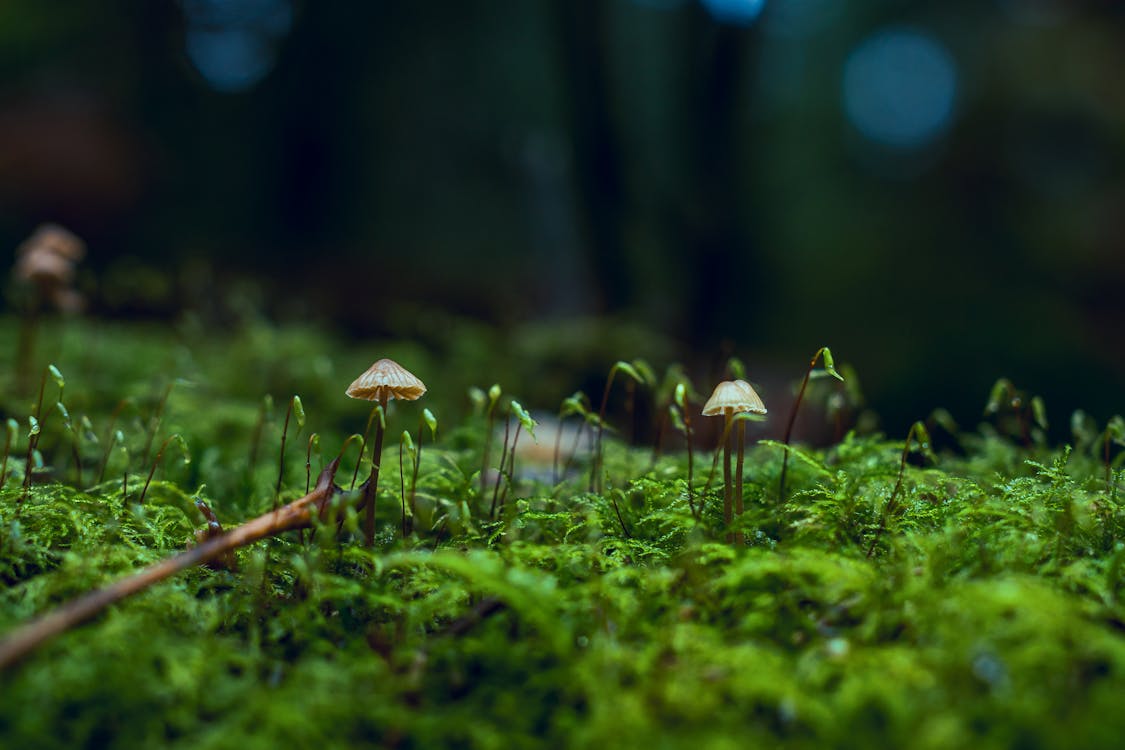
Mushrooms are having a moment, and for good reason. They are packed with nutrients, fascinating to grow, and thrive in the shady, damp spots of your yard where nothing else wants to grow. Beyond the kitchen, many species offer impressive wellness benefits, you can compare functional mushroom varieties like lion’s mane, reishi, and chaga to see what each one brings to the table. You do not need a farm or special equipment. With a few logs, some spawn, and patience, you can be harvesting your own shiitake, oyster, or lion’s mane mushrooms right at home.
I inoculated my first shiitake logs three years ago, and they are still producing beautiful flushes every spring and fall. It is genuinely among the most hands-off food production systems on our homestead.
🌱 From Our Homestead
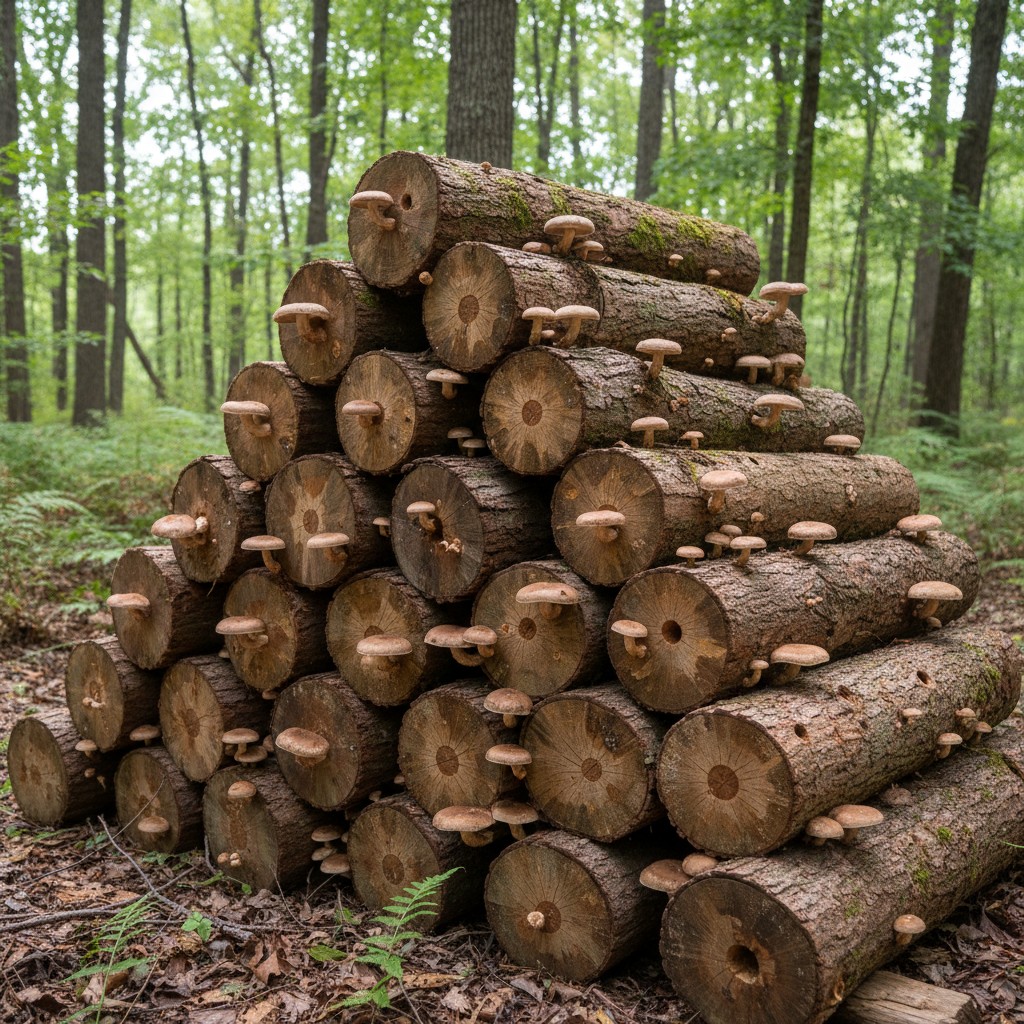
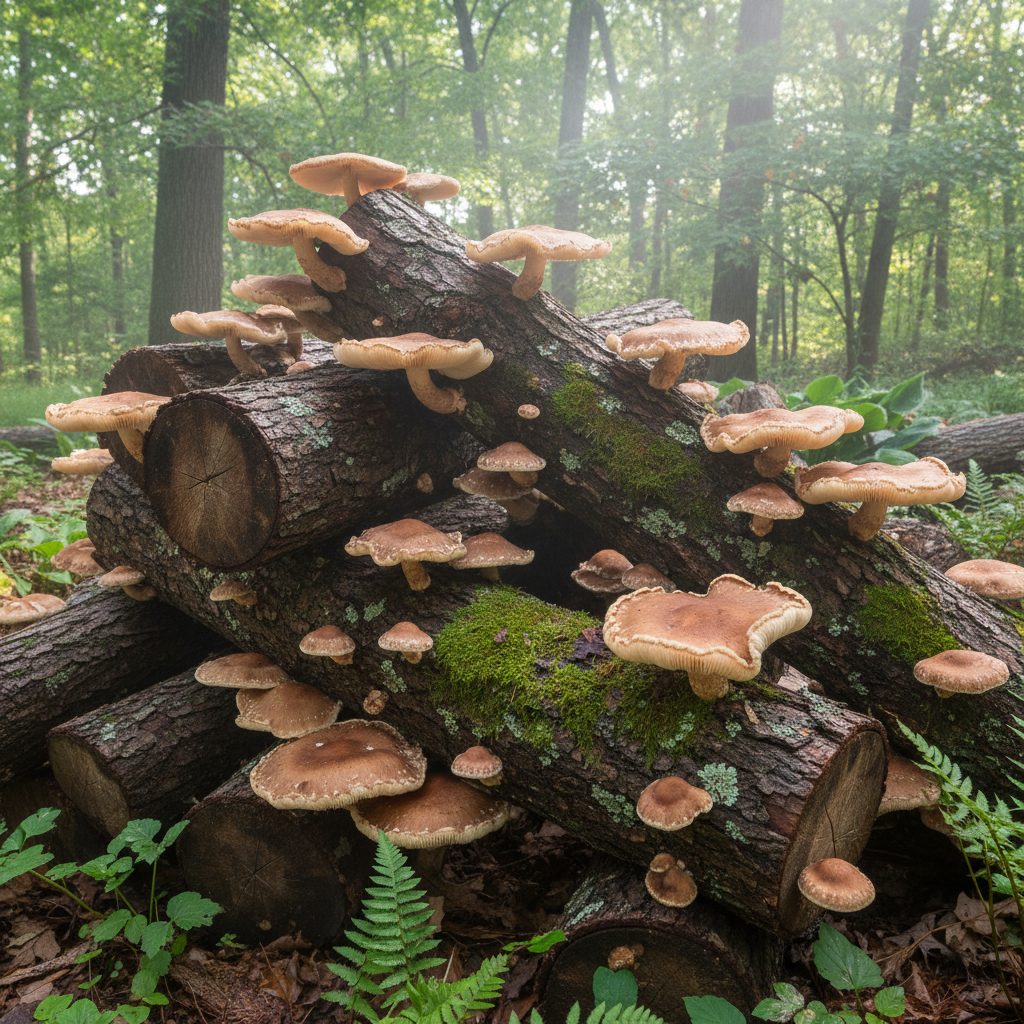
We inoculated a stack of oak logs with shiitake spawn two springs ago and honestly forgot about them. Fourteen months later, after a good rain, we walked out to find them absolutely covered in mushrooms, easily five pounds from that first flush.
How Does Log Growing Work?
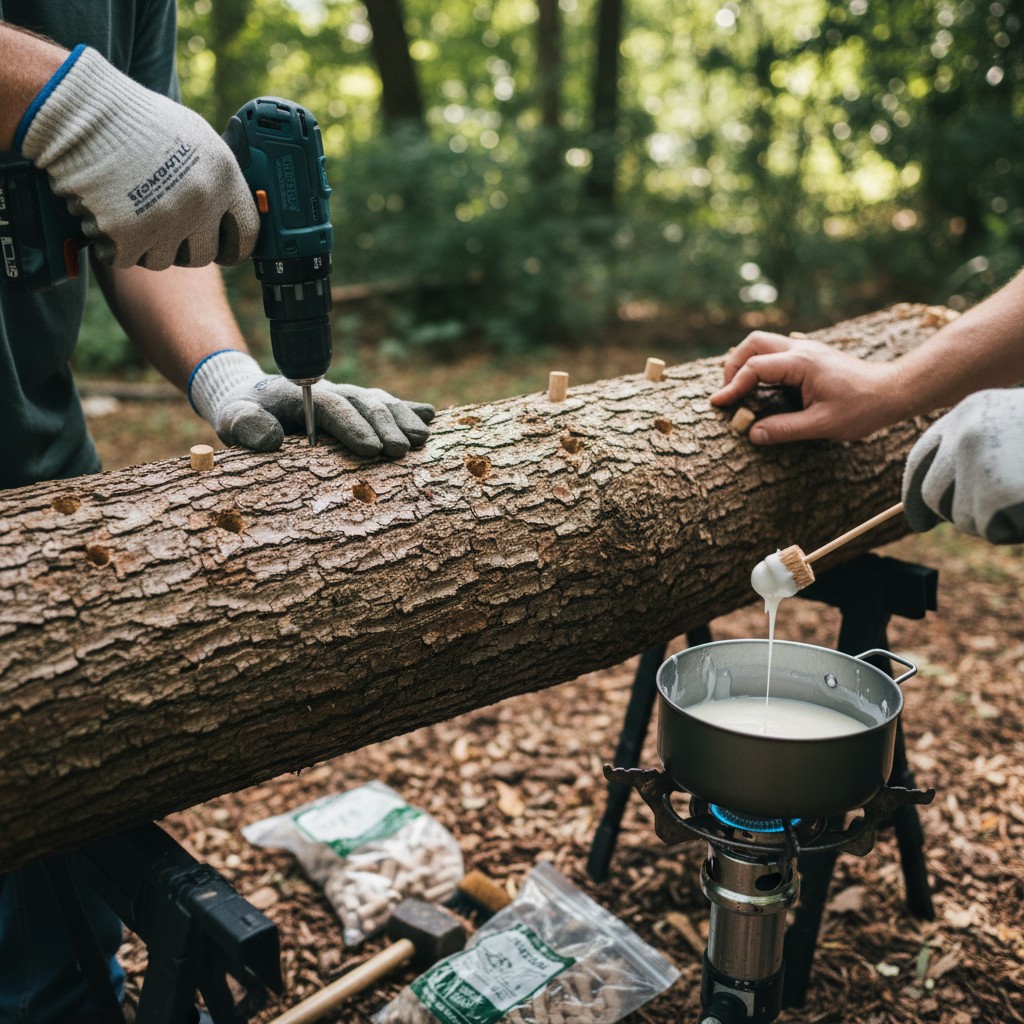
You drill holes in freshly cut hardwood logs, insert mushroom spawn plugs, seal with wax, and wait 6–12 months for full colonization, then harvest for 3–6 years. Log growing is the most traditional and hands-off approach. According to Penn State Extension, a single log can produce mushrooms for 3 to 6 years with minimal effort.
Best woods: Oak, sugar maple, beech, sweetgum, and poplar, cut fresh (2–6 weeks before inoculation) from a living, healthy tree. Avoid conifers, cedar, and black walnut, their resins and juglone inhibit mushroom growth. Do not use logs from trees that have been dead on the ground for months (they are already colonized by competing fungi), and do not use municipal tree-trimming wood that may have been treated with fungicide. Seal every plug hole with hot wax (cheese wax or food-grade paraffin), unsealed holes are the main contamination entry point. Best species for logs: Shiitake, oyster, and lion’s mane. See Cornell Small Farms Program for detailed log-cultivation protocols.
Know what contamination looks like. Healthy mushroom mycelium is bright white and smells faintly of fresh mushrooms or bread. If you see green (Trichoderma), black (Aspergillus), pink or orange (Neurospora), or fast-growing wispy cobweb-like white growth, the substrate is contaminated, bag it up and throw it out rather than harvesting from it. A sour, ammonia, or rotten smell is also a discard signal.
Can You Grow Mushrooms Indoors?
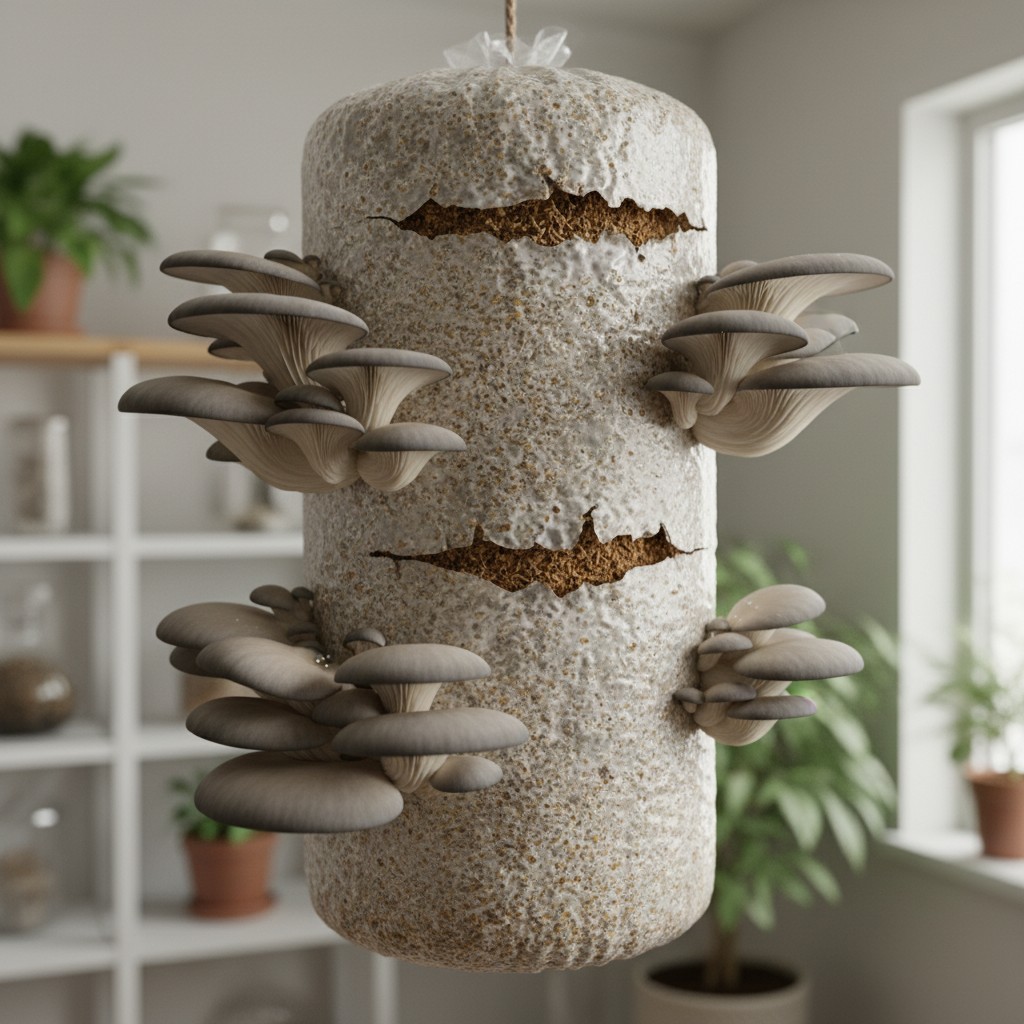
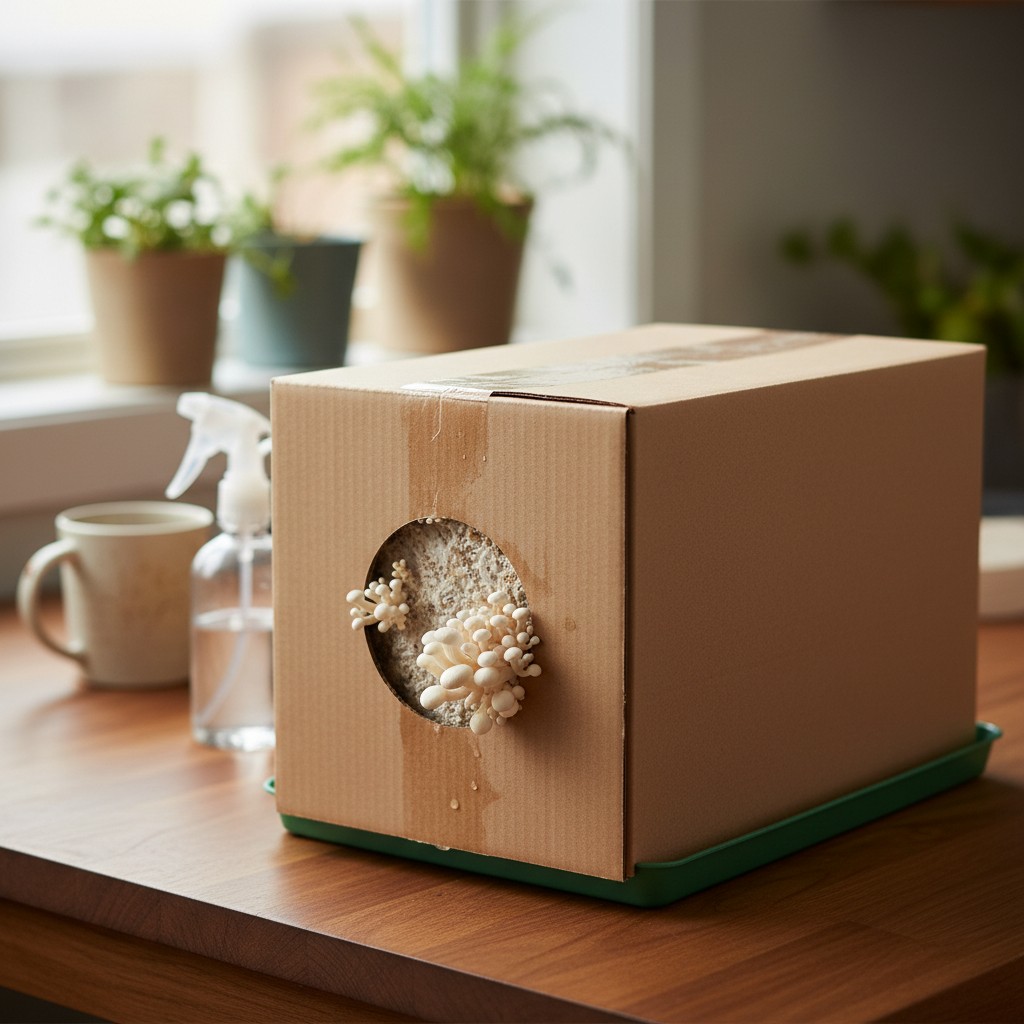
Yes, oyster mushrooms can produce a harvest in as little as 2–3 weeks from a pre-colonized bag, or roughly 3–5 weeks if you are inoculating your own substrate from scratch. They are vigorous, forgiving, and can grow in a closet, garage, or under the kitchen sink.
Pasteurization vs. Sterilization, these are not the same thing, and mixing them up is the number-one reason beginner bags get contaminated. Straw (a low-nutrient substrate) can be pasteurized by holding it submerged in hot water at 160–180°F for 1–2 hours, or by cold lime pasteurization. Grain spawn and supplemented sawdust (high-nutrient substrates) must be fully sterilized in a pressure cooker or pressure canner at 15 PSI / 250°F for at least 90 minutes to kill bacterial endospores and competing fungi, boiling alone will not do it. The Cornell Small Farms Program mushroom project and Paul Stamets’ Growing Gourmet and Medicinal Mushrooms both cover these protocols in detail.
What About Growing Mushrooms in Garden Beds?
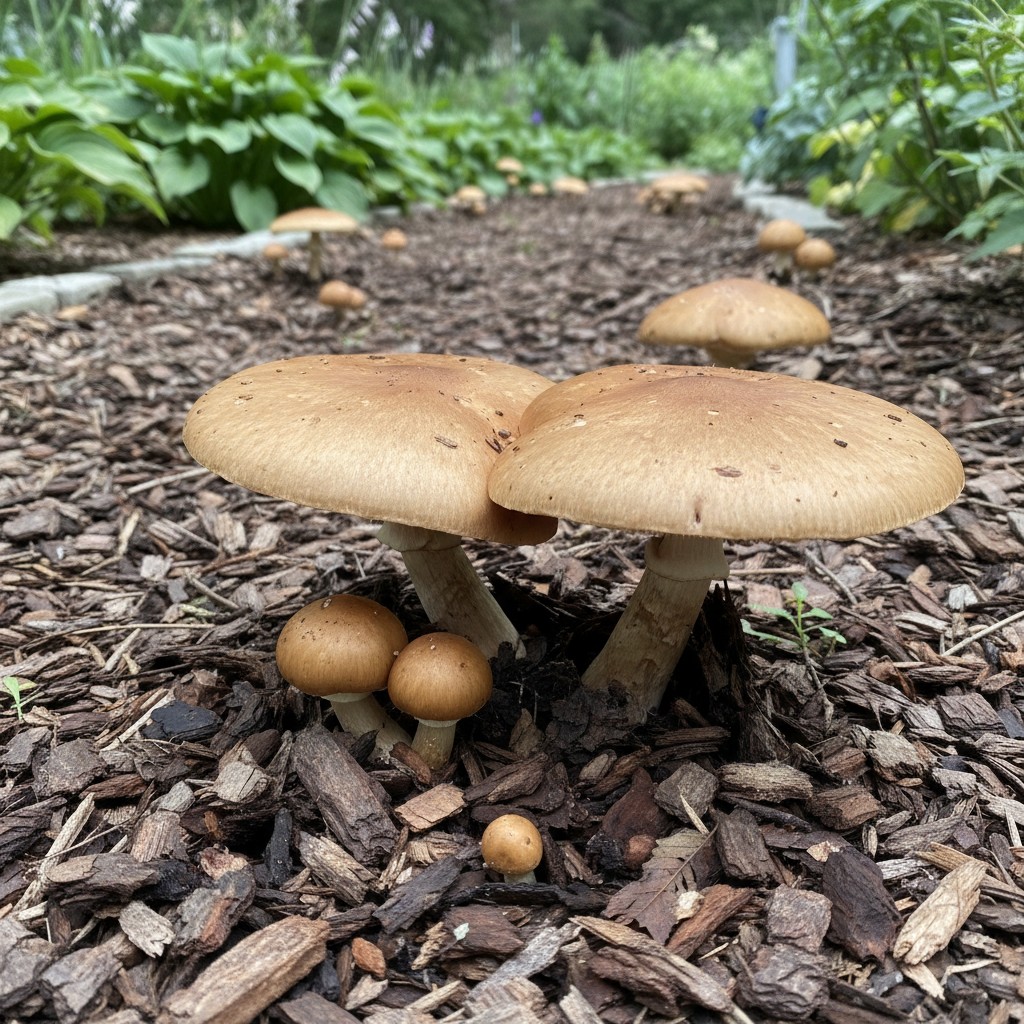
Wine cap mushrooms grow directly in wood chip mulch in your garden beds, fruiting in spring and fall while improving your soil. Spread spawn through a layer of fresh hardwood chips, keep it moist, and they will fruit naturally. They actually improve your garden soil as they break down the wood chips, it is mushroom growing and composting rolled into one. They work beautifully alongside raised beds and no-till garden practices.
| Method | Best Species | Time to Harvest | Duration | Difficulty |
|---|---|---|---|---|
| Log Growing | Shiitake, Oyster | 6–12 months | 3–6 years | Easy |
| Indoor Bags | Oyster, Lion’s Mane | 2–3 weeks | 1–3 flushes | Easy |
| Garden Beds | Wine Cap | 3–6 months | 1–3 years | Very Easy |
Ideal fruiting conditions by species: Oyster mushrooms fruit best at 55–75°F with 85–95% relative humidity. Shiitake prefer 55–75°F; a cold-water soak or period of cold weather (the “shock” method) triggers flushes on logs that have been colonizing. Wine cap (Stropharia rugosoannulata) grows outdoors in wood chips at 60–80°F and is very forgiving of natural humidity fluctuation. Indoors, maintain high humidity by misting the growing area 1–2 times daily and tenting bags or blocks with plastic to hold moisture around the pins.
Mushroom growing is one of those homestead skills that feels almost magical. You are cultivating a whole different kingdom of life, not plants, but fungi. Once you harvest your first flush of oyster mushrooms or crack open a shiitake log, you will be hooked. Try them in bone broth or sauteed with herb butter for an unforgettable meal.
Frequently Asked Questions
A: Late winter to early spring, when trees are dormant and logs are freshly cut. The wood should be cut 2–6 weeks before inoculation.
A: Not direct sunlight. Mushrooms prefer shade or indirect light. A north-facing wall, under trees, or a shady corner of the yard is perfect.
A: Morels are notoriously difficult to cultivate. Some kits exist, but success rates are low. Stick with oyster, shiitake, and wine cap for reliable results.
A: Harvest just before or as the caps fully open and flatten. For shiitake, pick when the cap edges are still slightly curled. For oysters, harvest when the edges begin to wave.
A: Generally yes, when you start from purchased spawn of a known species and follow a few rules. (1) Discard any contaminated substrate. Healthy mycelium is white; green (Trichoderma), black (Aspergillus), pink or orange (Neurospora), or fast-growing cobweb-like growth all indicate contamination, throw the bag or block out, do not harvest from it. Some contaminant molds (notably Aspergillus flavus) produce aflatoxins. (2) Always cook cultivated mushrooms thoroughly. Raw mushrooms are hard to digest, and raw or undercooked shiitake can trigger “shiitake dermatitis,” a whip-like rash in a minority of people. (3) Harvest oyster mushrooms before they release heavy spore clouds and ventilate indoor grow areas, dense oyster spore exposure has been linked to respiratory allergic reactions (hypersensitivity pneumonitis). (4) Never eat a wild mushroom unless a qualified mycologist has identified it; see the North American Mycological Association for local ID help.