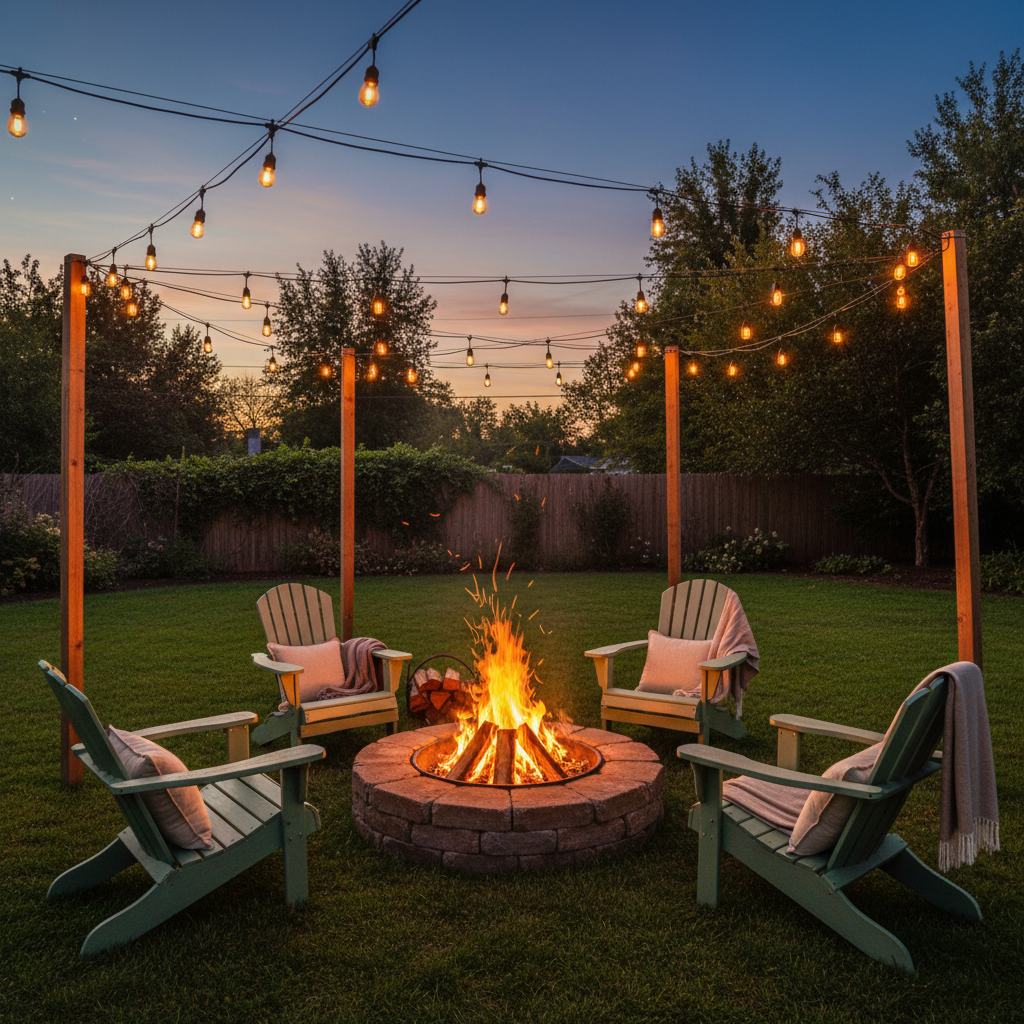
How to Build a Simple Outdoor Fire Pit This Weekend
- Budget: $75-$150 for a stacked-stone fire pit using retaining wall blocks.
- Time: One afternoon, no masonry experience or mortar needed.
- Safety first: Place at least 25 feet from any structure, combustible, or overhanging tree per NFPA 1 / IFC §307.4.2; bonfires require 50 ft.
- Size: 36-44 inch diameter, 3-4 courses of blocks on a gravel base. Fuel pile must stay ≤3 ft diameter, ≤2 ft tall.
- Surroundings: Keep a combustible-free zone of at least 10 feet around the pit, with a hard gravel or paver ring extending 5–6 feet in all directions.
Building a simple fire pit is one of the easiest and most rewarding DIY projects you can do in a single afternoon. A backyard fire pit transforms your outdoor space from a place you look at into a place you actually use. It’s where stories get told, marshmallows get roasted, and cold evenings become magical. I built mine on a Saturday morning and we were roasting s’mores by that evening, it’s that straightforward. According to the National Fire Protection Association, proper placement and construction are the keys to safe backyard fire pit use.
Where Should You Place Your Fire Pit?
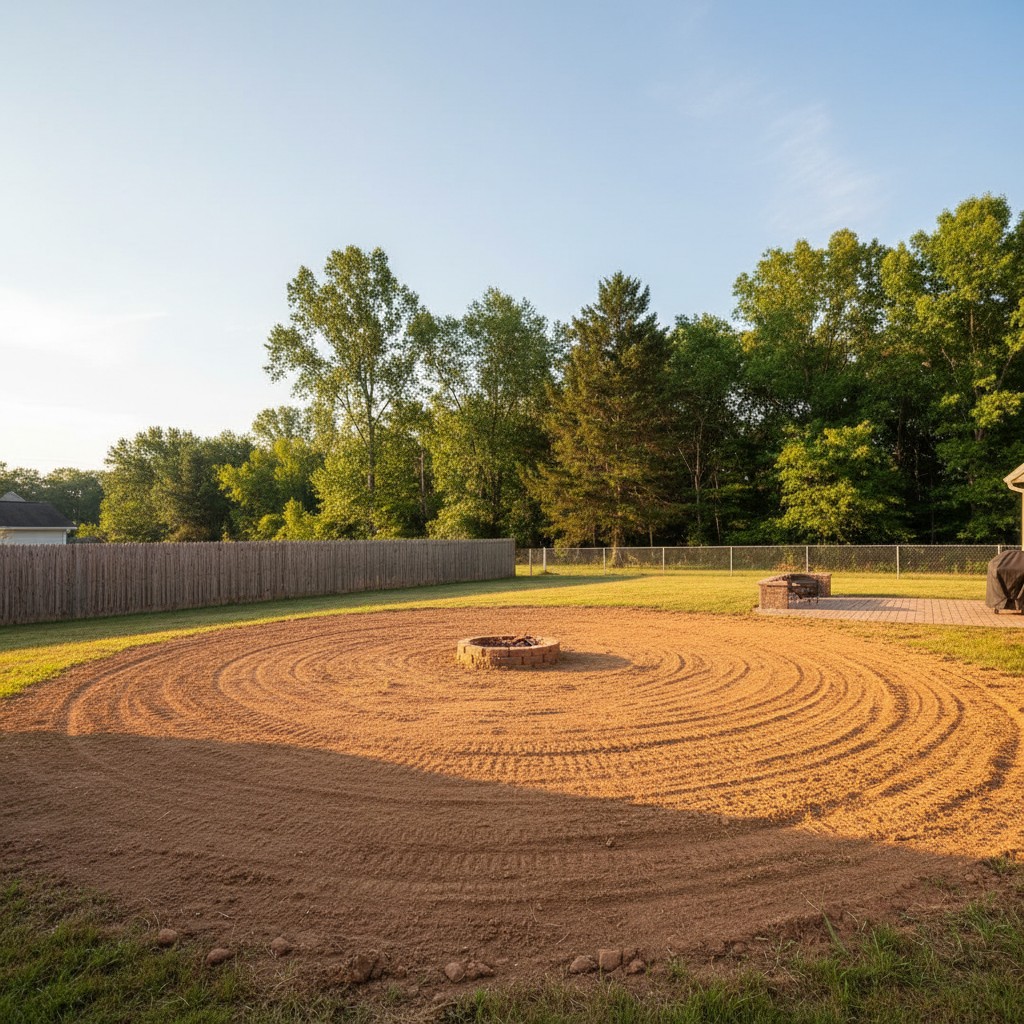
Place your fire pit at least 25 feet from any structure, fence, combustible material, or overhanging tree. This is the minimum clearance specified by the International Fire Code §307.4.2, which mirrors NFPA 1 §10.10.6.4: “Recreational fires shall not be conducted within 25 feet of a structure or combustible material.”
A few important notes on the definition. The 25-foot rule applies to a “recreational fire”, defined by the IFC as a fuel pile no larger than 3 feet in diameter and 2 feet in height for cooking or pleasure. Anything bigger is a bonfire, and IFC §307.4.1 requires 50 feet of clearance for bonfires. Always check your local fire code before building, many jurisdictions are stricter than the model code and some require a permit regardless of size.
Choose a level spot on bare ground, gravel, or pavers. Never build a fire pit on a wooden deck. I chose a spot that’s visible from our kitchen window so we can enjoy the glow even from inside on cold nights.
What Materials Do You Need?
A basic stacked-stone fire pit needs 30–40 retaining wall blocks, a firebrick liner or steel fire ring, lava rock for the base, and optional construction adhesive. Total cost runs $75–$150 depending on block style and local prices.
Standard concrete retaining wall blocks can spall or steam-explode under direct flame because trapped moisture rapidly vaporizes when heated. To build safely:
• Line the inside of your ring with firebrick or drop in a steel fire ring (available at hardware stores for $30–60).
• Use retaining wall blocks only as the decorative outer wall.
• Never burn directly against bare concrete blocks.
• Fire rock / lava rock or coarse sand, not pea gravel, goes inside the pit itself (pea gravel can pop under high heat).
How Do You Build a Stacked Stone Fire Pit?
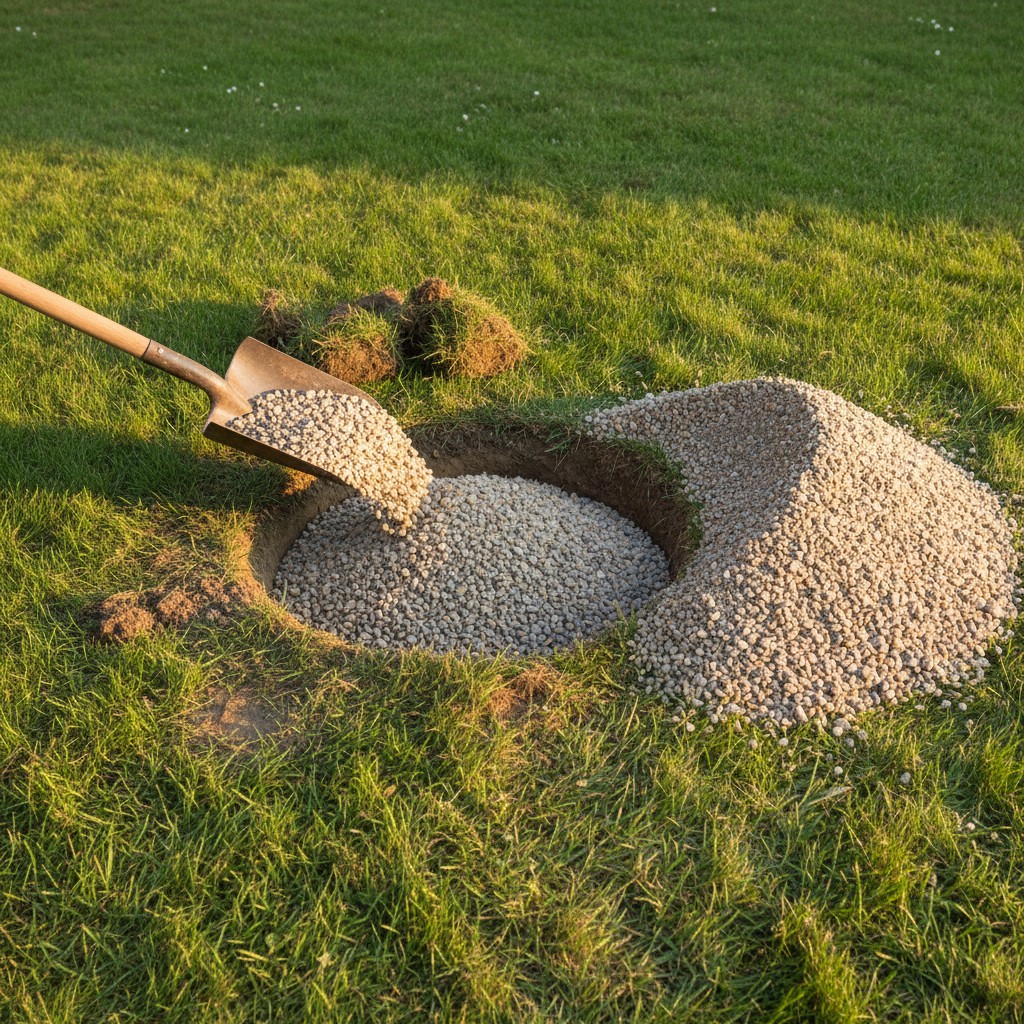
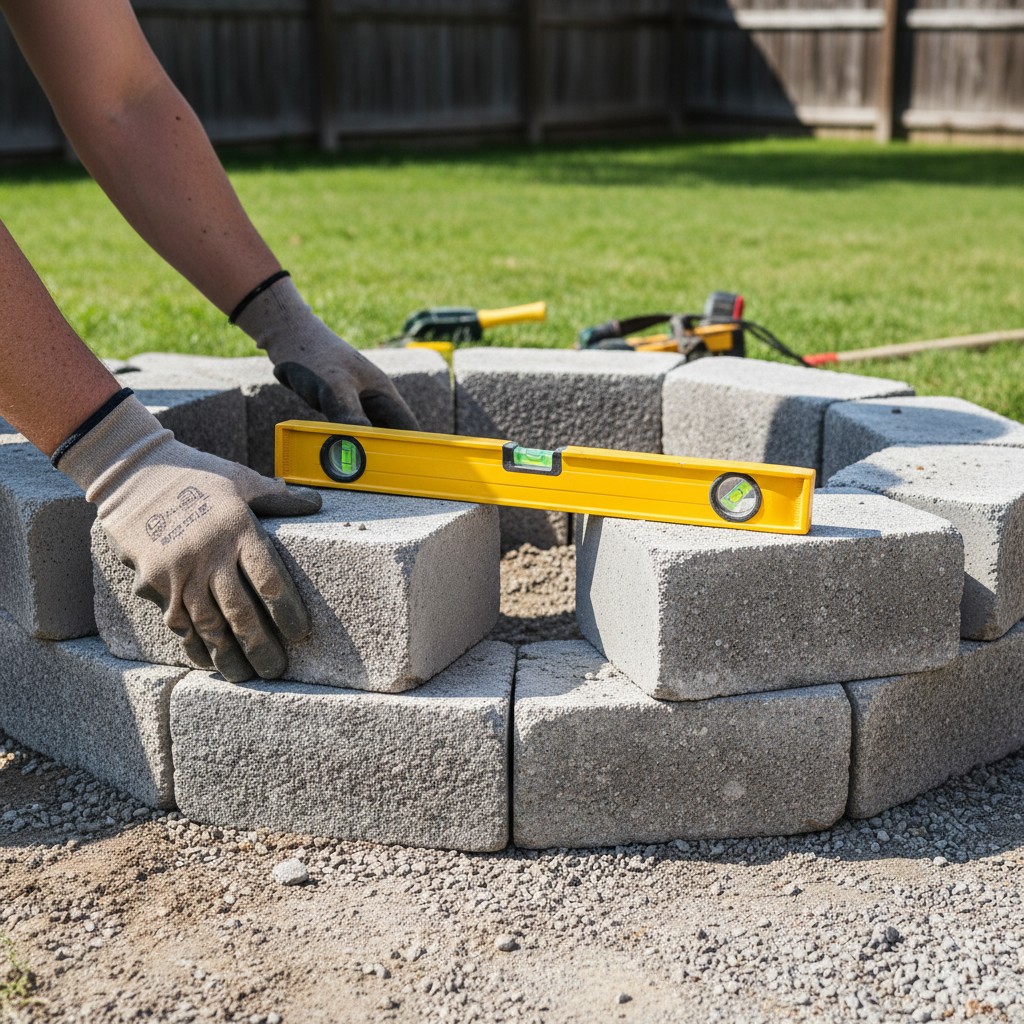
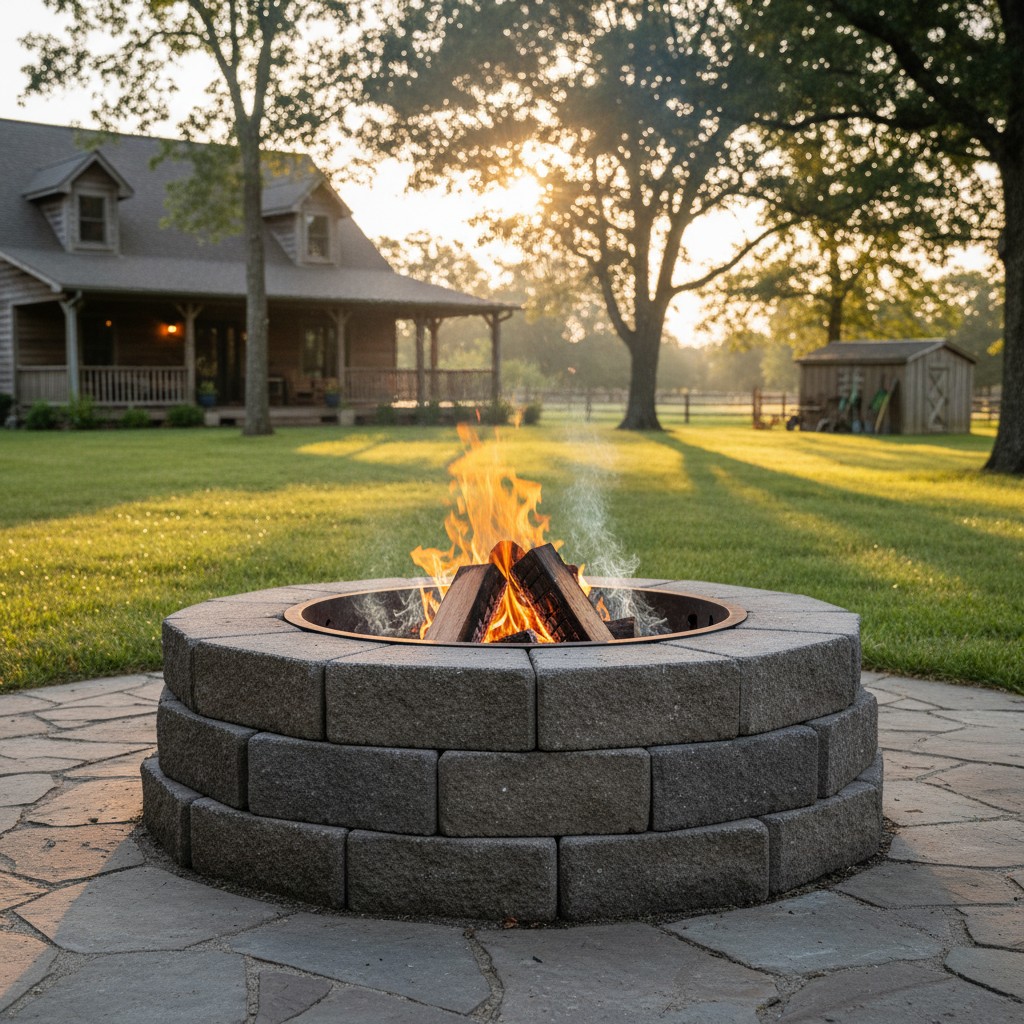
The stacked stone method is the simplest, just dry-stack retaining wall blocks in a ring on a gravel base, no mortar required. A 36 to 44 inch diameter circle using 3 to 4 courses of blocks is the most common size. A basic fire pit using 30 to 40 blocks costs $75 to $150 depending on the block style.
- Mark a circle on the ground using a stake, string, and spray paint.
- Dig out the circle 6 inches deep and fill with 4 inches of lava rock or coarse sand (never pea gravel, it can pop under high heat).
- Lay the first course of blocks in a ring, checking for level.
- Stack 2 to 3 more courses, staggering the joints for stability.
- Optional: Apply construction adhesive between courses for permanence.
| Materials | Estimated Cost | Notes |
|---|---|---|
| Retaining wall blocks (30-40) | $50-$100 | Flat-faced blocks stack best |
| Lava rock or coarse sand (2-3 bags) | $15-$25 | For pit base, never pea gravel |
| Firebrick liner or steel fire ring | $30-$60 | Critical safety inner liner |
| Construction adhesive | $5-$8 | Optional but recommended |
| Surrounding gravel/pavers | $15-$30 | 3-ft spark buffer zone |
| Total | $75-$150 | Compared to $300-$1,000+ for prefab |
How Do You Set Up a Safe Buffer Zone Around the Pit?
Surround your fire pit with gravel, pavers, or crushed stone extending at least 5 to 6 feet in all directions, and keep a broader combustible-free zone of 10 feet clear of dry grass, leaves, furniture, and overhanging branches. The NFPA recommends this broader cleared zone as a wildfire-prevention buffer for recreational fires, particularly in areas prone to wind or dry conditions.
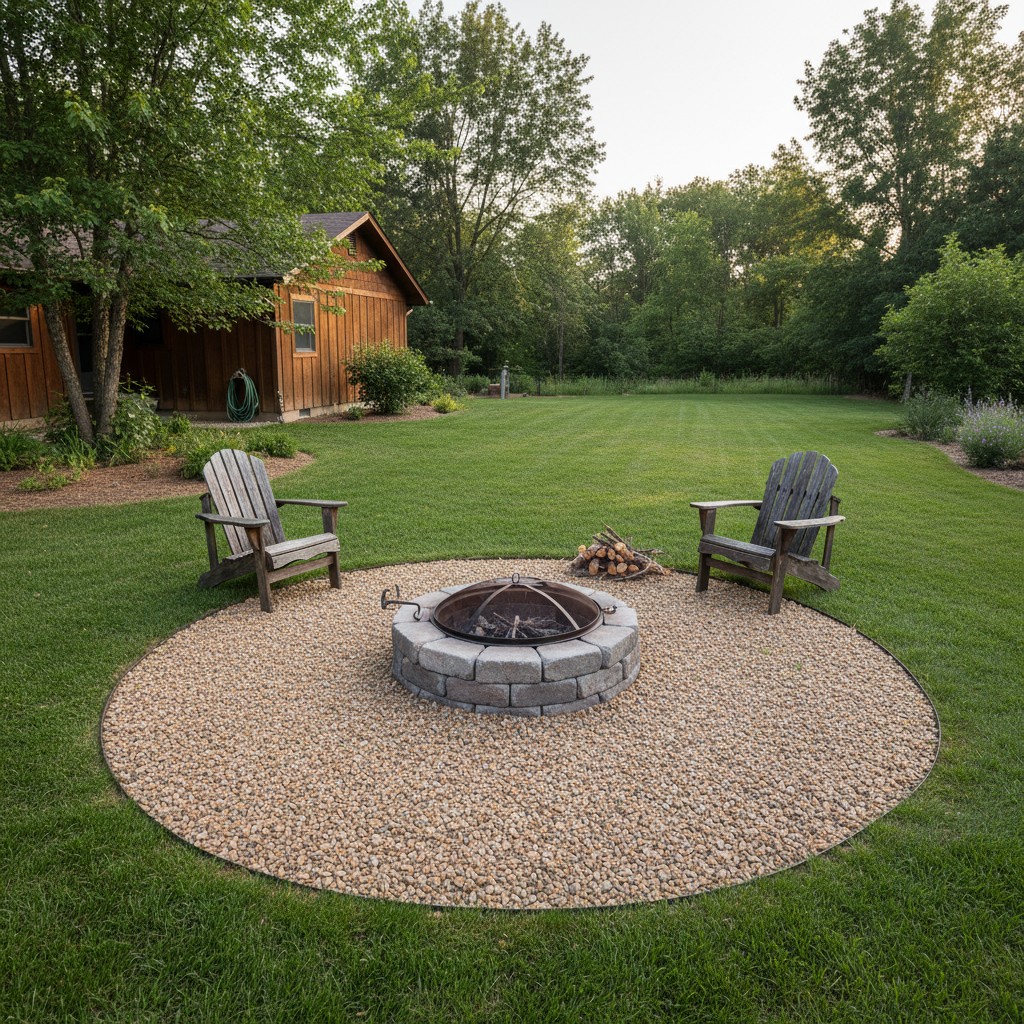
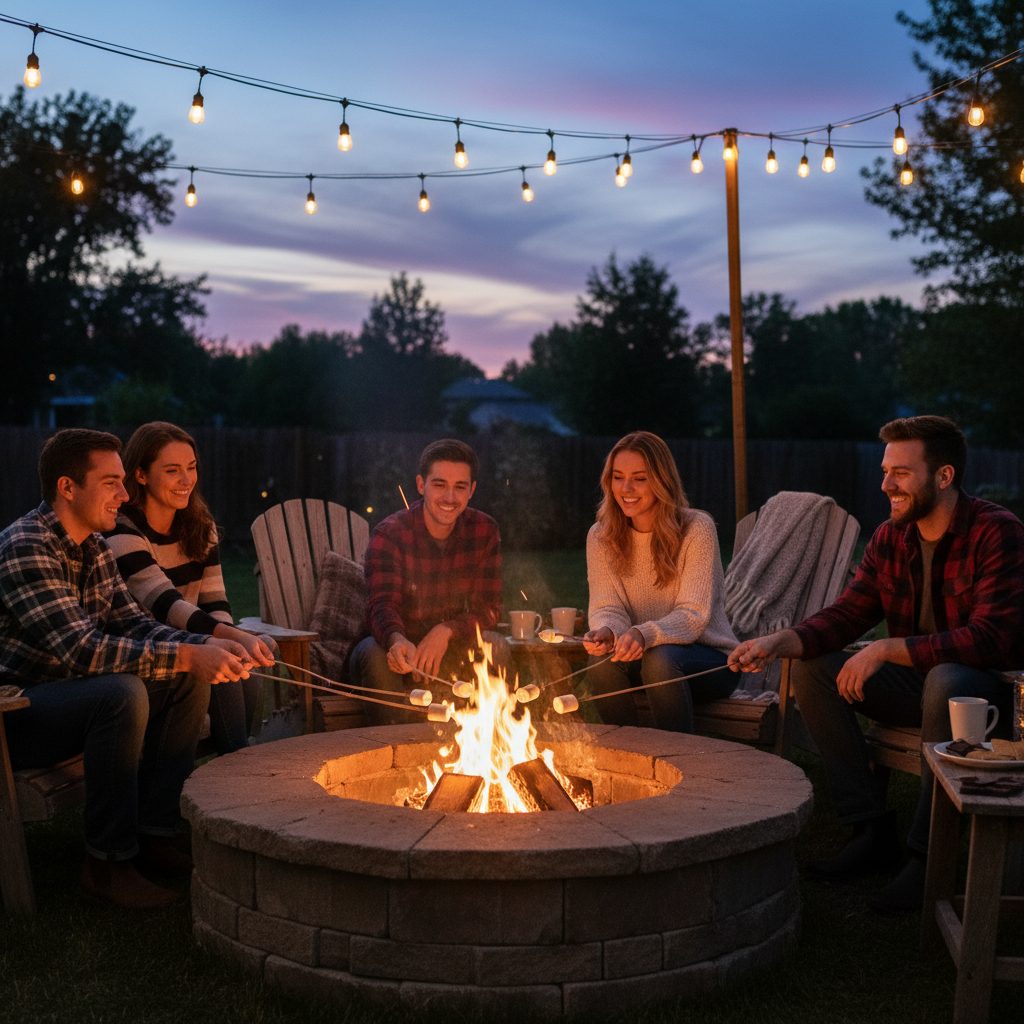
Add some Adirondack chairs or log benches, and you’ve created the new favorite spot on your property. A fire pit pairs perfectly with a cozy homestead evening, bring out some homemade sourdough bread and bone broth for the ultimate fall gathering. The This Old House team has additional construction tips if you want to get fancy. For more DIY projects, check out our DIY chicken coop guide or rainwater harvesting setup.
Always check for active burn bans and red-flag fire warnings in your county before starting a fire, even in your own backyard. Never burn in sustained winds over 10 mph or when humidity is below 25%. Keep a charged hose, a shovel, and a bucket of sand or a 2A-rated fire extinguisher within arm’s reach every single time. The NFPA’s guidance on open and outdoor fires reinforces that an adult must attend the fire from start to finish.
What’s the Best Wood, and What Should You Never Burn?
Seasoned hardwoods like oak, maple, hickory, and ash are the gold standard. They burn longer, hotter, and produce less smoke and creosote than softwoods. “Seasoned” means the wood has been cut, split, and dried for at least six months (ideally a year) to a moisture content below 20%.
Never burn: treated lumber (releases arsenic and chromium), painted or stained wood (VOCs and heavy metals), pressure-treated fencing or deck offcuts, plywood or particleboard (formaldehyde), magazines with glossy ink, plastic, rubber, or household trash. Also avoid softwoods like pine and fir in an open pit, they throw sparks and coat your chimney-stack-free pit in sticky creosote. Save the pine for kindling only.
How Do You Put Out a Fire Pit Safely?
Let the fire burn down to glowing embers, spread them out, douse with water, stir, and douse again until everything is cool to the touch. A fire isn’t out until the ashes are cold, embers can reignite 24+ hours later under the right conditions.
Stop adding fuel 45–60 minutes before you plan to leave. Use a long poker to spread embers into a thin layer so they cool faster. Pour (don’t splash) water slowly until hissing stops, stir with a shovel or poker, and pour more. If you can hold the back of your hand 4 inches above the ashes without feeling heat, it’s safe to leave. Never bury hot coals in sand or soil, insulated embers can smolder for days.
🌱 From Our Homestead
Building our fire pit was a Saturday afternoon project that has paid for itself a hundred times over in family memories. We use it at least twice a week from spring through fall, the kids roast marshmallows while I tend the last of the evening garden chores.
Frequently Asked Questions
It depends on your municipality. Many areas allow fire pits under a certain diameter (typically 3 feet) without a permit, but setback requirements from structures vary. Always check your local fire code before building, a quick call to your local fire department is the easiest way to find out.
Use firebrick (also called refractory brick) for any surface in direct contact with flames. Standard clay bricks can crack or even explode when exposed to high heat due to trapped moisture. Standard concrete retaining wall blocks are NOT safe as the direct inner wall of a fire pit, they can spall or steam-explode under flame. Use them only as a decorative outer ring with a firebrick liner or steel fire ring inside, or buy blocks specifically rated for fire pit use.
Hardwoods like oak, maple, and hickory burn longer and produce less smoke. Avoid softwoods like pine (too much spark and creosote) and never burn treated lumber, painted wood, or trash. Seasoned (dried 6+ months) wood burns best.
Let the fire burn down to embers, spread them out with a poker, douse with water until hissing stops, and stir ashes. Never leave a fire unattended, and always have a hose, bucket of water, or fire extinguisher nearby.
IFC §307.4.2 and NFPA 1 §10.10.6.4 both require a minimum of 25 feet between a recreational fire and any structure or combustible material. A bonfire (fuel pile larger than 3 ft × 2 ft) requires 50 feet. Your city or HOA may impose stricter setbacks, so always confirm locally.
Related: Want options? See three fire pit build plans from $50 to $300.