Feeding Your Chickens from the Garden: Free Food Your Flock Will Love
- Garden scraps can supplement up to 10–15% of your flock’s diet, reducing feed costs noticeably.
- Leafy greens, squash, cucumbers, and herbs are among the best garden-to-coop foods.
- Avoid feeding chickens raw potatoes, avocado, dried beans, and rhubarb leaves, these are toxic.
- Growing dedicated chicken crops like sunflowers, kale, and pumpkins maximizes your garden-to-coop pipeline.
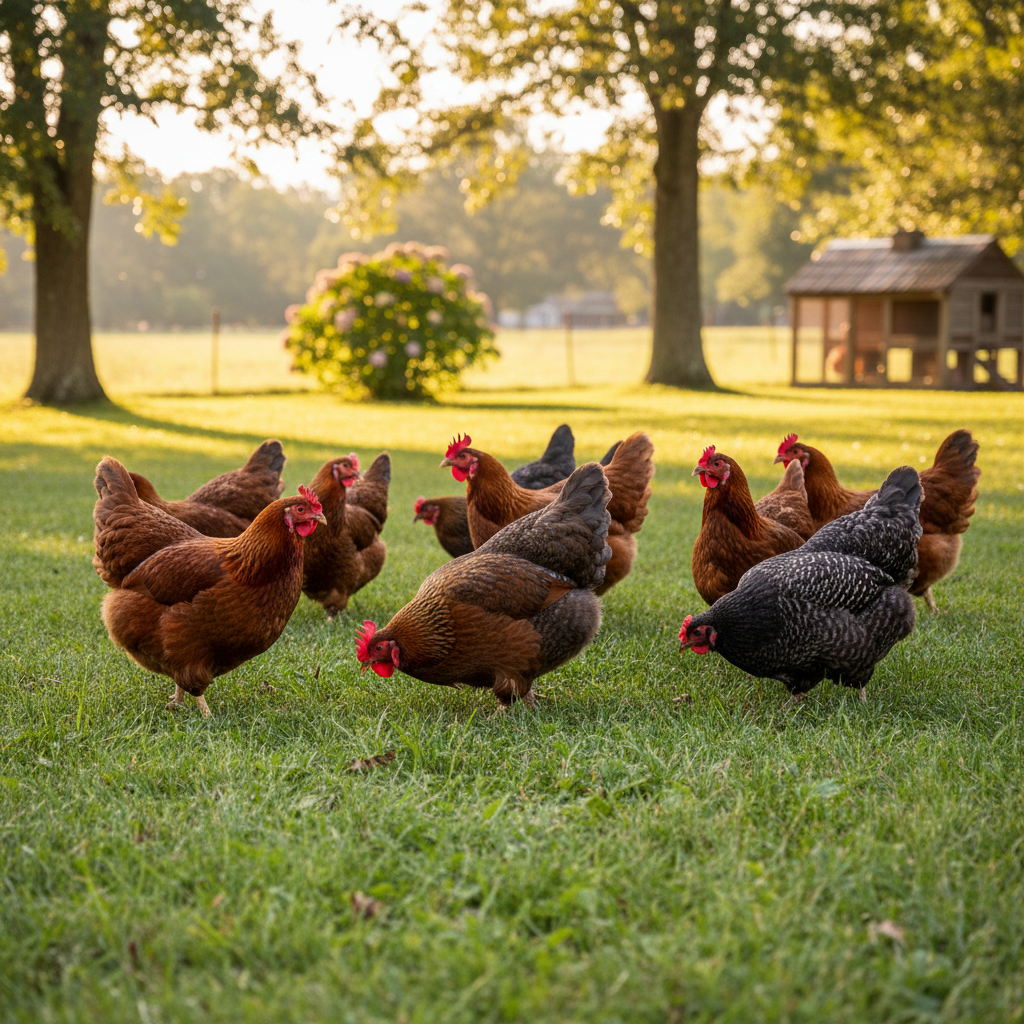
- Free-ranging chickens in garden beds after harvest provides natural pest control and fertilization.
🌱 From Our Homestead
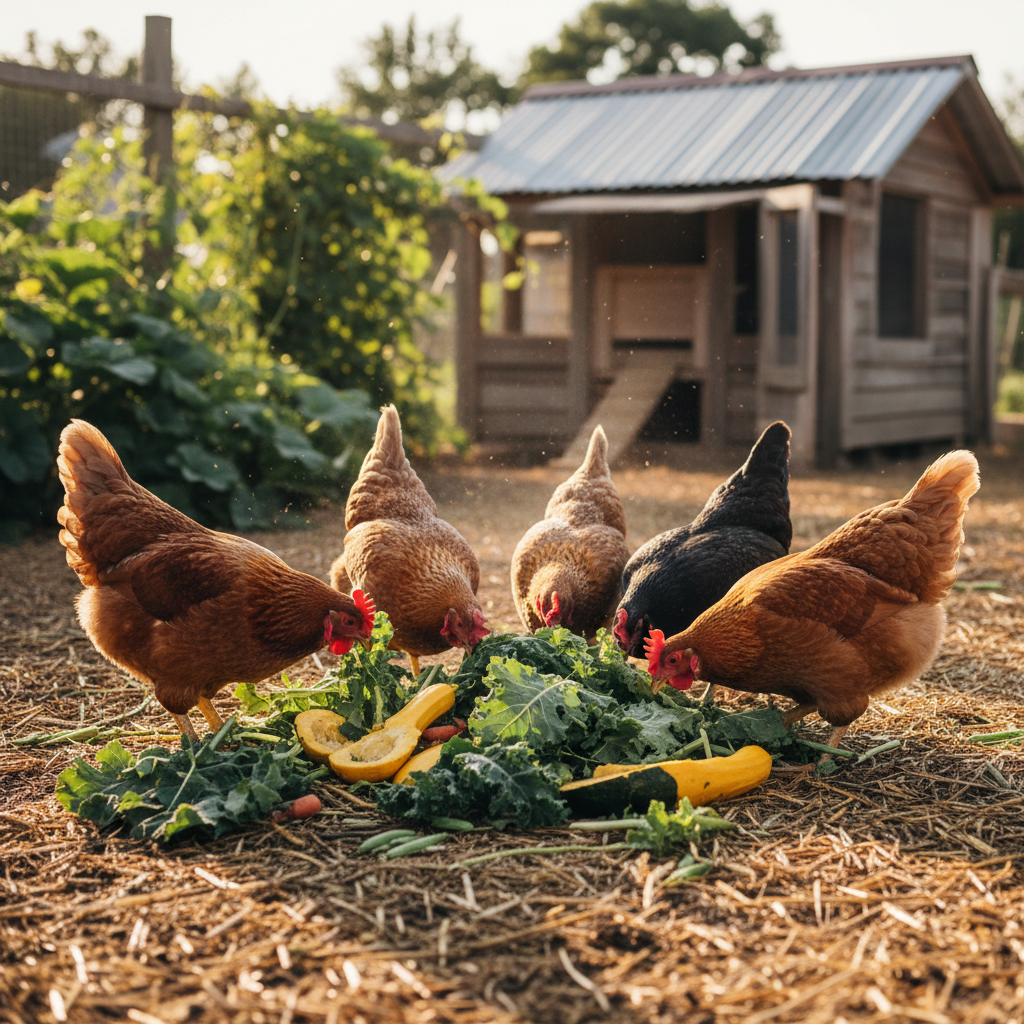
Last summer we grew an entire bed of sunflowers and leafy greens just for the chickens. It cut our feed bill noticeably, and the hens practically sprint across the yard when they see me coming with a basket of garden scraps.
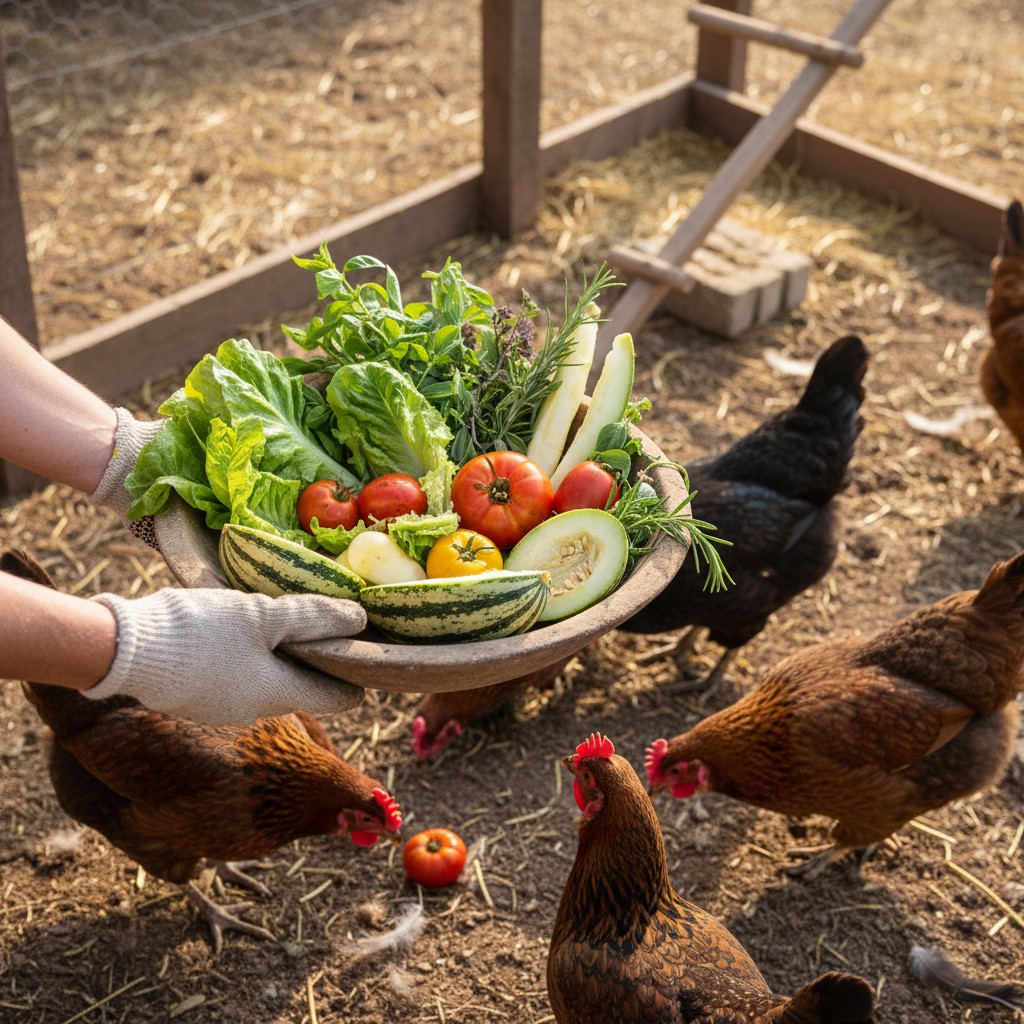
Can You Really Feed Chickens from Your Garden?
Yes, garden-grown fruits, vegetables, and herbs can safely supplement your chickens’ diet, reduce feed costs by 10–20%, and produce noticeably richer, more flavorful eggs. In my experience, the connection between a productive garden and a healthy flock creates a beautiful closed-loop system.
According to the University of Minnesota Extension, supplementing a balanced layer feed with garden produce enriches egg nutrition. A complete commercial feed should still make up 85–90% of their diet.
If you are just starting with backyard poultry, our complete beginner’s guide to backyard chickens covers the fundamentals of feeding, housing, and flock care.
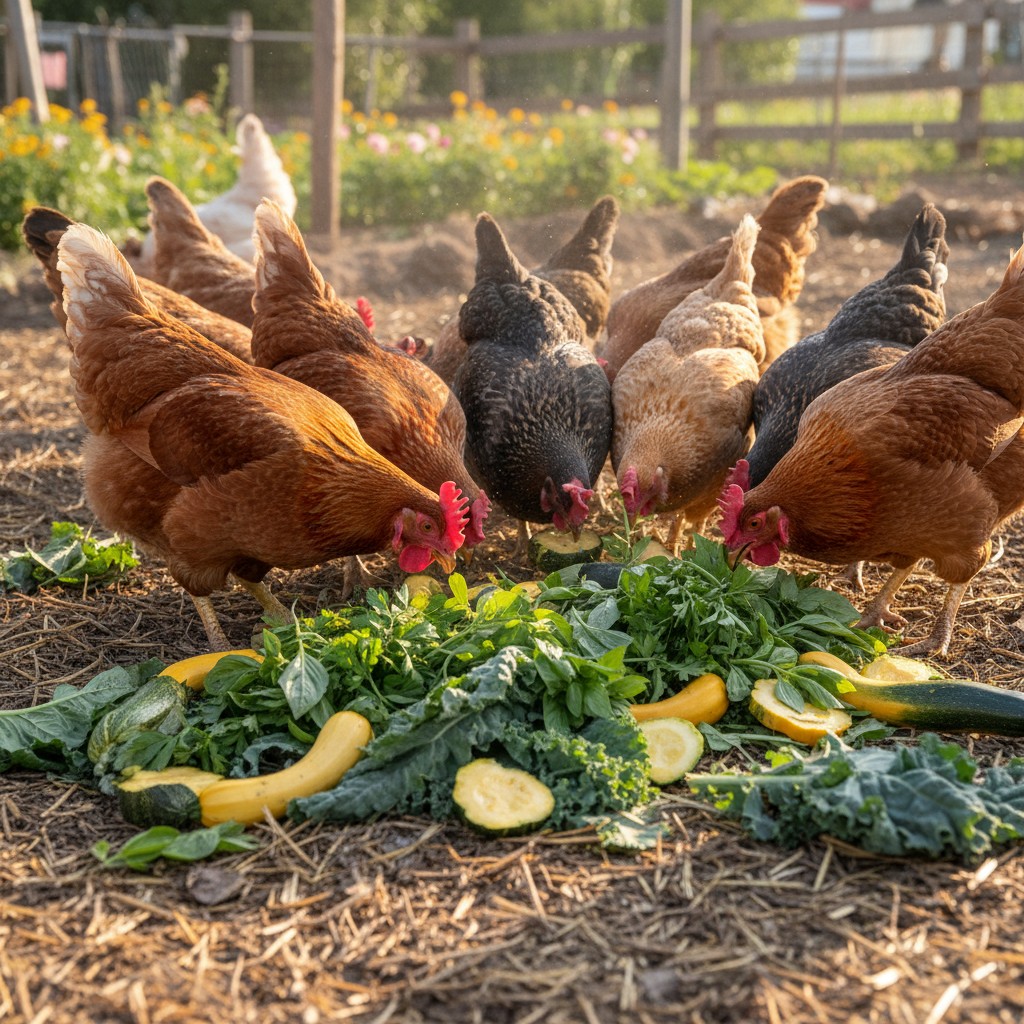
What Are the Best Garden Foods for Chickens?
Leafy greens, squash, cucumbers, berries, melons, and herbs like oregano and basil are among the best and safest garden foods for chickens. When I first started tossing garden scraps to our hens, I was amazed at how much brighter their egg yolks became within just a week or two.
| Garden Food | Nutritional Benefit | How to Feed |
|---|---|---|
| Leafy Greens (kale, lettuce, chard) | Vitamins A, C, K; calcium | Hang in coop or scatter fresh |
| Squash & Pumpkins | Beta-carotene, seeds are natural dewormer | Cut in half, seeds included |
| Cucumbers & Melons | Hydration, vitamins, electrolytes | Slice open: great summer treat |
| Berries (strawberries, blueberries) | Antioxidants, vitamin C | Scatter or mix with feed |
| Herbs (oregano, basil, mint) | Natural antibacterial, respiratory support | Fresh in coop or nesting boxes |
| Sunflower Heads | Protein, healthy fats, vitamin E | Hang whole or scatter seeds |
If you are growing strawberries, the slightly overripe ones are perfect chicken treats. Same with bolted lettuce and overgrown cucumbers, nothing goes to waste.
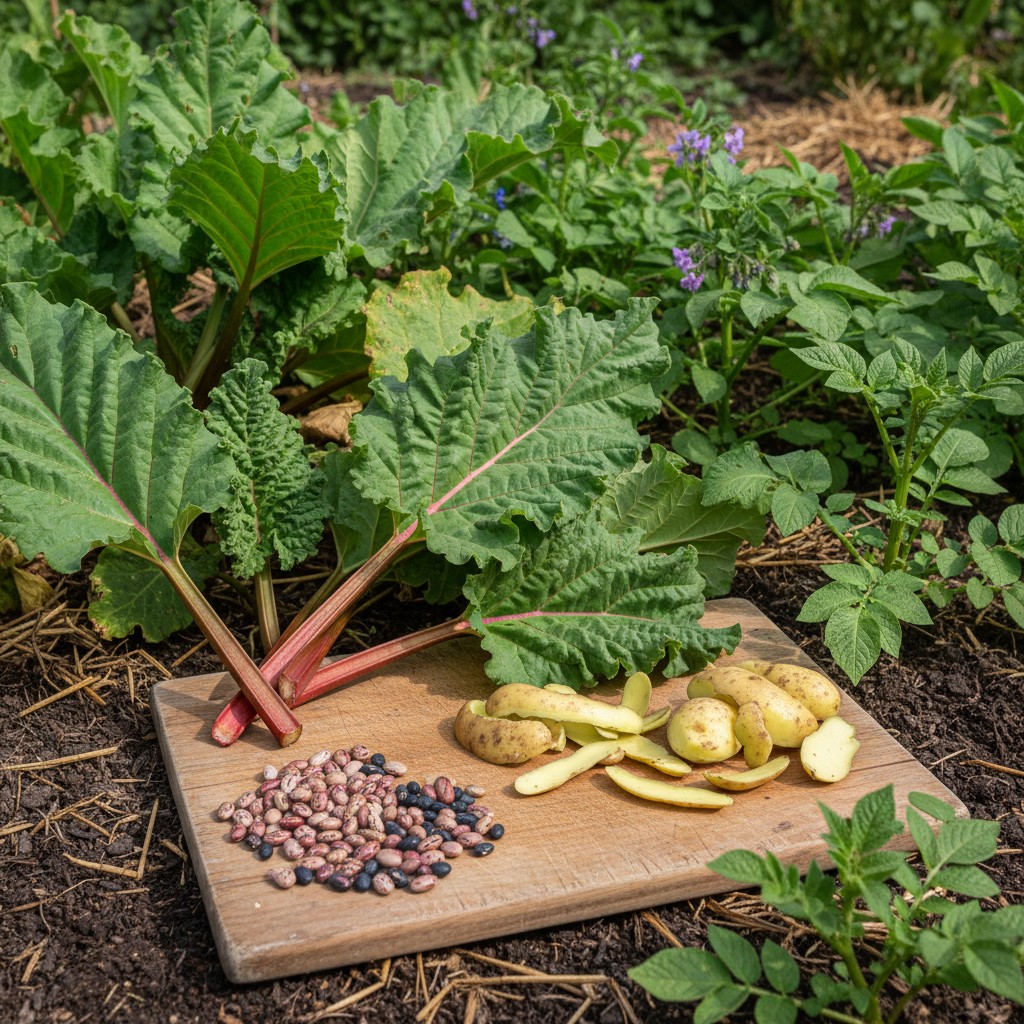
Which Garden Foods Are Toxic to Chickens?
Never feed chickens raw potato skins (especially green ones), avocado pits or skin, dried/raw beans, rhubarb leaves, or tomato plant leaves, these contain compounds that are toxic to poultry. After years of keeping chickens, this list has become second nature to me.
The Cooperative Extension Poultry Resource warns that solanine in green potatoes and persin in avocados can be fatal. Ripe tomato fruit is perfectly safe, it is only the green parts of the plant that are problematic.
Important clarification on potatoes and solanine: It is not only green potatoes that are dangerous. Sprouted potatoes, even if the skin has not turned green, also accumulate solanine at high concentrations around the sprout eyes. Old, shriveled potatoes that have been stored too long can similarly develop elevated solanine. The green color is a visual cue caused by chlorophyll, which co-develops with solanine but is not solanine itself, and solanine can be present without visible greening. The rule is: never feed chickens any raw potato that is green anywhere, sprouted, or has been stored so long it has softened and begun to sprout. Cooked potato (without green or sprouts) is generally considered safe in small quantities, as cooking reduces solanine levels significantly, though many chicken-keepers avoid potato scraps entirely out of caution.
For a deeper get into keeping your flock safe, our backyard chicken health guide covers common problems and prevention strategies.
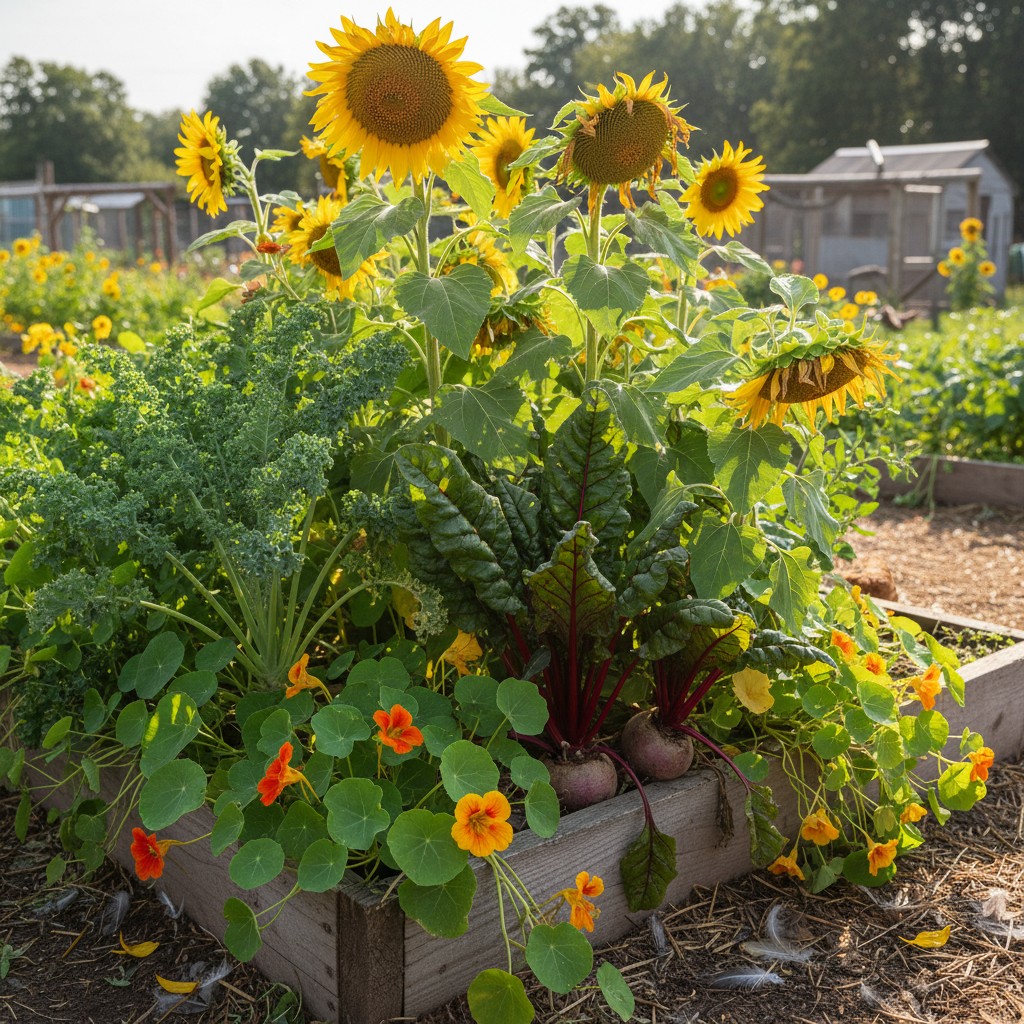
How Can You Grow Dedicated Crops for Your Chickens?
Plant sunflowers, mangel beets, kale, pumpkins, and comfrey as dedicated chicken crops to build a sustainable, low-cost supplemental feed supply. In my experience, growing even a small patch of sunflowers gives you bags of seeds that stretch your feed budget well into winter.
The Penn State Extension notes that crops rich in protein (like sunflower seeds at 20–25% protein) and beta-carotene directly improve egg quality.
You can also dedicate a section of your raised beds to quick-growing greens specifically for the flock. Kale, Swiss chard, and turnip greens grow fast and can be harvested repeatedly.
A note on brassicas (kale, cabbage, broccoli, cauliflower): These are safe and nutritious treats for chickens in moderate amounts, many backyard keepers feed kale and cabbage regularly without issue. However, raw brassicas contain glucosinolates, compounds that can interfere with thyroid function (goitrogenic effect) when consumed in very large quantities over a long period. For a backyard flock eating varied forage and a complete layer feed as their primary diet, occasional brassica scraps pose no meaningful risk. The concern applies mainly to flocks that are fed massive amounts of raw brassicas daily as a primary food source. Feed freely as treats and variety, just don’t replace complete feed with a bucketful of raw kale every day.
How Do Chickens and Gardens Work Together?
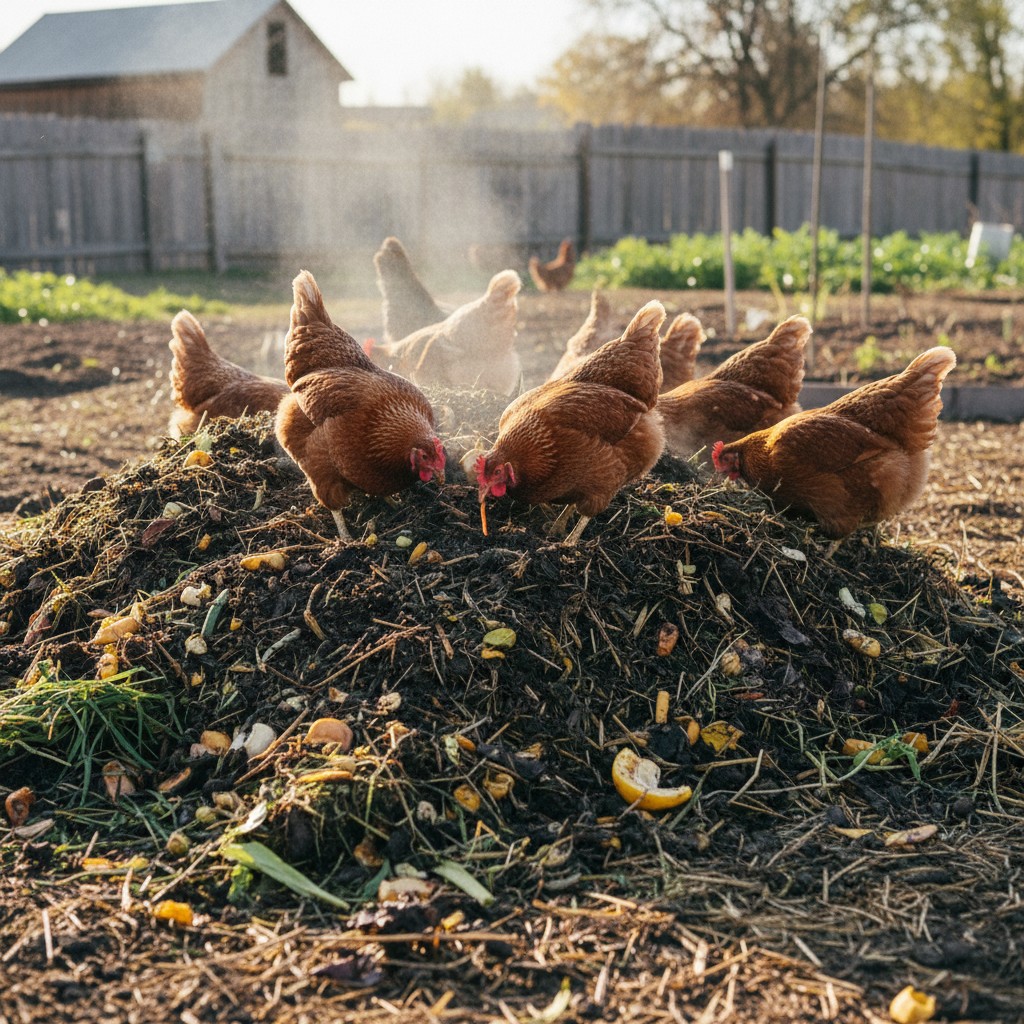
Chickens provide pest control, fertilization, and weed reduction for your garden, while the garden feeds the chickens, creating a powerful closed-loop homestead system. This symbiotic relationship is one of the things I love most about homesteading.
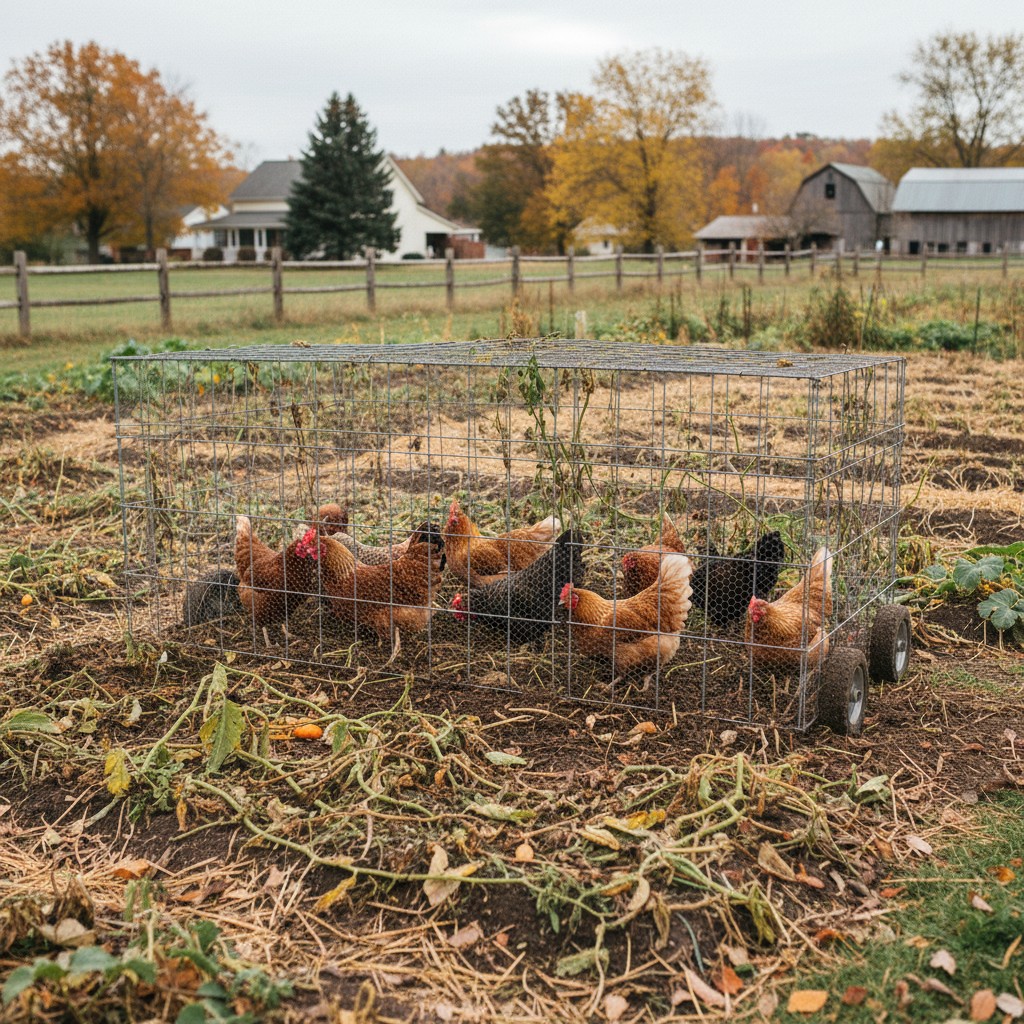
After your final harvest, let chickens free-range in garden beds. They will devour pest larvae, scratch up weed seeds, and deposit nitrogen-rich manure. Use fencing or a properly designed coop setup to manage access.
Their manure is gold for composting. Chicken manure is high in nitrogen and, when composted for 3–6 months, becomes one of the best garden amendments available.
Frequently Asked Questions About Feeding Chickens from the Garden
Garden scraps should make up no more than 10–15% of total diet. Their primary nutrition should still come from balanced commercial layer feed.
Ripe tomatoes are safe and chickens love them! Avoid green tomatoes or any leaves, stems, or vines from the tomato plant, as these contain solanine.
Yes! Chickens with access to diverse garden produce produce eggs with darker, more vibrant yolks and significantly higher vitamin content.
Dehydrate greens, freeze squash cubes, and store whole pumpkins in a cool location. Growing sprouted grain (fodder) indoors during winter is another great option.