How to Grow Lavender: The Complete Guide to Planting, Care, and Harvesting
Lavender is a generous plant. Give it poor soil and neglect and it returns fragrance, colour, and a steady parade of pollinators from late spring through midsummer. The catch is that lavender has firm opinions about drainage and sun, opinions it does not budge on. Ignore them and you get a short-lived, woody, rot-prone plant. Get them right and lavender practically grows itself for a decade or more.
This guide walks through every stage: choosing the right species for your climate, preparing the planting site, watering and pruning schedules, protecting plants over winter, knowing when to cut the stems, and actually using what you harvest, from sachets to the dinner table.
Which Lavender Variety Should You Grow?
The answer depends almost entirely on your winters. Lavandula angustifolia (English lavender) tolerates hard freezes and is the best choice for most North American and northern European gardens. Lavandula stoechas (Spanish lavender) and Lavandula dentata (French lavender) prefer frost-free winters and reward gardeners in warmer zones with a longer bloom season and showier flowers, but they die outright below about 10 °F (−12 °C).
Within each species there are dozens of cultivars that differ in height, flower colour, oil content, and hardiness. The table below covers the varieties most home gardeners encounter.
| Variety | Species | USDA Zones | Height | Best Use | Notes |
|---|---|---|---|---|---|
| Hidcote | L. Angustifolia | 5–8 | 12–18 in | Sachets, borders | Deep purple, compact; excellent oil content |
| Munstead | L. Angustifolia | 5–8 | 12–18 in | Culinary, hedges | Early bloomer; milder flavour than Hidcote |
| Vera | L. Angustifolia | 5–8 | 24–30 in | Essential oil, drying | High oil yield; traditional farm variety |
| Grosso | L. X intermedia | 5–9 | 24–30 in | Commercial oil, cutting | Long stems; blooms slightly later |
| Provence | L. X intermedia | 5–9 | 24–36 in | Dried bundles, potpourri | Classic Provençal fragrance; large plant |
| Kew Red | L. Stoechas | 7–11 | 18–24 in | Ornamental containers | Pink-red bracts; reblooms with deadheading |
| Royal Crown | L. Dentata | 8–11 | 24–36 in | Mild culinary, hedging | Serrated leaves; nearly year-round bloom in warm zones |
If you are in zone 5 or 6 and want the longest-lived plants, stay with L. Angustifolia cultivars. Hidcote and Munstead are widely available as starts at garden centres and are reliably hardy. Lavandin hybrids (L. X intermedia) like Grosso and Provence are sterile crosses that produce more essential oil and longer stems but are slightly less cold-hardy than true English varieties.
Pros and Cons of the Main Lavender Species
Variety choice shapes everything else: cold tolerance, bloom time, fragrance, and culinary use. Here is the practical comparison.
English Lavender (Lavandula angustifolia)
Pros: Hardiest of the common lavenders (zones 5 to 9), best fragrance for sachets and oil, the only widely available species safe for culinary use, longest-lived plants (10+ years).
Cons: Single bloom flush in early summer, less ornamental than Spanish or French varieties, struggles in hot humid climates without excellent drainage.
Spanish Lavender (Lavandula stoechas)
Pros: Striking topknot blooms, longer bloom season than English, attracts pollinators heavily, performs well in heat.
Cons: Tender (zones 7 to 9 only), shorter-lived than English (3 to 5 years typical), fragrance is medicinal rather than sweet, not suitable for cooking.
French Lavender (Lavandula dentata)
Pros: Almost continuous bloom in mild climates, distinctive serrated foliage, stronger camphor-tinged scent that repels insects effectively.
Cons: Least cold-hardy (zones 8 to 11), requires winter protection or container culture in most of the US, not culinary, plants are smaller and need more frequent replacement.
Lavandin (Lavandula x intermedia)
Pros: Largest plants and biggest harvests, hardy to zone 5, the workhorse of commercial lavender oil production, long-stemmed wands ideal for crafts.
Cons: Camphor content makes it unsuitable for culinary use, blooms slightly later than English, can become woody if not pruned annually.
Where Should You Plant Lavender in Your Garden?
Sun and drainage are the two non-negotiables. Lavender evolved on rocky Mediterranean hillsides where water drains away immediately and the sun beats down for ten months. Replicate those conditions, even loosely, and the plant will thrive for a decade. Put it in shade or wet clay and you will be replacing it every year or two.
Sun: Aim for a minimum of six hours of direct sun per day; eight to ten hours is better. A south- or southwest-facing slope is ideal. Avoid planting on the north side of a building, fence, or hedge.
Drainage: Roots sitting in wet soil develop root rot rapidly, especially in winter. Raised beds, slopes, and rocky areas all work well. On flat ground in clay-heavy soil, raise the planting area by 6–12 inches with added gravel and compost, or plant in containers with drainage holes.
Soil pH: Lavender prefers slightly alkaline to neutral soil, pH 6.5 to 7.5. If your soil is acidic (below 6.0), work agricultural lime into the bed several weeks before planting. A simple soil test kit from any garden centre will confirm whether amendment is needed.
Air circulation: Good airflow reduces fungal disease. Leave at least 18–24 inches between plants (30 inches for larger lavandin varieties) and avoid planting against walls where moisture lingers.
Lavender also makes an excellent companion plant in pollinator gardens. The long flowering season and nectar-rich blooms attract bees, butterflies, and beneficial wasps. For more on designing a pollinator-friendly space, see Pollinator Gardens 101: How to Attract Bees, Butterflies, and Hummingbirds.
How Do You Plant Lavender Step by Step?
Whether you are starting from seed, a nursery transplant, or a rooted cutting, the planting process follows the same principles. Seeds are slow (germination takes 2–3 weeks, and plants may not bloom until their second year) and many cultivars do not come true from seed, so nursery starts or rooted cuttings are the practical choice for most gardeners.
Timing: In zones 5–7, plant lavender in spring after the last frost date, typically May, so roots can establish before winter. In zones 8–11, fall planting (September–October) lets plants develop a strong root system during the mild season before summer heat arrives.
Bed preparation:
- Test soil pH and amend with lime if below 6.5. Work it in at least two weeks before planting.
- Add coarse grit or pea gravel (20–30% by volume) to heavy soil to improve drainage.
- Avoid rich compost or fertiliser; lavender prefers lean soil. A light top-dressing of compost is fine, but do not feed with high-nitrogen fertiliser, it promotes leafy growth at the expense of flowers and fragrance.
Planting:
- Dig a hole twice the width of the root ball and the same depth, lavender does not want to be planted deeper than it was in the pot.
- If the plant is root-bound, gently loosen the outer roots.
- Set the plant so the crown sits at or slightly above soil level. Burying the stem invites rot.
- Backfill with native soil (amended with grit if needed), firm gently, and water well.
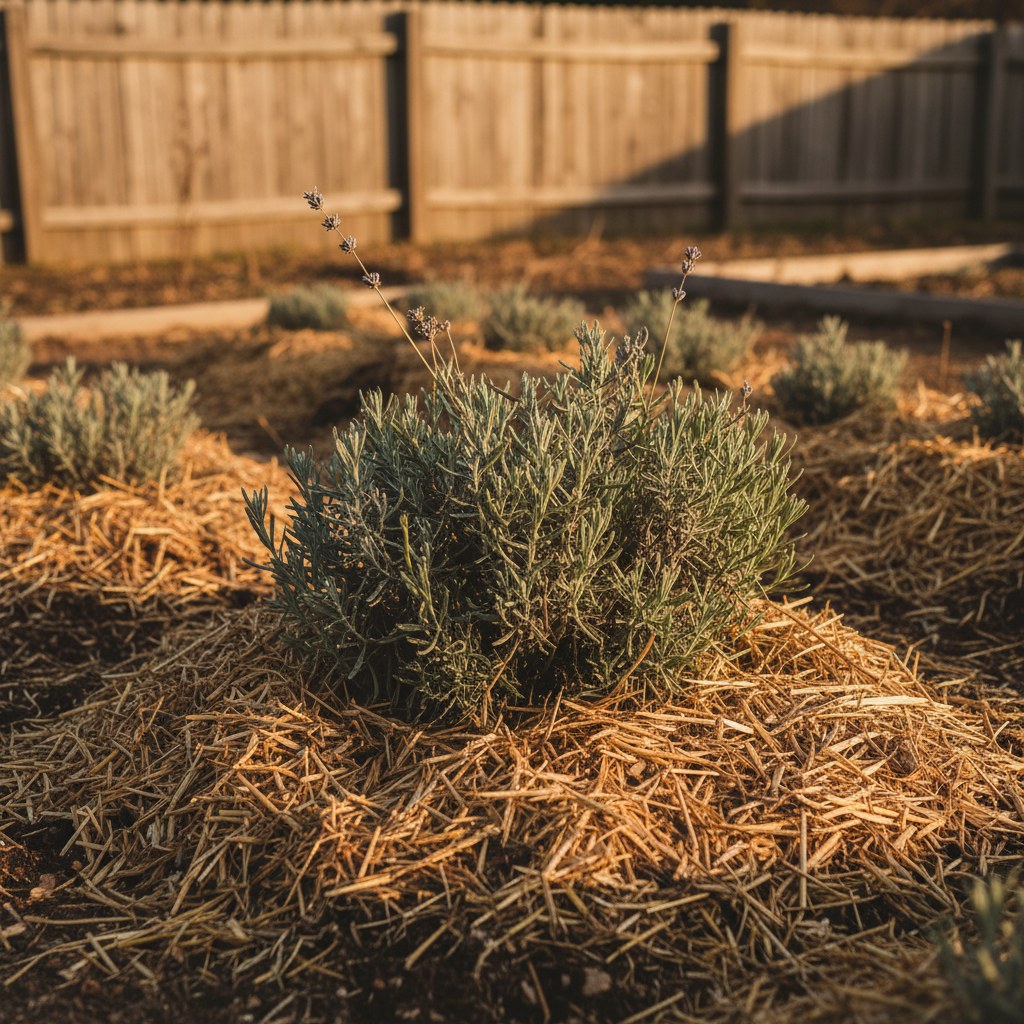
- Apply a 1–2 inch layer of gravel mulch around, but not touching, the stem. Gravel reflects heat, improves drainage at the crown, and discourages slugs. Avoid bark mulch, which holds moisture.
Container planting: Choose a pot at least 12 inches wide with multiple drainage holes. Use a mix of half potting soil and half perlite or coarse grit. Terra cotta pots dry out faster than plastic and are generally better for lavender.
How Often Should You Water Lavender?
Less than you think. Established lavender is drought-tolerant and actively prefers to dry out between waterings. The most common mistake gardeners make is watering too frequently, which keeps the root zone moist and leads directly to root rot and the fungal disease Phytophthora. Once you understand that lavender is biologically programmed for drought, the watering schedule becomes intuitive.
First season: Newly planted lavender needs more regular watering while establishing. Water deeply once or twice a week for the first 4–6 weeks, then taper off. Deep and infrequent is always the goal, you want water to penetrate 6–8 inches so roots grow down, not stay shallow chasing frequent surface moisture.
Established plants (year 2+): In most temperate climates, rainfall alone is sufficient from late spring through fall. During prolonged drought (no rain for 3–4 weeks in summer), give plants one deep watering. In zones with dry winters, water once a month during winter dormancy if there is no snow cover.
Containers: Potted lavender dries out faster and needs more attention, water when the top 2 inches of soil are dry, typically every 1–2 weeks in summer. Always empty saucers after watering so the pot is never sitting in standing water.
How to tell if lavender is overwatered: Yellowing lower leaves, mushy stems at the base, and a plant that looks wilted despite wet soil are all signs of too much moisture. If you catch it early, improving drainage and reducing water frequency can save the plant.
When and How Should You Prune Lavender?
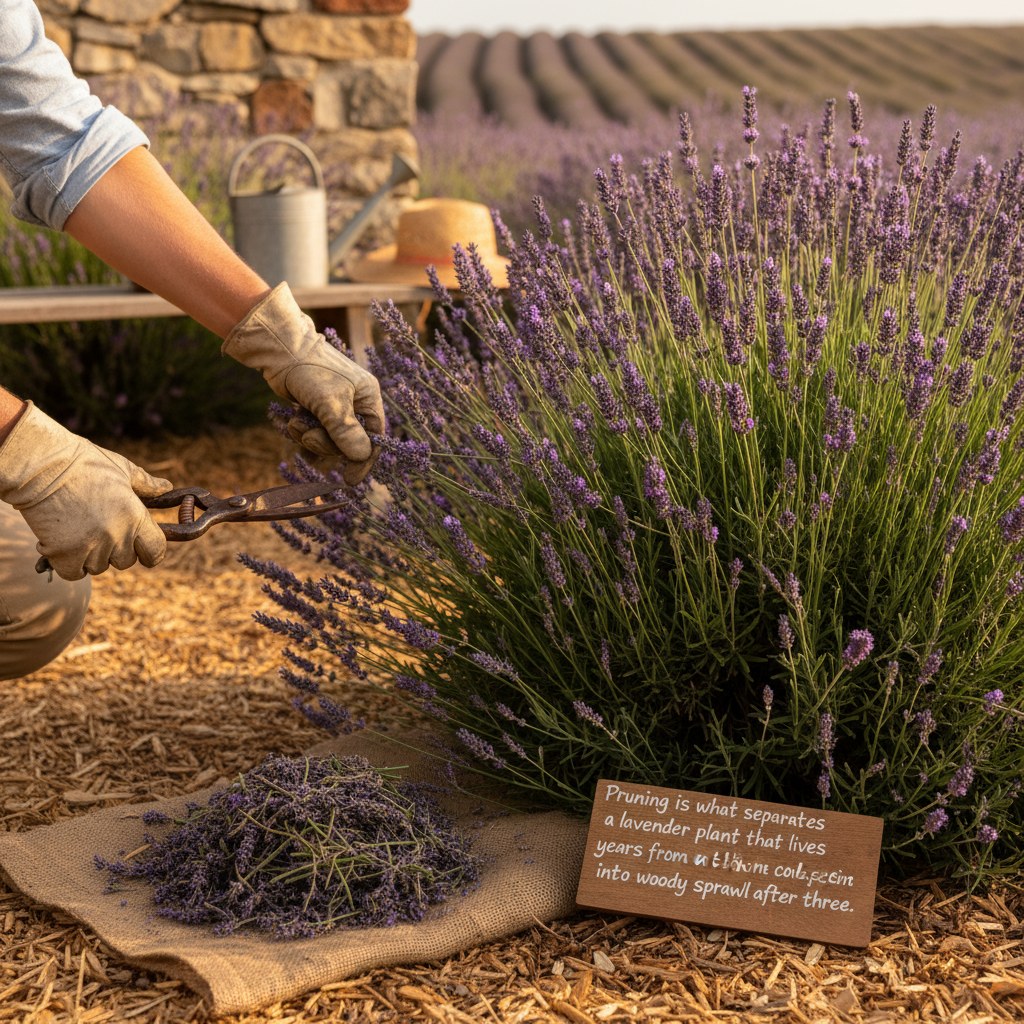
Prune or replace, those are your only two options. Left alone, lavender adds new growth at the tips each year while the inner stems turn to bare wood. Once that woody core dominates, the plant cannot regenerate and dies back unevenly. Regular pruning keeps it compact, encourages fresh flowering growth, and can carry a plant through a full decade. Skip it and you will be digging it out after three.
There are two pruning moments in the lavender calendar:
1. Spring cleanup (March–April, when new growth appears): This is a light shaping, not a hard cut. Remove any dead or winter-damaged stems, then cut back about one-third of the previous year’s growth, targeting the leafy green portion only. Never cut into bare brown wood; lavender will not regenerate from old wood the way roses or shrubs do. The goal is a rounded, dome-shaped plant.
2. After flowering (late summer, August–September): This is the more significant prune. Once the flower spikes have faded, cut the flowering stems down to within 2–3 inches of the leafy base mound. This removes the spent flowers, prevents the plant from spending energy on seed production, encourages a second flush of growth, and shapes the plant for winter.
Hard renovation pruning: If you have inherited an old, woody, neglected lavender, a hard cutback in early spring can sometimes bring it back, cut stems down to 3–4 inches, leaving any visible green shoots. Results are not guaranteed, and heavily woody plants may not recover. Prevention: annual pruning, is far more reliable.
Tools: Sharp bypass hand pruners for small plants; hedge shears for larger lavandin varieties or a row of lavender. Clean tools with rubbing alcohol between plants to avoid spreading any fungal issues.
How Do You Overwinter Lavender?
In zones 5–8, winter is the most stressful period for lavender, not because of the cold itself, but because of freeze-thaw cycles, wet soil, and ice that sits on leaves for weeks. A few simple preparations in fall make a meaningful difference in whether plants come back healthy in spring.
Fall pruning timing: Do not do your major post-bloom pruning too late in the season. Cutting hard in September gives plants 4–6 weeks to harden off before first frost. Pruning in October or November removes the insulating foliage just as the plant needs it and stimulates tender new growth that freezes easily.
Mulching: Before freeze-up, lay a 2–3 inch ring of gravel, coarse sand, or pine boughs around the base of the plant. The goal is a dry, insulated crown, not a warm one. Organic mulch piled directly against the stems traps moisture and invites rot, so keep it clear of the plant itself. Once hard freezes have passed in early spring, pull the mulch back.
Container overwintering: Pots are vulnerable because roots freeze from all sides. Move containers to an unheated garage, barn, or cold greenhouse, somewhere that stays above 10–15 °F (−9 to −12 °C) and receives some light. Water once a month. In mild zones, pots can overwinter outdoors against a south-facing wall with insulation wrapped around the container.
Snow cover: Counterintuitively, a consistent snow cover is an excellent insulator. Problems arise when snow melts and refreezes repeatedly, the ice excludes air and smothers the crown. If you see ice sheets forming on plants, gently break them up on milder days.
Zone 4 and below: English lavender is marginal in zone 4. In these climates, treat lavender as an annual or overwinter plants entirely indoors under grow lights. The Vera cultivar is sometimes listed as zone 4 with good siting and drainage.
When Is the Right Time to Harvest Lavender?
Timing the harvest correctly determines how much fragrance, oil, and colour you get from your lavender. Harvest too early and the buds have not developed fully; too late and the flowers shatter when dried, dropping purple petals everywhere and losing much of their essential oil.
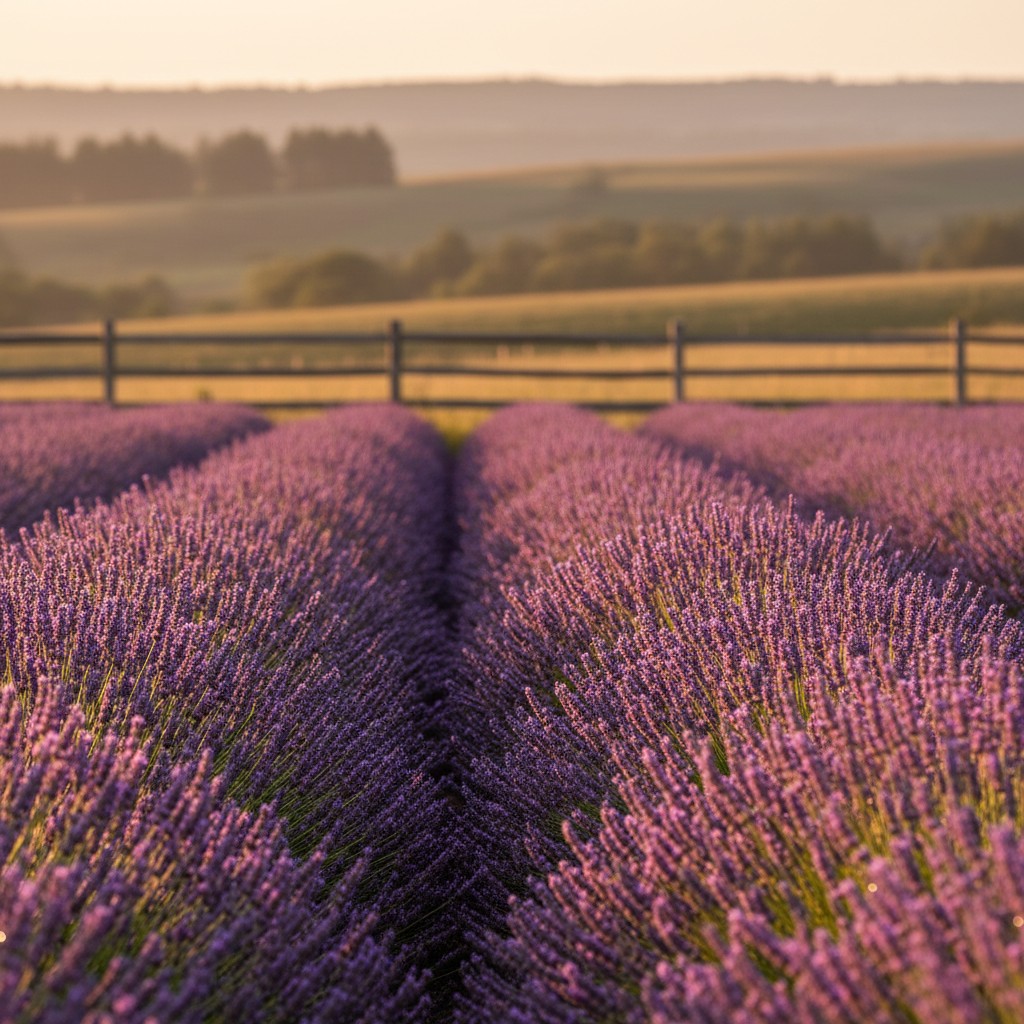
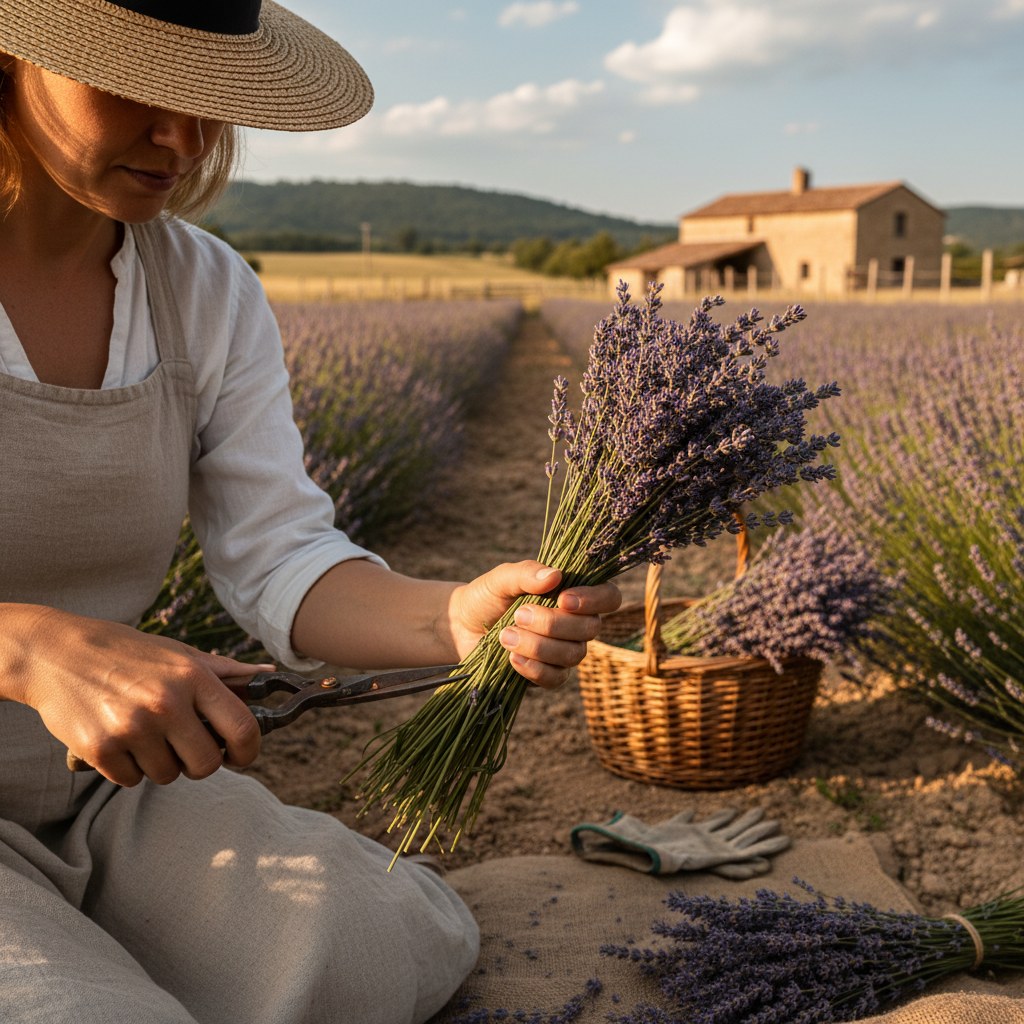
Harvest when one-quarter to one-third of the buds on each spike have opened. That window matters. The oil content peaks right there, and flowers cut at that stage hold their colour and fragrance through drying far better than those cut later. On a ready spike, the bottom row of buds is fully open while most of the upper buds stay closed tight. Once you notice bare stem below the lowest open buds, you are exactly where you want to be.
Time of day: Harvest in the morning after the dew has dried but before the midday heat, ideally between 9 a.m. And noon. Essential oil content is highest in the early part of the day.
Technique: Cut stems as long as possible, going down into the leafy mound but stopping before bare wood. Use sharp, clean scissors or pruners. Gather stems into bundles of 20–30, secure with a rubber band (rubber bands contract as stems dry), and hang upside down in a warm, dark, well-ventilated space. Bundles typically take 2–4 weeks to dry fully.
How much to harvest: You can safely remove up to half of the plant’s flowering stems at once. Cutting all of them at harvest time effectively doubles as your post-bloom pruning, one cut serves two purposes.
What Can You Do With Harvested Lavender?
Harvested lavender is among the most versatile homestead materials, useful in the bedroom, kitchen, apothecary, and garden all at once. Here are the most practical applications, from the simplest to the more involved.
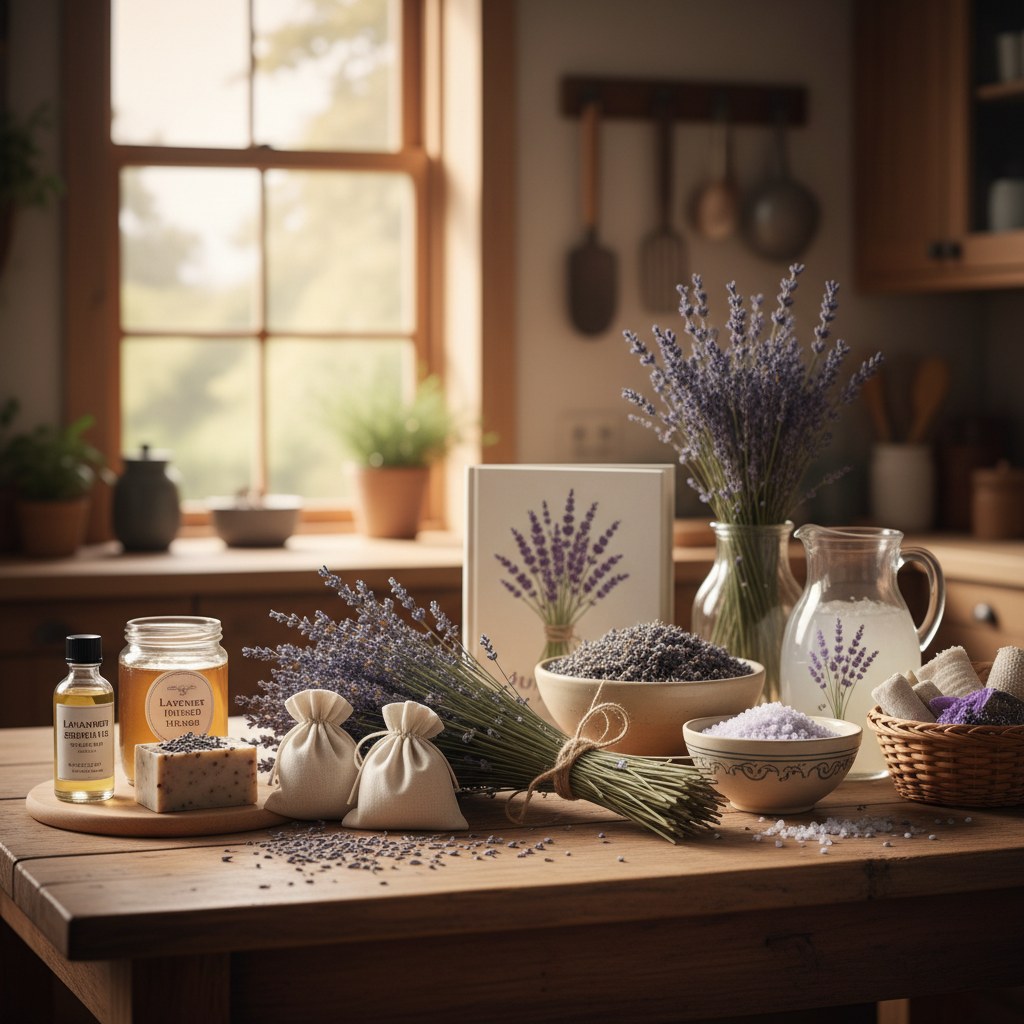
Sachets and drawer fresheners: Fill small muslin bags with dried lavender buds, strip them from the stems by rubbing between your palms, and place in drawers, closets, or under pillows. Lavender sachets repel moths and silverfish while scenting linens. Refresh the fragrance by squeezing the sachet occasionally; replace the buds when the scent fades, usually after 6–12 months.
Culinary uses: English lavender (L. Angustifolia) is the only variety widely used in food. The flowers have a floral, slightly citrusy flavour that pairs well with honey, lemon, cream, and lamb. Use sparingly: lavender is potent and can quickly tip from floral to soapy. Common applications include lavender shortbread, lavender lemonade, lavender salt (mix 1 tsp dried buds into ¼ cup flaky sea salt), and herb blends like Herbes de Provence. Always use food-grade, unsprayed lavender.
Herbal bundles and smudge sticks: Fresh lavender tied with twine makes beautiful aromatic bundles. When burned slowly (like a smudge stick), the smoke has a calming fragrance. These also make attractive gifts alongside beeswax candles or handmade soap.
Simple lavender water: Steep 2–3 tablespoons of dried lavender buds in 2 cups of just-boiled water for 20 minutes. Strain, cool, and pour into a spray bottle. Use as a linen spray, light room spray, or calming face mist. Keeps for 1–2 weeks at room temperature, longer if refrigerated.
Essential oil distillation: Home distillation is possible with a copper or stainless-steel still, but requires a large volume of fresh plant material, roughly 3–5 pounds of fresh lavender for just a few millilitres of essential oil. Lavandin varieties (Grosso, Provence) yield significantly more oil per pound than English lavender. For most home gardeners, simple infusions and dried products are more practical than true steam distillation.
Proper drying and storage technique makes a big difference in how long your lavender stays fragrant and potent. For a complete guide to drying herbs, including hanging, oven, dehydrator, and freeze-drying methods, see How to Dry and Store Herbs: 5 Methods for Year-Round Flavor.
Sources and Further Reading
- University of California Cooperative Extension, Lavender Cultivation in California, UC Master Gardener program
- Oregon State University Extension, Growing Lavender for the Home Gardener
- USDA Plant Hardiness Zone Map, US Department of Agriculture
- Royal Horticultural Society, Lavender Care and Cultivation
- North Carolina State Extension, Lavandula angustifolia plant fact sheet
Frequently Asked Questions About Growing Lavender
Why is my lavender dying even though I water it regularly?
Regular watering is almost certainly the cause. Lavender is native to dry Mediterranean environments and is highly susceptible to root rot when soil stays consistently moist. Stop watering, improve drainage (add grit, elevate the planting area, or move to a container with better drainage holes), and allow the soil to dry completely between waterings. If stems are already mushy at the base, the plant may not recover, cut back to green wood and see if new growth emerges, but be prepared to replace it.
Can lavender grow in shade?
Not well. Lavender requires a minimum of six hours of direct sun per day to flower well and remain healthy. In low-light conditions, plants become leggy, produce few flowers, and are far more susceptible to fungal disease. If your garden lacks full sun, consider containers that can be moved to the sunniest spot, or choose a different herb better suited to shade.
How do you propagate lavender from cuttings?
Take 3–4 inch softwood cuttings from new growth in late spring or early summer, look for stems that are flexible and not yet flowering. Strip the lower leaves, dip the cut end in rooting hormone powder, and insert into a pot of perlite or coarse sand mixed with potting soil. Keep moist (but not wet) in bright indirect light. Roots typically develop in 4–6 weeks. Once rooted, pot up into a larger container and harden off before transplanting outdoors. This is the most reliable way to propagate named cultivars, which do not come true from seed.
Does lavender come back every year?
Zone matters, but drainage matters more. In zones 5–9, established lavender is a woody perennial that returns each spring. In zone 4 and below it is marginally hardy and may not survive hard winters without protection. In zones 10–11, some species struggle with summer heat and humidity. Drainage is what truly determines longevity: lavender in well-drained soil can live 10–15 years; lavender in wet clay rarely makes it past 2–3.
What pests and diseases affect lavender?
Lavender has relatively few pest problems. The main threats are fungal: root rot (Phytophthora) from overwatering, gray mould (Botrytis) in humid conditions, and shab (a fungal disease specific to lavender caused by Phomopsis lavandulae). Good air circulation, fast-draining soil, and avoiding overhead watering prevent most of these. Aphids occasionally attack new growth but are usually controlled by ladybirds and other beneficial insects, another reason to cultivate a diverse pollinator garden nearby.