Beautiful homestead property at golden hour with farmhouse, vegetable garden, chickens, and fruit trees
|

Building Your Dream Homestead: A Complete Guide from Apartment to Acreage

TL;DR: Top 3 Property Sizes at a Glance
  • Best value for most people: The Quarter-Acre Dream. About 628 sq ft of intentional production (4 raised beds, 4 chickens, 3 dwarf fruit trees, berries, small greenhouse) yields a significant share of a family’s food without the rural overhead.
  • Best for full self-reliance: The 5-Acre Dream. Adds dairy goats, pastured pigs, a food forest, and a woodlot. Real meat, dairy, and firewood independence. Budget for $5,000 to $20,000+ to drill a well and $10,000 to $30,000 for septic.
  • Best place to start today: The Zero-Acre Dream. Sourdough on the counter, microgreens on the windowsill, fermentation in mason jars. The skills you build now scale to any property later.
🏡 Key Takeaways
  • Your dream homestead doesn’t require acreage, it requires intention, skills, and starting where you are
  • The average homesteader saves $875–$2,000+ per year on food alone (Frontdoor 2025 Survey)
  • Start with 3 foundation skills: growing food, preserving food, and cooking from scratch
  • A homestead is never “finished”, it’s a living, evolving system that gets better every year
  • The best time to start was 10 years ago. The second best time is this weekend
This is article number 100 on Wild Hearth Life, and it feels right to step back from the how-tos and talk about the bigger picture: what does your dream homestead actually look like, and how do you get there from where you are right now? Because here’s what we’ve learned writing 99 articles about gardening, chickens, food preservation, sourdough, and everything in between, homesteading isn’t a destination. It’s a direction. You don’t arrive one day and say “I’m done.” You just keep moving toward a life that’s more connected to your food, your land, your family, and your community. Whether you’re reading this from a studio apartment or a 40-acre farm, this guide is your roadmap. If you’re buying rural land to build on, budget for infrastructure that suburban buyers take for granted: drilling a well costs $5,000–$20,000+ depending on depth and geology, and installing a septic system runs $10,000–$30,000 for a conventional drainfield system (alternative/engineered systems can cost more). These are in addition to the land price and should be factored into your total acquisition budget from day one.

What Does a “Dream Homestead” Actually Look Like?

Established homestead with farmhouse, barn, pastures, orchard
Ask 10 homesteaders what their dream property looks like and you’ll get 10 different answers. But the common thread isn’t acreage or barns or Instagram-worthy chicken coops. It’s this: a life where you produce more than you consume, waste less than you make, and know where your food comes from. That can happen on a balcony. It can happen on a quarter acre. It can happen on 100 acres. The scale changes, but the principles don’t.
From our homestead: When we started, our “homestead” was a sourdough starter on the counter and a single raised bed in the backyard. Three years later, we have six garden beds, four chickens, a greenhouse, a pantry full of home-canned food, and we spend less at the grocery store than we ever thought possible. It didn’t happen overnight. It happened one skill at a time.

The Homestead Skill Tree: Build in This Order

Think of homesteading as a skill tree in a video game. Each skill unlocks the next. You can’t preserve food if you haven’t grown it. You can’t make cheese if you don’t have goats or a relationship with a dairy farmer. Build the foundation first.
Level Skills to Learn Time to Learn What It Unlocks
1. KitchenCooking from scratch, sourdough, yogurtWeek 1$500–$1,000/yr savings, food independence
2. GardenRaised beds, composting, herbsSeason 1Fresh food, connection to seasons
3. PreserveFermenting, canning, dehydrating, root cellaringSeason 1–2Year-round food supply
4. LivestockChickens, quail, beesYear 2Eggs, honey, pollination, fertilizer
5. ExpandFruit trees, goats, pigs, permacultureYear 2–3Dairy, meat, food forest, self-sufficiency
6. ThriveFarmers market, cheese making, soap, teachingYear 3+Income, community, sharing knowledge
Modest first-year homestead with simple garden and coop
Where everyone starts: a garden plot, a few chickens, and a plan.

Designing Your Dream Property

Whether you have a balcony or a back forty, design your space with permaculture zones in mind, put what you use daily closest to your door and what needs less attention further away.

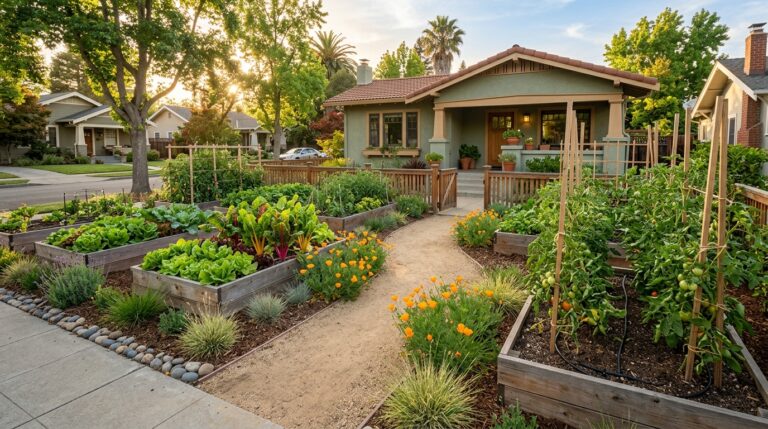
The Quarter-Acre Dream (Suburban)

Feature Space Annual Yield
4 raised beds + herb garden150 sq ft200–400 lbs vegetables + herbs
4 chickens50 sq ft800–1,000 eggs
3 dwarf fruit trees300 sq ft100–400 lbs fruit
Berry patch60 sq ft30–60 lbs berries
Small greenhouse48 sq ftExtended season + seed starting
Compost + rain barrel20 sq ftFree soil amendment + free water
Total628 sq ft (6%)Significant portion of a family’s food

Pros: No commute change, existing utilities and services already paid for, zoning typically allows raised beds and small flocks (4 to 6 hens) in most US suburbs, and 6% of a quarter-acre lot delivers most of the produce a family of four eats fresh in summer.

Cons: HOA covenants and town ordinances can ban roosters, beehives, or visible vegetable beds in the front yard (read the bylaws before buying chicks), neighbors are close enough that smells and noise travel, and you cannot scale to dairy or meat livestock without moving.

The 5-Acre Dream (Rural)

Everything above, plus:

Pros: Real production scale (dairy, pork, large garden, woodlot), the ability to hatch and butcher your own meat birds, no neighbor friction, and the flexibility to add infrastructure like greenhouses, hoop houses, and a barn without zoning fights. Long-term, this is the size that matches the homesteading rhythm.

Cons: Rural land typically has no municipal water or sewer, drilling a well runs $5,000 to $20,000+ and a conventional septic system $10,000 to $30,000 (alternative engineered systems can cost more). Distance from town adds drive time to every errand. Insurance, property taxes, and equipment costs are real recurring expenses.

The Zero-Acre Dream (Apartment)

Don’t have land? You can still homestead. Homesteading with no land is about building skills:

Pros: Zero startup cost, every skill transfers when you scale up to a yard or property later, no zoning or HOA constraints on what you grow indoors, and the kitchen-first skills (sourdough, fermentation, preservation, cooking from scratch) are the highest-leverage homesteading skills regardless of property size.

Cons: No outdoor production at scale, livestock is impossible, and storing canned goods or dehydrated harvests is limited by closet space. The discipline to homestead in an apartment is real, the visible reminders that come with a garden simply are not there.

Large productive garden with greenhouse and berry patch
Year five: the garden has grown into a full food production system.

The Economics of a Dream Homestead

Homesteading isn’t free, but it pays for itself quickly.
Activity Year 1 Investment Annual Savings/Value Payback
Vegetable garden (3 beds)$200–$400$400–$800Season 1
Backyard chickens (4 hens)$300–$600$200–$400 in eggsYear 1–2
Cooking from scratch$50 (equipment)$1,000–$3,000Month 1
Food preservation$100–$200$300–$600Season 1
Fruit trees (3 dwarf)$90–$180$200–$600 (by year 3)Year 2–3
Sourdough baking$30 (Dutch oven)$300–$500Week 2
Total$770–$1,410$2,400–$5,900/yearYear 1

Most homesteaders break even in their first year and save thousands every year after. Beginning farmers and ranchers: the USDA Farm Service Agency (FSA) offers Microloans up to $50,000 with simplified application requirements, as well as Beginning Farmer Direct and Guaranteed Loans for larger purchases. The FSA also administers the Farming Opportunities Training and Outreach (FOTO) program. These programs are specifically designed to help first-generation and underserved farmers access capital, they’re worth exploring early in your planning process. And that doesn’t count the health benefits of eating fresher food, spending time outdoors, and reducing your dependence on a system that feels increasingly fragile.

Small barnyard with goats, chickens, and ducks
Livestock adds complexity and reward. Start with chickens, add from there.

The 10 Principles of a Thriving Homestead

After 100 articles, here’s what we’ve distilled it down to:
  1. Start where you are. A windowsill herb garden is homesteading. A sourdough starter is homesteading. You don’t need land to start.
  2. Learn one skill at a time. Master composting before you add chickens. Master chickens before you add goats.
  3. Build soil, not just gardens. No-till, composting, cover crops, and mulch. Healthy soil grows healthy food.
  4. Grow what you eat. Don’t grow 20 tomato plants if your family eats 5. Plan your garden around your meals.
  5. Preserve the surplus. The harvest comes in waves. Can it, ferment it, dry it, freeze it.
  6. Close the loop. Kitchen scraps feed the compost or the chickens. Chicken manure feeds the garden. The garden feeds you.
  7. Make from scratch. Bread, yogurt, cheese, soap. Every thing you make is one less thing you buy.
  8. Embrace imperfection. Your first sourdough will be flat. Your first canning batch will be ugly. Your chickens will escape. It’s all part of it.
  9. Share what you grow. A bag of tomatoes on a neighbor’s porch builds more community than any social media post.
  10. Be patient. A permaculture system takes 3–5 years to hit its stride. Fruit trees take time. Soil takes time. The homestead rewards those who play the long game.
From our homestead: Someone asked me recently when our homestead would be “done.” I laughed. There’s always another bed to build, another skill to learn, another batch of jam to put up. That’s not a burden, it’s what’s nice about it. A homestead isn’t a project with an end date. It’s a way of living that gets richer and more rewarding every single year.
Solar panels, rainwater system, woodshed, root cellar
Infrastructure that builds self-reliance: solar, water, wood, cold storage.
Western states water rights, know before you buy or build: In Colorado, Utah, Wyoming, Nevada, Montana, Idaho, Oregon, Washington, New Mexico, and Arizona, water rights are governed by the Prior Appropriation doctrine, “first in time, first in right.” Surface water and in many cases groundwater may already be allocated to other users, and in several states even rainwater collection is regulated. Colorado historically required permits for rain barrel collection (now partially deregulated); Utah allows up to 2,500 gallons collected per household; Washington limits collection on some parcels. If your dream homestead is in the West, consult a water-rights attorney before you buy, and check state regulations before installing any rainwater collection system.

Your First Weekend: Start Right Now

You don’t need to read all 100 articles before you begin. Here’s what to do this weekend:

Saturday Morning

  • Start a sourdough starter, flour, water, a jar. It’ll be ready to bake with in 7 days.
  • Buy a bag of compost and a few seed packets. Plant herbs in pots by your kitchen door.

Saturday Afternoon

  • Make a jar of sauerkraut, cabbage, salt, a jar. It ferments on the counter for a week.
  • Plan where a raised bed could go in your yard. Measure the sunniest spot.

Sunday

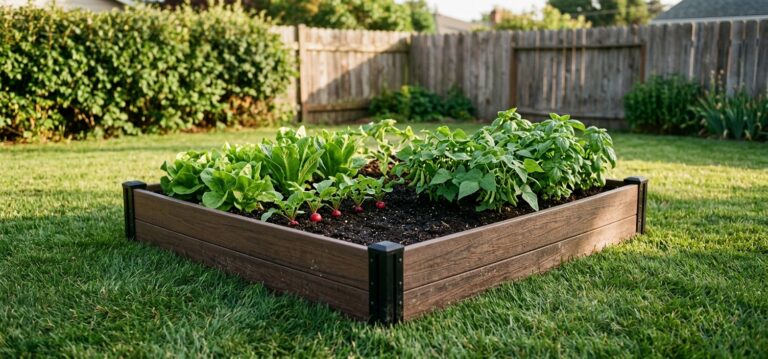
  • Build or buy that first raised bed. Fill it with soil and plant 5 easy crops: lettuce, tomatoes, basil, beans, and zucchini.
  • Make yogurt, milk and a spoonful of starter. Done.

By Sunday night, you’ll have a sourdough starter bubbling, sauerkraut fermenting, yogurt culturing, herbs growing, and a garden bed planted. You’ll be a homesteader.

Your First Weekend: Start Right Now, homesteading

Where to Go from Here

We’ve written 100 guides covering every aspect of homesteading, from growing microgreens in a mason jar to raising pigs, from making apple cider vinegar to going solar. Every article is written to help you take the next step, wherever you are on the journey.

Pick the skill that excites you most. Start there. Come back for the next one when you’re ready. We’ll be here.

Welcome to the homestead. 🌿

Farmhouse dinner table with home-raised food
The real dream: a table set with food you raised yourself.

Sources and Further Reading

  • USDA Farmers.gov, Conservation Programs and Soil Health
  • Frontdoor 2025 Survey, Food Garden Trends and Statistics
  • National Center for Home Food Preservation, University of Georgia
  • USDA Natural Resources Conservation Service (NRCS), well and septic installation guidance
  • USDA Rural Development, financing programs for rural homestead infrastructure
  • Cornell Small Farms Program, Cornell Cooperative Extension
  • Penn State Extension, Beginning Farmer Resources

Frequently Asked Questions

How much land do I need to homestead?

None to start. You can practice dozens of homesteading skills in an apartment, sourdough, fermentation, yogurt, cheese, herbs, microgreens. A quarter-acre suburban lot supports a full garden, chickens, fruit trees, and a greenhouse using just 5–6% of the space. Homesteading is a skill set, not a property size.

How much does it cost to start homesteading?

You can start for under $50, a sourdough starter (free), herb pots ($15), a bag of compost ($5), seed packets ($10), and mason jars for fermenting ($10). A more complete first-year setup with raised beds, chickens, and preservation supplies runs $800–$1,500 but typically saves $2,000–$5,000 per year once established.

What should I do first as a beginning homesteader?

Start in the kitchen: learn to cook from scratch, bake sourdough bread, and make yogurt. Then move to the garden: build one raised bed and grow 5 easy crops. These foundation skills cost almost nothing, save money immediately, and build the confidence you need for bigger projects like chickens and food preservation.

Can I homestead while working a full-time job?

Absolutely. Most homesteaders have day jobs. A garden needs 30 minutes a day. Chickens need 10 minutes morning and evening. Sourdough baking takes 30 minutes of active time. The trick is starting small, building systems that run themselves (like perennial food plants and composting), and expanding only when you have capacity.

Is homesteading worth it financially?

Yes. A 2025 Frontdoor survey found food gardeners saved an average of $875 per year. Add in eggs, preserved food, homemade bread, yogurt, and reduced takeout spending, and many homesteaders report meaningful additional savings. Beyond money, you gain food security, better nutrition, outdoor activity, and skills that increase in value over time.

Similar Posts