California Front Yard Vegetable Garden Fine: What Homeowners, Renters, and HOAs Actually Owe in 2026
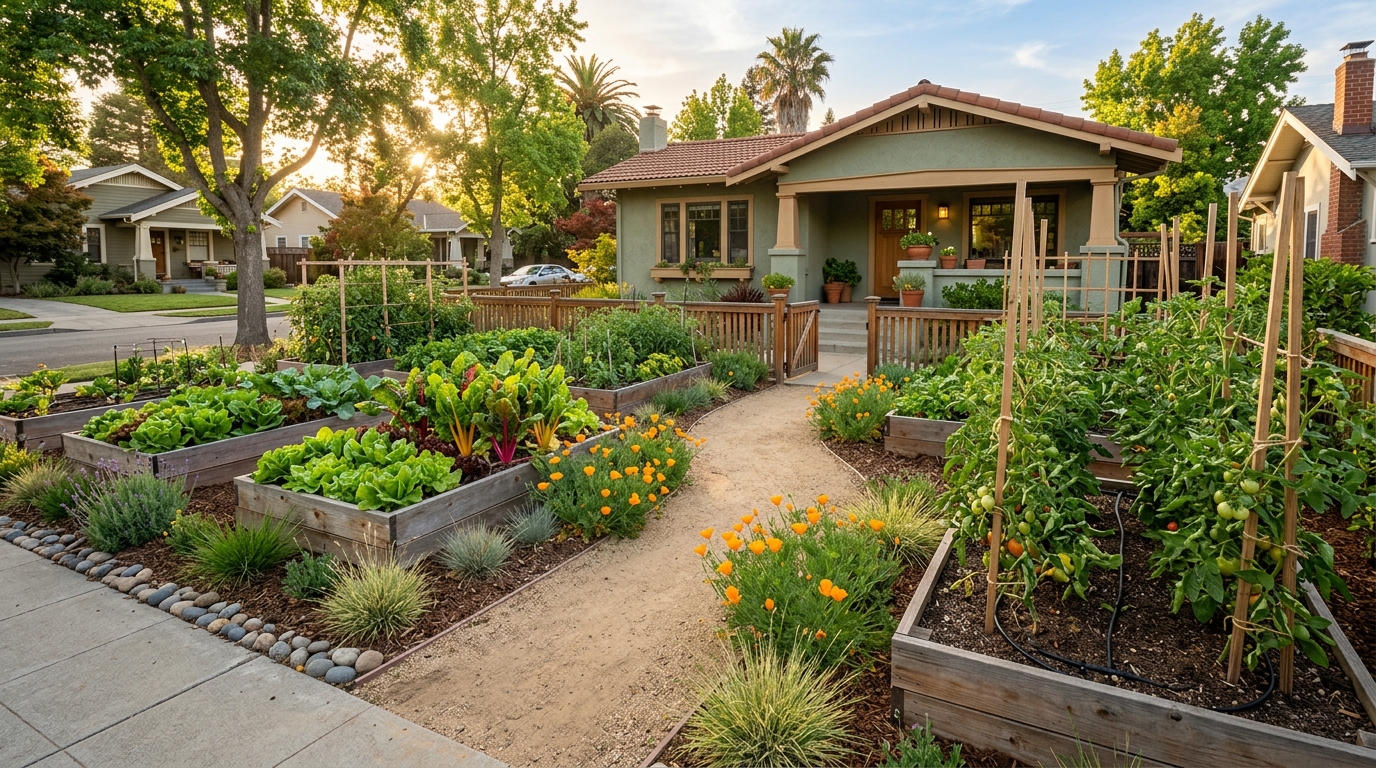
California grows about a third of the vegetables Americans eat, and yet the state’s own homeowners keep getting cited for planting tomatoes near their sidewalks. The gap between what the state permits and what a city or HOA will actually let you do in the front yard is wider than most gardeners expect. The Neighborhood Food Act closed one piece of it in 2014. Los Angeles closed another in 2015. Everything else still lives in a patchwork of municipal codes, CC&Rs, and enforcement letters that vary block by block.
On our property in the Sacramento Valley, the front strip closest to the street was the sunniest ground we owned, and the only reason I read the local zoning code before planting a single seed was that a neighbor had been sent a warning notice the year before. That reading is what this guide is built from: what the law actually says, where the fine risk really sits, and how to build a front yard food garden that a code officer will drive past without stopping.
Can California Fine You for a Front Yard Vegetable Garden?
California itself does not fine anyone for growing vegetables in a front yard, because the state has no zoning code that reaches individual homes. Fines come from two other places: the city or county where the property sits, and the homeowners association that governs the subdivision. Both can issue citations, and both usually start with a written notice before any dollar amount is attached.
The most-cited state law on this question, California Civil Code Section 4750, only reaches HOA rules and only protects the backyard. According to the statute as reproduced by Justia’s official California Code library, “Any provision of a governing document shall be void and unenforceable if it effectively prohibits or unreasonably restricts the use of a homeowner’s backyard for personal agriculture.” The word “backyard” is not accidental. It was the compromise that got the bill through the Legislature.
What that leaves you with is a two-layer question every time you plant near the street. Is the parcel inside an HOA? If yes, read the CC&Rs for landscape and architectural rules. Is the city one of the handful (Sacramento, Los Angeles, San Francisco, and a growing list of others) that has updated its zoning to name edible plants as an allowed front yard use? If not, you are relying on the general residential landscaping rules, which almost never mention vegetables one way or the other.
What Does California’s Neighborhood Food Act Actually Protect?
The Neighborhood Food Act (AB 2561), signed by Governor Jerry Brown on September 26, 2014, protects two very specific relationships: homeowner-versus-HOA in a common interest development, and tenant-versus-landlord in a one- or two-unit residential rental. It does not protect homeowner-versus-city, and it does not reach single-family homes outside an HOA.
According to the California Legislature’s own bill analysis, “The bill as originally drafted included provisions that would overturn local zoning ordinances that prohibit growing food in front yards, back yards and vacant lots, but this section was removed in the Assembly Local Government Committee due to opposition from the local government lobby.” That deletion is the reason your city can still write its own rules about what a residential front yard has to look like.
Inside its narrower scope, the law does real work. It codified two new sections of the Civil Code. Section 4750 covers HOAs. Section 1940.10 covers landlords and tenants. Both use the same definition of “personal agriculture,” which is a use of land where a person cultivates edible plant crops for personal use or donation. The law protects the activity, not any specific plant list, and it applies whether the crop is a cucumber, a fig, or a pot of basil.
The Backyard Protection for HOA Homeowners
Under Section 4750, HOA rules that ban edible gardens in a homeowner’s exclusive-use backyard are automatically void. The board does not get to enforce them, and a homeowner does not need a variance to plant. That said, the statute preserves “reasonable restrictions,” defined at FindLaw’s reproduction of the code as “restrictions that do not significantly increase the cost of engaging in personal agriculture or significantly decrease its efficiency.” A rule requiring straight edges on a raised bed is almost certainly reasonable. A rule capping the total vegetable planting at 25 square feet is almost certainly not.
The Tenant Protection in Two-Unit or Smaller Rentals
Section 1940.10 requires landlords of one- or two-unit residential properties to permit tenants to grow food in landlord-approved portable containers in the tenant’s private area. According to the FindHOALaw reproduction of the statute, the tenant has to keep dead material cleared and cannot block walkways or utilities, and “The portable containers may not create a health and safety hazard, block doorways, or interfere with walkways or utility services or equipment.” Anything planted in the ground, rather than in a container, still requires the landlord’s separate permission.
Where Do HOAs Still Get to Say No?
HOAs still get to say no in three places: the front yard, common areas, and anywhere a homeowner’s maintenance is creating what the association can document as a nuisance. According to guidance from California HOA lawyers writing on findhoalaw.com’s personal agriculture explainer, “HOAs do not have to allow gardens of personal agriculture in front yards like they do in back yards.” The statute simply does not reach that side of the house.
Reasonable restrictions in the backyard, meanwhile, are broader than most people assume. A board can ban corn stalks or other tall crops that block sightlines, require architectural review before a trellis over four feet, insist that raised beds match approved materials, and enforce weed and pest rules against a garden that is attracting rats. All of these have been treated by California HOA counsel as reasonable under the 4750 standard.
What “Reasonable Restrictions” Look Like in Practice
The following are examples pulled from CC&Rs across California HOAs and legal commentary on Section 4750. Read them as the outer edge of what your board can enforce even in the backyard.
| Restriction Type | Usually Enforceable | Usually Not Enforceable |
|---|---|---|
| Location | Front yard ban (statute does not cover front yards) | Total backyard ban on any edible crop |
| Structures | Architectural approval for raised beds or trellises | Blanket ban on all raised beds |
| Plant selection | Bans on specific tall or invasive crops | “No vegetables of any kind” |
| Maintenance | Weed removal, pest control, dead plant cleanup | Weekly mowing of raised-bed edges |
| Materials | Approved bed materials list (wood, stone, corten) | Mandatory purchase of a single expensive material |
If you own in an HOA and want a front yard garden, the practical path is not litigation. It is a written request to the architectural committee that proposes a specific design (materials, height, plant list, maintenance plan). Boards approve requests they can defend to the rest of the community, and a tidy plan drawn to the same standard as an ornamental redesign almost always clears.
Can My City Ban a Front Yard Garden?
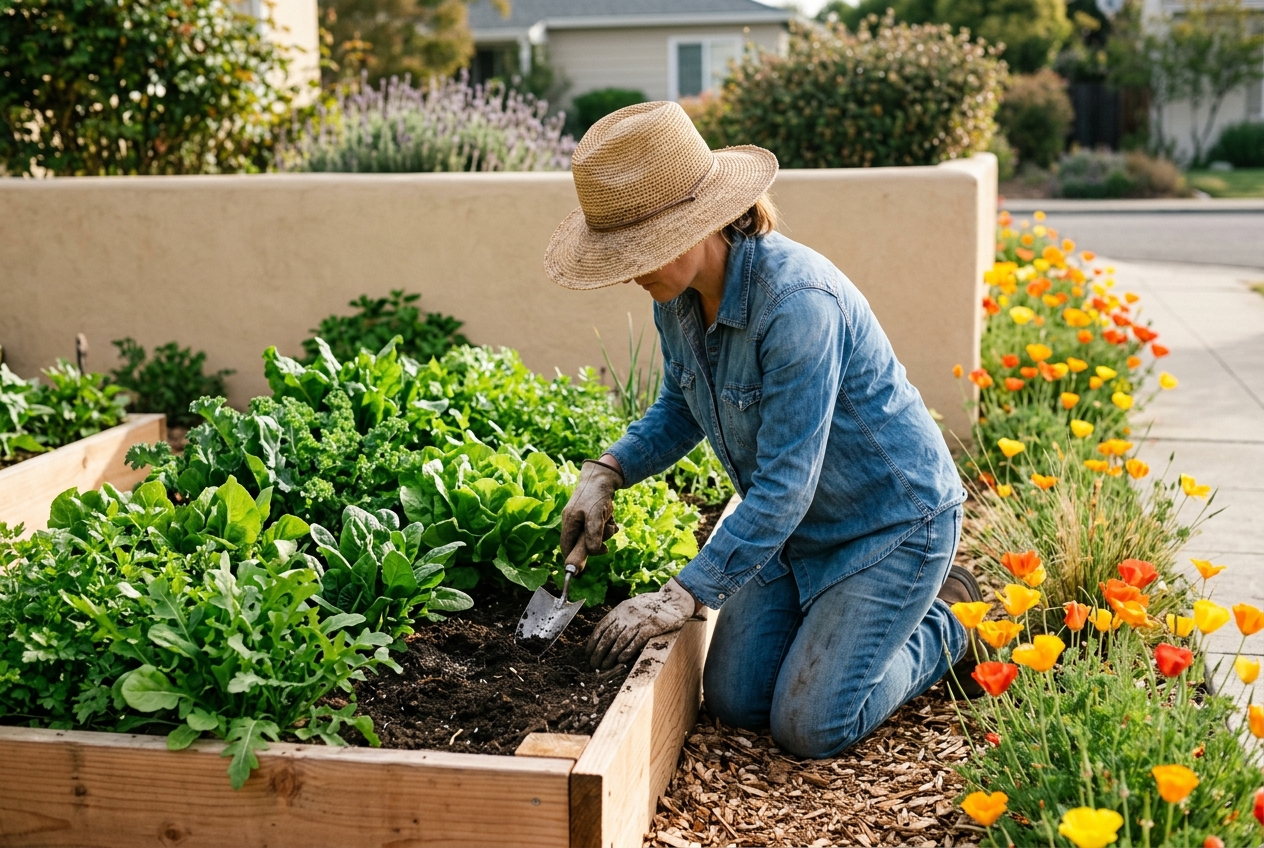
Yes, and dozens still effectively do, because their residential landscape codes require turf or ornamental plantings and never updated the definitions to include edibles. A code officer does not need a “no vegetables” ordinance to write a citation. A general rule that says the front yard has to be “landscaped and maintained” is often enough, if the officer decides a bare tomato bed does not qualify.
The pattern of California cities that have opened up their front yards falls into two waves. Sacramento moved first: according to the Sustainable Development Code brief on Sacramento’s ordinance, “On April 3, 2007, the City Council adopted the new front yard landscape code language that allows for sustainable diverse landscapes, without restricting fruits & veggies.” Los Angeles followed for parkways in 2015 (more on that below). Cities like San Francisco, Oakland, and Berkeley have long treated edible landscaping as an accepted use, though each has its own permit thresholds for hardscape and structures.
The Sacramento Model: Percent Coverage, Not Plant Type
Sacramento’s rules work by regulating how the yard is arranged, not what species grow in it. According to the Sacramento County code library at qcode.us, “Sacramento allows 40 percent of front yard area to be paved with impervious surfaces, meaning 60 percent should be landscaped.” Vegetables count toward the landscaped 60%, provided they meet the general standards for irrigation, pruning, and pest control. This kind of code, which measures the yard by function instead of by plant list, is the friendliest structure for a front yard garden and has been copied in cities across Northern California.
Los Angeles and the Parkway (Curbside Strip)
The narrow strip between the sidewalk and the curb belongs to the city almost everywhere in California, even though the adjacent homeowner is expected to maintain it. Planting anything but grass or approved shrubs there once required a $400 permit in Los Angeles. According to the Los Angeles Municipal Code Sec. 62.169, adopted as Ordinance 183474, “Residents can plant fruits and vegetables in their parkways without a permit. However, fruit trees still require a permit.” The rule change came out of years of pressure that started with South LA gardener Ron Finley: according to the TED Blog account of his fight, “Though it took Finley an arrest warrant, two court dates, and a public hearing, all over the span of two-and-a-half years, the city overturned the ordinance in 2015, officially allowing L.A. residents to garden on their parkways.” Outside LA, parkway rules still vary. Check your city before you plant.
What About Renters Growing Food Under a Landlord?
Renters in California have a narrower right than homeowners but a real one. Under Section 1940.10, a tenant of a one-unit or two-unit residential rental can grow food in portable containers in the tenant’s private area, and the landlord is required to allow it. Anything larger than a container garden, or anything planted directly in the ground, is still up to the landlord’s discretion under a separate lease provision or written approval.
According to the FindHOALaw summary of Section 1940.10, the tenant’s containers cannot “create a health and safety hazard, block doorways, or interfere with walkways or utility services or equipment,” and the tenant has to keep dead plant material cleared. Landlords retain the right to approve the containers themselves (material, size, placement), limit synthetic pesticides, and charge separately for excess water use, so it pays to make those decisions collaboratively in writing at the start of the lease.
If you rent in a multi-unit apartment building (three or more units), Section 1940.10 does not apply to you at all. Your rights come from your lease, from any tenant-agricultural policies the property manager has adopted, and from local right-to-garden ordinances (a few California cities have added them for apartment complexes with balconies and patios). For a first attempt, start with what fits on a balcony or patio; a compact kitchen herb garden is almost always within the scope of what a landlord will approve.
How Do You Plant a Front Yard Garden That Won’t Draw a Citation?
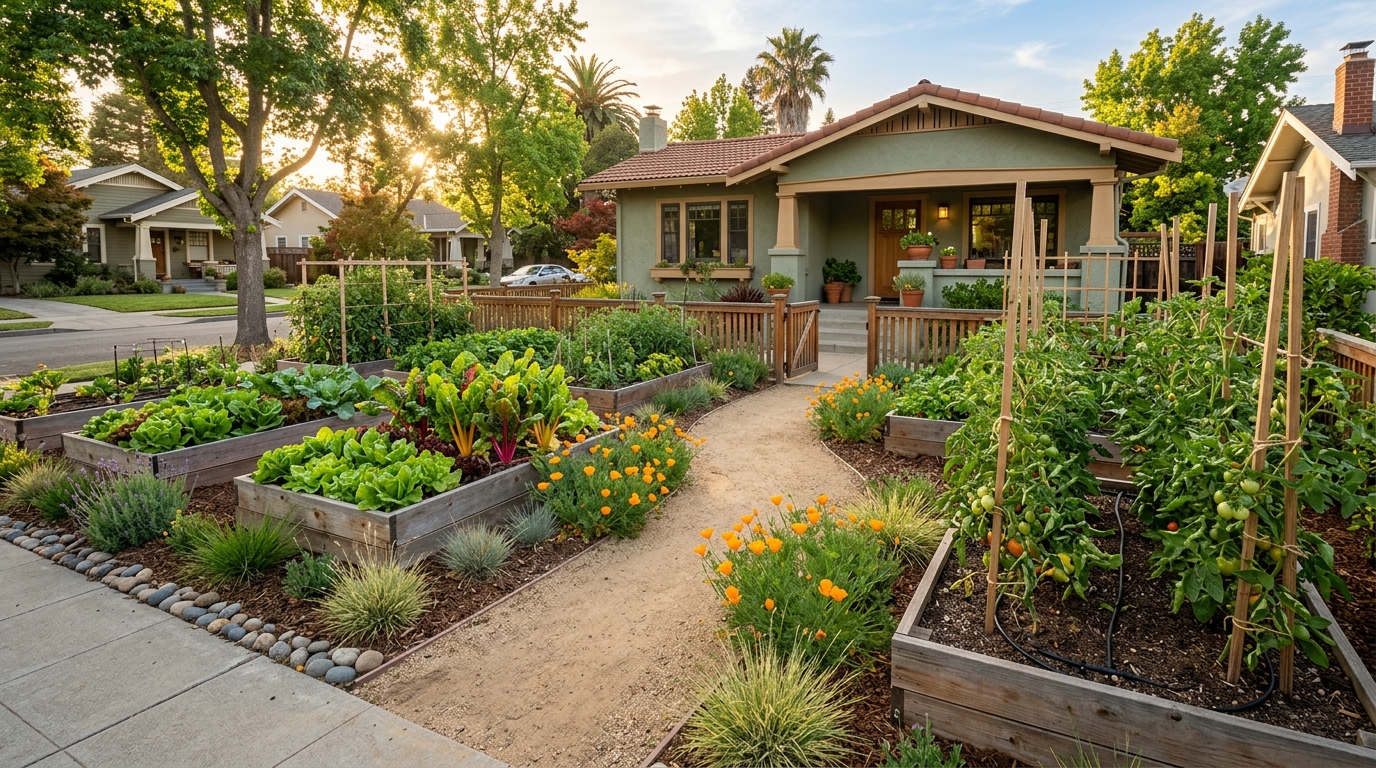
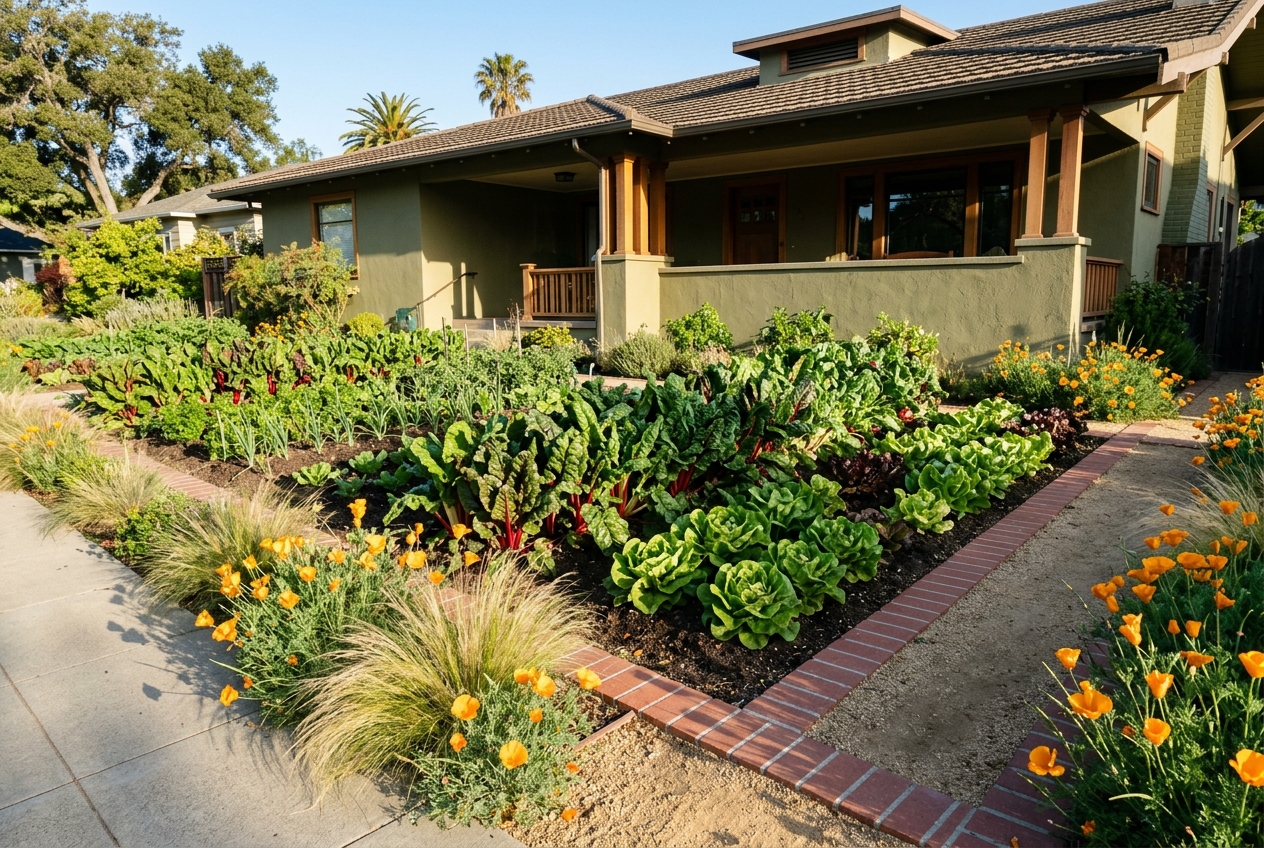
The single best predictor of whether a front yard food garden gets a code notice is whether it reads, from the curb, as landscaping rather than as agriculture. Code officers respond to complaints, and complaints are driven by visual cues: bare dirt, wilted plants, sagging tomato cages, hoses on the sidewalk. A front yard garden that looks intentional, edged, and maintained rarely generates a call, whatever the underlying zoning says.
According to UC Master Gardener guidance from the statewide Planning Your Edible Garden program, “To have a successful edible garden, follow seven basic rules: plant only as much as you can easily maintain, create a garden plan before you begin, grow fruits and vegetables that produce high yields in the space available, plant during the correct season for the crop you would like to grow, select varieties recommended for your climate zone, select a garden site that has at least 8 hours of full sun each day (avoiding shaded locations), and prepare the soil, amend, and fertilize as needed.” Every one of those rules also happens to reduce the odds of a citation, because a well-planned, correctly-timed, well-maintained garden is what code officers call “landscaped.”
Design Choices That Read as Landscaping
- Frame the edibles with ornamentals. A border of California poppies, low ornamental grasses, or lavender around a vegetable bed tells the eye the space is designed, not neglected. It also brings pollinators.
- Use raised beds with clean edges. A rectangular cedar bed reads as garden furniture. A tomato mound of loose soil reads as farm.
- Keep pathways defined. Decomposed granite, brick, or wood chips between beds signal that a person walks and maintains this space.
- Match materials to the neighborhood. If the block is stucco and gravel, corten steel beds fit; if it is Craftsman with wood trim, cedar fits.
- Stake and support before crops flop. Cages installed at planting look tidy. Cages added mid-season to catch sprawling tomatoes never do.
The Maintenance Habits That Keep Complaints Away
Weekly rather than seasonal upkeep is the difference. Clear spent plants within a week of harvest, pull weeds while they are still small, sweep the sidewalk after any pruning, and coil hoses out of sight. Compost heaps do not belong in the front yard; keep them behind a fence or in a closed bin around back. If you want to close the loop on your garden waste, the technique is the same whether the pile is out back or hidden in a bin, and our guide to composting kitchen scraps into garden gold covers the basic ratios.
Which Front Yard Vegetables Work Best in California’s Climate?
The front yard vegetables that work best in California are the cool-season crops that grow through the fall, winter, and spring, plus a small set of warm-season crops (tomatoes, peppers, squash) that carry the bed through summer. California’s Mediterranean climate runs on a schedule that is closer to the Mediterranean than to the Midwest, and the calendar assumption of “plant in April, harvest in August” costs new gardeners a full third of the year.
According to a USDA Climate Hubs cold-hardiness factsheet on Mediterranean planting windows, “The crops that perform best in California’s Mediterranean zones are cool-season vegetables that thrive at 55–75°F, and the period when California reliably stays in that range is fall through spring.” That is the reason a Bay Area or Los Angeles front yard garden built around lettuce, kale, chard, broccoli, and peas planted in October will out-produce (and out-look) a summer-only tomato bed. For a full zone-by-zone starter list, our guide to what to plant in your first vegetable garden matches crops to USDA zones.
Best Cool-Season Front Yard Crops (October to March)
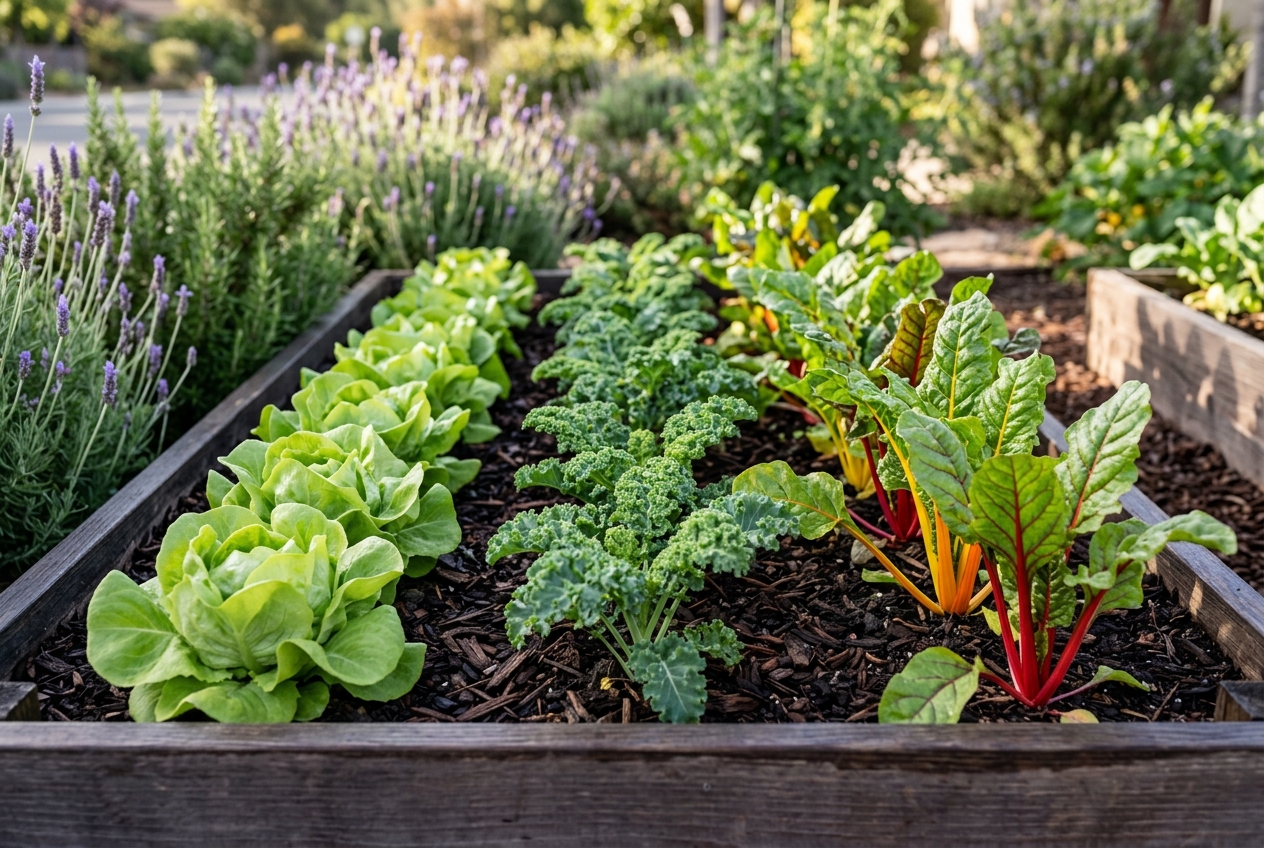
- Lettuce and salad greens. Fast, low, uniform in color. Reads as ornamental groundcover.
- Rainbow chard. The red, yellow, and orange stems look like flowers from ten feet away.
- Kale (lacinato/dinosaur). Upright, structural, holds a bed’s shape for months.
- Sugar snap peas on a low trellis. Adds vertical interest without blocking sightlines.
- Broccoli and cauliflower. Reads as bedding plants until harvest.
- Alliums (garlic, shallots). Plant in October, harvest in June; nearly invisible upkeep.
Best Warm-Season Front Yard Crops (April to September)
- Determinate tomatoes. Compact, stay in their cages, easier to keep tidy than sprawling indeterminates.
- Peppers. Bushy, ornamental, high yield per square foot.
- Bush beans. Neat, self-supporting rows.
- Compact zucchini varieties. Standard zucchini can sprawl into the sidewalk; look for “patio” or “bush” varieties.
- Culinary herbs (basil, thyme, oregano). Blend with ornamentals, tolerate California heat.
Avoid corn (tall, blocks sightlines, often prohibited by HOAs), pumpkins and winter squash (vines sprawl for 15 to 20 feet), and anything else whose mature form is going to overrun a small front bed. Save those for the backyard, where Section 4750 protects the space and passing neighbors do not have to see them.
Water-Wise Choices Under California’s Drought Rules
Californians in coastal and inland cities live with permanent water-use restrictions after the 2012–2016 and 2020–2022 droughts, and a front yard vegetable garden has to fit inside them. According to UC Master Gardener drought guidance from the Alameda County program, “A 3 to 4 inch layer of straw, wood chips, or dried leaves can cut soil evaporation by as much as 50 percent.” Drip irrigation on a timer, deep weekly soaks instead of daily sprinkles, and mulch are the same three habits that let ornamental gardens survive the dry years, and they carry vegetables through as well. If turf conversion is on the table, the Metropolitan Water District’s turf-replacement rebate at $2.00 per square foot (up to 5,000 sq ft per year, per program guidance from SoCalWater$mart) can help pay for the switch, and edible fruit trees are among the eligible replacement plants for residential projects.
What Should You Do If You Get a Notice or Fine?
Read the notice first, then respond in writing before you touch a plant. Most California code enforcement notices are courtesy letters that give you a compliance window (usually 30 days) before any fine is assessed. Ripping out the garden the day you receive the letter forfeits every argument you might have, including the one that saves the plants.
The three questions to answer, in order: What specific code section is being cited? Does that section actually reach a vegetable garden, or is it a general landscaping or nuisance rule the officer is stretching? And is there an accommodation (a design change, an added edging, a maintenance plan) that resolves the complaint without removing the crops? A polite written reply that quotes the exact code section back and proposes a fix resolves the majority of California front yard garden complaints without a hearing.
If the Notice Is From Your HOA
Ask for the specific CC&R or rule being enforced, in writing. If your garden is in the backyard, quote Civil Code Section 4750 back to the board and cite the “void and unenforceable” language. If it is in the front yard, ask what “reasonable restriction” (in the meaning of the same statute) is being applied and whether an architectural review submission would resolve it. Most HOA cases are resolvable at the architectural committee level; the board only escalates when the homeowner escalates first.
If the Notice Is From the City or County
Call the code enforcement office and ask for a site visit. Officers often issue notices from a drive-by photo, and a five-minute walk-through with the homeowner (“this is intentional, here is the plan, here is the maintenance schedule”) resolves many complaints. If the visit does not resolve it, most California cities have an administrative appeals process before any fine is assessed. Use it. And read the specific code section, because in cities like Sacramento or Los Angeles, the rule the officer is citing may not actually apply to vegetables at all.
If You Are Fined Anyway
Pay under protest if the fine is small, keep every document, and file an appeal within the deadline printed on the notice (usually 10 to 30 days). California’s Right to Repair and administrative appeals frameworks preserve your right to challenge the fine if you comply first. Do not let a $50-per-day fine compound while you decide. If you rent, forward the notice to your landlord immediately; the landlord is often the legally responsible party for a code violation on the property, and your right to grow under Section 1940.10 becomes part of that conversation.
Frequently Asked Questions
Is it illegal to grow vegetables in the front yard in California?
No, California has no statewide law making front yard vegetable gardens illegal, and no statewide law making them a protected right. Whether you can grow them at your address depends on your city or county’s zoning code and, if you live in one, your HOA’s CC&Rs. In cities like Sacramento and Los Angeles, edible plants are explicitly allowed in front yards and parkways. In many suburban cities that never updated their landscape code, the rules are silent, which usually means edibles are permitted as long as the yard is maintained.
Can my HOA fine me for a vegetable garden in California?
Yes, in the front yard. In the backyard, California Civil Code Section 4750 voids any HOA rule that effectively prohibits or unreasonably restricts a food garden in a homeowner’s exclusive-use backyard. That same statute expressly leaves front yards outside its protection, so HOAs can still enforce front-yard landscape and architectural rules. HOAs can also enforce “reasonable restrictions” in the backyard (materials, weed control, structure height) as long as those do not significantly increase cost or reduce efficiency.
What is California AB 2561, and what does it do?
AB 2561, the California Neighborhood Food Act, was signed on September 26, 2014. It added two sections to the Civil Code. Section 4750 voids HOA bans on backyard personal agriculture in common interest developments. Section 1940.10 requires landlords of one- or two-unit residential properties to permit tenants to grow food in portable containers in their private area. The bill’s original language reaching city zoning was removed in committee before passage, which is why front-yard protections are still city-by-city.
Do I need a permit to grow vegetables in my front yard in California?
Not in most cities, and not for the plants themselves. Where permits come up is for the surrounding elements: a fence over 3 or 4 feet, a permanent irrigation system tied to the water main, a raised bed built as a structure over 30 inches tall, or a fruit tree in the parkway (still permitted in Los Angeles per LAMC Sec. 62.169). Sacramento allows front-yard vegetables under its residential landscape code without a separate permit as long as the 40% impervious-surface cap and general maintenance rules are met.
Can I grow vegetables in the strip between the sidewalk and the street?
In Los Angeles, yes, without a permit for annual fruits and vegetables since the 2015 ordinance. Elsewhere in California, this strip (called the parkway or hellstrip) usually belongs to the city, and the adjacent homeowner has a maintenance duty but not a planting right. Check with your city’s public works or streets department before planting. Some cities require a revocable permit; some allow it by right; some ban it entirely.
Can my landlord stop me from growing tomatoes on my patio?
If the rental is a one- or two-unit residential property, California Civil Code Section 1940.10 requires the landlord to permit food crops in landlord-approved portable containers in your private area, provided you keep the containers clear of walkways, utilities, and doorways and remove dead plant material. The landlord can approve the specific containers, limit synthetic pesticides, and require a written agreement about water use, but a blanket “no vegetables” rule is unenforceable. In buildings with three or more units, this statute does not apply, and your rights depend on the lease.
Are there California cities that specifically allow front yard vegetables?
Yes. Sacramento revised its front-yard landscape code in 2007 to allow edible plants. Los Angeles allows curbside vegetables in parkways without a permit under Ordinance 183474 (2015). San Francisco, Oakland, Berkeley, and Davis have long allowed edible front-yard landscaping in practice, and cities across the Bay Area and Central Coast have followed suit with updated landscape ordinances. If you are planning a project and your city is not on this list, call planning or code enforcement and ask directly rather than guessing from silence in the code.
What crops should I avoid planting in a front yard garden in California?
Avoid tall crops that block street sightlines (corn, sunflowers over 6 feet, staked indeterminate tomatoes without cages), sprawling vines that overrun sidewalks (pumpkins, winter squash, watermelon), and anything that reads as farm rather than garden from the curb. HOA rules often specifically call out corn as prohibited. If space allows, save these for the backyard, where Section 4750 protects the space and you can also start a preserver’s garden at scale without any front yard visibility issues.
Where to Go From Here
The California front yard vegetable garden question sits on top of three overlapping systems (state law, city zoning, and HOA rules), and no one of them owns the answer. The state protects backyards in HOAs; some cities protect front yards; a few even open up the parkway. Everywhere else, the practical rule is that a well-designed, well-maintained edible garden almost never gets a citation, and a neglected one almost always does. Plan the design like landscaping, plant on California’s real calendar, and read your specific ordinance before you plant. That combination is what turns the phrase “california front yard vegetable garden fine” from a warning into a story about the notice you never got.
Once the beds are producing, the same discipline extends to saving seeds from your garden for next year, keeping pests off the crops without spraying (natural pest control approaches), and, if you keep birds, feeding chickens from the garden. Each of those closes the loop between what you plant and what you eat, which is the whole reason the Neighborhood Food Act was written in the first place.