Growing Corn in a Small Garden: Is It Worth It?
Key Takeaways
- Corn needs to be planted in blocks (minimum 4×4) rather than single rows for proper wind pollination, without adequate pollination, you get ears full of gaps.
- A realistic small-garden corn planting (4×4 block = 16 plants) yields about 16–32 ears, which is a modest but worthwhile harvest for fresh eating.
- Short-season, compact varieties like ‘Painted Mountain’ and ‘On Deck’ are specifically bred for small-space growing.
- The Three Sisters method (corn, beans, and squash planted together) maximizes yield per square foot and is one of the best strategies for small-garden corn.
- Be honest: corn isn’t the most space-efficient crop. But the flavor of homegrown corn eaten within minutes of picking is genuinely incomparable to store-bought.
Let me be upfront about something: growing corn in a small garden involves trade-offs. Corn takes up a lot of space relative to what it produces. A single plant yields one, maybe two ears. That same square footage planted in tomatoes, beans, or greens would feed you far more abundantly.
So why do small-garden growers still plant corn? Because an ear of corn picked sixty seconds ago and dropped into boiling water is a fundamentally different food than anything you can buy at a store. Corn begins converting sugars to starch the moment it’s harvested. Every minute between picking and eating diminishes the flavor. Homegrown corn, cooked immediately, is a revelation.
The question isn’t whether homegrown corn tastes better. It does. The question is whether the space investment makes sense for your particular garden. Let me help you figure that out.
🌱 From Our Homestead
We plant our sweet corn in blocks of four short rows instead of one long row, and the difference in pollination is obvious, almost every ear fills out completely now. The kids pick it at dusk, and we have it boiling within five minutes of harvest.
When to Plant: Soil Temperature Matters More Than the Calendar
Corn is among the most temperature-sensitive crops at germination. Plant it too early into cold soil and seeds rot rather than sprout, a common beginner mistake driven by eagerness in spring. The rule is simple:
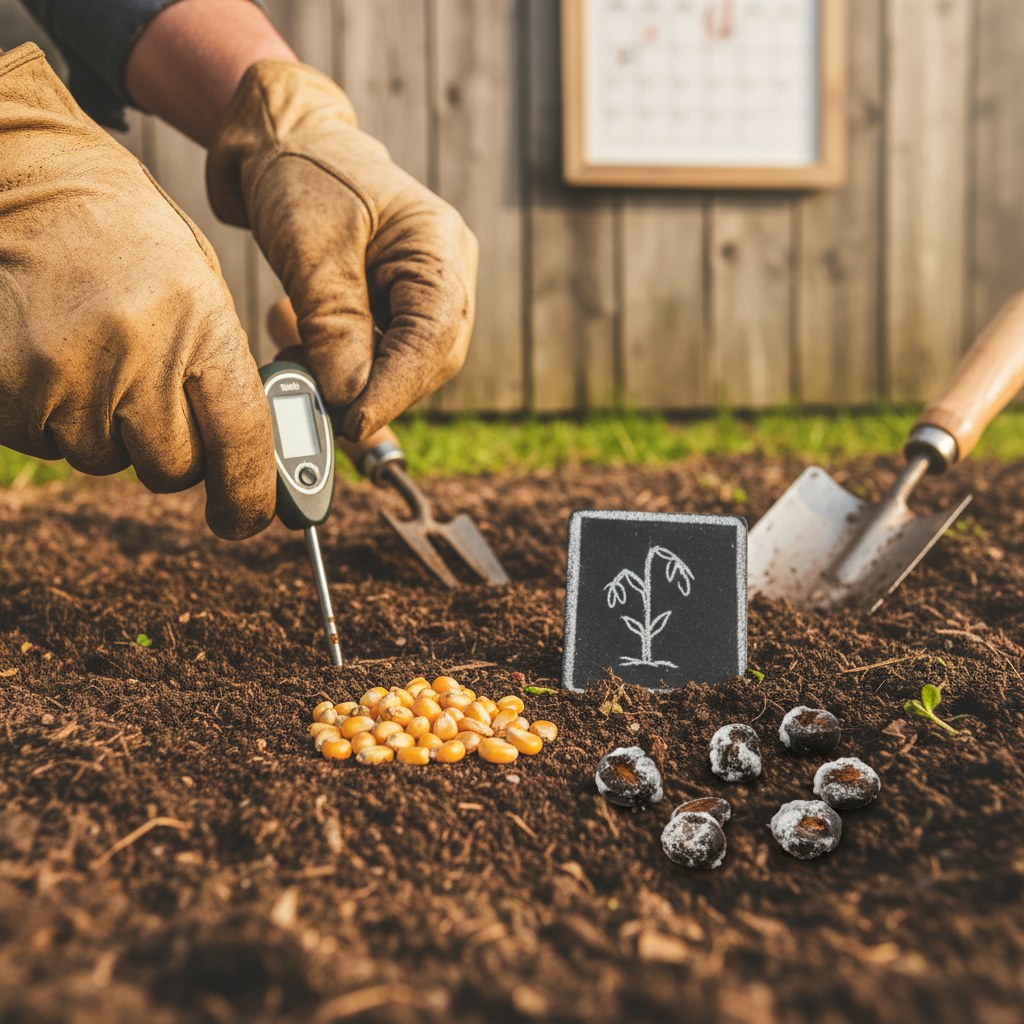
- Minimum soil temperature for germination: 60°F (16°C), seeds will germinate but slowly and unevenly, with higher rot risk.
- Ideal soil temperature: 65–75°F (18–24°C), germination is fast, uniform, and vigorous (typically 5–7 days).
- Above 95°F, germination drops off sharply. In very hot climates, avoid direct midsummer plantings.
Use a soil thermometer (inexpensive at any garden center) to check 2 inches deep in your planting area rather than guessing by air temperature. Soil in raised beds warms faster than in-ground beds, another advantage for small-garden corn growers in cool-spring climates. Wait for the soil temperature, not the calendar date.
The Space vs. Yield Reality
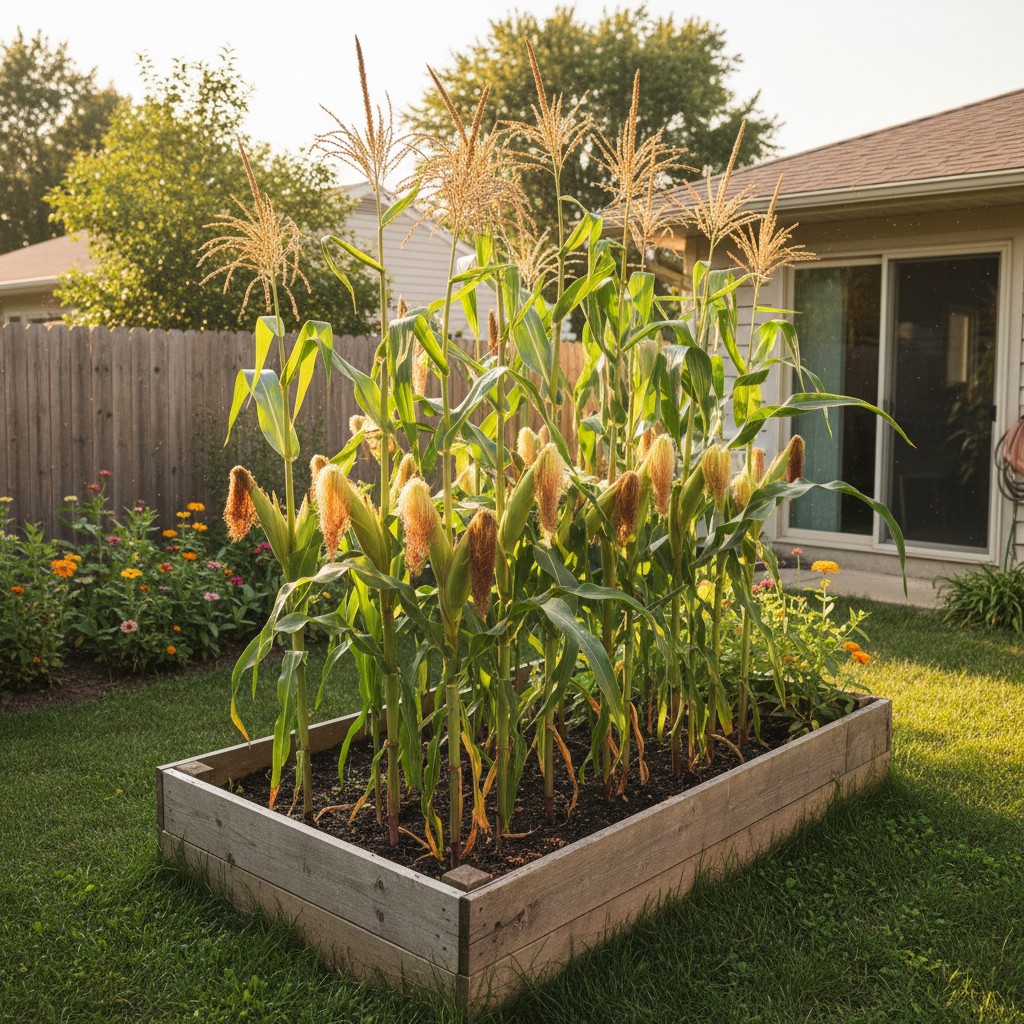
Let’s talk numbers honestly. Corn plants should be spaced 10–12 inches apart in rows 30–36 inches apart. A 4×4 block of 16 plants, the minimum for reliable pollination, takes up roughly 40 square feet (an area about 6.5 feet by 6.5 feet).
Those 16 plants will produce about 16–32 ears, depending on variety and whether they set one or two ears per stalk. That’s enough for maybe 4–8 meals for a family of four. Not nothing, but not a pantry-filling crop either.
For comparison, that same 40 square feet planted in bush beans could yield 20–30 pounds of beans. Planted in tomatoes, you could get 40–60 pounds of fruit. In lettuce, you could harvest greens for months.
Here’s my honest take: if you have less than 200 square feet of total garden space, corn probably doesn’t make the cut. But if you have 300+ square feet and you love fresh corn, it’s absolutely worth dedicating a corner to it. Especially if you use companion planting to get more production from the same space.
Why Block Planting Is Non-Negotiable
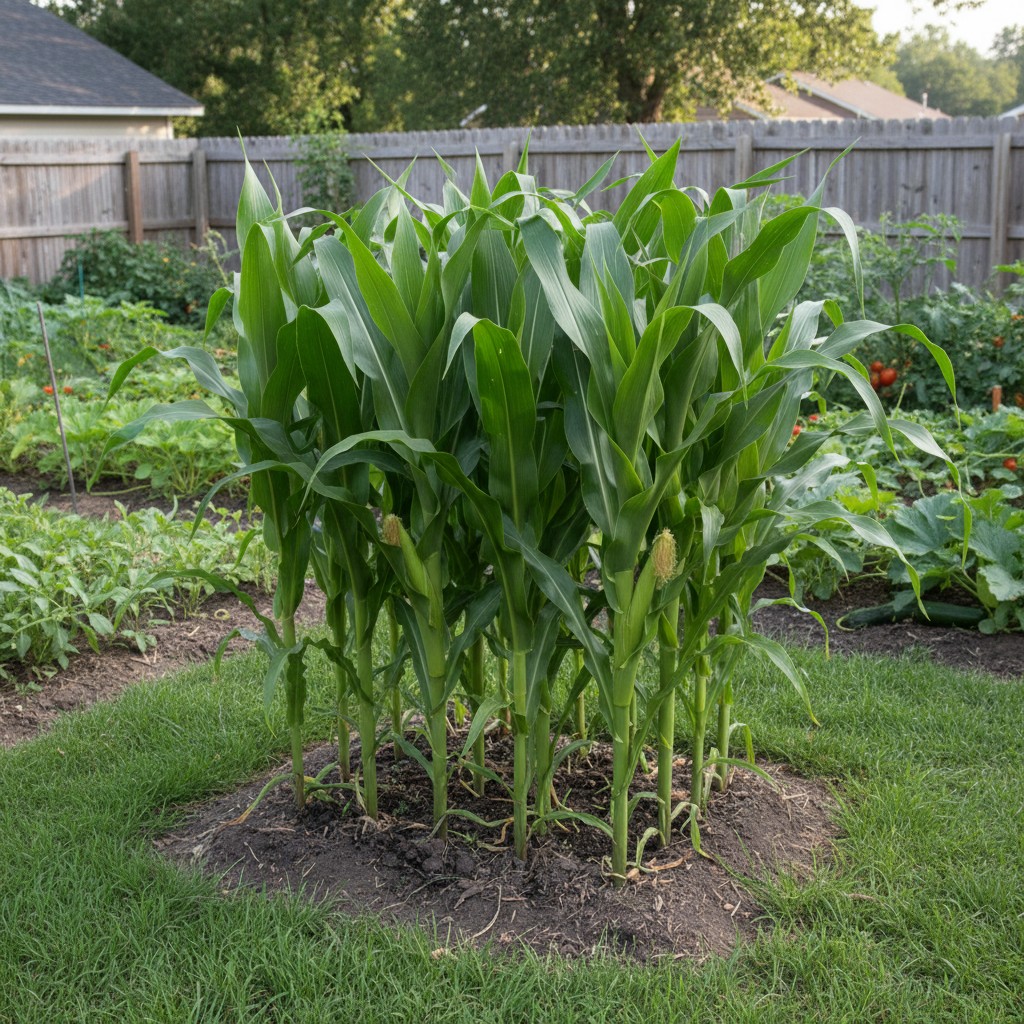
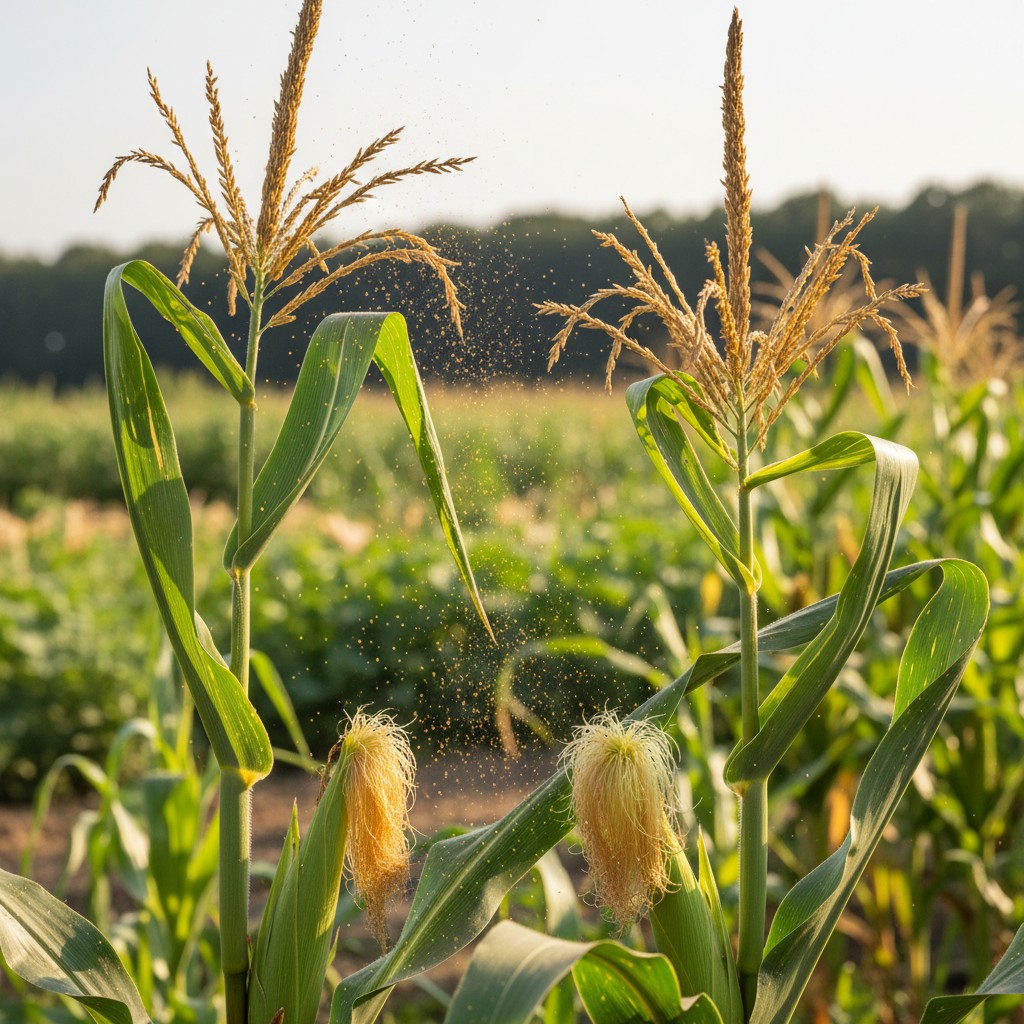
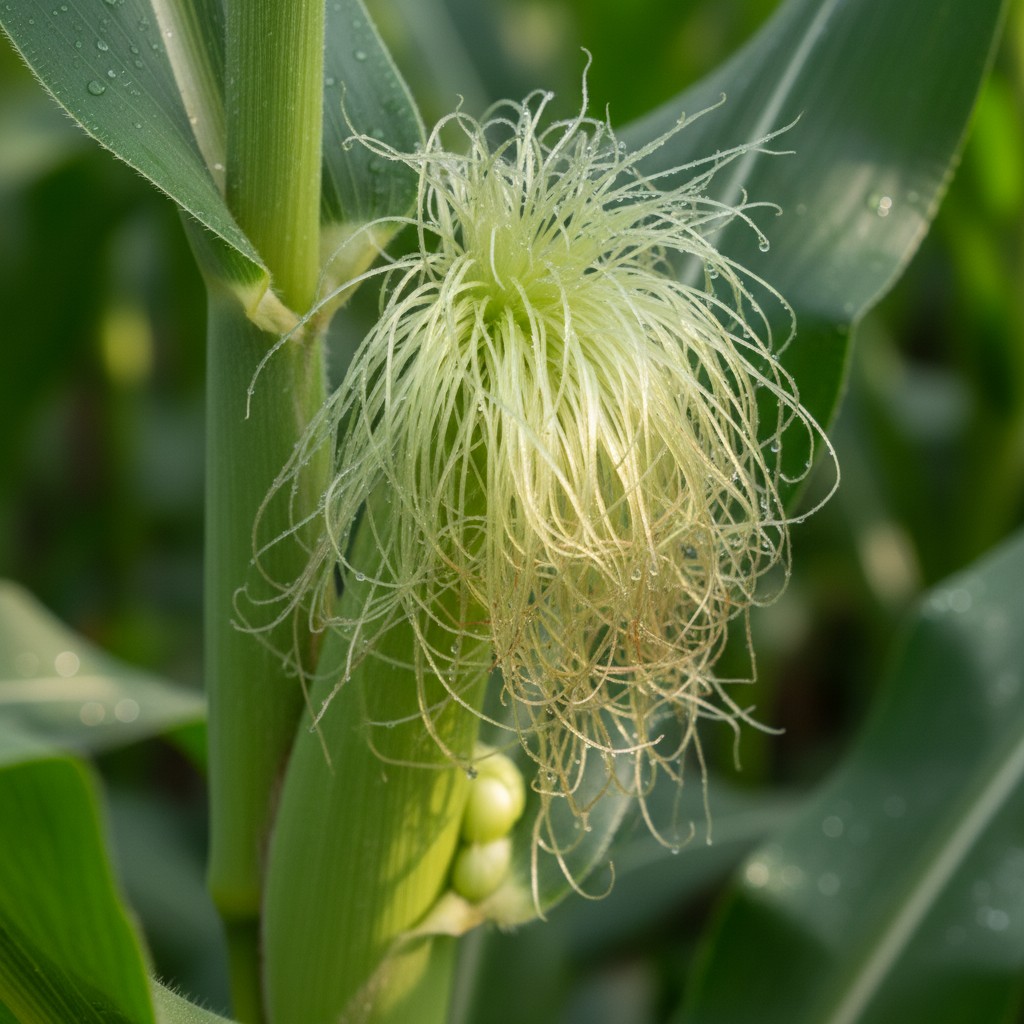
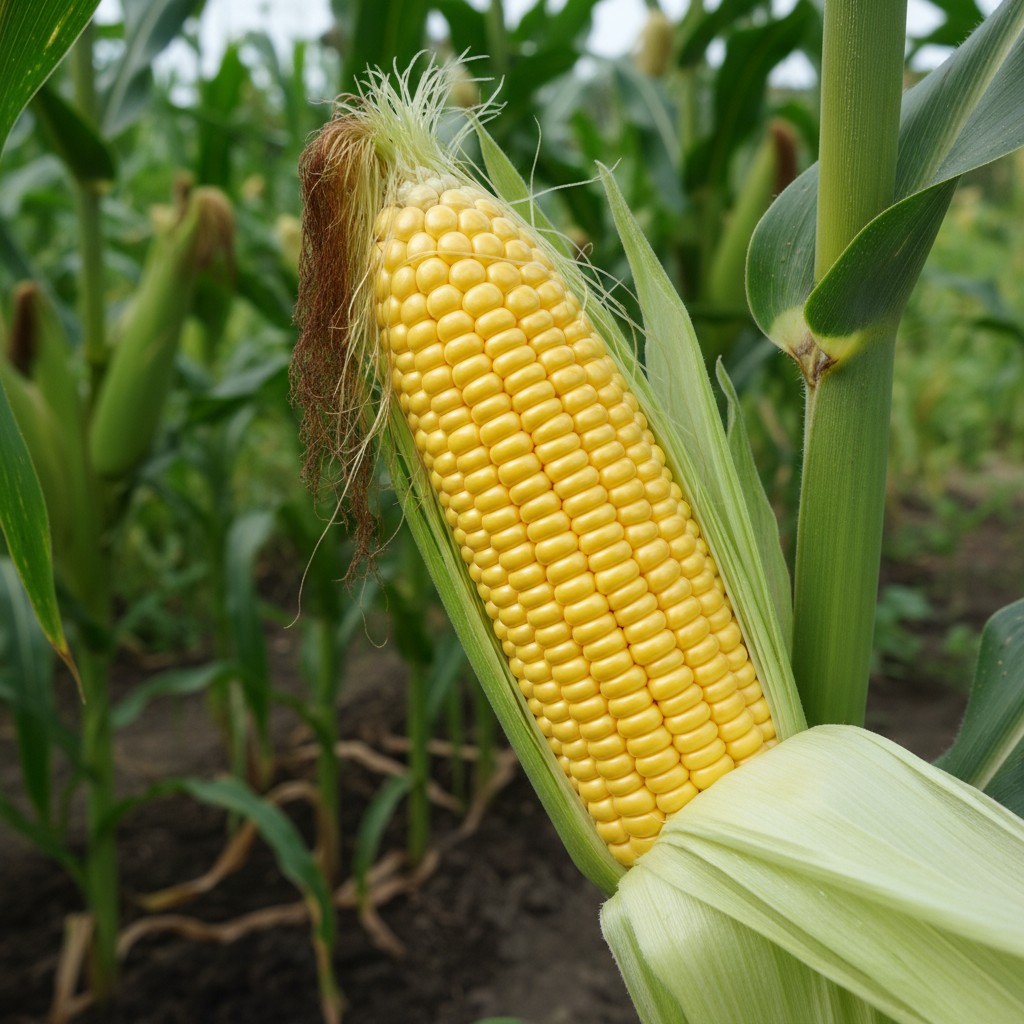
Corn is wind-pollinated. Each silk on an ear of corn connects to a potential kernel, and each silk must be individually pollinated by a pollen grain falling from the tassels above. Corn pollen is heavy and doesn’t travel far, it basically falls straight down or drifts a few feet in a breeze.
If you plant a single row of corn, most of the pollen blows away and never lands on a silk. The result: ears with scattered kernels and lots of empty gaps. Frustrating and wasteful.
Block planting: at least 4 rows of 4 plants each, makes sure pollen from any plant has neighboring silks to land on, regardless of wind direction. Bigger blocks pollinate even better. An 8×4 block of 32 plants is noticeably more reliable than a 4×4.
If space is really tight, here’s what most guides won’t tell you: you can hand-pollinate. In the morning, when tassels are releasing pollen (you’ll see the yellow dust if you shake them), cut a tassel and shake it directly over the silks of nearby ears. It’s tedious, but it works for very small plantings.
Best Varieties for Small Gardens
Standard field and sweet corn varieties grow 6–8 feet tall with long maturity times. For a small garden, look for compact and early-maturing varieties.
Sweet Corn for Small Spaces
- On Deck: Specifically bred for container and small-space growing. Grows only 4–5 feet tall with 7-inch ears. Matures in about 63 days. One of the few corns that performs well in a large container.
- Early Sunglow: An early variety (63 days) producing 7-inch ears on 4–5 foot stalks. Yellow, sweet, and reliable.
- Peaches and Cream. A bicolor (yellow and white kernels) with excellent sweet flavor. Matures in 70–83 days depending on the strain. Grows to standard height but is worth the space if you have it.
- Golden Bantam: A classic heirloom, open-pollinated, with old-fashioned corn flavor. Grows to about 5–6 feet. Matures in 73 days. The seeds are saveable for next year.
Non-Sweet Options
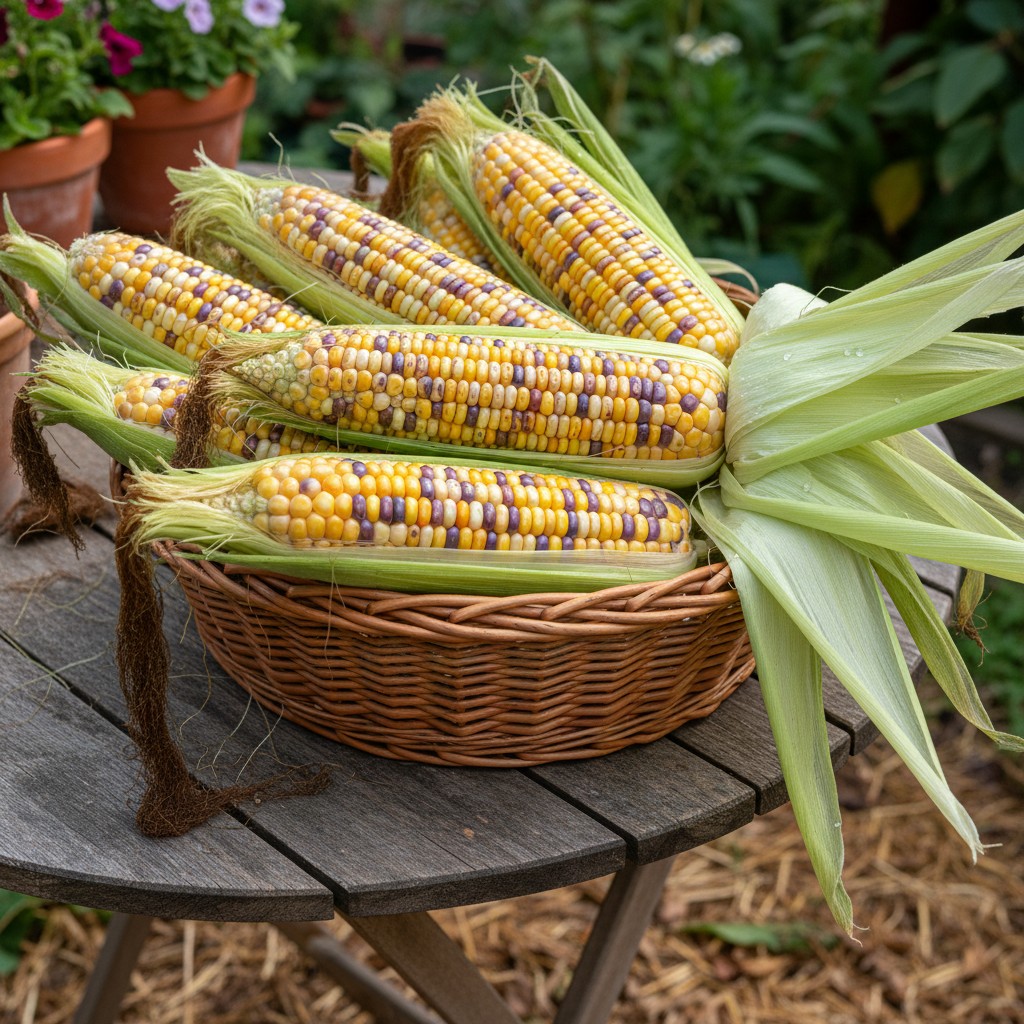
- Painted Mountain. A multicolored flour corn that matures in just 65–75 days. Grows 4–5 feet tall. Beautiful, versatile (cornmeal, grits, polenta), and adapted to short seasons and tough conditions. Each ear is a unique work of art.
- Tom Thumb Popcorn. Miniature popcorn plants (3–4 feet) with small but prolific ears. Kids love growing this. Harvest, dry, and pop your own popcorn.
The Three Sisters Method
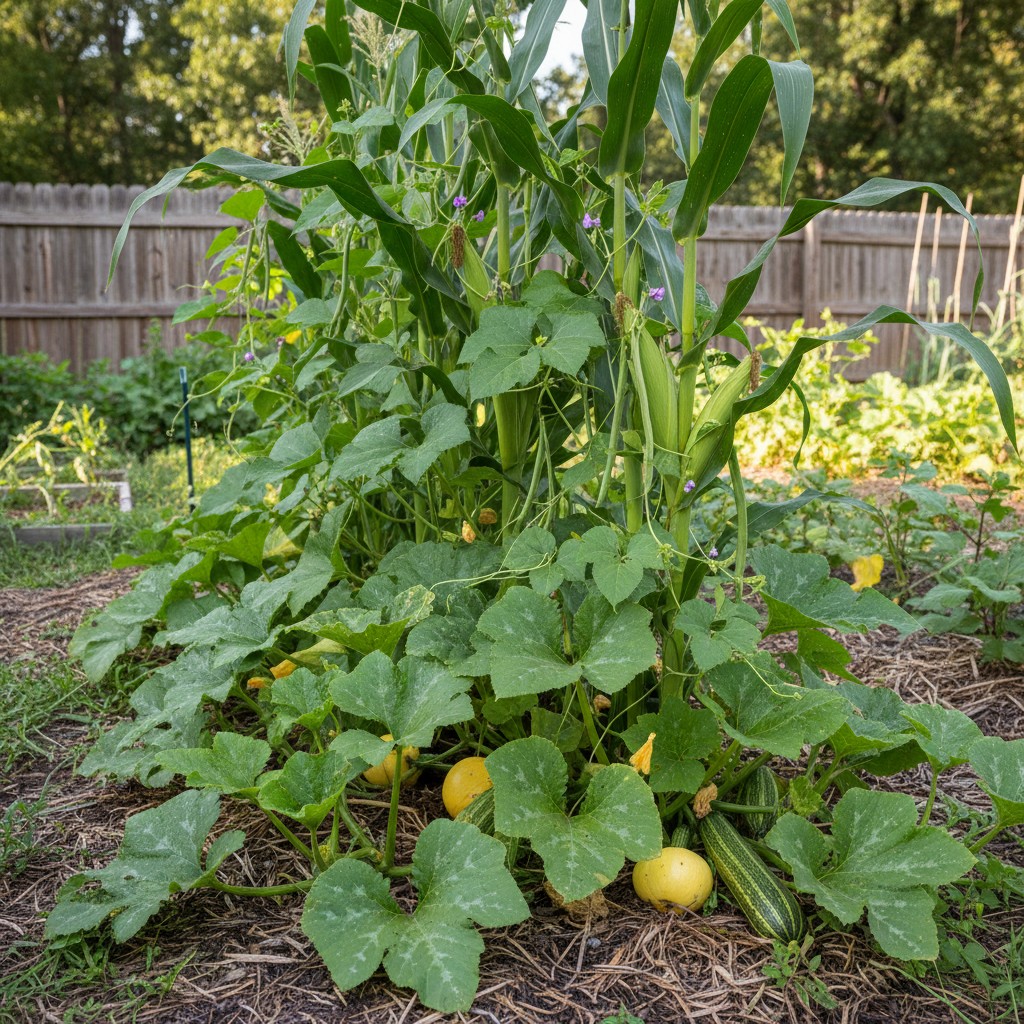
If you’re planting corn in a small garden, the Three Sisters method is arguably the most space-efficient approach. This Indigenous American planting technique combines corn, pole beans, and squash in a mutually beneficial arrangement that’s been used for thousands of years.
How It Works
- Corn provides a natural trellis for the beans to climb.
- Beans fix atmospheric nitrogen into the soil, feeding the heavy-feeding corn.
- Squash spreads along the ground, its large leaves shading the soil to suppress weeds and retain moisture. The prickly stems deter some animal pests.
How to Plant Three Sisters
- Create mounds about 4 feet in diameter and 6 inches tall, spaced 4–5 feet apart. Work compost or aged manure into each mound, corn is a very heavy feeder.
- Plant 4–6 corn seeds per mound in a small circle near the center. Once they germinate, thin to the strongest 4 plants.
- When the corn is about 6 inches tall, plant 3–4 pole bean seeds around the corn stalks, about 6 inches away from the stems.
- At the same time as the beans, plant 2–3 squash or pumpkin seeds at the edge of the mound.
The timing matters. Plant the corn first and give it a head start. If you plant everything at once, the fast-growing beans will overwhelm the young corn.
In a 10×10 foot area, you can fit 4 Three Sisters mounds, which gives you corn, beans, and squash from a hundred square feet. That’s dramatically better yield per area than corn alone.
Succession Planting for Extended Harvest
If you enjoy fresh corn and have the space, succession planting extends your harvest window instead of giving you everything at once.
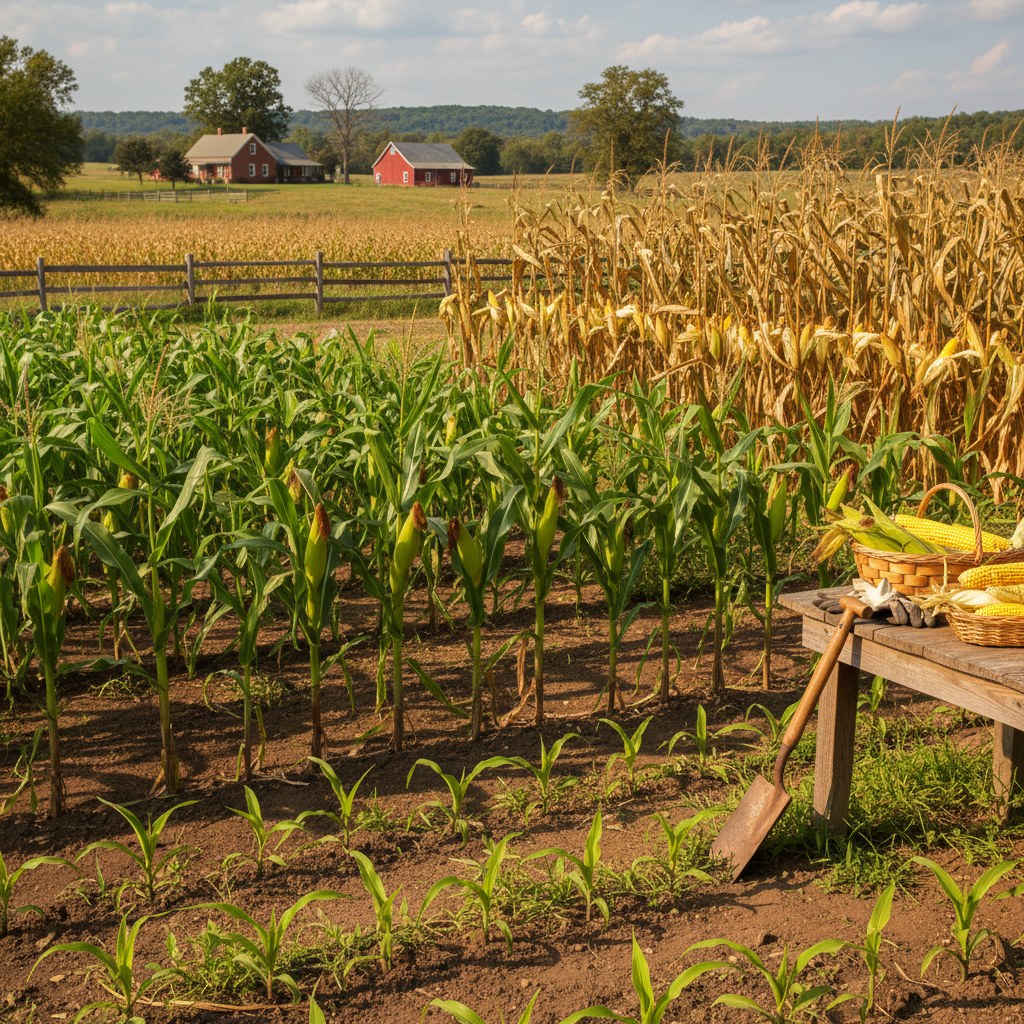
Plant a new block every 2–3 weeks from your last frost date through about 90 days before your first expected fall frost. Each block will mature at a different time, giving you fresh corn over 4–6 weeks instead of a single overwhelming week.
One important note for small gardens: if you’re planting different varieties in succession, be aware of cross-pollination. Sweet corn varieties fall into three main types: su (standard sweet), se (sugar enhanced), and sh2 (supersweet or “shrunken-2”). Here is why this matters for small gardens:
- sh2 (supersweet) crossed with su or se produces starchy, tough, flavorless kernels, a genuine disaster. Supersweet types must be isolated from all other corn types by 250+ feet, or tasseling must be staggered by at least 14 days.
- su crossed with se produces tolerable but slightly less sweet results, not catastrophic, but not ideal.
- Flour corn and field corn crossing with any sweet type similarly degrades sweetness. If your neighbor grows field corn, your sweet corn isolation window matters.
The simplest approach for a small garden: grow a single variety and stagger multiple sowings of that same variety 2–3 weeks apart rather than growing multiple types simultaneously. This eliminates cross-contamination risk entirely and extends your fresh-corn harvest window without any isolation headache.
Growing Tips for Better Corn in Less Space
Soil Fertility Is Everything
Corn is one of the heaviest-feeding crops in the vegetable garden. It needs abundant nitrogen, and it needs it consistently throughout the growing season. Before planting, work in 2–3 inches of compost and a nitrogen-rich organic fertilizer. Side-dress with additional compost or fish emulsion when plants are knee-high, and again when tassels begin to form.
In my experience, the biggest mistake small-garden corn growers make is underfeeding. Corn in depleted soil produces small, poorly filled ears. Feed it generously.
Water Deeply
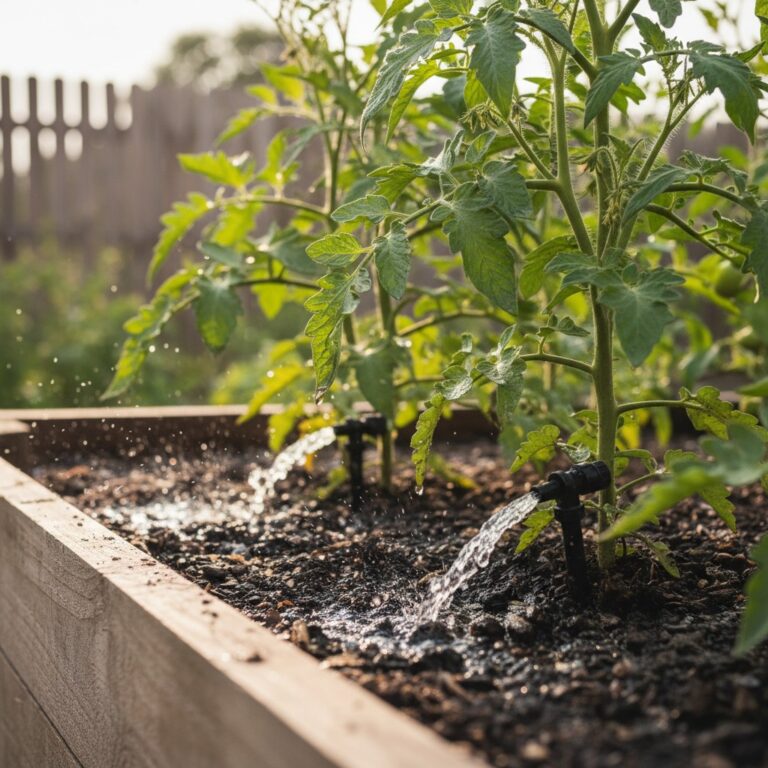
Corn has surprisingly high water needs, about 1.5 inches per week, more during tasseling and silking. The critical period is from about one week before tassels emerge through the completion of pollination. Water stress during this window directly reduces kernel count. Drip irrigation at the base of plants is ideal.
Don’t Remove Suckers
Corn plants sometimes produce side shoots (suckers or tillers) from the base. Old advice says to remove them. Modern research from university extension programs shows that removing suckers doesn’t improve ear quality and can actually reduce yields. Leave them alone.
Wind Protection
While corn needs wind for pollination, strong winds can topple the tall stalks, especially when they’re heavy with ears. A fence or hedge on the prevailing wind side helps. You can also mound soil around the base of stalks (called hilling) when they’re about a foot tall to stabilize the root system.
The Honest Pros and Cons
Pros
- Flavor of homegrown corn is unmatched, this alone justifies growing it for many gardeners
- Works beautifully in Three Sisters companion planting
- Fast-growing and visually impressive in the garden
- Flour and popcorn varieties store for months, extending the value of the crop
- Kids love watching it grow, it’s among the most dramatic garden plants
Cons
- Poor space efficiency compared to most other vegetables
- Requires block planting, which limits flexibility in garden layout
- Heavy feeding depletes soil, requires significant fertility input
- Attractive to raccoons, which will raid your patch the night before you planned to harvest (they have an infuriating sense of timing)
- One harvest per plant, there’s no “pick and come again” with corn
Is It Worth It?
Here’s my honest answer: it depends on why you garden. If maximum food production per square foot is your goal, corn isn’t the best use of space in a small garden. Grow more tomatoes, beans, and greens instead.
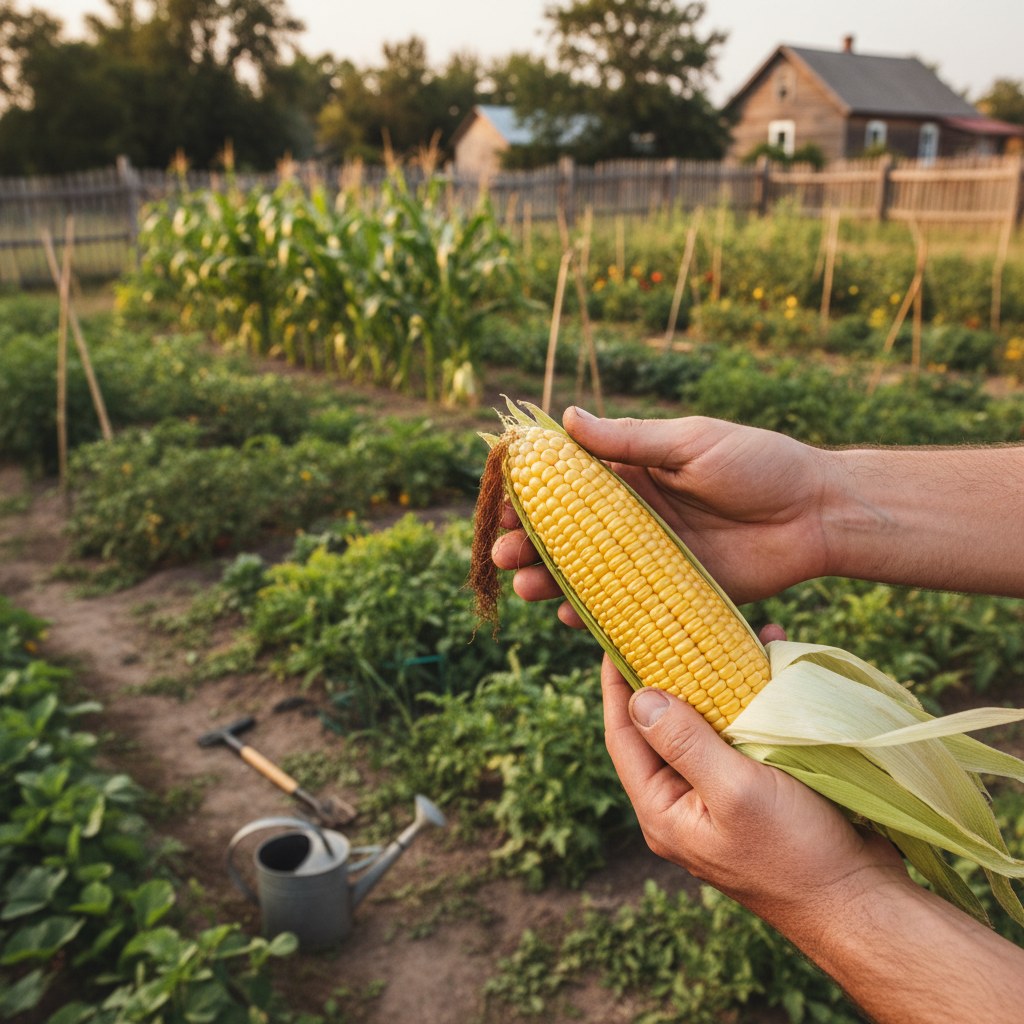
But if part of why you garden is the experience, the satisfaction of growing something ambitious, the taste of something you truly cannot buy, the fun of watching those stalks shoot up, then yes, absolutely, it’s worth it. Garden for the joy of it, not just the efficiency. A 4×4 block of corn takes up a corner of the garden and gives you something money can’t buy.
Frequently Asked Questions
How do I keep raccoons out of my corn?
Raccoons are the most frustrating corn pest and one of the hardest to deter. Electric fence is the most reliable solution, a single strand at 12 inches high connected to a solar-powered fence charger will stop them cold. Short of that, surrounding the corn block with a dense planting of squash (the prickly stems annoy them) can help. Some gardeners report success with motion-activated sprinklers or radios left on overnight. Harvesting promptly when ears are ripe, rather than leaving them a day or two longer, reduces your risk.
Can I grow corn in a raised bed?
Yes, and raised beds can be advantageous because the soil warms faster in spring. A 4×4 raised bed is the minimum practical size for a corn block. Plant 16 corn seeds in a 4×4 grid with 12-inch spacing. The depth of the raised bed should be at least 10–12 inches, as corn roots grow deep. Feed heavily since the limited soil volume holds fewer nutrients than an in-ground planting.
When should I harvest sweet corn?
Sweet corn is ready about 18–24 days after the first silks appear. The silks will have turned brown and dried. Peel back a small section of husk and press a kernel with your fingernail, if it releases a milky liquid, the corn is at peak sweetness. If the liquid is watery, wait a few more days. If it’s thick and pasty, you’ve waited too long and the sugars have started converting to starch. Harvest in the morning for the sweetest ears, and cook or refrigerate immediately.
What happened to my corn? The ears are only partially filled with kernels.
Partially filled ears are almost always a pollination problem. Common causes include planting in a single row instead of a block, hot and dry weather during silking (which dries out silks before they’re pollinated), or heavy rain that washes pollen away before it reaches the silks. Plant in blocks, ensure adequate water during the tasseling and silking period, and consider hand-pollinating to supplement wind pollination.