How to Grow a Grocery-Saving Garden in 2026 (Beat Rising Food Prices)
- The USDA Economic Research Service forecasts food-at-home prices will rise 3.1% in 2026, above the 20-year average of 2.6%.
- Fresh vegetables specifically are projected to rise 4.8% in 2026, the category a home garden directly offsets.
- A well-planned 100 sq ft kitchen garden returns $400–$700 worth of groceries per year on roughly $50–$80 in seed and supply costs, a 5x to 14x ROI.
- Focus on herbs, salad greens, tomatoes, and dried beans. Avoid crops where the store price beats the effort.
- Track every harvest in a notebook or phone note. Tracked gardeners report roughly double the perceived savings of gardeners who estimate.
Food Prices Are Rising Fast in 2026. Here’s Why
The USDA Economic Research Service’s 2026 Food Price Outlook projects retail food-at-home prices will rise 3.1% this year, above the 20-year historical average of 2.6%. Fresh vegetables are forecast to climb 4.8%, with a prediction interval running as high as 10.2%. Building on the past several years of above-average grocery inflation, the cumulative impact since 2021 is more than 25% for the average household’s food bill.
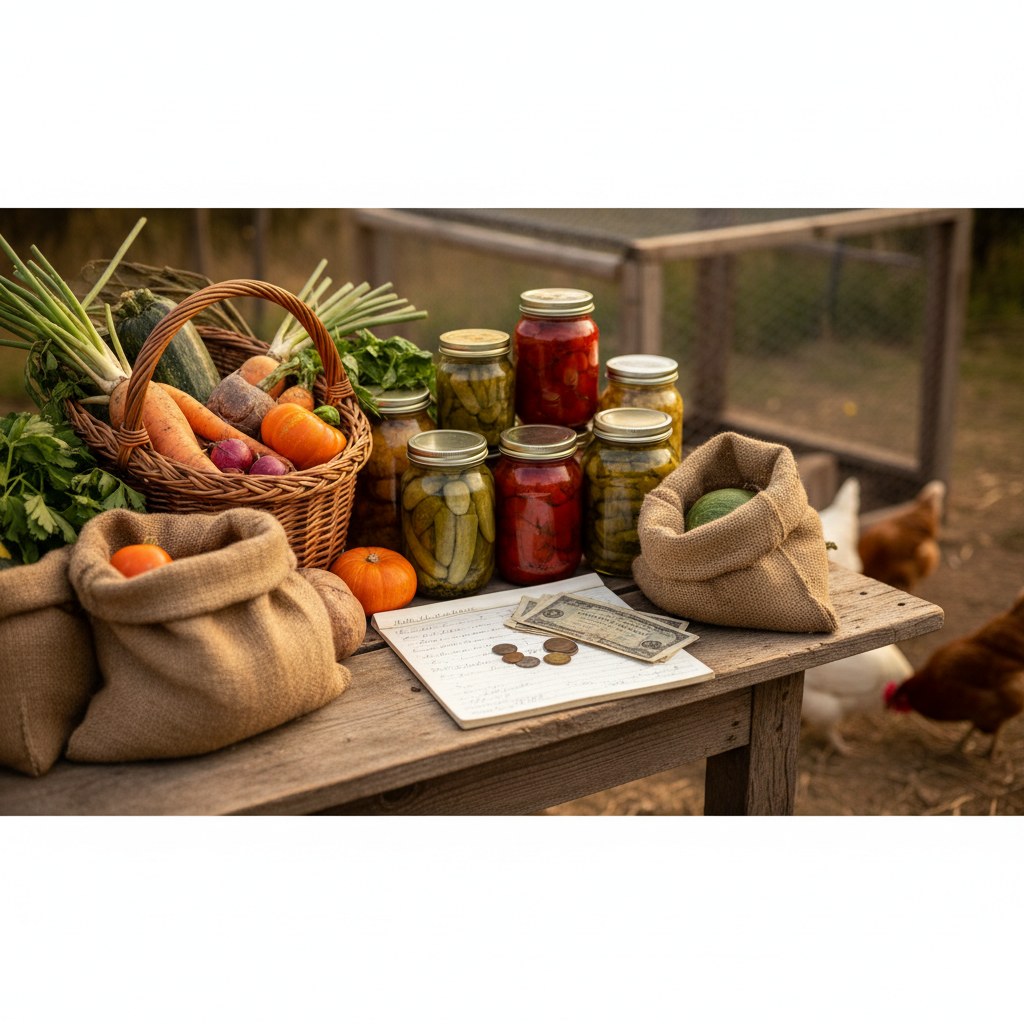
The drivers are layered. Fertilizer and diesel costs flow downstream to the shelf. Climate disruptions have shortened growing windows across California’s Central Valley and the Southeast. Labor costs in food processing and transport rose sharply, and consolidation in food retail means less price competition in many markets. The Bureau of Labor Statistics CPI data tracked food-at-home up 2.4% year over year in the most recent reading, and even that modest-sounding number compounds fast against already-elevated 2022–2025 prices.
None of that is going to reverse quickly. Growing your own is the one hedge that puts you directly in control, and 2026 is a year where the math on a home garden gets noticeably better.
These Crops Give You the Highest Return on Investment
University extension and National Gardening Association survey data both point to the same short list of high-ROI crops. According to NGA research, roughly 35% of U.S. Households now grow some of their own food, with 54% citing “to save money on food bills” as a primary motivation. The highest-value crops share two traits: they’re expensive per pound at retail, and they produce continuously over a long season rather than one-and-done.
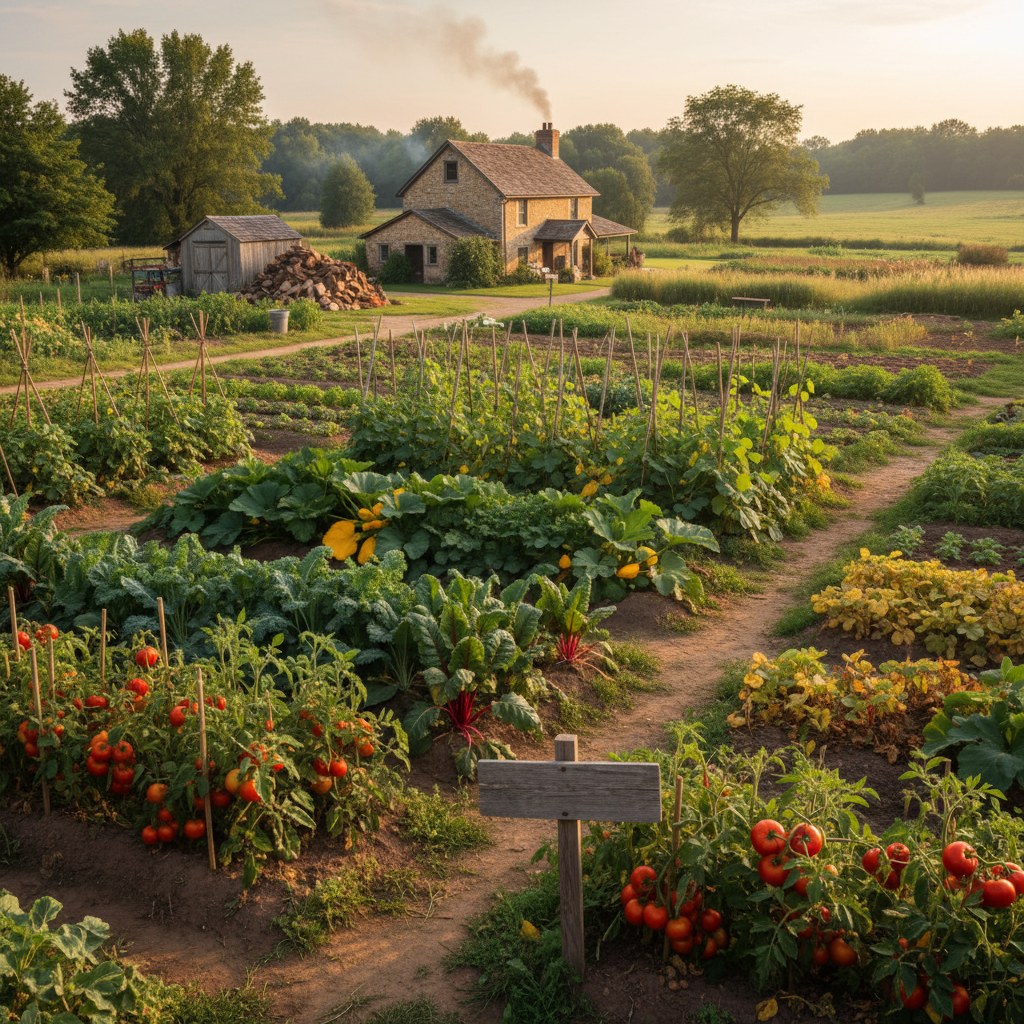
Herbs: The clearest win in any garden
A single basil plant costs $3.50–$4.50 in a grocery store and yields only a handful of leaves. A $0.40 seed packet grows four to six plants that produce from June through first frost, a replacement value of $80–$120 in fresh basil alone. The same math applies to cilantro ($0.30 seed packet vs. $2.50/bunch at retail, 6–8 cuts per season), parsley, chives, and dill. If you grow nothing else, a 4×4 herb bed pays back its entire setup cost within the first six weeks of harvest.
Salad greens and lettuce
Retail spring mix runs $5.99–$7.99 per 5 oz bag. One 10-foot row of cut-and-come-again lettuce mix, seeded for $1.50, yields roughly 12–15 harvests over a spring-and-fall season at the equivalent of 3–4 bags per cutting. That’s $200+ in retail value from a single row. Succession-plant every three weeks to keep production continuous.
Tomatoes
A staked indeterminate tomato plant started from a $0.50 transplant, trained up a cage, and harvested through September yields 15–25 lbs. At $2.50–$3.50/lb for comparable quality at retail, that’s $37–$87 per plant. Four plants in a 4×8 bed: $150–$350 worth of tomatoes.
Even better, surplus tomatoes can be canned as whole tomatoes, crushed tomatoes, and sauce to lock in those savings through winter. The National Center for Home Food Preservation provides research-tested processing times for all three styles.
Dried beans and storage crops
Dried beans seem cheap in the store, until you add up what a 20-foot row of black beans, pintos, or navy beans produces. One pound of seed plants roughly 30 feet and yields 8–12 lbs of dried beans. At $2.50–$3.50/lb retail for organic dried beans, that’s $20–$42 from $1 of seed.
Yields are low compared to tomatoes, but the hands-off growing period and zero-storage-infrastructure requirement make them worth including. For maximum space efficiency, pair beans with corn and squash in a Three Sisters planting, the USDA National Agricultural Library notes that “beans naturally absorb nitrogen from the air and convert it to nitrates, fertilizing the soil for the corn and squash,” which means you get three crops from one footprint and skip most of the fertilizer cost. Garlic, winter squash, and dry corn follow similar logic: they store for months with no processing.
Zucchini and summer squash
Two plants produce more than most families can eat. At $1.50–$2.00 per squash at the farmers market (where quality is comparable), a productive plant yielding 40–60 squash over a season is worth $60–$120. Seeds cost under $1.00. The caveat: abundance can become its own problem. Stick to two plants unless you have neighbors to share with or a plan for preservation.
These Crops Are NOT Worth Growing If Your Goal Is Saving Money
Not every garden crop is an economic win. Some are worth growing for freshness, flavor, or education, but they won’t cut your grocery bill.
- Corn: Takes enormous space (minimum 16 plants for pollination), yields 1–2 ears per stalk, and retail sweet corn runs $0.50–$0.75 per ear. The math rarely works unless you’re growing dry corn for storage.
- Watermelon and cantaloupe: Each vine needs 6–9 sq ft and produces 2–4 melons. Retail price is $4–$7 per melon. Possible break-even, but only if growing conditions are perfect. Space is usually better used.
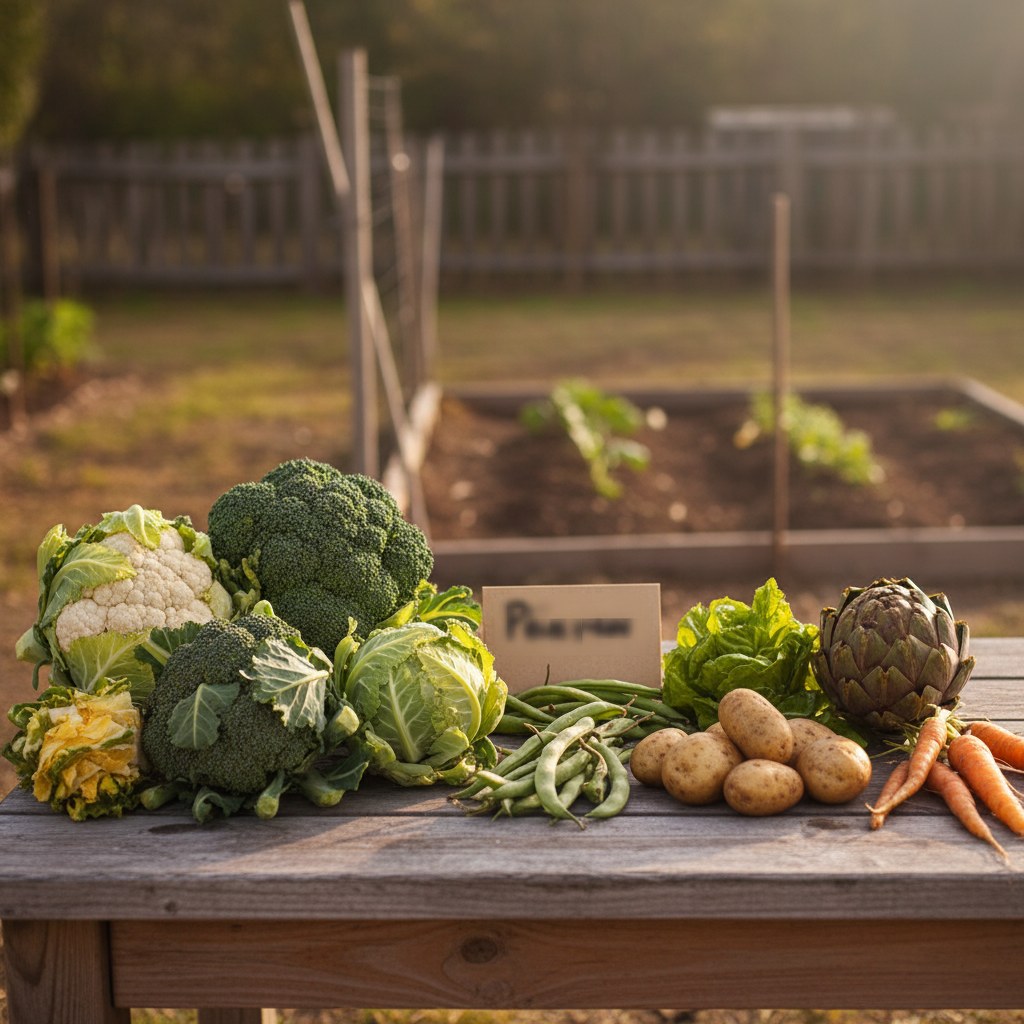
- Broccoli and cauliflower: Each plant produces one main head (maybe a few small side shoots). At $1.99–$2.99 per head at retail, you’d need eight plants in prime space to generate $20 in value. The ROI is low compared to lettuce or herbs in the same footprint.
- Specialty peppers: Hot peppers are high-value but productive plants yield more than most households use. Bell peppers are temperamental in cool climates and produce modestly. Worth growing if you love them, not the best dollar-per-square-foot choice.
What Does It Actually Cost to Start a Grocery-Saving Garden?
The honest answer depends on what you already have. Here are three realistic starting scenarios:
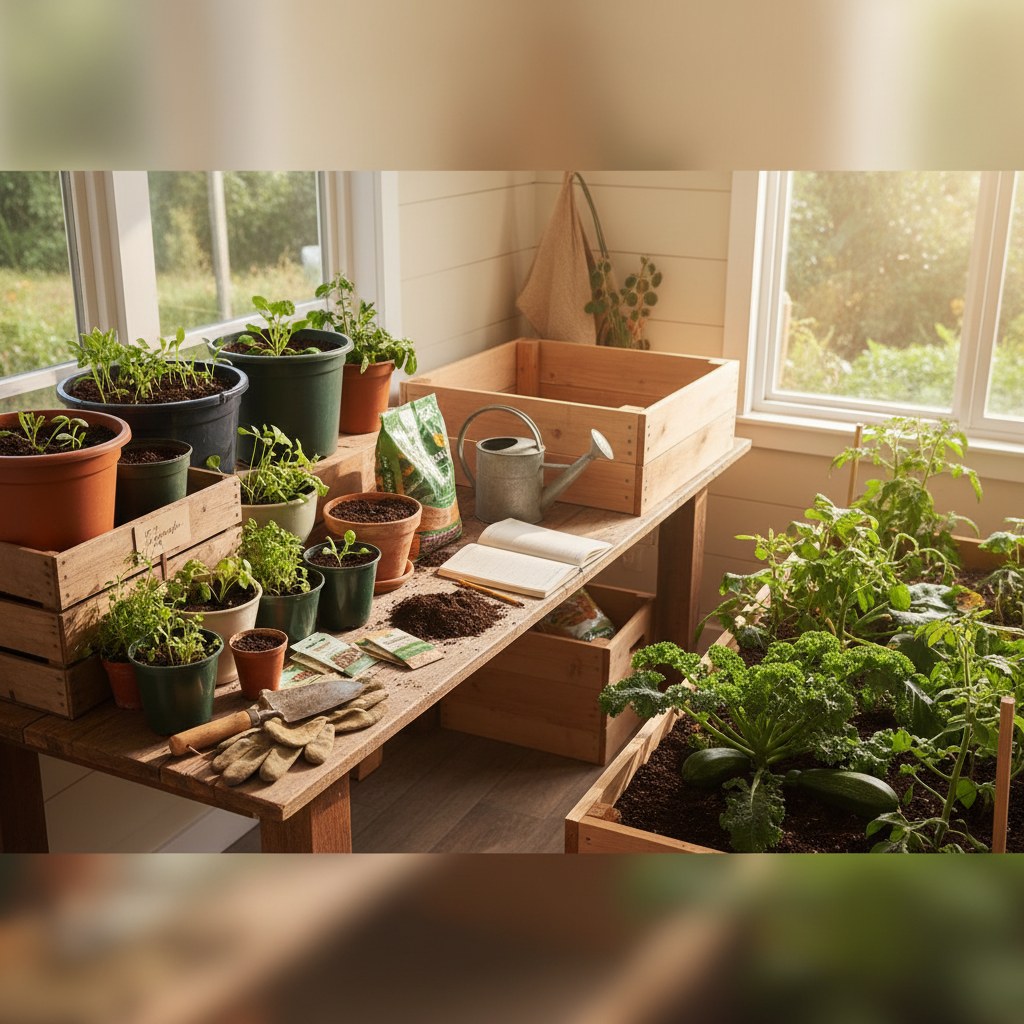
Scenario 1: Starting from scratch in a rental or small space ($85–$120)
- Two 4×8 raised bed kits or DIY lumber: $45–$65
- Bagged garden soil + compost (16 cubic feet): $30–$40
- Seed packets (lettuce, herbs, beans, tomato transplants): $15–$20
- Basic tools if you have none (hand trowel, watering can): $10–$15
Total: $100–$140 in year one. With realistic returns of $400–$600, that’s a 3x–5x first-year return even after subtracting startup costs.
Scenario 2: In-ground garden in owned home ($40–$60)
If you have soil you can amend, startup costs drop sharply. A $15 bag of compost worked into a 100 sq ft bed, $20 in seeds and transplants, and $10 in stakes and string puts you in the ground for under $50. First-year returns of $350–$500 are realistic, a 7x–10x return net of costs.
Scenario 3: Containers on a patio ($60–$90)
Container growing costs more per square foot because of potting mix, but concentrating on herbs and cherry tomatoes keeps it profitable. Four 5-gallon buckets of cherry tomatoes + a window box of herbs + two grow bags of lettuce can realistically produce $150–$250 in value on $60–$80 in setup costs.
For a peer-reviewed take on household-scale garden economics, a National Institutes of Health-indexed study on home and community garden outcomes documents similar cost-to-value ratios and shows that the median food-insecure household with a productive garden saw meaningful grocery-cost reductions after the first full season. Years two onward, with tools and bed infrastructure already in place, the ongoing cost drops to $25–$50/year in seeds and amendments.
How to Extend Your Savings Beyond the Growing Season
A summer garden’s value multiplies when you preserve the harvest. The two highest-impact methods for food cost savings are canning and root cellaring.
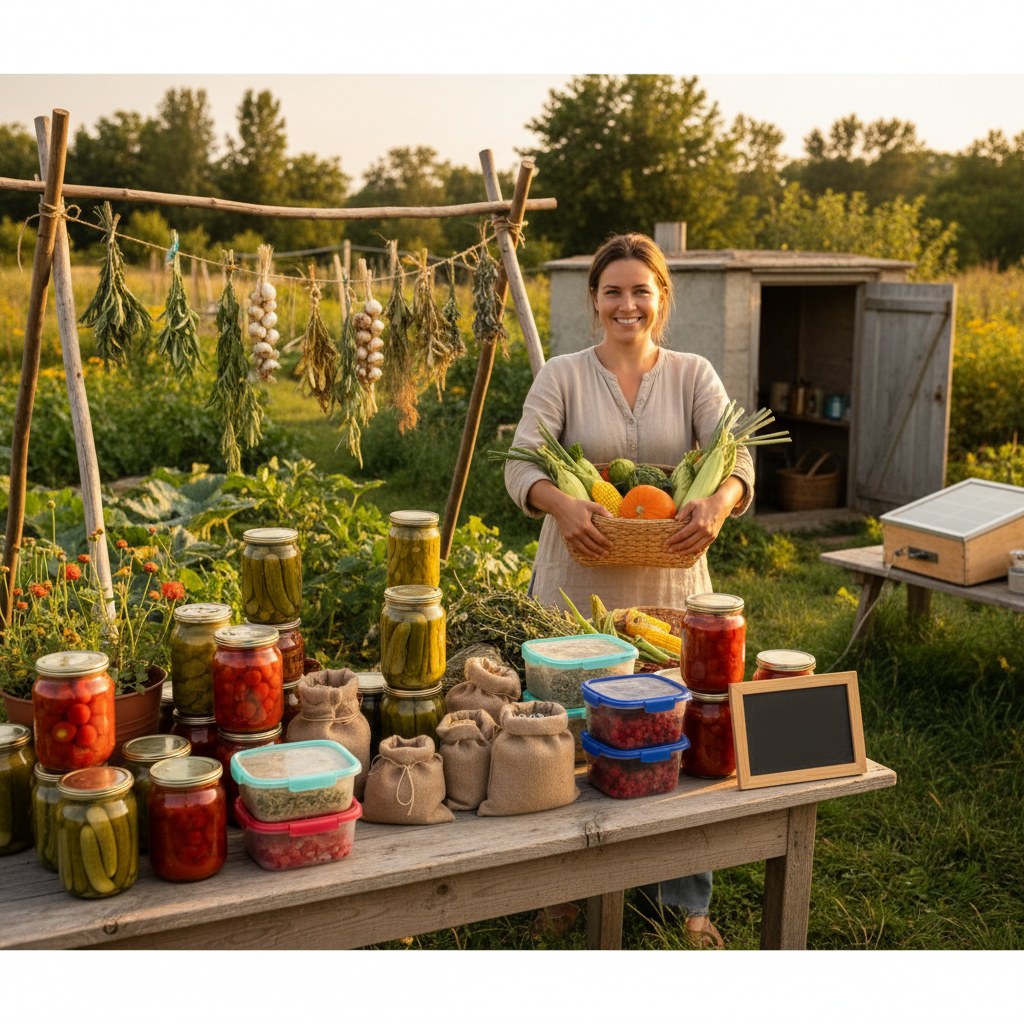
Canning tomatoes
A bushel of tomatoes (53 lbs, often available at end-of-season farmers market prices of $20–$30) yields 18–22 quarts of home-canned tomatoes. At retail, comparable-quality canned tomatoes run $3.50–$5.00 per quart. Home-canned cost: roughly $1.50–$2.00 per quart including lids and energy.
The detailed process, whole tomatoes, crushed tomatoes, and sauce, locks in the summer surplus at 60–70% savings versus store-bought through winter. Always follow National Center for Home Food Preservation processing times; they are the research-tested standard used by every state extension service.
Freezing and drying
Blanch and freeze zucchini, green beans, and corn in late summer when prices are at rock bottom. Dry herbs in small bunches hung in a warm room, the same basil worth $4.50 fresh at retail becomes $8–$12 worth of dried herb once concentrated. Dehydrating is the lowest-infrastructure preservation method available.
Cold storage crops
Grow crops that store themselves: winter squash (3–6 months in a cool room), dried beans (1+ year in mason jars), garlic (6–9 months cured and hung), and potatoes (3–5 months in a cool dark space). These don’t require canning equipment and stretch your harvest into deep winter. Pairing a productive garden with a 3-month emergency food pantry turns seasonal surplus into year-round food security.
How to Track Your Actual Savings
Most gardeners wildly underestimate what they grow because they never record it. A simple tracking habit pays off in motivation and planning.
The harvest log method
Keep a spiral notebook or a phone note near your garden entrance. Every time you harvest, write the date, crop, and weight or quantity. Once a week, look up the current retail price (your grocery store app works fine) and calculate replacement value. At the end of the season, total it up.
Example weekly log entry:
- July 14: 3 lbs cherry tomatoes @ $3.99/pint (~0.75 lb) = $16.00 value
- July 14: 1 bunch basil @ $3.49 retail = $3.49 value
- July 14: 6 zucchini @ $1.50 each = $9.00 value
- Week total: $28.49
Consistent harvest logging through a season typically surprises gardeners. Gardeners who track harvests report roughly double the perceived savings of gardeners who estimate without tracking. Tracking catches small daily picks, a handful of herbs here, a cucumber there, that silently add up to serious grocery offsets.
Compare to your grocery receipts
Pull your grocery receipts from the same months last year versus this year. Fresh produce spend should drop visibly in June–September. This gives you a real dollar delta rather than estimated replacement value, and it accounts for the fact that you eat more vegetables when you’re growing them, which adds nutritional value that doesn’t show in savings alone.
What’s the Realistic First-Year ROI?
Let’s run the actual numbers for a beginner with a modest 100 sq ft in-ground garden.
Setup and ongoing costs (year one)
| Item | Cost |
|---|---|
| Compost amendment (1 bag) | $12 |
| Seeds (lettuce, basil, cilantro, beans) | $15 |
| Tomato transplants (4) | $10 |
| Stakes and string | $8 |
| Hand tools (if needed) | $15 |
| Total year-one cost | $60 |
Realistic harvest value
| Crop | Estimated Yield | Retail Value |
|---|---|---|
| Tomatoes (4 plants) | 60 lbs | $150 |
| Salad greens (2 rows, spring + fall) | 18 harvests | $110 |
| Fresh herbs (basil, cilantro, parsley) | Season-long | $90 |
| Dried beans (20 ft row) | 8 lbs dried | $28 |
| Zucchini (2 plants) | 50 squash | $60 |
| Total harvest value | $438 |
Net year-one savings: $378. ROI: 630%.
By year two, with tools already in hand and bed infrastructure built, annual costs drop to $25–$35 in seeds and amendments. At that point, the same garden nets $400+ annually at minimal ongoing cost.
The USDA ERS food-price forecasts point to continued above-average produce price increases through 2027. Every year you delay starting a garden, the baseline cost you’re hedging against goes up. A garden started this spring locks in savings against a higher price baseline every subsequent year.
The data is consistent across sources: a well-chosen, modest kitchen garden pays for itself in the first season and generates hundreds of dollars in annual value thereafter. The barrier isn’t the economics, it’s starting.
Frequently Asked Questions
How much space do I actually need to save meaningfully on groceries?
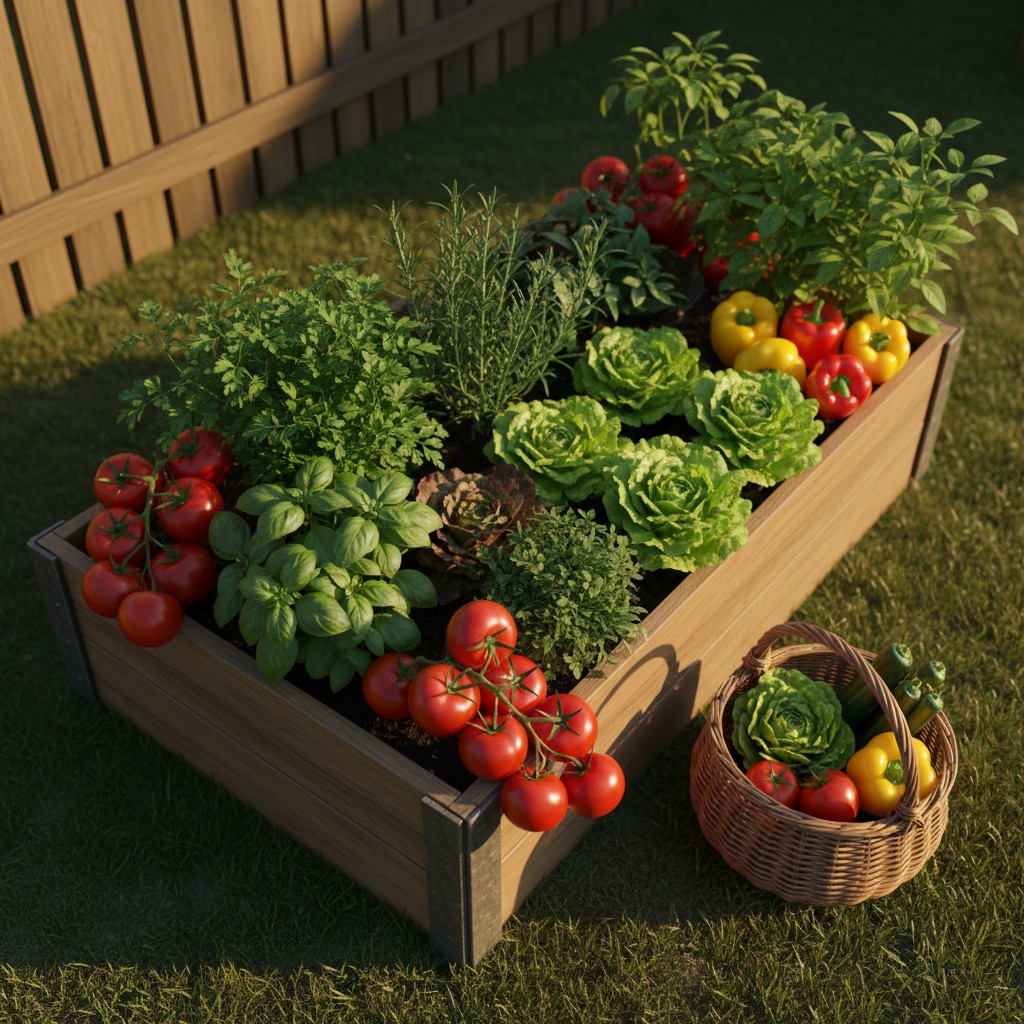
100 square feet, roughly a 10×10 patch or two 4×8 raised beds, is enough to generate $350–$500 in annual food value if you plant high-ROI crops. Smaller spaces (even containers) work if you focus on herbs and greens, where value-per-square-foot is highest. You don’t need acreage; you need the right crop selection.
Is growing your own food cheaper than buying at discount grocery stores?
For most crops, yes, especially herbs, salad greens, and tomatoes. Discount stores may beat you on commodity staples like cabbage, onions, or dried pasta, but fresh herbs at $3.50/bunch and premium tomatoes at $3.00/lb are nearly impossible to beat at home-growing costs. The comparison breaks down for crops that are genuinely cheap at retail.
How do I save on seeds to keep costs low?
Buy open-pollinated or heirloom varieties and save seeds at the end of the season. Tomatoes, beans, lettuce, and most herbs are easy to seed-save. A $1.50 seed packet of heirloom beans, saved carefully, becomes a self-sustaining supply. Seed swaps through local garden clubs and online communities (Seed Savers Exchange) also dramatically reduce ongoing costs.
What if I have a short growing season?
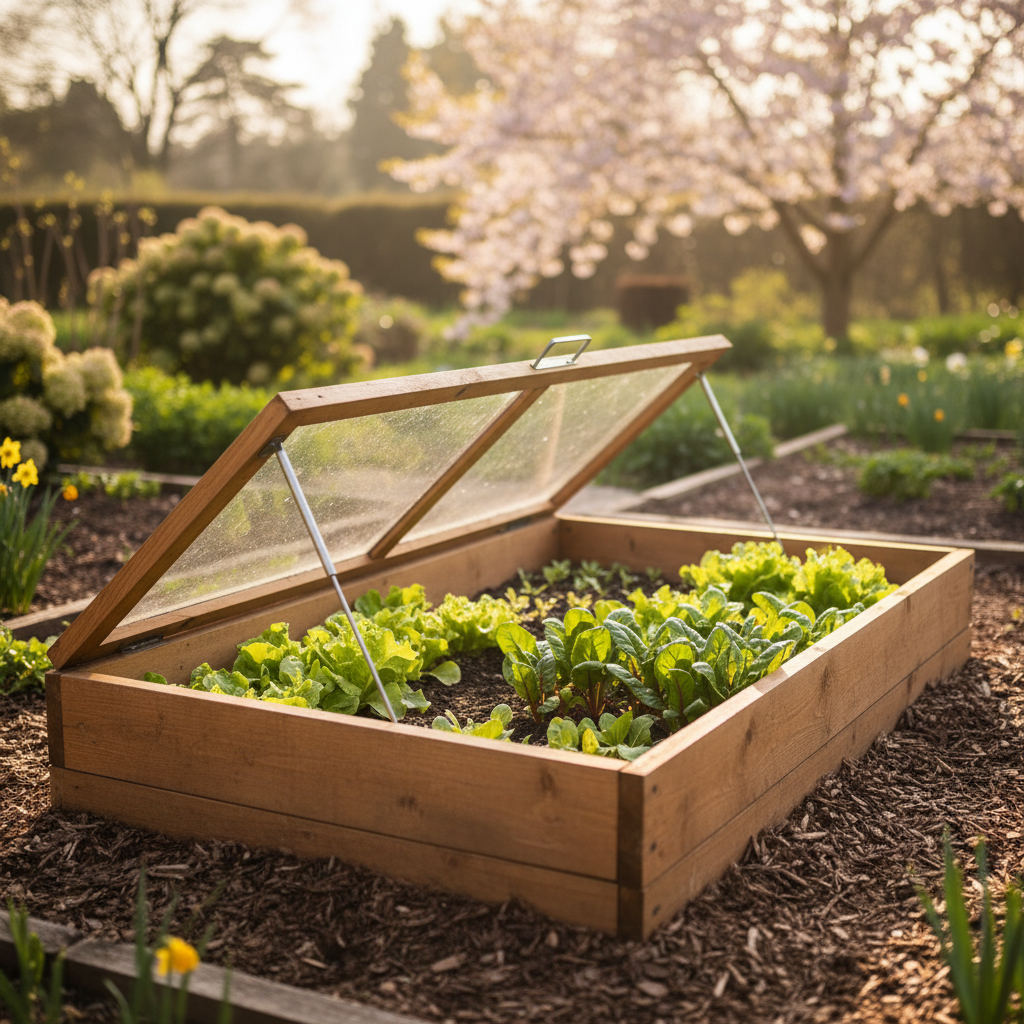
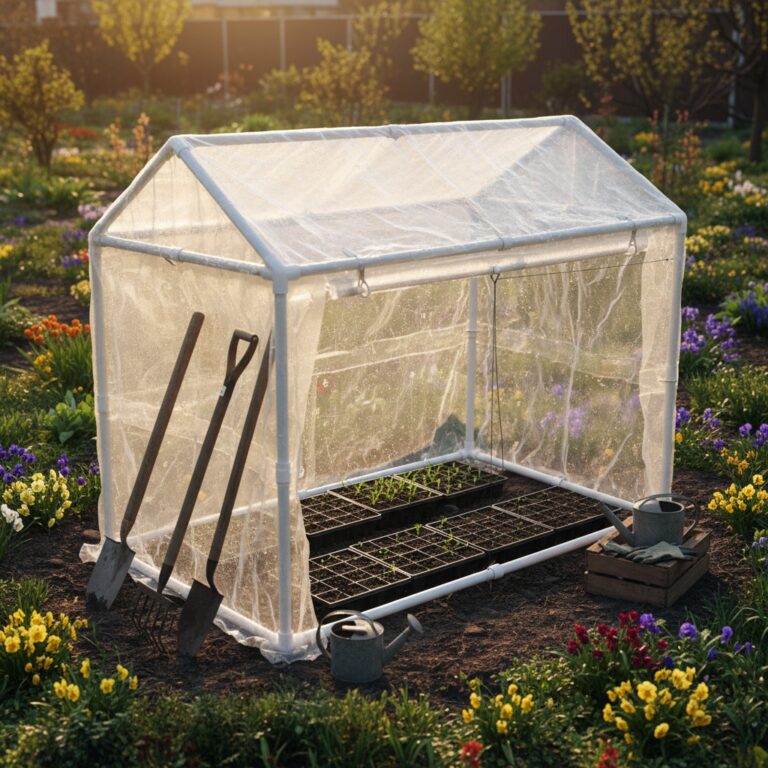
Focus on cold-tolerant crops: salad greens, kale, spinach, herbs, and radishes thrive in cool weather and extend your season into early spring and late fall. Row covers (a $15–$20 investment) add 4–6 weeks to each end of the season. In very short-season climates, start tomatoes indoors 6–8 weeks before last frost to maximize their production window.
Do I need to amend soil every year?
In-ground gardens benefit from 1–2 inches of compost worked in annually, roughly $10–$15 worth of bagged compost per 100 sq ft, or free if you compost kitchen and yard waste. Raised beds may need topping up as the mix compresses over time, typically one bag per bed every year or two. This ongoing cost is already factored into the year-two estimates above.
Will food prices keep rising after 2026?
USDA ERS’s multi-year outlook projects produce prices will continue above their 20-year averages through at least 2027. The 2026 forecast of 4.8% for fresh vegetables is not a one-off; it builds on several years of compounding increases. A garden hedges directly against the category most affected.
Sources: USDA Economic Research Service, Food Price Outlook 2026; Bureau of Labor Statistics Consumer Price Index; National Gardening Association, National Gardening Survey (2023 edition); USDA National Agricultural Library. The Three Sisters of Indigenous American Agriculture; National Center for Home Food Preservation.