Beekeeping: A Complete Guide to Bees, Hives, Honey, and Everything Else
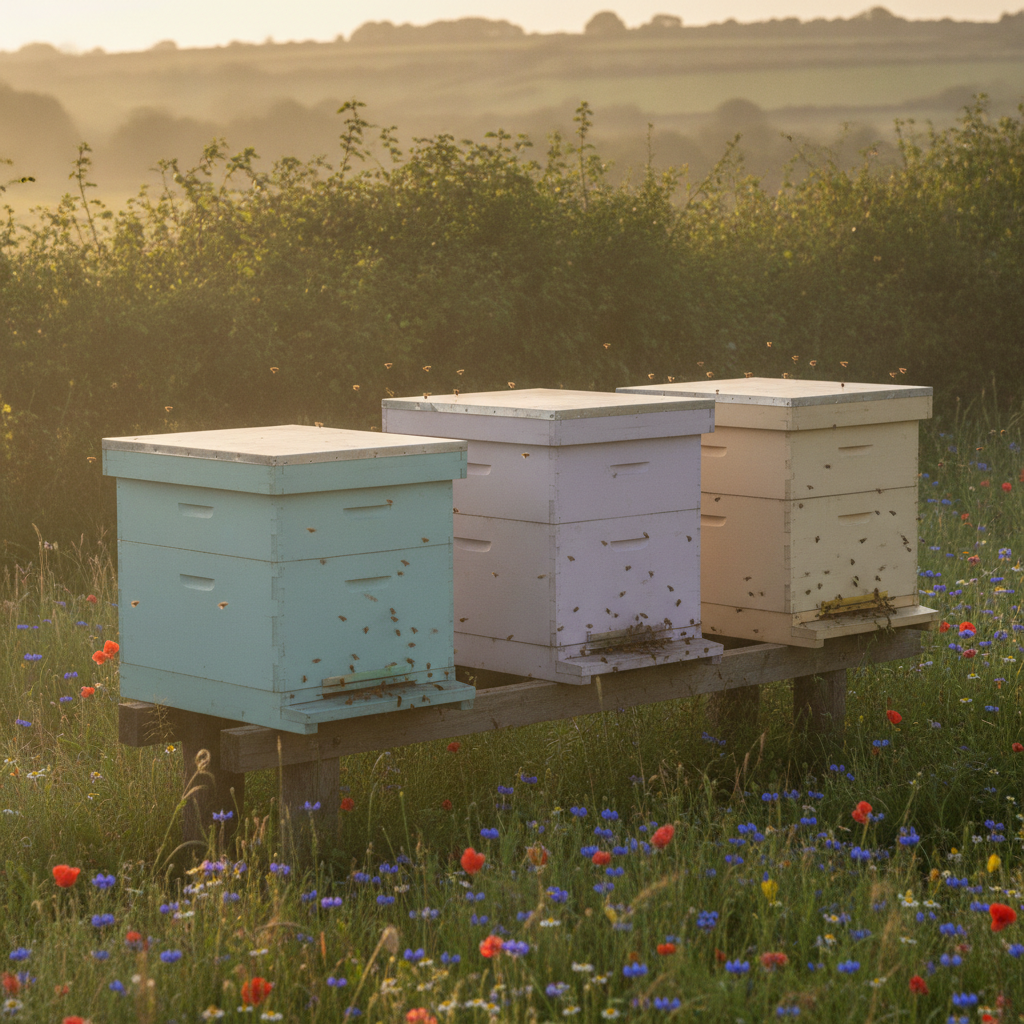
A single honey bee colony at peak summer strength can hold up to 80,000 individual bees, and every one of them depends on choices its keeper makes months earlier. According to USDA National Agricultural Statistics Service data, U.S. honey production in 2024 totaled 134 million pounds, produced by 2.60 million colonies at an average yield of 51.7 pounds per hive. That average hides a wide range. A well-sited backyard colony in a strong nectar flow can pull twice the national yield; a mismanaged one, or one lost to varroa mites, produces nothing at all. This guide walks through the fundamentals a new keeper actually has to get right: how a colony is structured, what the equipment costs, where to place the hives, which hive style to pick, how to source your first bees, how to monitor and treat varroa, how to overwinter a colony, and how state registration and local clubs fit into the year. Every recommendation below is anchored to a specific university extension, USDA, or Honey Bee Health Coalition source you can verify.
What Does a Honey Bee Colony Actually Look Like Inside?
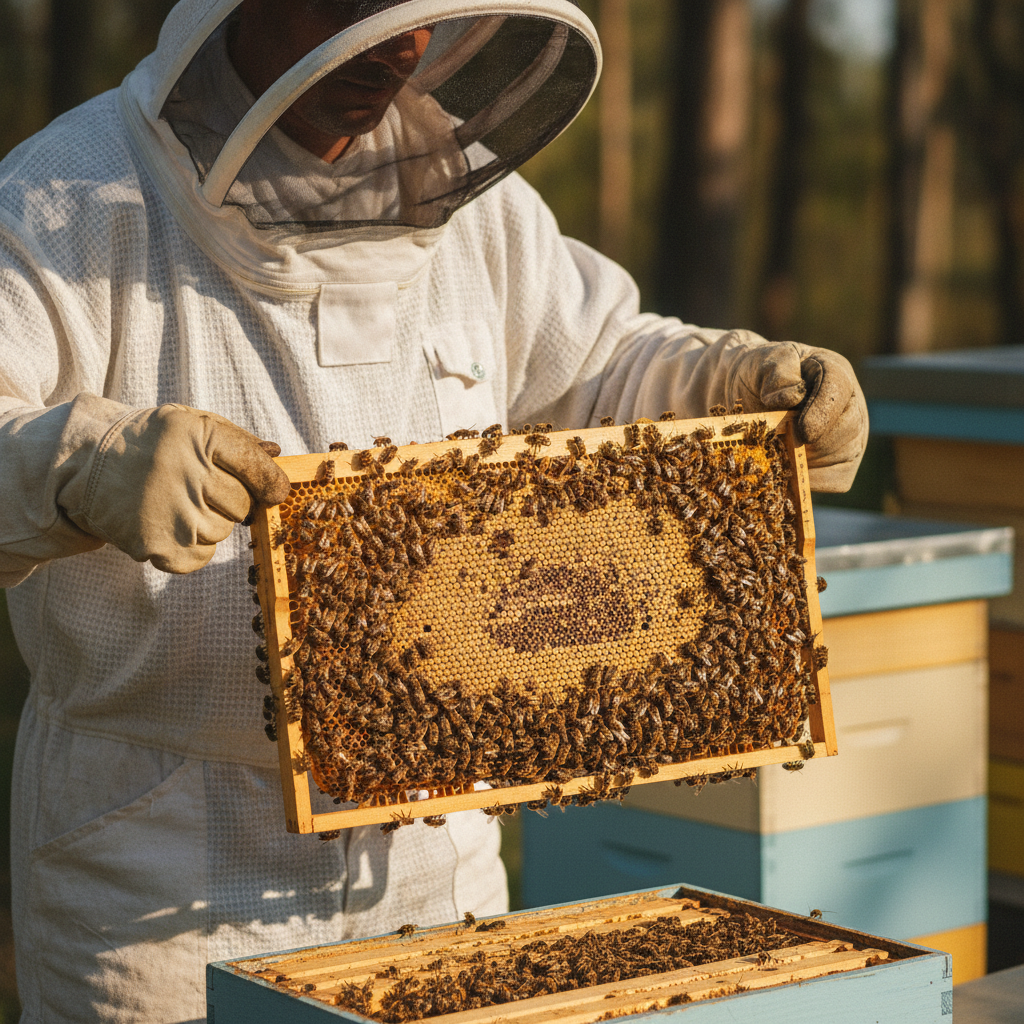
A honey bee colony is a single social organism made up of three castes: one queen, tens of thousands of female workers, and a few hundred male drones. According to UF/IFAS Extension, “each honey bee colony consists of a queen (reproductive female), workers (non-reproductive females), and drones (males), and each caste has a clearly defined role that is not performed by any other caste.” The queen is the only reproductive female; she can lay 1,500 to 2,000 eggs per day at peak. Workers do everything else: feed larvae, produce wax, forage, guard, cool the hive by fanning, and eventually die of exhaustion after four to six weeks in summer. Drones exist solely to mate with queens from other colonies, and they are expelled from the hive as fall approaches. UF/IFAS notes that “each colony can consist of up to 80,000 individuals,” which is the number to picture when you place a hive: not a handful of bugs but a compact town. That biology drives every management decision that follows in this guide, from where the hive sits to when you feed and treat. Readers ready for a step-by-step first-season plan can pair this piece with our beginner’s guide to backyard beekeeping.
How Much Does It Cost to Start Keeping Bees?
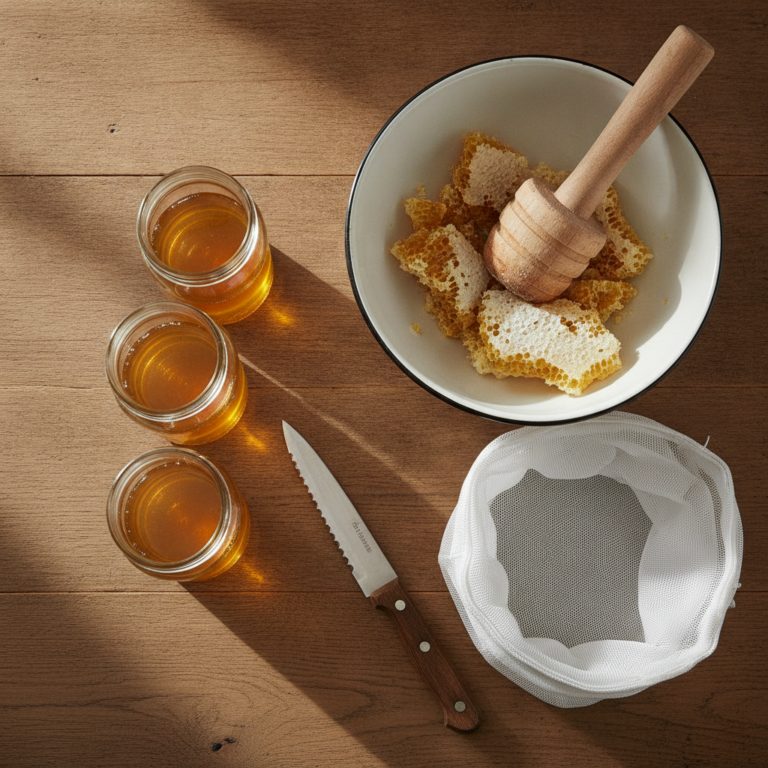
Basic beekeeping equipment for a single hive runs about $200, and the bees to fill it cost another $150 to $250. According to the University of Missouri Extension, “beekeeping suppliers offer beginners kits that include components such as a hive, tools, smoker, beekeeper’s veil, gloves, and instruction book for about $200.” That kit typically includes one Langstroth deep or two-medium brood setup, a hive tool, a smoker, a top and bottom board, a full-body veiled suit or jacket, and a starter book. The bees themselves are a separate purchase. A 3-pound package of loose bees with a caged mated queen runs $150 to $180 in most regions in spring 2026, while a five-frame nucleus colony, which arrives as a small working hive on drawn comb, runs $200 to $250. Missouri Extension also recommends that beginners start with “between two and five hives” so a winter loss does not zero out the operation. Add roughly $80 for a second-year honey extractor rental or the cost of crush-and-strain equipment, and a realistic first-year budget for two hives sits in the $600 to $900 range before any honey harvest.
Where Should You Place Your Hives for the Best Results?
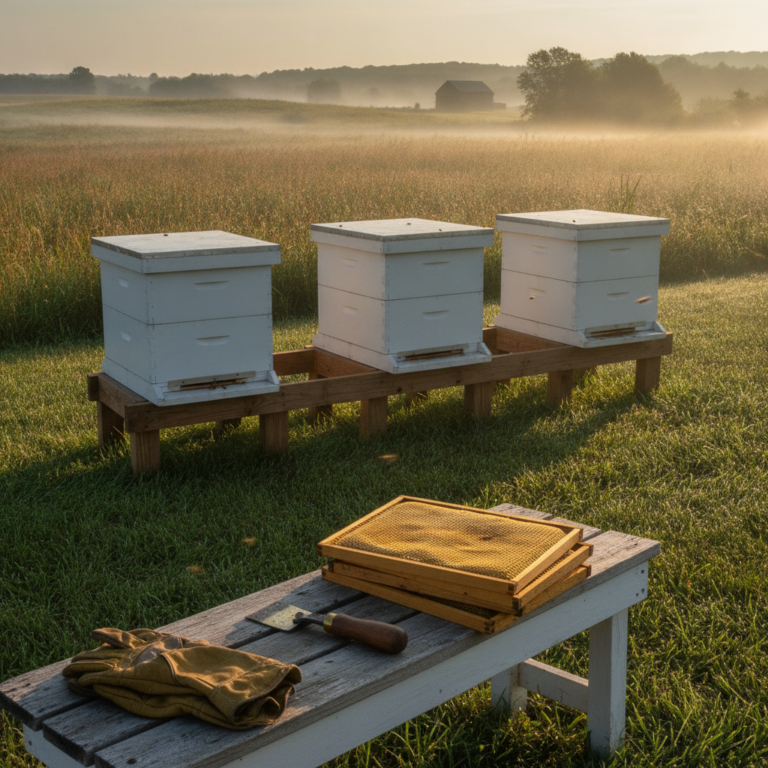
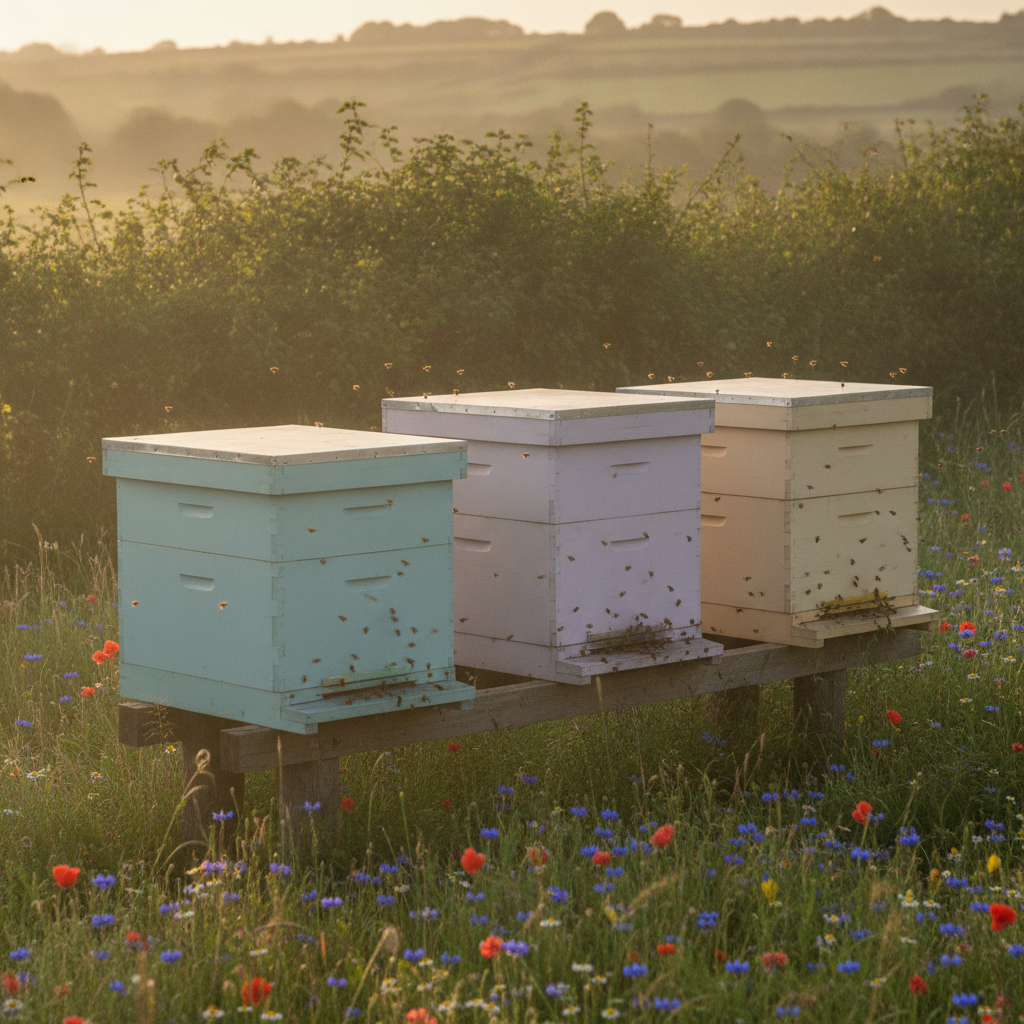
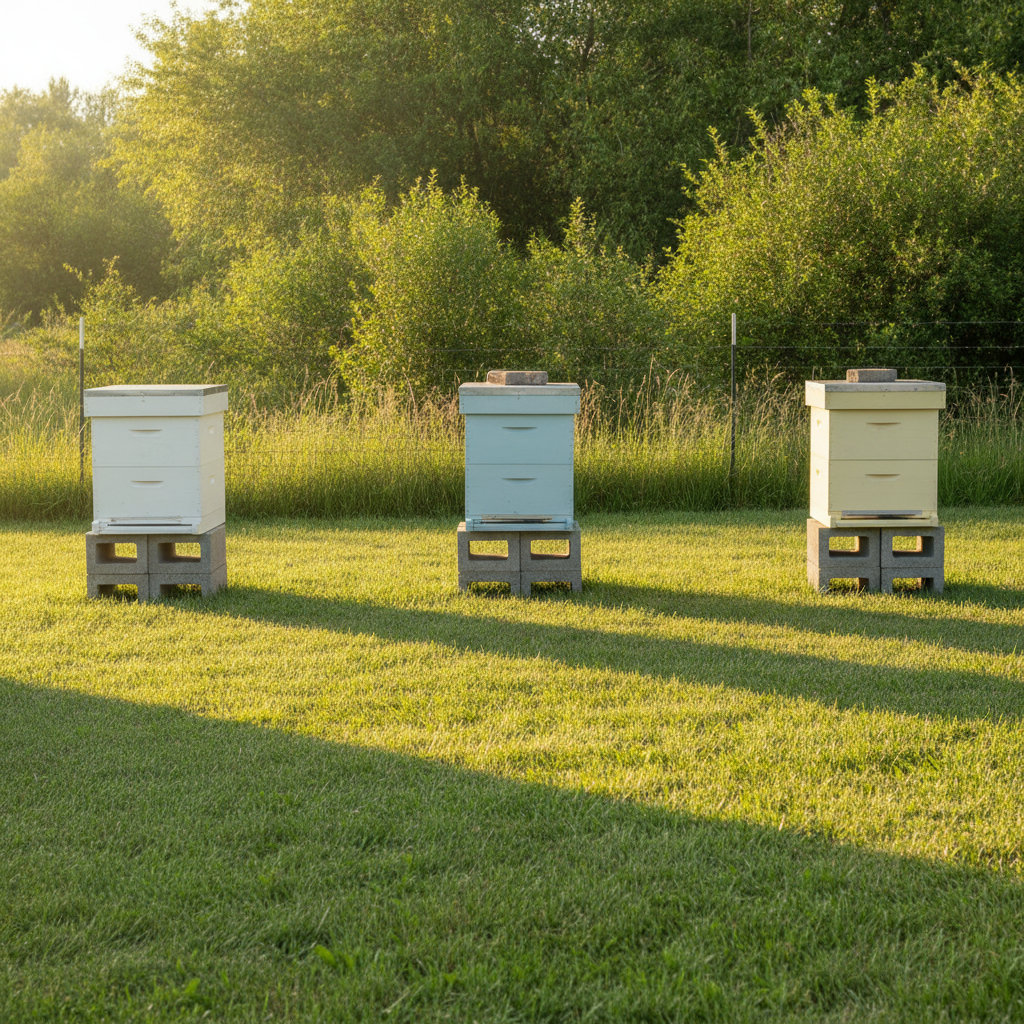
Hive placement should give the colony morning sun, wind protection, dry ground, nearby forage, a quarter-mile-or-closer water source, and easy year-round access for the keeper. According to Mississippi State University Extension, keepers should “orient the entrance of the hive to the south or southeast so your hive will receive 6-8 hours of direct sun starting early in the morning.” Early sun warms the cluster and gets foragers flying earlier in the day, which extends the working hours during a nectar flow. The Mid-Atlantic Apiculture Research and Extension Consortium (MAAREC) adds that bees “prefer to forage within a 2-mile radius of the hive but can travel up to 5 miles if necessary,” and that if fresh water is not present within a quarter mile of the apiary, the keeper should provide “a tank or pan of water with a floating board or crushed rock for the bees to land on.” Pair a south-facing site with a wind block, either a hedgerow or a fence, and place the hives on stands 12 to 18 inches off the ground to keep skunks from scratching at the entrance at night. On our own homestead we lost the first apiary because we picked a low spot that flooded in April; a raised, well-drained pad added the following year has stayed dry through three seasons.
Which Type of Hive Should You Choose?
Three modern hive designs cover almost all backyard beekeeping: the Langstroth, the top-bar, and the Warré. The Langstroth is the default for most U.S. keepers because equipment, replacement parts, and management advice are standardized across every supplier and every extension publication. According to University of Arkansas Extension, “there are two basic types of modern hives, the movable-frame Langstroth hive and the movable-comb top bar hive,” with the Warré appearing as a hybrid. The choice mostly comes down to how you want to work the hive and how much you plan to harvest.
Langstroth Hive
The Langstroth stacks rectangular boxes vertically, each holding 8 or 10 removable frames. Because every extension publication and every supplier catalog is written around it, a new keeper working a Langstroth can walk into any bee club meeting and find someone who runs the same gear. Honey supers, queen excluders, foundation, and extractors all standardize to Langstroth dimensions, and swapping frames between hives to equalize colony strength is straightforward. The tradeoff is weight: a full deep of honey weighs 80 to 90 pounds, which is why many keepers use two mediums instead of one deep for the brood chamber.
Top-Bar Hive
A top-bar hive is a long horizontal box with wooden bars laid across the top; bees build comb hanging down from each bar with no frames or foundation. Comb is cut off the bar to harvest, which means no extractor is required, and lifting a single bar of honey is far lighter than lifting a full super. The tradeoffs are lower honey yields and a much smaller pool of local mentors who can help troubleshoot problems, because Langstroth dominates U.S. extension guidance.
Warré Hive
The Warré, invented by the French monk Émile Warré, uses stacked square top-bar boxes and grows downward: new boxes are added at the bottom, not the top. The design mimics a tree cavity and requires less frequent inspection than a Langstroth. Warré keepers accept lower yields and less-standardized parts in exchange for a more hands-off management style. For most first-year keepers, a two-Langstroth apiary paired with our month-by-month first-year beekeeping guide is the fastest path to a working colony.
How Do You Get Your First Bees?
New keepers source bees three ways: a package, a nucleus colony (nuc), or a captured swarm. According to Alabama Cooperative Extension, “a package of honey bees is the least expensive way to establish a new colony. However, nucs will build up more quickly than package bees.” A package is a screened wooden or plastic box holding roughly 10,000 loose bees, a mated queen in a small cage, and a can of sugar syrup. It is installed by shaking the bees into a prepared empty hive and releasing the queen slowly. A nuc is a small working colony on five drawn frames of comb, complete with laying queen, brood in all stages, pollen, and nectar, and it drops straight into a matching brood box. UF/IFAS Osceola Extension emphasizes lead times: “suppliers commonly take orders for nucleus colonies or package bees in November and December, for delivery in April or May.” That timing surprises most first-year keepers who assume they can decide in March and have bees by the end of the month. The third route, catching a swarm, is free but unpredictable; a good swarm can build fast, but a late-season one may not store enough honey to survive winter. Small-livestock keepers used to planning around seasonal purchases will recognize the pattern; the same lead-time reality applies to raising quail as micro-livestock.
What Is Varroa, and How Do You Manage It?
Varroa destructor is a parasitic mite that feeds on developing and adult bees, transmits deforming viruses, and is now the single most common cause of colony collapse in the United States. According to the University of Missouri Extension, “the varroa mite is the most severe problem in beekeeping, and without treatment, a colony of bees will die from varroa parasitism within 36 months.” USDA NASS 2024 survey data confirms the scale of the problem: “varroa mites were the number one stressor for operations with five or more colonies during all quarters surveyed in 2024, with the highest percentage of colonies affected occurring April through June 2024 at 36.6 percent.” Management is not optional. Every hive in the U.S. carries some level of varroa, and untreated colonies almost always die by their third winter. The current best practice is Integrated Pest Management: monitor mite loads monthly, treat when counts cross an action threshold, and rotate treatment chemistries so mites do not build resistance.
How to monitor
Penn State Extension recommends alcohol wash for field monitoring: “the alcohol wash is the fastest and easiest field mite monitoring method… more reliable than the powdered sugar roll test as fewer variables affect the efficacy.” A typical wash collects about 300 nurse bees from a brood frame, shakes them in isopropyl alcohol, and counts the mites that dislodge. Divide the mite count by three to get percent infestation.
When to treat
The Honey Bee Health Coalition’s 2026 guidance sets a 2 percent action threshold from July through October, when varroa populations peak and winter bees are being reared. Missouri Extension uses a slightly higher trigger for hobby keepers, recommending treatment “when more than 5 percent of the bee population is affected.” Either way, monitoring at least monthly is what turns a healthy August colony into a survivor by March.
How Do You Prepare a Hive for Winter?
Winter prep starts in August, not November, because the bees that live through winter are the ones raised in late summer and early fall. According to Cornell CALS, “the minimum amount of honey you should leave on your full-sized colony is equal to one full deep box, or about 90-100 pounds,” and Cornell advises keepers to “always err on the side of ‘too much’, as it is better to welcome live bees in the spring sporting an extra box full of last season’s honey, than to open a hive full of bees that starved to death.” Mississippi State University Extension recommends 50 to 60 pounds of honey in the top box plus four honey frames in the brood box for southern climates, and says fall keepers should supplement with 2:1 sugar syrup “in the early months of fall” so bees “have enough time to ferment the syrup and turn it into honey reserves for the winter.” Cold-region keepers pair the honey supply with an entrance reducer, a mouseguard, a wind block, and a moisture-absorbing quilt box or shim on top. Do the last varroa treatment before you feed heavily in September; treating over syrup can cross-contaminate the winter stores. Homesteaders juggling multiple animal systems will recognize the fall-prep rhythm; it is the same one that drives common backyard chicken health preparations before hard cold.
Do You Need to Register Your Hives or Join a Club?
State apiary registration is legally required in many U.S. states, and joining a local beekeeping club is the fastest way to close the knowledge gap between reading and doing. According to the New York State Department of Agriculture and Markets, “as of December 23, 2021, all beekeepers in New York State are required to register with the Department and to renew their registration annually.” Other states like Tennessee mandate registration; some, like New Hampshire, keep it voluntary. Check your state department of agriculture before you install bees, because registration usually unlocks free state apiary inspections, which are the best early-warning system for American foulbrood, European foulbrood, small hive beetle, and other reportable pests. According to the Maryland Department of Agriculture, “inspectors visit about two-thirds of Maryland’s apiaries each year and examine colonies for diseases and pests.” Beyond the legal piece, a local club is where a first-year keeper actually learns hive inspection. Most clubs run bee schools: “Maryland beekeeping clubs conduct beekeeping short courses, usually starting in February or March each year… four to six session courses held during the evening with a hands-on Saturday session.” Sign up in December for a February-start class so you finish before your April bees arrive.
Is Beekeeping Worth the Investment in 2026?
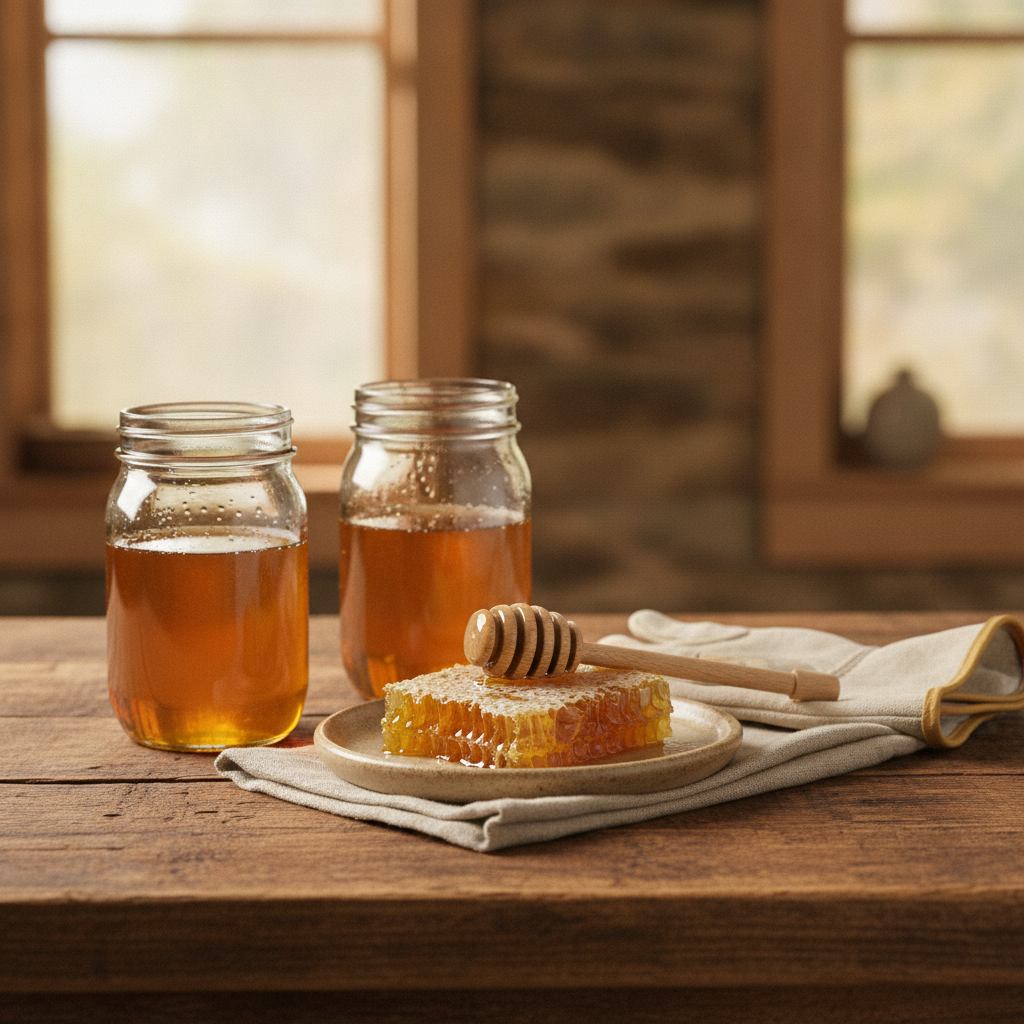
For most homesteaders, beekeeping breaks even by year two on the honey harvest alone and pays back the emotional and pollination dividends every year after. According to USDA NASS, “United States honey production in 2024 totaled 134 million pounds, down 4 percent from 2023. There were 2.60 million colonies producing honey in 2024, up 3 percent from 2023,” at an average yield of 51.7 pounds per hive. Wholesale prices sit at $2.69 per pound in 2024, but backyard keepers selling at farmers’ markets or direct to neighbors commonly clear $10 to $14 per pound for local raw honey. Two hives producing at the national average yield the second year would put 100 pounds of honey on the shelf, which at market prices covers a first-season equipment budget with room to spare. The pollination value across a homestead garden, orchard, and berry patch is harder to price but shows up in fruit set on apples, blueberries, squash, and cucumbers. Beekeeping also fails routinely; a 2024 to 2025 winter loss of 40 to 50 percent is now common even among experienced backyard keepers, which is why Missouri Extension’s advice to start with “between two and five hives” remains the honest first-year plan.
Frequently Asked Questions
How many hours per week does beekeeping actually take?
A settled two-hive apiary averages about one hour per week during the active April-through-October season, spiked by heavier hours during honey harvest and fall feeding. Inspections during the peak nectar flow run roughly 20 to 30 minutes per hive every 10 to 14 days. Winter time drops to almost nothing: a monthly outside check, a hefting of the hive to gauge remaining honey, and any needed fondant feed. The University of Missouri Extension suggests starting with “between two and five hives,” partly so the total time commitment stays realistic in year one.
How much honey will a first-year hive produce?
First-year colonies typically produce very little surplus honey because most of the season’s nectar goes into building comb and winter stores. In a good region, expect 10 to 25 pounds of surplus in year one, and 40 to 60 pounds per hive from year two onward. USDA NASS reported an average U.S. yield of 51.7 pounds per colony in 2024, which is a fair benchmark for an established backyard hive with a healthy queen and no serious varroa problem.
Do you need a big yard to keep bees?
No. A quarter-acre suburban lot is enough for two hives if placement follows local ordinance and gives the bees a clear flight path. According to the Mid-Atlantic Apiculture Research and Extension Consortium, bees “prefer to forage within a 2-mile radius of the hive,” which means the apiary itself does not need to sit on the forage. A hedge, fence, or 6-foot flight barrier at the property line pushes bee flight above head height and keeps neighbors and pets clear.
Are bee stings a real risk for the keeper?
Stings are unavoidable at some frequency, but well-fitted protective gear reduces them to a handful per season. A full veil, gloves, and light-colored long sleeves cover the main sting targets. The larger concern is anaphylaxis in the small fraction of keepers who develop a systemic allergy; anyone experiencing hives, swelling beyond the sting site, or breathing changes should stop keeping bees until a doctor has evaluated them. For most keepers a sting is a passing sting and nothing more.
What is the single most common reason first-year hives die?
Varroa mites, followed by starvation. According to the University of Missouri Extension, “the varroa mite is the most severe problem in beekeeping, and without treatment, a colony of bees will die from varroa parasitism within 36 months.” Untreated late-summer mite loads collapse the winter bee cohort; a hive that looks strong in October can be empty by February. Monthly monitoring from July onward and treatment at a 2 to 5 percent threshold prevents most of this loss.
Can I use a top-bar or Warré hive as a beginner?
Yes, but expect a steeper learning curve because most extension publications, mentors, and standardized equipment are written around the Langstroth. A first-year top-bar keeper will need to build comb management skills that a Langstroth keeper can defer, and Warré keepers give up frame-level inspection almost entirely. Start with a Langstroth if you value written guidance and local mentorship; choose a top-bar or Warré if reduced weight or a more hands-off style matters more than yield.
How do I know if my area even has good beekeeping conditions?
The fastest check is to ask your state apiary inspector or the closest university extension office for local nectar-flow calendars and known problem pests. State registration data, where public, shows how many active apiaries operate in your county, which is a rough proxy for how productive the area is. Local beekeeping clubs also publish region-specific advice; sign up before you invest in bees so you inherit years of accumulated local knowledge.