Ozarks Homesteading Expo 2026: The Complete Attendee Guide
Ozarks Homesteading Expo 2026: The Complete Attendee Guide
The Ozarks Homesteading Expo pulls about 3,000 people into a small Missouri fairground each September, and once you have spent a weekend there it is easy to see why. Two full days of hands-on workshops, a marketplace of small farm vendors, and a crowd of people who actually raise their own food make this one of the most practical homesteading events in the country. The 2026 edition runs September 4-5 at the Webster County Fairgrounds in Marshfield, Missouri, with general admission at $69 through SimpleTix.
I drove down from our place in zone 7 for the first time in 2023 with a notebook, a folding chair, and a very short list of questions about milking a Nubian. I came home with pages of notes on cheesemaking, three cuttings of elderberry, a used cast-iron corn stick pan, and the phone numbers of two Missouri families now on our regular text thread. That is what makes the expo different from a Google search or a YouTube playlist. It gives you a network.
This guide covers the details you need to plan the trip and get real value from your two days: what the expo is, when and where it happens, who runs it, what the workshops actually cover, what to pack, what mistakes to avoid, and how the Ozark climate and soils shape the kind of homesteading you will see modeled all around you. If you are still building your baseline skills, our companion guide on starting a suburban homestead pairs well with what you will learn on the fairgrounds.
What Is the Ozarks Homesteading Expo?
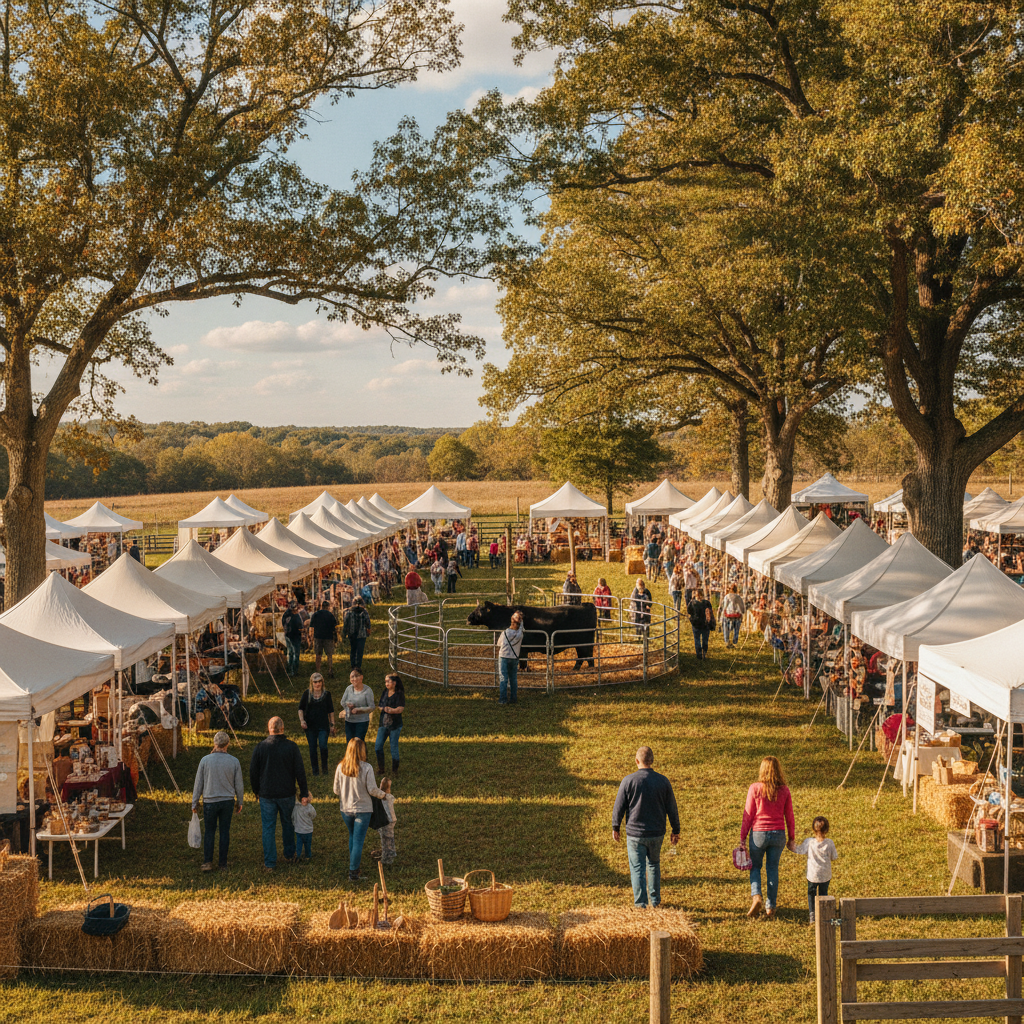
The Ozarks Homesteading Expo is a two-day educational fair for hands-on homesteaders, held every September in the Missouri Ozarks. According to the official event site, the expo features “40+ teaching sessions, demonstrations, workshops, food trucks and a large homesteading related vendor marketplace.” Sessions run from early morning through late afternoon on both days, with several tracks running in parallel so that a family of four can split up and cover different subjects.
Founder Cheryl Franklin launched the expo in 2019 in Neosho, Missouri, and it grew fast enough to require a move to the larger Webster County Fairgrounds in Marshfield. Ozarks Alive, a regional cultural nonprofit, describes Franklin’s mission simply: “Franklin emphasizes that it’s important to get to know like-minded people so you can share skills.” That framing matters. The expo is not a trade show with polished booths and glossy sales pitches; it is a working event where an instructor might butcher a hog outdoors while the next tent over teaches sourdough starter care.
When and Where Is the 2026 Ozarks Homesteading Expo?
The 2026 Ozarks Homesteading Expo takes place Friday and Saturday, September 4-5, 2026, at the Webster County Fairgrounds in Marshfield, Missouri. The fairgrounds sit just off I-44 about 25 miles east of Springfield, which is the nearest city with major hotels, a commercial airport (SGF), and grocery stores for stocking a cooler on the drive in.
Tickets are sold through SimpleTix. According to the 2026 ticket page, “General Admission with VIDEO ACCESS to all 2026 videos is $69” and “Kids 11 and under are FREE but must have a ticket.” That video access is a genuine value because you cannot physically attend every session; parallel tracks force you to pick, and the recordings let you catch the ones you missed. Local hotels in Marshfield fill early; many attendees book rooms in Springfield or bring a tent for on-site or nearby primitive camping. Book lodging by June if you can. Weather in early September in south-central Missouri averages highs in the low to mid-80s with occasional afternoon thunderstorms, so plan for both sun and rain.
What Kinds of Workshops Should You Expect?
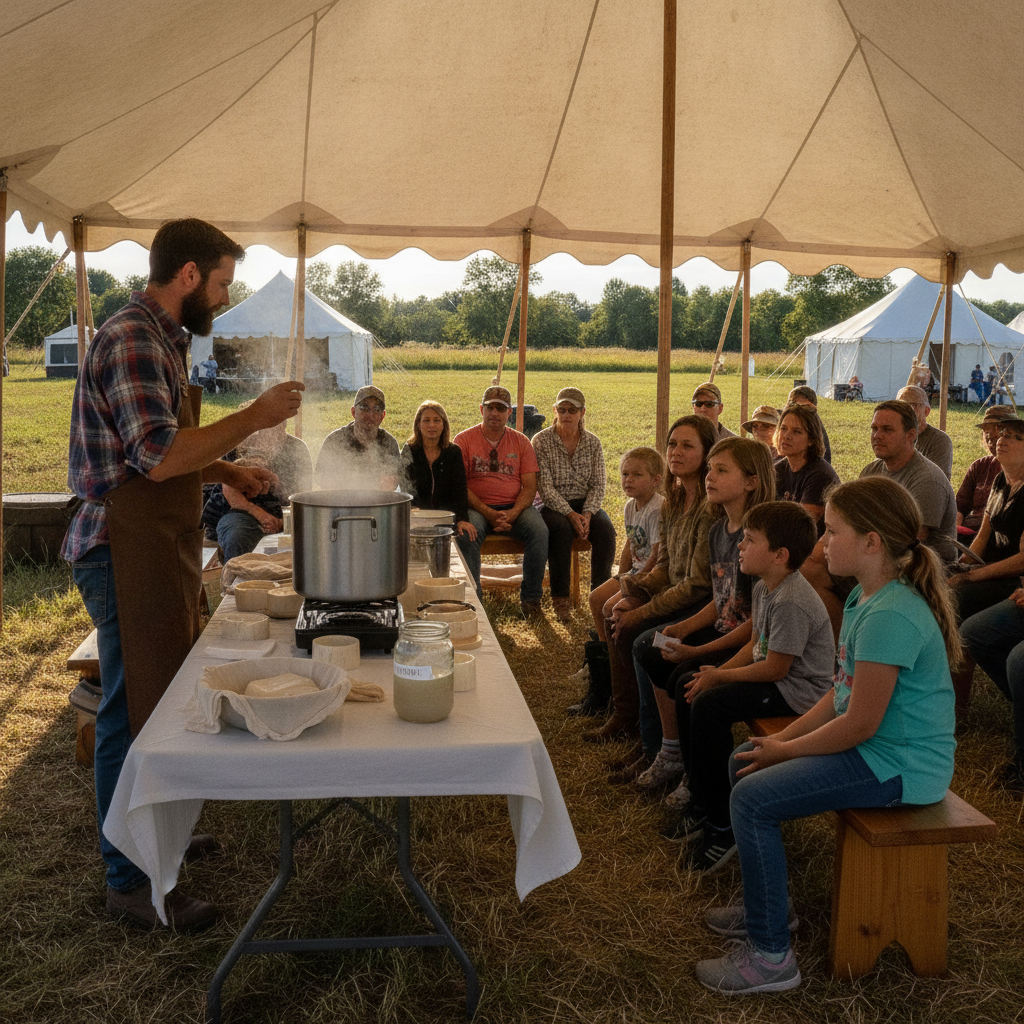
Workshop tracks cover almost every practical skill a self-sufficient household could want. The event site lists topics that include “livestock raising and processing, canning, beekeeping, cheesemaking, bread making, soap making, foraging, herbal medicine, soil health, solar, fermenting, all season gardening, orchards, off-grid living, blacksmithing, herbal medicine and so much more.” That is a genuinely broad menu, and the sessions lean heavily on demonstrations rather than slide decks.
Coverage of past years by the Marshfield Mail captured the flavor well: “Attendees learned everything from hog and chicken processing to canning, fencing, rainwater collection, and year-round gardening, as well as raising goats and chickens, trapping predators, blacksmithing and sawmilling.” Newcomers often gravitate to the animal processing demos, which are frank and unhurried; families with kids tend to camp out at the beekeeping and soapmaking tents where the pace is slower and every child gets a turn. If you are planning solar for a shed or barn, our off-grid solar guide covers the math to bring with you into those sessions.
Who Attends the Ozarks Homesteading Expo?
Roughly 3,000 people from across the country attend the Ozarks Homesteading Expo each year. The Marshfield Mail reported that “the sixth annual Ozarks Homesteading Expo took place at the Webster County Fairgrounds on September 5-6, and had about 3,000 people in attendance who came from all over the country.” That mix of locals and long-drive travelers gives the event an interesting texture. You will meet lifelong Ozark farm families next to first-year suburban homesteaders from Chicago and Dallas who drove ten hours to be there.
The crowd skews family-oriented. Multi-generational groups are common, and children run in packs between the goat pen and the food trucks. That family-friendly vibe is one reason to bring your kids along; the expo is one of the better real-world environments for pairing them with the kind of age-appropriate tasks in our guide on homesteading with kids. If you are attending alone, plan on eating dinner with strangers at least once. That is how most of the durable connections start.
How Do You Plan Your Two Days at the Expo?
The single most useful planning habit is to download the schedule the day it drops (usually about six weeks before the event) and highlight your top three sessions per day, plus a backup for each. Parallel tracks mean you cannot see everything live, so the video-access pass in the general admission ticket becomes your safety net. Sessions on the official site are grouped by topic area, which makes it easy to build a “livestock day” and a “food preservation day” if you want to focus.
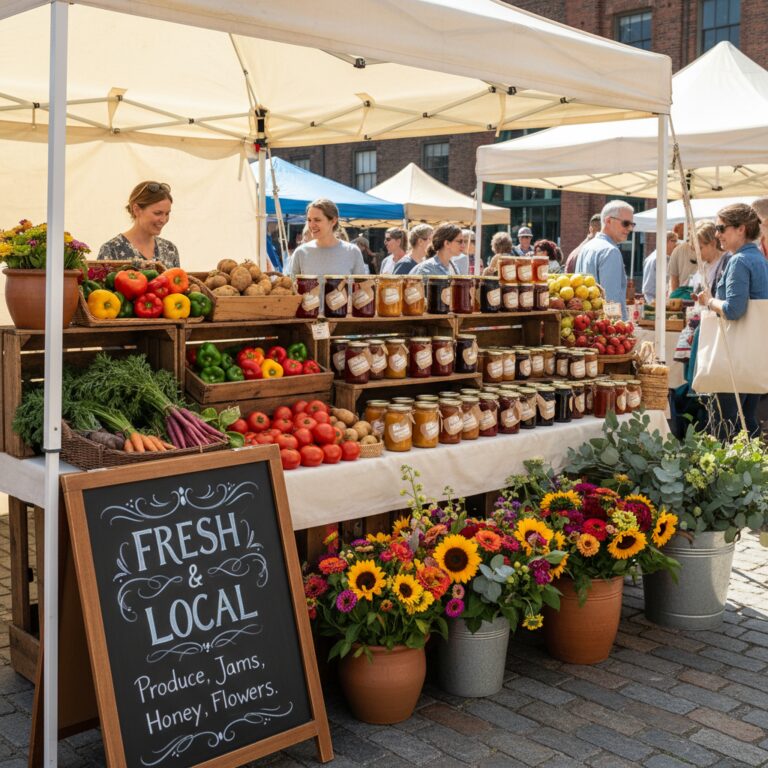
Leave real breaks in your schedule. The best conversations at the expo happen at the vendor booths and around the food trucks, not inside the class tents. Aim to spend at least 90 minutes each day just walking the marketplace and talking to sellers. If you plan to buy live plants, poultry chicks, or heavy equipment (many attendees do), park close to your assigned area on day two so you are not hauling starts and seedlings a quarter mile in September heat. Consider staying an extra half day; the Sunday drive home is a good time to visit a nearby farm supply or a regional feed store you cannot access from home. For readers still watching their startup budget, our $1,000 homesteading budget guide is worth revisiting before you fill your truck.
What Should You Pack for the Ozarks Homesteading Expo?
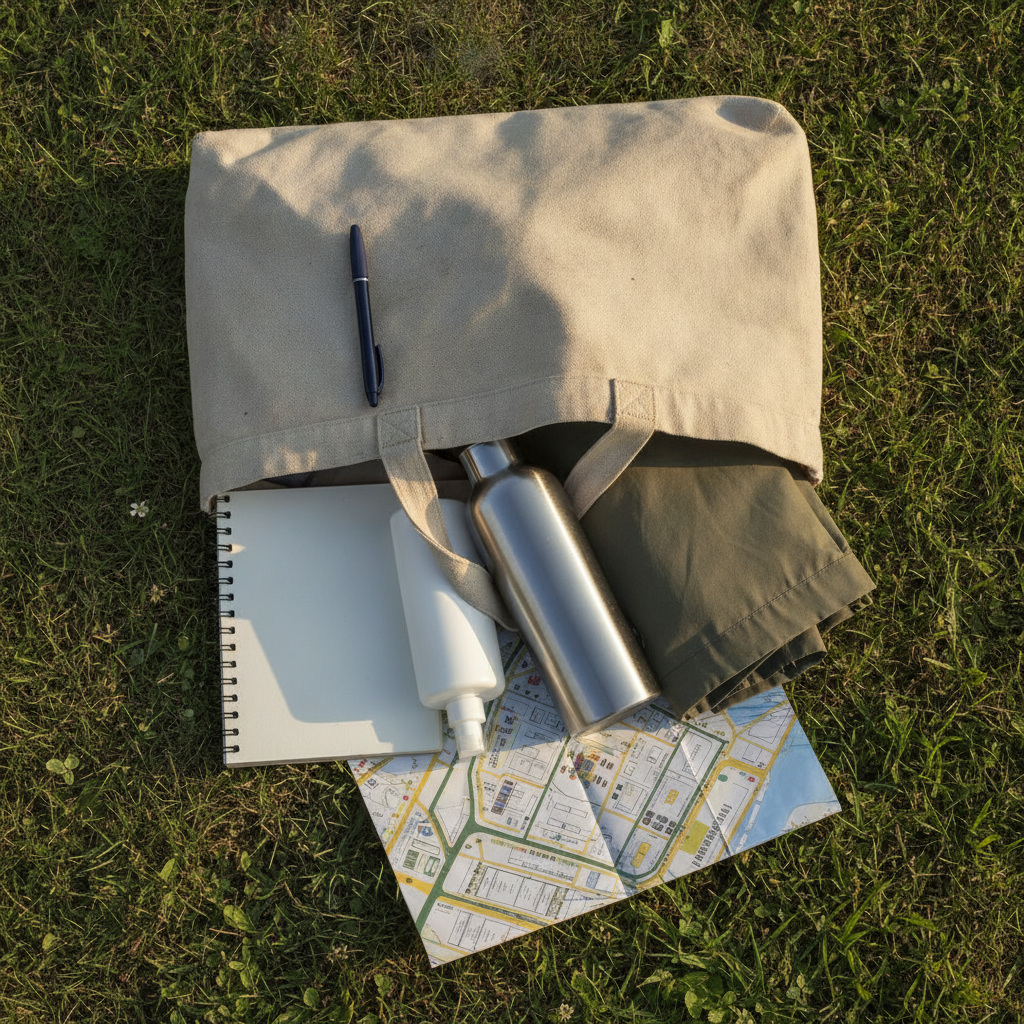
Bring practical field gear rather than conference gear. September in the Missouri Ozarks means daytime highs in the low-to-mid 80s, high humidity, and reliable afternoon storm risk, so the packing list is closer to a country fair than a hotel event. A pop-up canopy is not needed (all sessions have shade), but personal sun protection and rain readiness are.
A working pack list for two days looks like this:
- A refillable water bottle (fill stations are on-site)
- A brimmed hat and reef-safe sunscreen
- A lightweight rain jacket or poncho
- Closed-toe walking shoes or work boots (fairgrounds turf gets uneven)
- A spiral notebook and two pens (phone notes are hard in the sun)
- A folding camp chair if you plan to sit through long demos
- A cooler with lunch and snacks for the truck (food trucks are good but lines get long midday)
- Cash and a card (some vendors are cash-only for smaller items)
- An empty tote or crate for marketplace purchases
- A first aid kit with bandages, electrolyte tablets, and antihistamines
If you plan to bring home live plants or animals, bring the crates, cardboard boxes, or ventilated totes you will need to transport them safely. The University of Missouri Extension’s guidance on small acreage business planning reminds new homesteaders that impulse livestock purchases are one of the most common early mistakes, so plan those buys in advance rather than deciding at the pen.
Why Does the Ozark Region Suit Homesteading So Well?
The Ozark region combines a long growing season, generous rainfall, and rugged mixed forests, a combination that makes small-scale homesteading unusually workable. Under the 2023 USDA Plant Hardiness Zone Map, according to Ozarks public radio station KSMU, “the Missouri Ozarks fall largely into zones 6b and 7a in the new Plant Hardiness Zone Map from the USDA. In 2012, the Ozarks fell mostly in Zones 6a and 6b.” The University of Arkansas Cooperative Extension confirms the Arkansas Ozarks now sit “almost entirely in zones 7a, 7b, 8a, and 8b.” Warmer average winter lows mean a wider palette of perennials and fruit trees.
Rainfall is another reason the region supports homesteads. A CoCoRaHS climate summary for Missouri reports that “mean annual precipitation varies along the same gradient as temperature, from a low of 34 inches in the northwest to a high of 50 inches in the southeast.” The Ozarks sit on the wet end of that gradient at roughly 45-46 inches per year, enough to support pastures without irrigation in most seasons. The USGS profile of the Ozark Highlands notes that “the landscape features rugged uplands, some peaks higher than 2,500 feet above sea level, with exposed rock and varying soil depths and includes extensive areas of karst terrain,” which means well water, springs, and cave-cooled root cellars are all realistic homestead assets in the region.
Ozark Soils Are Rocky But Productive
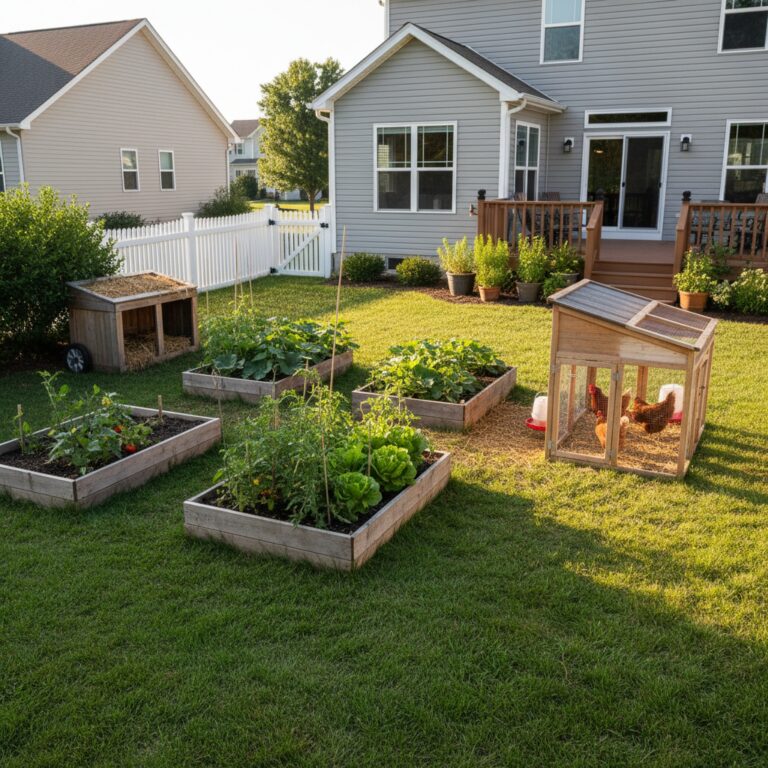
The dominant soil across much of the Ozarks is the Clarksville series. USDA’s official series description calls Clarksville soils “very deep, somewhat excessively drained soils formed in hillslope sediments and the underlying clayey residuum from cherty dolomite or cherty limestone on steep side slopes and narrow ridgetops.” Translation: chert rock everywhere, good drainage, moderate fertility once amended. Homesteaders in the region typically build raised beds or heavily composted no-till plots rather than fighting the native rock, then use the well-drained slopes for orchards, pasture, and forest-farmed products.
Regional Livestock and Poultry Fit the Land
Arkansas’ 2024 Ag Profile from the University of Arkansas Cooperative Extension notes that “the poultry industry is the leading industry of Arkansas animal agriculture providing over 40,000 jobs and 40% of the total cash receipts” and that “Arkansas ranks 11th in the country in terms of cattle production. The state has 23,385 cattle farms and that’s 54% of all farms in the state.” That is why so many expo workshops focus on chickens, meat birds, and beef cattle. If pigs are on your list, our guide to raising pigs on a small homestead pairs well with the hog processing demos you will see at the fairgrounds.
What Other Ozark Homesteading Events Are Worth Visiting?
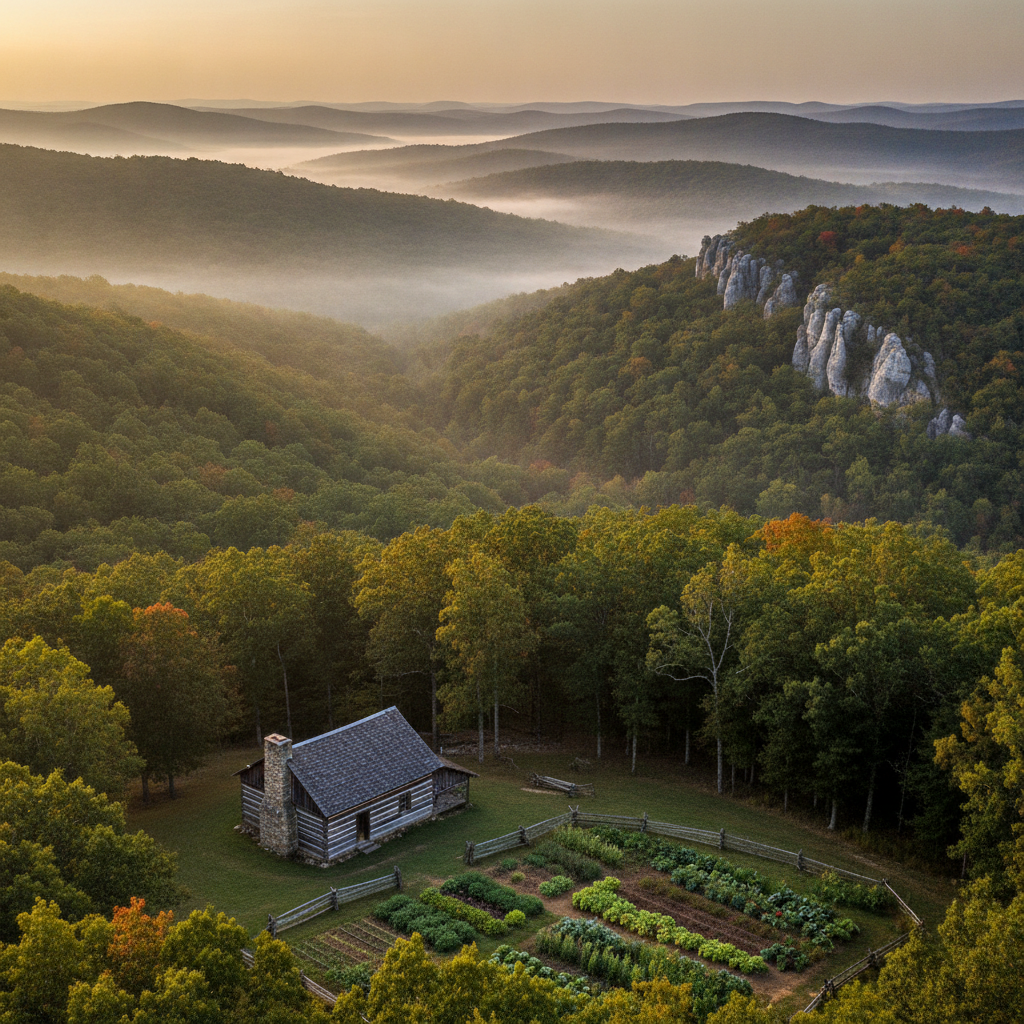
The Ozarks Homesteading Expo is the largest homesteading-specific event in the region, but several complementary gatherings are worth adding to your calendar. The Ozark Folk Center State Park in Mountain View, Arkansas, is the most important of these. According to the Encyclopedia of Arkansas, “the Ozark Folk Center State Park at Mountain View (Stone County) consists of 637 acres… the Ozark Folk Center State Park officially opened in May 1973.” It is a working craft village that runs Ozark Homesteading Workshops as part of its Ozark Farmways programming, plus long-running Heritage Herb Garden events every May and October.
The Arkansas State Parks description of the Folk Center’s Heritage Herb Garden explains that it is “where old-time pass-along plants, medicinal herbs, native plants, and edible herbs are grown,” and that garden is worth a full afternoon if you attend the herb workshops. Beyond the Folk Center, the University of Missouri Center for Agroforestry publishes guidance on forest farming (extension publication AF1010) that pairs well with the Marshfield expo’s foraging and mushroom tracks. Regional forest-farm operations like Ozark Forest Mushrooms in Salem, Missouri, model what a full-time understory business can look like at scale. St. Louis Public Radio profiled the Hellmuth family who “grow a special variety of shiitake mushrooms on white oak logs under a stand of yellow pine trees” as a working example.
How Ozark Homesteading Events Compare
Attendees often ask how the Ozarks Homesteading Expo stacks up against nearby options. The short answer is that the Marshfield expo is the biggest, most workshop-dense, and most affordable per-hour of instruction, while the Ozark Folk Center’s programs are smaller, more craft-focused, and family-vacation-friendly. The table below summarizes the differences based on the official event pages, University of Arkansas Extension resources, and Encyclopedia of Arkansas records.
| Event | Location | Typical Dates | Focus | Cost (2026) |
|---|---|---|---|---|
| Ozarks Homesteading Expo | Marshfield, MO (Webster County Fairgrounds) | First weekend of September | 40+ workshops on livestock, food, off-grid systems, vendors | $69 (video access included) |
| Ozark Folk Center Homesteading Workshops | Mountain View, AR (Ozark Folk Center State Park) | Weekends, seasonal | Traditional crafts, herb garden programs, homestead skills | Included with Craft Village admission |
| Heritage Herb Garden Programs | Mountain View, AR (Ozark Folk Center) | May and October | Culinary and medicinal herbs, native plants | Included with Craft Village admission |
Common Ozarks Homesteading Expo Mistakes to Avoid
A handful of avoidable errors keep first-time attendees from getting the full value of the weekend. These come up in nearly every post-event debrief I have had with other travelers.
- Waiting to buy tickets. The event has grown fast and some workshops now cap attendance. Buy on SimpleTix as soon as the calendar drops.
- Skipping the vendor marketplace. Some of the best information exchanges happen at the vendor booths, not in the class tents. Budget 90 minutes per day for the market.
- Trying to attend every session. Parallel tracks make full coverage impossible. Pick three per day, use the recordings for the rest.
- Under-hydrating. Missouri humidity in September will catch you off guard. Refill your bottle at every break.
- Impulse livestock purchases. If you have not researched breed suitability for your climate, wait. The Missouri Extension’s small acreage planning guide covers the pre-purchase checklist.
- Ignoring the food-preservation track. Even if you came for livestock, the canning and fermenting sessions are among the highest-rated year after year.
- Leaving Sunday morning. Some of the deepest conversations happen the last afternoon and evening. Stay through the closing session if you can.
Tips for a Great Ozarks Expo Weekend
- Introduce yourself at every table. The expo runs on relationships. A ten-minute conversation with a Missouri goat farmer often turns into a season-long mentor.
- Bring hard copies of your questions. Vendors and instructors answer better when you show up with a written list rather than trying to remember what you meant to ask.
- Trade small gifts. A jar of honey from your bees, a card of your homestead’s name, or seeds from an heirloom variety open doors faster than business talk.
- Use the video access. Rewatch your top sessions in October when your notes are cold. You will catch details you missed live.
- Plan a rest day after. The weekend is physically tiring. Do not schedule anything demanding for the Monday after.
- Bring your emergency food-storage questions. Attendees regularly cite the canning and pantry-planning sessions as most useful; our 3-month pantry guide is a good pre-read.
- Talk to families with older kids. Their teens have often already made a homestead income from soap, honey, or eggs, and their advice is gold if you have younger children coming up.
Frequently Asked Questions
When Is the 2026 Ozarks Homesteading Expo?
The 2026 Ozarks Homesteading Expo is Friday and Saturday, September 4-5, 2026, at the Webster County Fairgrounds in Marshfield, Missouri. Doors typically open in the morning both days, with classes running through late afternoon. Confirm exact hours on the official schedule at ozarkshomesteading.com closer to the event.
How Much Do Ozarks Homesteading Expo Tickets Cost?
General admission is $69 for the 2026 event through SimpleTix, and that price includes video access to every recorded 2026 session. Children age 11 and under are free but still require a reserved ticket. Higher-tier passes with early entry, reserved seating, or workshop kits are sometimes offered; check the SimpleTix listing for current options.
Where Should I Stay During the Expo?
Marshfield has a small number of hotels that book out quickly, so many attendees stay 25 miles west in Springfield, Missouri, where lodging is more plentiful and often less expensive. On-site or nearby primitive camping is popular with families and long-haul travelers. Book by June for the best selection in either town.
Is the Ozarks Homesteading Expo Family-Friendly?
Yes. The expo is explicitly family-oriented; kids 11 and under attend free with a ticket, and multi-generational groups are common. Beekeeping, soapmaking, and cheesemaking demos work well for younger children. Livestock processing demonstrations are frank and unedited, so parents may want to preview those sessions before bringing sensitive kids. If you are new to bringing children to hands-on farm settings, our guide on age-appropriate homestead tasks is a good primer.
What USDA Zone Are the Ozarks In?
The Missouri Ozarks are mostly in USDA Hardiness Zones 6b and 7a under the 2023 map, according to Ozarks NPR affiliate KSMU. The University of Arkansas Cooperative Extension reports that the Arkansas Ozark Highlands sit in zones 7a and 7b. That range supports a wide variety of fruit trees, berries, hardy perennial herbs, and cool-season vegetables through much of the year.
Can I Attend Without Any Homesteading Experience?
Absolutely. The Ozarks Homesteading Expo draws many first-year suburban and urban attendees each September. Instructors pitch introductory sessions specifically at beginners, and the video-access pass lets you rewatch material until it sticks. If you are still weighing whether homesteading is right for your situation, the guide on homesteading with no land is a useful starting point before you arrive.
What Should I Wear to the Expo?
Wear closed-toe walking shoes or work boots, a brimmed hat, and layered clothing that can handle Missouri’s early-September humidity, sun, and afternoon storms. Skip anything you would not want to get muddy; some demos happen in outdoor pens and rings. A lightweight rain jacket in your bag saves the day at least once each expo.
The Ozarks Homesteading Expo is one of the few regional events where you can walk out of a weekend with real skills, a marketplace of tested tools and starts, and a small network of neighbors who will pick up the phone when you have a lambing question at 4 a.m. in February. Buy the ticket early, pack for the weather, plan your top sessions, and leave real space for the conversations between them. That is where the expo becomes more than a class calendar.