Relating to Beekeeping Crossword Clue: APIAN, APIARIAN & The Real World Behind the Answer
If you landed here mid-puzzle, the fastest answer is APIAN for a five-letter grid and APIARIAN for an eight-letter one. Both mean “of or relating to bees or beekeeping,” and both trace back to the Latin word apis. The rest of this guide is for anyone who wants to know why those words exist, what real beekeeping looks like on a small homestead, and how to move from crossword curiosity to a working hive in your own backyard.
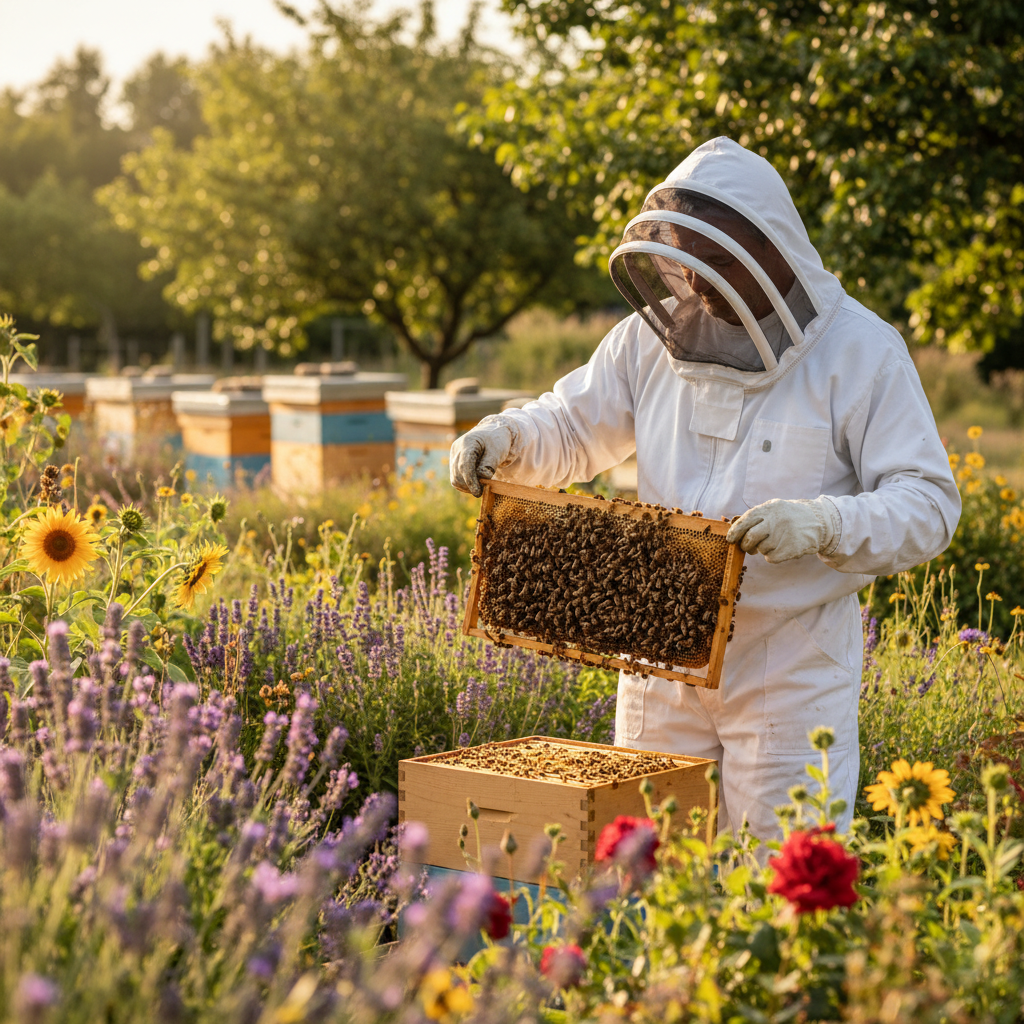
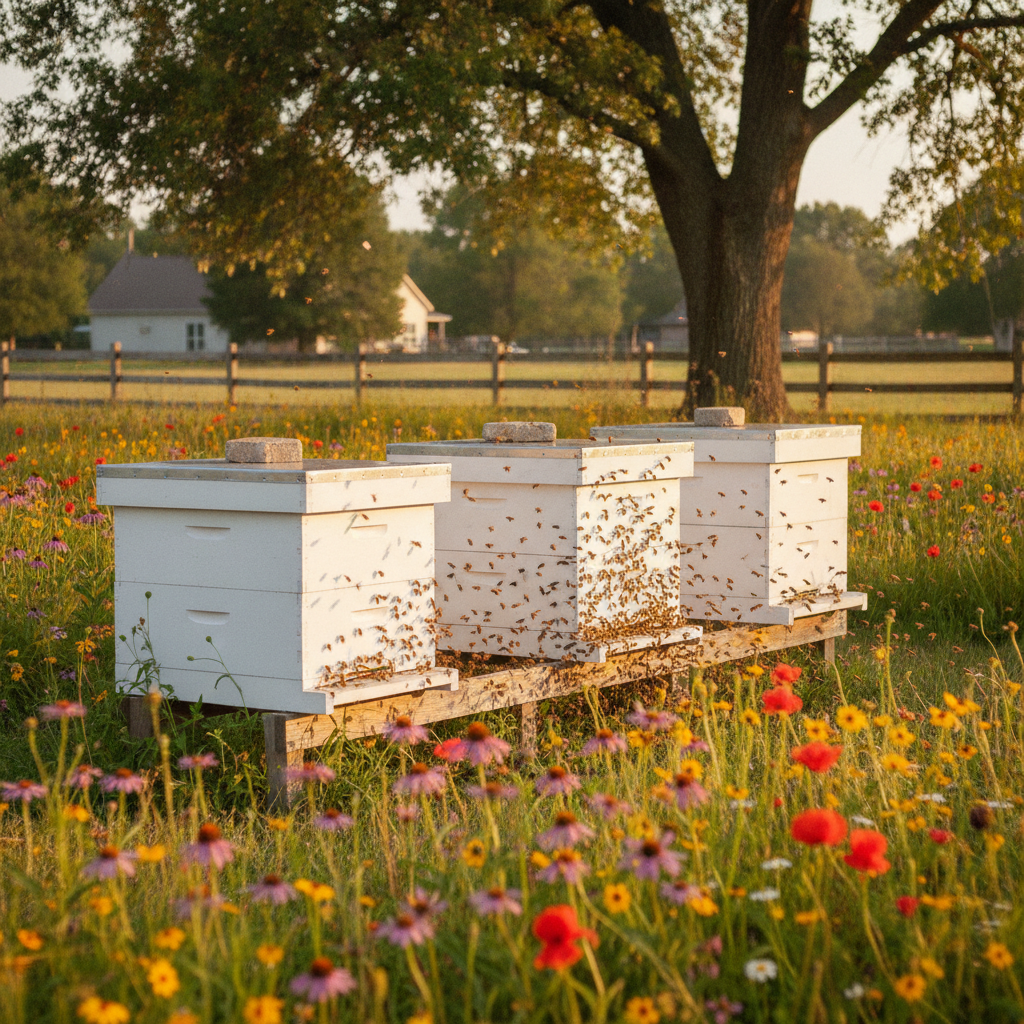
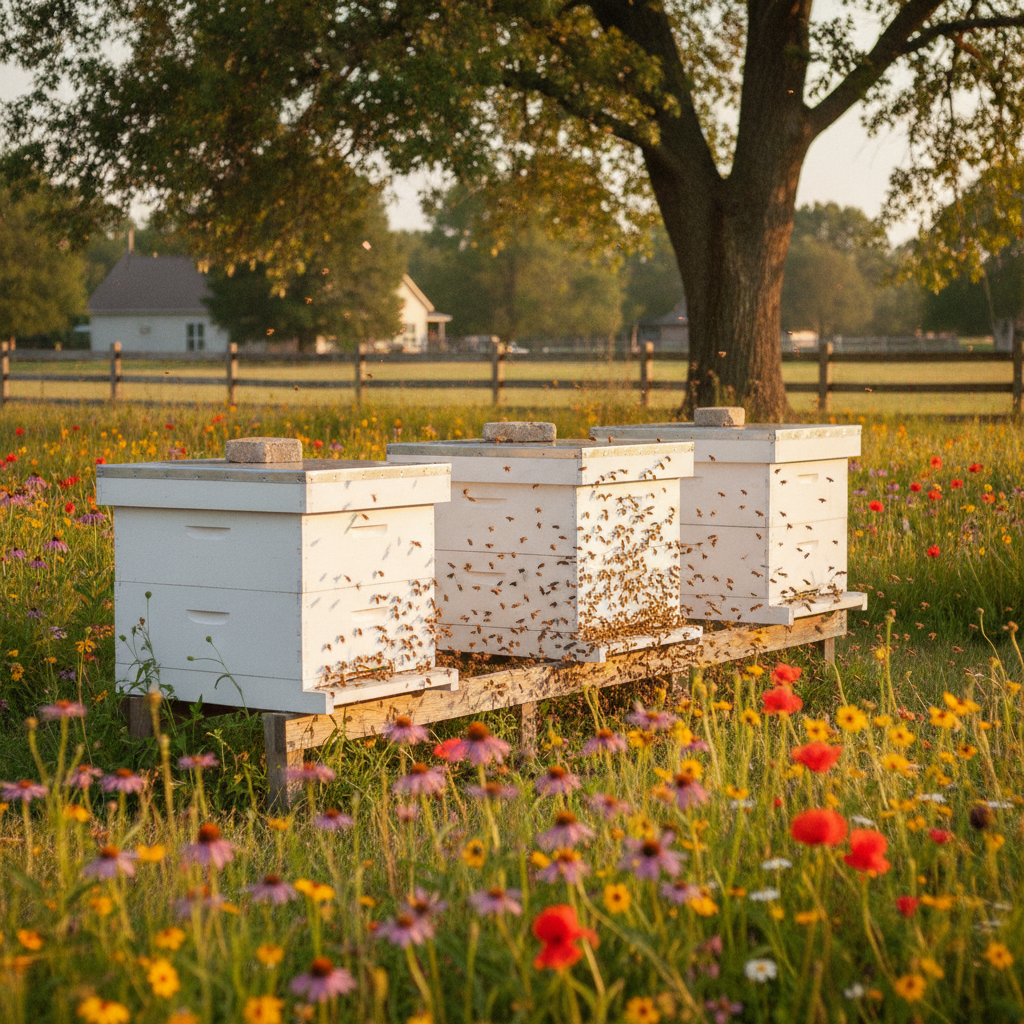
I keep four Langstroth hives on our farm in the Missouri Ozarks. After three seasons of losing swarms, misreading brood patterns, and finally producing a decent harvest, I can tell you that “apian” describes a hobby that is equal parts biology lesson, carpentry project, and weather forecast. The crossword clue is a doorway. Walk through it.
What Is the Crossword Answer for “Relating to Beekeeping”?
The five-letter answer is APIAN. The eight-letter answer is APIARIAN. According to Merriam-Webster, apian means “of or relating to bees,” while apiarian is defined as “of or relating to beekeeping or bees.” Which one fits your grid depends entirely on the letter count and the crossing letters. Puzzle editors from the Wall Street Journal to the New York Times use both, though APIAN shows up far more often because five-letter answers are easier to fit into standard American crossword grids.
You may also encounter APIARIST (a beekeeper, 8 letters), APIARY (the yard where hives are kept, 6 letters), or APIS (the Latin genus name, 4 letters). If the clue is phrased as “beekeeper” rather than “relating to beekeeping,” reach for APIARIST first. Merriam-Webster records the first known use of apiarian in 1790, so this is not modern jargon; it is technical vocabulary editors have leaned on for more than two centuries.
Where Do the Words APIAN and APIARIAN Come From?
Both words trace to Latin apis, meaning “bee,” through the noun apiarium, meaning “beehive stand.” Merriam-Webster’s etymology notes that “the root word ‘apiary’ itself is borrowed from Latin apiarium, from apis ‘bee.'” The Latin word apis is the same root that gives us the scientific genus name for the honey bee, Apis mellifera, which literally means “honey-carrying bee.”
English arrived at these terms late. According to the Oxford English Dictionary, “the earliest known use of the adjective apian is in the 1860s, with OED’s earliest evidence from 1862, in a translation by Fitzedward Hall, oriental scholar and philologist.” APIARIAN is older by nearly a century, with a first known use of 1790 in Merriam-Webster’s records. That eighty-year gap tells you something interesting: English-speaking beekeepers had a technical adjective for their trade a full generation before poets and translators started reaching for the shorter, more literary APIAN. The words are not synonyms in feel. Apiarian sounds like a trade term. Apian sounds like something a Victorian essayist would write.
What Does “Apian” Actually Describe?
Apian describes anything belonging to the world of bees, from a single worker foraging on clover to a national beekeeping industry that moves millions of hives across state lines each spring. According to the USDA, “about one-third of the food eaten by Americans comes from crops pollinated by honey bees, including apples, melons, cranberries, pumpkins, squash, broccoli, and almonds.” That single sentence is the reason the word matters outside a crossword grid.
The apian world is bigger than most people realize. The USDA National Agricultural Statistics Service publishes an annual Honey Bee Colonies report tracking, in its own words, “honey bee colonies, lost colonies, added colonies, renovated colonies and colonies affected by stressors by State and U.S.” Somewhere between 2.5 and 2.9 million managed colonies live in the United States at any given time, spread across almond orchards in California, blueberry fields in Maine, and rooftop apiaries in Brooklyn. When you use “apian” in a sentence, you are pointing at all of them at once.
What Is Beekeeping, Really?
Beekeeping is the deliberate management of honey bee colonies inside human-built hives, usually for honey, wax, pollination services, or the sheer pleasure of watching a superorganism run itself. A backyard beekeeper is not really “raising” bees the way a farmer raises chickens. You are providing a well-designed cavity, monitoring for pests, harvesting a fraction of what the colony stores, and staying out of the way the rest of the time.
According to Penn State Extension, a full beekeeping curriculum covers “bee biology, behavior, hive management, equipment, diseases, pests, bee products, and pollination.” That list is the shape of the hobby. Each item is its own rabbit hole. You will probably spend your first year on biology and equipment, your second year on disease management, and every year after that on weather and timing. My first hive died in February from starvation because I harvested too much honey the previous fall. That mistake taught me more than any book.
How Do You Get Started With Backyard Beekeeping?
The best first step is education, not equipment. Michigan State University Extension puts it plainly: “Before buying honey bees and equipment, you should take time to learn about beekeeping and connect with a local beekeeping community, as beekeeping has a steep learning curve.” Spend the winter reading, taking a class, and finding a local club before you order a single frame.
A realistic first-year path looks like this: take an in-person beginner course through your state extension service between November and February, join a local beekeeping association (dues are usually $20 to $40 a year), buy two complete Langstroth hive kits so you can compare healthy against struggling colonies, order two three-pound packages of bees or two nucleus colonies for April delivery, and set aside about $600 to $900 for the whole starter setup including protective gear. If you would rather go deeper before ordering bees, our complete beginner’s guide to backyard beekeeping walks through every decision in the order you will face it.
What Equipment Does a New Beekeeper Need?
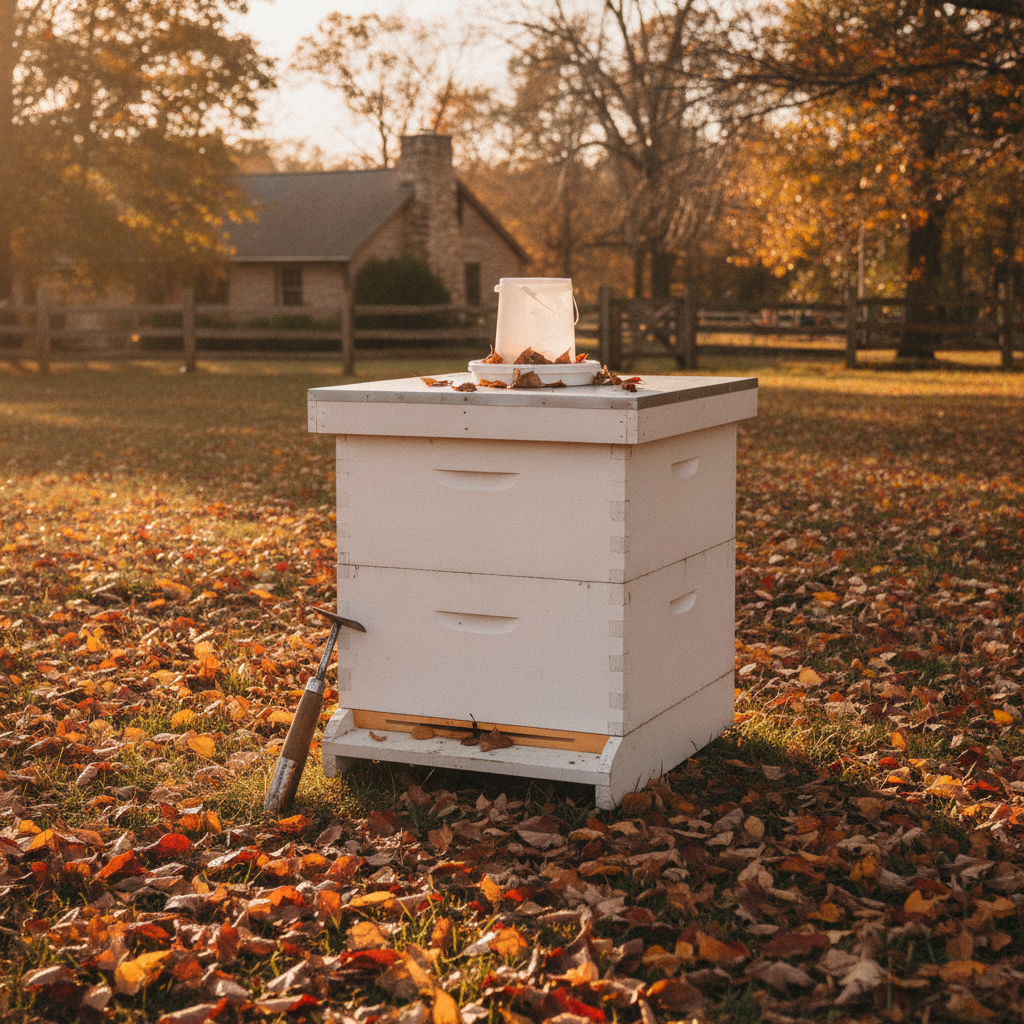
You need a hive, a smoker, a hive tool, protective clothing, and a feeder. That is the honest short list. Everything else is optional or specialized. The standard hive across North America is the Langstroth, patented by Reverend Lorenzo Langstroth in October 1852. According to the historical record, “in 1851, Reverend Lorenzo Langstroth (1810 to 1895), a native of Philadelphia, noted that when his bees had less than 1 cm of space available in which to move around, they would neither build comb into that space nor cement it closed with propolis.” That observation, now called “bee space,” is why modern frames slide in and out cleanly for inspection.
Budget roughly $250 to $400 for one complete Langstroth setup with two deep boxes, twenty frames, a bottom board, an inner cover, and a telescoping top cover. Add $80 to $150 for a full ventilated bee suit, $30 to $50 for a stainless-steel smoker, $10 for a hive tool, and $15 to $30 for a top or entrance feeder. Buy pine, not cedar, and buy assembled hives if you have never used a table saw. Cheap unassembled kits cost the same by the time you add glue, nails, and swearing.
How Is a Honey Bee Colony Organized?
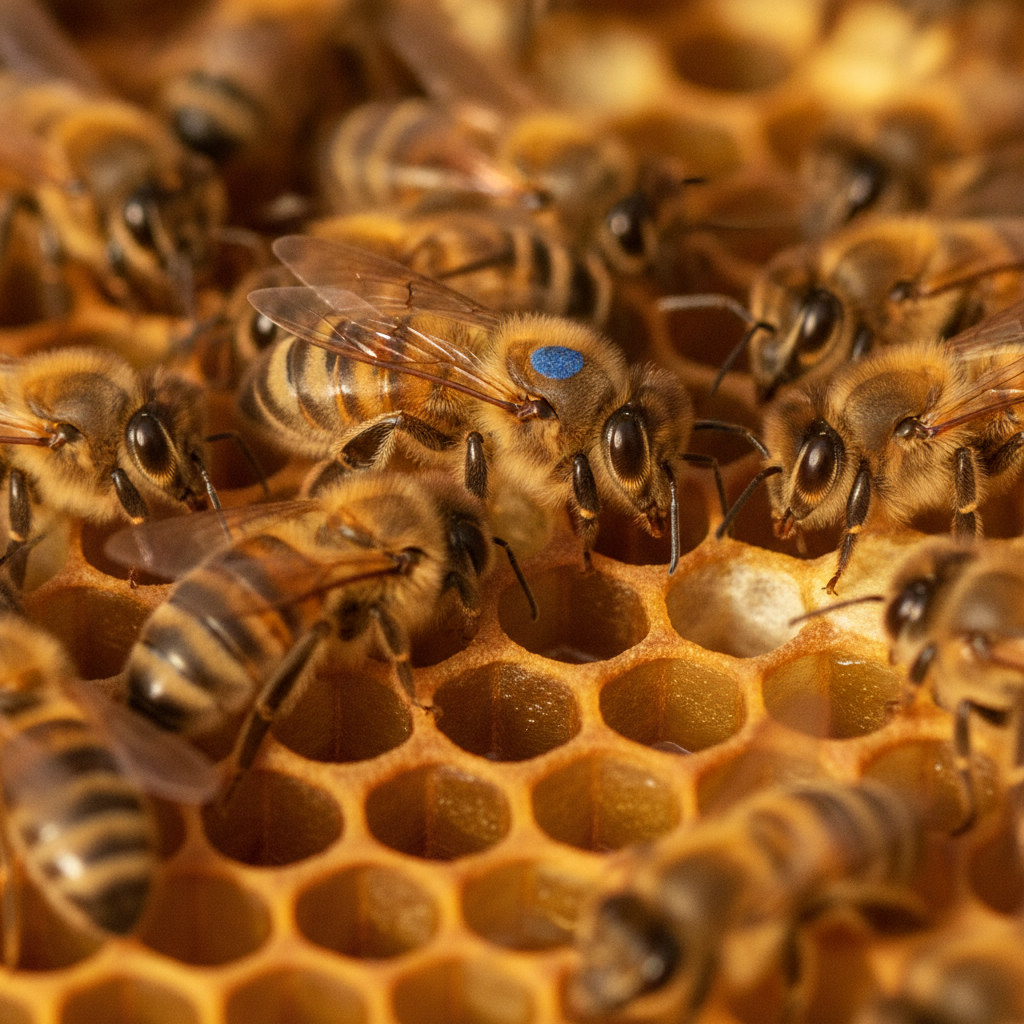
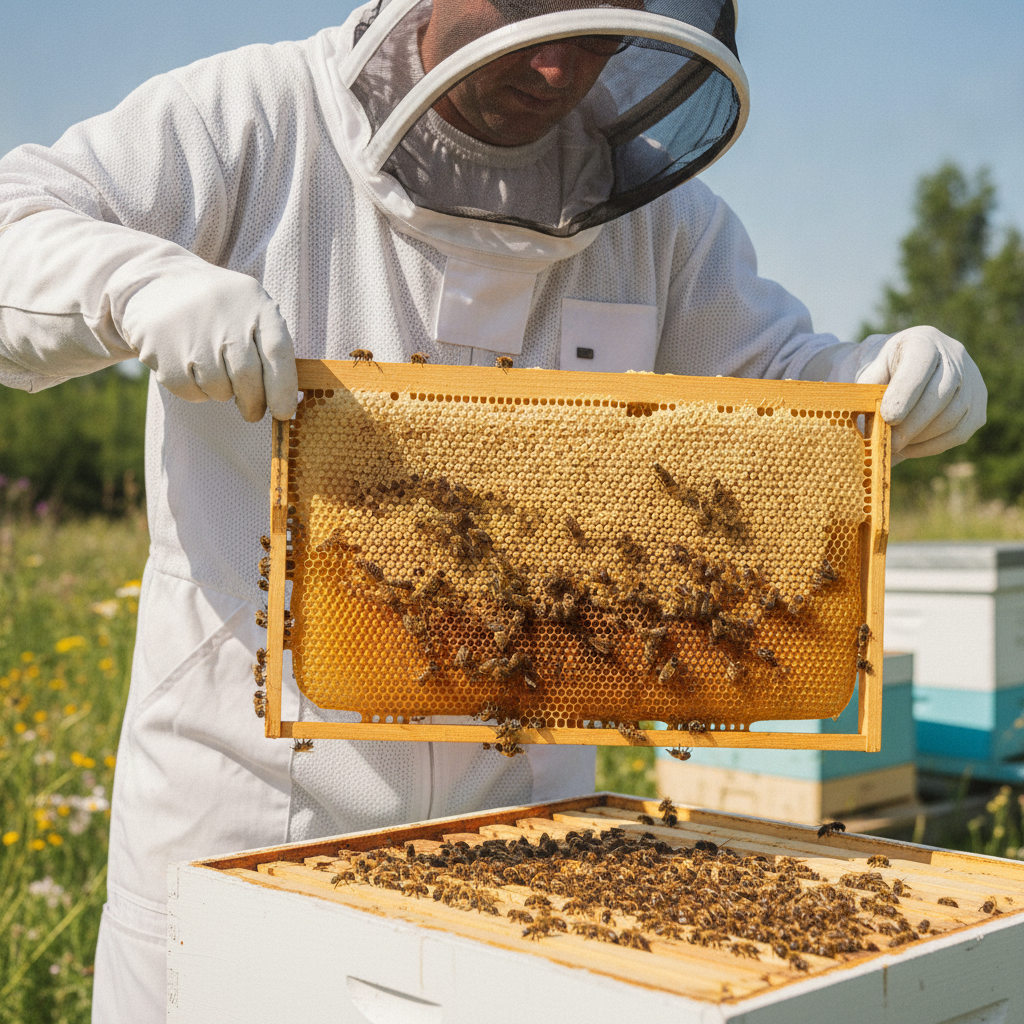
A honey bee colony is a single superorganism made of one queen, tens of thousands of sterile female workers, and a seasonal population of male drones. According to peer-reviewed research published in the National Library of Medicine, “during spring and summer, a honeybee colony typically consists of a single reproductive queen, 20,000 to 60,000 adult worker bees, 10,000 to 30,000 individuals at the brood stage (eggs, larvae, and pupae), and up to hundreds of male drones.” The same source notes that “during peak season in summer, the queen lays up to 2,000 eggs per day.”
The queen is not a ruler; she is a specialized egg layer with a two-year to three-year lifespan and a pheromone signature that holds the colony together. Workers do everything else, and they change jobs as they age. A newly emerged worker cleans cells. A week later she nurses larvae. By day twenty she is a forager flying up to three miles from the hive for nectar. Drones exist to mate with virgin queens from other colonies and die immediately after mating. Every drone in the hive is expelled before winter because a colony cannot afford to feed passengers through a Missouri January.
How Do Honey Bees Support American Agriculture?
Honey bees pollinate about $15 billion worth of crops in the United States every year. According to Farmers.gov, “honeybees pollinate $15 billion worth of crops in the United States each year, including more than 130 types of fruits, nuts, and vegetables.” The U.S. Fish and Wildlife Service adds that “there are over 100 crops grown in the United States that depend on pollination.” Almonds are the most famous. Roughly 70 percent of all managed U.S. hives travel to California each February to pollinate the almond bloom.
The commercial picture matters even for backyard keepers because it explains the market for equipment, queens, and package bees. When commercial operations struggle, retail prices for nucleus colonies climb. When they thrive, small keepers benefit from better breeding stock, cheaper miticides, and more available mentorship. Your two backyard hives are part of the same economic system that pollinates the almonds in your granola.
What Are the Biggest Threats to Honey Bees Today?
The single largest threat to managed honey bee colonies is the parasitic mite Varroa destructor. Peer-reviewed research on integrated pest management for varroa concludes that “beekeepers should use integrated pest management strategies to monitor varroa mite levels and intervene with cultural and mechanical methods to reduce mite populations, possibly applying acaricidal treatments.” Varroa vectors deformed wing virus and several other pathogens; an untreated colony almost always collapses within 18 to 24 months.
The second major threat is habitual colony loss driven by combined stressors. Colony Collapse Disorder, first documented in the winter of 2006 and 2007, exploded into public awareness but has since become one of several loss patterns rather than the dominant one. Published research in PLOS ONE describes CCD as being “characterized by the rapid loss of adult worker bees from affected colonies, evidenced by weak or dead colonies with excess brood populations relative to adult bee populations.” Modern losses more often come from mites, viral loads, pesticide exposure, poor forage, and hard winters acting together. The practical takeaway for a new beekeeper: monitor mite counts every three weeks from May through September, and never assume a healthy-looking colony is actually healthy.
How Do You Manage a Hive Through the Seasons?
Beekeeping follows a hard calendar, and the calendar is set by your local flora. In late winter you inspect for cluster location and top up emergency feed. In early spring you check for eggs and reverse deep boxes if brood has moved to the top. From mid-spring through early summer you add honey supers, monitor for swarm cells every seven to ten days, and begin varroa sampling. Summer is a harvest and mite-management window. Fall is treatment, feeding, and combining weak colonies. Winter is silence and worry.
A detailed month-by-month plan makes this manageable rather than overwhelming. Our beekeeping month by month first-year guide lays out the tasks in the order they hit. Skipping the September mite treatment is the single most common cause of first-year colony loss in the northern half of the country. Your winter cluster is only as strong as your late-summer mite management. Do not learn this the hard way like I did.
Where Should Beginners Learn Beekeeping?
Start with your state land-grant university’s cooperative extension service. According to Penn State Extension, a proper beekeeping course covers “bee biology, behavior, hive management, equipment, diseases, pests, bee products, and pollination,” and most extension services offer a version for less than $150. Oregon State University offers a “Getting Started with Bees” Certificate Program that, per the OSU Extension Service, “provides participants with basic knowledge about bee biology and backyard beekeeping.”
Beyond extension, the strongest resources are books and mentorship. Read The Beekeeper’s Handbook by Diana Sammataro and Alphonse Avitabile for reference and Honeybee Democracy by Thomas Seeley for the biology that shapes every management decision. Find a mentor through your county beekeeping club. Nothing replaces watching an experienced keeper open a strong hive on a June afternoon. If beekeeping is your first serious homestead livestock project, consider pairing it with a simpler system to spread the learning curve. Our guide to raising quail as micro-livestock and our complete beginner’s guide to backyard chickens both cover systems that give you fast wins while your bees grow into their second season.
How Does Beekeeping Fit Into a Broader Homestead?
Beekeeping quietly upgrades every other homestead system you already run. Two backyard hives pollinate a half-acre orchard, a large vegetable garden, and several neighboring properties, which means bigger apple harvests, better squash set, and stronger cucumber production without a single extra plant. According to the USDA, “the U.S. today has about 2.8 million honey bee hives,” and adding your two to the count meaningfully improves the pollination floor of your immediate neighborhood.
Bees also produce beeswax, propolis, and pollen, which slot cleanly into other homestead outputs. Wax becomes candles, wood polish, and food wraps. Propolis becomes tinctures for winter respiratory support. Honey, of course, becomes honey. If you already keep chickens, consider that healthy pollinator flowers along the coop run boost both hive forage and pest control. Our guide to building a predator-proof chicken run covers layout considerations that also apply to apiary placement, and our backyard chicken health guide pairs well with the mite-management mindset beekeeping demands.
Frequently Asked Questions
Is APIAN or APIARIAN the correct crossword answer?
Both are correct depending on the letter count. APIAN is five letters and means “of or relating to bees” per Merriam-Webster. APIARIAN is eight letters and means “of or relating to beekeeping or bees.” Check the crossing letters in your grid to decide which fits.
What is the difference between an apiary and an apiarist?
An apiary is the place where hives are kept, essentially a bee yard. An apiarist is the person who keeps the bees. Both words come from the same Latin root apis, but they play different roles in a sentence, similar to how “vineyard” and “vintner” relate.
Do you need a permit to keep bees in your backyard?
Most U.S. municipalities allow backyard beekeeping, but rules vary widely by city and county. Check your local zoning ordinance and, if applicable, HOA rules before you order bees. Common requirements include hive setbacks from property lines, a water source on your property, and registration with your state agriculture department.
How much honey does one hive produce per year?
A healthy first-year colony in the eastern half of the U.S. typically produces 20 to 40 pounds of surplus honey after leaving enough for winter. A well-managed established hive can produce 60 to 100 pounds in a strong nectar year. Yields depend heavily on local forage, weather, and colony genetics.
Do honey bees sting through a bee suit?
A properly fitted ventilated bee suit stops nearly all stings on the torso and arms, but bees can still sting through thin fabric where the suit is pulled tight against skin (usually shoulders and knees). Wear loose, light-colored clothing underneath, and never open a hive without gloves during your first year.
How many hives should a beginner start with?
Start with two hives, not one. Two hives give you a healthy colony to compare against a struggling one, provide a source of eggs to raise an emergency queen if one colony goes queenless, and roughly double the odds that at least one colony survives your first winter.
What is bee space, and why does it matter?
Bee space is the roughly one-centimeter gap that bees leave open rather than filling with comb or propolis. Reverend Lorenzo Langstroth discovered this principle in 1851 and used it to design the movable-frame hive. Every modern Langstroth frame relies on bee space so you can lift frames out without tearing comb.
Sources
- Merriam-Webster: APIAN definition
- Merriam-Webster: APIARIAN definition
- Oxford English Dictionary: apian
- USDA: Honey Bees and the Importance of Pollinators
- Farmers.gov: The Value of Birds and Bees
- U.S. Fish and Wildlife Service: Pollinators Benefit Agriculture
- USDA NASS: Bee and Honey Surveys
- Penn State Extension: Beekeeping 101
- MSU Extension: Getting Started with Beekeeping in Michigan
- OSU Extension: Getting Started with Bees Certificate Program
- Integrated Pest Management Strategies to Control Varroa Mites
- Colony Collapse Disorder: A Descriptive Study
- Meta-analysis of genetic diversity in commercial honey bee populations