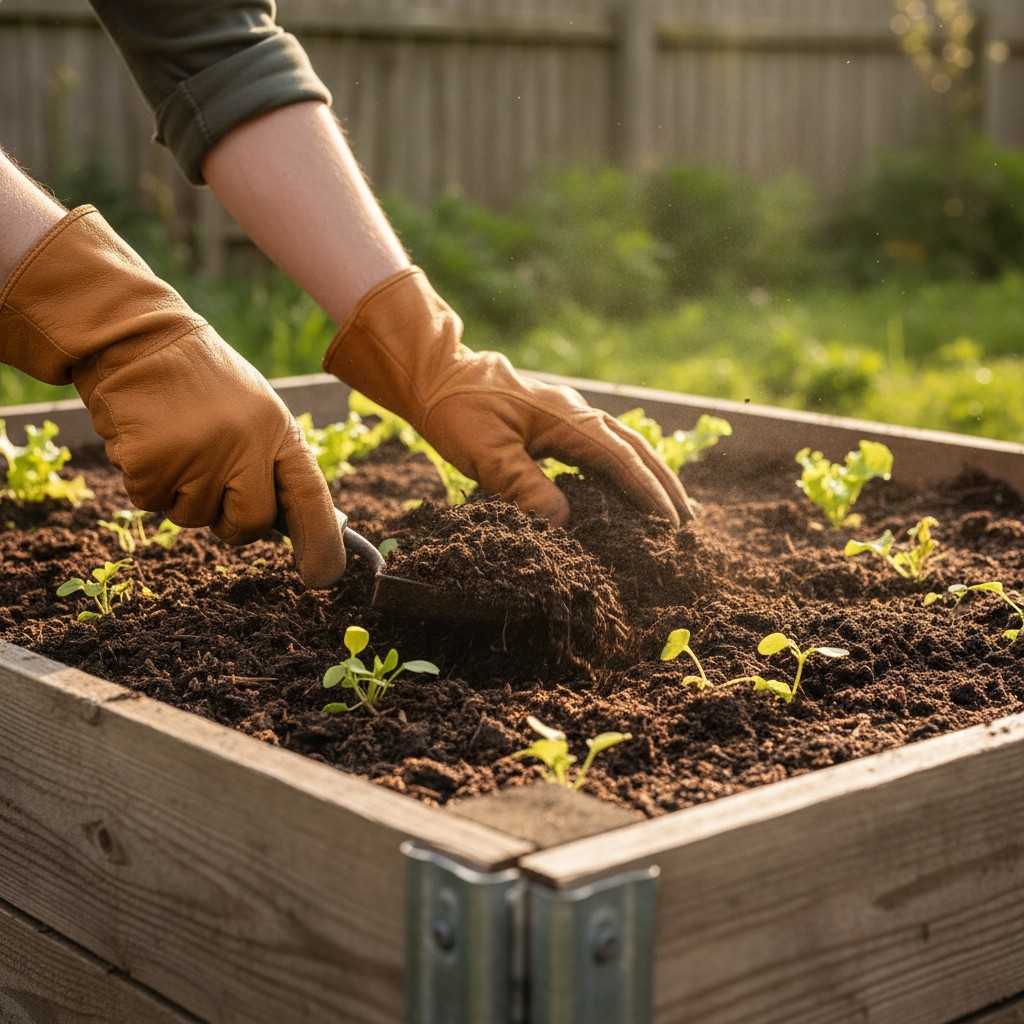
The Perfect Raised Bed Soil Mix: A Simple Recipe for Explosive Growth
nn
Key Takeaways
n
- n
- The ideal raised bed mix follows a roughly equal three-part ratio: topsoil, compost, and an aeration material like coarse vermiculite or aged bark fines.
- Pre-bagged “raised bed soil” from big-box stores is often too dense, poorly draining, and overpriced for large beds.</li>n<li>Building great soil is a multi-year process — your second and third seasons will outperform your first as the biology matures.</li>n<li>Top-dress with 1-2 inches of compost each season instead of replacing soil, following <a href="https://wildhearthlife.com/blog/no-till-gardening-how-to-grow-more-by-digging-less/">no-dig principles.</li>n<li>Filling a standard 4×8-foot bed (10-12 inches deep) costs roughly $80-$150 with bulk materials versus $200-$350 with bagged products.</li>n</ul>n</div>nn<p>You can build the most beautiful raised beds in the neighborhood — dovetail corners, cedar planks, perfectly level sides — and still</a> get terrible results if you fill them with the wrong soil. I've seen it happen more times than I can count. Someone spends a weekend building gorgeous beds, fills them with whatever was cheapest at the garden center, and then wonders why their tomatoes are stunted and their carrots look like twisted little fingers.</p>nn<p>Soil is the foundation of everything in a raised bed garden. You're not working with existing ground soil and all its established biology. You're building a <a href="https://wildhearthlife.com/blog/how-to-grow-lavender-the-complete-guide-to-planting-care-and-harvesting/">growing medium from scratch. That's both a challenge and an enormous opportunity, because it means you can create something better than most in-ground gardens will ever have.</p>nn<h2>Why Store-Bought "Raised Bed Mix" Usually Disappoints</h2>nn<p>Walk into any big-box garden center in spring and you'll see pallets of bags labeled "raised bed soil" or "garden soil." They're convenient. They're also usually not great, for a few reasons.</p>nn<p>First, the ingredients are often vague. "Forest products" can mean anything from well-aged bark to sawmill waste that will rob nitrogen from your soil as it decomposes. "Organic matter" is similarly meaningless without specifics. Second, many of these mixes are too heavy on peat or too fine-textured, which leads to compaction and drainage problems within one season. Third, they're expensive at scale. A standard 4×8 raised bed that's 12 inches deep holds roughly 32 cubic feet of soil. At typical bag prices of $6-$10 per cubic foot, you're looking at $200-$320 just to fill one bed.</p>nn<p>Here's what most guides won't tell you: even the decent bagged mixes are designed for the broadest possible use case. They're a compromise. When you mix your own, you can dial in the exact texture, drainage, and fertility your garden needs.</p>nn<h2>The Three-Part Recipe</h2>nn<p>The classic raised bed soil recipe is simple, and it works. Three components, roughly equal parts by volume:</p>nn<h3>Part 1: Topsoil (About 1/3 of the Mix)</h3>nn<p>Topsoil provides the mineral base — the sand, silt, and clay particles that give your mix weight, structure, and mineral content. It also brings trace elements that pure compost lacks. Buy it in bulk from a landscape supply yard, not in bags. Ask for "screened topsoil" — this means it's been run through a mesh to remove rocks, roots, and debris. Expect to pay $25-$45 per cubic yard in most areas.</p>nn<p>A word of caution: not all topsoil is equal. Some landscape yards sell glorified fill dirt. Ask where it comes from. The best topsoil is actual surface soil from agricultural land or construction sites, screened and sometimes blended with sand. Before committing to a large order, buy a small amount or visit the yard and feel it. It should be dark, crumbly, and smell earthy — not like clay or swamp.</p>nn<h3>Part 2: Compost (About 1/3 of the Mix)</h3>nn<p>Compost is the engine of your soil. It provides the organic matter, the microbial life, the slow-release nutrients, and much of the water-holding capacity. Quality matters enormously here.</p>nn<p>The best option is well-aged compost from a reputable source. Municipal composting facilities often sell compost in bulk at excellent prices — sometimes $15-$30 per cubic yard. It's typically made from yard waste and has been hot-composted to kill weed seeds and pathogens. Mushroom compost is another solid option; it's a byproduct of mushroom farming and is rich in nutrients, though it can be slightly alkaline.</p>nn<p>Your own homemade compost is ideal if you have enough. It won't be, and that's fine — most home composters can't produce the volume needed to fill a raised bed from scratch. Use what you have and supplement with purchased compost.</p>nn<p>Avoid compost that smells sour, looks like it still has identifiable food scraps, or feels slimy. These are signs it hasn't finished decomposing and will cause problems in your beds.</p>nn<h3>Part 3: Aeration Material (About 1/3 of the Mix)</h3>nn<p>This is the ingredient most people skip, and it's the one that separates a good raised bed mix from a great one. Aeration material creates air pockets in the soil that allow roots to breathe, water to drain, and beneficial organisms to thrive.</p>nn<p>Options include:</p>nn<ul>n<li><strong>Coarse perlite:</strong> Lightweight volcanic glass that doesn't break down. Excellent drainage. Can be pricey in large volumes.</li>n<li><strong>Coarse vermiculite:</strong> Retains more moisture than perlite while still providing aeration. Good for dry climates.</li>n<li><strong>Aged bark fines:</strong> Screened bark pieces roughly 1/4 to 1/2 inch in size. Breaks down slowly over several years, feeding the soil biology as it goes. The most cost-effective option for large volumes.</li>n<li><strong>Pumice:</strong> A volcanic rock that's heavier than perlite and won't float to the surface. If you can get it locally, it's arguably the best aeration amendment available. Common in the western United States.</li>n<li><strong>Rice hulls:</strong> Inexpensive and effective but break down within one season. Better as an annual addition than a base ingredient.</li>n</ul>nn<p>In my experience, aged bark fines offer the best balance of cost, availability, and performance for most raised bed gardeners. They're widely available from landscape supply yards.</p>nn<h2>The Mixing Process</h2>nn<p>If you're filling beds for the first time, have your bulk materials delivered and dumped as close to your beds as possible. Then it's shovel work. Mix the three components on a tarp or directly in a wheelbarrow before adding them to the bed. The goal is a uniform blend — you don't want pockets of pure compost next to pockets of pure topsoil.</p>nn<p>For a 4×8 bed that's 12 inches deep, you'll need roughly 32 cubic feet of total mix. That's about 1.2 cubic yards. Divide that roughly into thirds: 0.4 cubic yards each of topsoil, compost, and aeration material. In practice, eyeballing it works fine. This isn't baking — close enough is close enough.</p>nn<p>Fill the bed, water it thoroughly, and let it settle for a few days before planting. The mix will drop an inch or two as it hydrates and compacts slightly. Top it off before you plant.</p>nn<h2>Amendments Worth Adding</h2>nn<p>The three-part base mix will grow good vegetables on its own. But a few targeted amendments can take it further.</p>nn<h3>Worm Castings</h3>nn<p>If compost is good, worm castings are great. They're essentially ultra-concentrated compost that's been processed through the digestive system of red wiggler worms. The microbial diversity in worm castings is extraordinary. Add 10-15% by volume to your mix, or about a 5-gallon bucket per 4×8 bed. They're expensive to buy in bulk, which is why many gardeners start their own worm bin.</p>nn<h3>Bone Meal</h3>nn<p>A slow-release source of phosphorus, which supports root development and flowering. Add about 2-3 cups per 4×8 bed, mixed into the top 6 inches. Particularly helpful for tomatoes, peppers, and root crops.</p>nn<h3>Greensand</h3>nn<p>A mined mineral (glauconite) that's rich in potassium and trace minerals. It releases nutrients very slowly — over years, not weeks. Add about 5 pounds per 4×8 bed. It also helps improve soil texture in heavy mixes.</p>nn<h3>Azomite or Rock Dust</h3>nn<p>These provide a broad spectrum of trace minerals that plants need in tiny amounts but that compost alone may not supply. Think of it as a multivitamin for your soil. A few cups per bed is plenty.</p>nn<h3>Mycorrhizal Inoculant</h3>nn<p>These beneficial fungi form symbiotic relationships with plant roots, dramatically expanding the root system's effective reach. Sprinkle it directly on roots at transplanting time. According to research published in the journal <em>Mycorrhiza</em>, plants colonized by mycorrhizal fungi can access phosphorus from soil up to 10 times farther from the root than non-colonized plants.</p>nn<h2>Building Soil Over Time: The No-Dig Approach</h2>nn<p>Here's something that surprises a lot of new gardeners: your raised bed soil will get better every single year if you treat it right. The first season is actually the worst it will ever be. The microbial communities haven't fully established. The organic matter hasn't had time to integrate. The fungal networks are just starting to form.</p>nn<p>The no-dig method, popularized by gardeners like Charles Dowding, is simple. At the end of each growing season (or in early spring), spread 1-2 inches of finished compost on top of the existing soil. Don't till it in. Don't turn it. Don't mix it. Just lay it on top. The worms, microbes, and fungi will pull it down into the soil profile over time.</p>nn<p>This approach preserves the soil structure and fungal networks that took all season to develop. Tilling destroys those networks every time you do it. After three or four years of no-dig management, your raised bed soil will be dark, crumbly, alive with earthworms, and almost ridiculously productive.</p>nn<h2>Cost Breakdown: Bulk vs. Bagged</h2>nn<p>Let's compare real costs for filling a single 4×8 bed, 12 inches deep (roughly 1.2 cubic yards total needed):</p>nn<h3>Bulk Materials (Landscape Supply Yard)</h3>n<ul>n<li>Screened topsoil: 0.4 cu yd — $12-$18</li>n<li>Bulk compost: 0.4 cu yd — $10-$15</li>n<li>Bark fines or similar: 0.4 cu yd — $15-$25</li>n<li>Delivery fee (one-time for all materials): $40-$75</li>n<li><strong>Total: $77-$133 per bed</strong></li>n</ul>nn<h3>Bagged Products (Garden Center/Hardware Store)</h3>n<ul>n<li>Bagged raised bed mix (32 cu ft needed): $192-$320 (at $6-$10 per cu ft)</li>n<li><strong>Total: $192-$320 per bed</strong></li>n</ul>nn<p>The savings with bulk materials become dramatic when you're filling multiple beds. Three beds using bulk materials might cost $150-$250 total (plus one delivery fee), while bagged products would run $575-$960. That's money better spent on seeds and starts.</p>nn<h2>Troubleshooting Common Soil Problems</h2>nn<h3>Water Pools on Top and Won't Drain</h3>n<p>Your mix is too heavy — likely too much clay in the topsoil or too little aeration material. Work in additional perlite or bark fines. For a quick fix, poke deep holes with a garden fork every 6 inches to create drainage channels.</p>nn<h3>Soil Dries Out Extremely Fast</h3>n<p>Too much aeration material and not enough organic matter. Top-dress with an inch of compost and consider adding coconut coir (a sustainable peat alternative) to increase water retention. Mulching the surface with straw or shredded leaves also helps tremendously.</p>nn<h3>White Mold on the Surface</h3>n<p>This is almost always a beneficial saprophytic fungus breaking down organic matter. It's a sign of healthy soil biology, not a problem. If it bothers you visually, lightly rake the surface to break it up.</p>nn<h2>Frequently Asked Questions</h2>nn<h3>Can I just use 100% compost in my raised beds?</h3>n<p>You can, and some gardeners do with good results, but it's not ideal long-term. Pure compost can become hydrophobic when dry (repelling water instead of absorbing it), lacks the mineral component that topsoil provides, and shrinks significantly as it continues to decompose — you'll lose several inches of depth per season. A blended mix is more stable and provides better structure for root growth.</p>nn<h3>How often should I replace the soil in my raised beds?</h3>n<p>Never, if you manage it well. Annual top-dressing with compost replenishes nutrients and organic matter. The soil should improve year over year, not degrade. Replacing it would destroy the soil biology you've spent seasons building. The only exception is if the soil has become contaminated with herbicides or heavy metals.</p>nn<h3>Should I put anything at the bottom of my raised bed before adding soil?</h3>n<p>If your bed sits on compacted ground, a layer of coarse sticks or branches (hugelkultur-style) at the bottom can improve drainage and slowly add organic matter. Landscape fabric on the bottom is optional — it prevents weeds from growing up into the bed but isn't strictly necessary. Never use a solid barrier like plastic, which prevents drainage.</p>nn<h3>Does the soil recipe change for specific crops?</h3>n<p>The base recipe works for most vegetables. However, root crops like carrots and parsnips benefit from extra aeration material (up to 40% of the mix) for loose, rock-free soil. Blueberries need acidic soil (pH 4.5-5.5) and should get their own bed with a peat-heavy mix. Herbs like lavender</a> and rosemary prefer a leaner, sandier mix with less compost. For most standard vegetable gardening, one recipe covers everything.
nn
n
Similar Posts
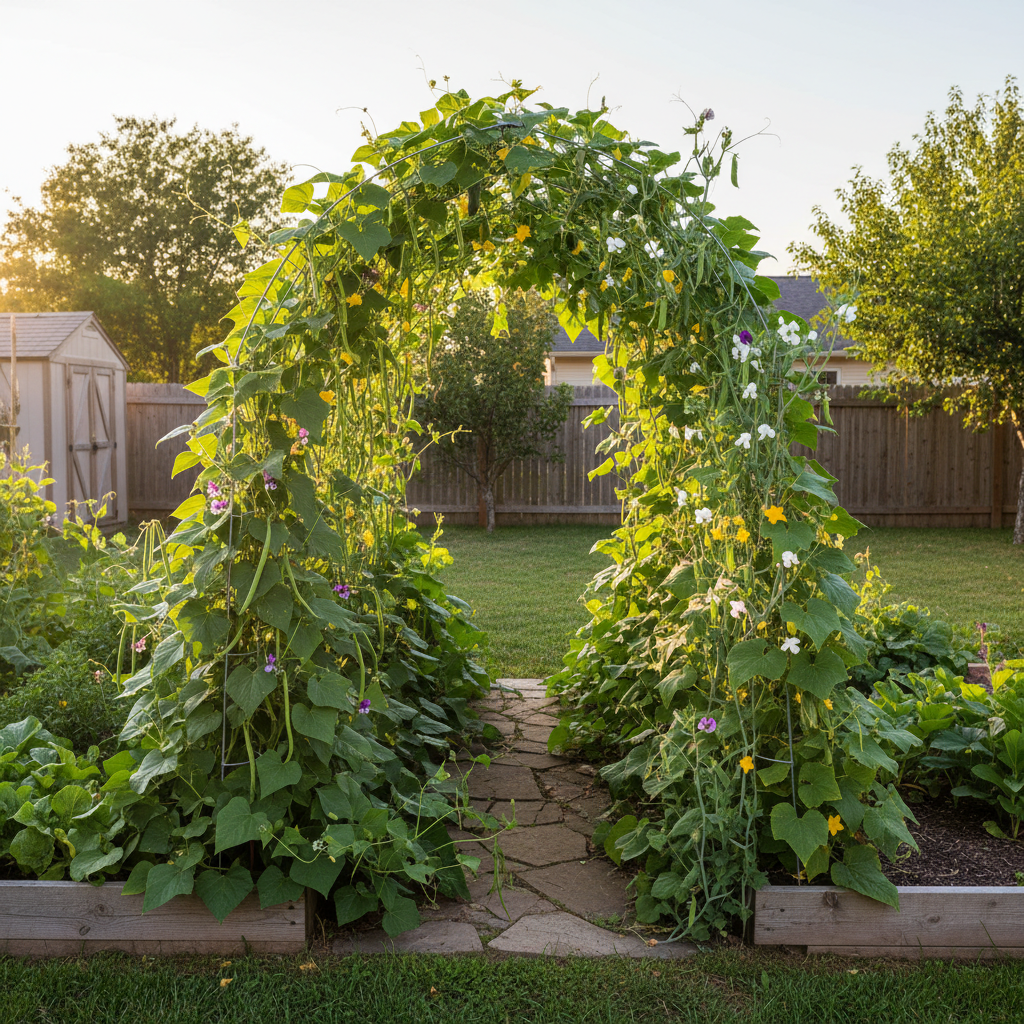
Vertical Gardening: How to Grow Up When You Can’t Grow Out
🌿 TL;DR – Key Takeaways Vertical gardening can increase your yield by up to 3x per square foot of ground space. Trellises, arbors, and vertical planters keep plants healthier by improving air circulation and sun exposure. Cucumbers, pole beans, peas, tomatoes, and squash are excellent vertical crops. DIY trellises can be built for under $20…
Growing Strawberries at Home: From Planting to Picking
🌿 TL;DR – Key Takeaways A single strawberry plant produces 1-2 pints of fruit per season, and a 4×8 bed can yield 50+ pints annually. June-bearing varieties give one large harvest; everbearing types produce fruit spring through fall. Strawberries grow well in beds, containers, hanging baskets, and vertical towers. Runners allow you to propagate new…
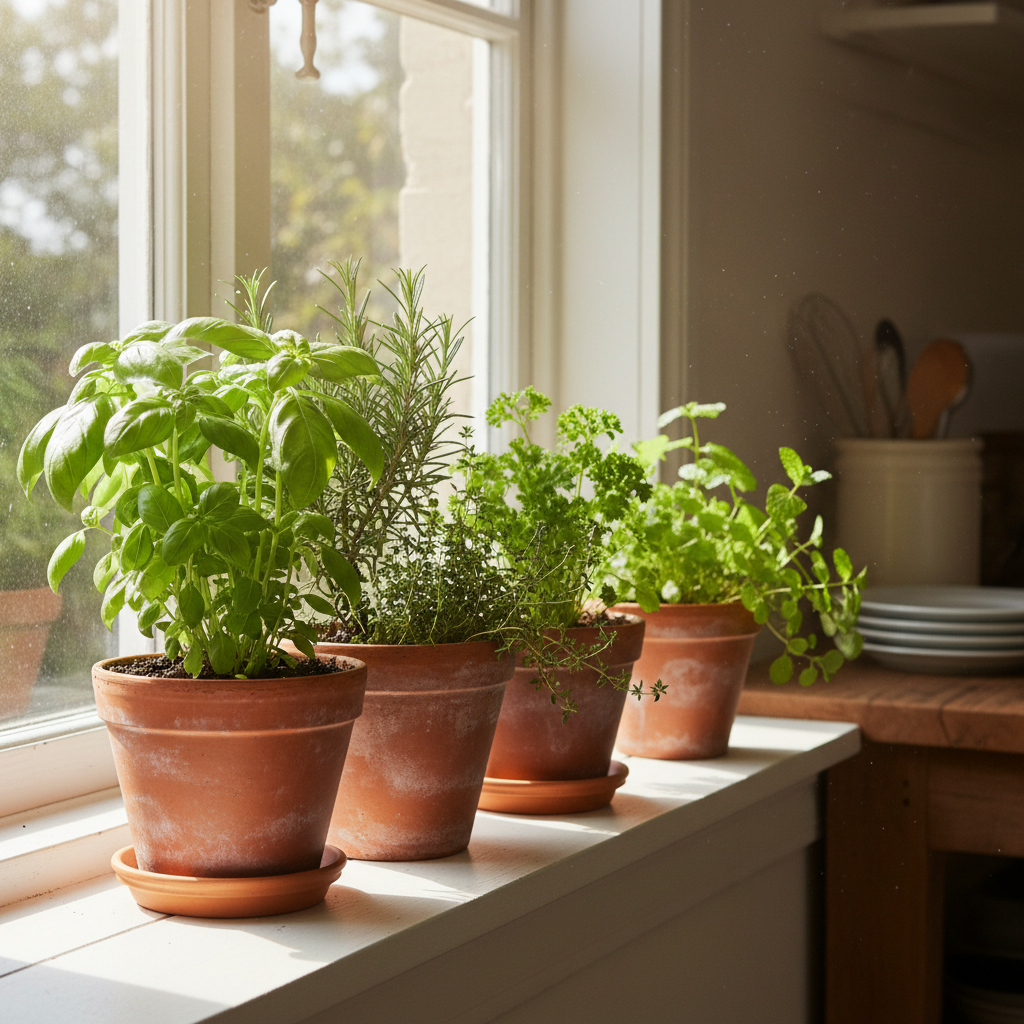
How to Start a Kitchen Herb Garden (Indoor or Outdoor)
📌 TL;DR — Key Takeaways Start with 5 herbs — basil, parsley, rosemary, thyme, and mint cover 90% of cooking needs. Indoor gardens need 6+ hours of sunlight (south-facing window) or a small grow light. Outdoor herbs</strong> prefer full sun, lean soil, and a spot near your kitchen door. Harvest often — cutting stems (never…
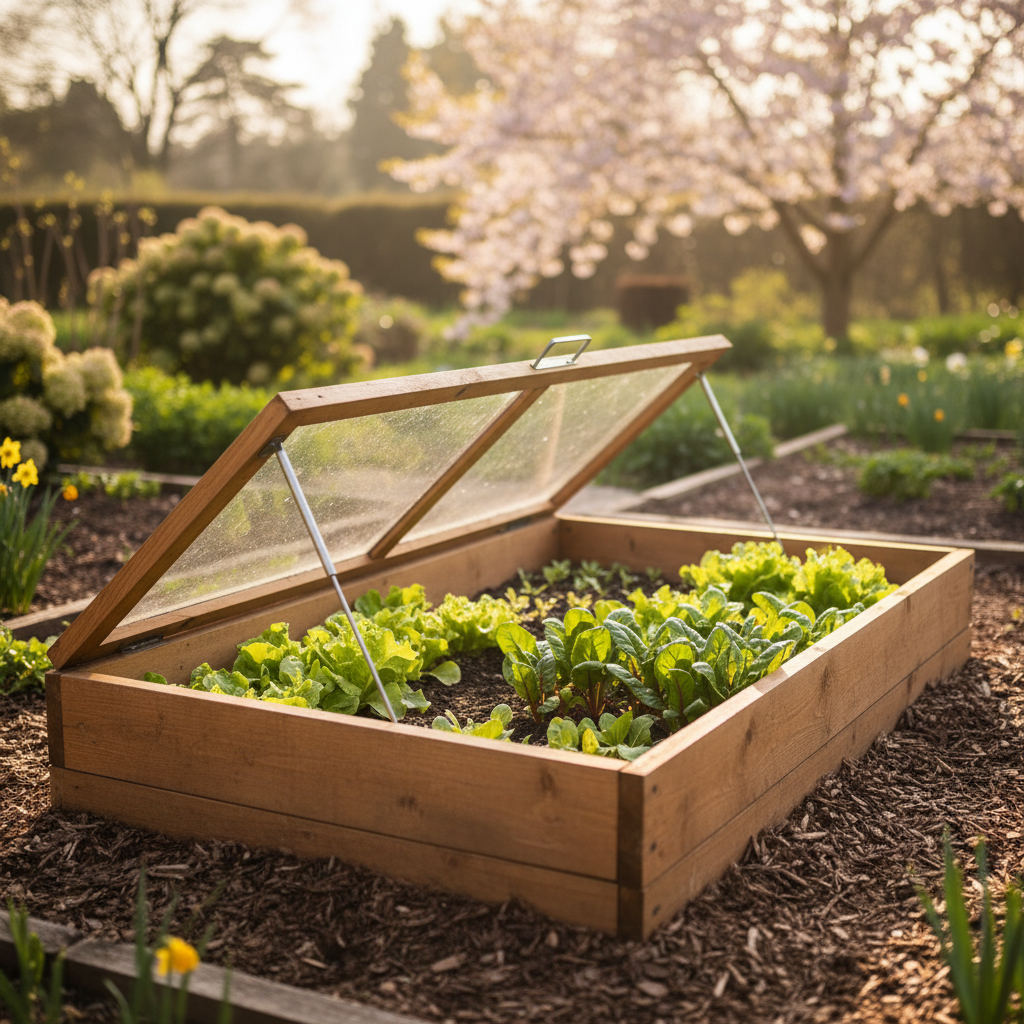
How to Build a Simple Cold Frame and Extend Your Growing Season
❄️ TL;DR: Build a Simple Cold Frame A cold frame extends your growing season by 4–8 weeks on each end Build one for under $30 with lumber, an old window, and hinges Slope the lid south — back wall 4–6 inches taller than front Prop open on sunny days to prevent overheating (above 90°F) Grow…
How to Start a Flower Cutting Garden (Even in a Small Space)
🌿 TL;DR – Key Takeaways A cutting garden as small as 100 square feet can produce 400+ bouquets per growing season. Focus on “cut and come again” varieties like zinnias, cosmos, and dahlias for continuous blooms. Succession planting every 2-3 weeks extends your cutting season from spring through frost. Homegrown bouquets save $15-30 per arrangement…
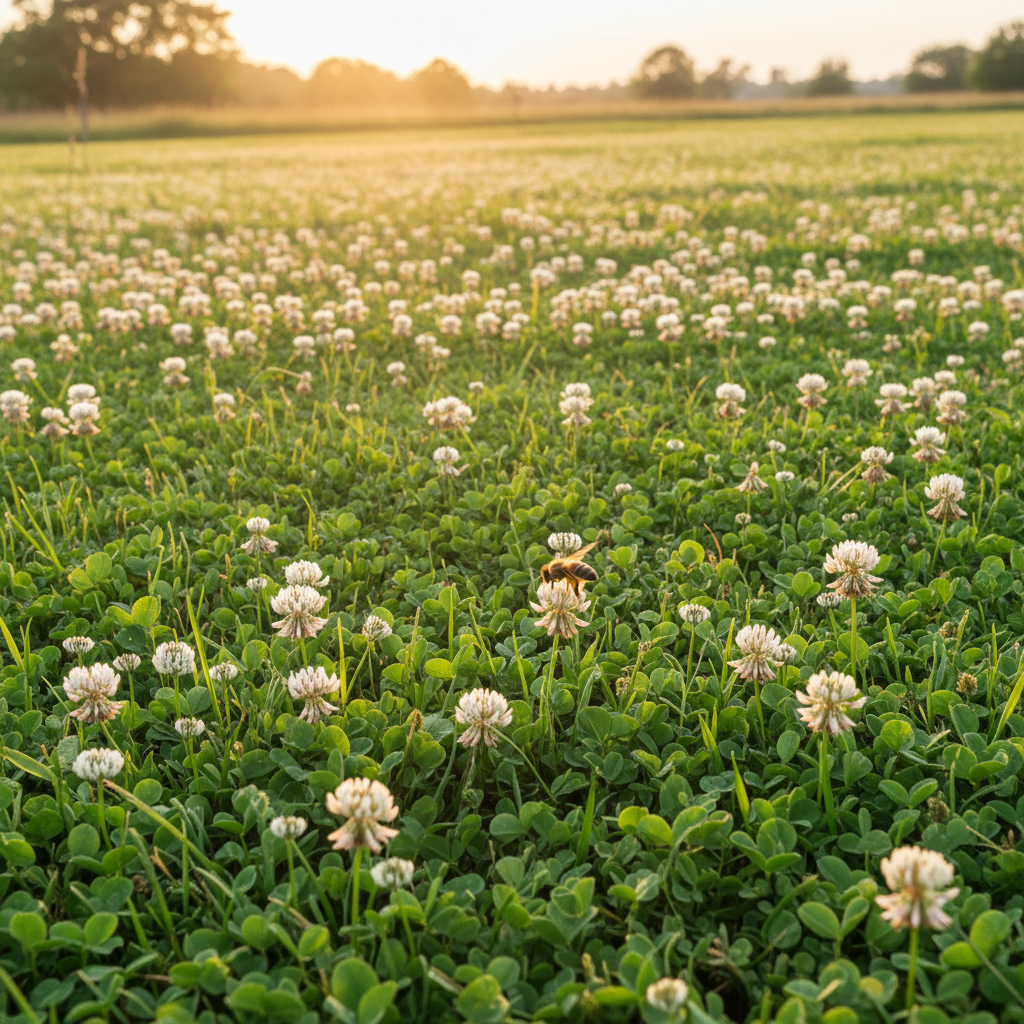
Clover Lawns: Why Homesteaders Are Ditching Grass (And How to Make the Switch)
📌 TL;DR — Key Takeaways Clover fixes nitrogen — it fertilizes your soil naturally, saving you hundreds in lawn chemicals. Stays green in drought — deep roots mean clover thrives when grass turns brown. Feeds pollinators — clover blooms are a critical food source for bees and butterflies. Seed is cheap — 2-8 oz per…