How to Store Your Harvest: Root Cellaring Basics for Beginners
- Root cellaring preserves produce for 1–6+ months without electricity, canning, or freezing.
- Ideal conditions: 32–40 degrees F and 85–95% humidity for most root vegetables.
- You do not need an actual cellar, buried containers, basement corners, and unheated garages work.
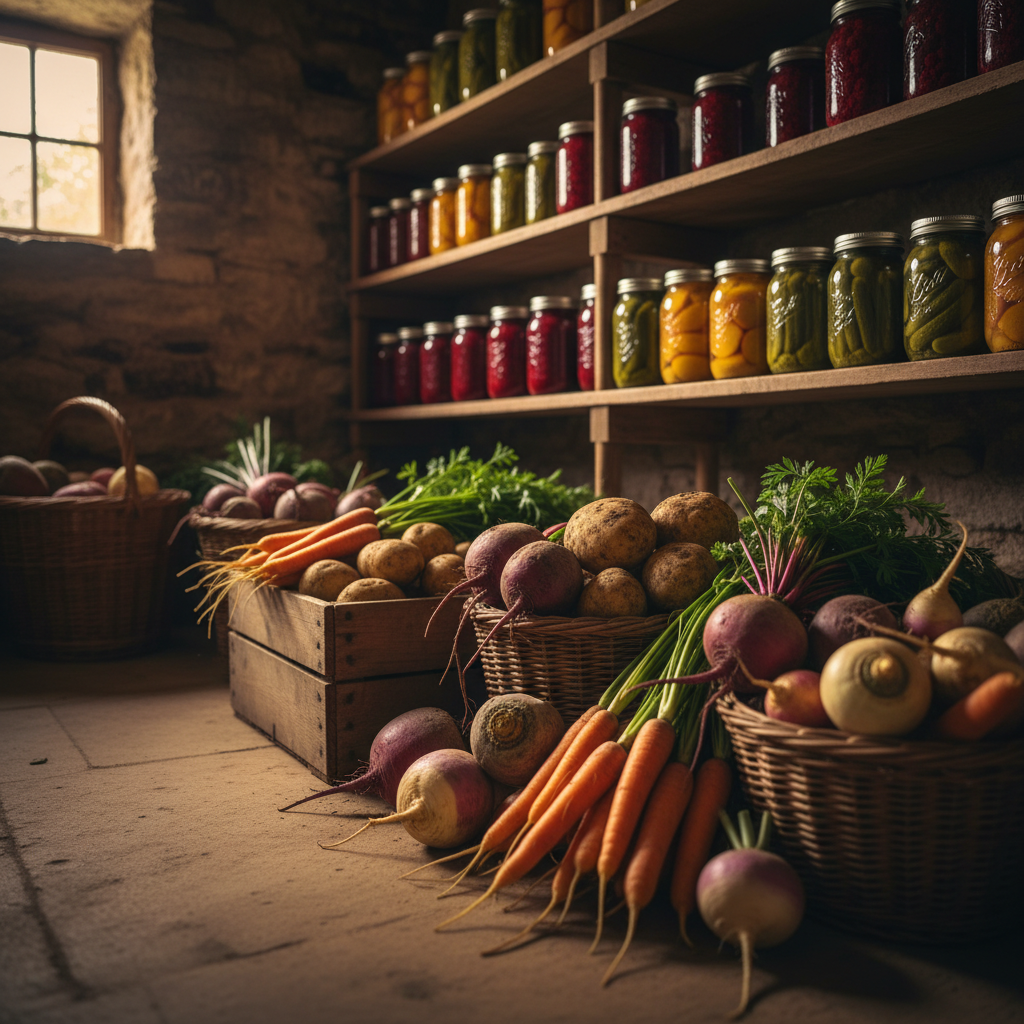
- Potatoes, carrots, beets, turnips, apples, cabbage, and winter squash are the best root cellar crops.
- Different crops need different conditions, some need cold and damp, others cool and dry.
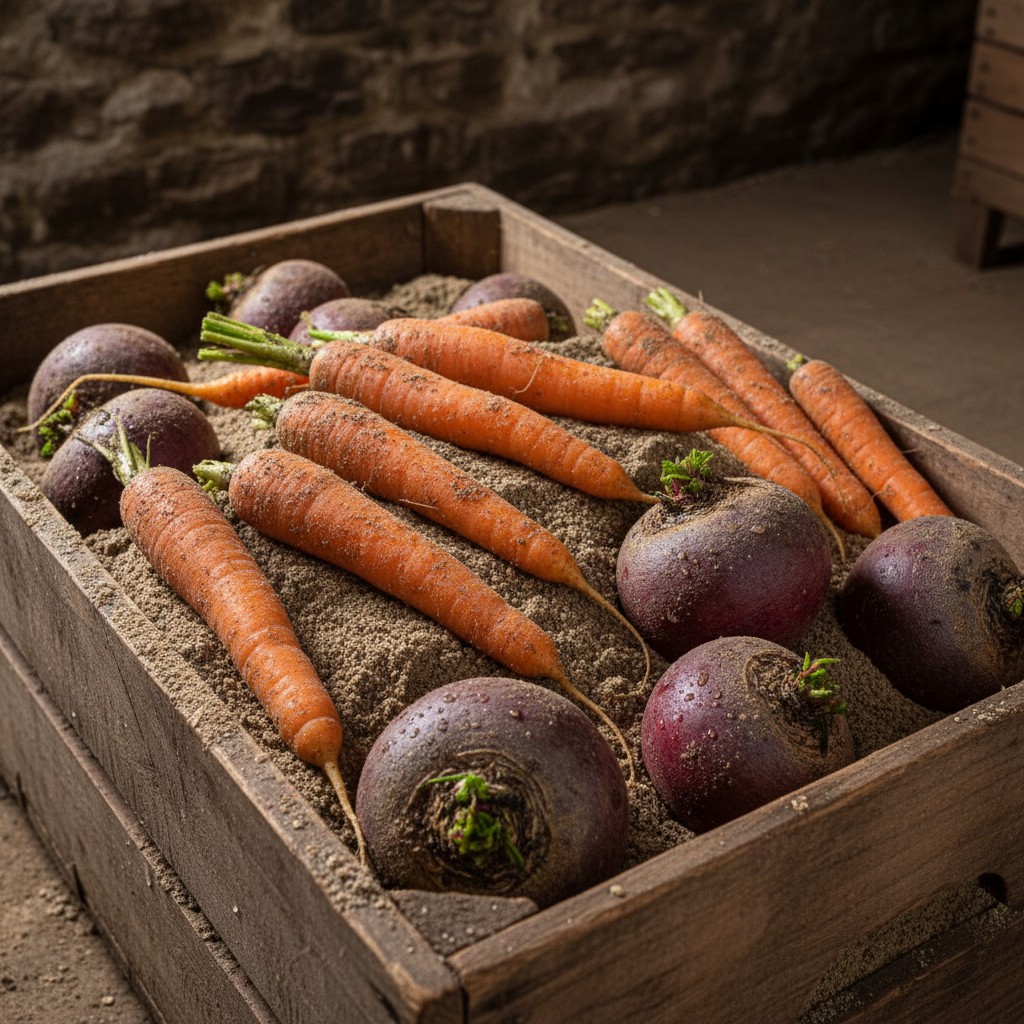
The unheated corner of my basement in Exeter stays right around 38 degrees F through January and February, which I discovered almost by accident the first winter I stored carrots down there in a bin of damp sand. February rolls around and they were still firm, barely any shriveling. That discovery changed how I plan the fall garden.
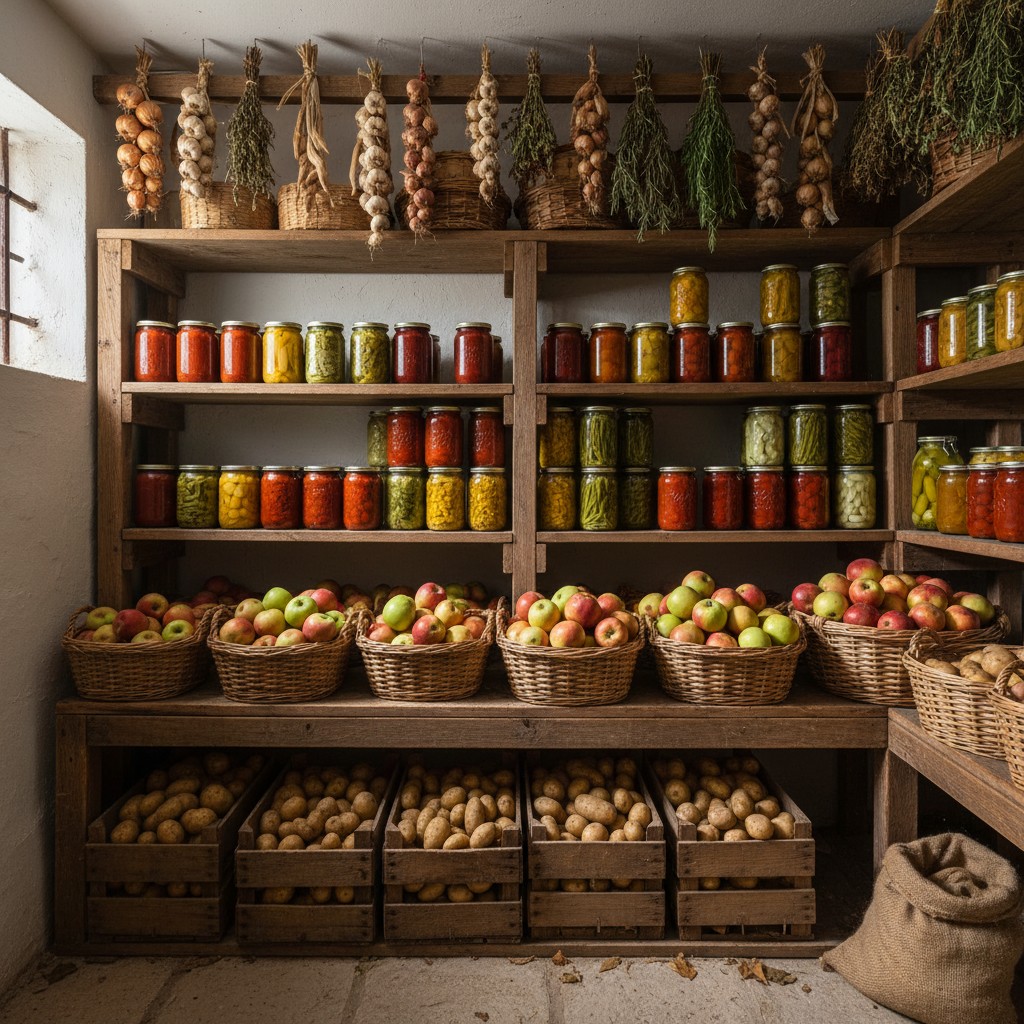
What Is Root Cellaring and Why Does It Still Matter?
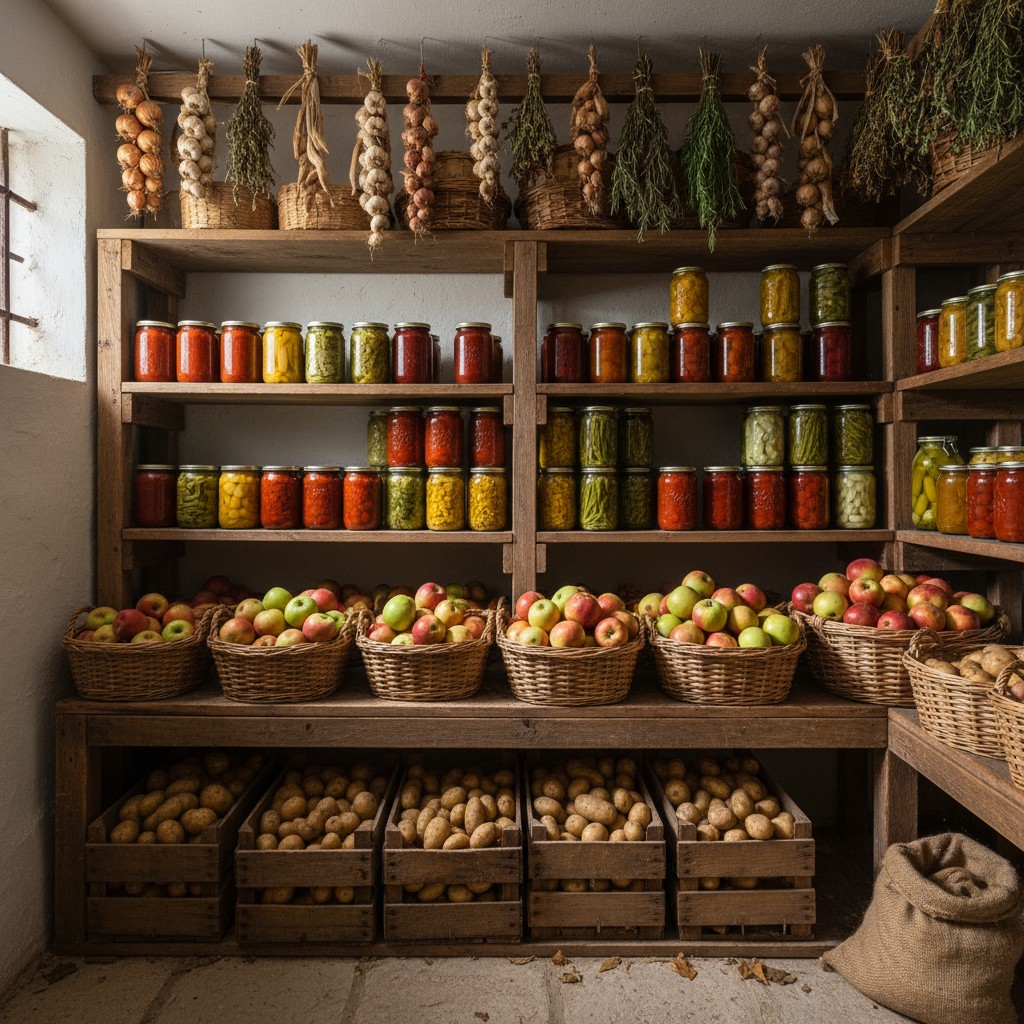
Root cellaring is the centuries-old practice of storing fresh produce in a cool, humid environment to preserve it for months without processing, electricity, or special equipment. When I first started root cellaring, I was astonished that October carrots were still crisp in February.
According to the University of Minnesota Extension, root cellaring is the simplest, most energy-efficient preservation method. Unlike canning or dehydrating, it keeps produce in its fresh, raw state.
What Conditions Does a Root Cellar Need?
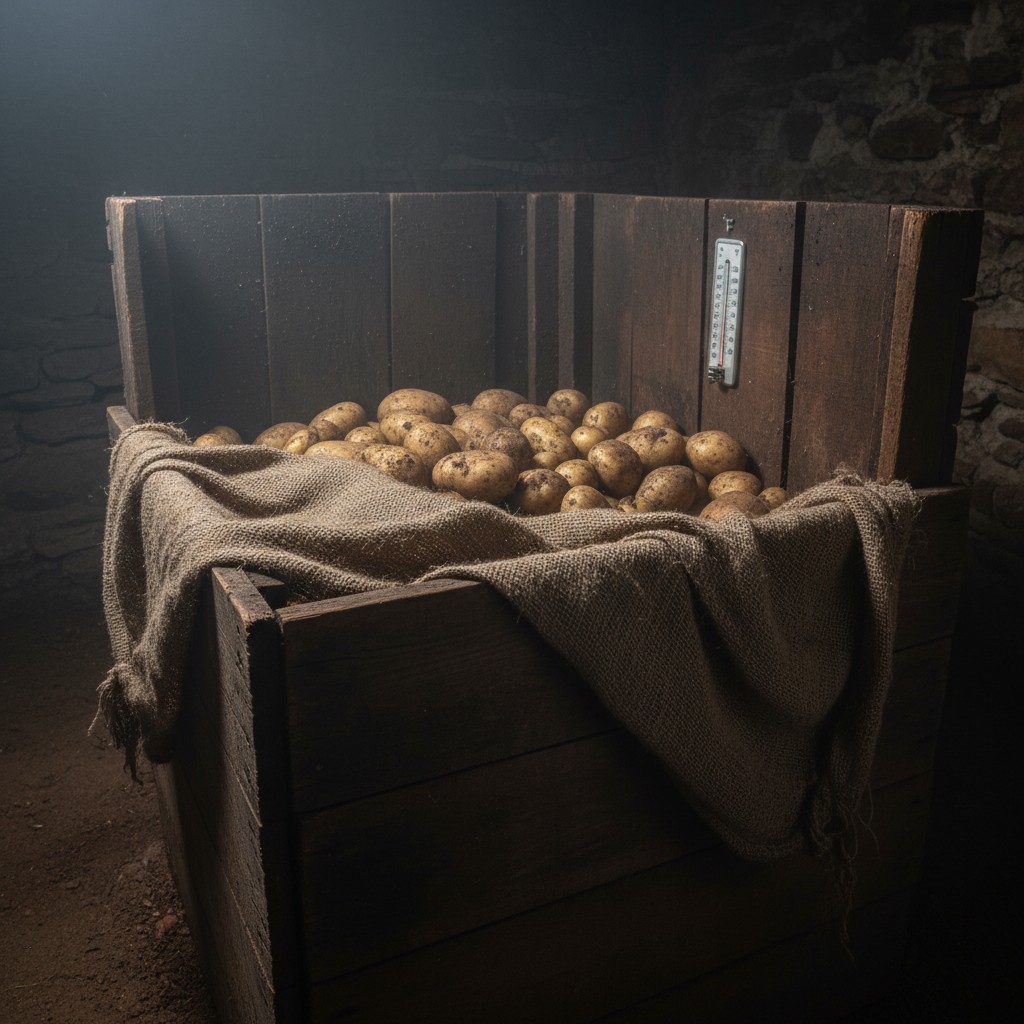
Temperatures between 32–40 degrees F, humidity of 85–95%, adequate ventilation, and complete darkness. After trying various setups, even simple solutions like a buried garbage can work surprisingly well.
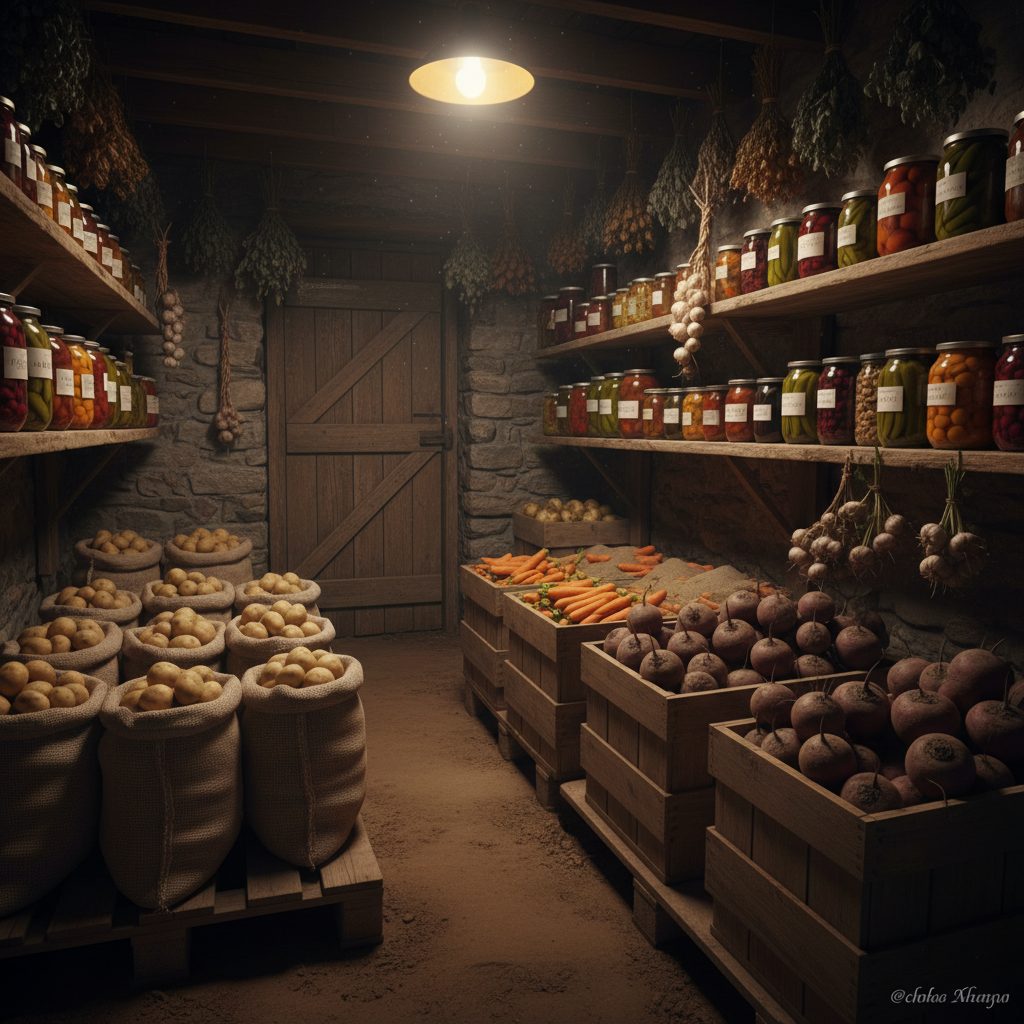
| Produce | Ideal Temp | Ideal Humidity | Storage Life |
|---|---|---|---|
| Potatoes | 38–40°F | 90–95% | 4–6 months |
| Carrots | 32–35°F | 90–95% | 4–6 months |
| Beets | 32–35°F | 90–95% | 3–5 months |
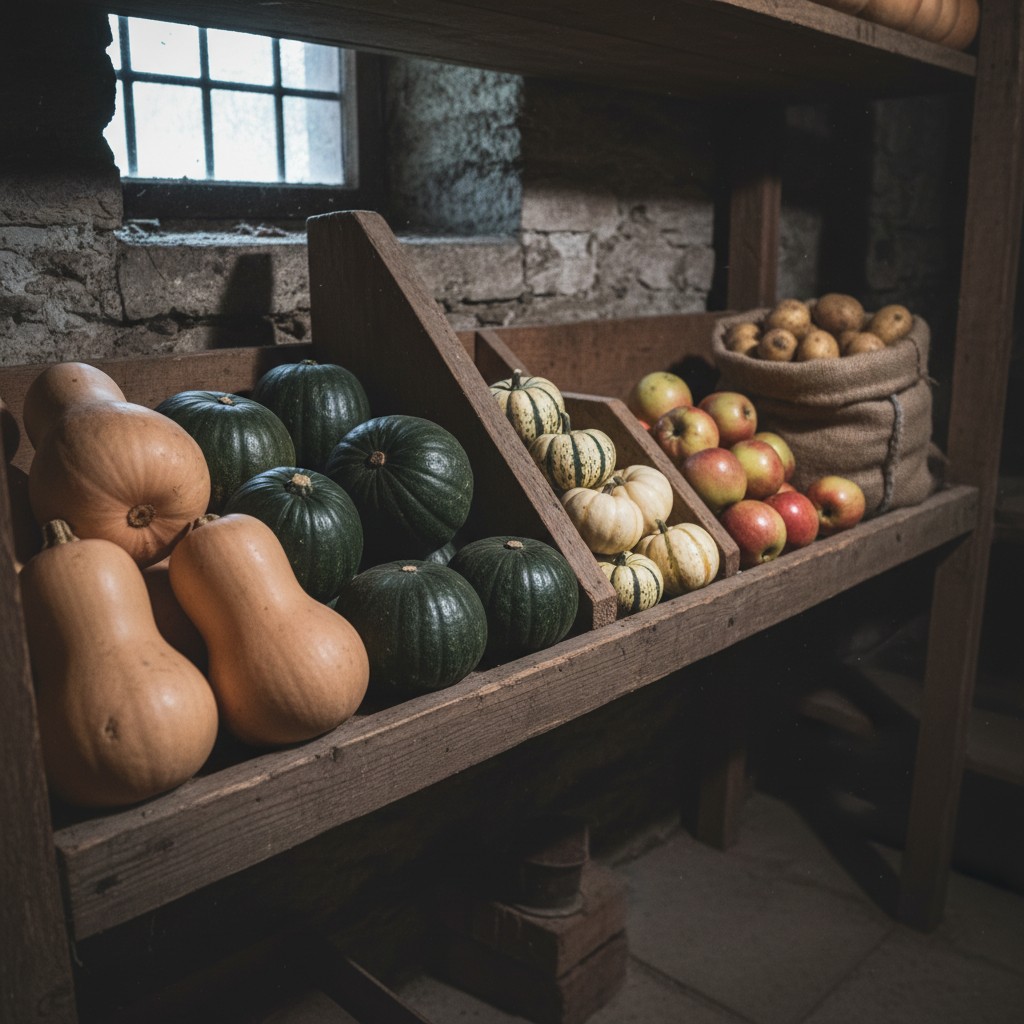
| Winter Squash | 50–55°F | 50–70% | 3–6 months |
| Apples | 32–35°F | 80–90% | 2–6 months |
| Cabbage | 32–35°F | 90–95% | 3–4 months |
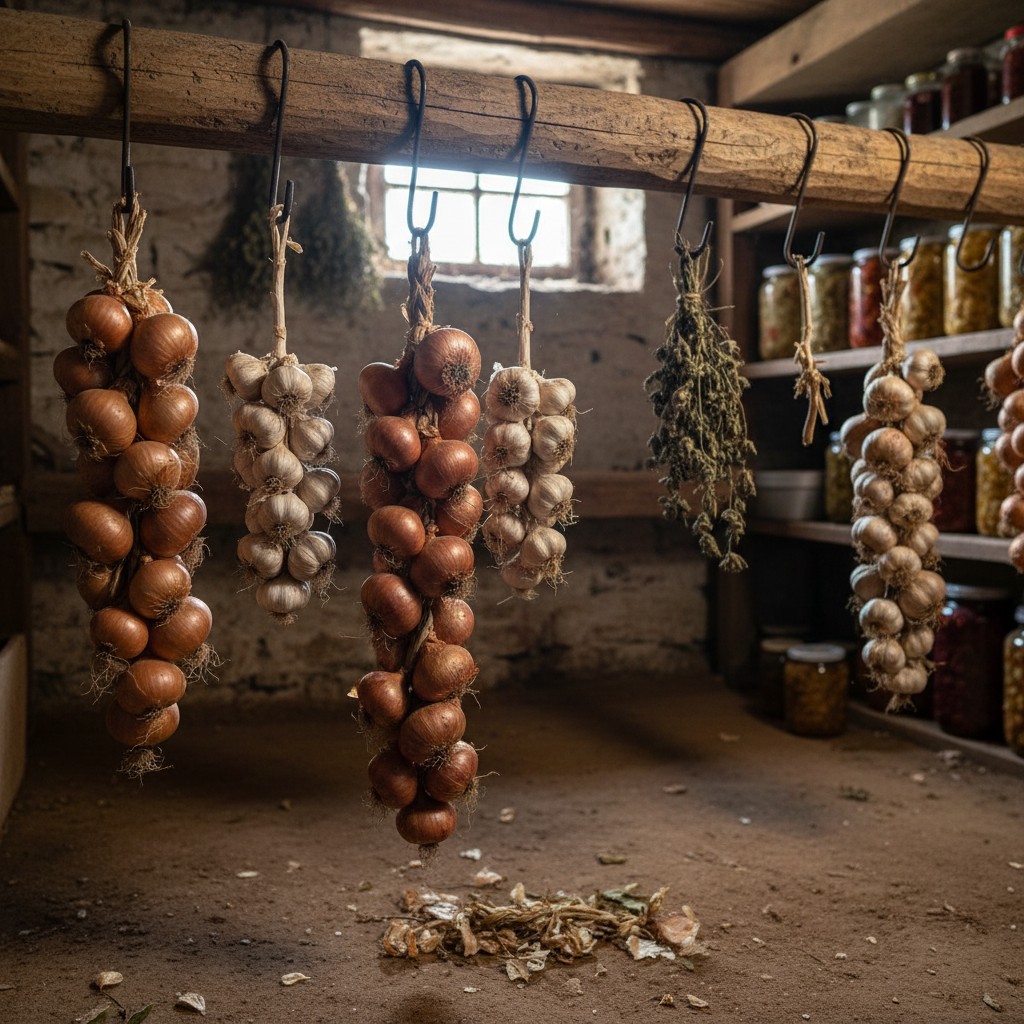
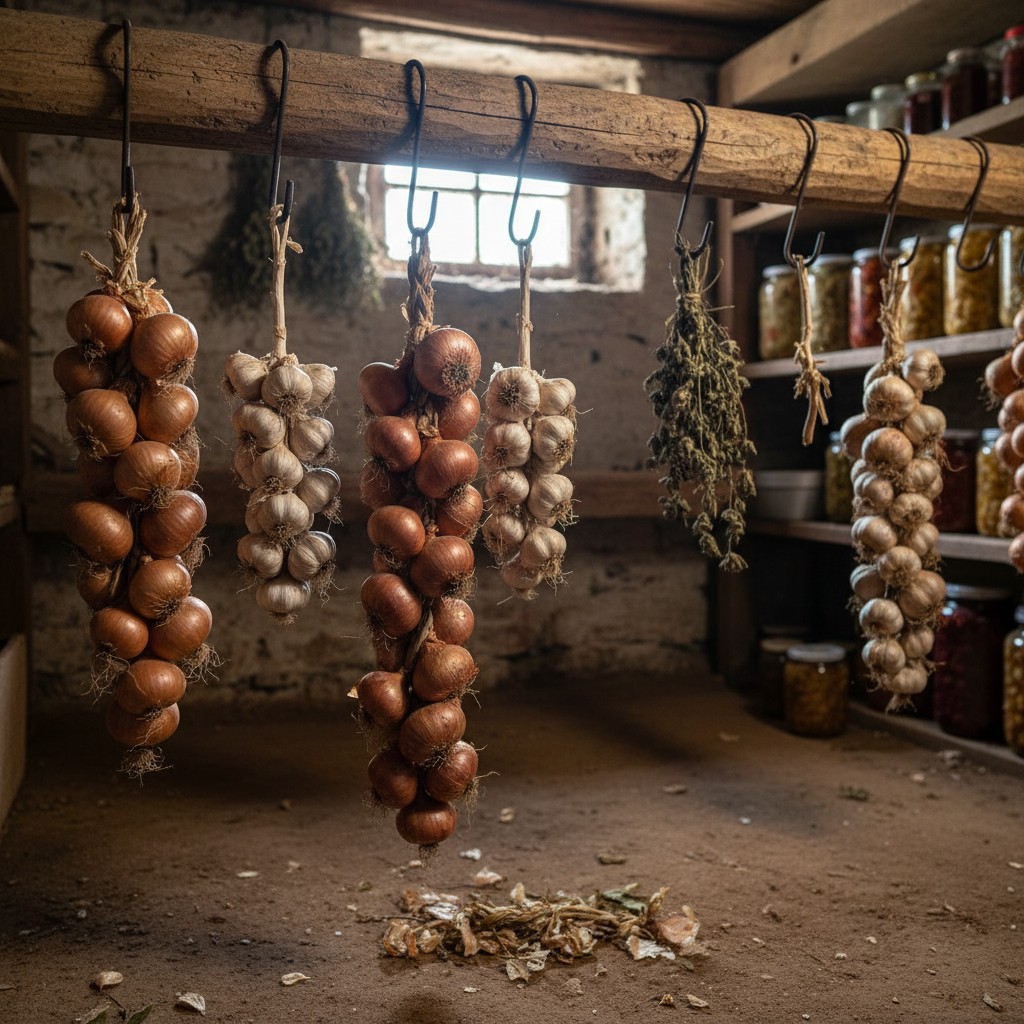
| Onions & Garlic | 32–40°F | 60–70% | 4–8 months |
Note that onions, garlic, and winter squash need drier conditions. The Utah State University Extension recommends keeping these in a separate, drier area.
There is an additional reason to keep onions and garlic physically separated from apples and pears: onions and garlic release sulfur compounds that can be absorbed through apple and pear skins, imparting an off-flavor during long-term storage. Even a well-partitioned cellar can allow enough airflow for flavor transfer, keep them in different rooms or sealed containers if possible.
How Can You Create Root Cellar Storage Without a Basement?
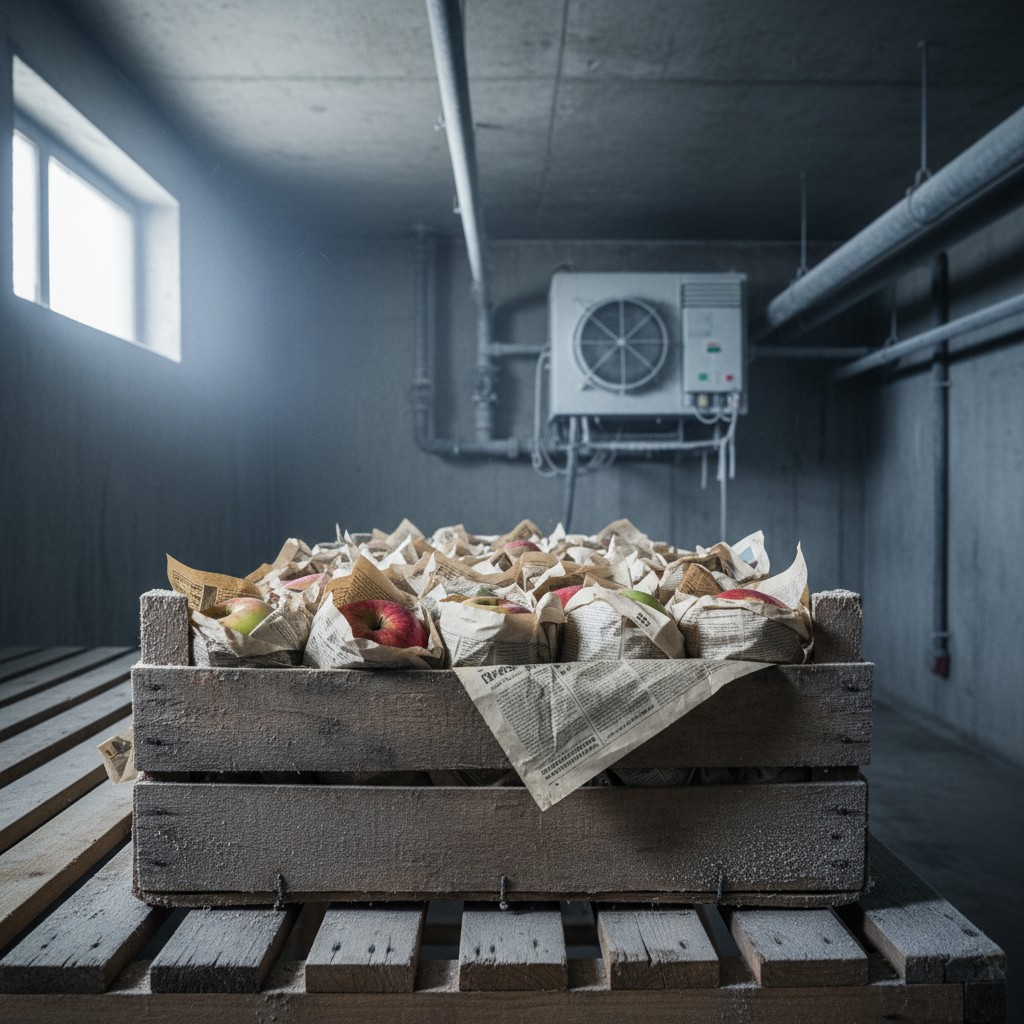
Use buried containers (garbage cans or coolers), unheated garages, cold closets against exterior walls, or earth-bermed structures. When I first started, our root cellar was a metal garbage can buried 2 feet into a hillside, it worked remarkably well.
Crops from your raised beds are ideal for root cellaring. Growing garlic and onions specifically for winter storage is equally rewarding.
What Are the Key Tips for Successful Root Cellaring?
Cure produce before storing, never store damaged items, check regularly, and keep ethylene-producing fruits (apples) away from sensitive vegetables. These four rules dramatically improve success rates.
According to the University of Nebraska-Lincoln Extension, proper curing adds months to storage life. In my experience, checking every 1–2 weeks and removing decaying items prevents one bad apple from ruining the batch. Pair root cellaring with an emergency food pantry for true food security.
🌱 From Our Homestead
We converted a section of our basement into a root cellar two winters ago. Keeping potatoes, carrots, and apples cool and dark through the winter means we are still eating our own produce well into February, which felt like a real milestone for us.
Frequently Asked Questions About Root Cellaring
It is best not to. Apples release ethylene gas, causing potatoes to sprout faster. Store them in separate areas or containers.
No: do not wash them. The soil clinging to root vegetables helps protect them. Brush off loose dirt gently but leave them unwashed. Moisture introduced by washing is one of the fastest ways to invite rot, even a partially damp surface creates conditions for bacterial and fungal decay within days in a sealed storage environment.
Layer carrots in a bucket of slightly damp sand or sawdust. Trim green tops to half an inch. Store at 32–35 degrees F for up to 4–6 months.
It is challenging but possible. Focus on winter squash (50–55 degrees F), sweet potatoes (55–60 degrees F), and dried beans. A buried container 3+ feet deep may work even in zone 8–9.
Place pans of water on the floor or drape damp burlap over containers. A dirt floor maintains humidity better than concrete. Use a hygrometer to monitor levels.