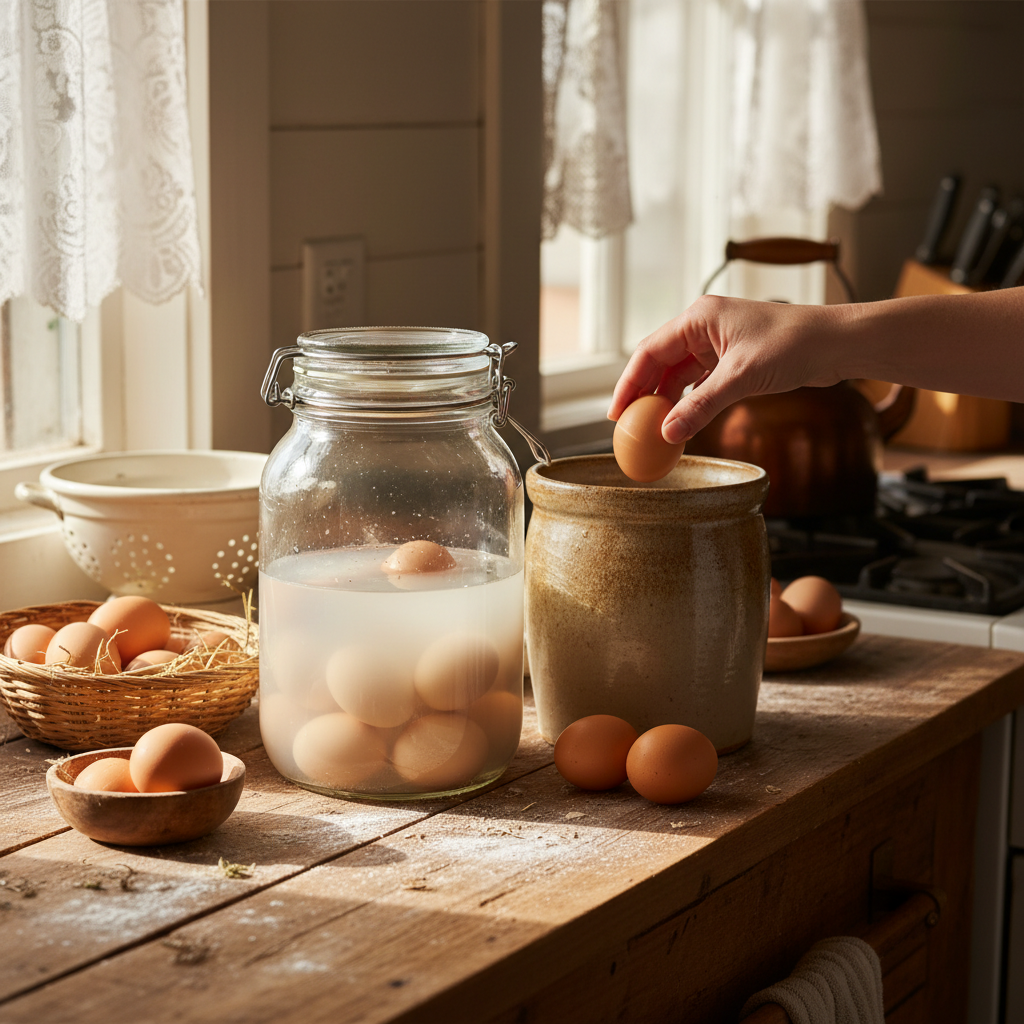
Water Glassing Eggs: How to Preserve Fresh Eggs for 12+ Months Without Refrigeration
🌿 Key Takeaways
- Water glassing uses calcium hydroxide (pickling lime) dissolved in water to seal eggshell pores and preserve fresh eggs for 12–18 months without refrigeration.
- It is a traditional method, not a recommended one. Extension specialists advise against water glassing because Salmonella Enteritidis can be inside the egg before it is laid. Freezing is the validated way to store eggs long term.
- The ratio is simple: 1 ounce of pickling lime per 1 quart of water.
- Only unwashed, fresh, crack-free eggs with intact bloom will work, store-bought eggs won’t cut it.
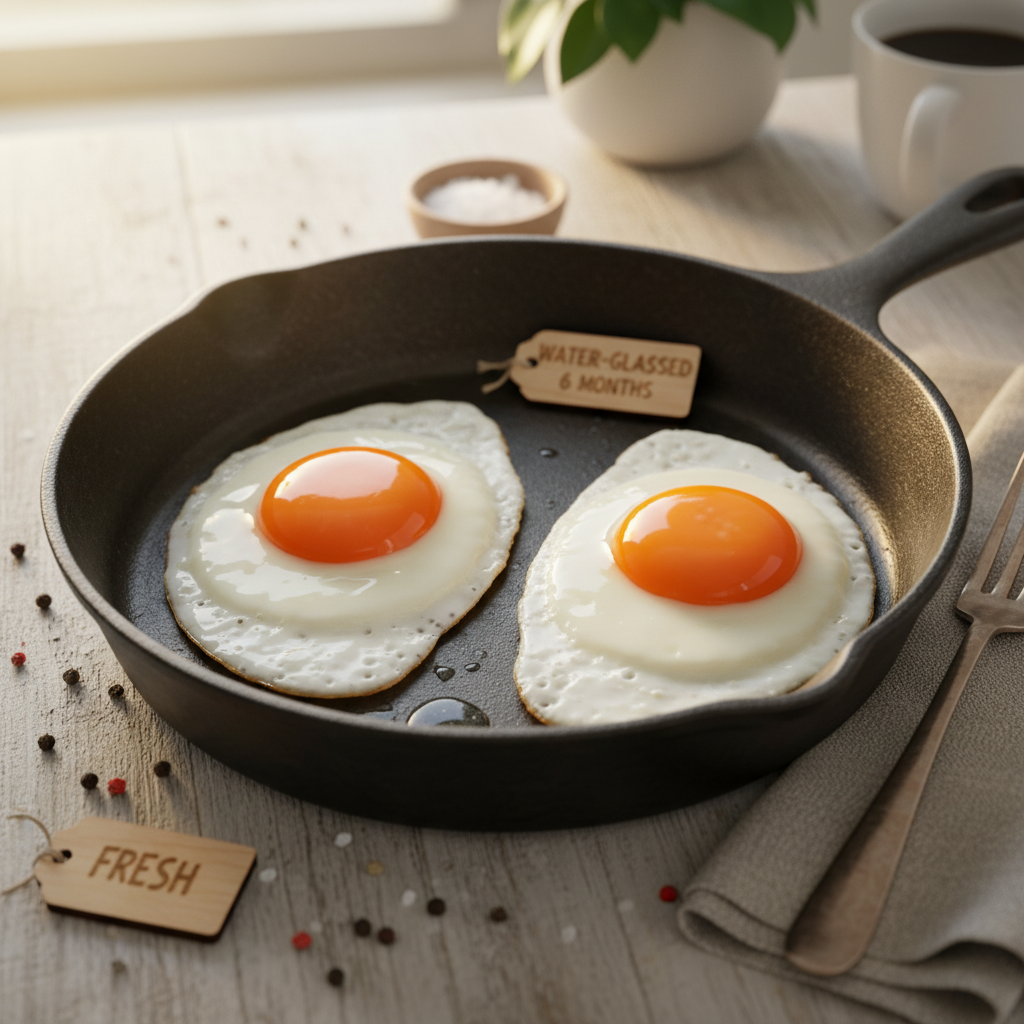
- Properly stored water-glassed eggs taste nearly identical to fresh eggs in cooking and baking.
- This preservation method has been used by homesteaders since the early 1800s and is making a well-deserved comeback.
If you’ve ever had a flock of chickens, you know the pattern. Spring and summer bring an avalanche of eggs, more than your family could ever eat. Then winter rolls around and production drops to almost nothing. It's the classic homestead feast-or-famine cycle.
What if you could stash those spring eggs away and crack them open in January, tasting almost exactly like the day they were laid? That’s the magic of water glassing. It’s one of the oldest, simplest, and most reliable egg preservation methods out there, and it requires zero electricity.
Whether you’re just getting started with backyard chickens or you’ve been homesteading for years, water glassing deserves a spot in your skill set. Let’s walk through everything you need to know.
What Is Water Glassing and Why Should You Care?
Before refrigeration existed, homesteaders needed reliable ways to keep food through the lean months. Water glassing: also called “liming eggs”, was among the most popular solutions, widely practiced from the early 1800s through the mid-20th century.
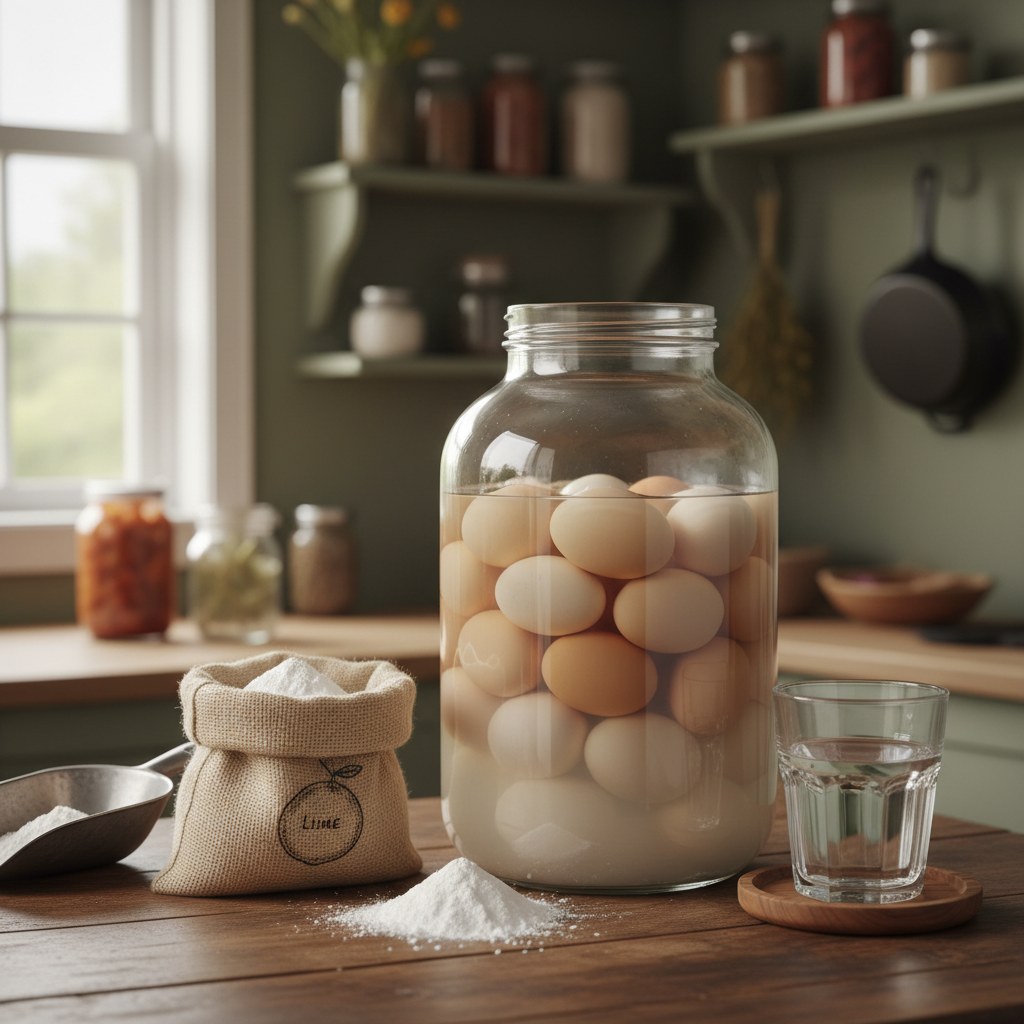
water glassing is the process of submerging fresh, unwashed eggs in a solution of calcium hydroxide (pickling lime) and water. The lime creates a sealed barrier over the egg’s natural pores, locking out air and bacteria while locking in freshness. Think of it like giving each egg an airtight coat of armor.
Why does this matter today? A few reasons. It fits perfectly into a self-sufficient emergency food pantry. It eliminates the need for freezer space. And honestly? It just feels good knowing you can preserve a year’s worth of protein with a $5 bag of lime and some tap water.
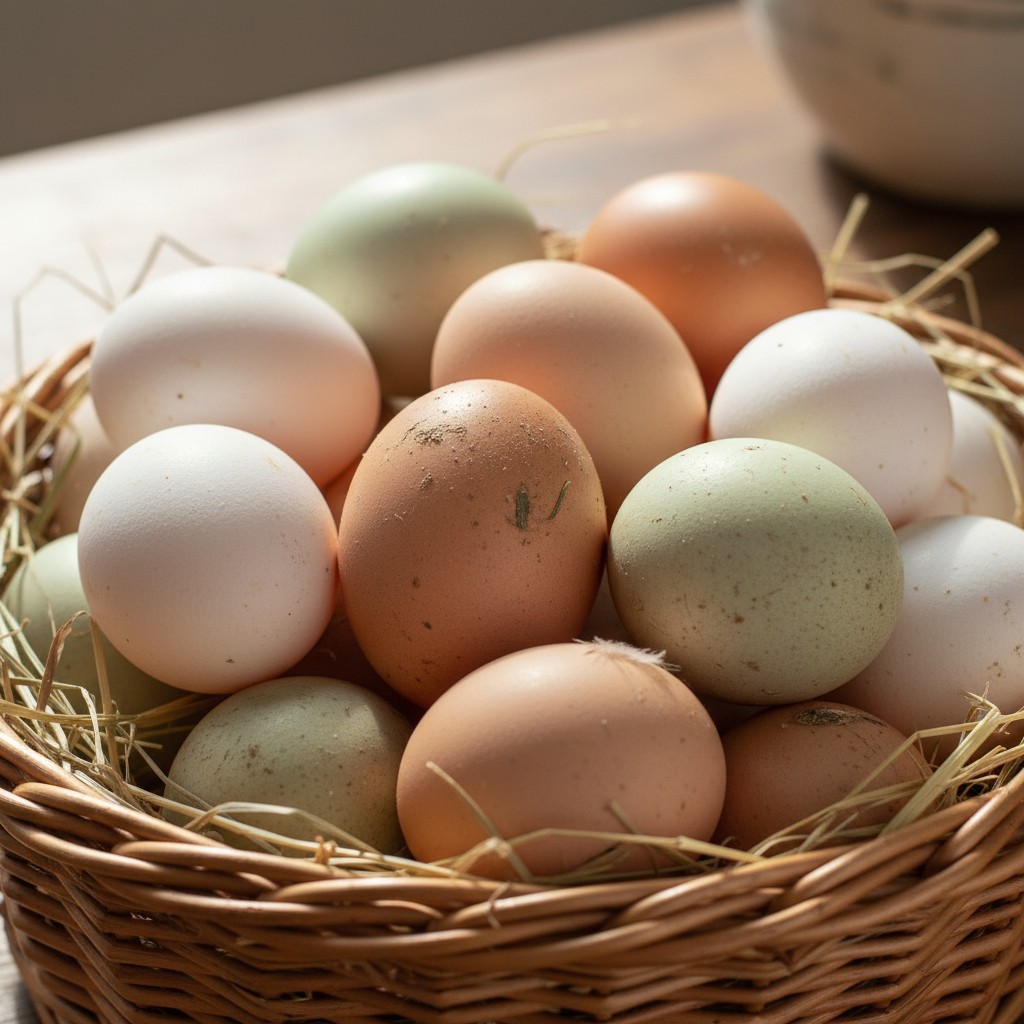
How Does the Science Actually Work?
A fresh egg’s shell has between 7,000 and 17,000 tiny pores. When a hen lays an egg, she deposits a thin protein coating called the “bloom” or cuticle over the shell. This bloom naturally seals those pores and protects the egg from bacteria and moisture loss for a short time.
Why does the bloom matter so much?
The bloom is nature’s preservative. It’s the reason unwashed farm-fresh eggs can sit on your counter for weeks without going bad. Once you wash an egg, as commercial producers do, you strip away that bloom, opening up all those pores to contamination. That’s why store-bought eggs must be refrigerated.
When you place a bloom-intact egg into a calcium hydroxide solution, something elegant happens. The lime reacts with carbon dioxide in the water to form calcium carbonate, the same mineral that makes up the eggshell itself. This creates an additional mineral seal over every pore, reinforcing the bloom and locking the egg in a state of suspended freshness.
The high pH of the lime water (around 12.4) also creates an environment that’s extremely hostile to bacteria. Nothing harmful can grow in that solution, which means your eggs stay safe month after month.
What Supplies Do You Need to Get Started?
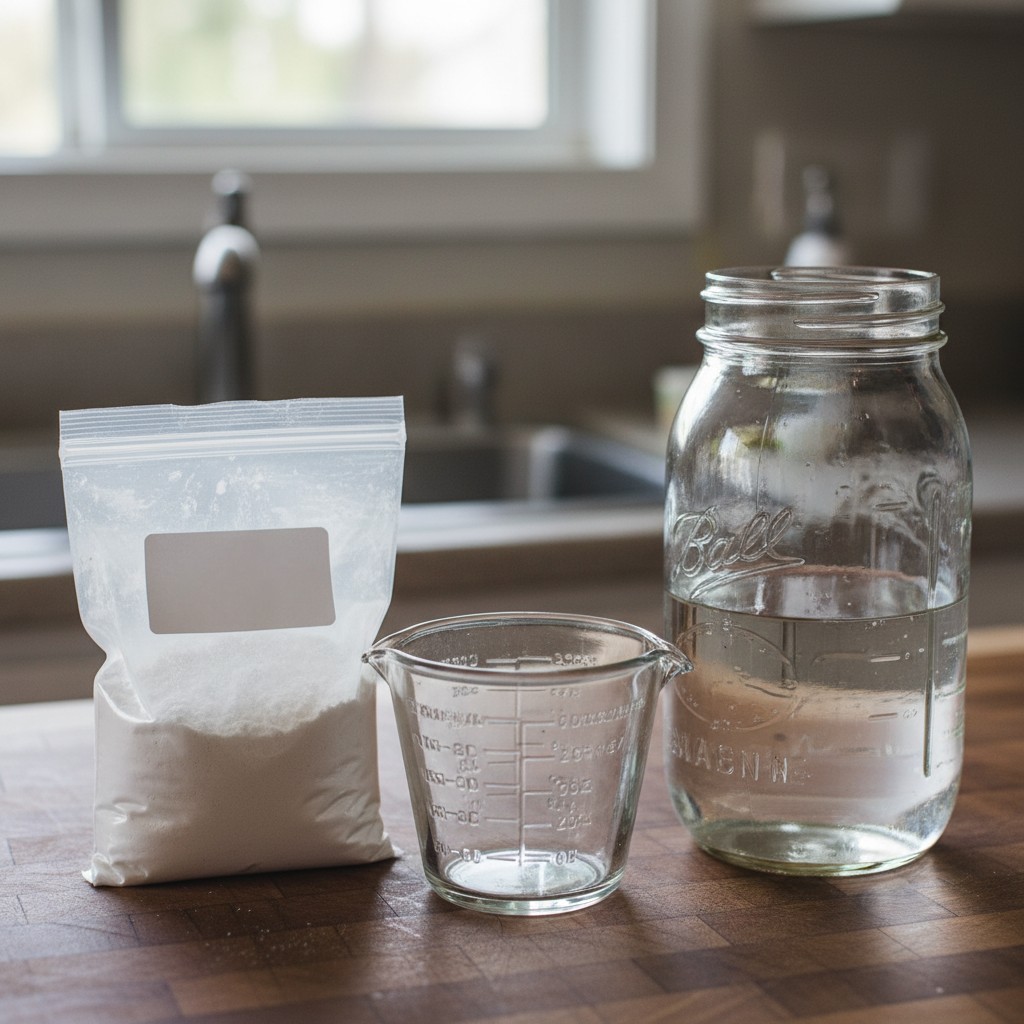
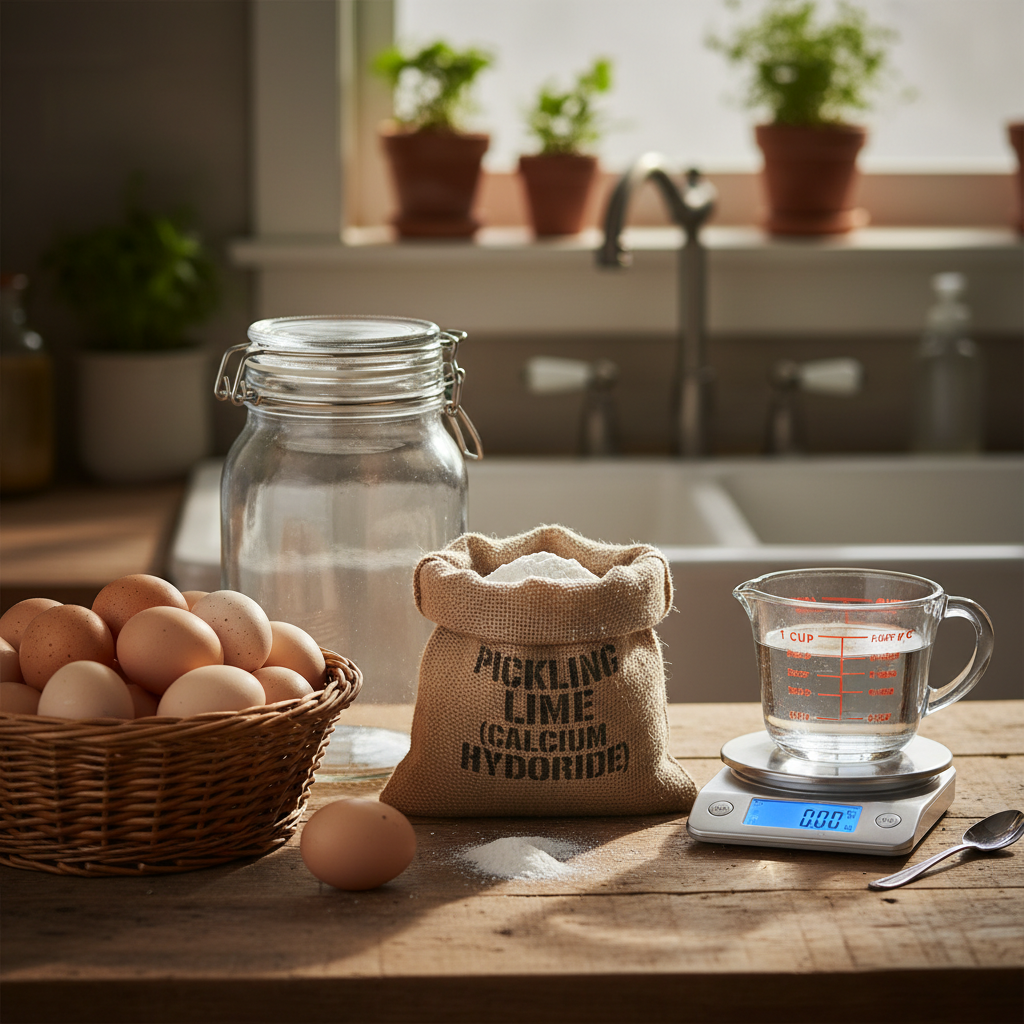
One of the best things about water glassing is how little you need. Here’s your complete supply list:
| Supply | Details | Approx. Cost |
|---|---|---|
| Calcium hydroxide (pickling lime) | Food-grade, also labeled “hydrated lime” or “cal”. NOT garden lime or quicklime | $5–$8 per lb |
| Food-safe container | Glass jar, food-grade bucket, or ceramic crock (no metal) | $3–$15 |
| Fresh unwashed eggs | From your flock or a local farmer, bloom must be intact | Free–$4/doz |
| Clean water | Filtered or distilled preferred; chlorinated tap water works too | Minimal |
A one-pound bag of pickling lime can preserve roughly 15 dozen eggs. That’s a year’s worth of breakfast for a small family, preserved for under $10 in materials. Try getting that deal from your freezer.
Step-by-Step: How Do You Water Glass Eggs?
Limed eggs were a standard pantry item in American households well into the 1940s, and the method itself has not changed. What has changed is what we know about eggs, and it is worth being straight about that before you start.
⚠ Read this first: water glassing is not a recommended method today.
Extension food-preservation specialists at Washington State and Oregon State advise against it, and the reason is specific rather than general caution. Salmonella Enteritidis can be deposited inside an egg as it forms in the hen. That was not understood in the 1940s, and it is the one risk an intact bloom cannot do anything about — a clean, unwashed, perfectly sealed shell tells you nothing about what was already in there. Months at room temperature give anything present time to multiply. A Penn State study also found small home flocks carry a higher incidence of Salmonella than commercial operations, and small home flocks are the only source of the unwashed, bloom-intact eggs this method needs.
The methods that are actually validated are refrigeration for the short term and freezing for long storage — crack the eggs, beat them lightly, and freeze in portions. That is what Extension recommends instead.
The rest of this guide is here because people do water-glass eggs, and doing it carefully beats doing it from a worse source. Treat it as a traditional method you are choosing with the risk in view, not as an equivalent to freezing. If anyone in your household is pregnant, under five, elderly, or immunocompromised, freeze instead.
Step 1: Select your eggs carefully
This is the most important step. Every egg you put into your lime solution must be:
- Unwashed: the natural bloom must be fully intact
- Fresh: ideally collected the same day they’re laid
- Crack-free: inspect each egg carefully, even hairline cracks disqualify it
- Clean: if an egg has visible dirt or droppings, set it aside for immediate use
Keeping your nesting boxes clean makes this much easier. If you’re raising ducks alongside chickens, duck eggs can also be water glassed using the same method, their thicker shells actually take to it quite well.
Step 2: Mix your lime water solution
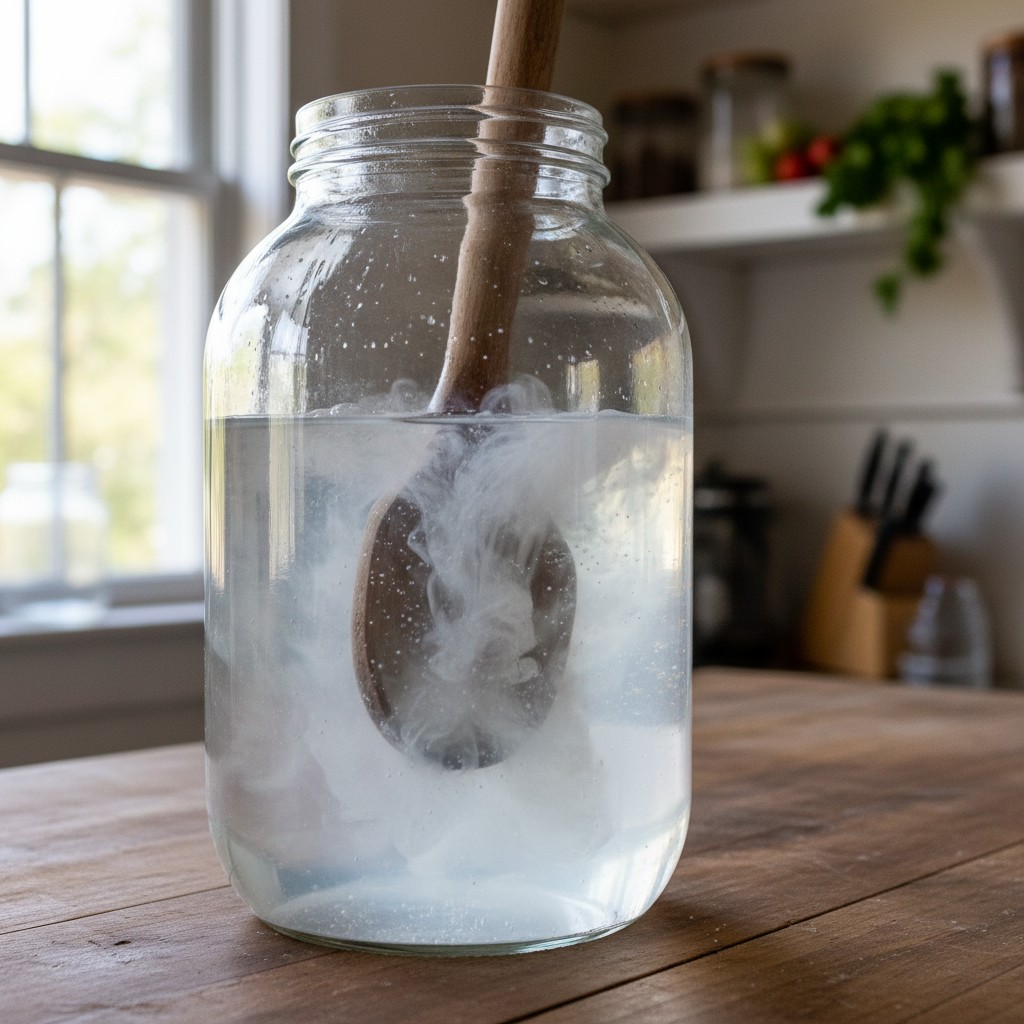
The ratio is simple and universal: 1 ounce (about 2 tablespoons) of pickling lime per 1 quart of water.
For a 5-gallon bucket, that works out to roughly 5 ounces of lime to 5 quarts of water. Stir it thoroughly. The water will turn milky white. Some lime will settle to the bottom, that’s normal and actually a good sign that the solution is properly saturated.
Important safety note: Pickling lime is caustic. Wear gloves when handling it, avoid inhaling the dry powder, and keep it away from your eyes. It won’t harm you in the diluted solution, but the dry powder demands respect.
Step 3: Add eggs to the solution
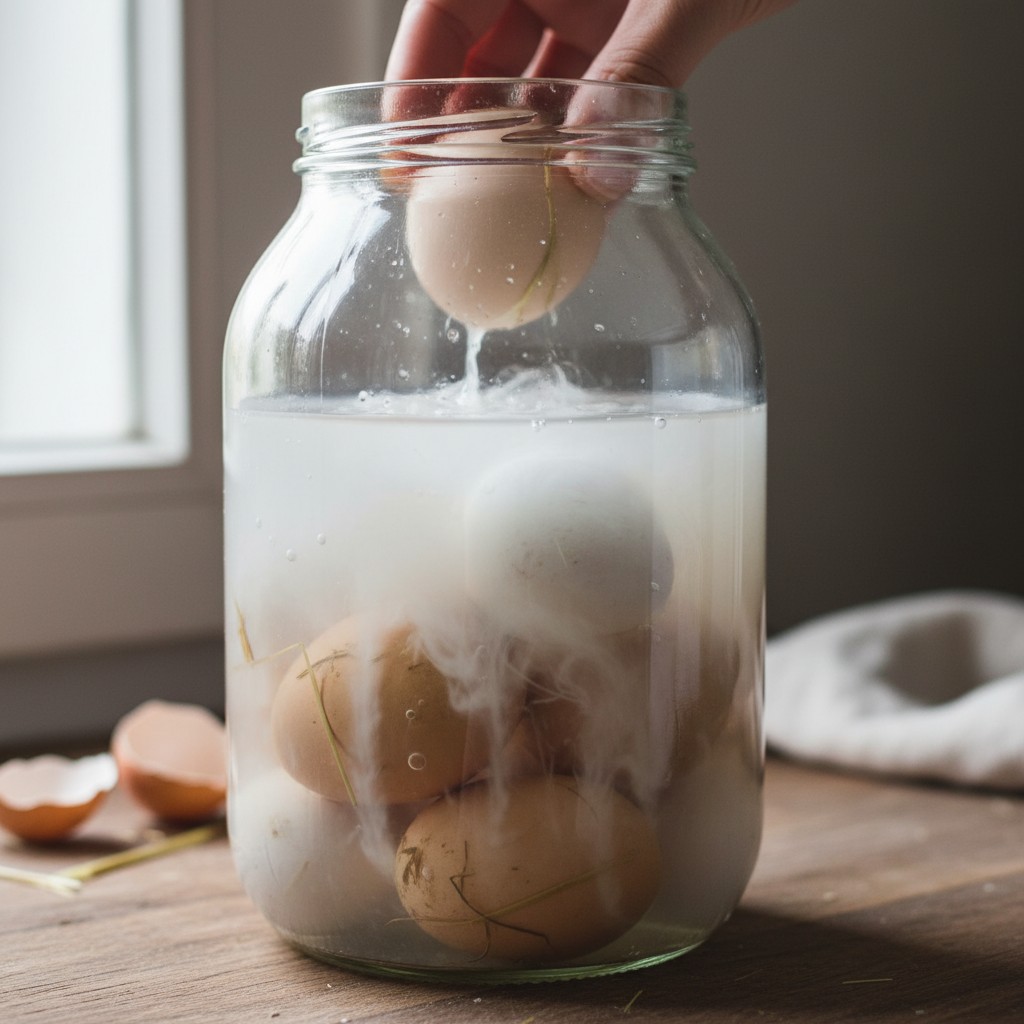
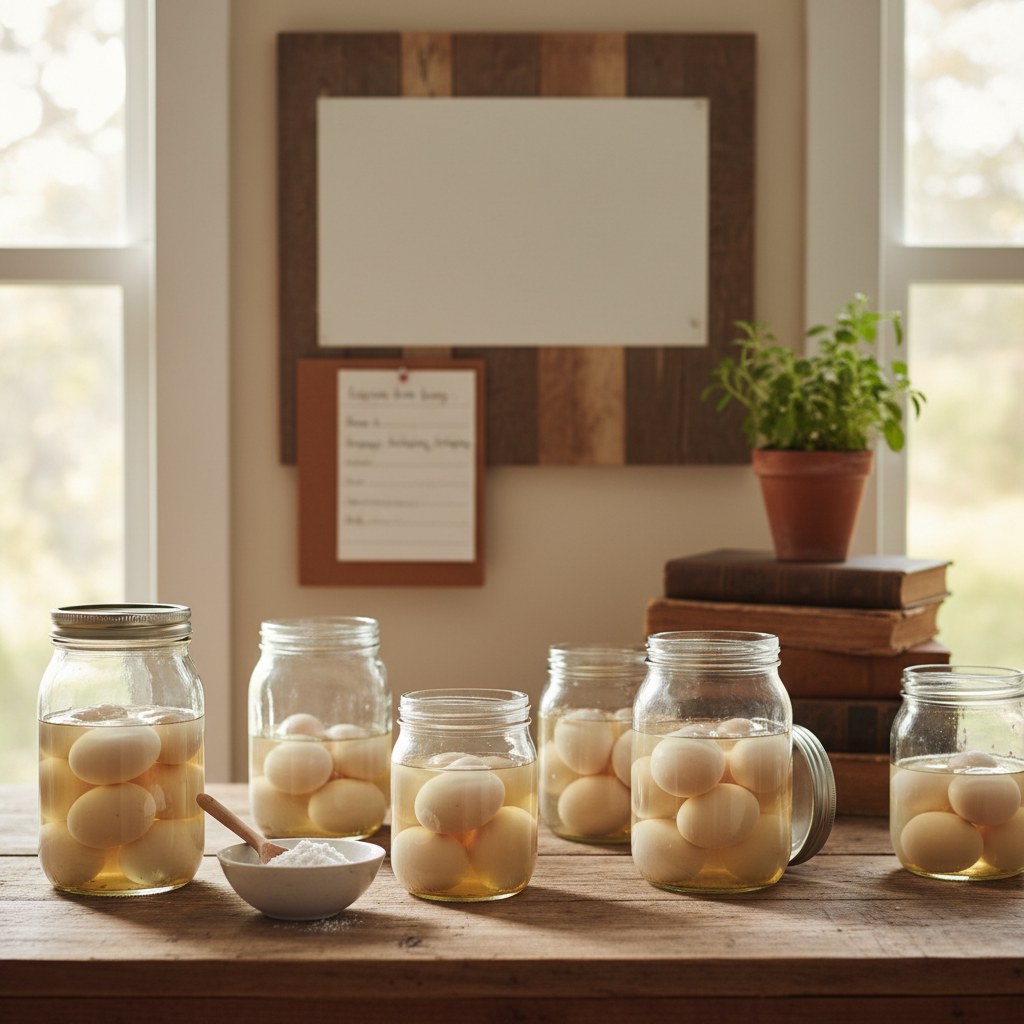
Gently lower each egg into the lime water, pointy end down. This positions the air cell at the top and helps maintain yolk centering. You can add eggs over days or weeks as your hens lay, you don’t need to fill the container all at once.
Make sure every egg stays fully submerged. The solution should cover the top layer of eggs by at least 2 inches. If you need to add more solution later, mix a fresh batch at the same ratio and pour it in.
Step 4: Seal and store
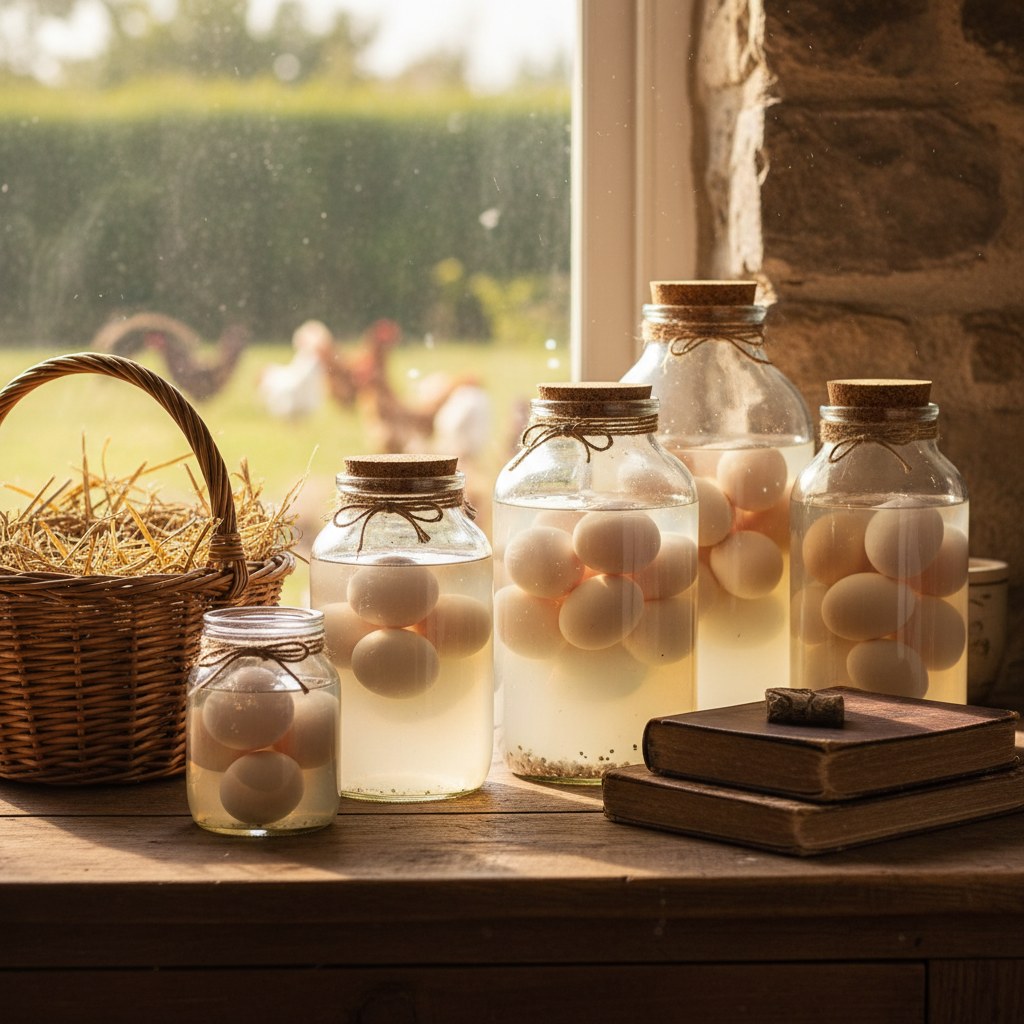
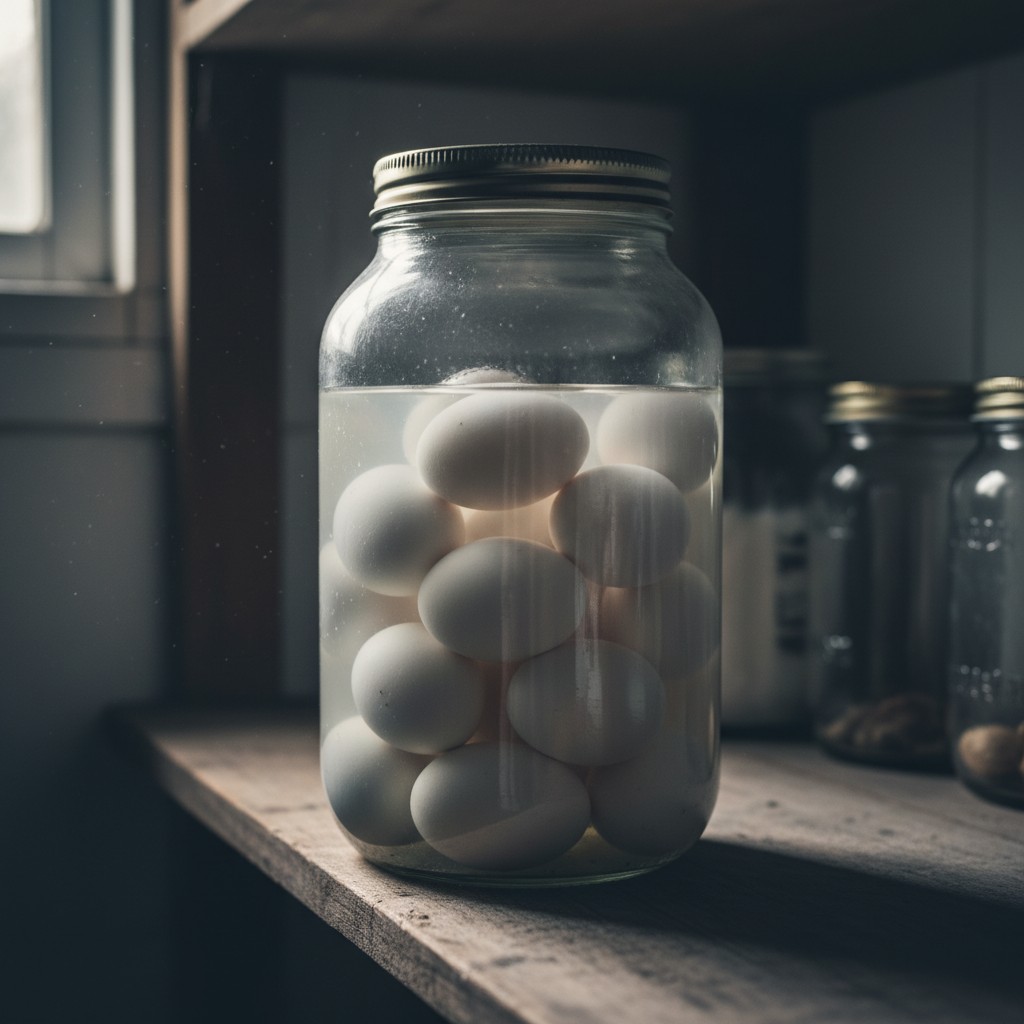
Cover your container with a tight-fitting lid. Store it in a cool, dark location, a pantry, basement, root cellar, or even a closet works. The ideal temperature range is 35–65°F (2–18°C). If you’ve set up a root cellar, that’s the perfect spot.
Label your container with the date you started and the date of the most recently added eggs. That’s it. Walk away and let the lime do its work.
From our homestead: Last spring we put up 14 dozen eggs in two 5-gallon food-grade buckets. We pulled the last ones out in February, nearly 11 months later, and scrambled them for breakfast. Honestly? If I hadn’t told my husband they were water-glassed, he wouldn’t have known. The whites were just slightly thinner than a fresh egg, but the yolks were golden and the flavor was spot-on. It felt like finding buried treasure in the pantry.
How Long Do Water Glassed Eggs Actually Last?
Historical records and modern homesteader experience consistently report that water-glassed eggs remain safe and usable for 12 to 18 months when stored at cool temperatures. Some people push it to 24 months, though quality does gradually decline after the one-year mark.
| Storage Duration | Egg Quality | Best Uses |
|---|---|---|
| 0–6 months | Excellent: nearly indistinguishable from fresh | All purposes: frying, poaching, baking, scrambling |
| 6–12 months | Very good: whites slightly thinner | Scrambling, baking, omelets, quiche |
| 12–18 months | Good: noticeable thinning of whites, yolk still firm | Baking, scrambled eggs, hard-boiling |
| 18–24 months | Fair: use promptly after retrieving | Baking only |
How Do Water Glassed Eggs Taste Compared to Fresh?
This is the question everyone asks, and the answer is genuinely surprising. In the first six months, most people can’t tell the difference at all. The yolk color stays vibrant (especially if your hens are eating a varied garden-supplemented diet), and the flavor is rich and clean.
After six months, you’ll notice the whites become a bit runnier, similar to what happens with any aging egg. The yolk membrane may also be slightly more fragile. Neither of these changes affects the taste in any meaningful way. For baking, you genuinely cannot tell the difference even at the 12-month mark.
One texture note: water-glassed eggs don’t peel as easily when hard-boiled, because the sealed pores trap gases inside. If you need hard-boiled eggs, steam them instead of boiling, that helps quite a bit.
What Are the Safety Considerations?
Water glassing is considered a safe preservation method when done correctly, but there are a few non-negotiable rules you need to follow.
Can you use store-bought eggs?
No. Commercially processed eggs in the U.S. Are washed and sanitized, which strips away the protective bloom. Without that bloom, the lime solution can’t form a proper seal over the pores. Using washed eggs for water glassing is not just ineffective, it’s potentially dangerous, because bacteria may have already entered through the open pores.
Should you candle eggs before water glassing?
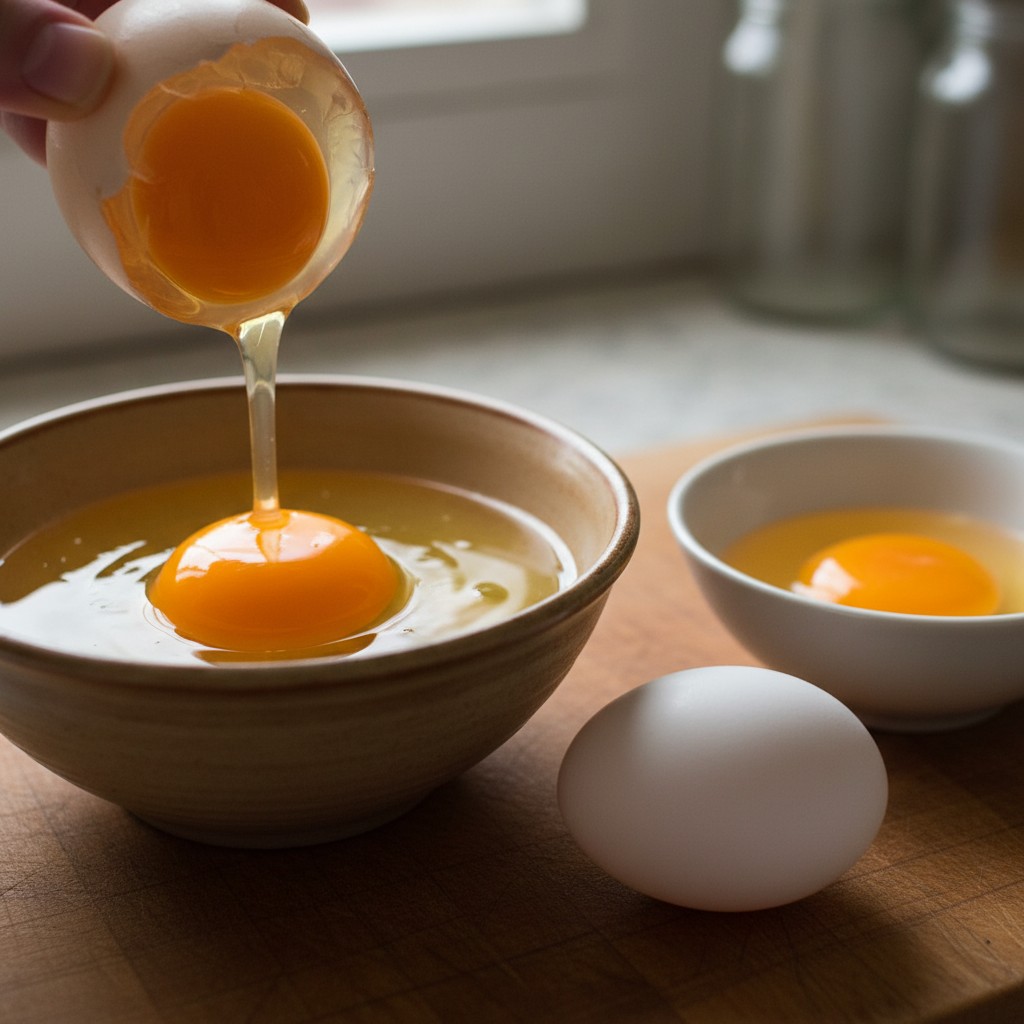
Yes: candling is a worthwhile extra step before committing eggs to a long-term batch. Hold each egg up to a bright flashlight or candle in a darkened space: a truly fresh, high-quality egg will show a small, tight air cell at the blunt end and a clearly defined yolk shadow. Any egg with a large air cell, a moving yolk, or visible internal cracks is not preservation-quality. Candling takes about 30 seconds per egg and gives you confidence in every jar you fill. Also remember: always crack water-glassed eggs into a separate bowl before adding them to a dish, if anything smells off on opening, you catch it before it ruins a meal.
What about eggs with hairline cracks?
Never use them. Even a tiny crack allows the alkaline lime solution to seep inside the egg, contaminating the contents. Eat cracked eggs right away or discard them. Keeping your flock healthy and well-nourished helps produce stronger shells with fewer cracks.
Do you need to rinse eggs before eating?
Yes, always rinse water-glassed eggs thoroughly under cool running water before cracking them. The lime residue on the shell is food-safe in trace amounts, but rinsing is a simple precaution that takes two seconds.
How can you tell if an egg has gone bad?
Use the same float test you’d use with any egg. Place the rinsed egg in a bowl of plain water. If it sinks and lies flat, it’s fresh. If it stands on end, it’s older but still usable. If it floats, discard it. Always crack water-glassed eggs into a separate bowl first, if anything smells off, toss it.
What Mistakes Should You Avoid?
Most water glassing failures come down to a handful of common mistakes. Avoid these and you’ll have great results every time.
- Using the wrong type of lime. You need calcium hydroxide, also called pickling lime, hydrated lime, or “cal.” Do NOT use agricultural lime (calcium carbonate), quicklime (calcium oxide), or any product that contains additives. Check the label carefully.
- Using metal containers. The alkaline lime solution reacts with metal over time. Stick with glass, food-grade plastic, or ceramic.
- Letting eggs peek above the waterline. Any exposed surface is no longer protected. Keep eggs fully submerged at all times.
- Storing in a warm location. Heat accelerates egg degradation even inside lime water. A consistently cool spot is essential.
- Adding washed or old eggs. If you’re not sure whether an egg’s bloom is intact, don’t risk it. When in doubt, eat it fresh.
How Does Water Glassing Compare to Other Preservation Methods?
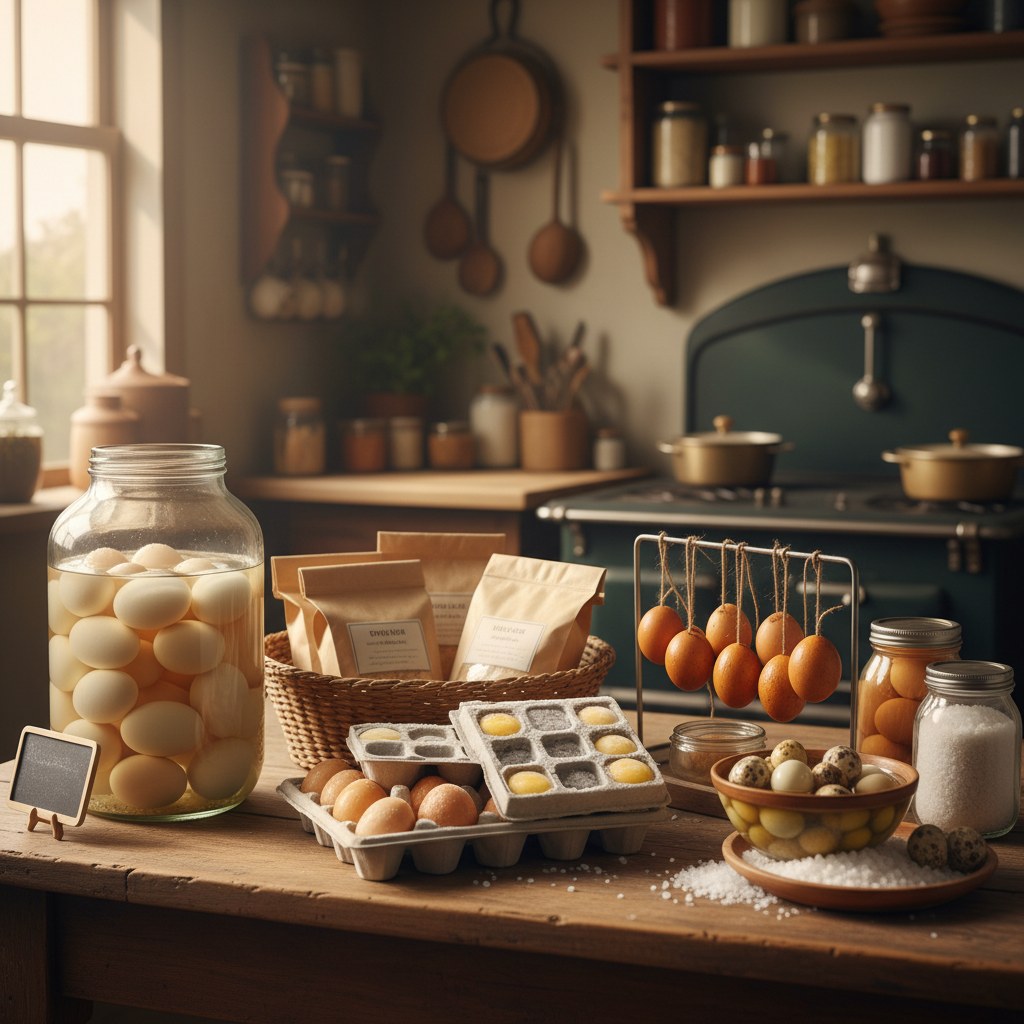
Water glassing isn’t the only way to preserve eggs, but it holds up remarkably well against the alternatives.
| Method | Shelf Life | Electricity Needed? | Maintains Whole Egg? |
|---|---|---|---|
| Water glassing | 12–18 months | No | Yes |
| Freezing (scrambled) | 6–12 months | Yes | No |
| Dehydrating | 6–12 months | Yes (to make) | No |
| Mineral oil coating | 3–6 months | No | Yes |
| Refrigeration (unwashed) | 3–5 months | Yes | Yes |
For homesteaders focused on self-reliance and off-grid preparedness, water glassing is hard to beat. It pairs perfectly with other root cellaring and food storage strategies you may already be using.
Frequently Asked Questions
Can you water glass duck eggs or quail eggs?
Absolutely. Duck eggs work particularly well because their thicker shells and heavier bloom take to the lime solution beautifully. Quail eggs can also be preserved this way, though their small size makes them a bit fiddly to handle. The same rules apply: unwashed, fresh, and crack-free.
Does water glassing change the nutritional value of eggs?
Research on this is limited, but the general consensus among food scientists is that water glassing preserves the vast majority of an egg’s nutritional content. You may see minor decreases in certain B vitamins over very long storage periods, but the protein, fat, and mineral content remain largely intact.
Can you reuse the lime water solution?
It’s best not to. Once you’ve emptied a batch, mix a fresh solution for your next round. Lime is inexpensive, and fresh solution ensures the pH stays high enough to be effective. Used solution may have a lower pH and could contain bacteria introduced when you removed eggs.
Is it safe to water glass eggs if you’re pregnant?
No — freeze your eggs instead. This is the one case where the answer is not “be careful”. Unrefrigerated storage does introduce risk that refrigeration and freezing do not, because Salmonella Enteritidis can already be inside an egg when it is laid and months at room temperature let it multiply. Thorough cooking does kill it, so the risk is not unmanageable for a healthy adult who never eats a soft yolk. But pregnancy is exactly when a runny egg or an under-set custard stops being a small mistake, and the safe alternative costs nothing but freezer space. The same goes for children under five, adults over sixty-five, and anyone immunocompromised.
Where do you buy food-grade pickling lime?
Look for it in the canning section of hardware stores, farm supply stores, or online. Mrs. Wages is among the most common brands. You can also find it at Mexican grocery stores labeled as “cal”, it’s traditionally used for making tortillas. Just make sure the label says “calcium hydroxide” with no additives.
Ready to Start Preserving?
Water glassing is one of those homestead skills that feels almost too simple to be real. A bag of lime, some water, a jar, and your farm-fresh eggs, that’s the whole operation. No fancy equipment, no electricity, no pressure canning. Just quiet, reliable food preservation that’s been working for over 200 years.
If you’re already growing food for your flock and collecting eggs each morning, water glassing is the natural next step. Start with a single jar this spring. Pull those eggs out next winter and scramble them up. I think you’ll be amazed, and a little proud, at what a quart of lime water can do.
Your future self, standing in the kitchen on a cold January morning with a perfectly preserved farm egg in hand, will thank you.