How to Deadhead Flowers and Keep Your Garden Looking Its Best All Season
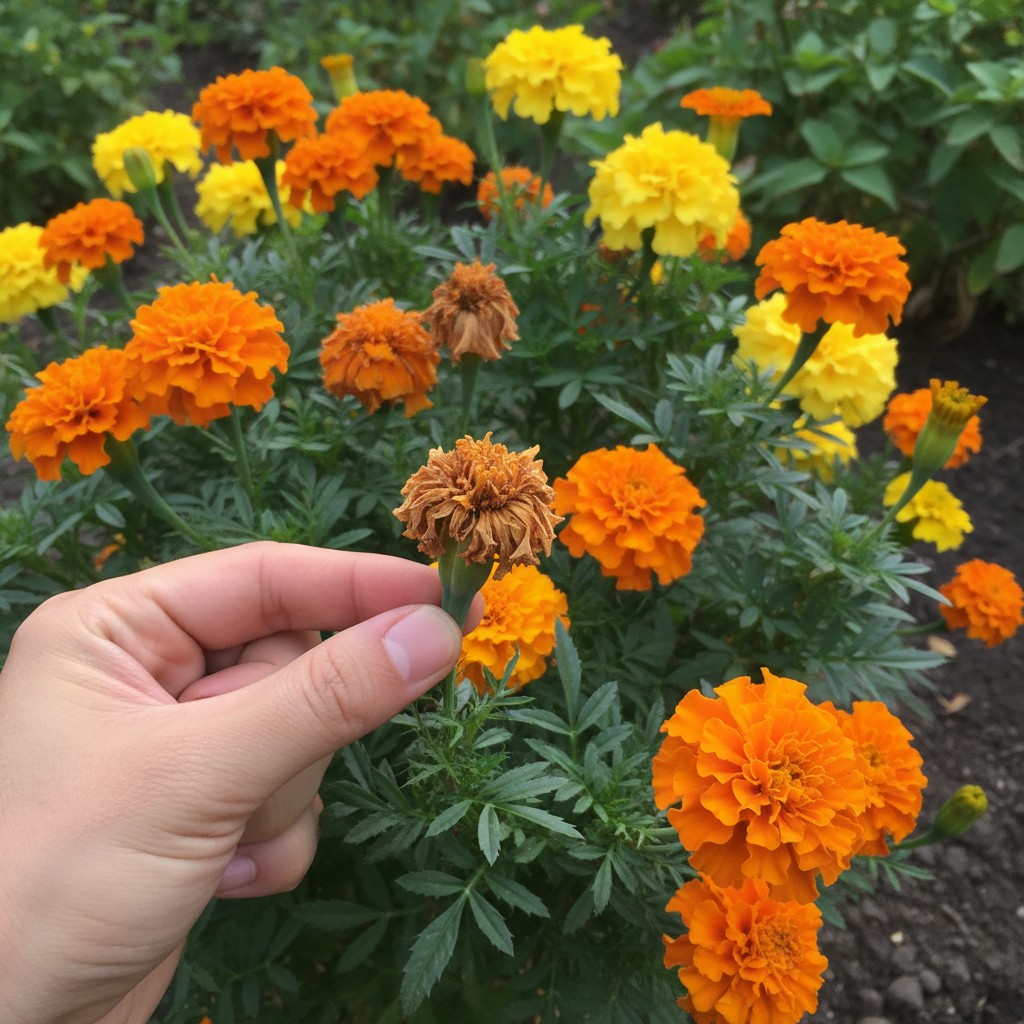
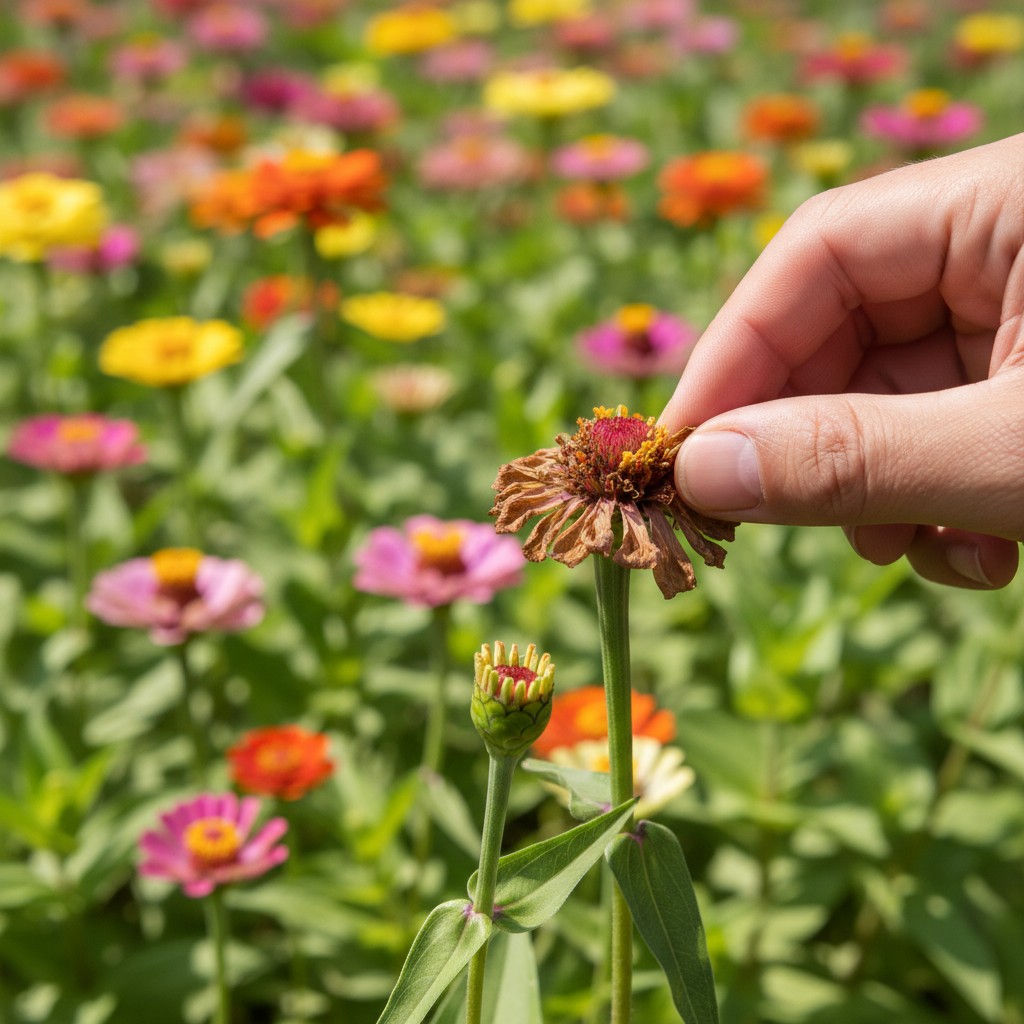
- Easiest (no tools needed): Snap-and-pinch for zinnias, cosmos, marigolds. Pinch the spent flower stem above the next leaf node and two new flowering stems sprout from the leaf axils.
- Best for woody plants: Bypass-pruner cut for roses, dahlias, and hydrangeas. Cut at a 45-degree angle just above an outward-facing leaflet so the next stem grows out, not in.
- Best for sprawling annuals: Shear-back by one-third for petunias, coreopsis, and catmint. The plant looks rough for about a week, then comes back thicker for a strong second flush.
There’s a moment every summer, usually right around mid-July, when your garden goes from “wow, look at all those flowers” to “why did everything stop blooming at once?” The containers that were overflowing with petunias look leggy and tired. The zinnias have more brown seed heads than fresh flowers. The roses put on one gorgeous flush and then just… sat there.
I spent my first two seasons as a gardener thinking this was normal. That flowers had a set window and once it closed, you waited for next year. Nobody told me that the single most impactful thing I could do, the thing that would have kept my garden blooming from June through the first frost, was also the simplest. It takes five minutes a day, no special tools, and zero expertise. You just have to remove the spent flowers before the plant decides its job is done.
That’s deadheading. And once you understand why it works, you’ll never look at a fading flower the same way again. The Royal Horticultural Society describes it plainly: “most garden plants benefit from deadheading, but leave those that produce decorative or bird-friendly seeds and fruits”, a rule we’ll return to in the last section.
Key Takeaways
- Deadheading removes spent flowers before they set seed, redirecting the plant’s energy into new blooms instead of seed production, confirmed by the RHS deadheading guide.
- Some flowers snap clean by hand (zinnias, cosmos, marigolds); others need sharp pruners for a clean cut (roses, dahlias, hydrangeas).
- A 15-minute weekly garden walk, deadheading, weeding, watering check, pest scout, stake check, prevents small problems from becoming big ones.
- Not everything should be deadheaded: leave coneflowers and black-eyed Susans in fall for bird food, and let self-sowers like cosmos drop seed if you want them to naturalize.
- Heavy bloomers like roses, dahlias, and petunias benefit from liquid fertilizer every two weeks during peak season to fuel continuous flower production.

Why Deadheading Is the Single Best Thing You Can Do for Your Flowers
Every flowering plant has one biological goal: reproduce. It grows stems, produces leaves, builds buds, opens flowers, attracts pollinators, and sets seed. Once the seed is developing, the plant gets the signal that its work is done. Mission accomplished. It starts winding down flower production and directing energy into ripening those seeds.
When you deadhead, when you remove the spent flower before the seed matures, you interrupt that signal. The plant hasn’t completed its reproductive cycle, so it tries again. It pushes out new buds, opens new flowers, and keeps going. For many annuals and repeat-blooming perennials, this cycle can continue for months. A zinnia that might produce around twenty flowers in a season can produce over thirty if you stay on top of deadheading.
But it’s not just about more flowers. Deadheading also keeps plants looking clean. Brown, papery spent blooms hanging on a plant make the whole garden look neglected. Removing them instantly freshens the appearance, even before the new buds open. It also improves air circulation around the foliage, which reduces the risk of fungal diseases like powdery mildew and botrytis, both of which thrive on decaying flower tissue sitting in humid conditions.
If you’re growing a cutting garden, deadheading is even more critical. Every time you cut a flower for a vase, you’re effectively deadheading, and the plant responds by producing more stems. That’s why cutting gardens often look better as the season progresses. You’re constantly harvesting, and the plants keep pushing new growth to compensate.
How to Deadhead: The Right Way for Every Flower Type
The five methods below cover almost every flower you are likely to grow. The table compares them at a glance so you can match the right method to each plant before reading the detail in the sections that follow.
| Method | Best For | Tools | Cut Location | Rebloom Window |
|---|---|---|---|---|
| Snap-and-Pinch | Zinnias, cosmos, marigolds | Fingers | Above next leaf node | 7 to 14 days |
| Pruner Cut | Roses, dahlias, hydrangeas | Bypass pruners | Above outward-facing leaflet | 14 to 21 days |
| Shear-Back | Petunias, coreopsis, catmint | Hedge shears | By one-third overall | 14 to 21 days |
| Daily Snap | Daylilies (one-day blooms) | Fingers | Individual spent blooms | Continues all season |
| Cluster Cut | Lilac, rhododendron, azalea | Pruners | Below spent truss | Next season |
Method guidance per Royal Horticultural Society and University of Minnesota Extension. Rebloom windows are typical ranges; actual time depends on weather, soil fertility, and cultivar.
The basic idea is always the same: remove the spent flower. But technique varies by plant, and getting it right matters more than most people realize. Cut in the wrong spot and you leave ugly stubs. Cut too aggressively and you remove developing buds. The RHS recommends two reliable methods: for soft stems, “pinch or snap off faded blooms with finger and thumb, aiming to remove the flower with its stalk,” and on tougher stems, “trim away the spent flower, cutting back to just above the next bud or leaf on the stem.” Here’s how that plays out on the plants you’re most likely growing.
Snap-and-Pinch Flowers
Some flowers have stems that break cleanly when you bend them at a leaf node. These are the easiest to deadhead because you don’t even need tools, just your thumb and forefinger.
- Zinnias: Follow the spent flower stem down to the first set of full-sized leaves. Snap or cut just above that leaf node. Two new stems will sprout from the leaf axils, each producing its own flower. This is why deadheaded zinnias get bushier and more productive over time.
- Cosmos: These snap very easily. Pinch right above the next branching point. Cosmos are so vigorous that even imprecise deadheading works, they’ll push new growth regardless.
- Marigolds: Pinch or snap the spent flower head off just below the base of the bloom, where it meets the stem. Marigold stems are slightly sticky, so this can be a messy job. I keep a rag in my pocket during marigold season.
Pros: No tools needed, the fastest method by far, almost impossible to do wrong. Soft stems heal cleanly with no disease entry point. Children and beginners can do this without supervision.
Cons: Only works on plants with brittle, hollow, or naturally-snapping stems (zinnias, cosmos, marigolds, daylilies). Marigold stems are sticky and stain skin and clothing. Will not work on roses or any woody-stemmed plant.
Pruner-Required Flowers
Woodier stems and more complex flower structures need sharp bypass pruners for a clean cut. Tearing or crushing the stem invites disease.
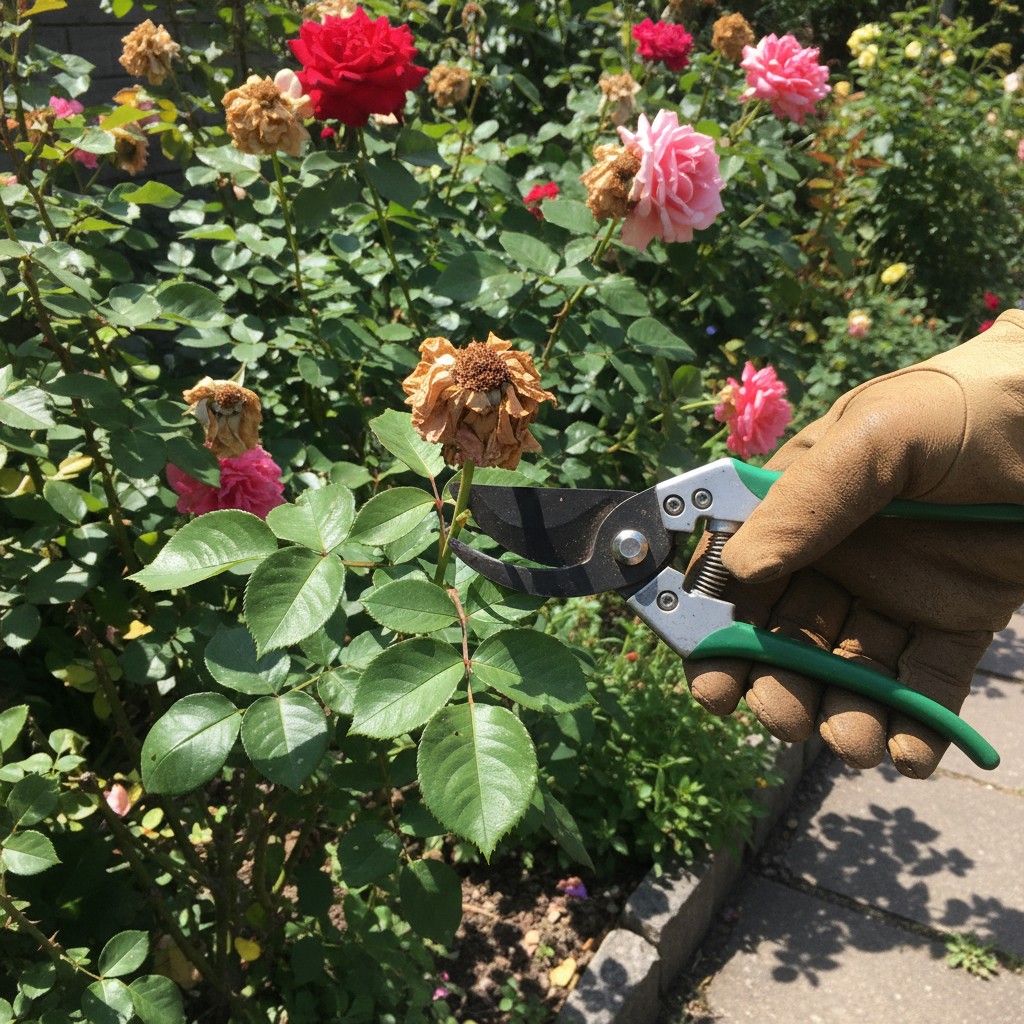
- Roses: This is where people get nervous, but the rule is simple. For hybrid teas and floribundas, cut the spent bloom stem down to just above the first outward-facing leaf with five leaflets. That’s where a strong new flowering stem will emerge. For shrub roses and climbers, you can simply snip the flower cluster off at the base of the cluster stem. Cut at an angle parallel to the leaf, sloping away from the bud.
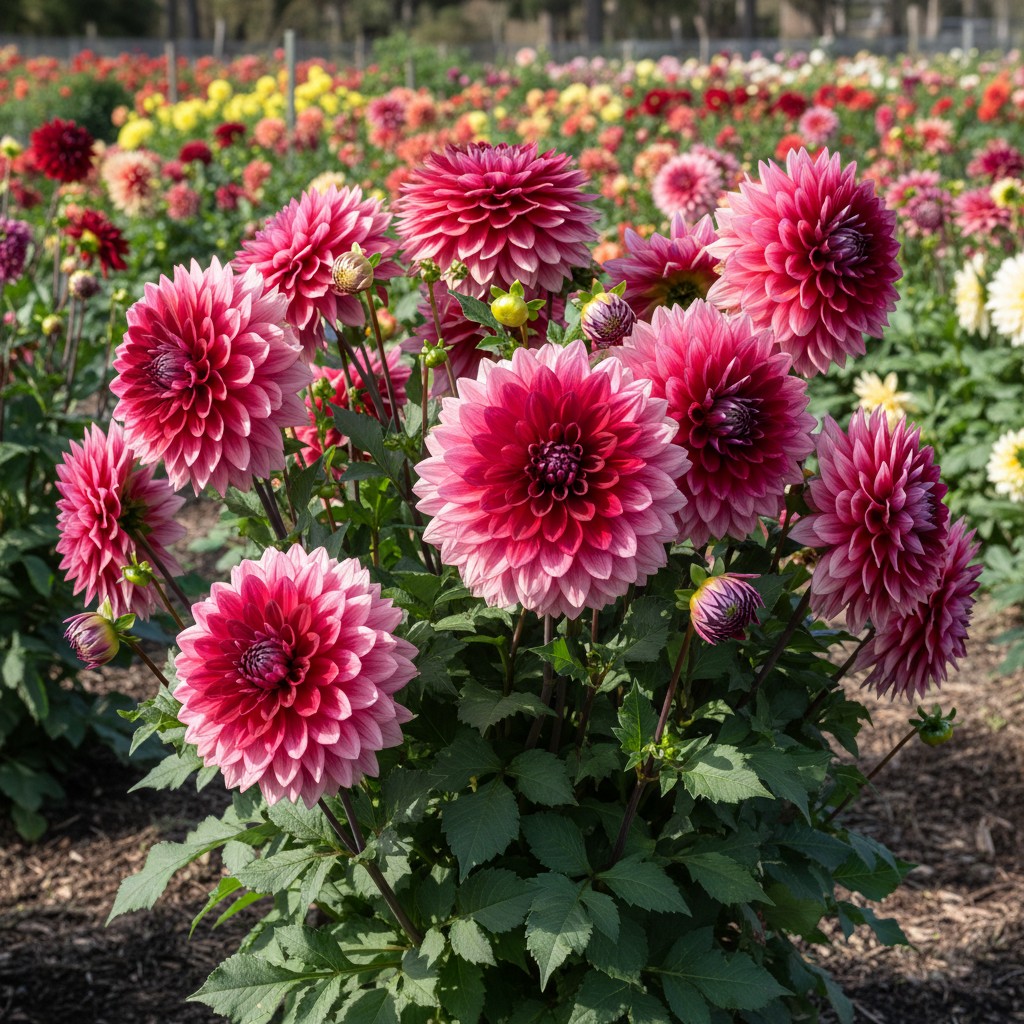
- Dahlias: Cut the spent flower stem back to where it meets a main branch or a side stem with a developing bud. Dahlia stems are hollow, which makes them prone to rot if water pools in the cut end. Angle your cut so water runs off.
- Daylilies: Each flower lasts only one day. Snap off individual spent blooms daily (they pop right off), and once the entire flower stalk has finished blooming, cut the scape down to the base of the plant. Don’t cut the foliage, just the flower stalk.
- Flowering shrubs (lilacs, rhododendrons, azaleas, camellias, tree peonies): The RHS lists these explicitly as shrubs that benefit from deadheading. Snap or snip off the spent flower trusses immediately after bloom, cutting just above the next pair of leaves or buds. This redirects energy into next year’s flower buds instead of seed set.
Pros: Clean precise cuts that prevent disease, works on the most prolific rebloomers (roses, dahlias, daylilies, repeat-flowering shrubs), lets you shape the plant while deadheading. The 45-degree angle cut sheds water away from the wound.
Cons: Requires sharp bypass pruners (cheap pruners crush stems and invite disease), takes a season to learn the right cut location for each plant, and is slower per flower than snap-and-pinch. Pruners must be wiped with rubbing alcohol between diseased plants.
Shear-Back Flowers
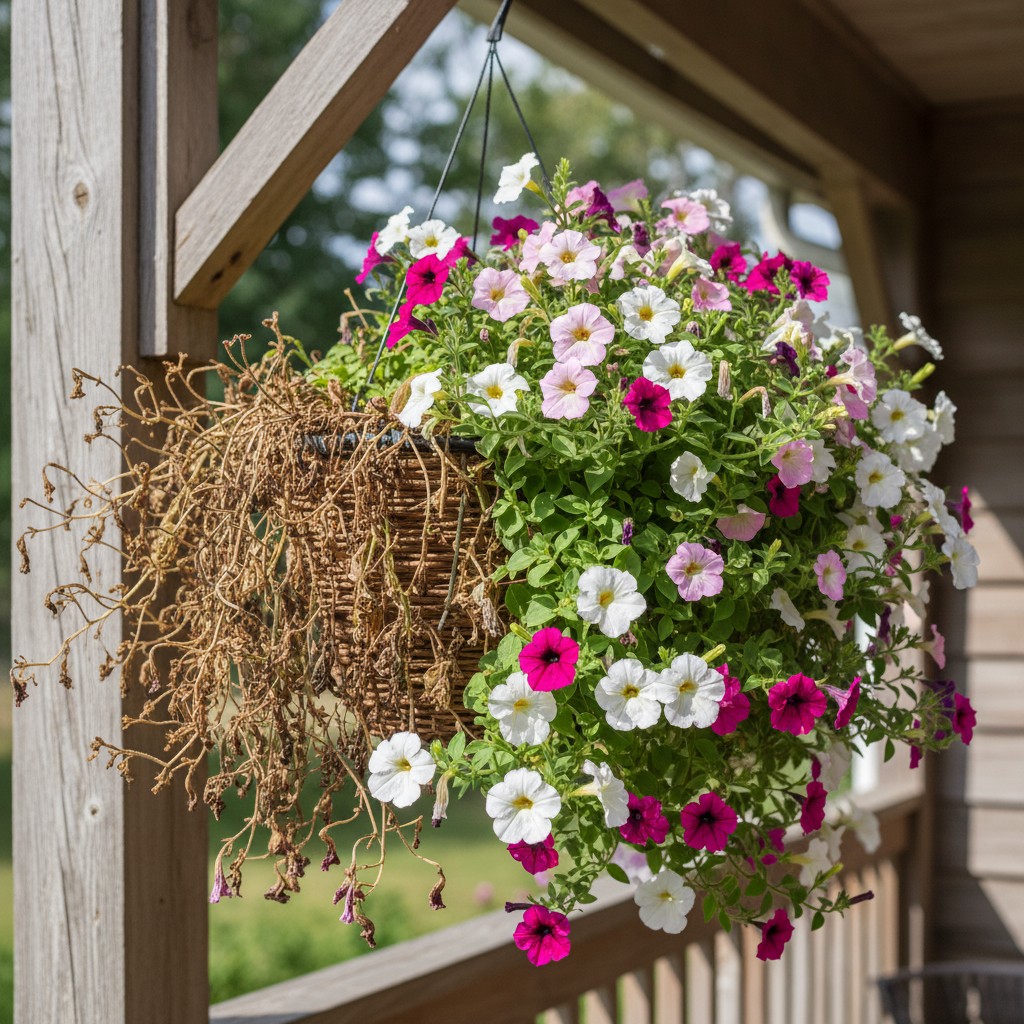
Some plants produce so many small flowers that deadheading individually would take all day. For these, use garden shears to cut the whole plant back by about one-third when the first flush of blooms fades.
- Petunias: When they get leggy and sparse in midsummer, cut them back hard, by half if needed. Water well and feed with liquid fertilizer. They’ll look terrible for about a week, then come back thick and full for a strong second bloom.
- Coreopsis, catmint, salvia: Shear back by one-third after the first bloom wave. You’ll get a second flush within a few weeks.
Pros: Renovates an entire sprawling plant in under a minute, triggers a strong second flush within two to three weeks, ideal for plants too dense to deadhead individually like established petunias or catmint clumps. Cheap garden shears handle this easily.
Cons: The plant looks rough for seven to ten days after shearing (this requires patience). Too aggressive for plants that do not tolerate hard cutbacks, including roses, dahlias, and most flowering shrubs. The plant needs water and a half-strength liquid feed afterward to fuel the regrowth, otherwise the second flush is weak.
Pinching, Pruning, and Cutting Back. What’s the Difference?
These terms get thrown around interchangeably, but they refer to different techniques with different purposes. Understanding the distinction will help you make better decisions in the garden.
Pinching is the removal of the growing tip of a stem, usually when the plant is young. You literally pinch the top off between your thumb and forefinger. This forces the plant to branch from the leaf nodes below, creating a bushier, more compact plant with more flowering stems. Pinch zinnias, dahlias, snapdragons, and basil when they’re 8-12 inches tall. You sacrifice the first flower, but you get three to five flowers in return.
If you’re growing edible flowers, pinching is especially valuable, it maximizes the number of blooms you can harvest for the kitchen.
Pruning is the selective removal of specific stems or branches, usually on woody or semi-woody plants. You’re making intentional choices about which stems to keep and which to remove based on the plant’s structure, health, and your desired shape. Pruning roses, hydrangeas, and butterfly bushes falls into this category. It requires more knowledge of the specific plant because timing matters, prune at the wrong time and you can remove next season’s flower buds. RHS Pruning Groups are a useful reference if you’re unsure when to prune a particular shrub.
Cutting back is a more dramatic reduction of the entire plant. You’re taking everything down by one-third to one-half, usually to stimulate fresh growth and a new round of blooms. It’s what you do to petunias in July, catmint after its first flush, or perennial geraniums that have gotten sprawling and sparse. It looks drastic, but most plants bounce back within two to three weeks.
Deadheading is the most targeted of all, you’re only removing the spent flower, not reshaping the plant or removing growth points. Think of it as maintenance, while pinching, pruning, and cutting back are renovation.
The Weekly Garden Walk: A 15-Minute Maintenance Routine
I used to garden in bursts, ignoring things for two weeks, then spending an entire Saturday trying to catch up. Everything was always a little out of control. The weeds were just big enough to be hard to pull. The spent flowers had already set seed. The tomato that needed staking had already flopped over and cracked.
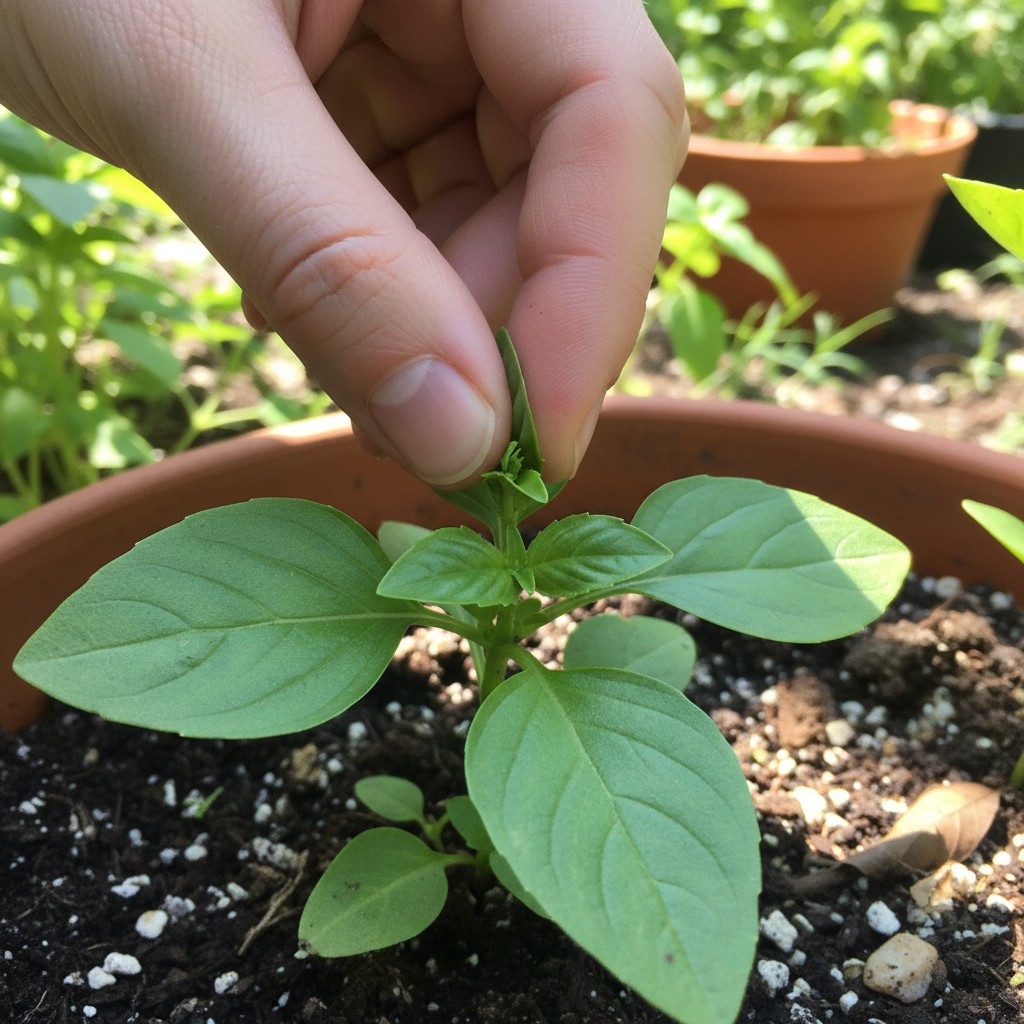
What changed everything was a 15-minute weekly walk. Same day every week, same time. For me it’s Sunday morning with coffee. I don’t bring my phone. I bring a bucket, my pruners, and a pair of gloves. Here’s what I cover:
Minutes 1-5: Deadhead. Walk the garden and remove every spent bloom you see. Drop them in the bucket. This is the single highest-return activity. If you do nothing else, do this.
Minutes 5-8: Weed check. Pull anything small. The key word is small, if you catch weeds when they’re seedlings, they come out in one smooth pull. Wait two weeks and you’ll need a trowel. Focus on the areas around the base of your plants where weeds compete directly for water and nutrients.
Minutes 8-10: Water assessment. Push your finger into the soil in a few spots. Is the top inch dry? Is the mulch still in place or has it washed away? Make a mental note of which beds need water this week. While you’re at it, check that drip lines or soaker hoses are still positioned correctly and not clogged.
Minutes 10-12: Pest scout. Flip a few leaves. Check the undersides for aphid clusters, egg masses, or chewing damage. Look at the base of stems for signs of borers. Check for powdery mildew on roses, zinnias, and bee balm. Catching a pest problem in the first week means you can often handle it with a strong spray of water from the hose. Catching it in week three means you’re reaching for sprays.
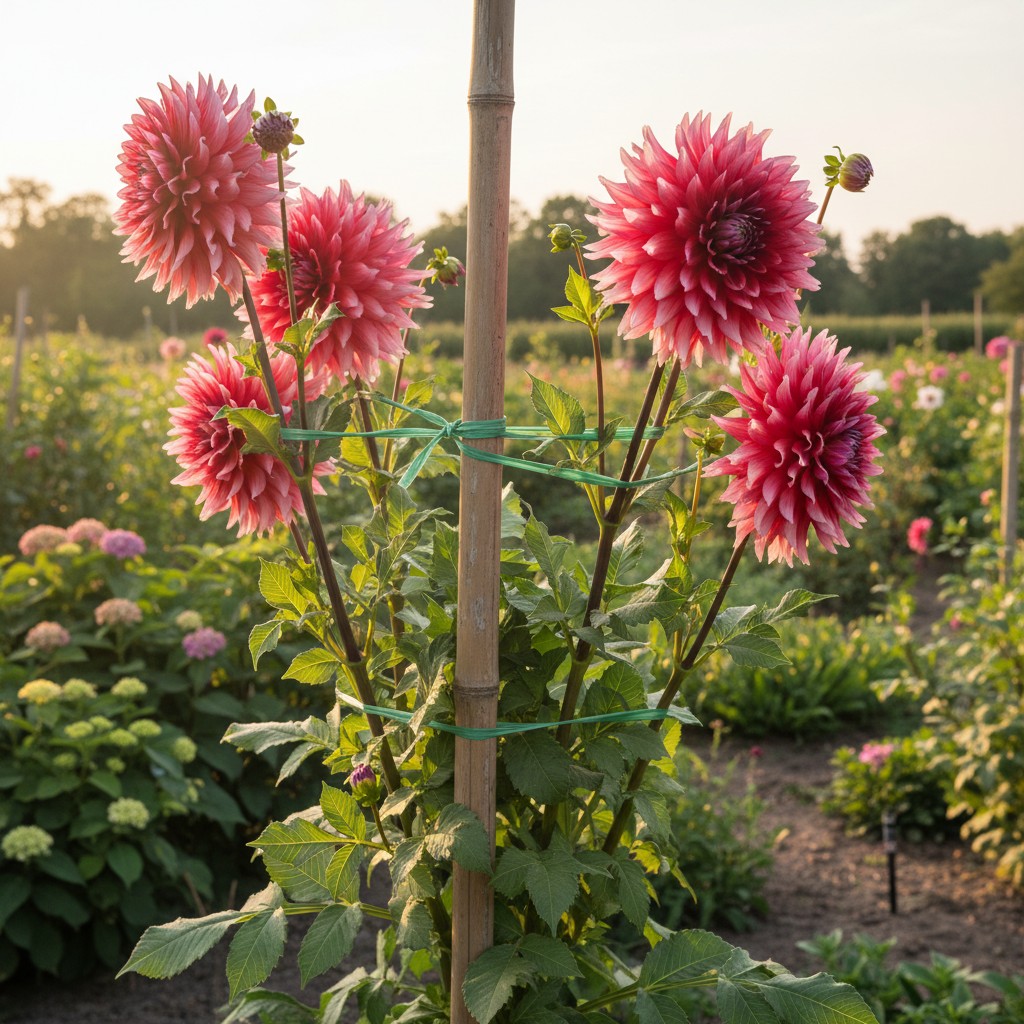
Minutes 12-15: Stake and tie check. Are tall plants leaning? Has a peony cage shifted? Do the dahlia stems need another tie-up? A quick adjustment now prevents the heartbreak of a snapped stem loaded with buds after the next rainstorm.
Fifteen minutes. That’s it. If you’ve been designing a cottage garden, this routine is what keeps it looking intentionally lush rather than abandoned.
Staking and Supporting Tall Plants Before They Flop
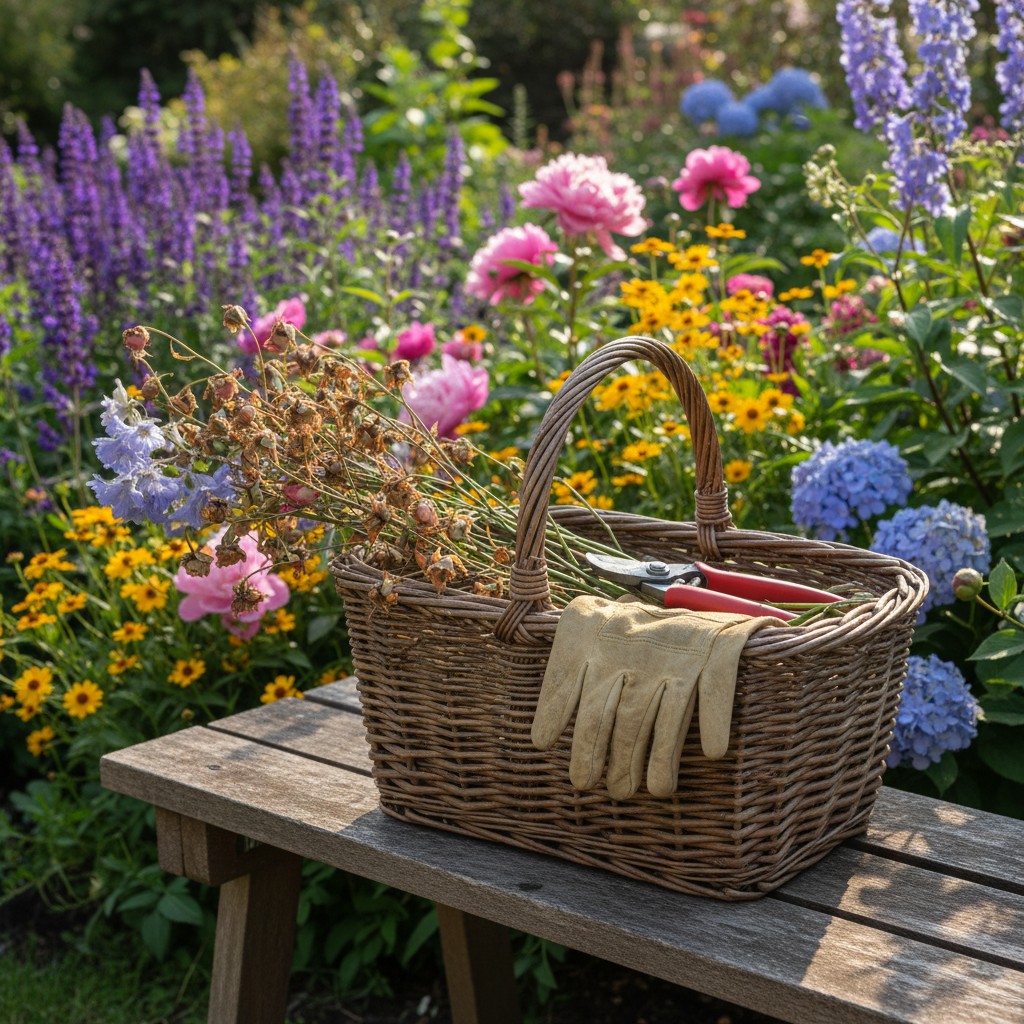
Here’s a rule I wish someone had told me years ago: stake your plants before they need staking. By the time a tall plant is flopping over, the stems have already started to curve. Even if you stake it upright, it’ll always have that bend. The time to stake is when the plant is about one-third of its mature height.
Which Plants Need Support
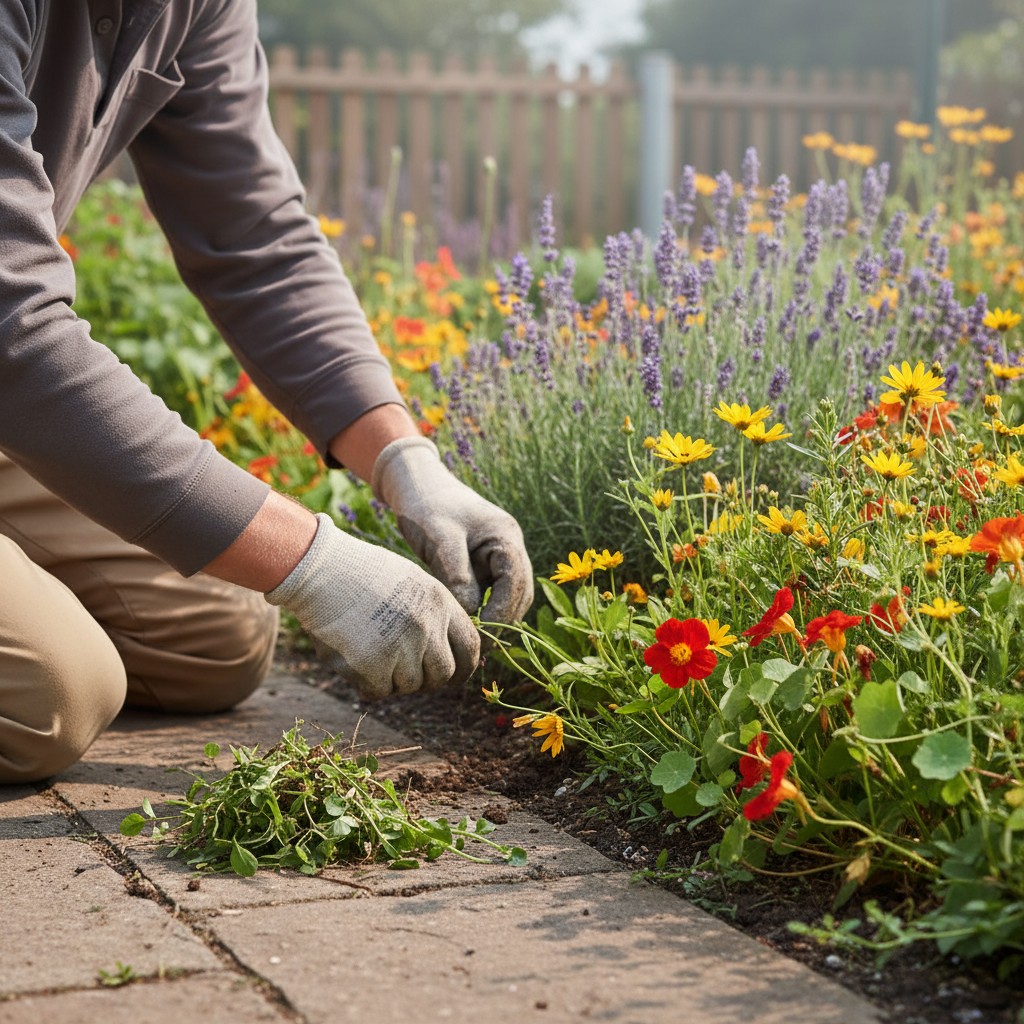
Dahlias (especially dinner-plate varieties), delphiniums, gladiolus, hollyhocks, tall zinnias, sunflowers, and top-heavy roses all benefit from staking. Peonies are notorious floppers once the heavy blooms open after a rain. Tall asters and chrysanthemums often lean hard in fall.
Staking Methods
Single stakes: A bamboo stake or metal rod placed 2-3 inches from the main stem. Tie the stem loosely to the stake using soft twine or stretchy plant tape, never wire or zip ties that can cut into the stem as it grows. Add new ties every 8-12 inches as the plant grows taller.
Peony rings and grow-through grids: These are metal rings on legs that you place over the plant early in the season. The plant grows up through the grid, which supports the stems invisibly. By the time the plant is full-sized, you can’t even see the support. Put these in place in early spring when the first shoots are just emerging.
The corral method: For bushy plants that tend to splay outward (like tall asters or large clumps of black-eyed Susans), push four stakes around the perimeter and wrap twine around them to create a corral. The plant leans against the twine instead of falling over.
Pea staking (also called brushwood staking): Push twiggy branches from pruned shrubs into the ground around young plants. As the plants grow up through the branches, the twigs provide natural-looking support. This works especially well in a pollinator garden where you don’t want visible hardware.
Feeding and Watering: The Maintenance Nobody Talks About
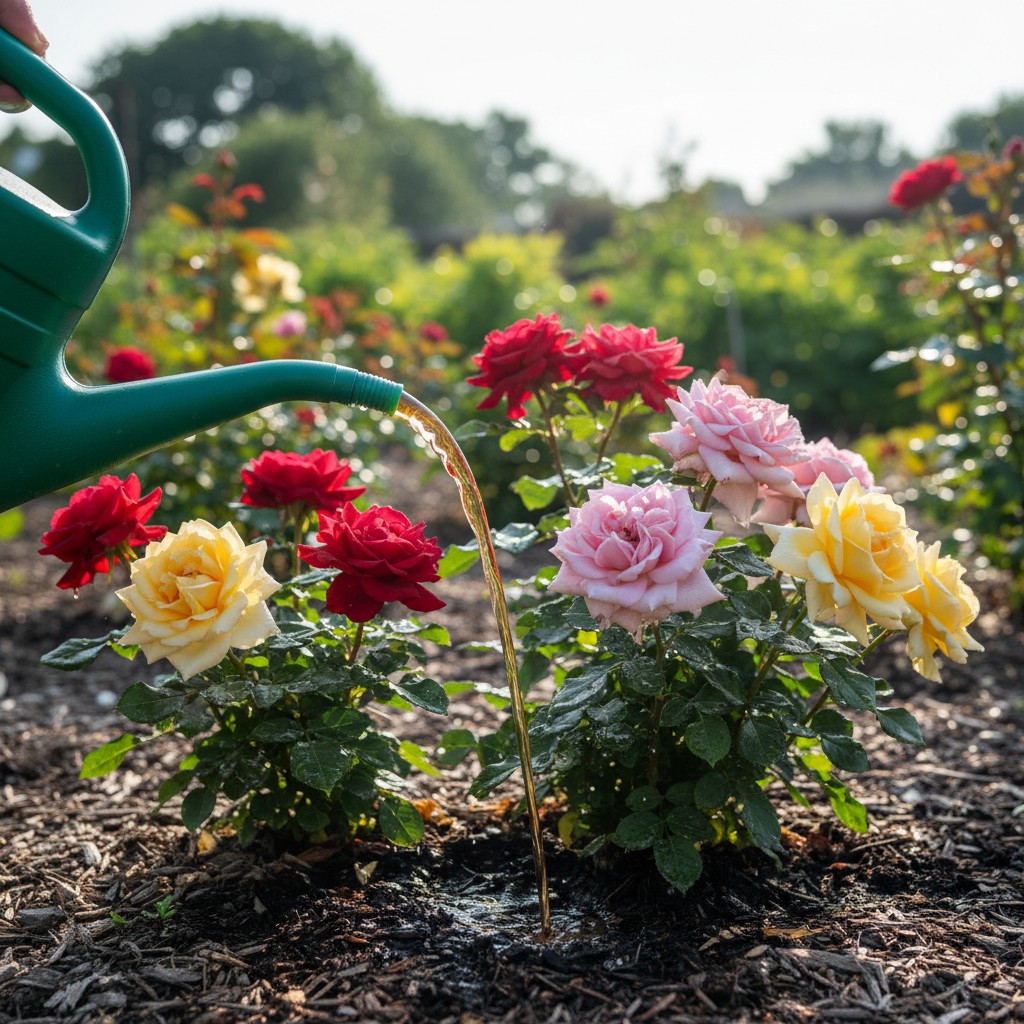
Deadheading tells a plant to make more flowers. But the plant can only do that if it has the resources, water, nutrients, and sunlight. If you’re deadheading faithfully but not feeding, you’ll get diminishing returns as the season wears on. The plant is willing but the tank is empty.
Feeding Heavy Bloomers
Annuals that flower continuously, petunias, zinnias, marigolds, dahlias, cosmos, are burning through nutrients at a rapid pace. They benefit from liquid fertilizer (fish emulsion, liquid seaweed, or a balanced liquid feed like 10-10-10 diluted to half strength) every two weeks during the active growing season.
For everything in beds and borders, a monthly side-dressing of compost does wonders. Pull the mulch back, spread a half-inch layer of finished compost around the base of the plants (keeping it away from stems), and replace the mulch. This feeds the soil biology, improves moisture retention, and provides a slow release of nutrients that synthetic fertilizers can’t match. If you’re making your own compost, this is where it really pays off.
Watering Smart
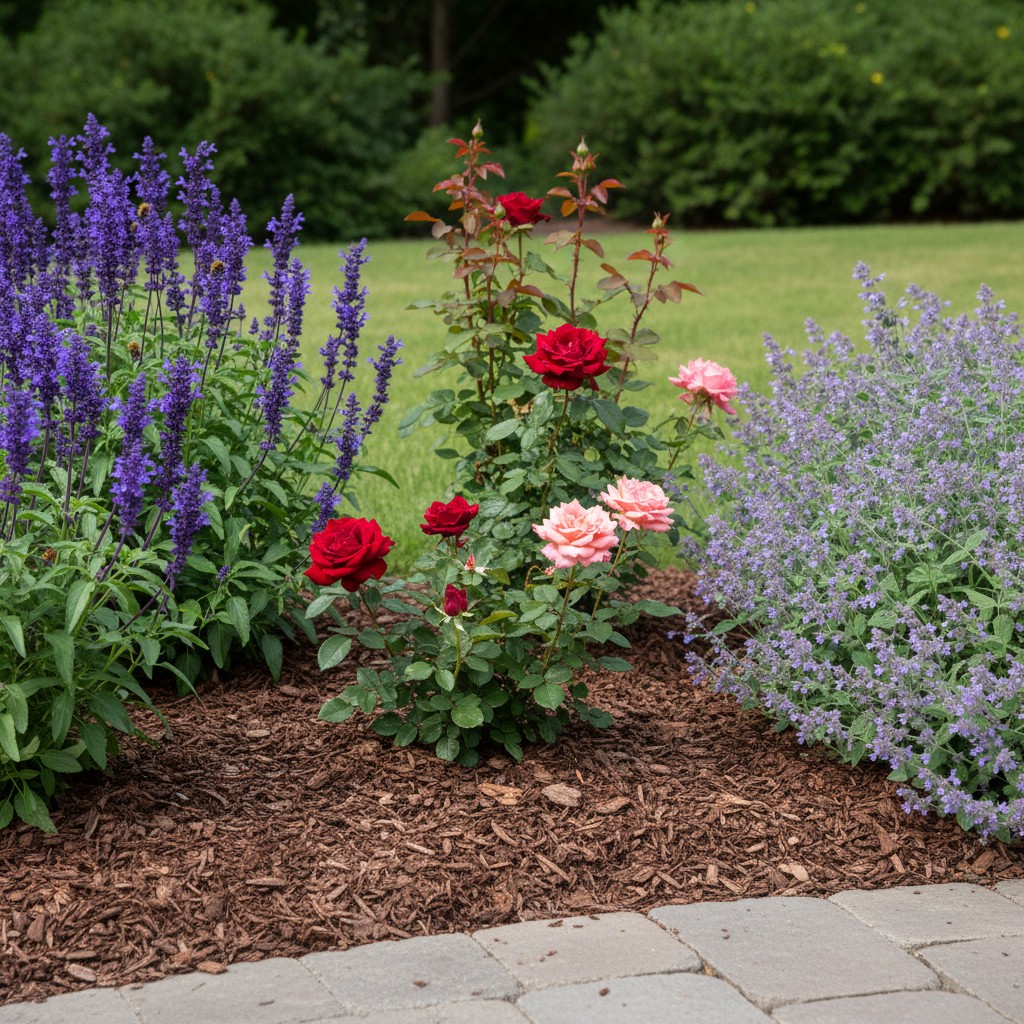
Most flowering plants need about an inch of water per week during the growing season, more in sandy soil or extreme heat. The trick is deep, infrequent watering rather than shallow daily sprinkles. Deep watering encourages roots to grow downward where the soil stays cool and moist. Shallow watering keeps roots near the surface where they’re vulnerable to heat stress.
Water in the morning when possible. This gives foliage time to dry before evening, reducing fungal disease pressure. Direct water at the base of plants, not over the top. Overhead watering on roses is practically an invitation for black spot.
Mulch is your best friend here. A 2-3 inch layer of shredded hardwood, straw, or chopped leaves reduces water evaporation, keeps soil temperatures stable, and suppresses weeds. In my garden, mulched beds need watering about half as often as bare soil.
What to Leave Alone (And Why)
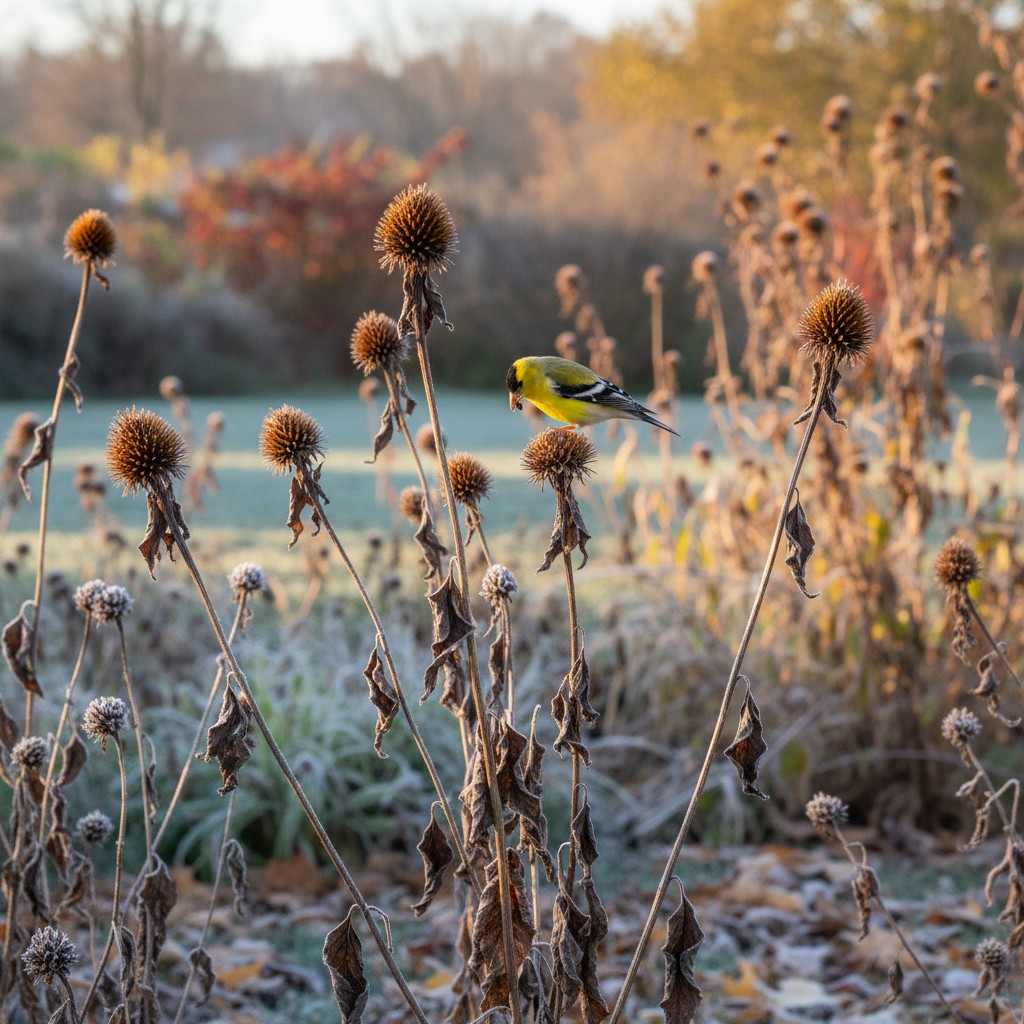
Deadheading is powerful, but it’s not always the right move. There are good reasons to let some flowers go to seed, and knowing when to put the pruners down is as important as knowing when to pick them up. The RHS explicitly carves out plants that “produce decorative or bird-friendly seeds and fruits” as ones to leave intact.
Seed Heads for Birds
Coneflowers (Echinacea), black-eyed Susans (Rudbeckia), sunflowers, and ornamental grasses produce seed heads that goldfinches, chickadees, and other songbirds rely on through fall and winter. I deadhead my coneflowers through July and August to keep them producing flowers for pollinators, but once September arrives, I let every remaining bloom go to seed. The architectural seed heads also add winter interest to the garden, dark spiky cones poking through a dusting of snow are genuinely beautiful.
Self-Sowing Flowers
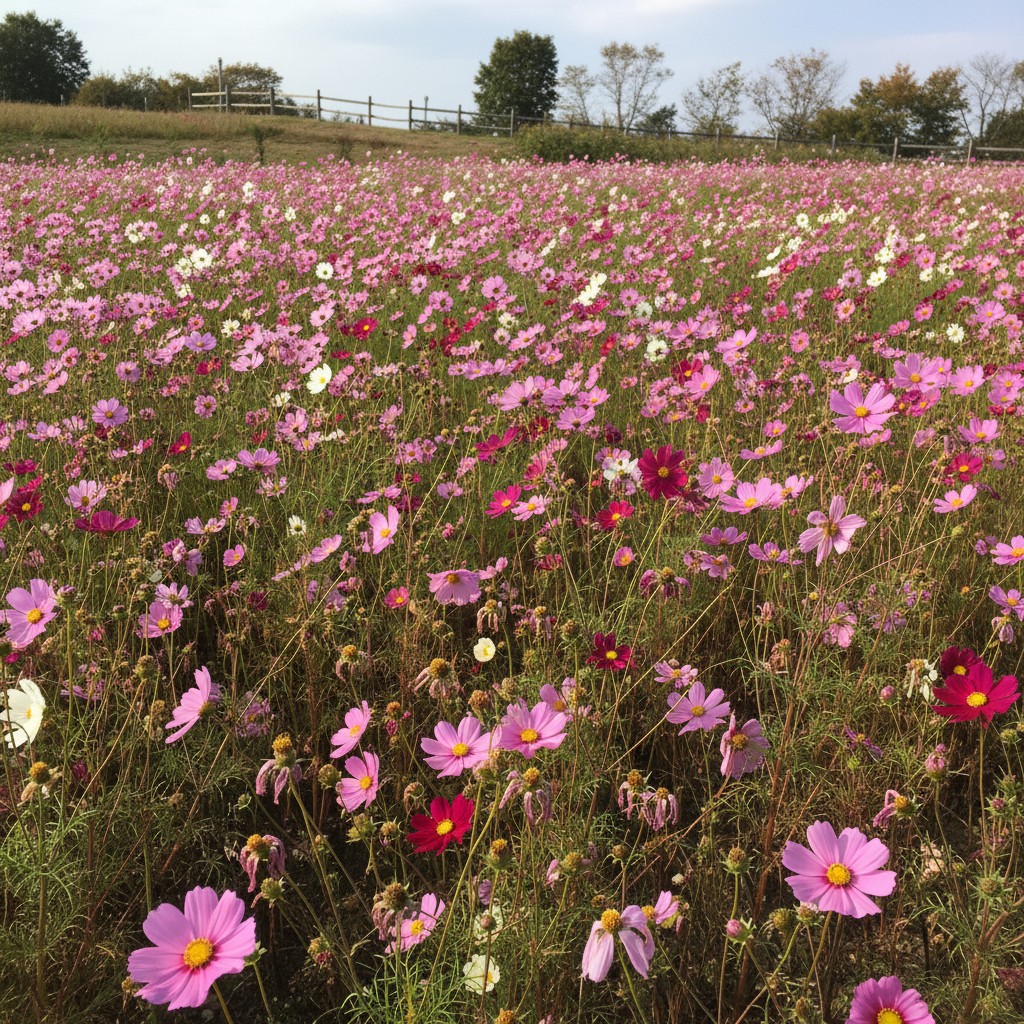
If you want certain flowers to naturalize and come back on their own each year, you need to let them drop seed. Cosmos, larkspur, calendula, bachelor’s buttons, and nigella (love-in-a-mist) are all prolific self-sowers. My approach is to deadhead most of the plants through the season for maximum bloom, but leave the last flush of flowers on three or four plants to mature and drop seed. That gives me plenty of volunteer seedlings the following spring without letting the garden look ragged all summer.
Flowers That Don’t Need Deadheading (And One Big Myth)
Some plants are genuinely self-cleaning, the spent blooms fall off on their own and the plant keeps blooming regardless. Impatiens, begonias, lantana (note: toxic to pets and livestock; invasive in some southern states), and newer petunia varieties (like the Supertunia and Wave series) are bred to be low-maintenance in this regard. You can still tidy them up, but the bloom-boosting effect of deadheading is minimal.
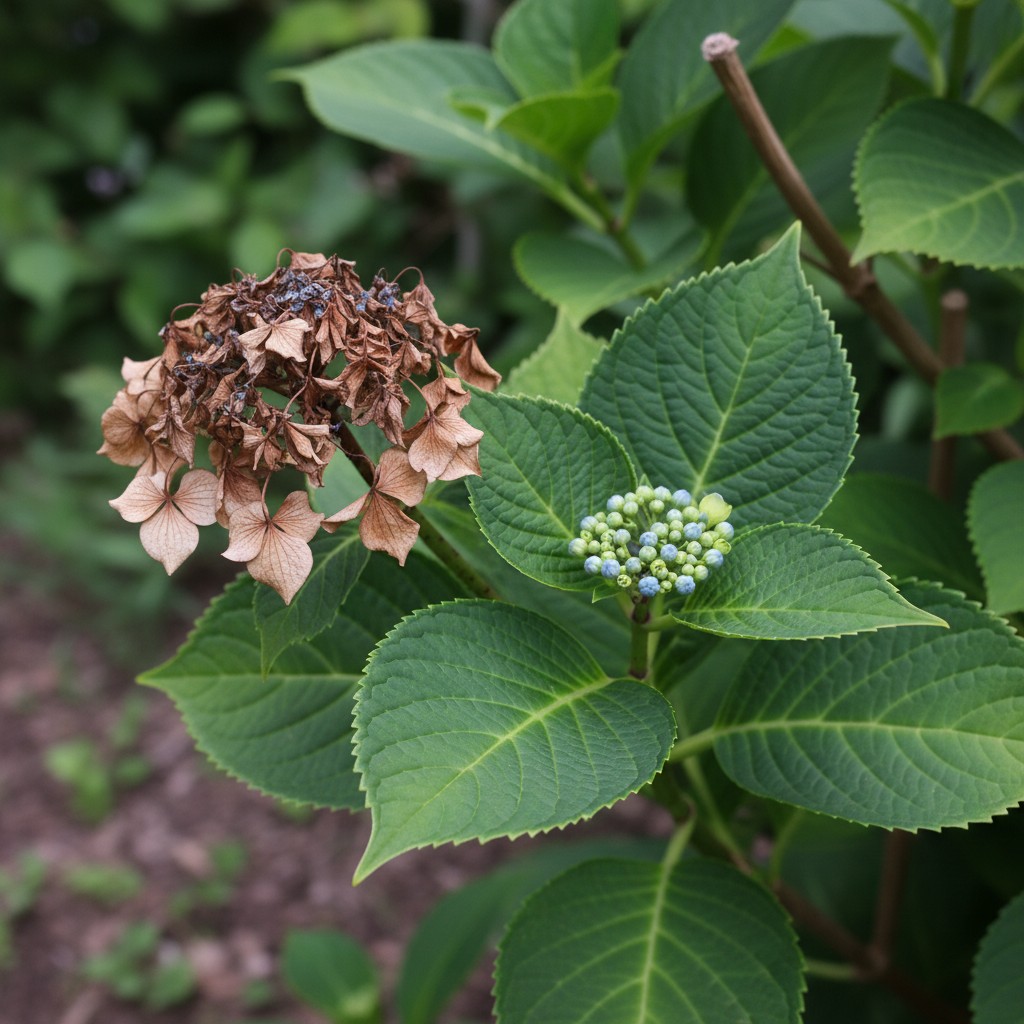
The bloom-once-per-year myth. Many garden blogs claim deadheading makes every flower rebloom. It doesn’t. Plants that bloom on old wood or only once per season, including most old garden roses, mophead hydrangeas (Hydrangea macrophylla blooms on old wood), peonies, bearded iris, and most spring-flowering bulbs, will not produce a second flush regardless of how aggressively you deadhead. On these, deadheading is purely cosmetic and for plant energy, not for rebloom. The RHS guidance groups match this: they list shrubs like lilac and tree peony as benefiting from deadheading (energy redirection into next year’s buds), not as rebloomers.
Late-Season Leave-It-Alone
As fall approaches, stop deadheading perennials entirely. New growth stimulated by late-season deadheading won’t have time to harden off before frost, and it can actually reduce the plant’s winter hardiness. Let perennials go to seed naturally in the last month before your first expected frost. This also contributes to a healthy fall garden cleanup approach, leaving seed heads and foliage standing provides winter habitat for beneficial insects and overwintering pollinators.
🌱 From Our Homestead
I used to let my flowers go to seed by August because I thought deadheading was fussy and unnecessary. The year I finally committed to a weekly deadheading routine, my zinnias bloomed until first frost and my roses put on three full flushes instead of one. Fifteen minutes a week changed my entire garden.
Sources and Further Reading
- Royal Horticultural Society, Deadheading Plants, RHS Gardening Advice
- University of Minnesota Extension, Annual Flower Care, Department of Horticultural Science
- Penn State Extension, Pruning Basics for Flowering Plants and Shrubs
- Oregon State University Extension, Growing Roses in Oregon, including pruning guidance
- Missouri Botanical Garden, Plant Finder, cultural and pruning notes for individual species
- NC State Extension Plant Toolbox, North Carolina State Cooperative Extension
- USDA Plant Hardiness Zone Map, US Department of Agriculture
Frequently Asked Questions
How often should I deadhead my flowers?
For most actively blooming plants, every two to three days is ideal during peak season. At minimum, do a thorough deadheading once a week during your garden walk. The faster you remove spent blooms, the faster the plant redirects energy to new buds. That said, even inconsistent deadheading is better than none, if you skip a week, just catch up when you can.
Can I deadhead with my hands or do I need pruners?
It depends on the plant. The RHS recommends that “the simplest method is to pinch or snap off faded blooms with finger and thumb, aiming to remove the flower with its stalk”, perfect for soft-stemmed flowers like zinnias, cosmos, and marigolds. Woody or semi-woody stems like roses, dahlias, and butterfly bush need bypass pruners for a clean cut. Tearing a woody stem crushes the tissue and creates entry points for disease. When in doubt, use pruners. Keep them sharp and wiped clean with rubbing alcohol between diseased plants.
I deadheaded my roses but they didn’t rebloom. What went wrong?
A few possibilities. First, check that your rose variety is a repeat bloomer, some old garden roses and many climbers bloom only once per season on old wood, and no amount of deadheading will change that. Second, roses need adequate nutrition to rebloom. If you haven’t fed them since spring, they may not have the resources for another flush. Third, make sure you cut down to a five-leaflet leaf facing outward. Cutting too high (above a three-leaflet leaf) often produces a weak, blind stem with no flower.
What’s the difference between deadheading and pruning?
Deadheading removes only the spent flower and a short section of stem. Pruning is a broader term for selectively removing stems, branches, or sections of a plant to control its shape, size, or health. You deadhead a rose bloom; you prune a rose bush. Deadheading is a daily or weekly maintenance task. Pruning is a seasonal structural task. Both matter, but deadheading has a more immediate impact on continuous blooming.
Should I deadhead native wildflowers?
Generally, no: or at least not all of them. Native wildflowers evolved alongside local wildlife, and their seed heads provide food for birds and habitat for overwintering insects. If you’re growing a wildflower meadow or a native planting, let nature take its course. In a more cultivated bed where you happen to be growing natives like coneflowers or black-eyed Susans, you can deadhead through the main season for extended bloom and then stop in early fall to let them set seed for wildlife.
Do hydrangeas need deadheading?
It depends on the type. Mophead and lacecap hydrangeas (Hydrangea macrophylla) bloom on old wood, so deadheading won’t trigger a second flush, you can remove spent blooms for tidiness in late summer, but leave the stems intact through winter to protect next year’s buds. Panicle and smooth hydrangeas (H. Paniculata, H. Arborescens) bloom on new wood and can be cut back more aggressively in late winter or early spring.
What are the most common deadheading mistakes?
Three big ones. First, cutting too high and leaving long bare stubs, these look ugly and can die back into the healthy stem. Always cut just above a leaf node or branching point. Second, removing developing buds by accident. Before you cut, look below the spent flower for small buds forming along the stem, cut above them, not below. Third, deadheading at the wrong time of year. Stop deadheading perennials about a month before your first frost date to let them harden off for winter.