Growing Sunflowers: From Seed to Harvest (Plus How to Save the Seeds)
Growing Sunflowers: From Seed to Harvest (Plus How to Save the Seeds)
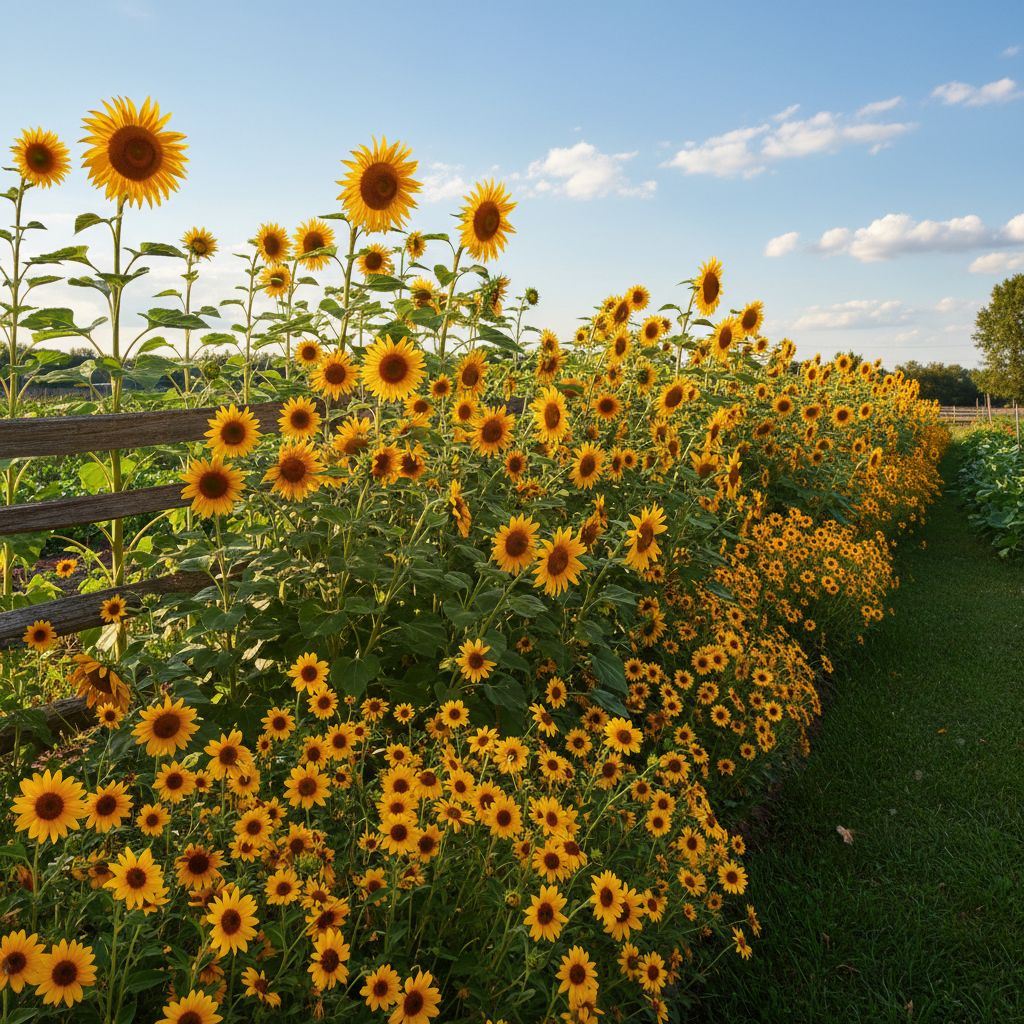
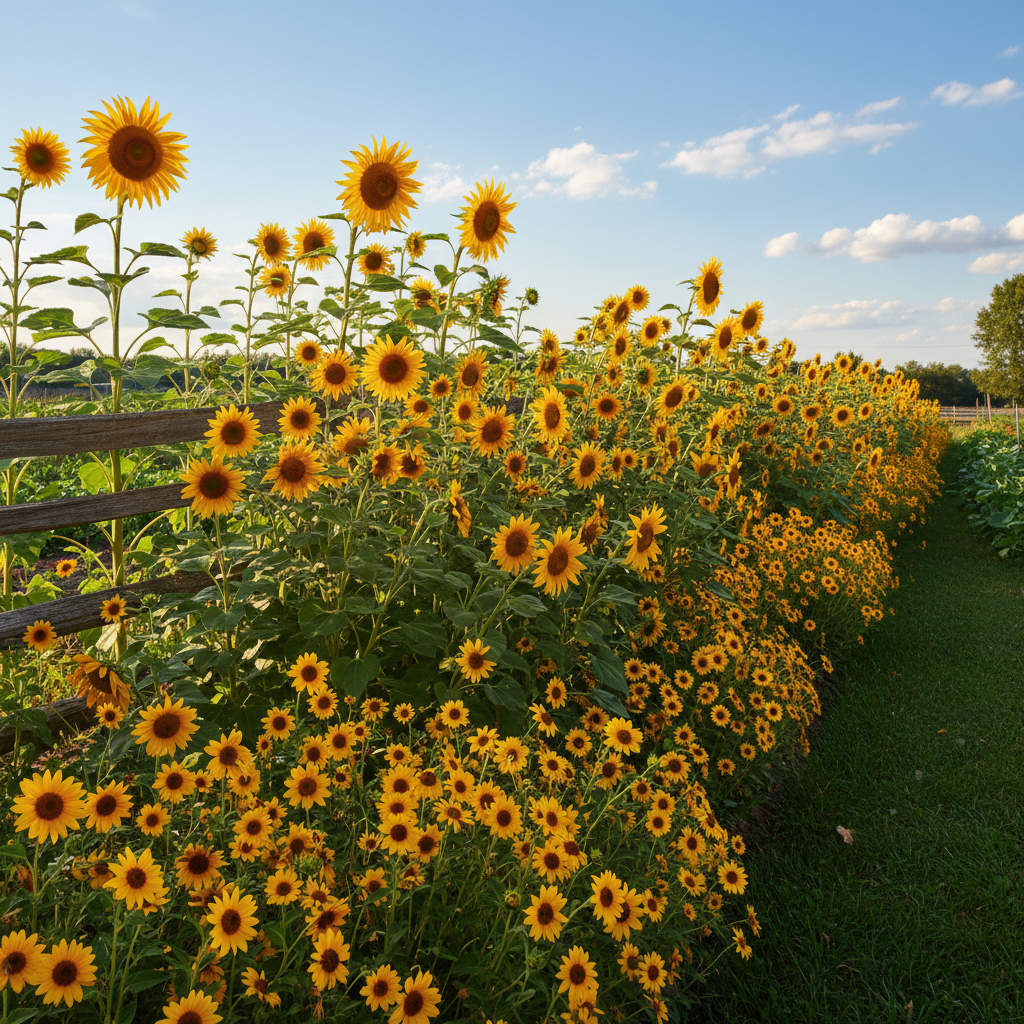
Sunflowers reach maturity in 85 to 95 days, according to University of Minnesota Extension, which means a Memorial Day sowing produces cut stems by mid-July and ripe seed heads by early September. They are one of the few annuals that pull a triple shift on a homestead. The blooms feed bees, butterflies, and beneficial wasps. The seeds feed chickens and people. The spent stalks become hugelkultur fill or pole-bean trellises by fall. Few crops give back this much per square foot of garden bed.
The catch is that “easy” sunflowers still reward growers who get a few details right. Soil temperature, planting depth, variety choice, and harvest timing each have a narrow correct window. Get them wrong and you end up with leggy plants, half-empty heads, or a seed crop the goldfinches strip in three days. This guide pulls together the specifics from land-grant extension research and adds what I have learned over six seasons running a 50-foot sunflower border on our zone 6b homestead in southern New England.
How Long Does It Take a Sunflower to Bloom From Seed?
Most sunflowers bloom 70 to 120 days after sowing, depending on variety. According to University of Minnesota Extension, “it takes 70 to 120 days until bloom, depending on variety of sunflower,” with most varieties reaching full maturity in 85 to 95 days. Short cut-flower types flower at the fast end of that window; tall single-stem giants like Mammoth sit at the slow end.
Germination is quick and consistent across varieties: seeds break ground in 7 to 10 days at 70°F soil temperature. Almost all of the variation between a 70-day sunflower and a 120-day one happens after that, in how long the plant spends putting on height before it sets a bud.
| Stage | Days after sowing |
|---|---|
| Germination | 7–10 days |
| First bloom | 70–120 days (variety dependent) |
| Full maturity / ripe seed heads | 85–95 days |
In practice that means a Memorial Day sowing produces cut stems by mid-July and ripe seed heads by early September. Check the days-to-maturity figure on your seed packet before you sow — it is the single number that tells you which end of the 70-to-120-day range you are working with.
Why Sunflowers Earn a Place in Every Garden
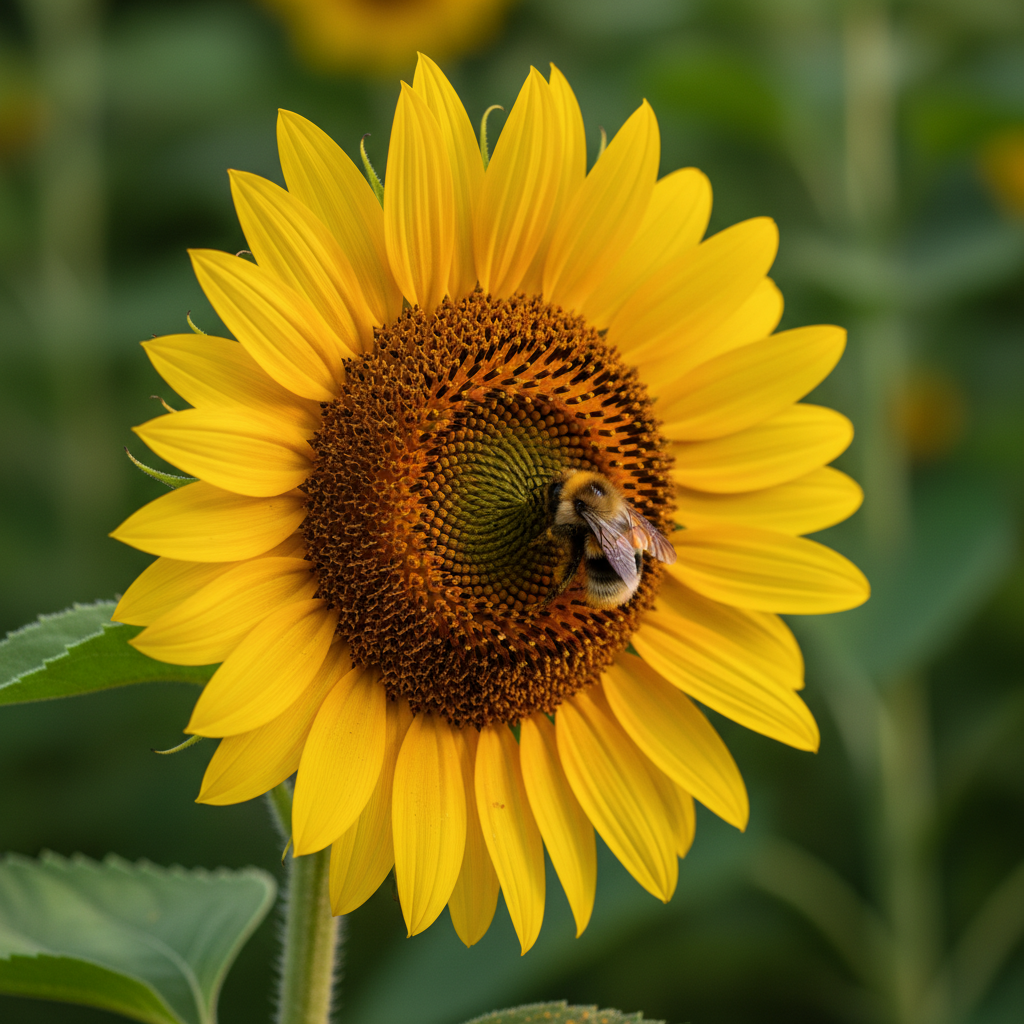
Sunflowers (Helianthus annuus) deliver dense pollinator value alongside cut flowers, edible seeds, and chicken feed, all from a single annual planting. Research by Mallinger and colleagues (2019, Journal of Economic Entomology) across the northern Great Plains found that insect pollination increased confection-sunflower yields by 45 percent, with native solitary bees (especially female Andrena helianthi and Melissodes spp.) the most common and effective visitors. The same plants you cut for the kitchen table anchor native bee populations.
According to the USDA Natural Resources Conservation Service, “nectar and pollen from flowering plants provide food and water for pollinators,” and a single sunflower head offers up to 2,000 individual disk florets across its lifespan. Within a week of opening, a mature head pulls in honeybees, bumblebees, sweat bees, and longhorned bees in steady traffic. Goldfinches show up a month later for the seeds.
On our property the spent heads go straight to the laying flock. One head keeps four hens busy for an afternoon and bumps yolk color noticeably the following week. If you already feed your chickens from the garden, sunflowers are one of the highest-payoff crops you can plant.
Choosing the Right Sunflower Variety
Pick a variety based on what you want at harvest: cut flowers, big seed heads, or season-long blooms. Sunflowers fall into four broad categories that determine spacing, days to bloom, and seed yield. According to University of Minnesota Extension, sunflower varieties typically reach maturity in 85 to 95 days, and “it takes 70 to 120 days until bloom, depending on variety of sunflower.” Dwarf types finish in roughly 50 to 70 days, while giant cultivars such as Mammoth Russian can run 110 days or more.
| Type | Mature Height | Recommended Spacing | Best Use |
|---|---|---|---|
| Dwarf (Music Box, Sunny Smile) | 1 to 3 ft | 6 inches | Containers, borders, kid gardens |
| Mid-size (ProCut, Sunrich) | 4 to 6 ft | 6 to 12 inches | Cut flowers, succession beds |
| Tall single-stem (Mammoth, American Giant) | 8 to 12 ft | 12 to 24 inches | Seed harvest, screens |
| Branching (Italian White, Autumn Beauty) | 4 to 7 ft | 18 to 24 inches | Pollinator forage, bouquets |
If you only have room for one type, branching sunflowers give the longest harvest window because each plant throws 5 to 10 blooms across six weeks. Single-stem cut-flower varieties do the opposite: one bloom per plant, every stem uniform, all arriving inside a 5-day window. That uniformity is what florists need; backyard growers often prefer the slow, steady output of branching types.
When Is the Best Time to Plant Sunflowers?
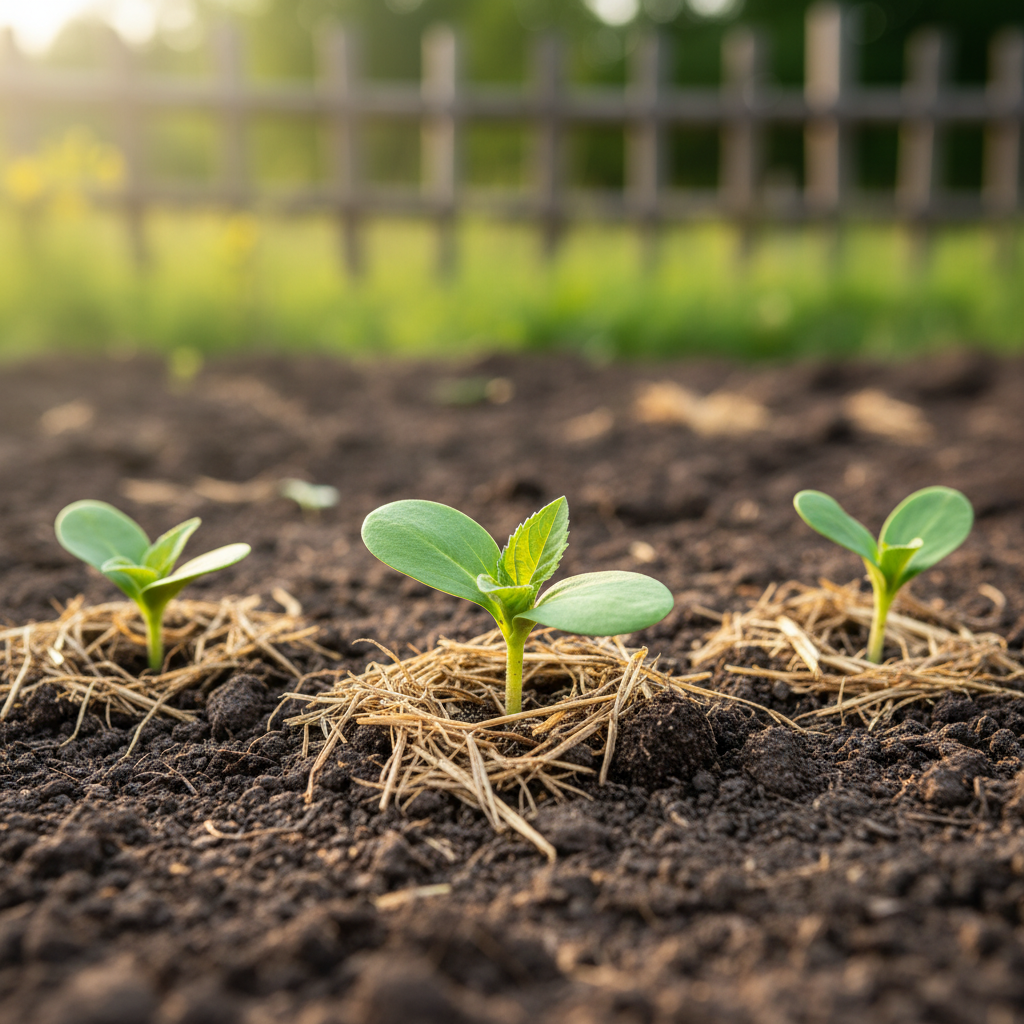
Direct-sow sunflower seeds outdoors after the last frost date, once soil temperature reaches at least 50°F at planting depth. According to Wisconsin Corn Agronomy Extension, “Sunflower seeds will germinate at 39° F, but temperatures of at least 46 to 50° F are required for satisfactory germination.” Cooler soil produces patchy emergence and gives soil pathogens a longer window to attack swelling seeds.
For most of the United States that translates to late April in the Mid-Atlantic, mid-May in the Midwest, and early June at higher elevations or further north. A soil thermometer pushed two inches deep at 8 a.m. on a sunny morning gives the reading that matters; air temperature lags soil temperature by two to three weeks in spring. Plant on a falling-rain day if possible so seeds get an immediate soak.
Succession Planting for Continuous Bloom
Plant a new short row of sunflowers every one to two weeks for nonstop blooms from midsummer through frost. University of Minnesota Extension recommends three succession strategies: planting multiple varieties with different days to maturity at one time, “planting the same variety at one- to two-week intervals,” or planting multiple varieties with varying days to maturity at three- to four-week intervals. Mississippi State Extension similarly endorses staggered weekly sowings, counting back 60 days from the first frost as the stop date.
I run three rows on a two-week stagger starting the week after frost. The first row blooms while the second is knee-high, and the third row covers late August into October. The overlap also keeps pollinators in the garden long after the squash and tomatoes finish.
How Do You Plant Sunflower Seeds Correctly?
Plant sunflower seeds 1 to 2 inches deep in full sun, in well-drained soil with a pH between 6.5 and 7.5. According to Wisconsin Corn Agronomy Extension, sunflower tolerates a broad pH range — commercial fields run from 5.7 to over 8 — with a 6.0 to 7.2 range optimal for most soils. Aim for slightly acidic to neutral garden beds. Direct seeding works better than transplanting because sunflowers grow a deep taproot fast and resent root disturbance.
Soil Preparation
Loosen soil to 12 inches deep and work in 1 to 2 inches of finished compost. Sunflower taproots can reach 4 to 6 feet under ideal conditions, and that depth is how the plant survives mid-summer dry spells without irrigation. Hard pan or compacted clay stunts the taproot, leaving the plant top-heavy and prone to falling over in storms. If your soil is heavy clay, plant on a raised bed or work in coarse organic matter the season before.
Planting Depth and Spacing
University of Georgia Extension specifies “plant 1 to 2 inches deep. The sandier the soil, the deeper the seed should be planted.” Spacing depends on variety. University of Minnesota Extension recommends roughly 6 inches between plants for varieties 2 to 5 feet tall, at least 1 foot between taller sunflowers, and about 2 feet between giant varieties for good air circulation. West Virginia University Extension gives a similar rule: 6 inches for smaller varieties, 12 inches for tall ones. Plant two seeds per hole and thin to the strongest seedling once true leaves appear.
Direct Seed Versus Starting Indoors
Skip indoor starts unless your growing season is under 90 days. Sunflowers transplant poorly and often bolt or grow stunted after the root disturbance. If you must start early, sow into 4-inch deep biodegradable pots and transplant the entire pot before the taproot circles. Plants germinate in 7 to 10 days at 70°F soil temperature.
Sunflower Care Through the Season
Most sunflower problems trace back to three care issues: inconsistent watering during the first 30 days, no support for tall single-stem types, and crowding from other crops. Water deeply once a week through germination and the first month, then taper off as the taproot establishes. Wisconsin Corn Agronomy Extension notes that “optimum temperatures for growth are 70 to 78°F, but a wider range of temperatures (64 to 91°F) show little effect on productivity,” which is why sunflowers thrive through the same heat that stresses peas and lettuce.
Watering and Mulch
Aim for 1 to 1.5 inches of water per week in the first month, including rainfall. Once the head forms, sunflowers tolerate drought well. Mulch with 2 to 3 inches of straw or grass clippings to lock in soil moisture and suppress weeds. Avoid wetting the foliage at night, which encourages downy mildew and rust on susceptible varieties.
Staking Tall Varieties
Stake any variety over 5 feet, ideally before the head fills out. A 6-foot bamboo or hardwood stake driven 18 inches into the ground next to each plant, with a soft tie at the 3 and 5 foot marks, prevents the wind-snap that takes out 8-foot Mammoth plants every August storm. We lost a row of giants to a thunderstorm one July; everything that was staked stayed up. Single rows also fall over more often than block plantings, where neighbors brace each other.
Companion Planting and the Allelopathy Question
Sunflowers produce allelopathic compounds — sesquiterpene lactones — in their roots, leaves, and seed hulls that can suppress some neighboring crops. Penn State Extension lists tomato, lettuce, kale, broccoli, cabbage and other brassicas as the species most affected, and recommends planting allelopathic species at the edge of the garden or in a designated bed. Good neighbors include corn, squash, cucumbers, and most flowers; legumes (beans and peas) appear to tolerate sunflower compounds and can act as barrier rows. For more pairings see our companion planting guide.
Supporting Pollinators
Sunflowers anchor a pollinator strip without much help, but interplanting with shorter pollinator-favorites multiplies the visit rate. Borage, calendula, zinnia, and cosmos bloom at different heights and extend the daily nectar window. See our full pollinator garden guide for layout templates.
What Pests and Problems Should You Watch For?
The two biggest threats to a sunflower harvest are birds at seed maturity and a handful of fungal diseases in wet years. Goldfinches, blue jays, cardinals, and chickadees can strip a ripening head in 48 hours once seeds turn black-and-white striped. Kansas State Extension recommends covering ripening heads “once the petals begin turning brown with a paper sack or cheesecloth and securing the cover with a rubber band” — which protects against bird damage and also catches seeds that drop early.
Insect pests are usually minor in home gardens. The exception is the sunflower head moth in commercial belts, which is rare in backyard plantings. Watch for sunflower beetles in the seedling stage; they strip cotyledons in clusters. Hand-pick or use row cover for the first 10 days. Slugs hammer seedlings in wet springs, and a ring of crushed eggshells or diatomaceous earth around emerging plants fixes that.
Powdery mildew shows as a white film on lower leaves in late summer. It is mostly cosmetic on a mature plant and almost never affects seed yield. Verticillium wilt and rust are more serious but cultivar-specific. If your plants brown from the bottom up before bloom, rotate the bed for two years.
How Do You Know When Sunflower Seeds Are Ready to Harvest?
Sunflower seeds are ready to harvest when the back of the head turns from green to lemon-yellow, the head droops downward, and the seeds turn fully black with white stripes (or solid white for confection types). Kansas State Extension describes the visual cue precisely: “Maturity is indicated by shriveled florets in the center of the flower disk, the backside of the head turning a lemon-yellow color and heads facing down.” K-State adds that the ultimate check is to pull a few seeds and confirm they have turned “black with white stripes.” That combination usually arrives 30 to 45 days after the last petal drops.
The other reliable signal is when seeds start dropping on their own. Once one or two fall when you tap the head, the rest are within a week of full ripeness. This is also the window when songbirds first arrive, so cover any heads you want to keep. K-State Extension recommends covering with a paper bag or cheesecloth secured with a rubber band as soon as petals brown.
Cut heads on a dry morning after dew has burned off. Leave 10 to 12 inches of stem for hanging. If a fall rain stretch is forecast, harvest a few days early and finish drying indoors. Wet heads put into storage mold within 72 hours.
How Do You Save and Store Sunflower Seeds for Next Year?
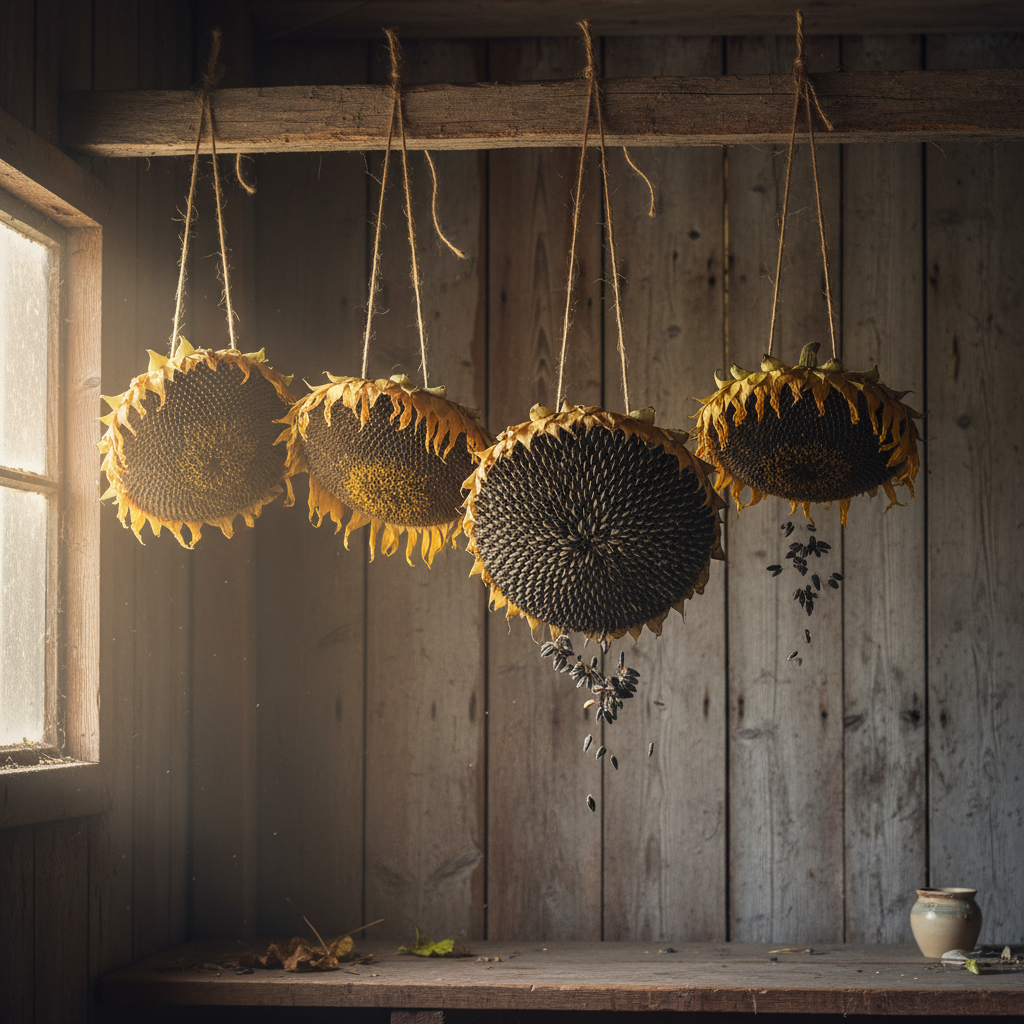
Hang cut heads in a warm, dry, well-ventilated room for two to three weeks until the back is fully brown and brittle. Oklahoma State Extension specifies the conditions: cut heads with about a foot of stem attached and hang them in a “warm, dry, well-ventilated, and rodent- and insect-free location with low humidity to prevent spoilage.” Use a paper bag or cheesecloth tied around each head to catch any seeds that drop during drying.
Once dry, rub two heads together over a 5-gallon bucket to release seeds. Stubborn seeds lift out with a fork or by working a stiff wire brush across the disk. Winnow chaff by pouring the bucket contents from a height in front of a box fan; the lighter chaff blows aside while heavier seeds drop straight down.
Store seeds in a paper envelope or sealed glass jar in a cool, dark, dry location. Oklahoma State Extension reports that sunflower seeds “can remain viable for seven years when stored in a cool, dry and dark location” — though germination rates drop with each year, so favor seed from the most recent harvest. Label each batch with variety and harvest year. For more on saving seed from any garden crop, see our seed saving 101 guide. If you grow sunflowers as cut flowers, the same patch doubles as a seed bank for next year’s cutting garden.
Frequently Asked Questions
How Long Does It Take a Sunflower to Bloom From Seed?
70 to 120 days from sowing, depending on variety, per University of Minnesota Extension. Short cut-flower types bloom nearest 70 days; tall single-stem varieties take closer to 120. Expect germination in 7 to 10 days and a visible bud about four to six weeks before the flower opens.
How Many Sunflower Seeds Does One Head Produce?
A single mature sunflower head from a tall variety like Mammoth or American Giant typically yields 1,000 to 2,000 seeds, depending on pollination success and variety. Mid-size cut-flower types produce 200 to 800 seeds per head. Branching varieties produce smaller heads (100 to 300 seeds each) but compensate with 5 to 10 heads per plant. Poor pollination is the most common reason heads come in half-empty, and you can spot under-pollinated heads by the gaps and small or undeveloped seeds in the disk. Planting near other pollinator-friendly flowers and avoiding broad-spectrum insecticides during bloom keeps seed set high.
Can Sunflowers Grow in Containers?
Yes, dwarf varieties grow well in containers as long as the pot is at least 12 inches deep and 12 inches wide. Music Box, Sunny Smile, Suntastic, and Big Smile finish at 1 to 3 feet and tolerate the constrained root run. Use a quality potting mix, water deeply twice a week in summer, and feed once a month with a balanced organic fertilizer. Skip taller varieties in pots; their taproots and top weight make container growing risky and the plants topple in any significant wind.
Do Sunflowers Come Back Every Year?
Common sunflowers (Helianthus annuus) are annuals that complete their life cycle in one season. They will reseed themselves if you leave a few mature heads on the plant and let seeds drop onto cleared soil. Volunteers from the previous year’s drop are common in well-mulched beds. Perennial sunflower species do exist, including Maximilian sunflower (Helianthus maximiliani) and Jerusalem artichoke (Helianthus tuberosus), but those are different plants with different growing requirements. Stick with annuals if you want big heads for seed harvest.
Why Are My Sunflowers Falling Over?
Falling sunflowers usually indicate one of three problems: a shallow taproot due to compacted soil, insufficient staking on tall varieties, or wet soil during a windy storm. Tall sunflowers planted in heavy clay never develop the deep root they need for self-support. Stake any variety over 5 feet before the head fills out, ideally with a 6-foot bamboo or hardwood stake driven 18 inches into the ground. Block plantings of three or more rows resist wind damage better than single rows because plants brace each other. For severe cases, mound 4 to 6 inches of soil around the base midseason to add lateral support.
Are Sunflower Seeds Safe for Backyard Chickens?
Black oil sunflower seeds are a favorite chicken treat and a useful winter calorie boost, but feed them in moderation as a supplement rather than a staple. The high fat content (around 40 percent) supports feather growth during molt and adds insulation for cold-weather laying. Crack the heads open or run them through a kitchen mallet so smaller hens can pick out seeds easily. Store-bought striped seeds work too; just check that they are unsalted and unroasted. Sunflower seeds pair well with the rest of your homestead-grown poultry feed.
Can I Grow Sunflowers in Partial Shade?
Sunflowers need full sun, defined as 6 to 8 hours of direct sunlight per day, to bloom well and fill out full seed heads. Plants grown in partial shade get leggy, lean toward the light, and produce small or hollow heads. The exception is the hottest growing zones (USDA 8 and warmer), where afternoon shade can prevent leaf scorch on the south side of the plant. If your only available spot gets less than 6 hours of sun, choose dwarf branching varieties instead of tall single-stem types; they tolerate slight shade better and still produce useful blooms for cutting.
Final Thoughts
A 50-foot row of mixed sunflowers takes one Saturday to plant, an hour of staking in midsummer, and one weekend in fall to harvest, dry, and store. The payoff is fresh-cut bouquets from July through October, a winter feed crop for the chickens, and enough saved seed to plant next year’s bed without buying anything. Six seasons in, our biggest year produced 11 pounds of seed off 60 plants. Pick a variety that fits your bed size, hit the soil temperature window for direct sowing, and protect the heads from birds when the seeds blacken. The plants do most of the rest of the work themselves. Start with a packet of mixed varieties this season, save seed from the heads that performed best, and within two years you will have a sunflower bed adapted to your specific soil, climate, and bird pressure.