The Best Shade Garden Plants for Low-Light Spaces
- Easiest beginner plant: Hostas, hundreds of varieties, thrive in dappled to full shade, almost foolproof once established (note: toxic to pets).
- Best for full shade: Hellebores (Lenten Rose), evergreen foliage, blooms through snow in late winter, pest-free and deer-resistant.
- Best for color and texture: Astilbe paired with Japanese Painted Fern, feathery blooms with silvery-purple foliage, bulletproof combo for moist shade.
Key Takeaways
- Many stunning perennials thrive in shade, including hostas, ferns, astilbe, hellebores, bleeding heart, and coral bells, shade doesn’t mean boring.
- Understand your shade type: dappled shade (under a canopy) is very different from full shade (north side of a building), and plant choices should reflect this.
- Edible crops like lettuce, spinach, kale, parsley, and mint actually prefer some shade, especially in hot climates where they bolt quickly in full sun.
- Foliage texture and color do the heavy lifting in shade gardens. Think in terms of leaf shape, size, and tone rather than relying solely on flowers.
- Shade gardens tend to need less watering and weeding than sunny beds, they’re genuinely lower maintenance once established.
⚠️ Pet & Livestock Safety: Toxic Shade Plants
Several classic shade-garden plants recommended below are toxic to dogs, cats, and/or horses. If you have pets or livestock that browse your beds, plan accordingly, fence these off, keep animals supervised, or choose non-toxic alternatives.
- Hostas: contain saponins; toxic to dogs, cats, and horses. Causes vomiting, diarrhea, and depression.
- Bleeding heart (Dicentra / Lamprocapnos spectabilis), contains isoquinoline alkaloids; toxic to dogs, cats, and horses. Can cause tremors, seizures, and labored breathing; potentially fatal in livestock that graze large amounts.
- Hellebores (Lenten rose), all parts contain cardiotoxic bufadienolides and helleborin. Toxic to humans, dogs, cats, and livestock.
- Lily of the valley (Convallaria majalis), all parts contain cardiac glycosides (convallatoxin). Highly toxic to dogs, cats, humans, and livestock; can be fatal.
- Vinca minor (periwinkle), contains vinca alkaloids; toxic to dogs, cats, and horses. Also invasive in 20+ U.S. States, consider native alternatives.
Sources: ASPCA Toxic and Non-Toxic Plants · NC State Extension Poisonous Plants · Pet Poison Helpline. If you suspect your pet has eaten a toxic plant, call the ASPCA Animal Poison Control Center: 1-888-426-4435 (24/7, consultation fee may apply).
If you’ve been staring at the shady parts of your yard thinking nothing worthwhile can grow there, I have good news: you’re wrong. Some of the most elegant, lush, and low-maintenance gardens are shade gardens. The trick is working with the shade rather than fighting it.
A lot of gardeners treat shade like a problem to solve, removing trees, installing lighting, squeezing sun-loving plants into marginal spots. That’s backwards thinking. Shade is an opportunity. It opens up a whole palette of plants that would scorch and suffer in full sun, and it creates spaces that feel cool and inviting when the rest of the yard is baking in July heat.
🌱 From Our Homestead
The north side of our house was a bare mud patch for years because I assumed nothing would grow there. Once I planted hostas, ferns, and astilbe, it turned into one of the lushest, most low-maintenance corners of our entire yard.
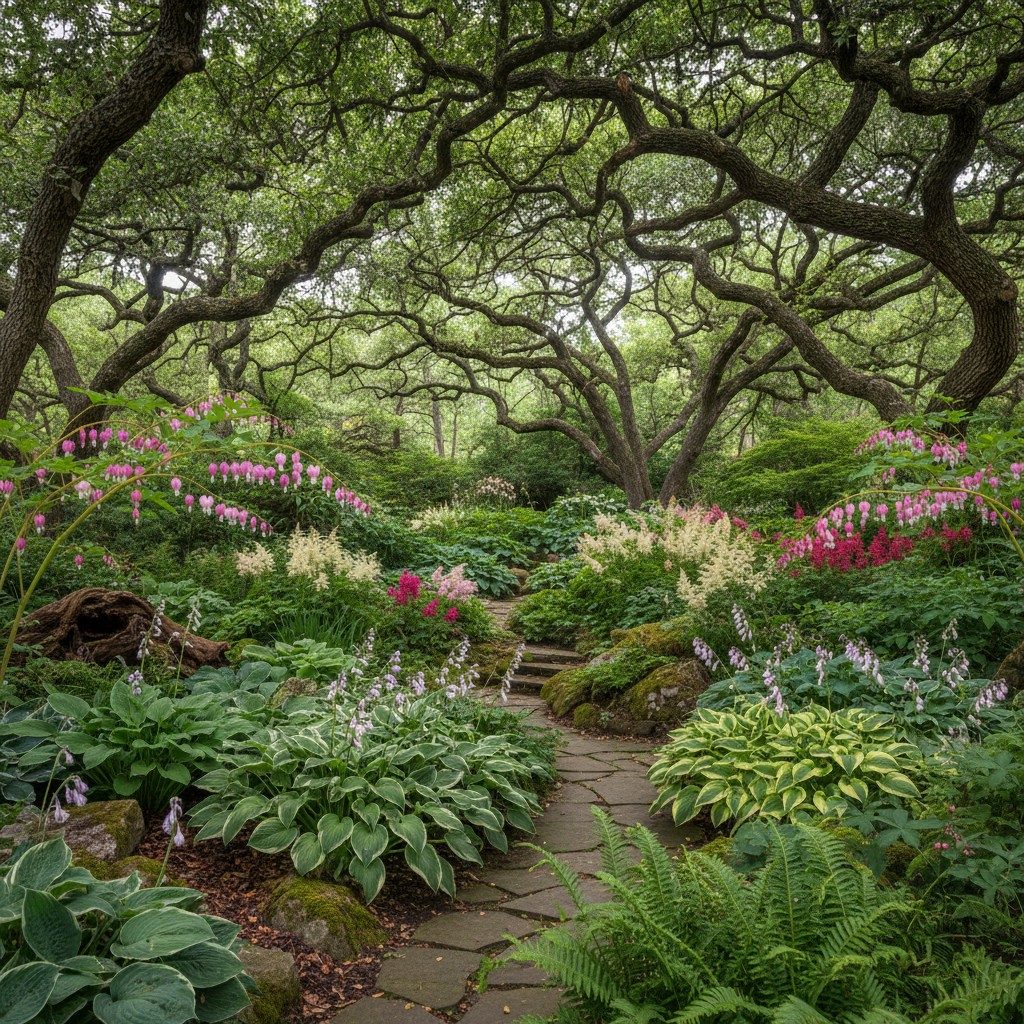
Understanding Your Shade
Before you choose a single plant, you need to understand what kind of shade you’re dealing with. Not all shade is the same, and this distinction matters far more than most people realize.
Types of Shade
- Light or dappled shade: Sunlight filters through a tree canopy, creating a moving pattern of light and shadow. This is the easiest shade to garden in and supports the widest range of plants. Most woodland plants thrive here.
- Partial shade: The area receives 2–4 hours of direct sun, usually in the morning or late afternoon. Many shade-tolerant plants actually perform best in partial shade.
- Full shade: Less than 2 hours of direct sun per day. The north side of buildings, dense evergreen canopies, and narrow side yards fall into this category. Fewer plants tolerate full shade, but there are still excellent options.
- Dry shade: Shade combined with dry soil, typically found under large trees that suck up moisture, or under wide eaves. This is the most challenging shade condition and requires the most careful plant selection.
Spend a day actually observing how sunlight moves across your shady area at different times. You might discover pockets of morning sun you didn’t know about, or realize that what you thought was full shade actually gets three hours of afternoon light. This information shapes everything.
The Best Perennials for Shade
The eight perennials below are the workhorses of any shade garden. The table compares them at a glance so you can match plants to your specific conditions before reading the detail on each.
| Plant | Shade Tolerance | Bloom Time | Height | Hardiness Zone | Pet Safe? |
|---|---|---|---|---|---|
| Hostas | Dappled to full | Mid to late summer | 4 in to 4 ft | 3 to 9 | No |
| Ferns (mixed) | Dappled to full | Foliage only | 1 to 5 ft | 3 to 8 | Most yes |
| Astilbe | Partial to dappled | Early to mid summer | 1 to 4 ft | 3 to 8 | Yes |
| Brunnera | Partial to full | Early spring | 1 to 1.5 ft | 3 to 8 | Yes |
| Hellebores | Partial to full | Late winter to early spring | 1 to 1.5 ft | 4 to 9 | No |
| Bleeding Heart | Partial to dappled | Spring | 1 to 3 ft | 3 to 9 | No |
| Coral Bells | Partial sun to partial shade | Early to mid summer | 8 to 18 in | 4 to 9 | Yes |
| Lily of the Valley | Partial to full | Mid spring | 6 to 12 in | 3 to 8 | No |
Hardiness zones reference USDA. Pet safety per ASPCA Toxic Plants database.
Hostas
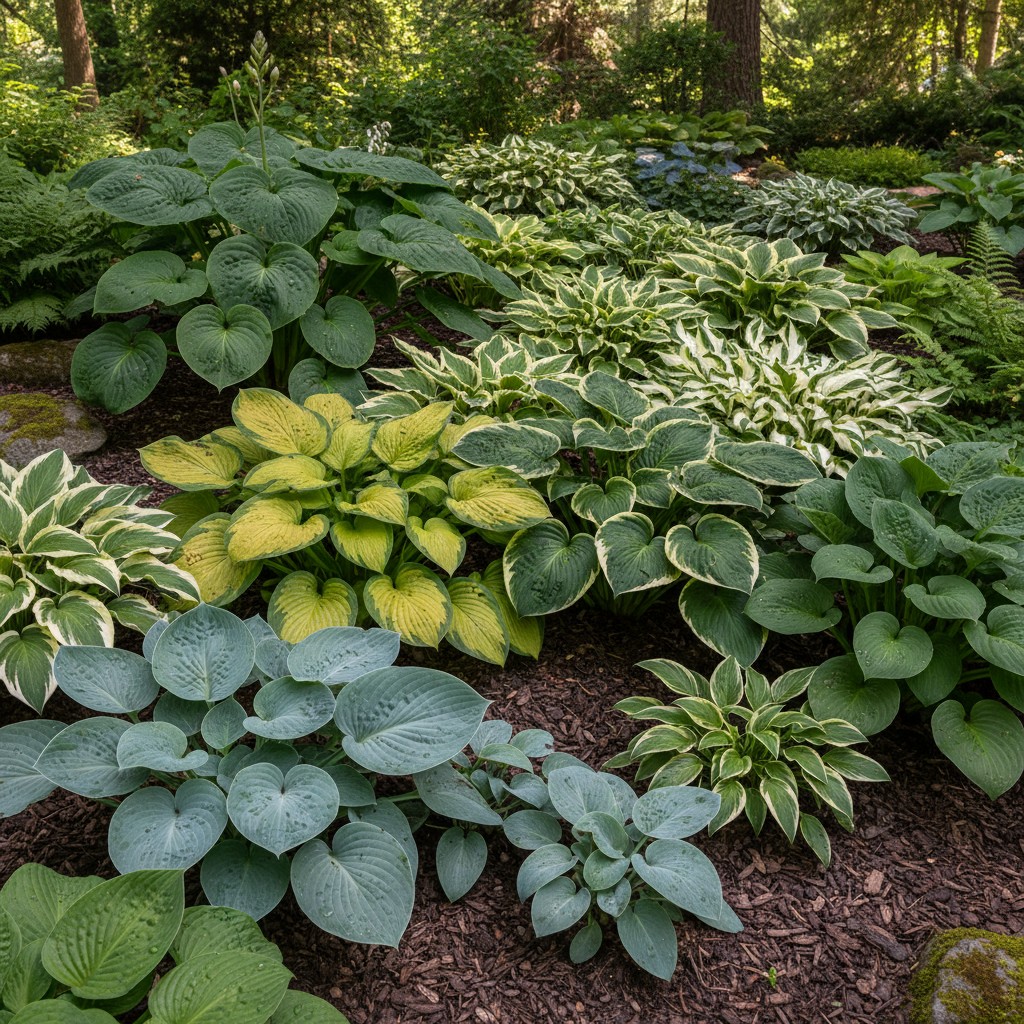
Hostas are the undisputed royalty of the shade garden, and for good reason. They come in an astonishing range of sizes (from 4-inch miniatures to 4-foot giants), leaf colors (blue, green, gold, variegated), and textures (smooth, puckered, wavy-edged). A shade garden of nothing but hostas in different varieties can look spectacular.
Blue-leaved varieties like ‘Halcyon’ and ‘Elegans’ develop their best color in deeper shade. Gold varieties like ‘Sum and Substance’ tolerate more sun and actually need some morning light to develop their richest color. Variegated types like the classic ‘Patriot’ work beautifully as accent plants.
The main downside: slugs and deer love hostas. Slug control (iron phosphate bait or beer traps) is a necessary part of the deal in wet climates. If deer are a serious problem in your area, consider deer-resistant alternatives instead.
Pet safety: Hostas are toxic to dogs, cats, and horses per the ASPCA. The toxic principle is saponins, and ingestion causes vomiting, diarrhea, and depression. If you have animals that dig in or graze garden beds, site hostas where pets can’t reach them, or skip them entirely.
Pros: Hundreds of leaf colors and sizes, almost foolproof in shade, low water needs once established, divides easily for free plants.
Cons: Toxic to dogs, cats, and horses (saponins). Slugs and deer love them. Not suitable for households with curious pets that browse beds.
Ferns
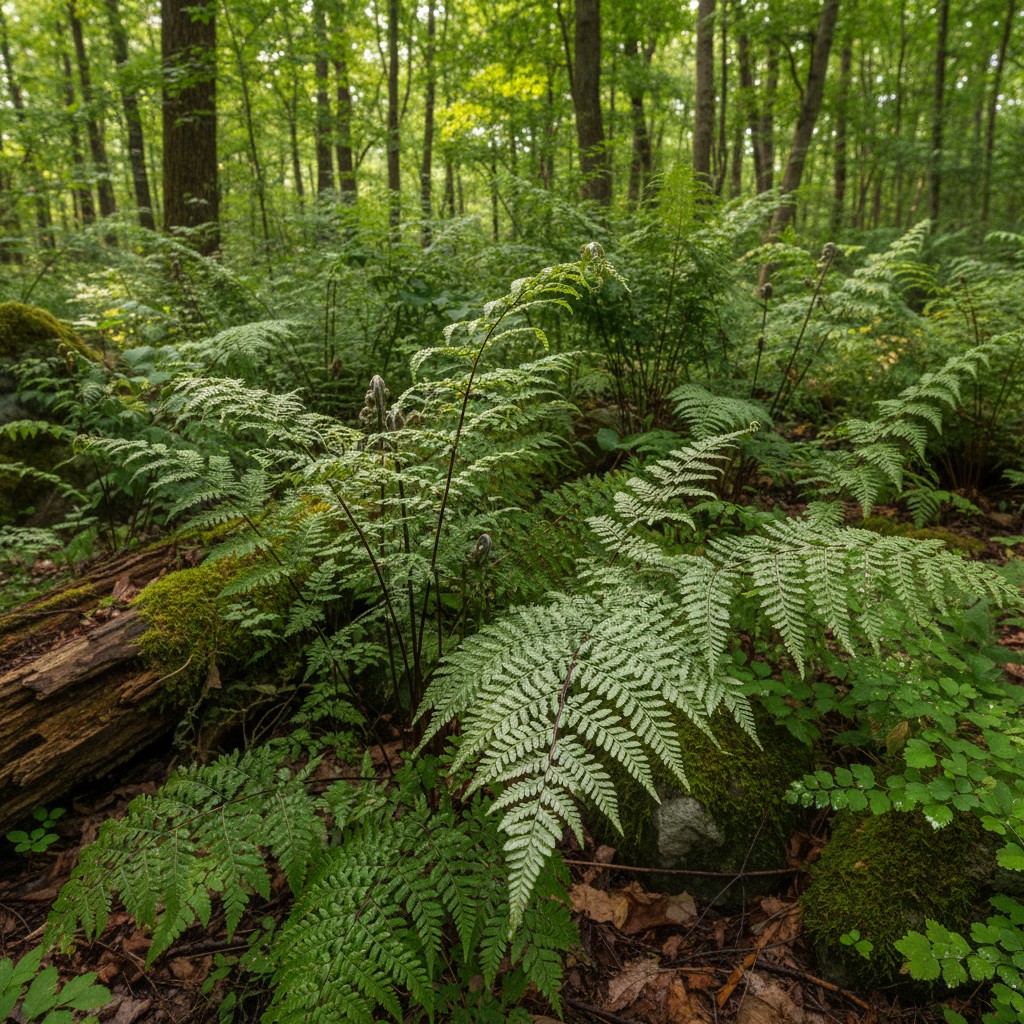
Nothing says “woodland garden” quite like ferns. Their arching fronds add movement and texture that no other plant group can match.
- Japanese painted fern (Athyrium niponicum). Silvery-purple fronds that glow in shade. Among the most ornamental ferns you can grow. Hardy to zone 4.
- Autumn fern (Dryopteris erythrosora). New fronds emerge a striking copper-red before maturing to green. Semi-evergreen in mild climates.
- Ostrich fern (Matteuccia struthiopteris). Dramatic, tall fronds that form a vase shape. Produces edible fiddleheads in spring, but they must be boiled 15 minutes or steamed 10–12 minutes before eating — and sautéing, stir-frying or microwaving are explicitly not accepted substitutes for that step (University of Maine Extension). If a recipe calls for sautéed fiddleheads, boil them first. The CDC has documented gastrointestinal illness outbreaks from raw or undercooked ostrich fiddleheads. Spreads vigorously, give it room or contain it.
- Maidenhair fern (Adiantum pedatum). Delicate, airy fronds on black stems. Needs consistently moist soil and protection from wind.
Pros: Most ferns are pet-safe per ASPCA, exceptionally low maintenance, add unmatched texture, deer rarely browse them.
Cons: Ostrich fern spreads aggressively and needs containment. Maidenhair fern needs constant moisture and dies back in dry conditions. Foliage only, no flowers.
Astilbe
When people tell me they need more color in their shade garden, astilbe is the first plant I recommend. The feathery plumes come in shades of white, pink, lavender, red, and deep magenta, and they bloom from early to midsummer depending on variety.
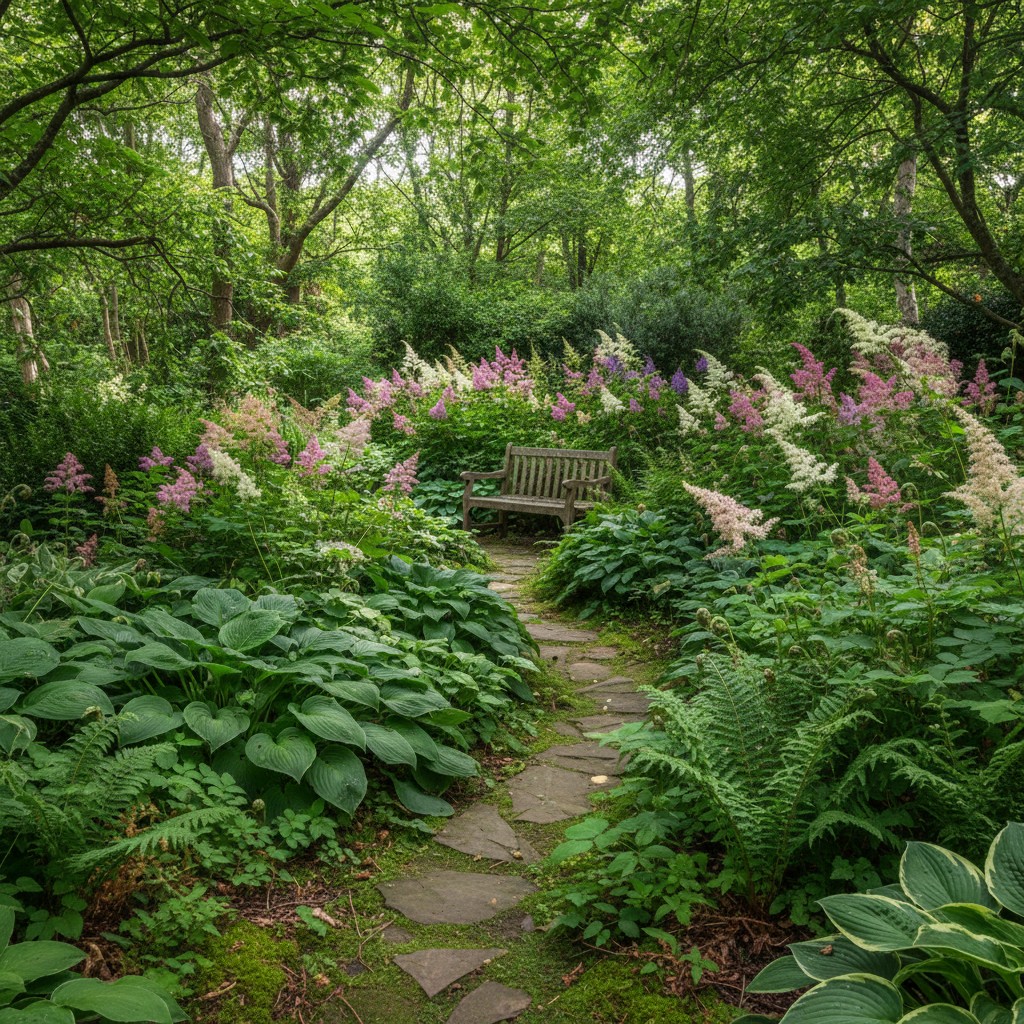
Astilbe needs consistently moist soil, it will struggle and brown out in dry shade. In my experience, pairing astilbe with hostas and ferns creates a shade combination that’s almost impossible to get wrong. The contrasting textures, feathery plumes, broad hosta leaves, arching fern fronds, just work.
Pros: Genuinely showy flower plumes in shade (rare for shade plants), pet-safe, deer-resistant, plays beautifully with hostas and ferns.
Cons: Needs consistently moist soil. Browns out badly in dry shade. Not drought-tolerant. Skip if you cannot water during dry spells.
Brunnera (Siberian Bugloss)
Brunnera macrophylla produces clouds of tiny blue flowers in spring that look remarkably like forget-me-nots, followed by heart-shaped leaves that persist all season. The variety ‘Jack Frost’ has silvery, frost-patterned foliage that lights up deep shade. It’s one of those plants that makes visitors stop and ask what it is.
Deer resistant, slug resistant, and low-maintenance once established. Brunnera is the kind of plant that makes shade gardening feel easy.
Pros: Pet-safe, deer-resistant, slug-resistant, low-maintenance, persists all season after spring bloom. The variety ‘Jack Frost’ lights up dark corners.
Cons: Slow to establish (year two before it really fills in). Late-emerging in spring (do not panic when you see bare ground in April).
Hellebores (Lenten Rose)
Hellebores are among the first perennials to bloom, often pushing through snow in late winter or very early spring. The nodding, rose-like flowers come in white, pink, burgundy, green, and near-black, and they last for weeks.
Beyond the flowers, hellebores have handsome evergreen foliage that provides year-round structure. They’re drought-tolerant once established, deer resistant, and pest-free. Plant them where you’ll see them from a window during the gray days of late winter, the blooms are a morale boost when you need it most.
Pros: Among the first perennials to bloom, evergreen foliage, drought-tolerant once established, deer-resistant, pest-free. The blooms last for weeks.
Cons: Highly toxic to humans, pets, and livestock (cardiac glycosides). Cannot be planted near children or animals that browse beds. Slow to establish.
Bleeding Heart (Dicentra)
Old-fashioned bleeding heart (Dicentra spectabilis, now Lamprocapnos spectabilis) produces arching stems of pink or white heart-shaped flowers in spring. It’s among the most romantic-looking plants in any garden. The foliage dies back by midsummer in warm climates, so plant it behind hostas or ferns that will fill in the gap.
Fringed bleeding heart (Dicentra eximia) is a smaller, more delicate species that blooms on and off from spring through fall and keeps its foliage all season. It’s a terrific front-of-border plant.
Pet safety: All Dicentra and Lamprocapnos bleeding hearts are toxic to dogs, cats, and horses per the ASPCA. Plants contain isoquinoline alkaloids that can cause tremors, seizures, labored breathing, and, in livestock grazing large amounts, death. Keep away from pastures and supervise curious pets.
Pros: Romantic spring bloom, fringed varieties bloom on and off all season, classic cottage-garden look that no other shade plant matches.
Cons: Toxic to dogs, cats, and horses. Foliage dies back by midsummer in warm climates. Plant behind fillers (hostas, ferns) to hide the gap.
Coral Bells (Heuchera)
Coral bells have undergone a renaissance in breeding over the past two decades. Modern varieties come in an almost absurd range of foliage colors, lime green, deep purple, amber, rose, silver, chocolate brown, and dozens of combinations. They form tidy mounds of ruffled leaves with airy stems of tiny bell-shaped flowers in summer.
Coral bells handle a range of conditions from partial sun to fairly deep shade. They’re excellent in containers too. The only caveat: in very hot, humid climates (deep South), they can suffer. Give them good drainage and afternoon shade in those areas.
Pros: Huge range of foliage colors (lime, purple, amber, silver, chocolate). Pet-safe per ASPCA. Tolerates more sun than most shade perennials. Excellent in containers.
Cons: Struggles in hot humid climates (Deep South). Crowns can heave out of soil over winter and need pressing back in each spring. Short-lived without periodic division.
Lily of the Valley
Lily of the valley (Convallaria majalis) produces intensely fragrant, tiny white bell flowers in mid-spring. The fragrance alone is reason enough to grow it. It thrives in shade and spreads to form a dense ground cover.
A word of caution: this plant is aggressive. Plant it where you want a ground cover that will fill in and stay put, or contain it with barriers. Don’t plant it in a mixed border where it will overrun its neighbors. Also, all parts of the plant are toxic if ingested, important to know if you have young children or curious pets.
Pros: Intensely fragrant blooms, dense ground cover for problem areas, thrives in deep shade where almost nothing else does, deer-resistant.
Cons: All parts highly toxic to pets, livestock, and humans (cardiac glycosides). Aggressive spreader, will overrun a mixed bed. Plant only where contained.
Edible Plants That Thrive in Shade
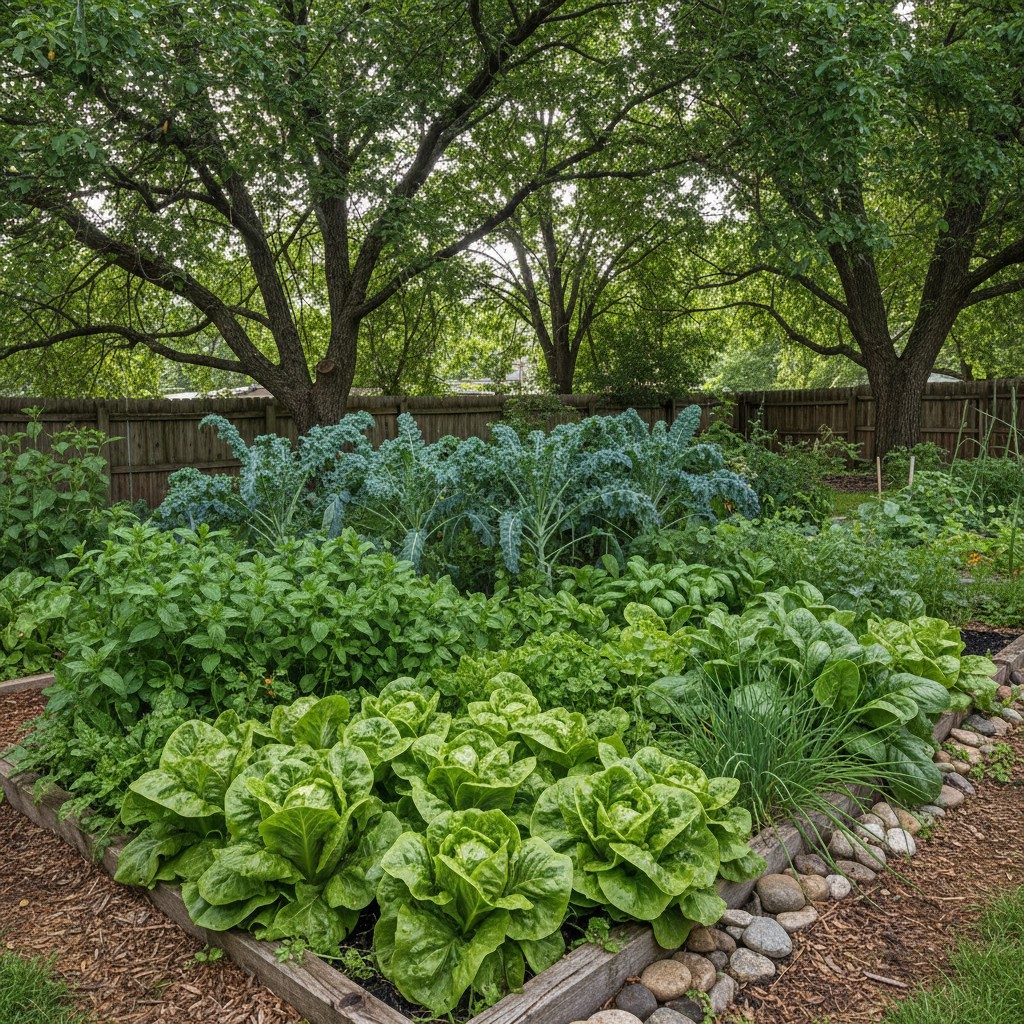
Here’s what most guides won’t tell you: shade is actually an advantage for many edible crops, especially in warm climates. Plants that bolt or turn bitter in hot sun often perform beautifully with some shade protection.
Leafy Greens
Lettuce, spinach, arugula, and Asian greens like mizuna and tatsoi all prefer cooler conditions. In partial shade, these crops can produce well into summer long after their sun-grown counterparts have bolted and gone bitter. You might get slightly slower growth, but the extended harvest window more than makes up for it.
Herbs
Parsley, cilantro, chervil, and mint all grow well in partial shade. Mint especially: it spreads aggressively and is often planted in shade on purpose to slow it down. Chervil, an underappreciated herb with a delicate anise flavor, actually requires shade and bolts almost immediately in full sun.
Other Edibles
Rhubarb produces well in partial shade and can handle some full shade. Alpine strawberries fruit reliably in dappled light. Kale and Swiss chard tolerate partial shade, growing more slowly but staying tender and mild-flavored longer.
Design Tips for Shade Gardens
Think Foliage First, Flowers Second
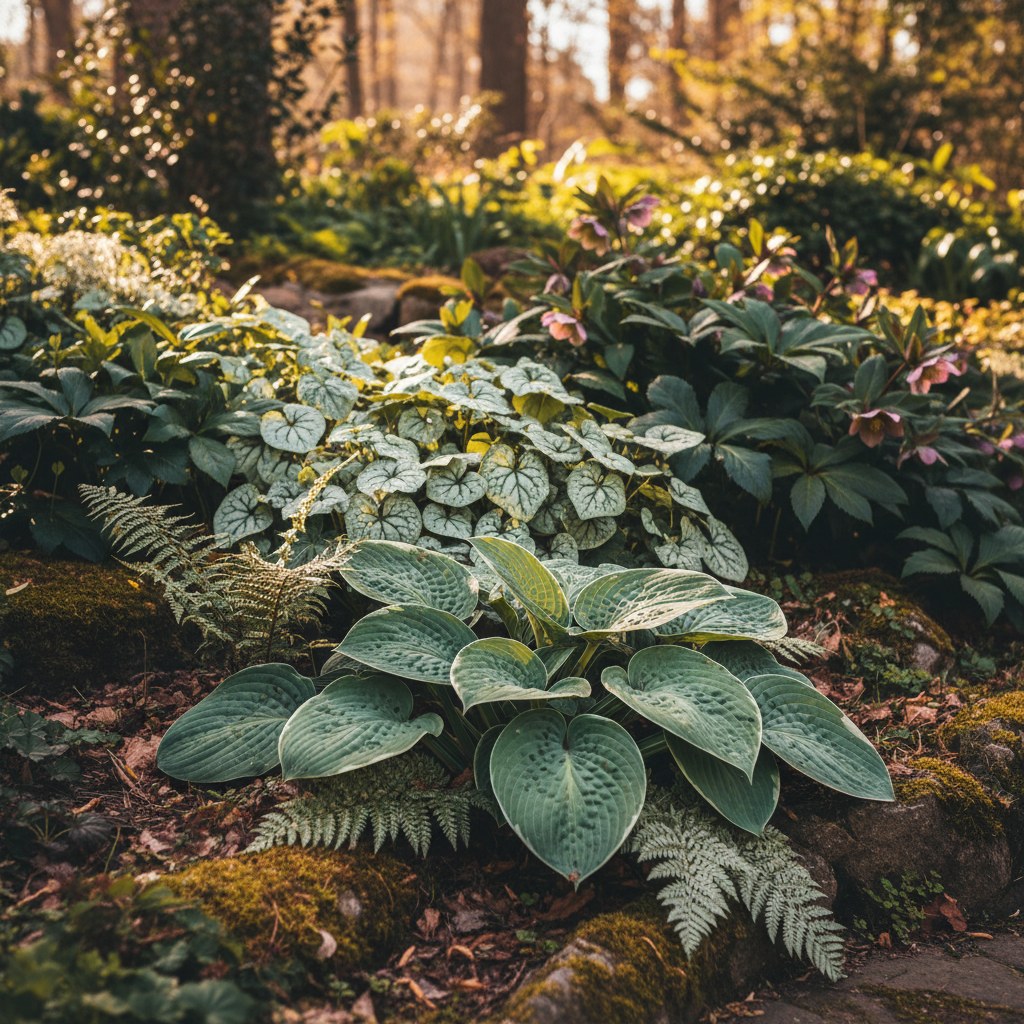
In a sunny garden, flowers provide most of the visual interest. In a shade garden, foliage does the heavy lifting. Focus on contrasting leaf shapes, sizes, textures, and colors. Place a bold, broad-leaved hosta next to a delicate fern. Set a dark-leaved heuchera against a bright chartreuse hosta. These foliage combinations look good all season, far longer than any flower display.
Layer Heights
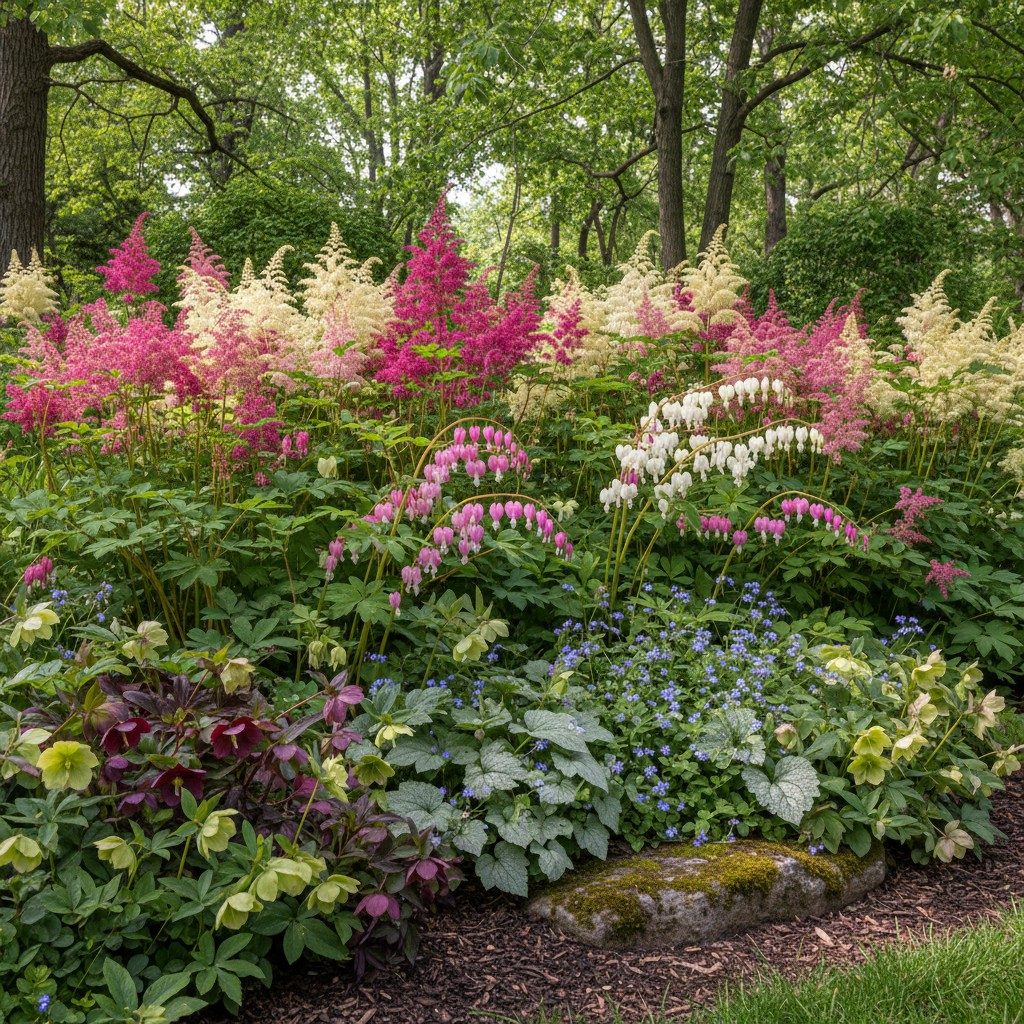
Create depth by layering plants from low to high. Ground covers (lily of the valley, wild ginger, sweet woodruff) in front, medium mounds (hostas, coral bells, brunnera) in the middle, and tall accents (ostrich ferns, Solomon’s seal, astilbe) in the back.
Use Light-Colored Plants to Brighten Dark Areas
White flowers, silver foliage, and variegated leaves are your best friends in deep shade. They reflect available light and seem to glow in low-light conditions. White-flowering astilbe, ‘Jack Frost’ brunnera, and white-variegated hostas all serve this purpose beautifully.
Add Structure
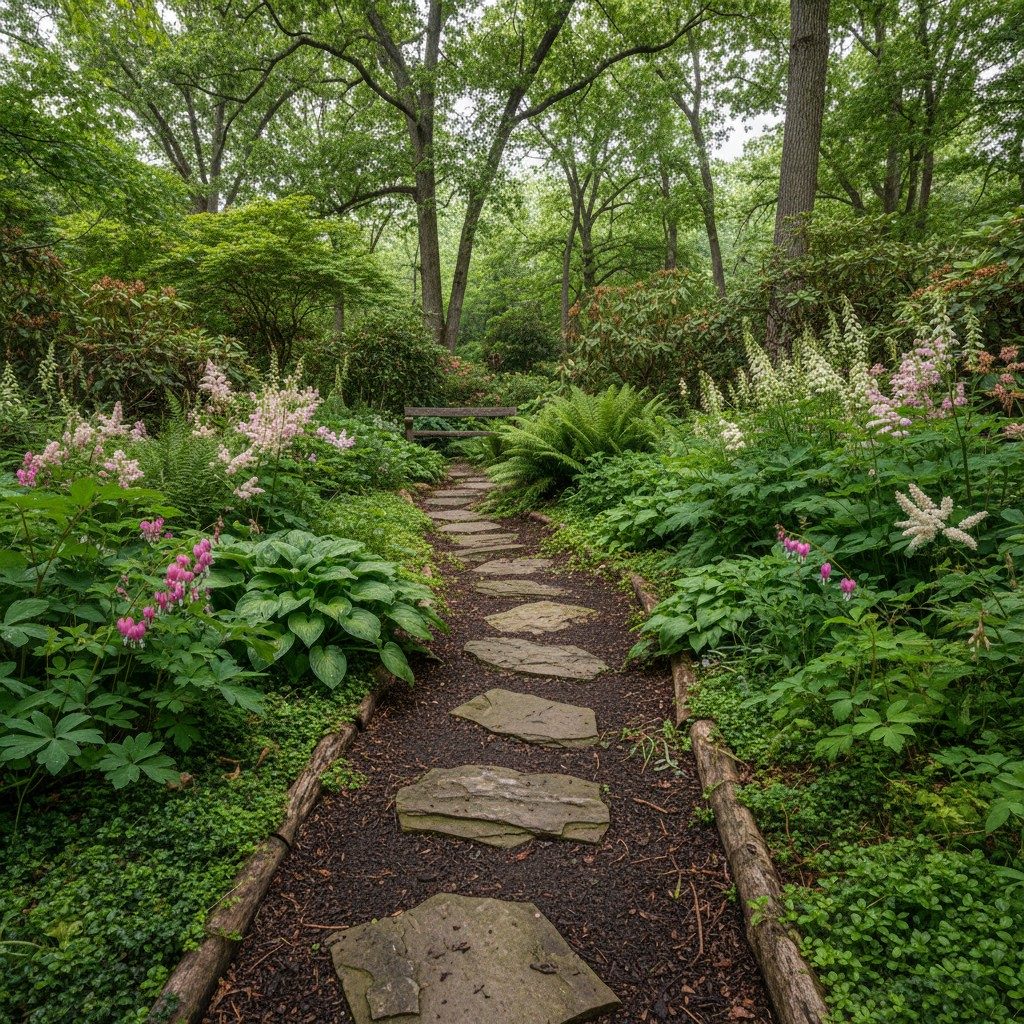
A simple bench, a stone path, a birdbath, or a small water feature gives the eye a focal point and makes a shade garden feel intentional and designed rather than like the leftover part of the yard nobody dealt with.
Invasive Shade Plants to Avoid
⚠ Invasive Warning
Several plants commonly sold or recommended for shade gardens are documented invasives in many U.S. States. They escape into wild areas, crowd out native vegetation, and are difficult to eradicate once established. Check your state’s invasive plant list before purchasing.
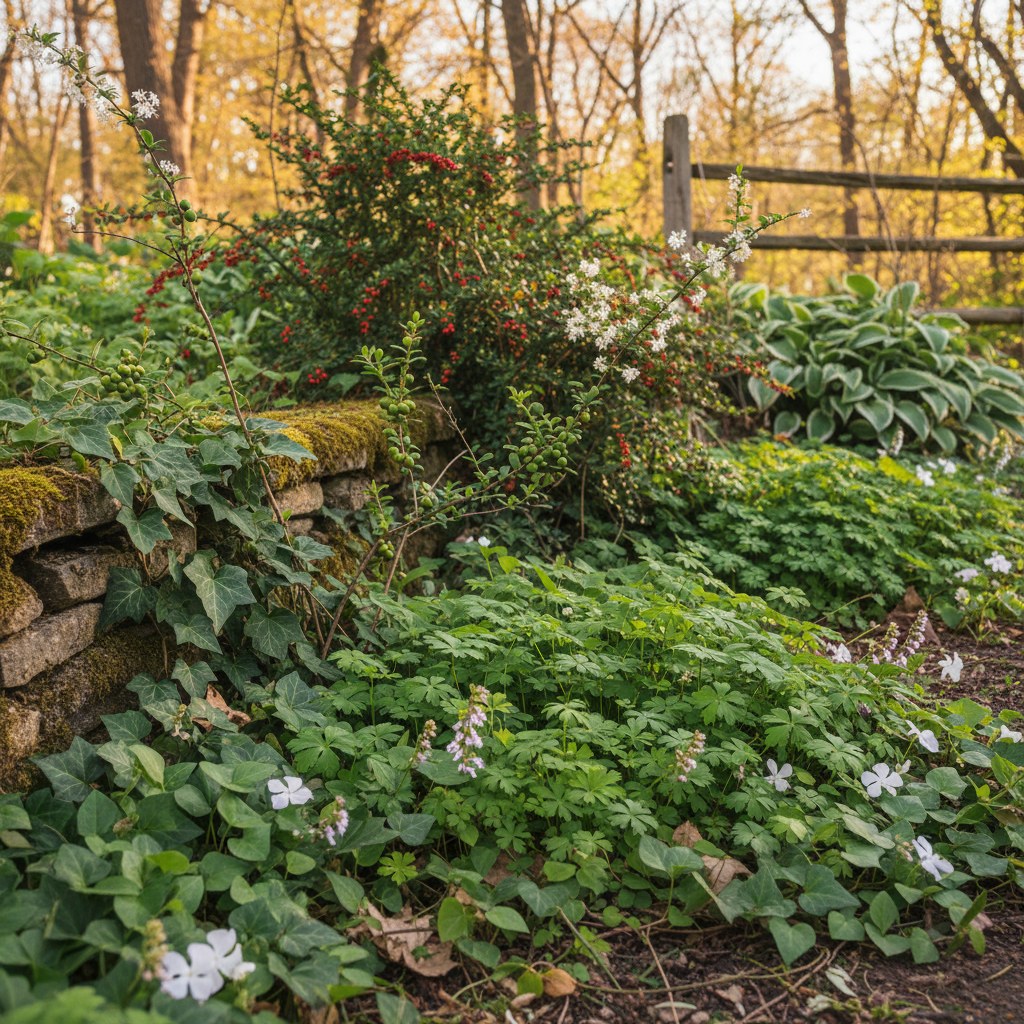
- English ivy (Hedera helix). Invasive in 40+ U.S. States. Smothers ground and climbs trees. Once established, nearly impossible to fully remove.
- Japanese pachysandra (Pachysandra terminalis). Invasive in the eastern U.S. Spreads into woodlands and displaces native plants. Native alternative: Pachysandra procumbens (Allegheny spurge), which is equally attractive and well-behaved.
- Lesser celandine (Ficaria verna). Highly invasive in the eastern and Pacific Northwest. Among the most damaging spring ephemeral invaders, smothering native wildflowers before they emerge.
- Japanese spurge. Often confused with native Allegheny spurge. Verify species before planting.
- Creeping euonymus (Euonymus fortunei). Invasive in 20+ states. Spreads via birds and root runners.
- Goutweed / bishop’s weed (Aegopodium podagraria). Nearly impossible to eradicate once planted. Listed as invasive in several northeastern states.
- Lamium (Lamium galeobdolon, yellow archangel). Invasive in some Pacific Northwest and northeastern regions. L. Maculatum (spotted deadnettle) is better-behaved in most areas.
- Vinca minor (periwinkle). Invasive in 20+ U.S. States. Toxic to dogs, cats, and horses (ASPCA). Frequently recommended despite these issues, skip it.
Native Alternatives for Every Non-Native Recommendation
For every invasive or problem plant above, there are beautiful native alternatives that support local wildlife without the ecological risk:
- Instead of English ivy: Phlox stolonifera (creeping phlox) for dappled shade, or Gaultheria procumbens (wintergreen) for dense shade and deer resistance.
- Instead of Japanese pachysandra: Pachysandra procumbens (Allegheny spurge), native, well-behaved, excellent in dry shade.
- Instead of lesser celandine: Sanguinaria canadensis (bloodroot) for spring ephemeral interest; Tiarella cordifolia (foamflower) for season-long coverage.
- Instead of goutweed: Asarum canadense (wild ginger), a slow-spreading native ground cover with attractive heart-shaped leaves.
- Instead of vinca: Chrysogonum virginianum (green-and-gold), Packera aurea (golden ragwort), or Mitchella repens (partridgeberry) for deep shade.
- For dry shade under trees (instead of invasive ground covers): Epimedium (non-invasive), Dryopteris marginalis (marginal wood fern), or Carex pensylvanica (Pennsylvania sedge), one of the best no-mow lawn alternatives for dry shade.
Native plants in shade gardens do triple duty: they require less water once established, support native pollinators and birds, and pose no invasive risk. Many are as beautiful as their non-native counterparts, and increasingly available at specialty nurseries and native plant sales.
Mulch Thoughtfully
A 2–3 inch layer of shredded hardwood or leaf mold mulch does triple duty in a shade garden: suppresses weeds, retains moisture, and creates that clean, woodland-floor aesthetic that makes shade plantings look cohesive. Avoid dyed mulches, they look artificial and can leach chemicals.
Maintenance Advantages of Shade Gardens
Once you get past the initial planting, shade gardens tend to be significantly lower-maintenance than full-sun beds. There’s less evaporation, so watering needs are reduced. Fewer weeds germinate in shade, and those that do are often easier to pull from the softer, moister soil. Many shade perennials are naturally long-lived and need only occasional division.
The main maintenance task is fall cleanup: removing dead foliage, top-dressing with compost or leaf mold, and dividing any perennials that have outgrown their space. In a well-designed shade garden, that’s about it. More time relaxing, less time working. That sounds like the right trade-off to me.
Sources and Further Reading
- University of Minnesota Extension, Growing Hostas in Minnesota, Department of Horticultural Science
- University of Minnesota Extension, Gardening in the Shade, planting and growing guides
- NC State Extension Plant Toolbox, Poisonous Plants of North Carolina, NC State Cooperative Extension
- ASPCA Animal Poison Control Center, Toxic and Non-Toxic Plants Database
- Royal Horticultural Society, Shade Gardening guides
- USDA Plant Hardiness Zone Map, US Department of Agriculture
Frequently Asked Questions
Can I grow roses in shade?
Most roses need at least 6 hours of direct sun to bloom well. However, a few tolerate partial shade (3–4 hours of sun). ‘Ballerina’ (a hybrid musk) and several David Austin varieties including ‘The Generous Gardener’ can handle less sun, though they’ll produce fewer blooms than in full sun. In partial shade, roses are also more prone to fungal diseases due to reduced air circulation and slower drying.
My shade garden soil is dry and full of tree roots. What can I plant?
Dry shade under trees is the toughest planting condition. The best plants for this include epimedium (barrenwort), liriope (choose clumping Liriope muscari, not the aggressive L. Spicata), dry-tolerant ferns like Christmas fern, and wild ginger (Asarum canadense). Skip vinca minor, although it’s commonly recommended for dry shade, it’s listed as invasive in 20+ U.S. States and is also toxic to dogs, cats, and horses per the ASPCA. Better native alternatives include Phlox stolonifera (creeping phlox), Tiarella cordifolia (foamflower), Chrysogonum virginianum (green-and-gold), and Packera aurea (golden ragwort). Amend the soil surface with compost annually, don’t dig deeply or you’ll damage tree roots. Consider using containers in the most root-congested areas.
Will shade-loving plants die if they get some afternoon sun?
It depends on the plant and the intensity of the afternoon sun. Morning sun is gentle; afternoon sun in summer is harsh and hot. Most shade plants can handle some morning sun but will burn or wilt in hot afternoon sun. Hostas, for example, will develop brown, scorched leaf edges in afternoon sun. If your shade area gets late-day sun exposure, choose the more sun-tolerant shade plants like heuchera, astilbe, and brunnera, which handle some direct light better than ferns or maidenhair.
How do I improve soil in a shady area under trees?
Don’t dig deeply near tree roots, you’ll damage them and potentially harm the tree. Instead, top-dress annually with 1–2 inches of compost or leaf mold, letting it work into the soil naturally over time. In areas between major roots, you can carefully dig small planting holes and amend the soil for individual plants. Over several years, consistent top-dressing transforms compacted, root-bound soil into something much more plantable.
What is the lowest-maintenance shade plant for total beginners?
Hellebores top the beginner list. Once planted, they require almost no care: they are pest-free, deer-resistant, drought-tolerant after the first year, and produce flowers in late winter when nothing else is blooming. Brunnera ‘Jack Frost’ is a close second for its silvery foliage and pet-safe profile. Both plants reward you for years with minimal input. Avoid hostas as a first plant if you have slugs or deer in your area, the constant pest pressure will discourage you.
Can I mix native plants with non-native shade perennials?
Yes, and it is often the right approach for backyard gardens. A mix of well-behaved non-natives (hostas, hellebores, astilbe) alongside native ground covers (wild ginger, foamflower, golden ragwort) gives you visual variety and supports local pollinators. The rule is simple: avoid documented invasives (English ivy, vinca minor, lesser celandine, goutweed) regardless of how attractive they look. Established invasives escape into surrounding woodlands and are nearly impossible to remove. Native alternatives exist for every problem plant on the invasive list.