Fermenting Vegetables at Home: A Science-Backed Beginner’s Guide
One quart of homemade sauerkraut costs roughly a dollar in cabbage and salt, keeps for nine months in the fridge, and finishes at a pH low enough that Clostridium botulinum, the bacterium responsible for botulism, cannot grow in it. That single fact, drawn straight from USDA Food Safety and Inspection Service guidance, is the entire case for fermenting vegetables at home.
On our property in southern Pennsylvania, we ferment about fifty pounds of cabbage every October and another twenty pounds of cucumbers in late August. The five-gallon stoneware crock we use was a gift; the rest of the gear (a dinner plate, a glass jar full of brine as a weight, a clean tea towel) was already in the kitchen. After three seasons of fermenting roughly every other week from spring through fall, I have stopped buying jarred pickles, kimchi, or sauerkraut entirely. The cost difference is real, and the flavor difference is bigger.
This guide pulls together the science, the equipment, the safe brine ratios, and the troubleshooting steps from USDA extension publications and peer-reviewed microbiology research so you can ferment your first jar this week with confidence. If you are also building a deep pantry on a budget, fermented vegetables earn a place on the shelf for almost no money.
What Is Lacto-Fermentation, and Why Does It Work?
Lacto-fermentation is the process in which naturally present Lactobacillus bacteria convert sugars in vegetables into lactic acid, which drops the pH and gives the ferment its sharp, tangy bite. According to the University of Minnesota Extension food-safety team, these bacteria also “release carbon dioxide, which creates bubbles in the liquid or brine,” which is why a healthy ferment fizzes and burps under its weight for the first week or two.
Two species do most of the work. North Carolina State Extension identifies them as Leuconostoc mesenteroides, which kicks off the ferment in the first few days while it is still cool, and Lactobacillus plantarum, which takes over and produces most of the lactic acid. The handoff is what gives a well-made sauerkraut its complex, layered sourness rather than a flat one-note tang.
The process is also self-limiting. NC State notes that once the acidity reaches 0.25 to 0.3 percent calculated as lactic acid, the bacteria slow down and start to die off, although their enzymes continue to function and develop flavor. That self-limiting curve is what makes lacto-fermentation safer than many cooks expect: the same acid that preserves the cabbage eventually shuts down the very microbes producing it. You are not racing a runaway reaction; you are catching a wave that crests and then settles on its own.
What Equipment Do You Need to Ferment Vegetables at Home?
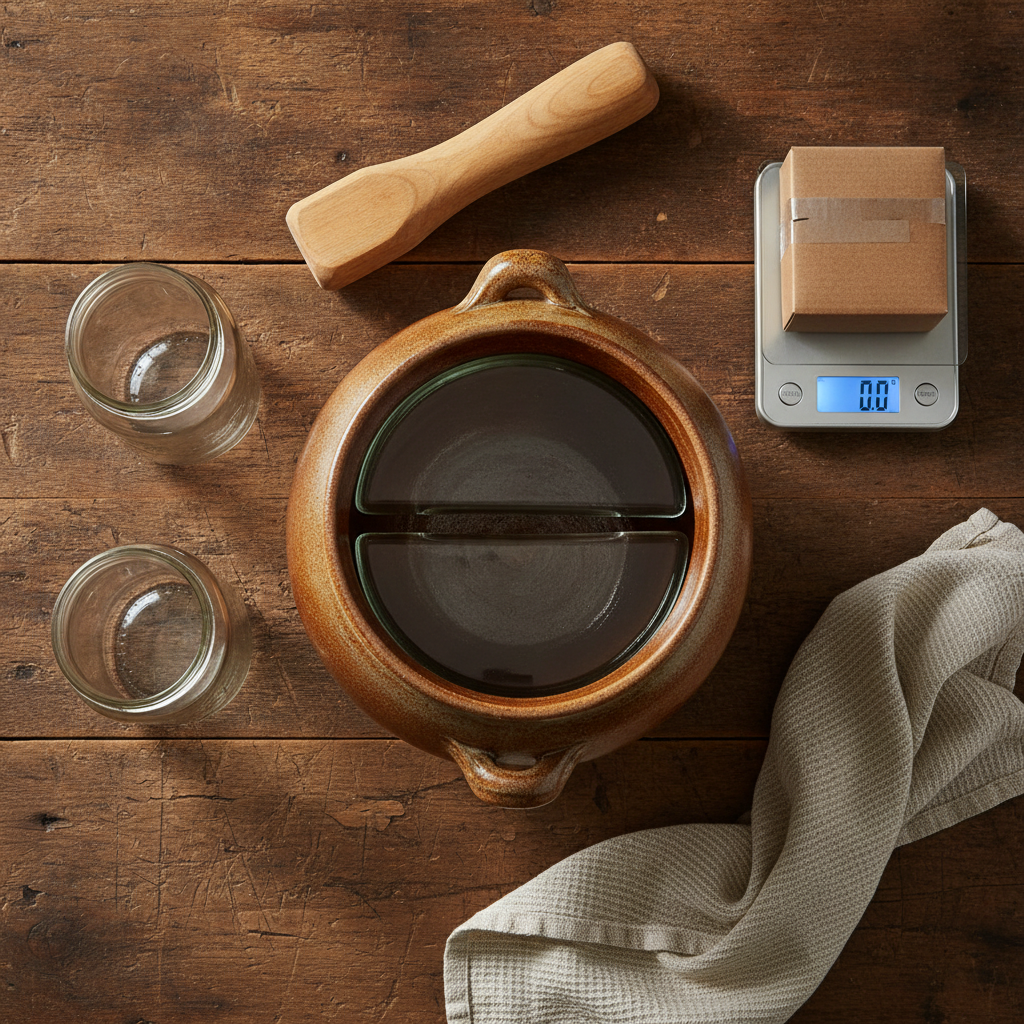
You need a non-reactive container, a way to hold the vegetables under the brine, and pure salt. According to the National Center for Home Food Preservation at the University of Georgia (NCHFP), the basic guideline is one gallon of container capacity per five pounds of fresh vegetables, which makes a five-gallon stoneware crock the right size for a 25-pound batch of cabbage or cucumbers. For smaller home batches, NCHFP confirms that “food-grade plastic and glass containers are excellent substitutes for stone crocks,” and that “fermenting sauerkraut in quart and half-gallon Mason jars is acceptable, but may result in more spoilage losses.”
The submersion step is non-negotiable. NCHFP states that “cabbage and cucumbers must be kept 1 to 2 inches under brine while fermenting,” because any vegetable above the liquid line is exposed to oxygen and will mold. A glass plate weighted with a clean jar of water works in a crock. In a Mason jar, a small glass jelly jar or a purpose-made glass fermentation weight does the same job.
For salt, use canning or pickling salt only. Oregon State University Extension Publication PNW 355 specifies that “pickling and canning salt are pure, granulated salts containing no anti-caking agents, and no iodine.” Iodized table salt can inhibit the bacteria you want and cloud the brine; the anti-caking compounds in standard table salt can leave a gritty residue. Coarse kosher salt without additives is the everyday substitute most home fermenters reach for.
How Much Salt Should You Use in the Brine?
Use 2 to 3 percent salt by weight for almost every fermented vegetable, and do not improvise. Colorado State University Extension is direct about why: “Salt helps form the brine and acts as a preservative. Salt causes the cabbage cells to release fermentable sugars and inhibits growth of undesirable yeasts, molds, and bacteria… the bacteria needed for safe fermentation tolerate higher concentrations of salt.” Lower the salt and you invite spoilage; raise it past about 5 percent and the lactobacilli themselves slow down.
For sauerkraut, CSU Extension recommends weighing the cabbage and calculating 2 to 2.5 percent salt by weight, which works out to roughly 3 tablespoons of pickling salt per 5 pounds of cabbage. Other fermented vegetables sit comfortably in a 2 to 3 percent salt solution for two to six weeks. The University of Minnesota Extension translates that into a kitchen-friendly wet brine: “Mix 1 to 3 tablespoons of salt per 1 quart (4 cups) of water,” and “cucumbers, onions and radishes may require up to 5 tablespoons of salt per 1 quart of water” because those vegetables release more of their own juice.
Oregon State University Extension issues a blunt warning that should sit above every fermenter’s workbench: “Do not alter salt concentration in fermented pickles or sauerkraut.” This is not a matter of taste. The salt level is the safety mechanism that protects against pathogens during the days before the pH has dropped. The reference table below converts the common percentages into kitchen measures.
| Ferment | Salt-to-vegetable ratio | Kitchen measure | Source |
|---|---|---|---|
| Sauerkraut (dry-salt) | 2 to 2.5% by weight | 3 Tbsp pickling salt per 5 lb cabbage | CSU Extension |
| Most wet-brine vegetables | 2 to 3% solution | 1 to 3 Tbsp salt per 1 qt water | UMN Extension |
| Cucumbers, onions, radishes | Up to ~5% solution | Up to 5 Tbsp salt per 1 qt water | UMN Extension |
What’s the Right Temperature and Timeline for Fermenting Vegetables?
The sweet spot for most vegetable ferments is 65 to 75°F, and the timeline scales with temperature. The National Center for Home Food Preservation, citing USDA recommendations for sauerkraut, says: “The USDA recommendation is to store at 70 to 75°F while fermenting. At temperatures between 70 and 75°F, kraut will be fully fermented in about 3 to 4 weeks; at 60 to 65°F, fermentation may take 5 to 6 weeks.” Cooler ferments are slower but often more flavorful; warmer ferments are faster but riskier.
Fermented pickles are even pickier. University of Minnesota Extension states that “a temperature between 68 and 72°F is ideal. Temperatures over 78°F can cause over fermentation and spoilage, while temperatures below 60°F will inhibit fermentation.” That tighter window is why summer cucumber pickles often turn out soft when an unconditioned kitchen pushes past 80°F during a heat wave. A basement, a north-facing pantry, or a cool closet is usually a better fermentation spot than the kitchen counter.
Penn State Extension adds one more practical observation: “Sauerkraut that is fermented during warm weather is more likely to develop undesirable molds and yeasts.” If your only option is warm-weather fermentation, lean toward the higher end of the salt range, check the surface daily, and consider smaller jars that finish faster. The rhythm of the seasons matters here as much as it does in canning or baking.
How Do You Make Your First Batch of Sauerkraut Step by Step?
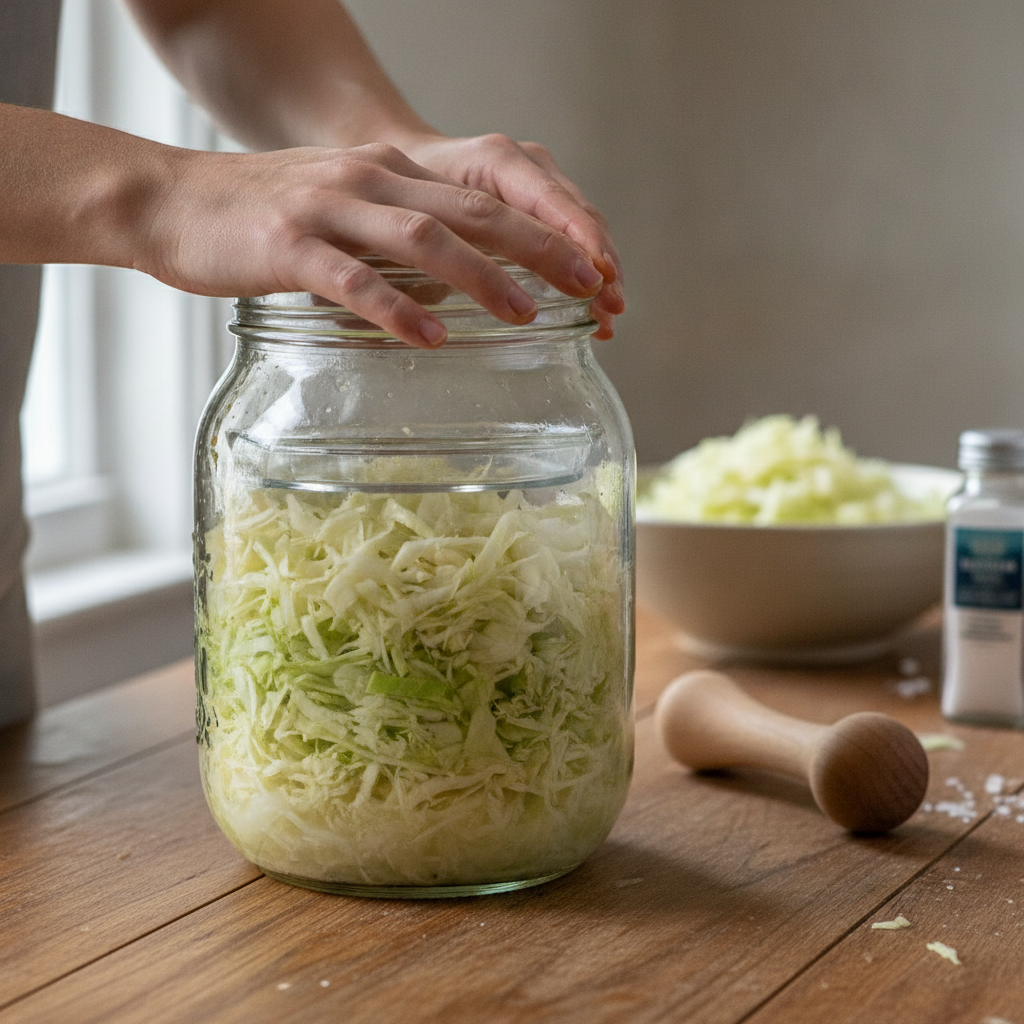
You can make safe, classic sauerkraut in one half-gallon jar with five pounds of cabbage, three tablespoons of pickling salt, and three weeks of patience. The method is the same one CSU Extension and NCHFP describe, scaled down for a beginner. Discard outer leaves, weigh the head, calculate 2 to 2.5 percent salt by weight, then shred the cabbage as thinly as a coin (a mandoline or large knife works fine).
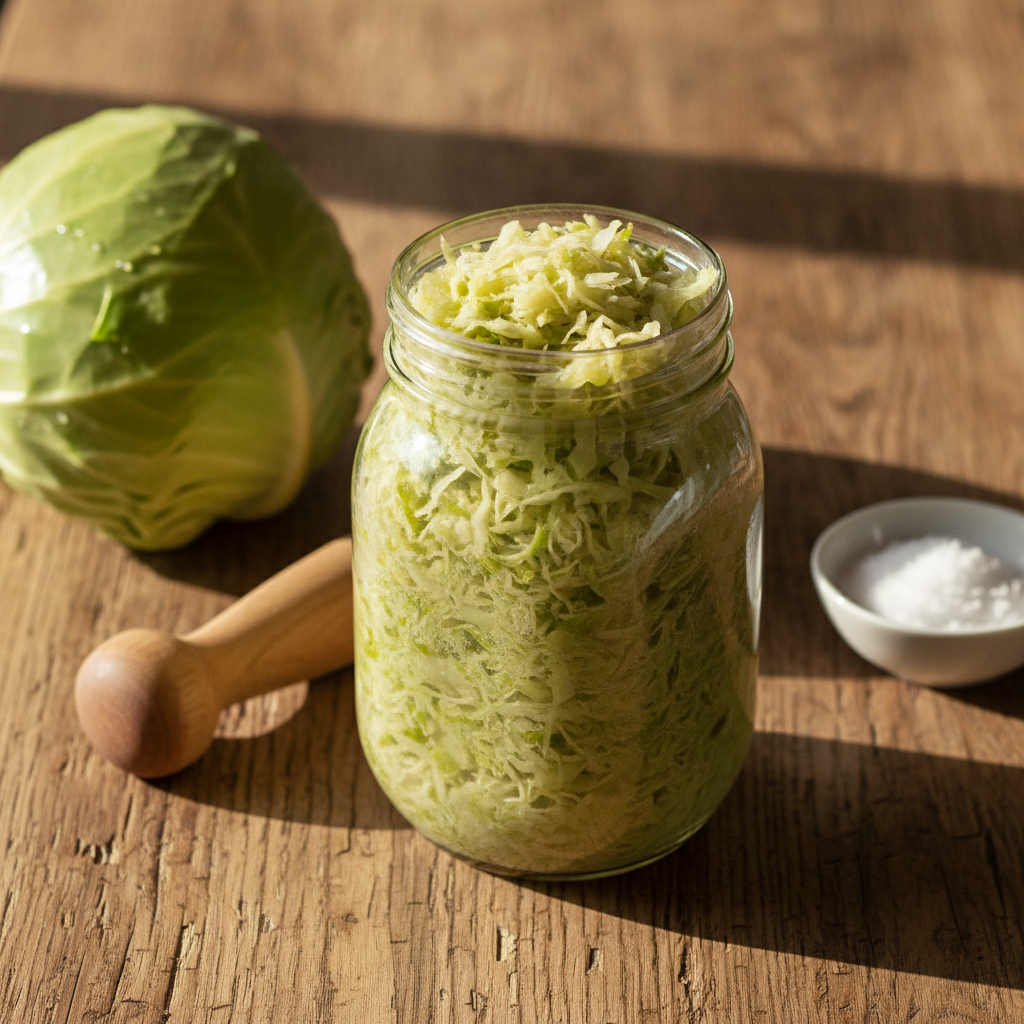
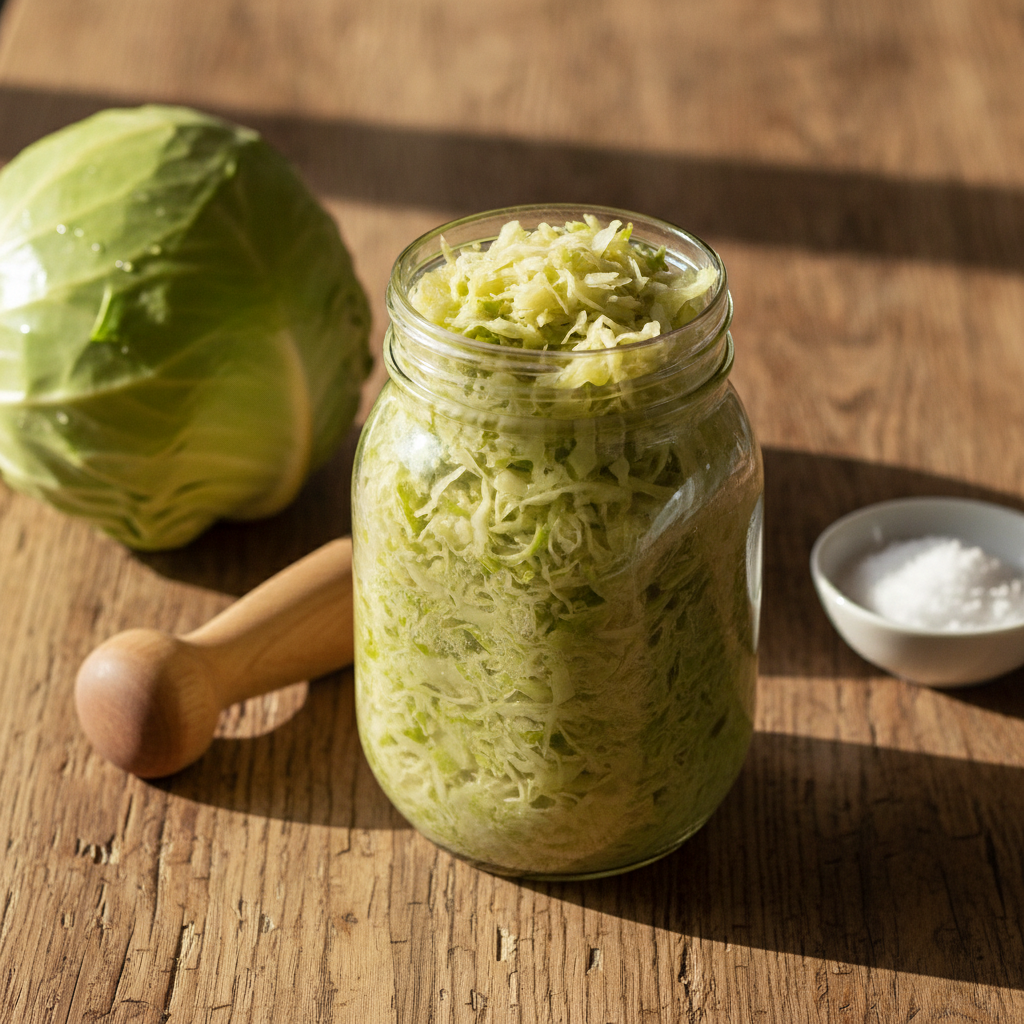
Layer the shredded cabbage into a large bowl, sprinkling salt as you go, then massage the cabbage with clean hands for five to ten minutes. The salt draws water out of the cell walls, and within fifteen minutes the cabbage will be sitting in its own brine. Pack the cabbage into your jar handful by handful, pressing down hard with a wooden tamper or your fist so the brine rises to cover everything. Leave at least two inches of headspace, because the kraut will bubble and expand.
Weight the cabbage so it stays 1 to 2 inches below the brine, per the NCHFP guideline. Loosely cover the jar with a clean cloth or a fermentation-style lid that lets gas escape. Set it on a tray (the brine often overflows during the first week), then store at 65 to 75°F. Check daily for the first week, skimming any surface scum and pressing the cabbage back under if it floats. After about three weeks at room temperature, the kraut should taste pleasantly sour with no off odors. Cap it and move it to the refrigerator.
This is one of the homestead tasks kids can help with, since the salting and pounding steps are tactile, safe, and reward small hands with immediate visible progress.
How Do Kimchi and Fermented Pickles Differ from Sauerkraut?
Kimchi and fermented cucumber pickles use the same Lactobacillus chemistry as sauerkraut but follow different brine, seasoning, and timing rules. Colorado State University Extension describes kimchi as “a flavorful, sour, salty mix of fermented vegetables and seasonings that plays an important role in Korean culture. The history of kimchi dates back thousands of years and the original name, chimchae, translates to ‘salted vegetables.'” The base is usually napa cabbage and Korean radish, salted in a wet brine for several hours, drained, then mixed with a thick seasoning paste of garlic, ginger, gochugaru chile, and fish sauce or salted shrimp.
Kimchi ferments faster than sauerkraut and finishes at a slightly lower pH. CSU Extension states that “the formation of organic acids (primarily lactic and acetic acid) results in an optimum kimchi pH of 4.2,” and adds the safety rule that “kimchi should reach a pH of 4.6 or below before consuming.” A few days at room temperature is usually enough; longer fermentation at room temperature pushes the kimchi past pleasant sourness into overripe territory.
Fermented cucumber pickles are sauerkraut’s most fragile cousin. NCHFP recommends one specific prep step that matters more than any other: “Be sure to remove and discard a 1/16-inch slice from the blossom end of fresh cucumbers. Blossoms may contain an enzyme which causes excessive softening of pickles.” Use small pickling cucumbers, not slicers; brine within 24 hours of picking; and stick to the 68 to 72°F range. Adding tannin-rich leaves such as grape, oak, or horseradish to the jar can also help maintain crunch by inhibiting the softening enzymes.
How Do You Troubleshoot Kahm Yeast, Mold, and Soft Pickles?
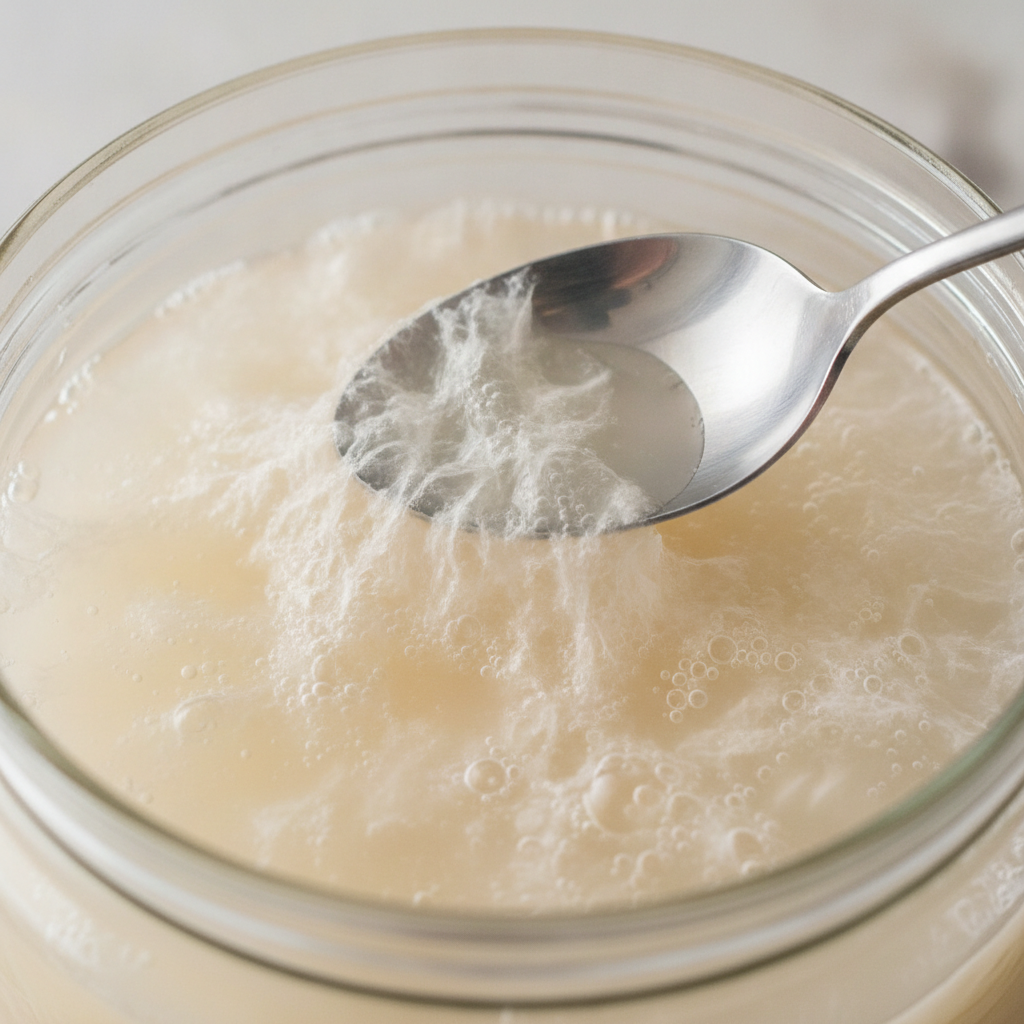
A thin white film on top of the brine is almost always harmless kahm yeast, but any other color of growth means the batch goes in the compost. University of Minnesota Extension is unambiguous: “White scum caused by kahm yeast often forms on vegetable ferments, and skimming this layer off every few days can prevent off flavors from developing. However, if you see any color of scum or mold other than white forming on your ferment, you have lost the battle and it is time to discard that product.” Pink, green, black, blue, or fuzzy growth all fall under the discard rule.
Kahm yeast has a tell. UMN Extension notes that “kahm yeast appears most often during warm weather and when fermenting sweeter vegetables, such as beets, carrots, and peppers. Its growth is often an indicator that not enough salt was used.” Two simple corrections fix most kahm problems: bump the salt to the higher end of the 2 to 3 percent range on the next batch, and move the ferment to a cooler spot.
NCHFP recommends checking ferments several times a week and “promptly remove surface scum or mold” before it has a chance to spread through the brine. A clean stainless spoon, used only for this purpose, is the right tool. Soft, slimy, or mushy pickles usually point to one of three causes: temperature above 78°F, salt below 2 percent, or the blossom-end enzyme problem on cucumbers. Fix the variables on the next batch rather than trying to rescue a slimy one.
How Long Do Fermented Vegetables Keep, and Are They Actually Good for You?
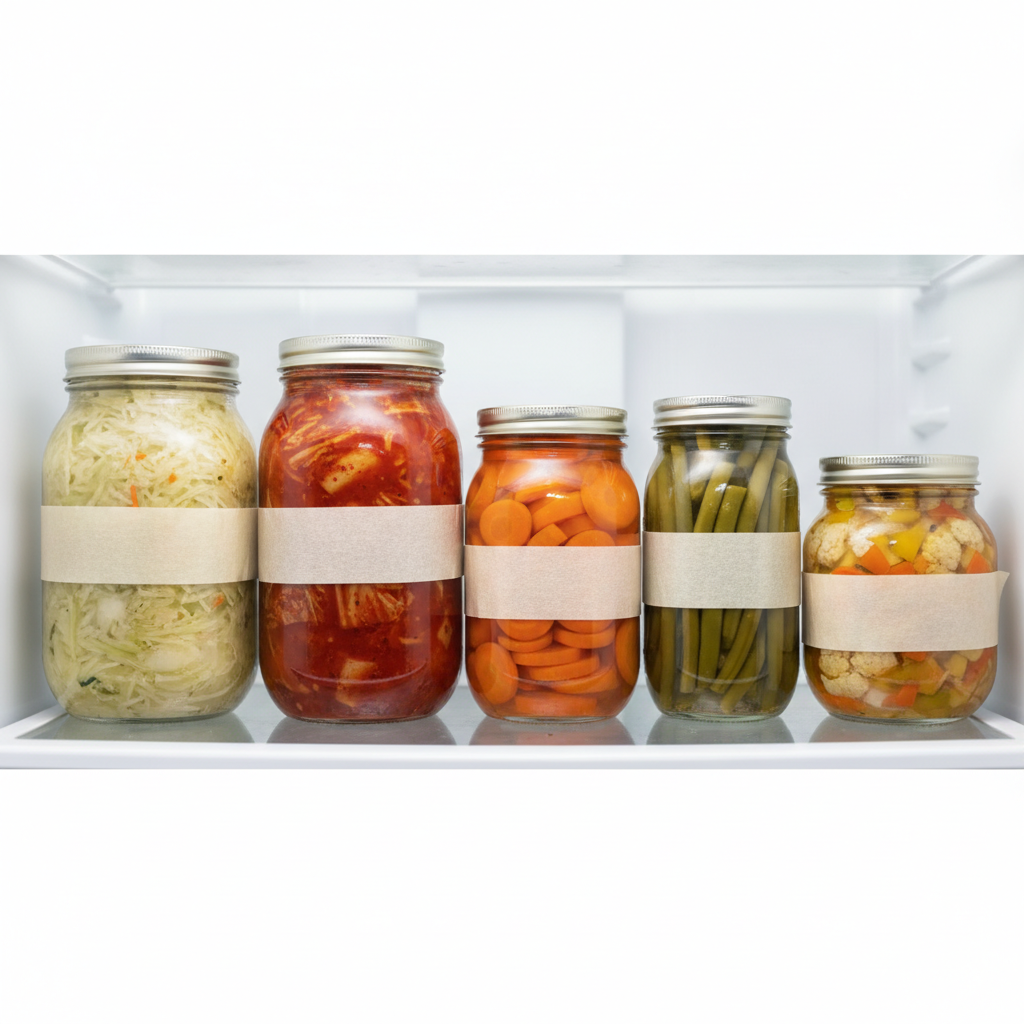
Properly fermented vegetables keep up to nine months in a standard household refrigerator, and the peer-reviewed evidence for their health benefits is now substantial. University of Minnesota Extension states plainly that “refrigeration stops the fermentation process, and fermented produce can be kept refrigerated for up to 9 months.” Kimchi is the outlier on the short end: CSU Extension recommends storing it tightly covered and pressed down, and eating within about two weeks for peak quality, although it remains safe much longer.
The nutrition case is no longer anecdotal. A 2024 review in the National Library of Medicine concluded that lactic-acid fermented vegetables are “associated with anti-allergic, anti-hypertensive, anti-inflammatory, anti-diarrheal, anti-infection, and anti-aging properties, as well as prevention and control of chronic diseases such as cardiovascular diseases, type 2 diabetes, obesity, and cancer.” A separate 2022 review in the same database documents that fermentation produces “bioactive peptides, vitamins (especially B-complex), gamma-aminobutyric acid, and phenolic and organosulfur compounds” that are not present (or are less bioavailable) in raw vegetables.
A 2024 proof-of-concept clinical study found that healthy adults who ate roughly 250 grams of sauerkraut daily for ten days showed “significant changes in the gut microbiota composition… on taxonomic and functional levels, independent of baseline microbiota composition, even after short-term supplementation.” Translated into kitchen language: a quarter pound of homemade kraut a day, for less than two weeks, measurably moves the needle on gut health. Pairing fermented vegetables with the rest of your from-scratch cooking habits turns a single ten-dollar head of cabbage into months of probiotic condiments.
Frequently Asked Questions About Fermenting Vegetables at Home
Is fermenting vegetables at home safe?
Yes, when you follow tested salt ratios and keep the vegetables submerged. According to USDA Food Safety and Inspection Service guidance, Clostridium botulinum “cannot grow below a pH of 4.6,” and a properly fermented vegetable lands well below that line within the first week. The two non-negotiables are using 2 to 3 percent salt by weight and keeping everything 1 to 2 inches under the brine. Discard any batch with pink, green, black, or fuzzy growth, regardless of how the rest looks.
Do I need a special fermentation crock to get started?
No. The National Center for Home Food Preservation explicitly approves food-grade plastic buckets and glass jars as substitutes for traditional stoneware crocks, and notes that “fermenting sauerkraut in quart and half-gallon Mason jars is acceptable, but may result in more spoilage losses.” A wide-mouth half-gallon Mason jar, a small glass jelly jar as a weight, and a clean tea towel will produce excellent sauerkraut. Buy a real crock once you know you love the process.
Why did my fermented pickles turn out soft?
Soft pickles almost always trace back to one of three causes: fermentation temperature above 78°F, salt concentration below 2 percent, or the enzyme released by the cucumber blossom end. NCHFP recommends slicing off a 1/16-inch piece from the blossom end of every cucumber before fermenting. Hold the jar at 68 to 72°F, use a 2 to 3 percent brine, and add a grape, oak, or horseradish leaf for extra tannins if soft pickles have plagued past batches.
Can I use table salt instead of pickling salt?
It is not recommended. Oregon State University Extension specifies that “pickling and canning salt are pure, granulated salts containing no anti-caking agents, and no iodine.” Iodized salt can inhibit the Lactobacillus bacteria you are trying to encourage, and the anti-caking compounds in standard table salt can cloud your brine or leave a gritty residue. Pickling salt, canning salt, or pure non-iodized kosher salt all work; reach for one of those instead.
What is the white film on top of my sauerkraut, and is it dangerous?
A thin, white, papery film is almost certainly kahm yeast, which UMN Extension describes as harmless but capable of producing off flavors if ignored. Skim it off every few days with a clean spoon and press the cabbage back below the brine. UMN Extension also notes that kahm yeast often signals “not enough salt was used,” especially on sweeter vegetables, so consider raising the salt slightly and moving the ferment to a cooler location for the next batch. Mold of any other color, however, means discard.
Where to Go From Here
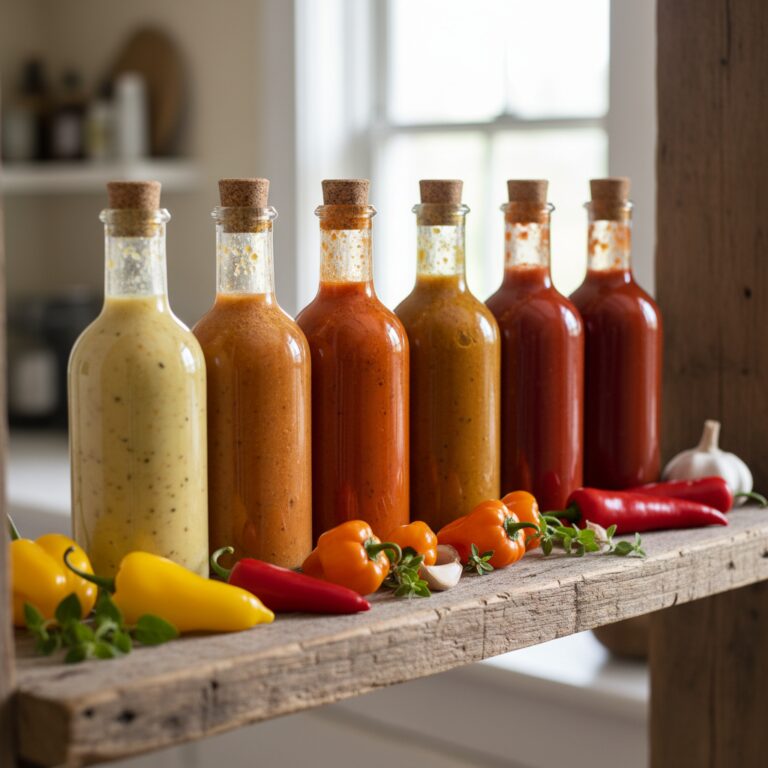
A first jar of sauerkraut is the easiest entry point: cabbage, salt, weight, time. Once that batch comes out of the fridge, the same method scales sideways into kimchi, dilly beans, fermented hot sauce, curtido, and giardiniera. Tested recipes for each live on the NCHFP, Penn State, Cornell, and Colorado State Extension sites, all linked above. Treat extension publications as your default reference; they are written by food scientists for safety, not engagement.
If you are starting a homestead in the suburbs or already deep into your August harvest tasks, fermenting vegetables at home is the single highest-return preservation skill you can pick up this season. The gear is cheap, the science is well-documented, and the finished jars buy you nine months of probiotic-rich condiments that taste better than anything on the store shelf.