5 Best Herbal Room Sprays for Beginners (Recipes + Safety Guide)
The average scented consumer product emits 17 volatile organic compounds, and 24 of the 133 VOCs identified across those products are classified as toxic or hazardous under U.S. federal law, according to Anne Steinemann’s air-quality study published in PMC (article PMC3018511). That number is the single best reason to swap a “spring rain” aerosol for a spray you built yourself out of distilled water, witch hazel, and one honest essential oil. You know exactly what is in the bottle, you spend about a dollar per refill, and you can match the scent to the room.
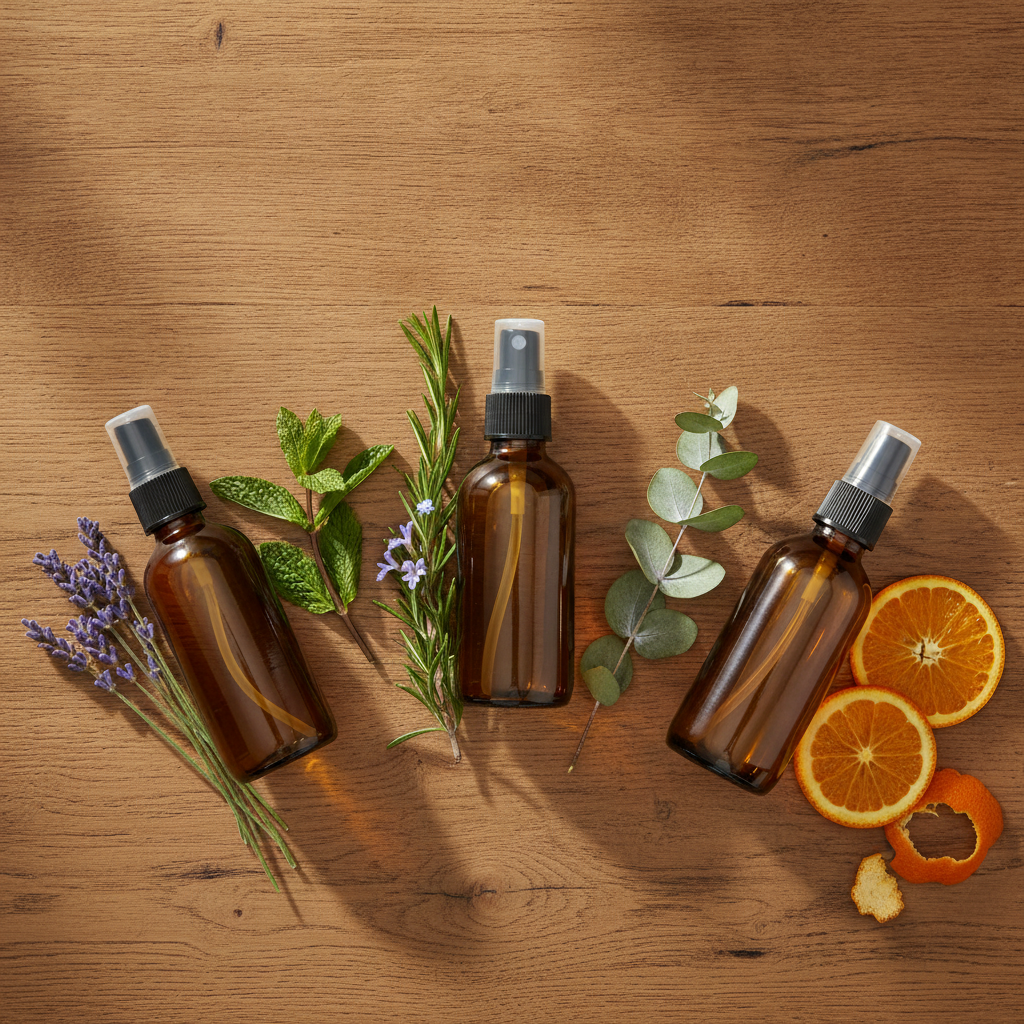
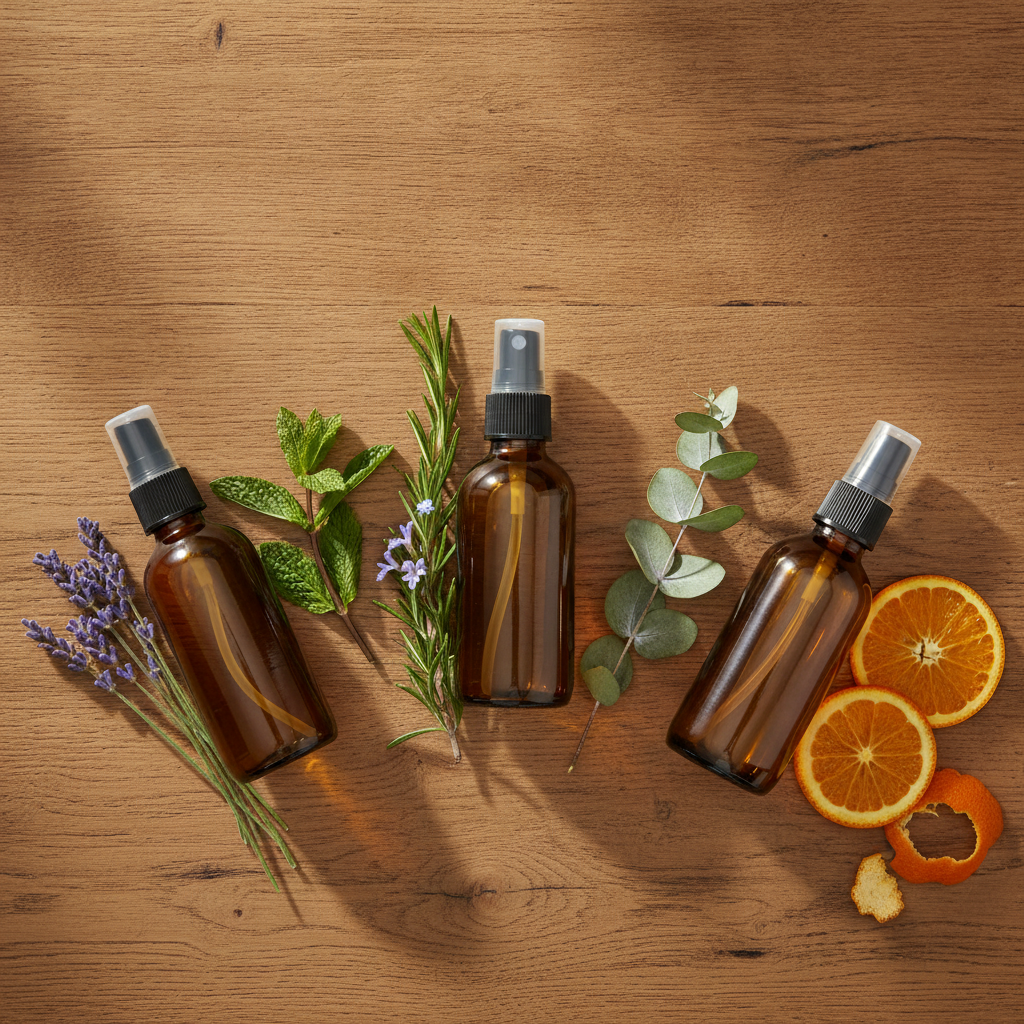
After three seasons of testing blends on our Zone 6b homestead, I have narrowed the field to five beginner-friendly herbal room sprays: lavender, peppermint, rosemary, eucalyptus, and sweet orange. Each oil has published aroma chemistry data, safety guidance from the National Center for Complementary and Integrative Health (NCCIH), and a defensible everyday use case. Every spray below uses the same base recipe, so once you own witch hazel and a single essential oil, you already have a spray. If you are new to working with herbs, the companion piece on how to start a kitchen herb garden pairs well with this list.
1. Why Is Lavender the Easiest First Herbal Room Spray to Try?
Lavender is the safest, most-studied starter oil. A 2023 systematic review of 11 clinical trials with 972 participants found that inhaled lavender essential oil is a “safe and feasible anxiolytic intervention,” with 10 of 11 studies showing significantly decreased anxiety (PMC10671255). That is the citation to reach for when someone asks whether a bedtime lavender mist is more than folklore. The chemistry lines up: the main components of lavender oils are “the monoterpenoids linalool, linalyl acetate, 1,8-cineole, β-ocimene, terpinen-4-ol, and camphor,” per an aroma-chemistry review indexed in PMC (PMC10160692). Linalool and linalyl acetate are the two constituents most often credited with the calming, sleep-supporting effect.
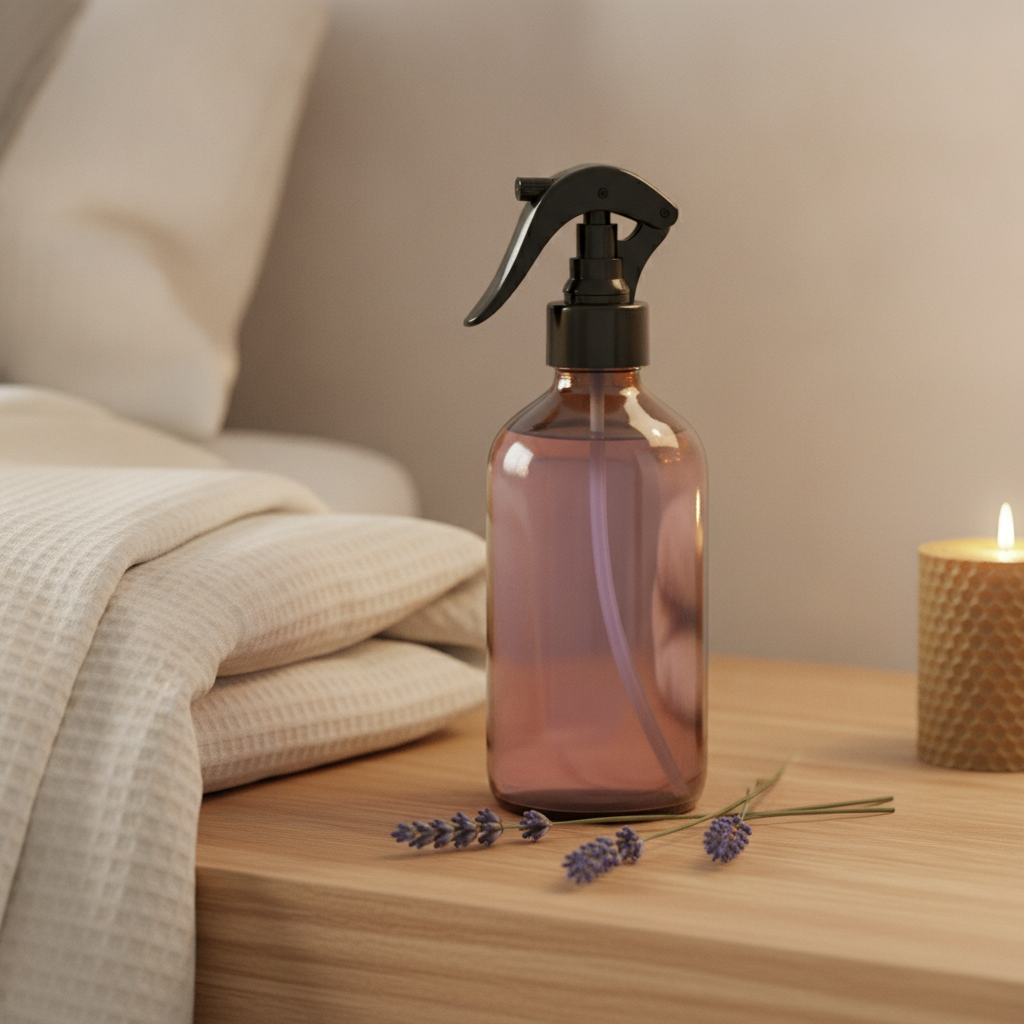
According to NCCIH, lavender aromatherapy is “possibly safe” when inhaled but “may cause headache or coughing” in sensitive users, so a two-second mist above (not directly on) the pillow is the beginner dose. NCCIH also flags allergic skin reactions from topical lavender, worth remembering before you spray sheets. Two or three light passes over a bedroom at 8 p.m. is enough. If you eventually want to grow your own, the full guide to growing lavender covers planting through harvest.
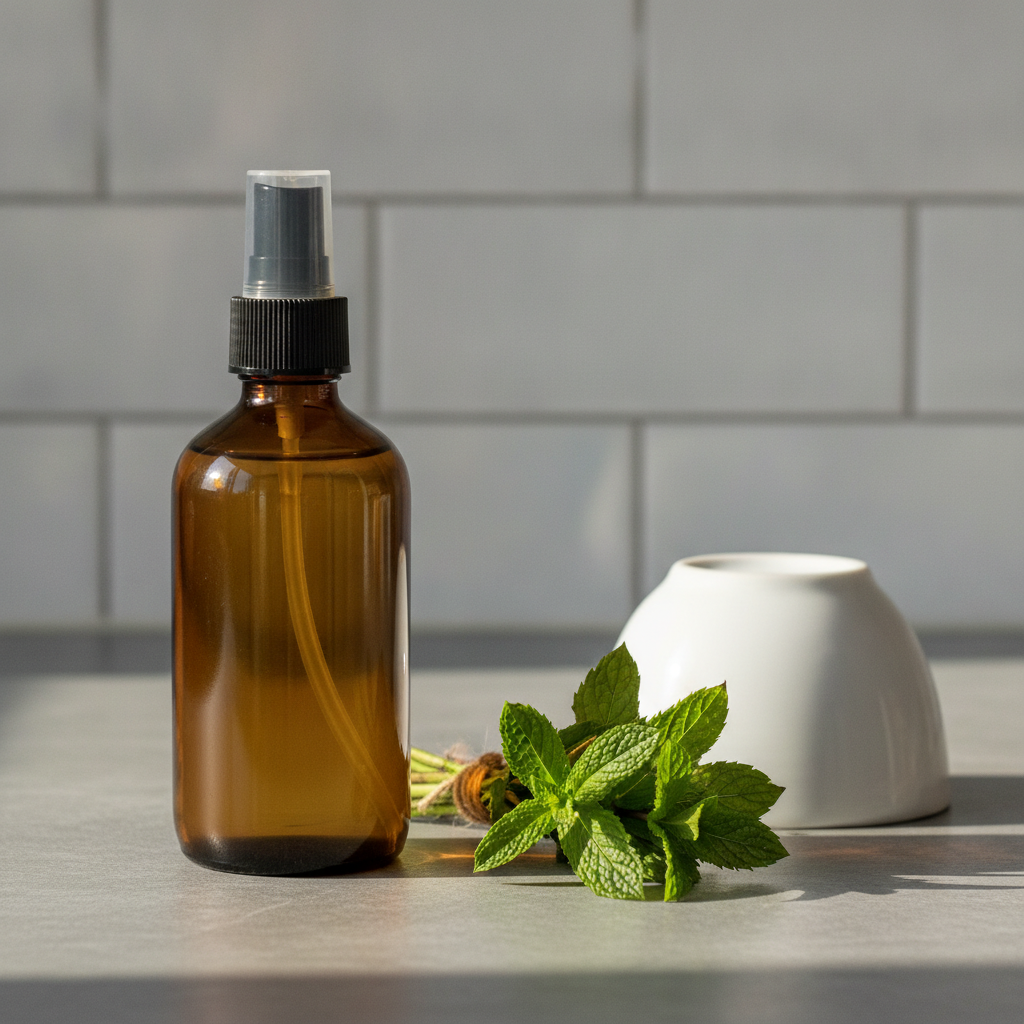
2. Peppermint Spray for Freshening the Kitchen and Bathroom
Peppermint is the fresh-scent workhorse. According to a phytochemistry review indexed in PMC (PMC5527698), peppermint essential oil’s principal constituents include “monoterpinic alcohols mainly menthol (38-48%), and ketones mainly menthones (20-30%).” That menthol content is what gives peppermint spray its cooling, distinctly “cleaner-than-clean” bathroom finish. It is also what does the antimicrobial work: an in-vitro study found peppermint oil active against Staphylococcus aureus with minimum inhibitory concentrations ranging from 64 to 256 micrograms per milliliter (PMC6259925). A room mist will not sterilize a countertop, but the scent is doing real chemistry.
NCCIH considers inhaled peppermint oil “possibly safe when inhaled as aromatherapy” for adults, though “there is not enough reliable information” on intranasal application. That translates to a plain rule: spray the room, not your face. The critical safety limit is children. NCCIH explicitly warns that peppermint oil “should not be applied to the face of infants or young children because serious side effects may occur if they inhale the menthol in the oil.” Our kitchen peppermint blend lives on a high shelf out of toddler reach for that reason.
3. What Makes Rosemary the Best Room Spray for a Home Office?
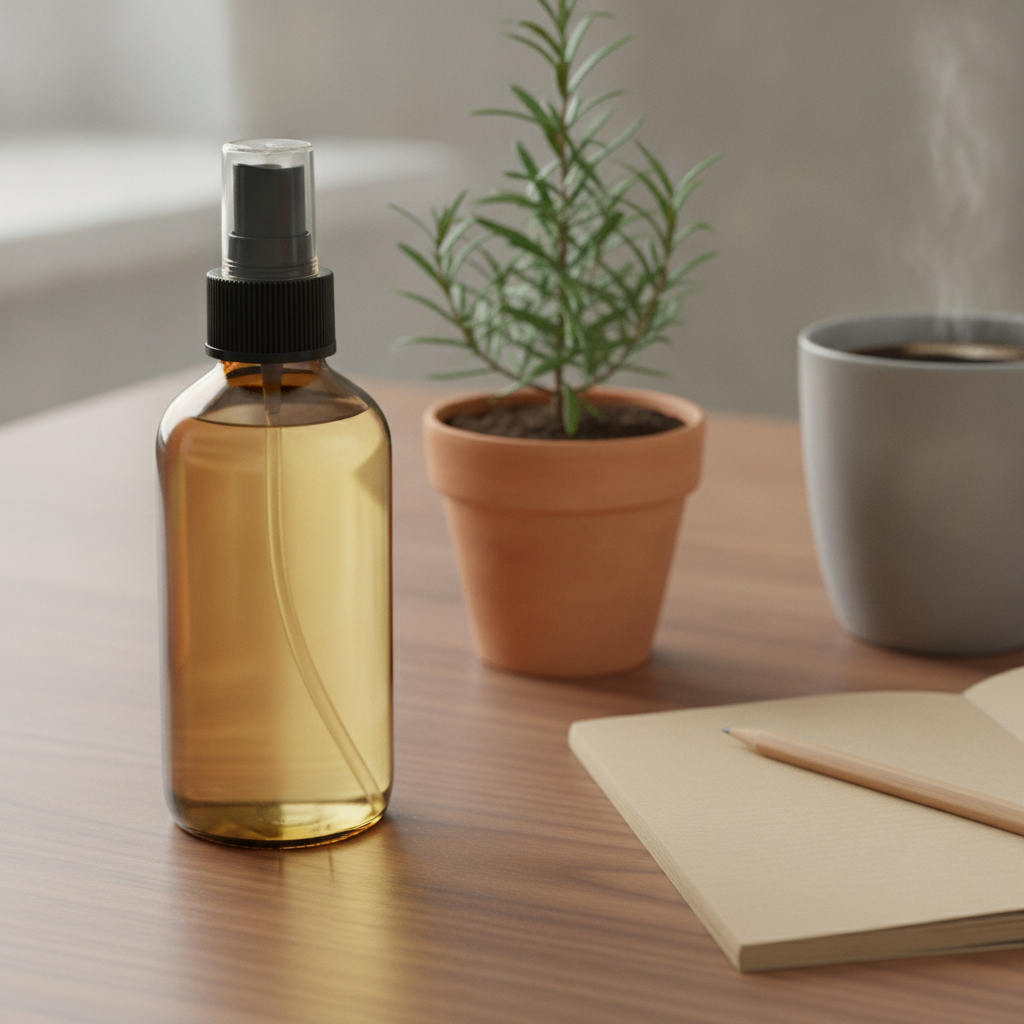
Rosemary is the focus spray, backed by direct EEG evidence. An inhalation study found that “increased beta activity following rosemary oil inhalation can be explained by enhanced alertness” (PMC3700080). That is a measurable brain-activity change tied to a single oil, and it lines up with rosemary’s centuries-old reputation as a “remembrance” herb. If you write at a desk, take exams, or code, this is the one to reach for at 9 a.m.
The scent character comes from two constituents. A peer-reviewed analysis indexed on PubMed (PubMed 21787731) reports “the major constituents of rosemary essential oil are 1,8-Cineole (26.54%) and α-Pinene (20.14%).” The 1,8-cineole overlap with eucalyptus is why rosemary reads camphorous and slightly medicinal, and the α-pinene delivers the pine-forest edge. Use 20 to 25 drops in a 4-ounce bottle so the air stays inhalable rather than sharp. Rosemary in flower also draws bees, which is a good excuse to plant a hedge outside the home-office window; the primer on pollinator gardens covers layout.
4. Is Eucalyptus Room Spray Safe for a Cold-Season Bedroom?
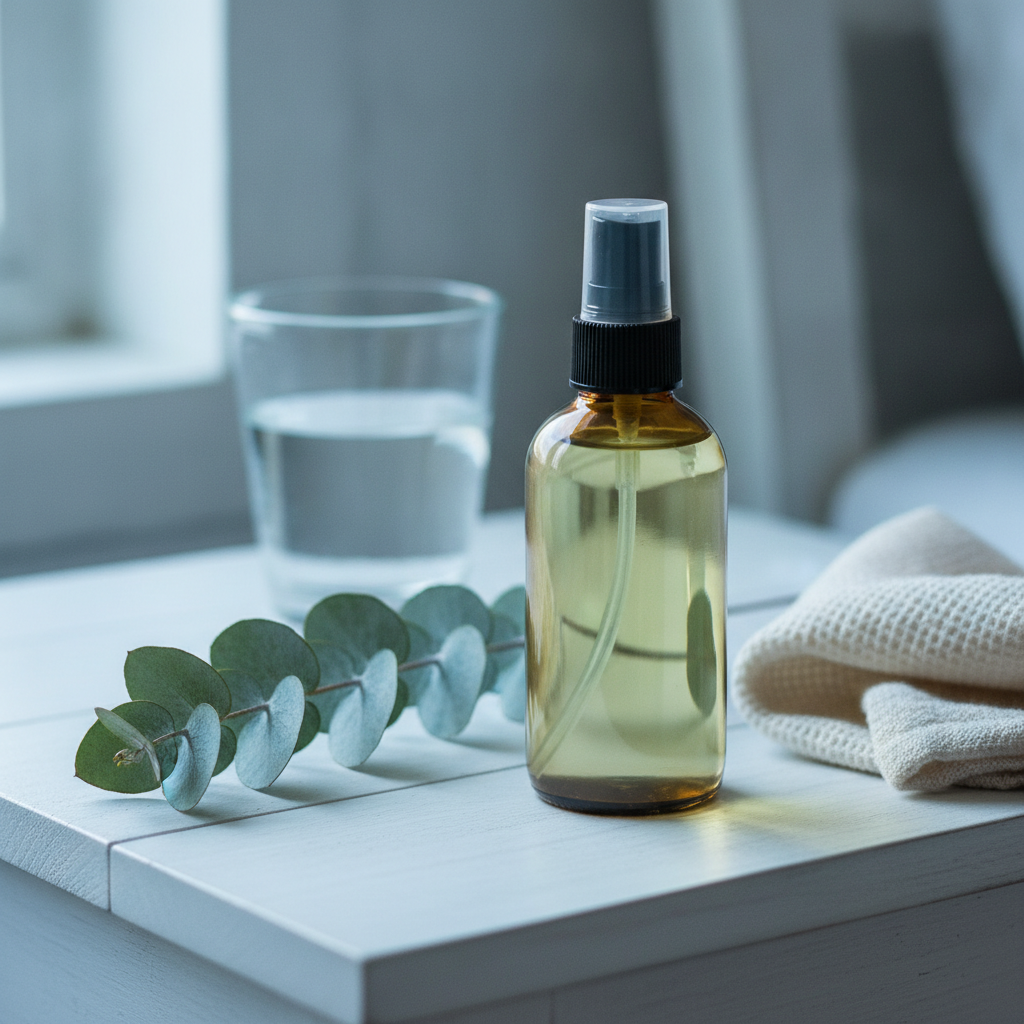
Eucalyptus is safe for adult bedrooms in short bursts and is the one to keep on hand during cold and flu season, with a real physiological basis. According to a 2020 pharmacology review in PMC (PMC7467491), “1,8-cineole (eucalyptol), the major constituent of eucalyptus species, is well known for its anti-inflammatory, antioxidant, bronchodilatory, antiviral and antimicrobial effects.” The same review notes that as an isolated compound, “1,8-cineole is known for its mucolytic and spasmolytic action on the respiratory tract, with proven clinical efficacy.” That is the science behind why a stuffy bedroom feels different after two mists.
The critical caveat is animals. The ASPCA lists eucalyptus as toxic to dogs, cats, and horses, with clinical signs including “salivation, vomiting, diarrhea, depression, weakness.” Do not use eucalyptus room spray in a room a pet sleeps in, and never mist bedding a cat naps on. In our house, eucalyptus lives in the guest bathroom and the master bedroom only, both of which the cats are shut out of overnight. Keep the concentration on the low end (15 drops in a 4-ounce bottle) if anyone in the house has asthma.
5. When Should You Reach for a Sweet Orange Room Spray?
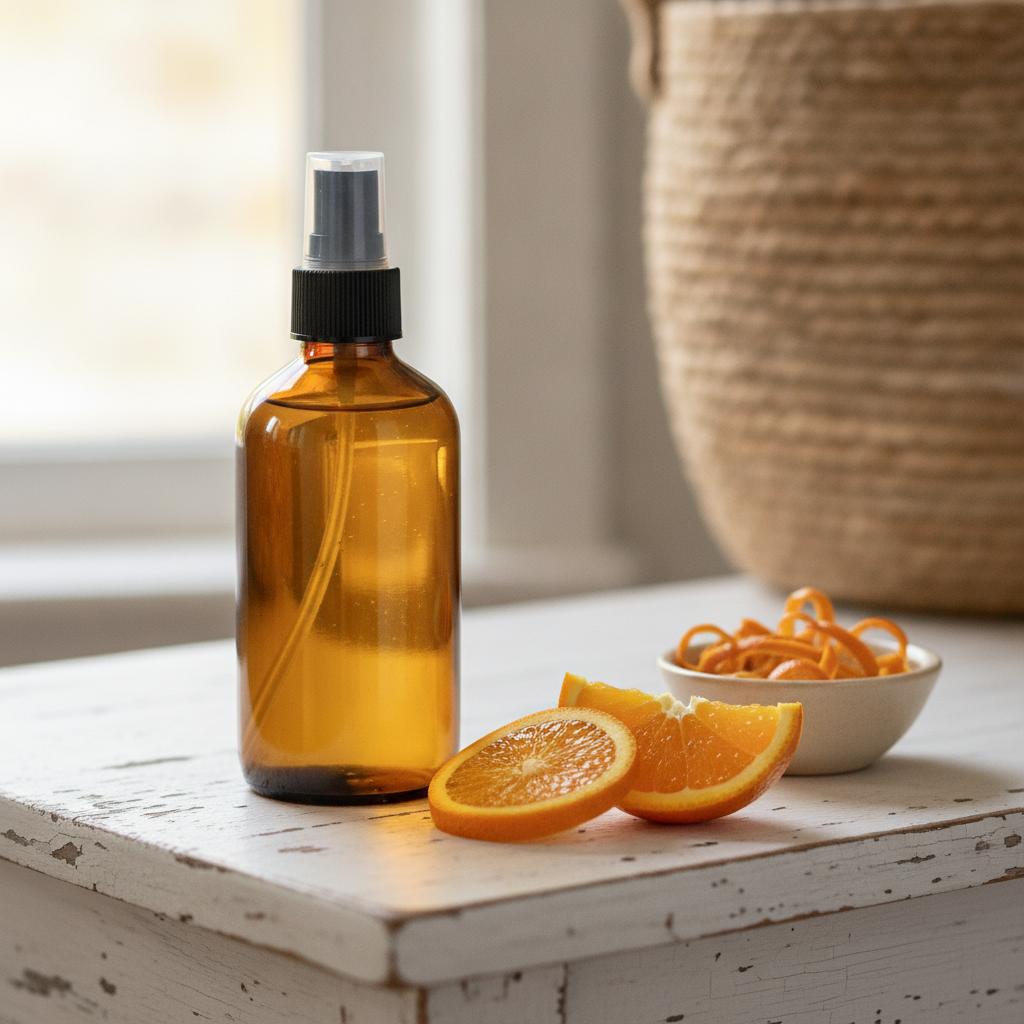
Sweet orange is the mood-lifter and the entryway spray, and there is animal-model evidence to back the folk reputation. In a chronic-stress mouse model, “limonene inhalation significantly restored CUMS-induced depressive behavior, hyperactivity of hypothalamic-pituitary-adrenal axis, and the decrease of monoamine neurotransmitter levels” (PubMed 30905156). Limonene carries the effect, and it is the workhorse compound in citrus oils: “limonene is the principal component of citrus essential oils, constituting between 37.05 and 72.52% of the mixture,” per a 2020 chemistry review indexed in PMC (PMC7154898).
Because sweet orange oil is inexpensive and low on the sensitization scale, it is the citrus I recommend to beginners. Reach for the spray on a gray February morning, after taking out compost, or after a house full of teenagers has left. Two caveats. Citrus oils can be phototoxic on skin (so this is a room spray, not a body spray), and cats metabolize citrus poorly, so keep the spray out of rooms your cat sleeps in. A backyard orange grove is aspirational in most of the U.S., but the homemade herbal tea blends guide covers dried peel uses.
The Base Recipe and Dilution Math for All Five Sprays
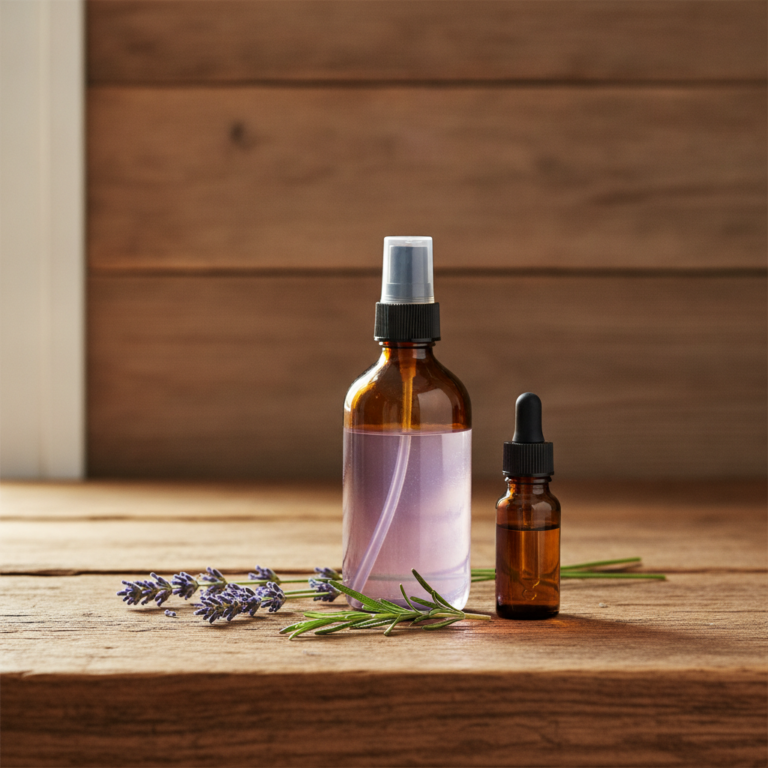
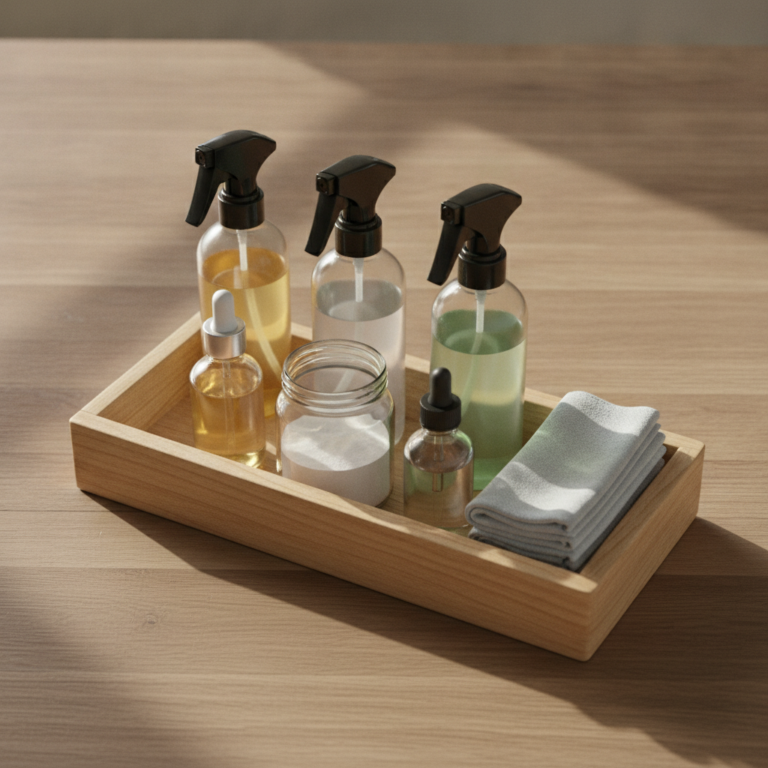
The recipe is the same across all five herbal room sprays: 3 fluid ounces of distilled water, 1 fluid ounce of witch hazel, and 15 to 30 drops of one essential oil, mixed in a 4-ounce amber glass spray bottle. Witch hazel is the solubilizer that keeps the oil from floating on top of the water, and distilled water is preferred over tap because it does not seed microbial growth. Shake before every use, and store in a cool, dark cupboard so the oil constituents do not oxidize.
The National Cancer Institute defines essential oils as “volatile liquid substances extracted from aromatic plant material by steam distillation or mechanical expression.” That is the baseline for a real essential oil versus a synthetic fragrance oil. Skip fragrance oils for room sprays; they carry the same VOC problem the Steinemann study documented. Below are the drop counts I settled on after seasonal testing.
| Spray | Drops per 4 oz | Best room | Time of day |
|---|---|---|---|
| Lavender | 25 | Bedroom | Evening |
| Peppermint | 20 | Kitchen, bathroom | Morning |
| Rosemary | 22 | Home office | Morning |
| Eucalyptus | 15 | Bedroom (cold season) | Bedtime |
| Sweet orange | 30 | Entryway, living room | Any |
Cleveland Clinic notes that with essential oils, “allergic reactions (sensitization) can often take 12 to 72 hours to appear,” so patch-test a fresh blend on your inner forearm three days before misting bedding. A finished spray keeps its scent about 3 to 4 months in dark storage. The raised-bed gardening starter is a natural next project if you want to grow your own peppermint or rosemary for tea and dried sachets.
What Should You Know Before Spraying Around Pets?
Full-strength essential oils are a real hazard to pets, and the roughly 0.6 to 1.25 percent dilution these sprays work out to — 15 to 30 drops in 4 ounces, at the standard 6-drops-per-ounce-per-percent conversion — does not solve the problem completely. According to the ASPCA, “in their concentrated form (100%), essential oils can absolutely be a danger for pets. Dogs and cats who have either walked through oils, gotten some on their coat or had oils placed directly on them can develop health concerns.” Cats are more vulnerable than dogs because they lack a liver enzyme that most mammals use to clear terpenes, which is why the caution is stronger in cat households.
The ASPCA’s practical guidance for diffusers applies here too: “using an oil diffuser for a short time period in a secured area, one that your dog or cat cannot access, is not likely to be an issue.” Translate that into three house rules. First, do not mist a room a pet naps in until the aerosol has settled, roughly 20 minutes. Second, skip eucalyptus, tea tree, wintergreen, and pennyroyal entirely if you have cats or birds. Third, never spray directly on pet bedding, blankets, or a cat tree.
Frequently Asked Questions
These are the questions we get most often from readers new to making their own herbal room sprays, answered with the safety and chemistry sources referenced above.
How long does a homemade herbal room spray last?
Roughly 3 to 4 months if stored in a dark cupboard between uses, and 6 to 8 weeks if it lives on a sunny windowsill. Witch hazel provides mild preservative action because of its alcohol content, but essential oil constituents like linalool and 1,8-cineole oxidize under UV light. That oxidation weakens the scent and can increase skin sensitization risk. Shake before every use, and toss any spray that smells “off” or looks cloudy.
Can I substitute vodka for witch hazel?
Yes. High-proof vodka (80 proof or higher) works as a solubilizer at the same 1-ounce ratio, and it can extend shelf life to about 6 months. The tradeoff is a stronger “boozy” note in the first 10 seconds of the spray before it evaporates. Witch hazel is my default because it is odorless once dry. Skip rubbing alcohol; the denaturants smell wrong for a bedroom or kitchen spray.
Are homemade herbal room sprays safe during pregnancy?
Some are, some are not. Lavender and sweet orange are the two beginner sprays most often flagged as low-risk during pregnancy when used as light room aromatherapy. Peppermint, rosemary, and eucalyptus are frequently on “use with caution or avoid” lists during pregnancy and breastfeeding. Check with your OB or midwife before adding any oil to a bedroom that a pregnant person sleeps in, especially in the first trimester.
Do I really need distilled water, or is tap water fine?
Distilled or filtered water is meaningfully better. Tap water carries microbes and dissolved minerals that shorten shelf life and can leave visible spots on dark fabrics. A gallon of distilled water costs about a dollar at a grocery store and refills roughly 30 four-ounce sprays. If distilled is impossible, boil tap water for 5 minutes and cool it fully before mixing your spray.
Can I combine two essential oils in one bottle?
Yes. Beginner-friendly pairings include lavender plus sweet orange (a “sleepy citrus” bedroom blend) and rosemary plus peppermint (a “focus” office blend). Keep total drops at or under 30 in a 4-ounce bottle so the mist stays inhalable rather than sharp. When in doubt, start with 15 drops of your primary oil and 10 drops of your secondary, then adjust after a week of use.
What is the FDA position on these sprays?
According to the FDA, “there is no regulatory definition for ‘essential oils,'” and the law treats plant-derived ingredients the same as any other. A fragrance marketed with sleep or health claims (a spray promising to “help you sleep,” for example) meets the FDA’s definition of a drug. That means these homemade sprays are yours to make and use, but do not sell them with health claims unless you want to attract FDA scrutiny.
Which Herbal Room Spray Should You Make First?
Start with lavender. It has the strongest safety data (that 2023 systematic review of 11 clinical trials found inhaled lavender to be a “safe and feasible anxiolytic intervention”), the widest room use, and the most forgiving scent profile if you overdo the drop count. Buy a 4-ounce amber bottle, a 15-milliliter bottle of therapeutic-grade lavender essential oil, a small jug of witch hazel, and a gallon of distilled water. Total cost is under twenty dollars, and that is enough supplies for six months of refills. Once your lavender spray is working, add peppermint (kitchen and bathroom) and sweet orange (entryway) to the rotation. Save rosemary and eucalyptus for a specific need: rosemary for focused-work days, eucalyptus for cold season. Label every bottle with a permanent marker and the date, and rotate stock every 3 to 4 months. The goal is not to fill your house with scent. It is to replace one commercial aerosol at a time with something whose ingredients you actually know.