Companion Planting Guide: What to Grow Together (and What to Keep Apart)
A note on the science: Most companion planting lore is traditional and anecdotal. The pairings below are widely recommended and practiced, but they have varying levels of scientific support. Some: like the Three Sisters nitrogen-fixation mechanism, or marigolds suppressing nematodes when grown as a dense pre-crop, are well-documented in peer-reviewed research. Others (basil improving tomato flavor, for example) remain plausible but lack rigorous controlled-trial evidence. We flag the stronger evidence-based claims throughout and note where University of Minnesota Extension and Mississippi State Extension say the research is thin. Treat companion planting as a useful framework refined by centuries of observation, not as settled science.
- The Three Sisters (corn, beans, squash) is the best-documented companion system, beans genuinely fix nitrogen for corn, per USDA NAL.
- Marigolds suppress root-knot and lesion nematodes, but only when grown as a solid pre-crop for at least two months before vegetables, not intercropped. See UF/IFAS Extension ENY-056.
- Basil + marigolds + tomatoes has research evidence for reducing thrips in tomato crops (Mississippi State Extension).
- Keep fennel away from everything, it is widely observed to inhibit nearby plants.
- Many popular claims (marigolds repelling Colorado potato beetles, flea-beetle deterrence) are not supported by controlled research.
I planted fennel near my raised beds for three seasons before I figured out why the tomatoes closest to it always sulked. Pulled it, moved it to a corner of the yard well away from everything else, and that corner is where it lives now, beautiful and completely isolated. Some of the old rules exist because someone actually paid the price to learn them.
Companion planting is the practice of growing certain plants together because they help each other out, by repelling pests, attracting beneficial insects, improving flavor, providing shade or support, or enriching the soil. It is one of the oldest gardening techniques, and some of its principles are on solid scientific ground. Others are pure folklore. This guide flags which is which.
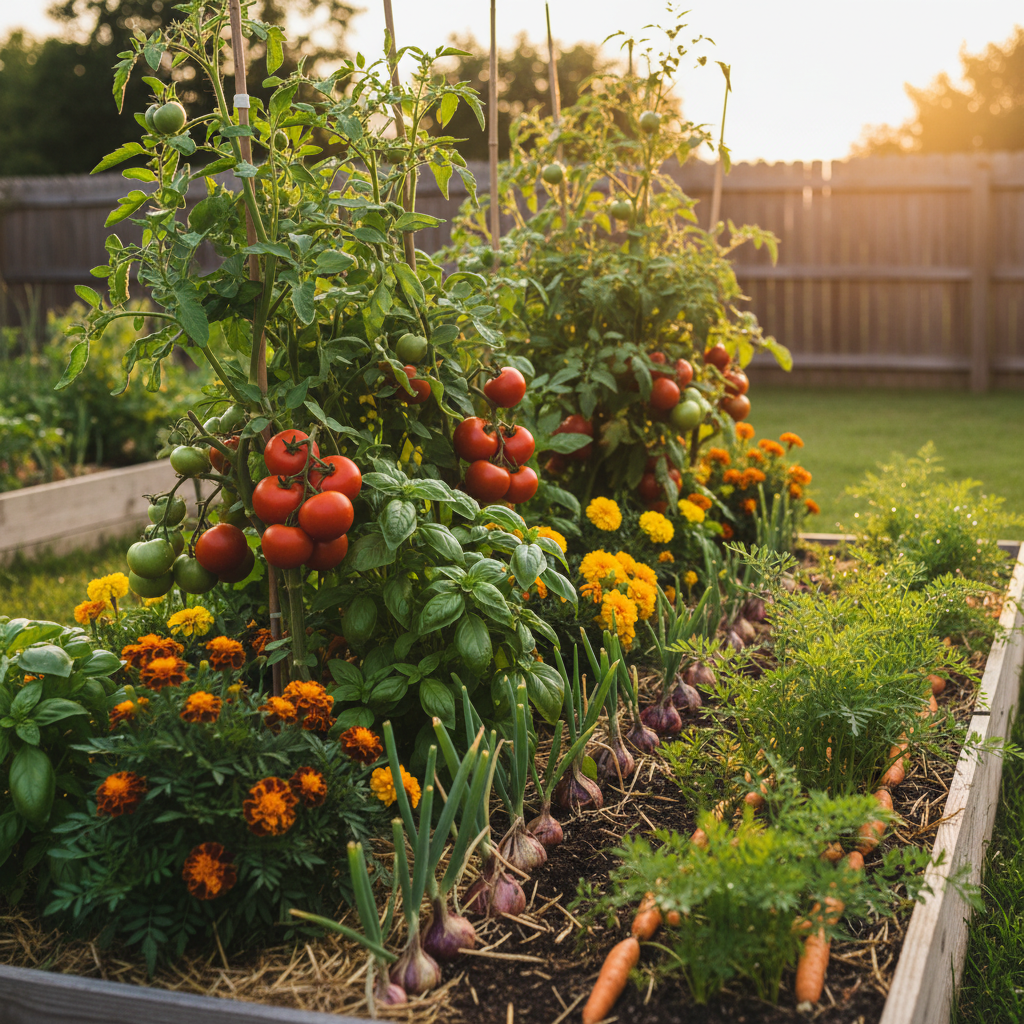
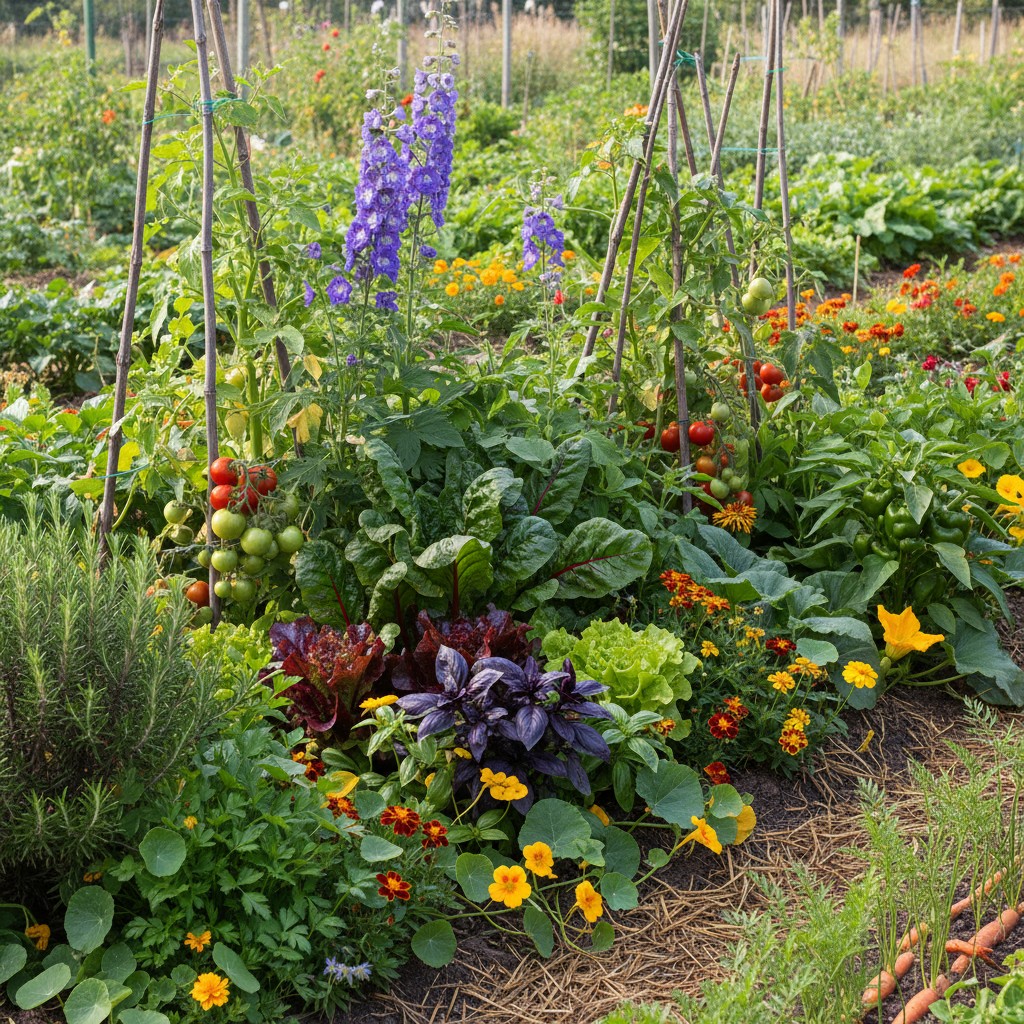
In my own garden, I have seen the difference firsthand. The year I started interplanting marigolds and basil with my tomatoes, my aphid problems dropped dramatically. Companion planting is not magic, but the results can feel pretty magical, especially when you stack the techniques that actually have evidence behind them.
🌱 From Our Homestead
The year I started interplanting basil with our tomatoes and marigolds along every bed border, our pest problems dropped noticeably. Now companion planting is the first thing I plan before I even order seeds.
What Are the Best Companion Planting Combinations?
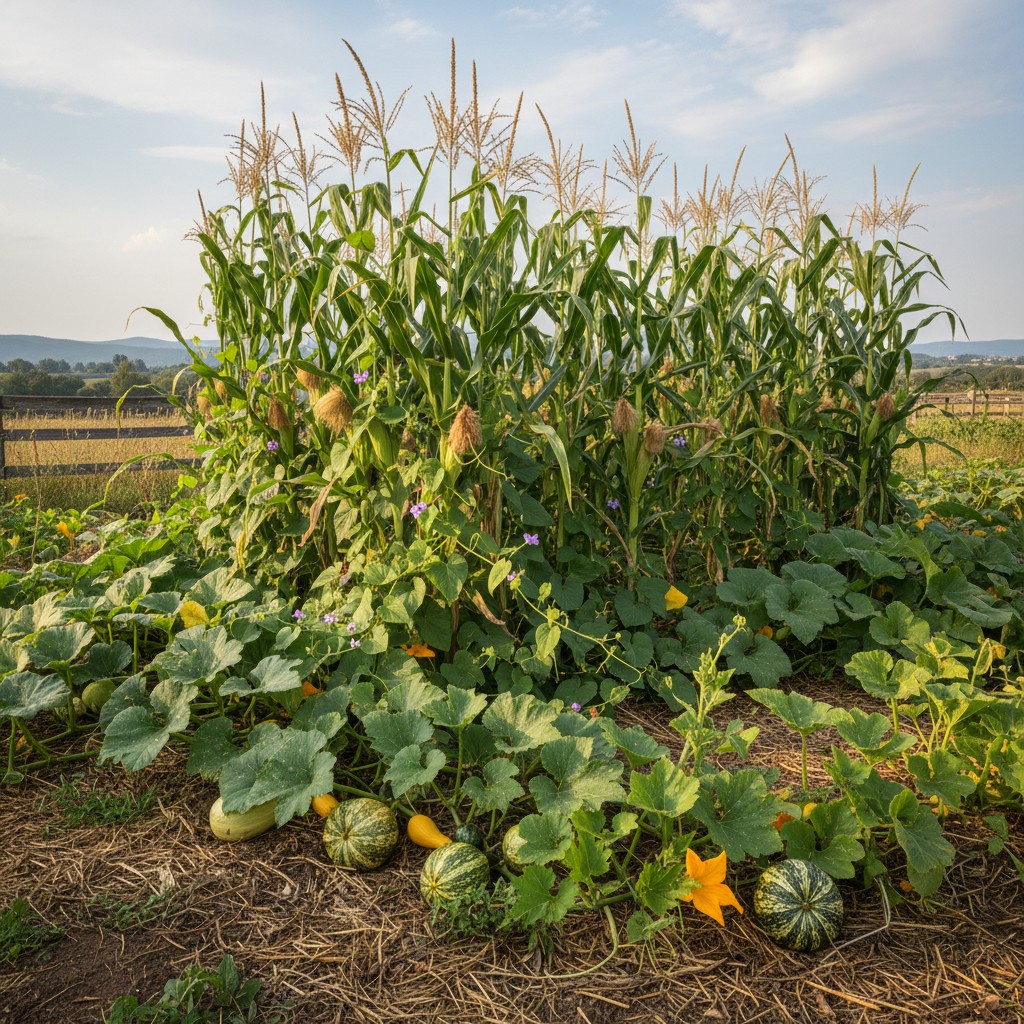
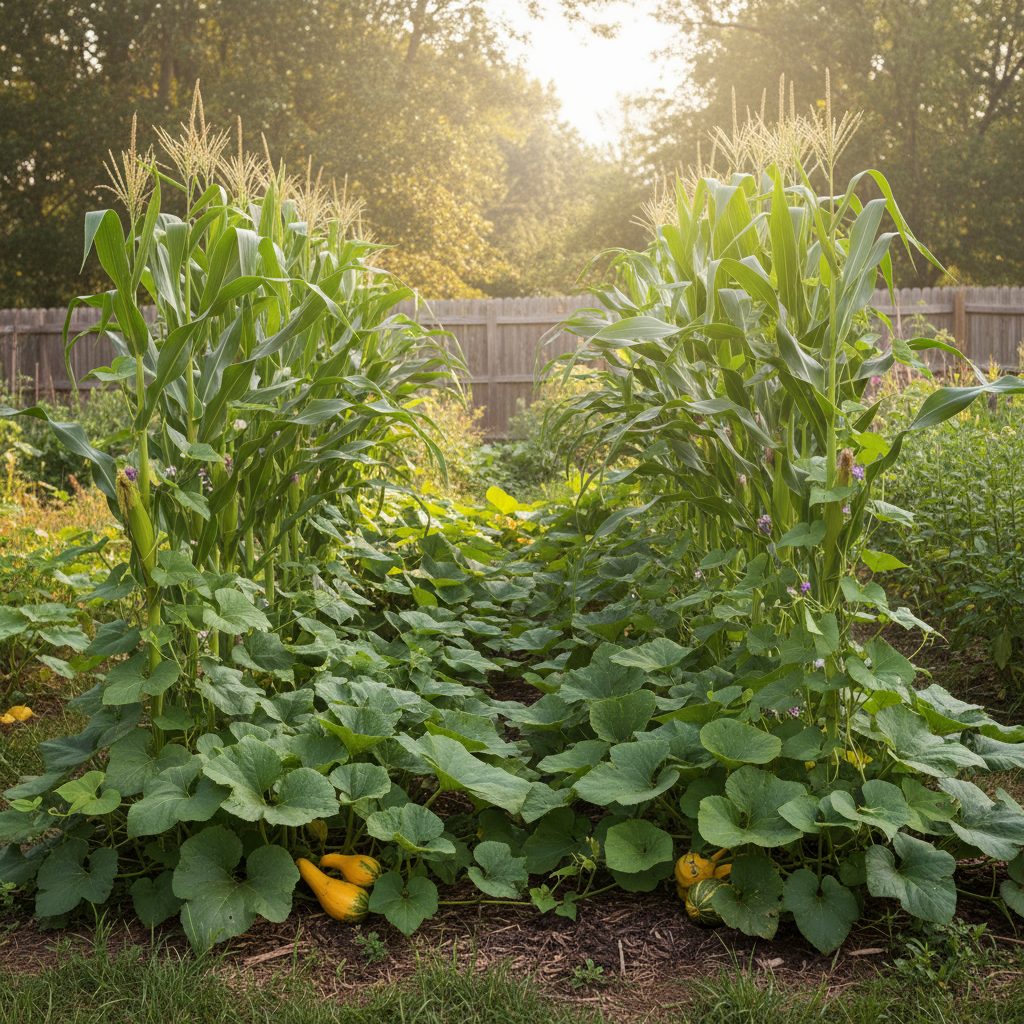
The Three Sisters (corn, beans, squash) is the most famous companion planting system, and one of the few with clear, mechanistic scientific support.
The Three Sisters: Corn, beans, and squash. The corn provides a trellis for beans to climb, beans fix nitrogen in the soil for the corn, and squash spreads along the ground shading out weeds and retaining moisture. According to the USDA National Agricultural Library, “beans naturally absorb nitrogen from the air and convert it to nitrates, fertilizing the soil for the corn and squash,” and “the squash leaves provide ground cover between the corn and beans, preventing weeds from taking over the field.” This system has been used by Indigenous peoples of the Americas for centuries, and is one of the clearest examples of documented polyculture benefit in agricultural research.
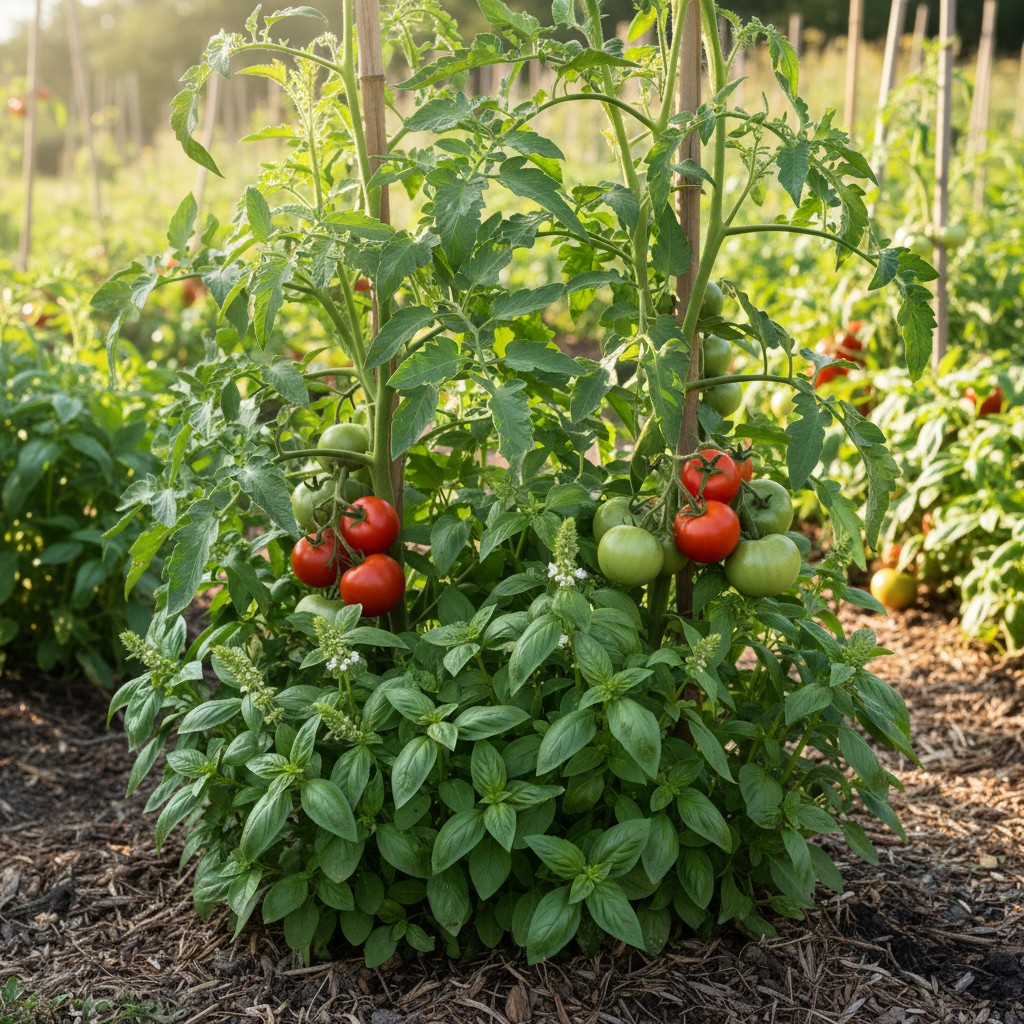
Tomatoes, basil, and marigolds: This is the combination with the strongest research backing among home-garden companion plantings. According to Mississippi State University Extension, research found “basil and marigolds together reduced thrip populations in greenhouse-grown and field-grown tomatoes.” The traditional claim that basil improves tomato flavor is less well-supported, it remains plausible but has not been rigorously tested. Either way, the trio is a sound planting choice.
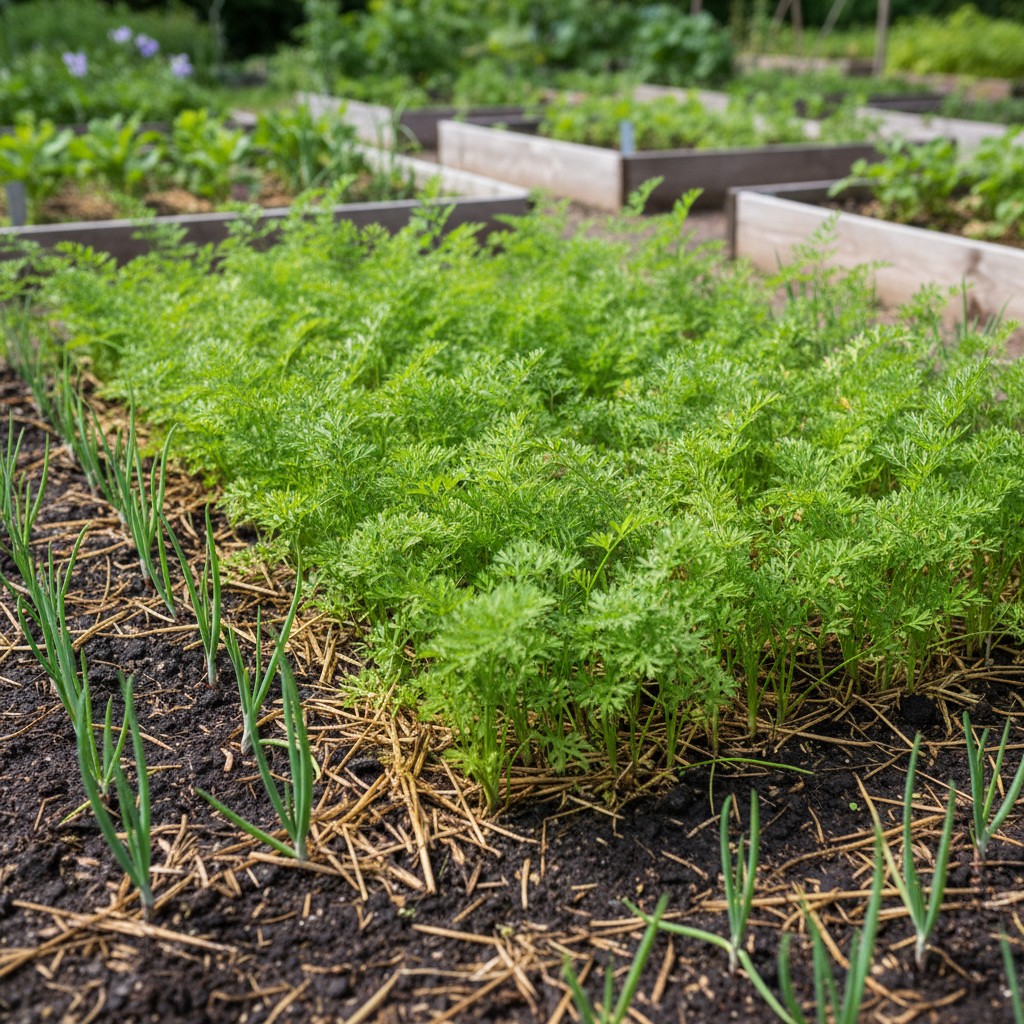
Carrots and onions: The traditional claim is that the scent of onions confuses carrot flies and the scent of carrots repels onion flies. This pairing is widely recommended but has mixed experimental support; results in controlled trials have been inconsistent. It’s a reasonable planting choice with low risk either way, try it and observe. Grow both alongside your garlic if you have room.
Lettuce and tall crops: Lettuce bolts in hot sun. Plant it in the shade of taller crops like tomatoes, corn, or sunflowers for a longer harvest of tender greens. This isn’t really “companion planting” in the pest-deterrence sense, it’s space and microclimate management, but the benefit is real and easy to reproduce.
Legumes as living cover: Mississippi State Extension notes that “planting legumes as a cover crop or underneath another crop can help reduce fertilizer needs.” Underplanting beans or peas with heavier feeders like corn or brassicas is a scientifically supported practice that translates directly to lower input costs.
How to Actually Use Marigolds for Nematode Control
Marigolds genuinely suppress plant-parasitic nematodes, but the way most gardeners use them doesn’t work. This is the single most misunderstood claim in companion planting, so it’s worth spelling out the research clearly.
University of Florida IFAS Extension (publication ENY-056) summarizes decades of research: “Marigold can suppress 14 genera of plant-parasitic nematodes, with lesion nematodes (Pratylenchus spp.) and root-knot nematodes (Meloidogyne spp.) the most affected.” The active mechanism is a compound called alpha-terthienyl, released from living marigold roots, which is “nematicidal, insecticidal, antiviral, and cytotoxic.”
The catch is the planting protocol. Per UF/IFAS: “Marigold should be planted at least two months before the desired vegetable crop and must be planted at the same site in which the vegetable crop will be planted.” Row and plant spacing must be “less than 7 inches”, dense enough that the roots fully colonize the soil. And critically: intercropping a few marigolds with your tomatoes does not work. The roots don’t cover enough soil volume to affect the nematode population.
If you have a nematode problem, the research-backed protocol is: dedicate a bed to marigolds (French or African, Tagetes patula or T. Erecta) for a full two-month growing stretch, keep them spaced no more than 7 inches apart, then till them in and plant your vulnerable crop (tomatoes, peppers, okra) the same season. University of Minnesota Extension cautions that broader claims, marigolds repelling Colorado potato beetles or flea beetles, are not supported: “multiple studies have shown this to be untrue.” Use marigolds for nematodes, not as a general insect repellent.
Which Plants Should Never Be Neighbors?
Some plants actively inhibit each other’s growth through chemical compounds or nutrient competition. Here are the key pairings to avoid:
- Tomatoes and brassicas (broccoli, cabbage, cauliflower), they compete for nutrients and can stunt each other (widely observed, moderate research support)
- Beans and onions/garlic, alliums are often reported to inhibit the growth of beans, though evidence is mixed; plant separately to be safe
- Fennel and almost everything, fennel releases allelopathic compounds that inhibit the growth of most garden plants. This is one of the best-documented negative-companion effects. Give fennel its own spot.
- Dill and carrots, they are in the same family and can cross-pollinate, plus mature dill may inhibit carrot growth
- Potatoes and tomatoes, both are Solanaceae and susceptible to the same blights; planting them together compounds disease risk. Rotate locations as well, not just spacing.
| Plant | Good Companions | Bad Companions | Evidence Level |
|---|---|---|---|
| Tomatoes | Basil, carrots, marigolds | Brassicas, fennel, potatoes | Basil+marigold thrip reduction: strong |
| Beans | Corn, squash, carrots | Onions, garlic, fennel | Three Sisters N-fixation: strong |
| Carrots | Onions, lettuce, rosemary | Dill, fennel | Traditional; mixed research |
| Lettuce | Tall crops, radishes, herbs | None significant | Microclimate; strong |
| Strawberries | Borage, thyme, lettuce | Brassicas, fennel | Mostly traditional |
Which Flowers Belong in Every Vegetable Garden?
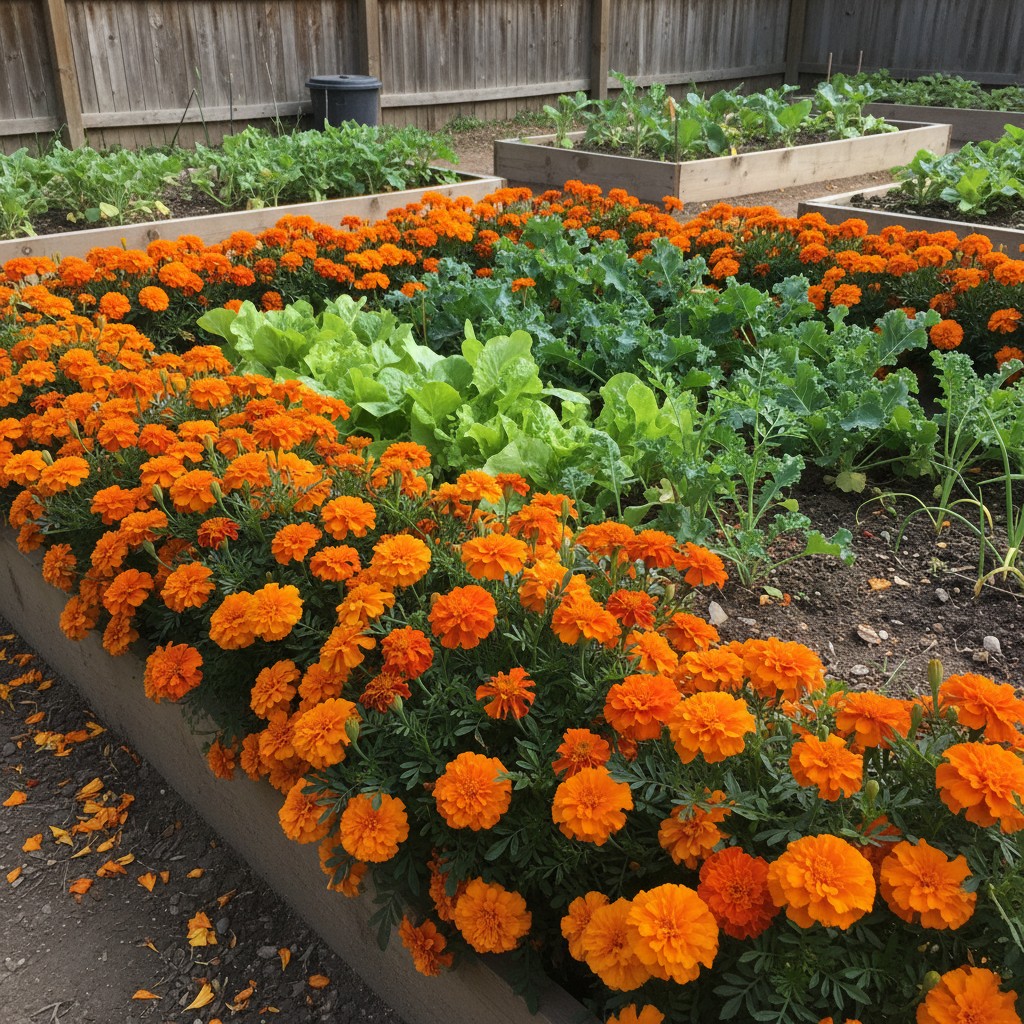
Marigolds, nasturtiums, sunflowers, and borage are four widely recommended companion flowers, each with different levels of scientific support.
Marigolds have well-documented nematicidal effects when used as a pre-crop (see the section above) and moderate research support for reducing thrips in tomatoes when paired with basil. Their general reputation as an “all-purpose” pest repellent is not supported by controlled research, but if you have nematode-prone soil, they are a genuinely useful tool.
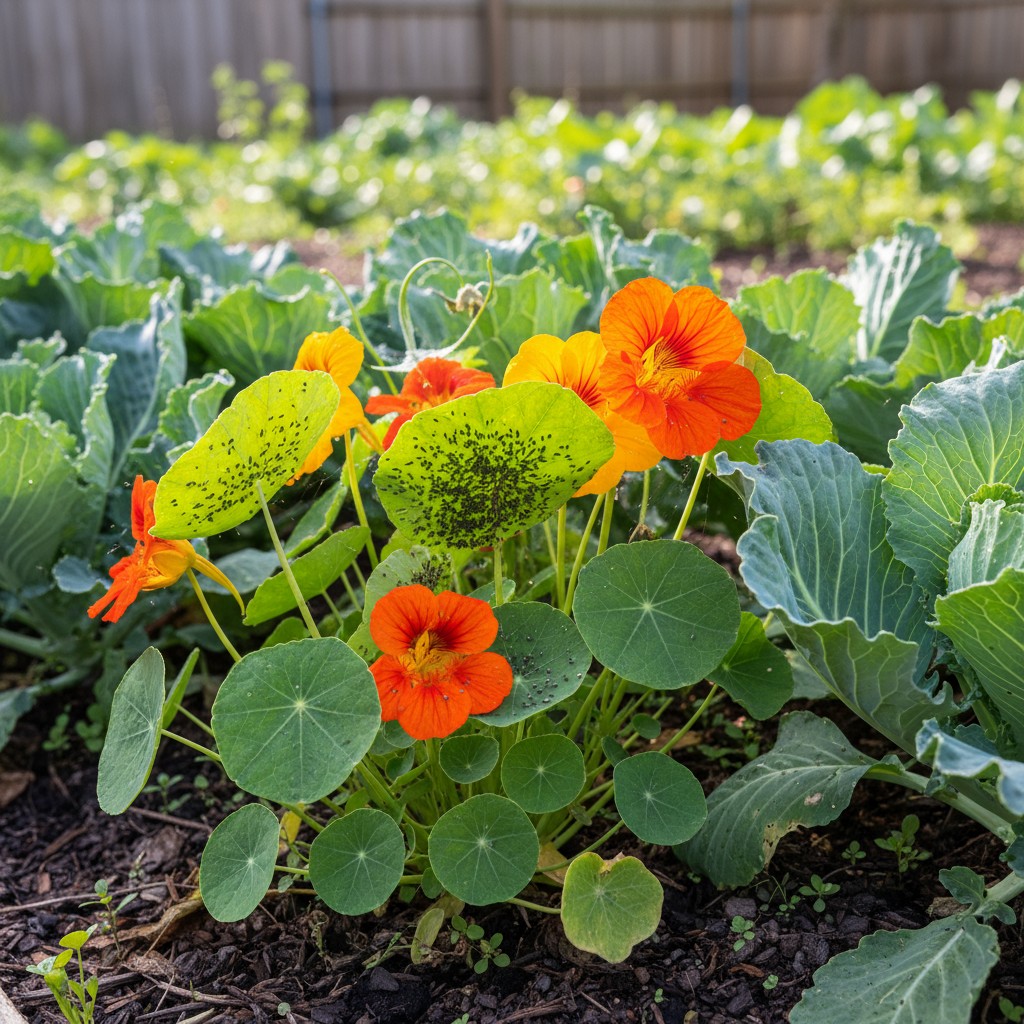
Nasturtiums are the best-documented trap crop in the home garden. Aphids and some cabbage-family pests strongly prefer them over brassicas and tomatoes, which means they draw pests away from your food. This is a mechanism, pest preference, that has held up well in trials.
Sunflowers attract pollinators and provide natural trellises for climbing beans. The pollinator-attraction effect is real; the “improves soil” claim is weaker. Be aware that sunflowers are mildly allelopathic, their hulls and decaying roots can suppress some nearby plants, so plant them at a garden edge or rotate after harvesting.
Borage attracts bees prolifically, this is well documented and easy to observe. The claim that borage improves tomato and strawberry growth specifically is traditional rather than research-proven, but the pollinator benefit alone makes it worth growing. For deeper pollinator support, see our beekeeping guide.
Companion planting is not an exact science, it is part tradition, part observation, and part experimentation. Try combinations, see what works in your garden, and keep notes. Intercropping and diversification generally do reduce pest pressure in research, even when specific plant-pair claims don’t hold up. Pair companion planting with natural pest control for the healthiest garden possible.
Frequently Asked Questions
Further Reading: The Best Evidence-Based Guide
For a deeper, science-grounded look at companion planting, the current best synthesis is Plant Partners: Science-Based Companion Planting Strategies for the Vegetable Garden by Jessica Walliser (Storey Publishing, 2020). Walliser, a horticulturist and co-host of The Organic Gardener Podcast, cites primary research for every pairing she covers and is careful to distinguish robust findings from folk tradition. It is the most rigorous and readable guide to the topic currently available, and it will change how you think about garden diversity.
A: Both. Some principles: the Three Sisters nitrogen fixation, legume cover cropping, trap cropping with nasturtiums, and marigolds as a pre-crop for nematodes, have clear research support. Others, like marigolds repelling Colorado potato beetles or flea beetles, have been tested and disproven. Think of companion planting as a mix of well-documented mechanisms and practical observations, not a single validated science.
A: For pollinator and trap-cropping benefits, within 2–3 feet is generally effective. For the Three Sisters, plant corn, beans, and squash within the same mound or bed. For marigold nematode suppression, the research-tested spacing is less than 7 inches between plants in a dense solid stand.
A: Absolutely. Raised beds are actually ideal because you have more control over spacing and soil. Interplant flowers with vegetables throughout the bed and dedicate a bed to marigolds as a pre-crop if nematodes are a concern in your area.
A: Tomatoes, basil, and marigolds. All three are easy to grow, widely available, and the basil+marigold thrip reduction is one of the more rigorously supported pairings, per Mississippi State Extension.
A: Specifically paired with basil, yes, research shows they reduce thrip populations. As a general-purpose insect repellent, no; studies have not supported the broader pest-repellent reputation. For nematode-prone soil, grow a full marigold pre-crop for two months before planting tomatoes, that’s the protocol with research behind it.