Growing Raspberries and Blackberries at Home
Key Takeaways
- Understanding the difference between floricanes (second-year fruiting canes) and primocanes (first-year canes) is what makes proper pruning, get this right and everything else falls into place.
- Everbearing (primocane-fruiting) varieties produce fruit on first-year canes, making pruning dramatically simpler: just mow the whole patch to the ground in late winter.
- Both raspberries and blackberries spread aggressively via underground suckers. Plan for containment from the start, or you’ll be fighting them for years.
- A simple two-wire trellis system keeps canes upright, improves air circulation, and makes harvesting much easier.
- A well-maintained raspberry or blackberry patch can produce for 15–20 years and yield 1–2 quarts per plant annually, one of the best returns per square foot of any fruit crop.
Raspberries and blackberries are some of the best
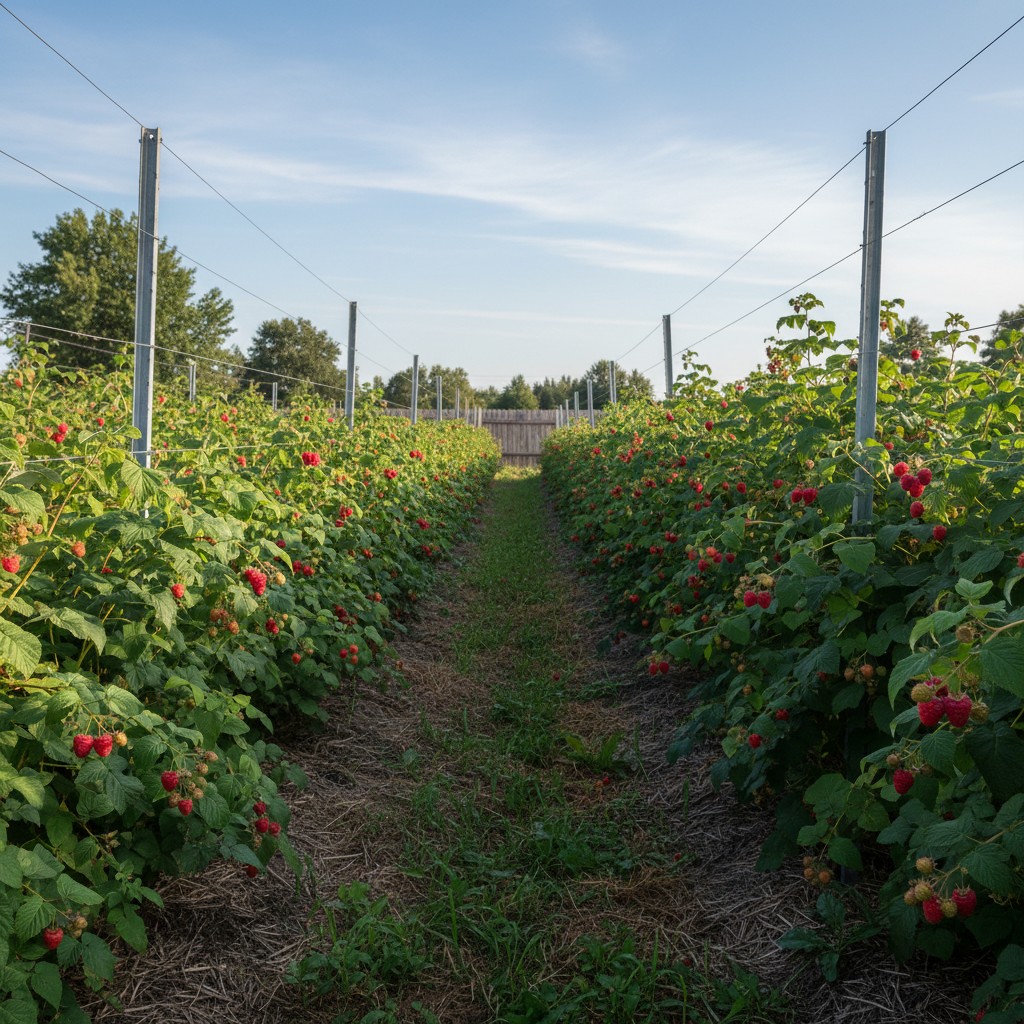
The raspberry canes along my back fence have been producing since 2017, and the biggest mistake I made in year two was leaving too many canes standing after the fall harvest. That spring they were so tangled and crowded that air barely moved through the middle of the patch, and I lost a good portion of the canes to cane blight. Thinning ruthlessly in late winter has been the fix ever since.
fruit crops for home growers, and I’ll argue they’re underplanted. Compare them to fruit trees: a bramble patch starts producing the year after planting, needs a fraction of the space, requires no grafting expertise, and can be expanded for free from its own suckers. A dozen raspberry plants along a fence line can produce 15–25 quarts of berries per season. At retail prices for fresh raspberries, that’s several hundred dollars worth of fruit from a planting that takes up a few feet of garden edge.The challenge isn’t growing them, brambles are vigorous almost to a fault. The challenge is managing them well. Pruning, specifically, is where most home growers get confused. Once you understand the lifecycle of a bramble cane, the pruning logic clicks into place and the whole operation becomes straightforward.
🌱 From Our Homestead
Our raspberry patch started with five bare-root canes stuck along the back fence. By the third summer, the kids were picking berries by the bowlful every evening, we froze over 20 quarts and still could not keep up with what the canes produced.
Understanding the Cane Lifecycle
This is the most important concept in bramble growing, so let’s get it clear before anything else.
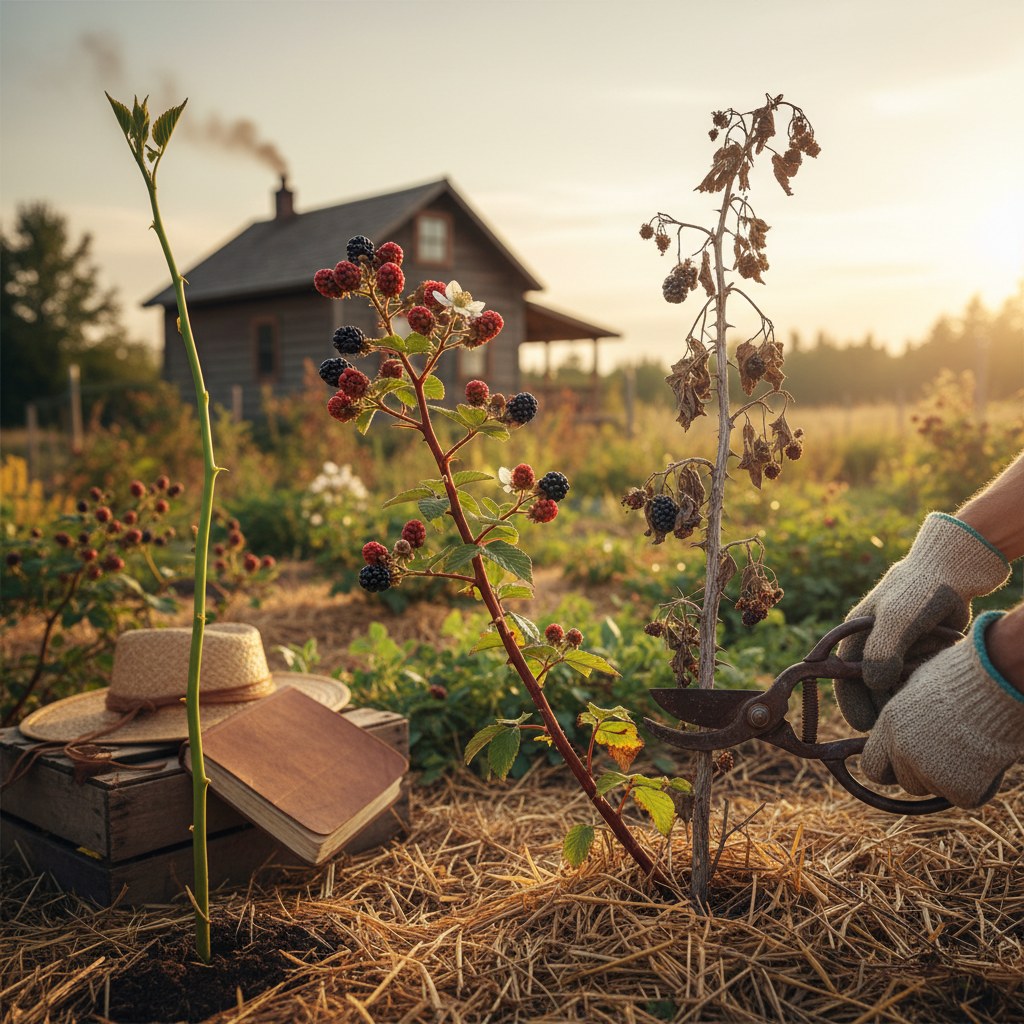
Raspberry and blackberry plants are perennial, the root system lives indefinitely. But individual canes are biennial. Each cane lives for exactly two years.
- Year 1: Primocane: A new cane emerges from the root system in spring. It grows vigorously all summer, developing leaves but (in traditional summer-bearing varieties) no fruit. By fall, the primocane is mature and goes dormant for winter.
- Year 2. Floricane: That same cane wakes up in spring, produces lateral branches, flowers, and fruits. After fruiting in summer, the floricane dies. Its job is done.
Meanwhile, new primocanes are growing from the roots right alongside the fruiting floricanes. So at any given time during the growing season, your bramble patch has both primocanes (this year’s new growth, next year’s fruiters) and floricanes (last year’s growth, this year’s fruiters) growing together.
Everbearing varieties (more accurately called primocane-fruiting) break this pattern. They produce fruit on first-year canes, typically in late summer or fall. This changes the pruning approach significantly, which we’ll cover below.
Choosing Between Raspberries and Blackberries
Raspberries
Raspberries are slightly more cold-hardy than blackberries, with most varieties thriving in zones 3–8. They come in red, yellow (golden), black, and purple types. Red raspberries are the most popular and easiest to grow.
- Heritage: The gold standard everbearing red raspberry. Produces a large fall crop on primocanes and a smaller summer crop on floricanes if you don’t prune them to the ground. Reliable, productive, widely adapted. Hardy to zone 3.
- Caroline: An everbearing variety with larger berries and better flavor than Heritage, though slightly less cold-hardy.
- Latham: A summer-bearing red raspberry that’s extremely cold-hardy (zone 2). Moderate berry size but very reliable in harsh climates.
- Anne: An everbearing golden raspberry with exceptional sweetness. Yellow raspberries have a different flavor profile, more aromatic, less tart. Kids tend to love them.
- Jewel: A popular black raspberry with intense flavor, excellent for jams and baking. Black raspberries grow differently from reds, they form arching canes that tip-root rather than suckering.
Blackberries
Blackberries are generally better suited to zones 5–9, though breeding has expanded their range. They produce larger berries with a distinct, bolder flavor. Modern thornless varieties have made blackberry growing much more pleasant.
- Triple Crown: Thornless, semi-erect, with enormous berries and outstanding flavor. Among the most popular home garden blackberries. Zones 5–9.
- Ouachita. Thornless, erect canes that need less trellising. Heavy producer with good disease resistance. Zones 5–9.
- Chester: Thornless, late-season, very productive. Good cold hardiness for a blackberry (zone 5).
- Prime-Ark Freedom. A primocane-fruiting (everbearing) thornless blackberry. Produces on first-year canes, which is relatively unusual for blackberries. Zones 5–9.
Planting
Site Selection
Full sun (6–8 hours minimum), well-drained soil, and good air circulation. Brambles are susceptible to root rot in waterlogged soil. Avoid low spots where cold air and water collect.
Don’t plant brambles where tomatoes, peppers, eggplant, or potatoes grew in the past 3–4 years. These crops can harbor Verticillium wilt, which also affects brambles.
Planting Technique
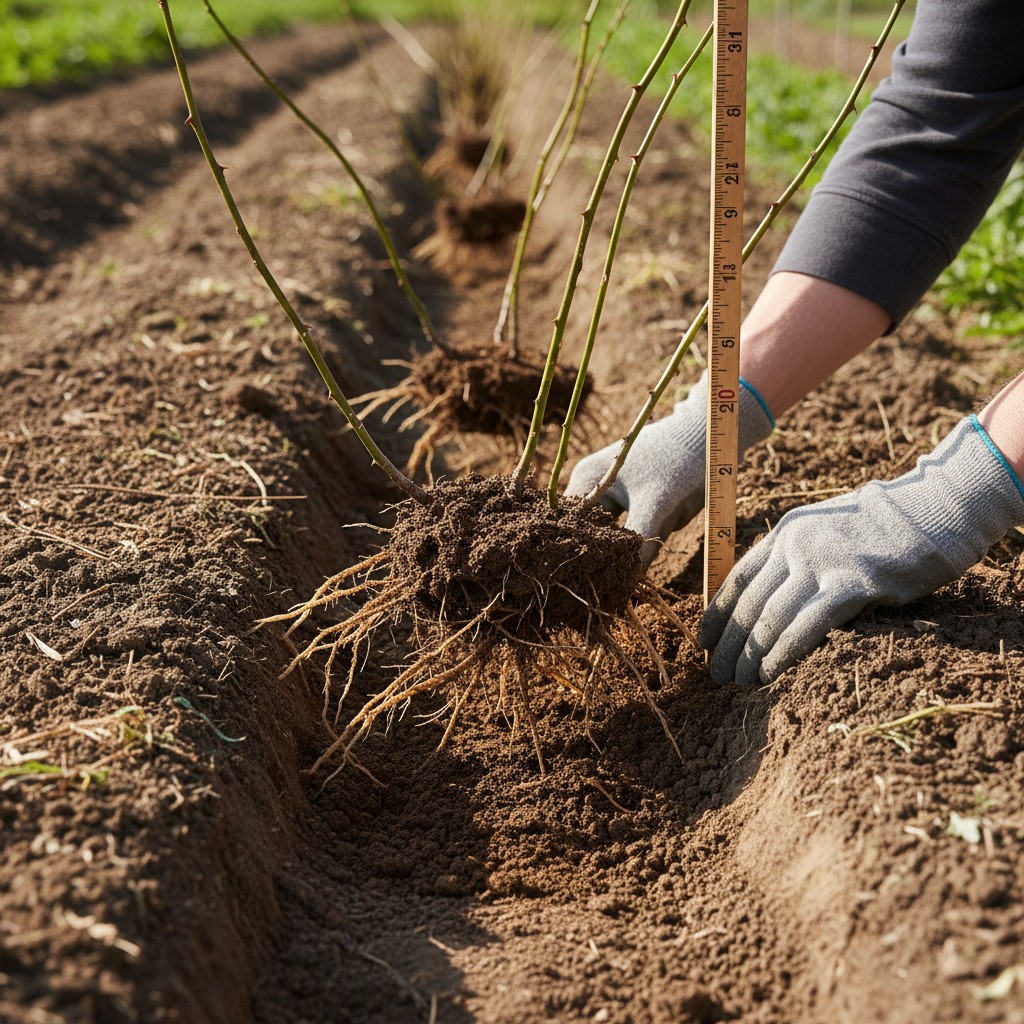
Plant bare-root canes in early spring as soon as the ground can be worked. Space red raspberries 2–3 feet apart in rows, with rows 6–8 feet apart. Blackberries need a bit more room, 3–4 feet between plants.
- Dig a hole wide enough to spread the roots without bending them.
- Set the plant so the crown (where roots meet stem) is at soil level or just slightly below.
- Backfill with native soil amended with compost.
- Water deeply.
- Cut the cane back to 6 inches tall. I know this feels wrong, you just planted a nice cane and now you’re cutting it down. But this forces energy into root establishment and new cane production from the base, which sets up a much stronger patch long-term.
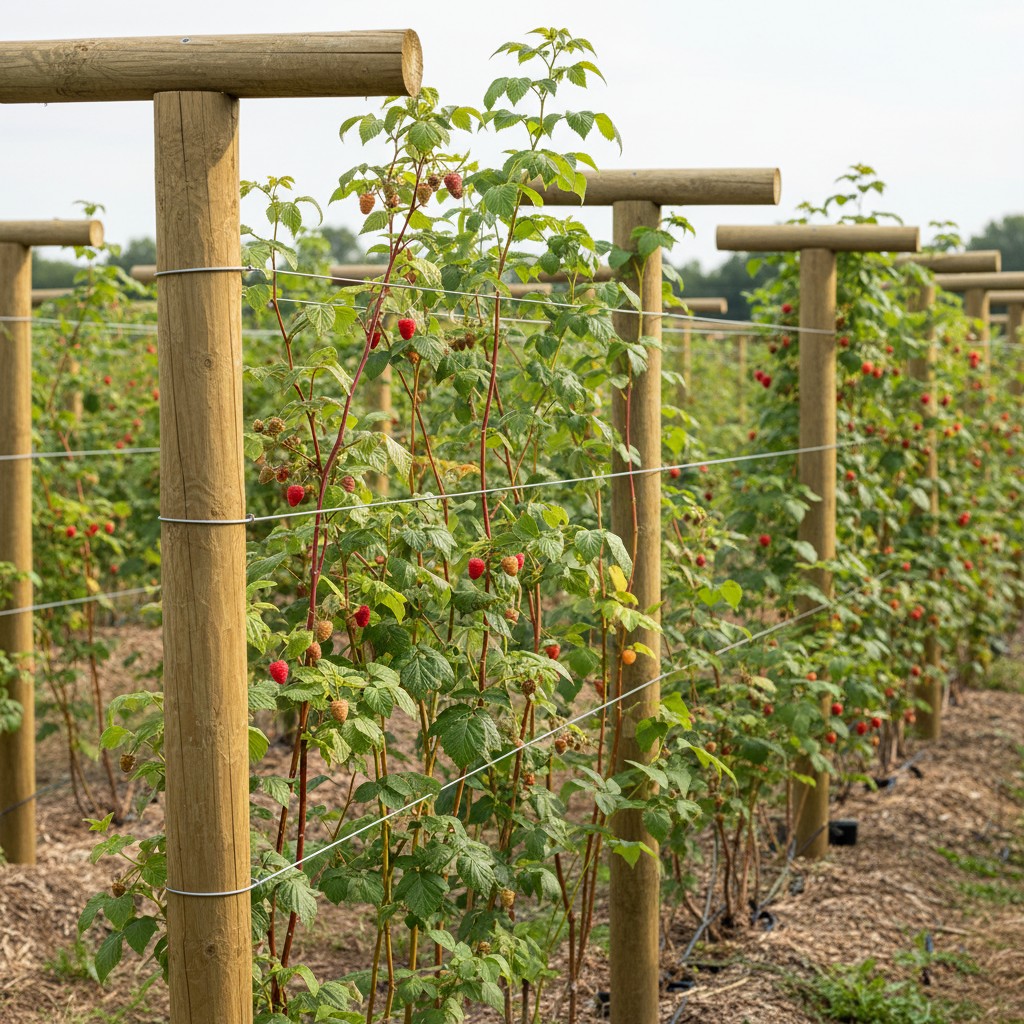
Trellising: Simple and Worth the Effort
You can grow brambles without a trellis. You’ll quickly wish you hadn’t. Unsupported canes flop over, fruit sits on the ground and rots, access for picking and pruning becomes a battle, and the whole patch turns into an impenetrable thicket.
Simple Two-Wire Trellis
This is the most practical trellis for home bramble patches:
- Set sturdy posts (4×4 lumber or heavy-duty T-posts) at each end of the row. For rows longer than 20 feet, add intermediate posts every 15–20 feet.
- String heavy-gauge wire (12–14 gauge) at two heights: one at about 30 inches and another at about 5 feet.
- As canes grow, train them to grow between or tie them to the wires. The wires keep canes upright and orderly.
For erect blackberry varieties, a single wire at 3–4 feet may be sufficient. For floppy red raspberry canes, the two-wire system is much better.
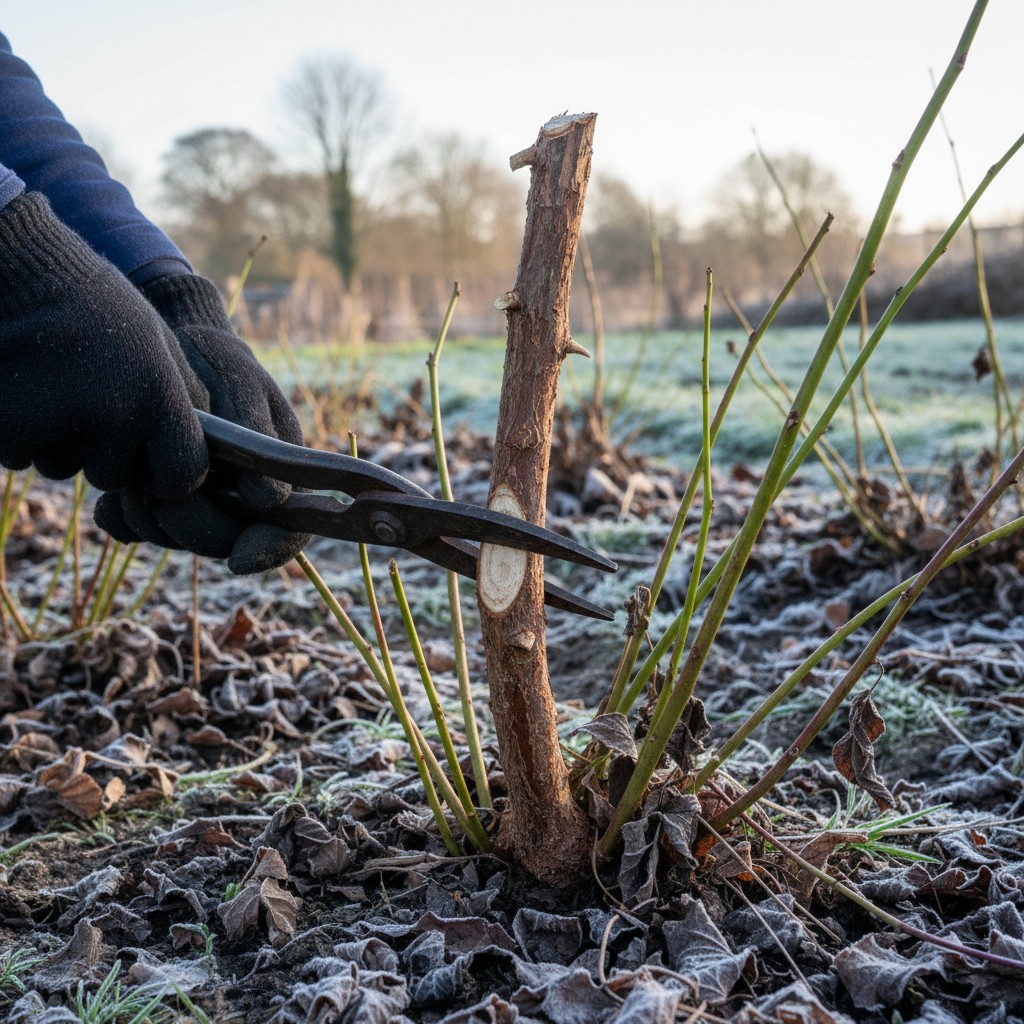
Pruning: The Part Everyone Gets Wrong
Pruning brambles is the number one source of confusion, and it’s the number one reason people’s bramble patches decline into tangled, unproductive messes. But the logic is simple once you understand the cane lifecycle.
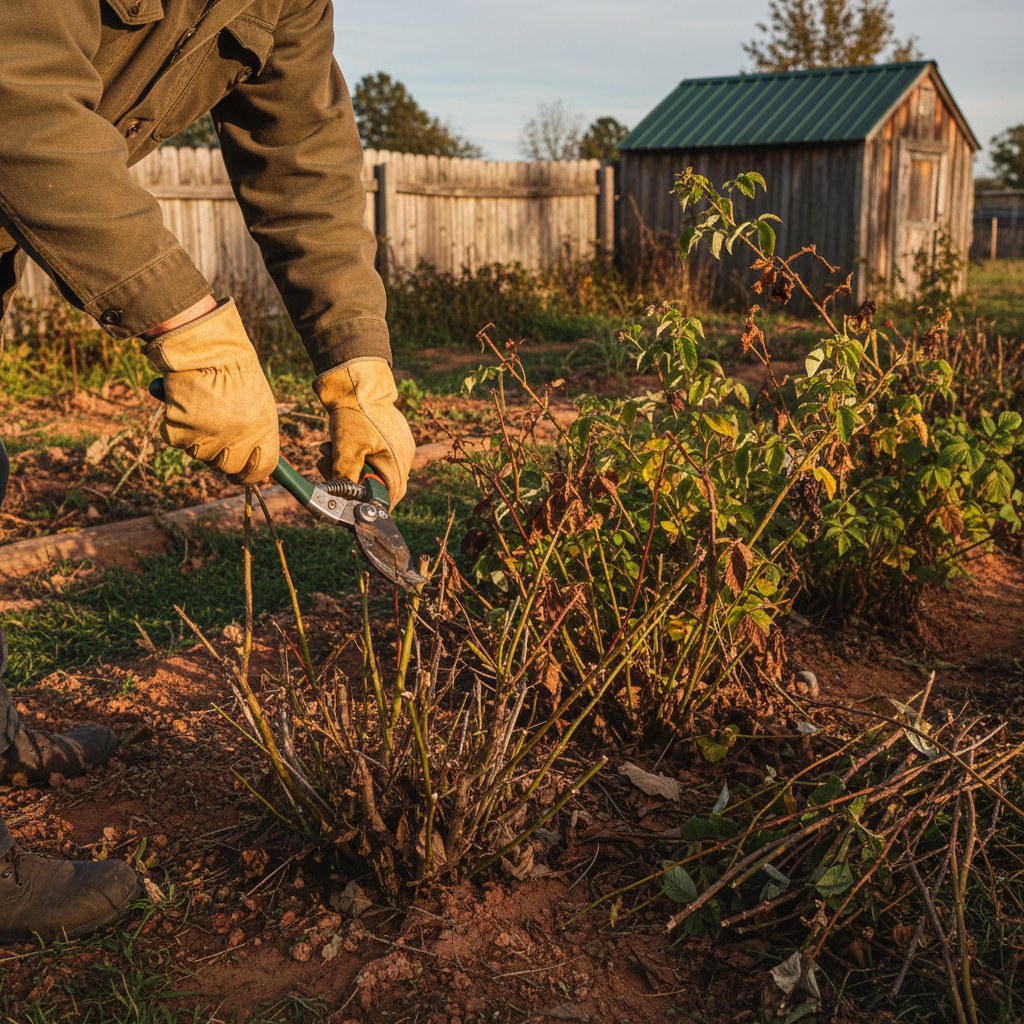
Pruning Summer-Bearing (Floricane-Fruiting) Varieties
- Immediately after harvest (summer): Cut all floricanes (the canes that just fruited) to the ground. They’re done: they’ll die anyway, and removing them immediately improves air circulation and light penetration for the primocanes that will fruit next year.
- Late winter/early spring: Thin primocanes (now going into their second year) to about 4–6 of the strongest canes per linear foot of row. Remove any weak, damaged, or spindly canes. Tip the remaining canes to about 5 feet tall to encourage lateral branching, which increases fruit production.
Pruning Everbearing (Primocane-Fruiting) Varieties
Here’s where it gets beautifully simple. If you’re growing everbearing varieties for the fall crop only (which produces the largest, most concentrated harvest):
- Late winter: Mow or cut the entire patch to the ground. Every cane. Done.
- New primocanes emerge in spring, grow all summer, and fruit in late summer/fall.
- Repeat.
That’s it. No sorting floricanes from primocanes. No figuring out which canes to keep. Cut everything, let new canes grow, harvest, repeat. This is why I recommend everbearing varieties for beginners, the pruning is foolproof.
If you want both a summer and fall crop from everbearing varieties, you can leave some canes standing through winter. They’ll fruit on the remaining portion of the cane in early summer (as floricanes), while new primocanes produce the fall crop. But in my experience, the summer crop from everbearing varieties is smaller and often of lower quality than what you’d get from a dedicated summer-bearing variety. Most gardeners are better served by either growing everbearing for fall-only production (with total mow-down) or planting separate summer-bearing and everbearing varieties.
Pruning Blackberries
Same floricane/primocane logic. The key difference is that blackberry laterals (side branches on floricanes) should be shortened to 12–18 inches in late winter to concentrate energy into fewer, larger berries rather than many small ones. This lateral shortening step makes a significant difference in blackberry fruit size.
Propagation From Suckers
One of the great advantages of brambles is free propagation. Red raspberries spread by underground suckers, new plants pop up around the perimeter of the patch from spreading root systems. You can dig these up in early spring or fall and transplant them to expand your patch or share with friends.
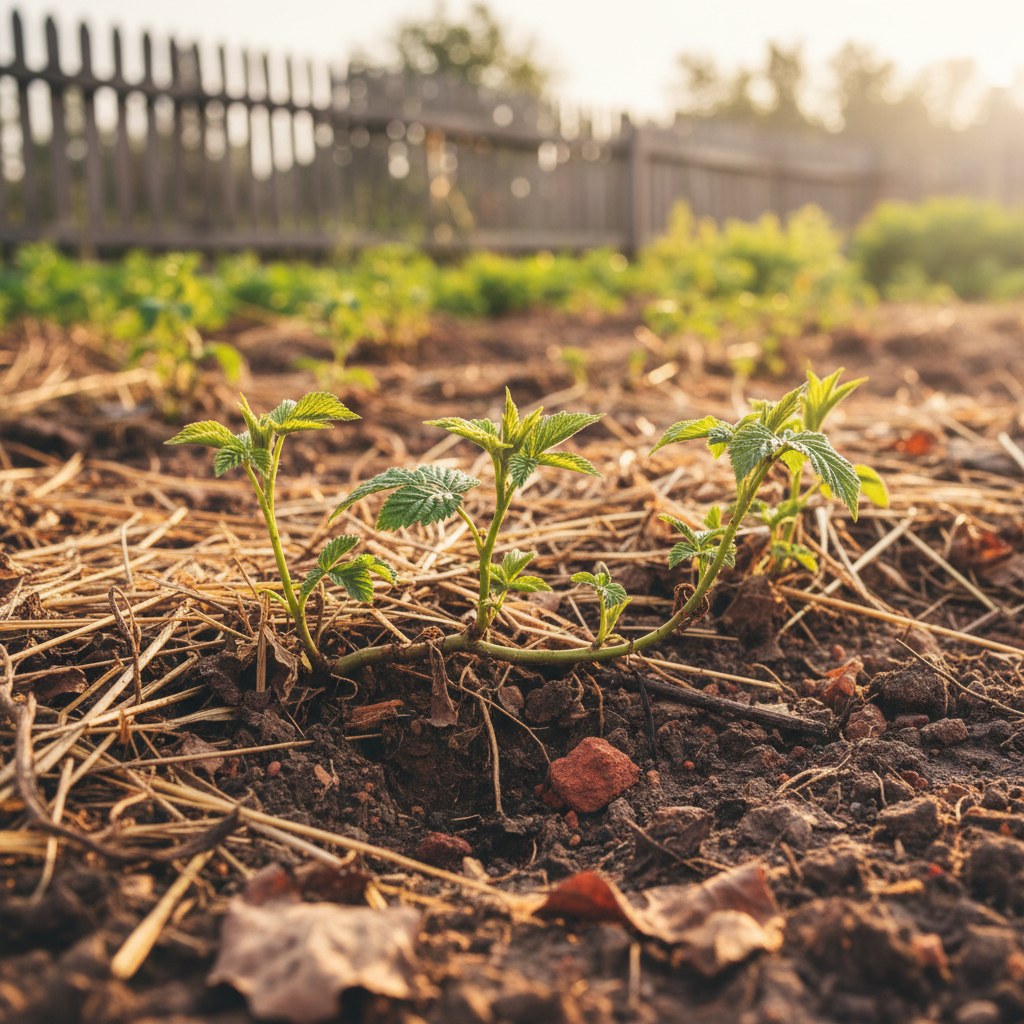
Black raspberries and some blackberries propagate by tip layering. When cane tips touch the ground, they root and form new plants. You can encourage this by bending a cane tip to the ground and burying it a few inches in late summer. By the following spring, it will have rooted and can be severed from the parent plant and transplanted.
This natural propagation is wonderful when you want more plants and a nightmare when you don’t. Suckers will appear in paths, in neighboring garden beds, in the lawn, anywhere the root system reaches. Mowing keeps suckers in check in paths and lawns. In garden beds, pull them early and often. Some growers install root barriers (12–18 inches of heavy plastic edging sunk into the soil) to contain the spread.
Pest and Disease Management
Common Pests
- Spotted wing drosophila (SWD): This invasive fruit fly lays eggs in ripening fruit, causing soft, mushy berries. It has become the single most significant bramble pest across North America. Fine mesh netting (smaller than standard bird netting) applied before fruit starts coloring can exclude SWD. Harvest fruit promptly and refrigerate immediately, don’t leave ripe berries on the plant.
- Japanese beetles: Skeletonize leaves in midsummer. Hand-pick into soapy water. Avoid Japanese beetle traps, which actually attract more beetles to your yard than they catch.
- Cane borers: Cause wilting cane tips. Prune affected canes below the damage and destroy them.
Common Diseases
- Anthracnose: Purple spots on canes that enlarge and crack. Good air circulation (proper spacing and pruning) is the best prevention.
- Root rot (Phytophthora): Caused by waterlogged soil. Plant in well-drained locations. There is no cure once established.
- Virus diseases: Causes crumbly, small fruit and mottled leaves. Remove and destroy affected plants. Buy virus-free certified stock when starting a new patch.
Harvest Tips
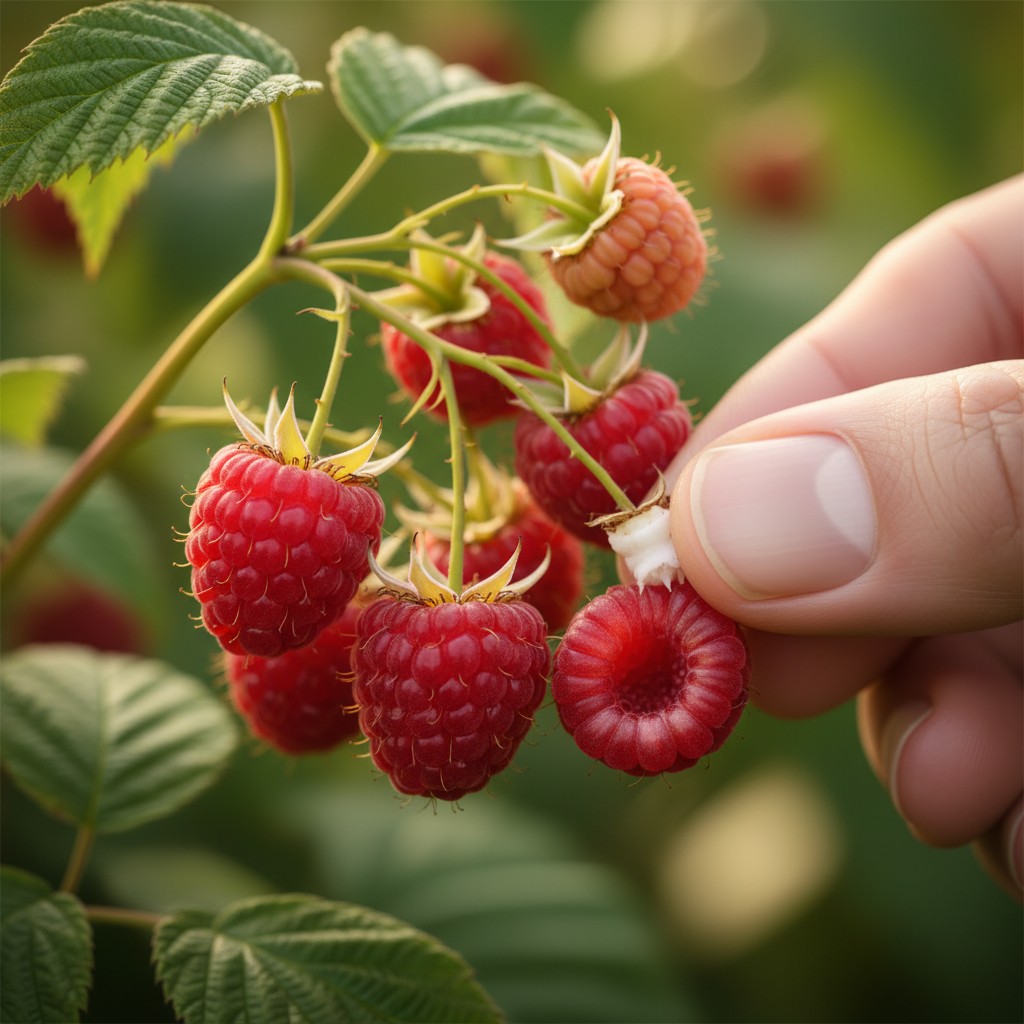
Ripe raspberries slip easily off the receptacle (the white core). If you have to tug, the berry isn’t ready. Ripe blackberries are fully black with no red or green areas, and give slightly when gently squeezed. An underripe blackberry is sour and astringent, wait for full softness.
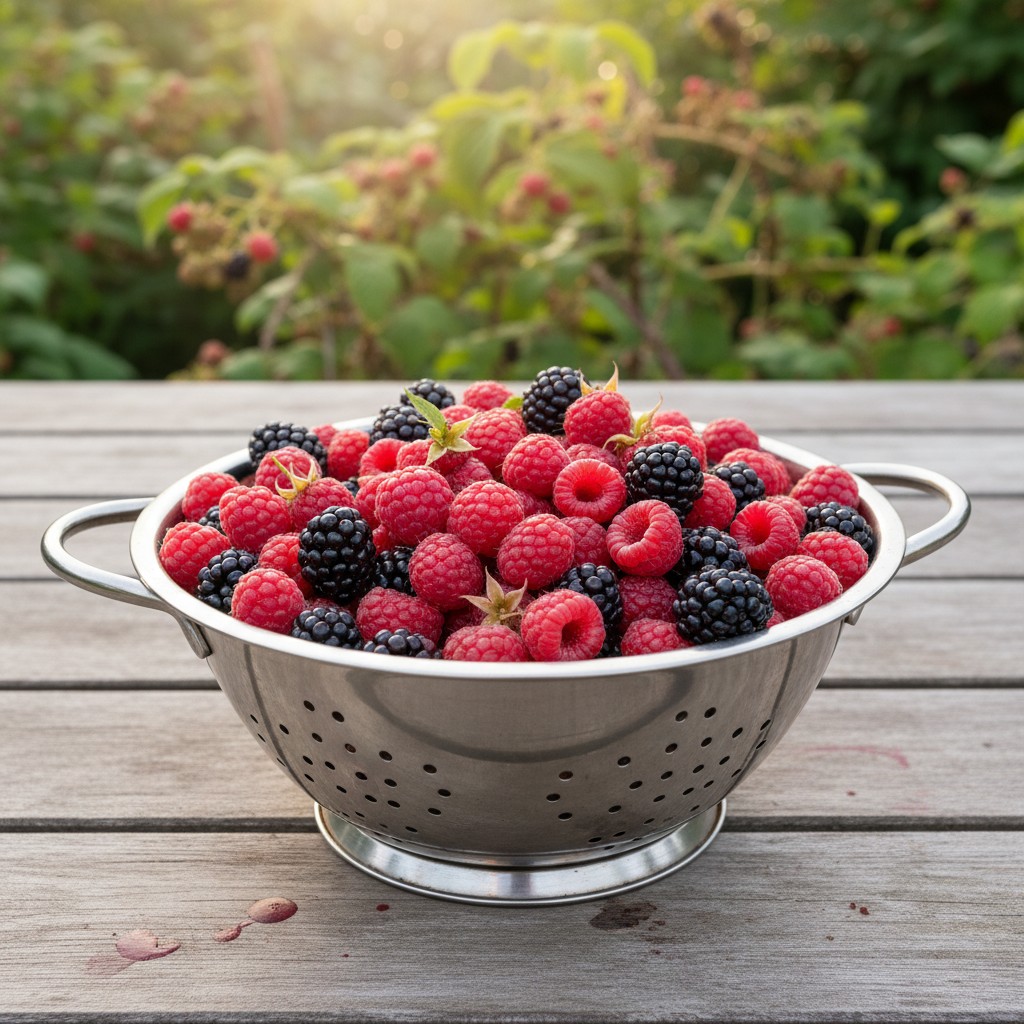
Harvest in the morning when berries are cool. Eat or refrigerate immediately. Fresh-picked berries last only 2–3 days in the refrigerator. For longer storage, spread berries in a single layer on a sheet pan, freeze, then transfer to freezer bags. Individually frozen berries are far more versatile than clumped masses frozen together.
Pick every 2–3 days during peak season. Overripe berries left on the plant attract pests and disease, and they pull energy from the remaining developing fruit.
Frequently Asked Questions
How long does it take for new raspberry plants to produce fruit?
Everbearing varieties typically produce a small fall crop the first year after planting. A full crop comes in year two. Summer-bearing varieties produce their first crop in year two (since they fruit on second-year canes). By year three, most bramble patches are in full production and will continue producing heavily for 15–20 years with proper management.
Can I grow raspberries in containers?
Yes, with some limitations. Use at least a 5-gallon container (10-gallon is better). Compact everbearing varieties like ‘Raspberry Shortcake’ and ‘BrazelBerries’ are specifically bred for container culture. Standard varieties can work but will be less productive than in-ground plants. Container brambles need consistent watering and annual fertilization, and the soil should be refreshed every 2–3 years.
My raspberry patch is a tangled mess. Can I renovate it?
Absolutely. In late winter, mow or cut the entire patch to the ground. Yes, all of it. You’ll sacrifice one year’s harvest, but the new canes that emerge in spring will be vigorous and disease-free. Thin them to proper spacing (4–6 canes per linear foot), install a trellis if you don’t have one, and you’ll have a productive, manageable patch again by the following year. This drastic renovation is better than trying to sort through years of tangled growth.
What’s the difference between raspberries and blackberries when harvesting?
The easiest way to tell: when you pick a ripe raspberry, the fruit separates from the receptacle (the white cone-shaped core), leaving a hollow berry. When you pick a blackberry, the receptacle comes with the fruit, there’s no hollow center. This is why raspberries are more delicate and hollow inside, while blackberries have a more solid center. This structural difference also means blackberries hold up slightly better in storage and cooking.