How to Make Homemade Soap: A Beginner’s Guide to Cold Process Soap Making
- Cold process soap making requires just 3 core ingredients: oils/fats, lye (sodium hydroxide), and water.
- Lye is essential, all true soap requires saponification between lye and fat.
- Properly made soap cures in 4–6 weeks and contains zero remaining lye, completely safe for skin.
- A basic batch makes 8–10 bars for about $1–2 per bar vs. $5–8 for natural store-bought.
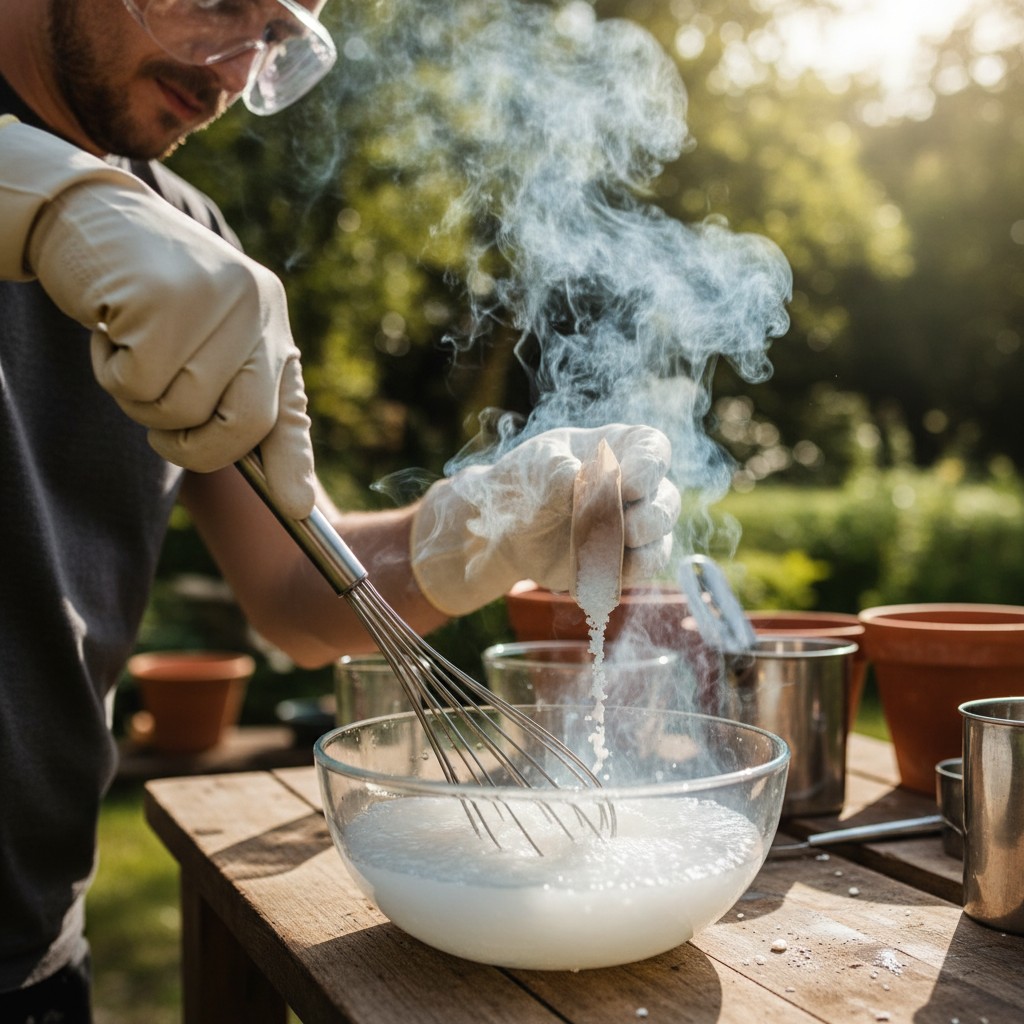
- Safety gear (goggles, gloves, long sleeves) is mandatory, always add lye to water, never water to lye.
Why Should You Learn to Make Homemade Soap?
Homemade cold process soap costs $1–2 per bar, contains no synthetic detergents, and gives you complete control over ingredients, ideal for sensitive skin. When I first started making soap, I was intimidated by the lye. Now it is one of my favorite homestead skills.
According to Penn State Extension, homemade soap retains all its natural glycerin, which is often stripped from commercial products.
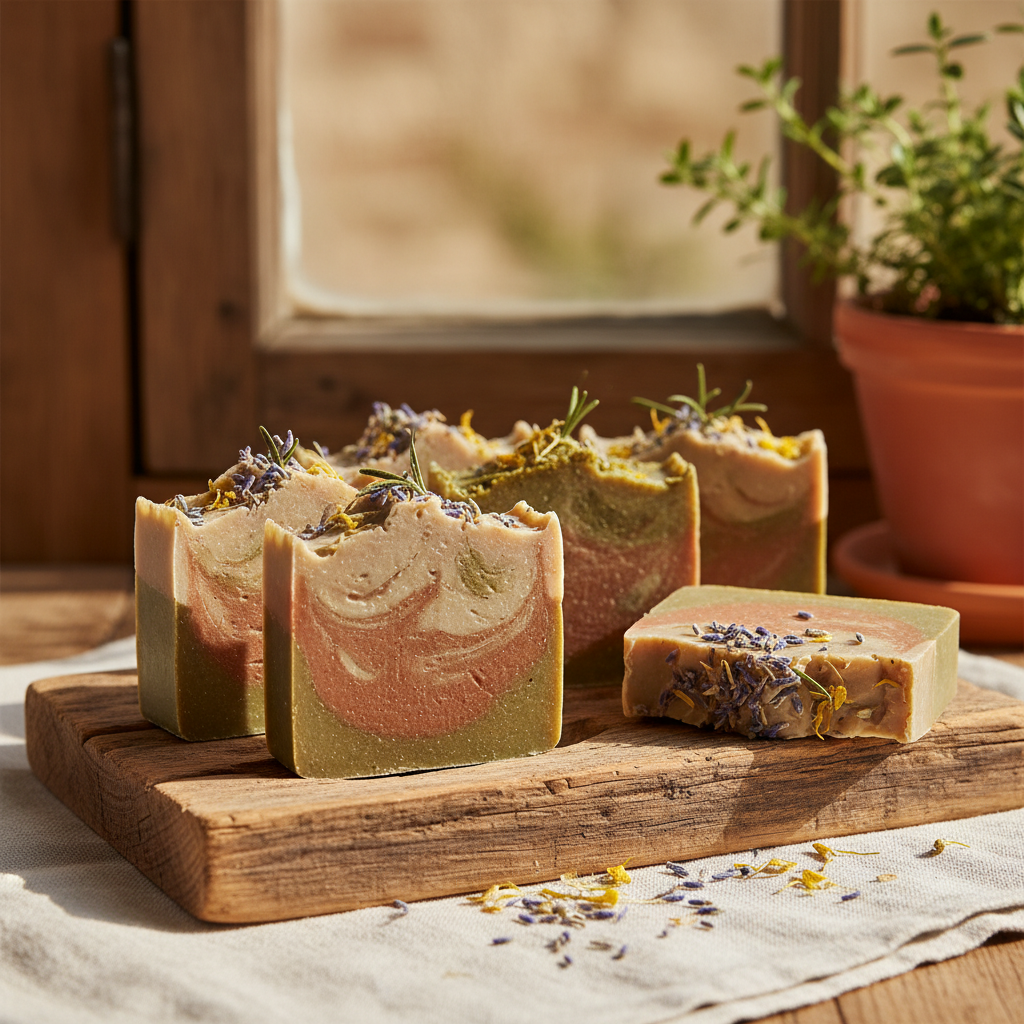
Soap making pairs beautifully with beeswax wraps and herb-infused oils. If you have a kitchen herb garden, you can incorporate herbs directly into your soap.
What Supplies Do You Need to Make Cold Process Soap?
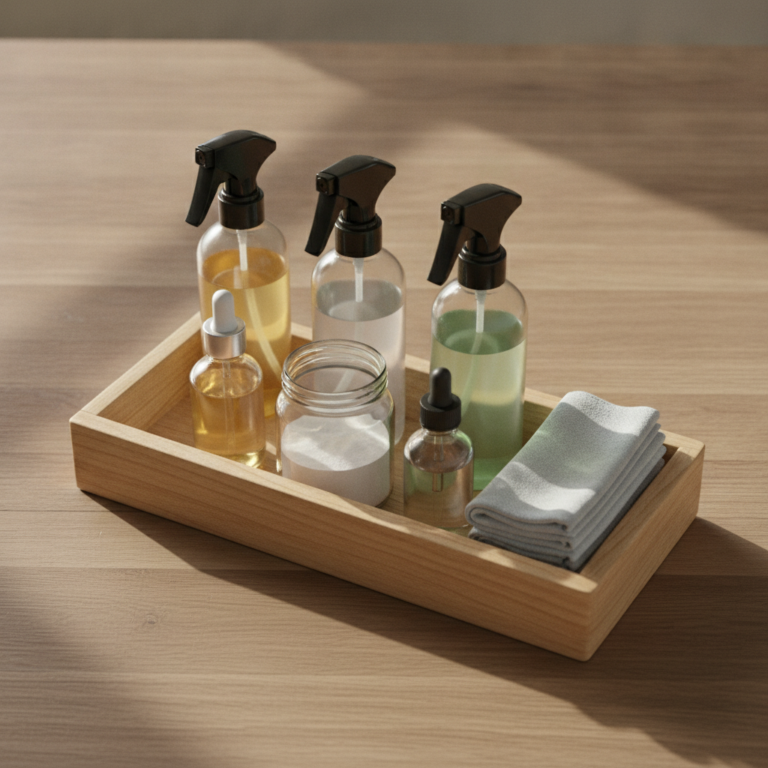
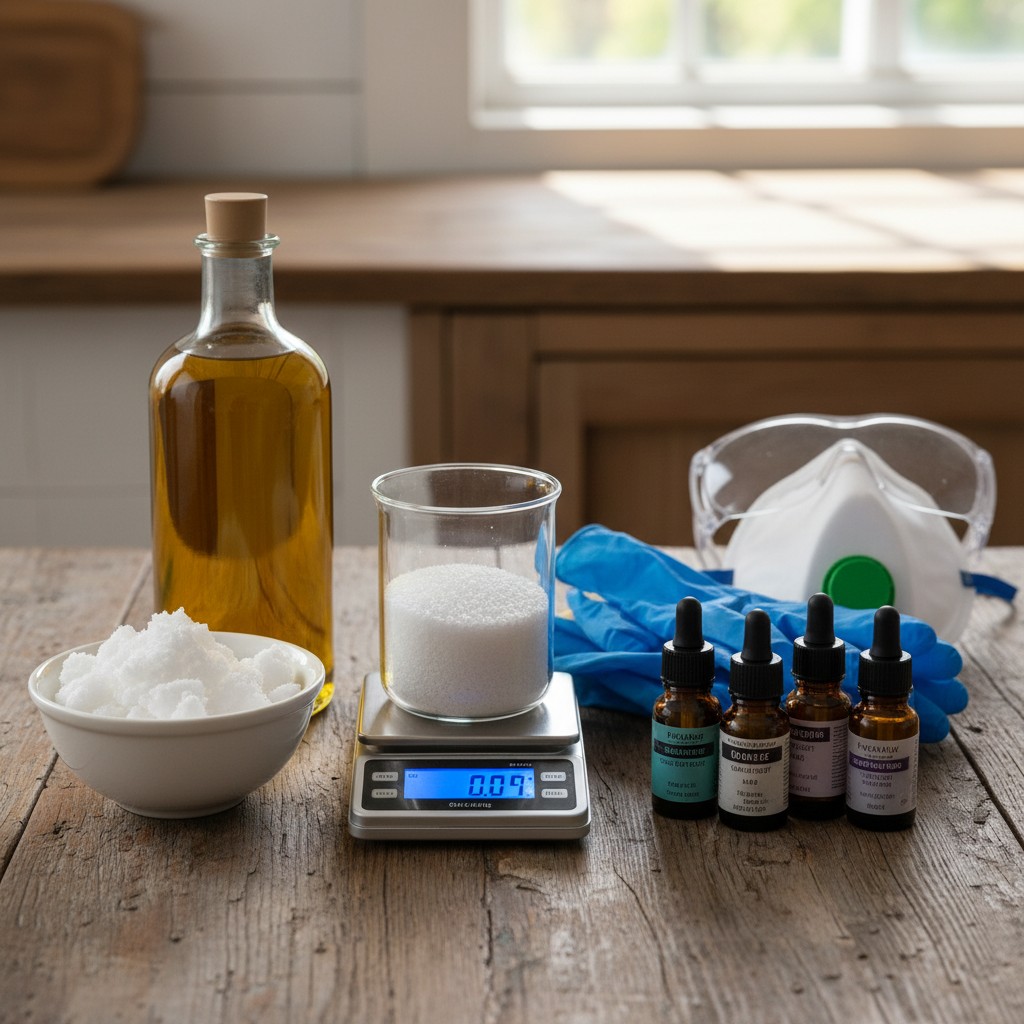
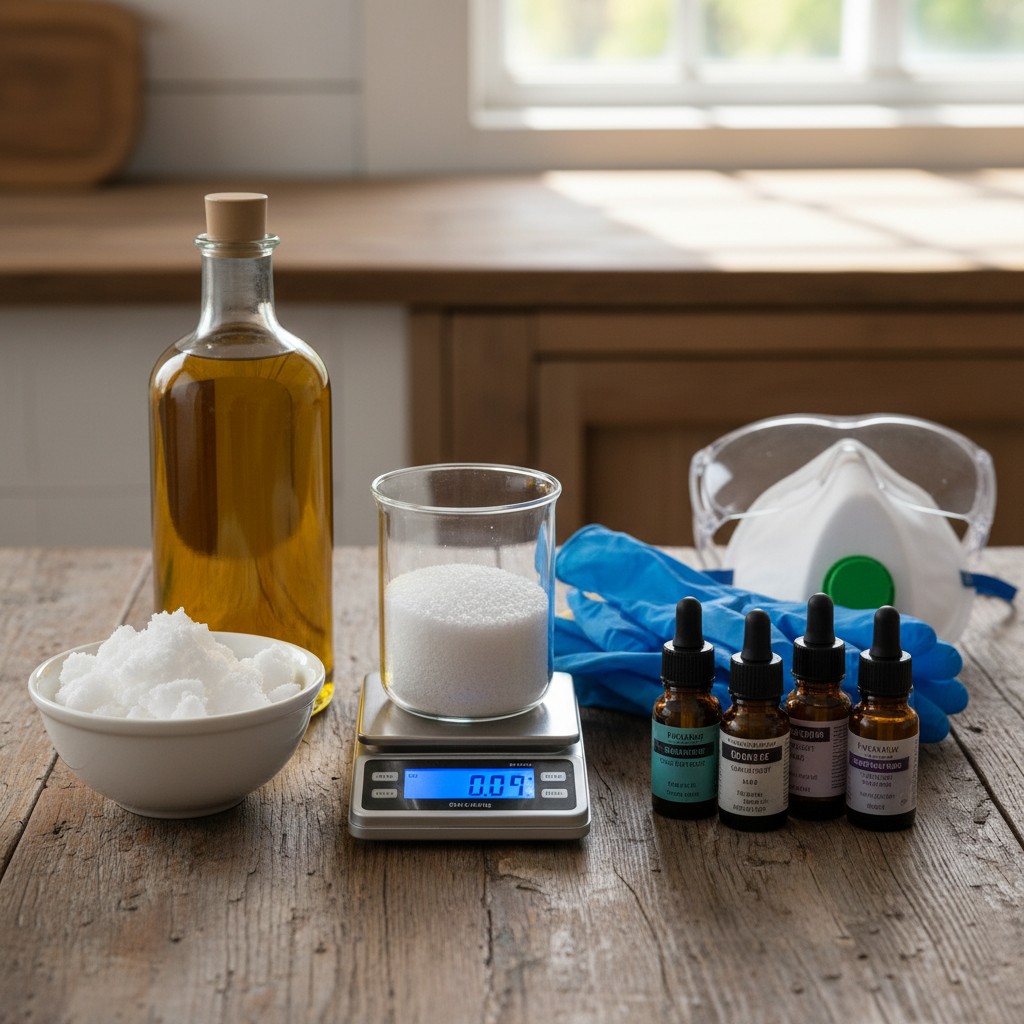
A digital scale, immersion blender, thermometer, safety gear, soap mold, and your core ingredients: oils, lye, and distilled water. The immersion blender is the most important tool, it turns hours of hand stirring into minutes.
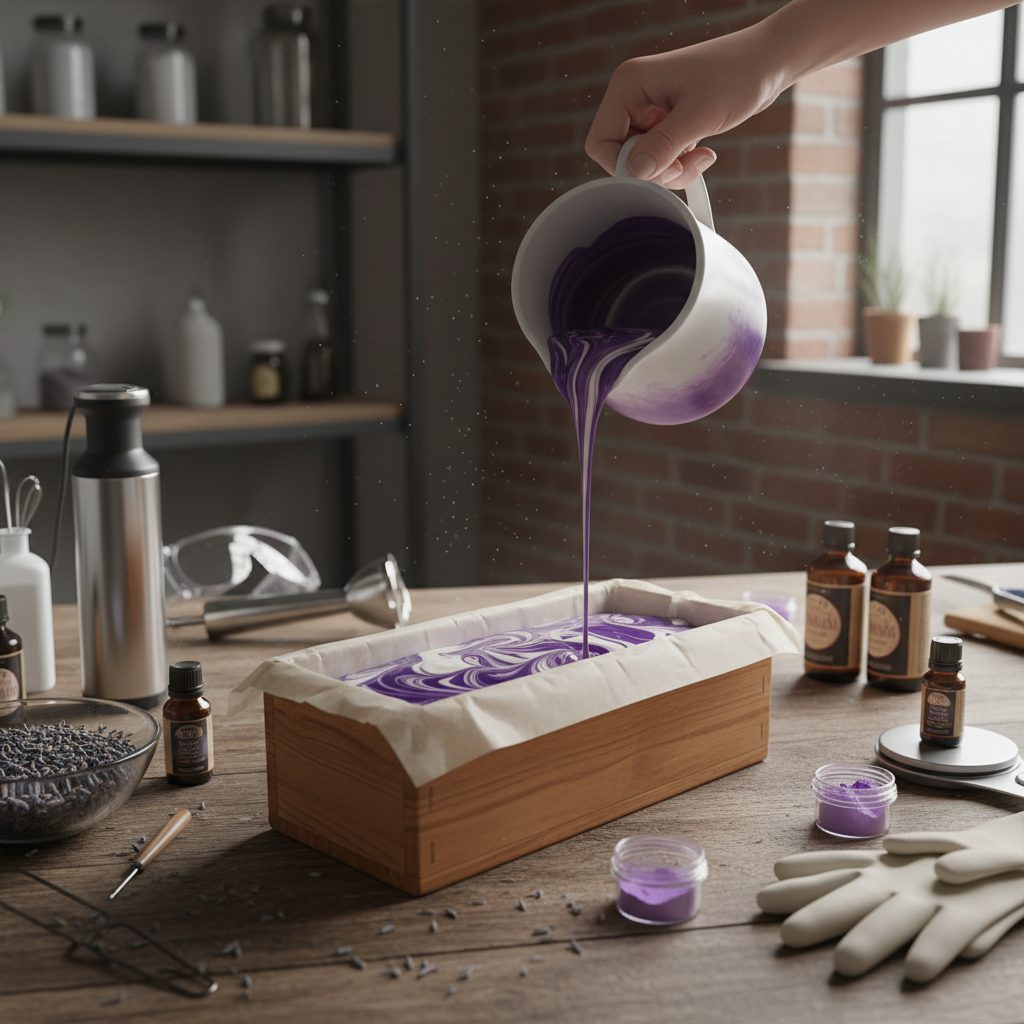
| Item | Purpose | Approximate Cost |
|---|---|---|
| Digital kitchen scale | Precise measurement (essential) | $10–15 |
| Immersion blender | Emulsify oils and lye to trace | $15–25 |
| Safety goggles + gloves | Protect eyes and skin from lye | $5–10 |
| Silicone soap mold | Shape bars, easy release | $10–20 |
| Oils (olive, coconut, etc.) | The base/body of the soap | $10–20 per batch |
| Sodium hydroxide (lye) | Triggers saponification reaction | $5–8 per pound |
All measurements must be by weight. Always run your recipe through a lye calculator before making a batch, free tools like SoapCalc and Bramble Berry’s Lye Calculator compute the exact amount of sodium hydroxide needed for any oil combination. Different oils require different amounts of lye to saponify fully; using a calculator prevents both lye-heavy soap (caustic) and unsaponified oils (rancid). The South Dakota State University Extension emphasizes that a lye calculator is essential.
How Do You Make Cold Process Soap Step by Step?
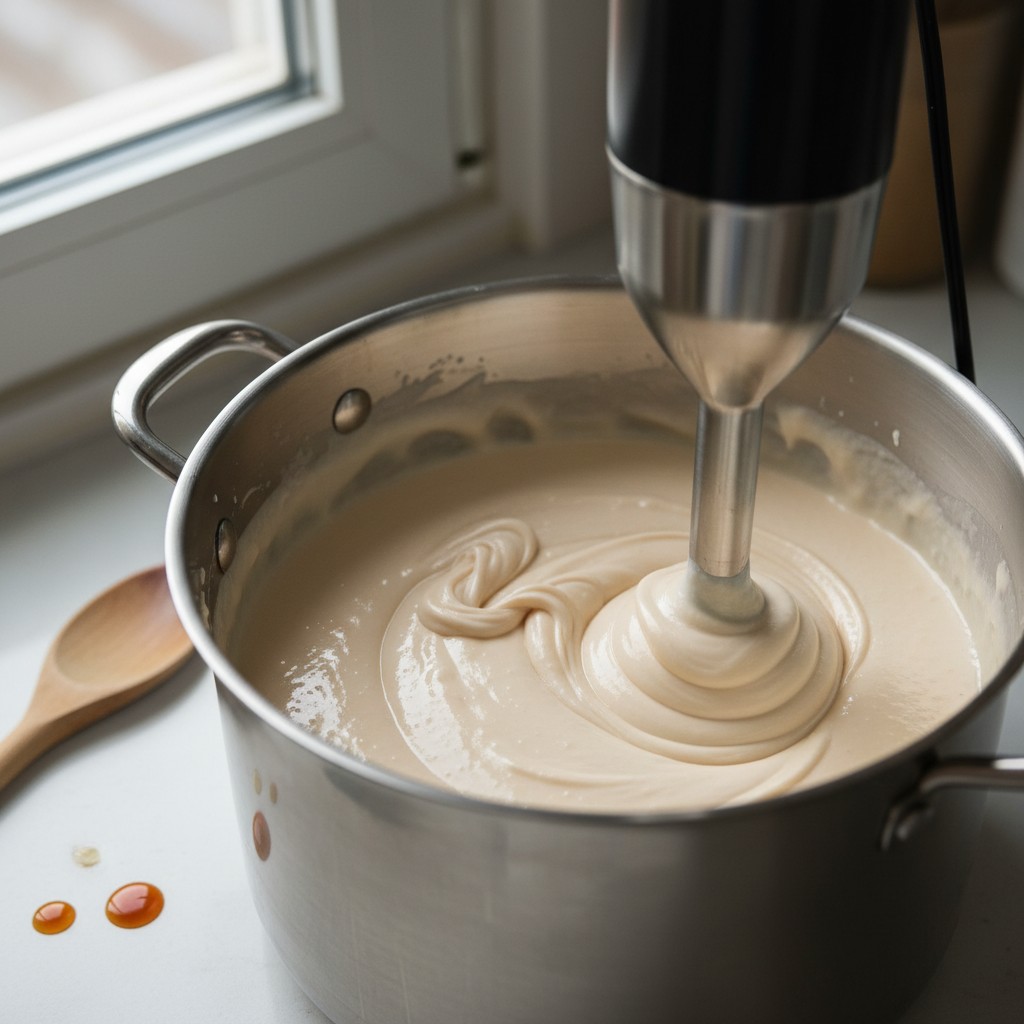
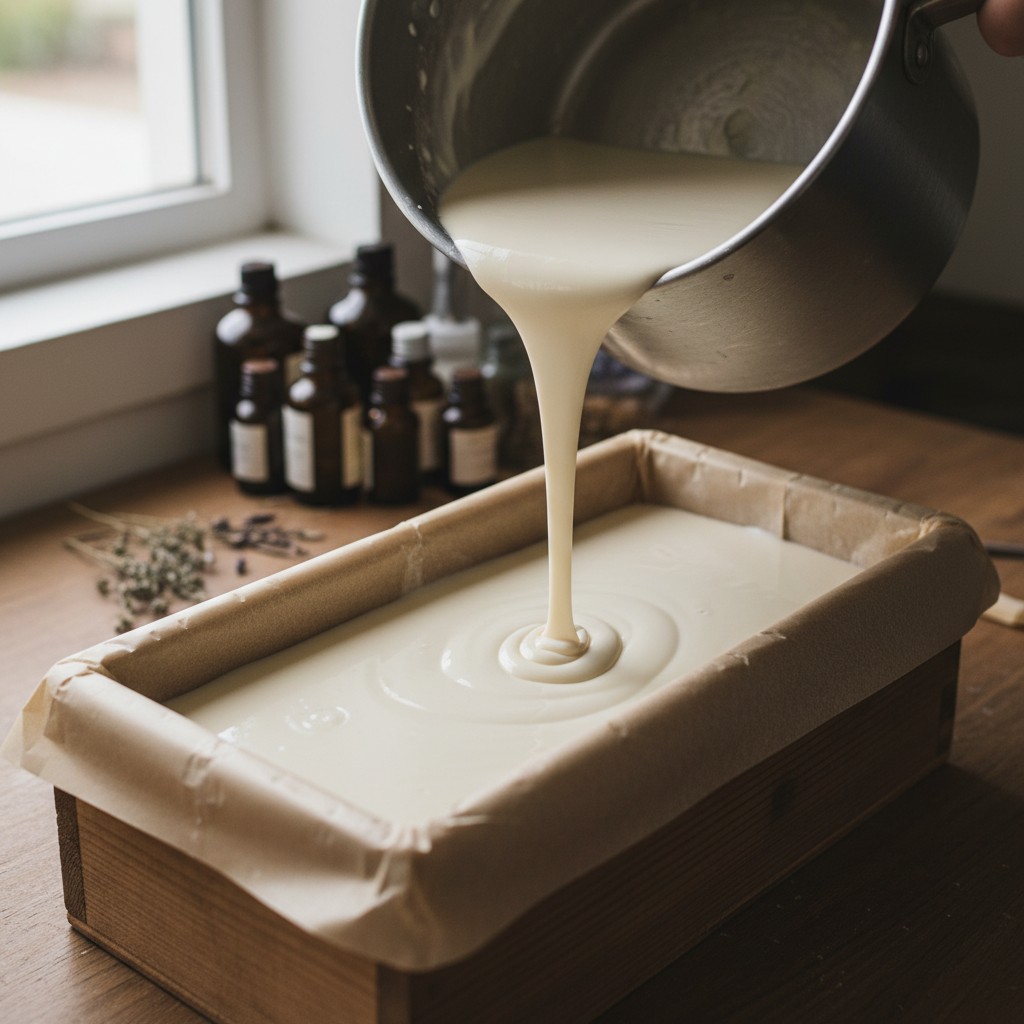
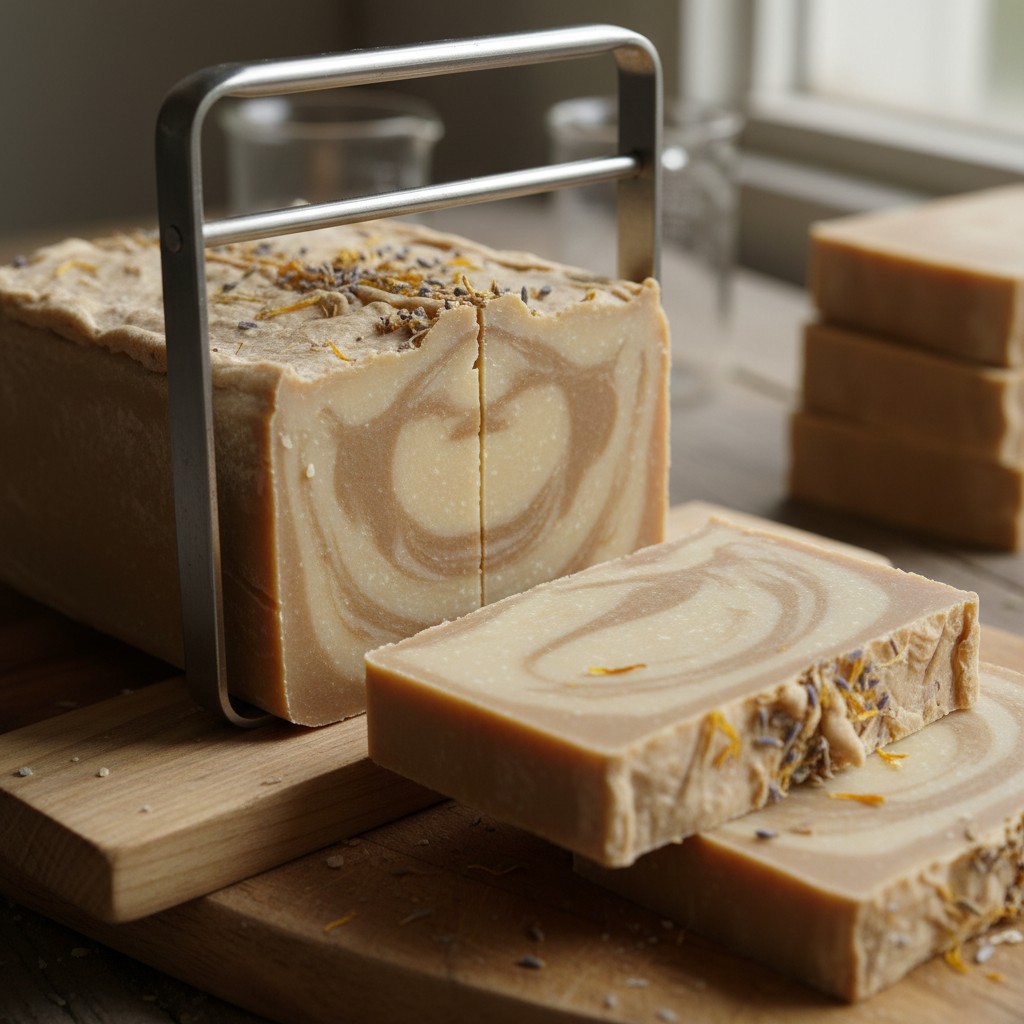
Weigh and melt oils, separately mix lye into cold water, combine at 100–110 degrees F, blend to trace (pudding-like consistency), add scents/colors, pour into molds, and cure for 4–6 weeks.
Beginner recipe: 10 oz olive oil, 10 oz coconut oil, 5 oz shea butter, 3.5 oz lye, 7.5 oz distilled water. Use distilled water, not tap water. Tap water contains minerals (iron, calcium, chlorine) that can cause DOS (Dreaded Orange Spots), an oxidation defect that makes soap go rancid prematurely. Distilled water is inexpensive and makes a measurable difference in soap quality and shelf life. Slowly add lye to cold water in a ventilated area. Use only stainless steel or HDPE #2 plastic containers for mixing lye water. Never use aluminum, lye reacts violently with aluminum, producing dangerous hydrogen gas. Never use thin glass, lye solution reaches temperatures of 180–200°F almost instantly and can shatter glass from thermal shock. A stainless steel pitcher or an HDPE plastic pitcher (check the recycling symbol on the bottom) are the safest choices. Let cool to 100 degrees F. Melt solid oils, add liquid oils, cool to 100–110 degrees F. Combine and blend to trace. Pour into molds, cure 4–6 weeks.
According to the FDA, true soap made from fat and alkali is regulated differently from cosmetics.
What Are the Best Oil Combinations for Beginner Soap?
Olive oil (moisturizing), coconut oil (cleansing and bubbly), and shea butter (firmness and creamy lather) create a balanced, skin-friendly beginner bar. In my experience, this three-oil formula rivals any $8 artisan bar.
If you raise animals, rendered tallow from bone broth making is a wonderful free soap fat. As you advance, experiment with specialty oils like avocado and castor oil (which boosts lather at just 5%).
🌱 From Our Homestead
My first batch of cold process soap was a disaster, it never fully hardened. But batch number two turned out beautifully, and now we have not bought a bar of commercial soap in over a year.
Frequently Asked Questions About Homemade Soap
Lye requires respect and safety gear, but is not dangerous when handled correctly. You cannot make true soap without lye. Properly cured soap contains zero remaining lye. Melt-and-pour bases are a lye-free alternative.
Curing allows excess water to evaporate, making the bar harder, longer-lasting, and milder on skin. A well-cured bar lasts twice as long in the shower.
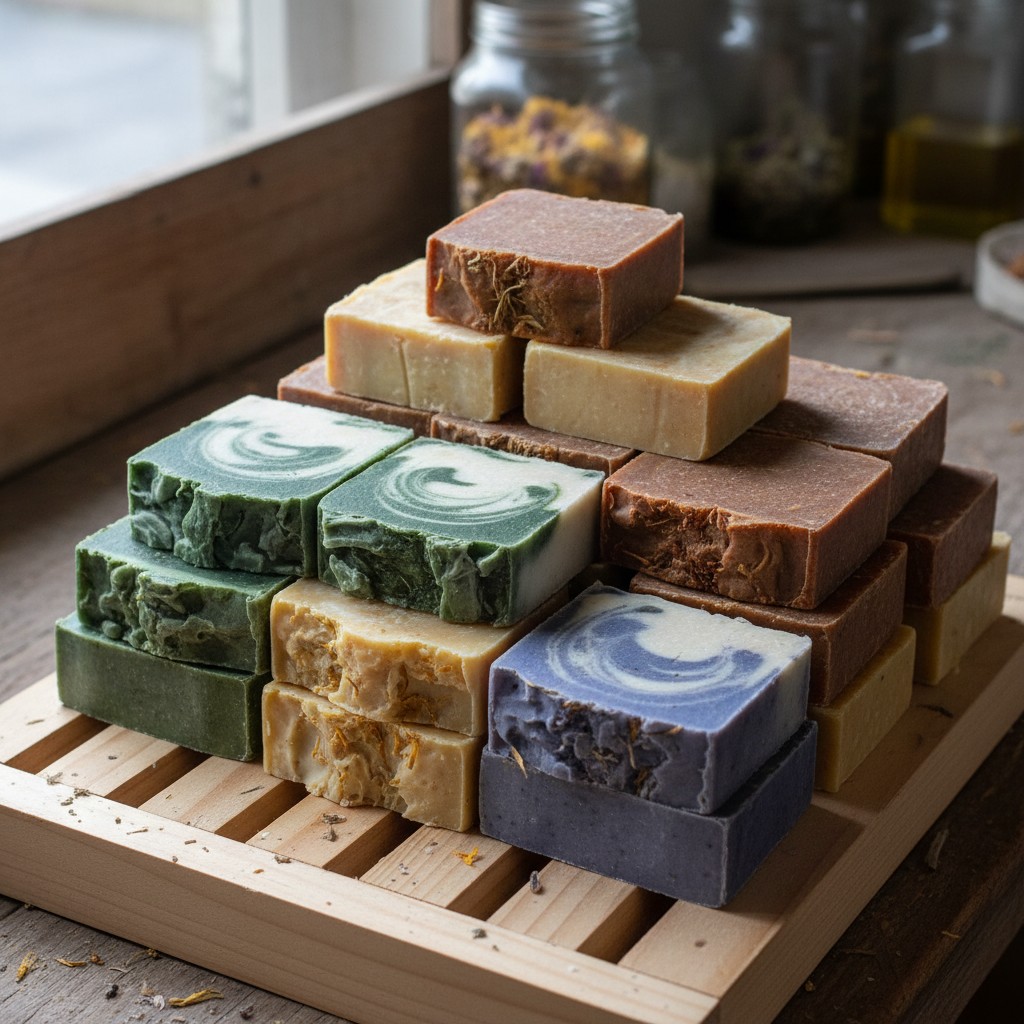
Yes! Add essential oils at trace, typically 0.7 oz per pound of oils. Popular choices: lavender, tea tree, peppermint. Dried herbs add beautiful texture.
After curing, do the zap test: touch a wet bar to your tongue. If it tingles, there is unsaponified lye, cure longer. Always use a lye calculator and weigh ingredients precisely.
A standard beginner batch (about 25 oz of oils) produces 8–10 bars at roughly 4 oz each. Scaling up is easy once comfortable.