Growing Herbs Indoors All Winter: A Windowsill Garden Guide
🌱 From Our Homestead
I pot up rosemary, thyme, and a couple of basil plants from the garden every October and line them up under a grow light in the kitchen. Having fresh herbs at arm’s reach all winter has completely changed how we cook from November through March.
Growing Herbs Indoors All Winter: A Windowsill Garden Guide
When the first frost hits and the outdoor garden goes dormant, most homesteaders feel that familiar pang of loss, no more stepping outside to snip fresh basil or grab a handful of parsley. But it doesn’t have to be that way. A windowsill herb garden can keep you in fresh herbs all winter long, and it’s far simpler to set up than you might think.
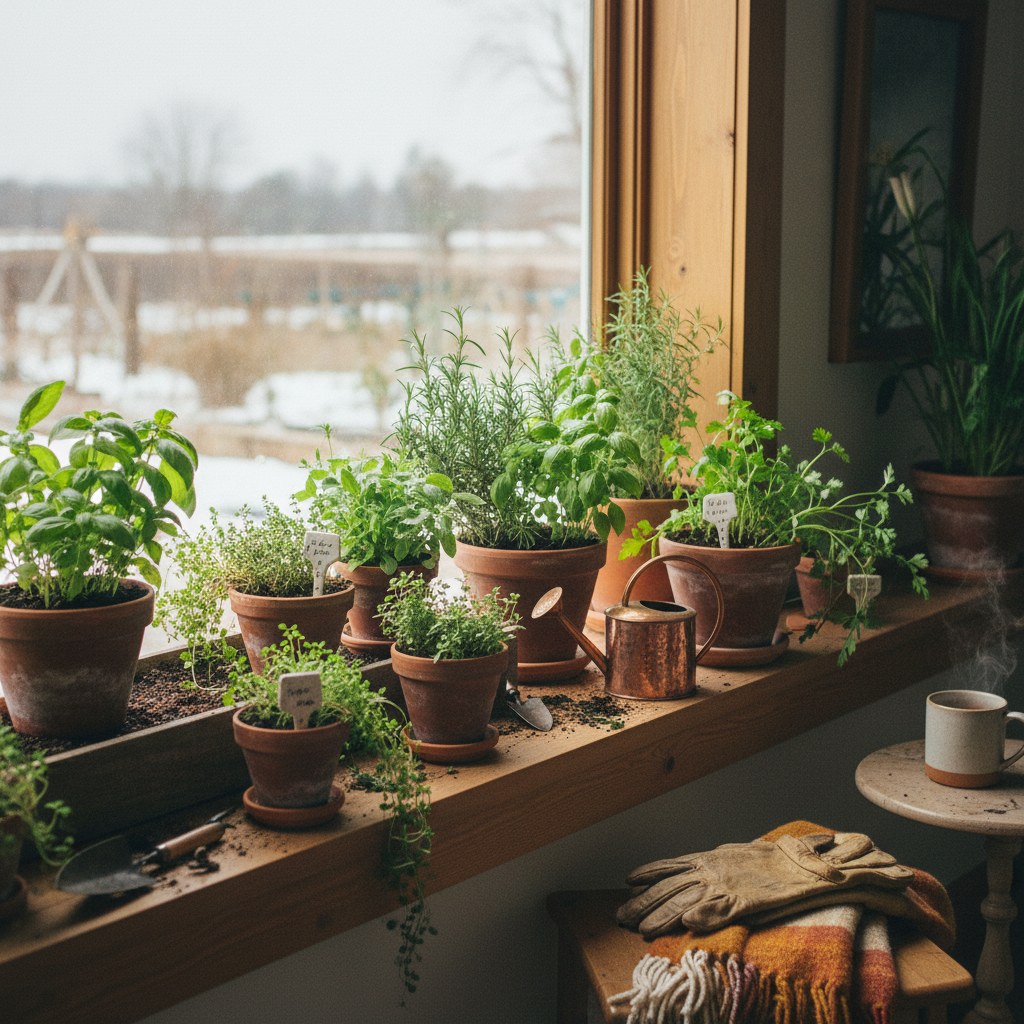
Growing herbs indoors isn’t just about convenience, though that’s certainly a big part of it. Fresh herbs in winter transform everyday cooking from something functional into something that tastes alive. There’s a measurable difference between dried oregano from a jar and a sprig of fresh oregano plucked from a pot on your kitchen windowsill. Once you’ve experienced it, you won’t want to go back.
- Rosemary, thyme, chives, mint, and parsley are the easiest herbs to grow indoors through winter
- Most herbs need at least 6 hours of light daily, a south-facing window is ideal, or supplement with a grow light
- Overwatering is the number one killer of indoor herbs; let soil dry slightly between waterings
- Start harvesting once plants are established, never taking more than one-third of the plant at a time
- Indoor herbs grow slower than outdoor ones, so manage your expectations and plant several pots of your favorites
Why Grow Herbs Indoors?
Rosemary is the one I keep overwintering every year without fail, potted up from the bed by the south side of the house before the first hard frost. I lost three plants in the early years by setting them on a north-facing windowsill where they slowly went yellow and dropped needles by February. A south window or a simple grow light on a timer completely changed the outcome.
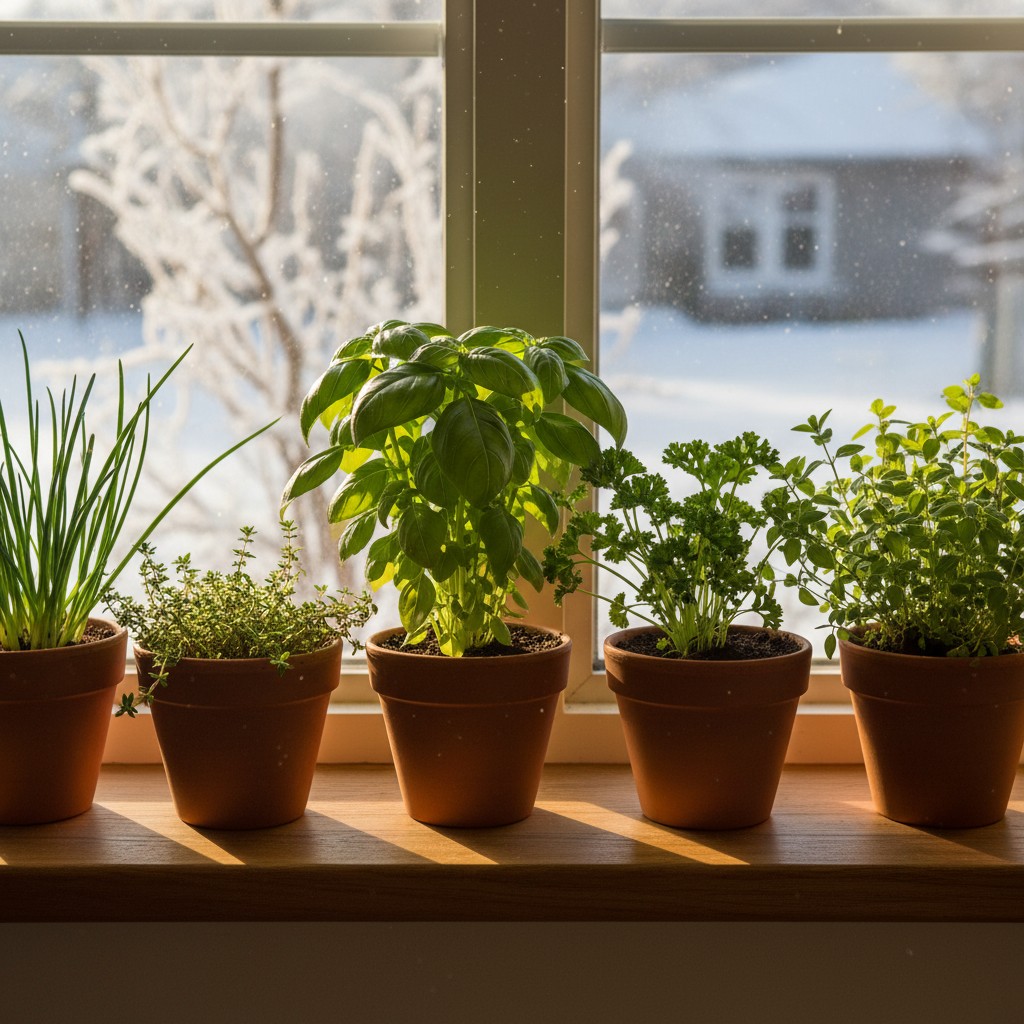
If you already maintain an outdoor herb garden, you know how much fresh herbs improve your cooking. The problem is that most culinary herbs are either annual or go dormant in winter, leaving you dependent on dried herbs or expensive grocery store packets from November through April. Those little plastic clamshells of herbs at the supermarket cost $3-4 each and go bad in a week, growing your own is dramatically more economical.
An indoor herb garden also gives you a gardening fix during those long winter months when you can’t be out in the beds. There’s genuine mental health value in tending living plants when everything outside is brown and frozen. It keeps your green thumb active and your cooking inspired.
The Best Herbs for Indoor Growing
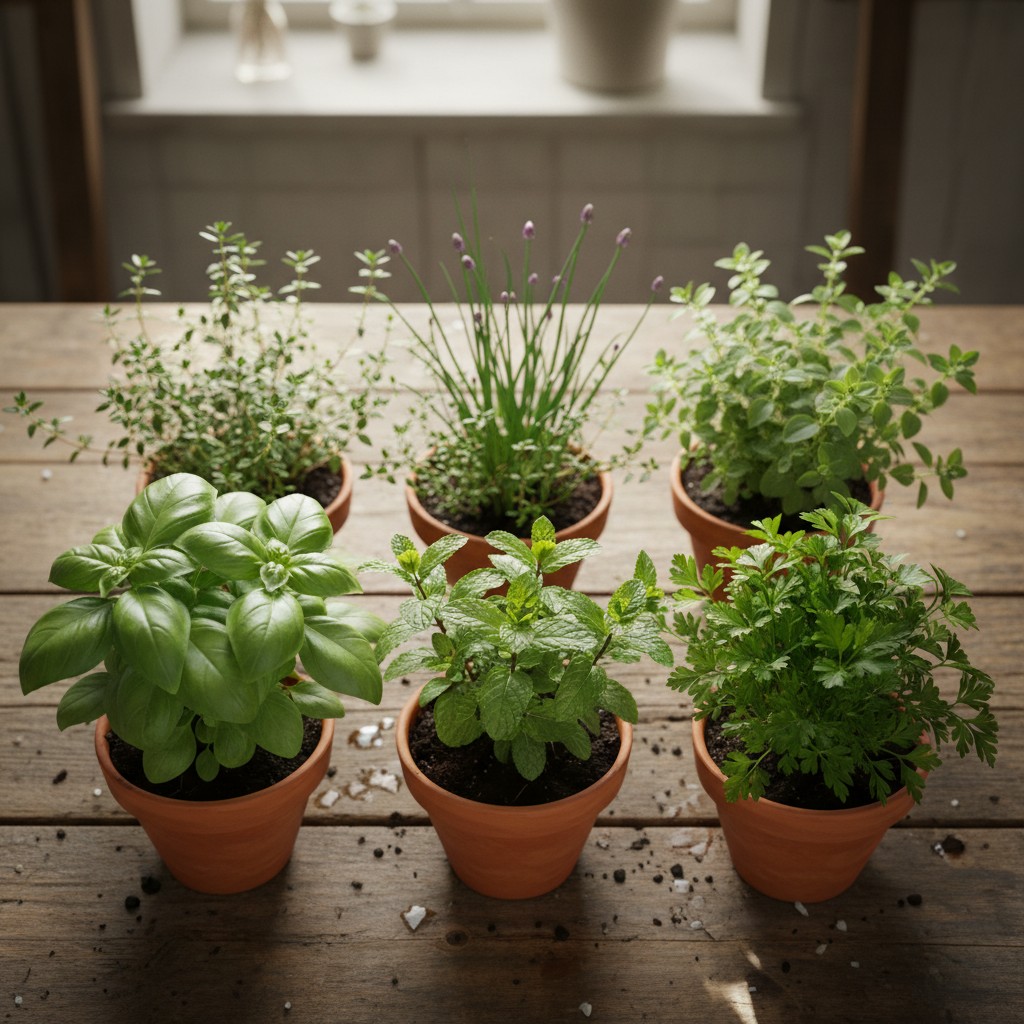
Not all herbs thrive indoors equally. Some adapt beautifully to life on a windowsill, while others really struggle without full outdoor sun and airflow. Here are your best bets, ranked by ease of indoor growing.
Tier 1: Almost Foolproof
| Herb | Light Needs | Water | Notes |
|---|---|---|---|
| Chives | 4-6 hours | Moderate | Practically indestructible, snip and they regrow |
| Mint | 4-6 hours | Keep moist | Thrives indoors; a pot contains its spreading habit |
| Parsley | 4-6 hours | Moderate | Flat-leaf varieties do best indoors |
| Thyme | 6 hours | Let dry between | Compact growth perfect for windowsills |
| Oregano | 6 hours | Let dry between | Mediterranean herbs love drier indoor air |
Tier 2: Very Doable With Some Attention
Rosemary is a winter favorite but slightly fussier indoors. It needs excellent drainage, good air circulation, and as much light as you can give it. The biggest mistake people make is overwatering, rosemary’s roots rot quickly in soggy soil. Let the top inch of soil dry out completely before watering, and if possible, place the pot where it gets some air movement. A small fan on low nearby can help prevent the stagnant air that leads to powdery mildew.
Basil is the herb most people want to grow indoors, but it’s honestly the trickiest. It needs more light than almost any other herb, at least 6-8 hours of direct sun or a good grow light. It also hates cold drafts, so keep it away from drafty windows. Start fresh plants from seed rather than trying to bring outdoor basil inside, and don't expect the huge leafy plants you get in summer. Indoor basil will be smaller and slower-growing, but the flavor is still worlds better than dried.
Cilantro bolts quickly in warm indoor conditions, but you can manage this by growing it in a cooler spot (near a window in an unheated room works well) and succession planting every 3 weeks. The trick is to keep harvesting the outer leaves regularly and to accept that individual plants won’t last as long as they do outdoors in spring.
My first winter growing herbs indoors, I lost every rosemary plant to overwatering. I was treating them like my outdoor herbs, giving them a good drink every couple of days. Indoor herbs, especially Mediterranean ones, use far less water than you’d think, the lack of wind, lower temperatures, and reduced light all mean slower growth and less water uptake. Now I stick my finger into the soil before I water anything, and I haven’t lost a rosemary since.
Choosing the Right Containers
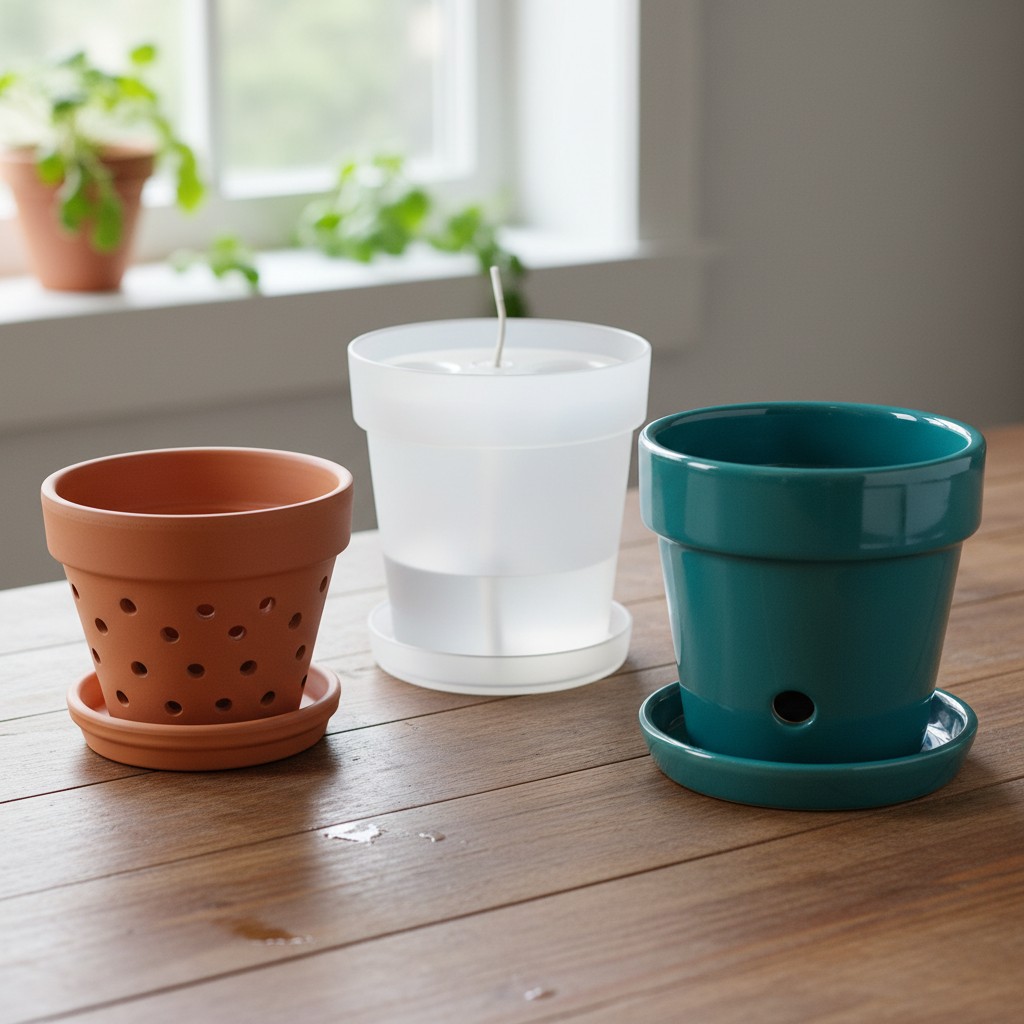
Container choice matters more for indoor herbs than outdoor ones because drainage is critical and you don’t have rain and wind helping regulate moisture levels.
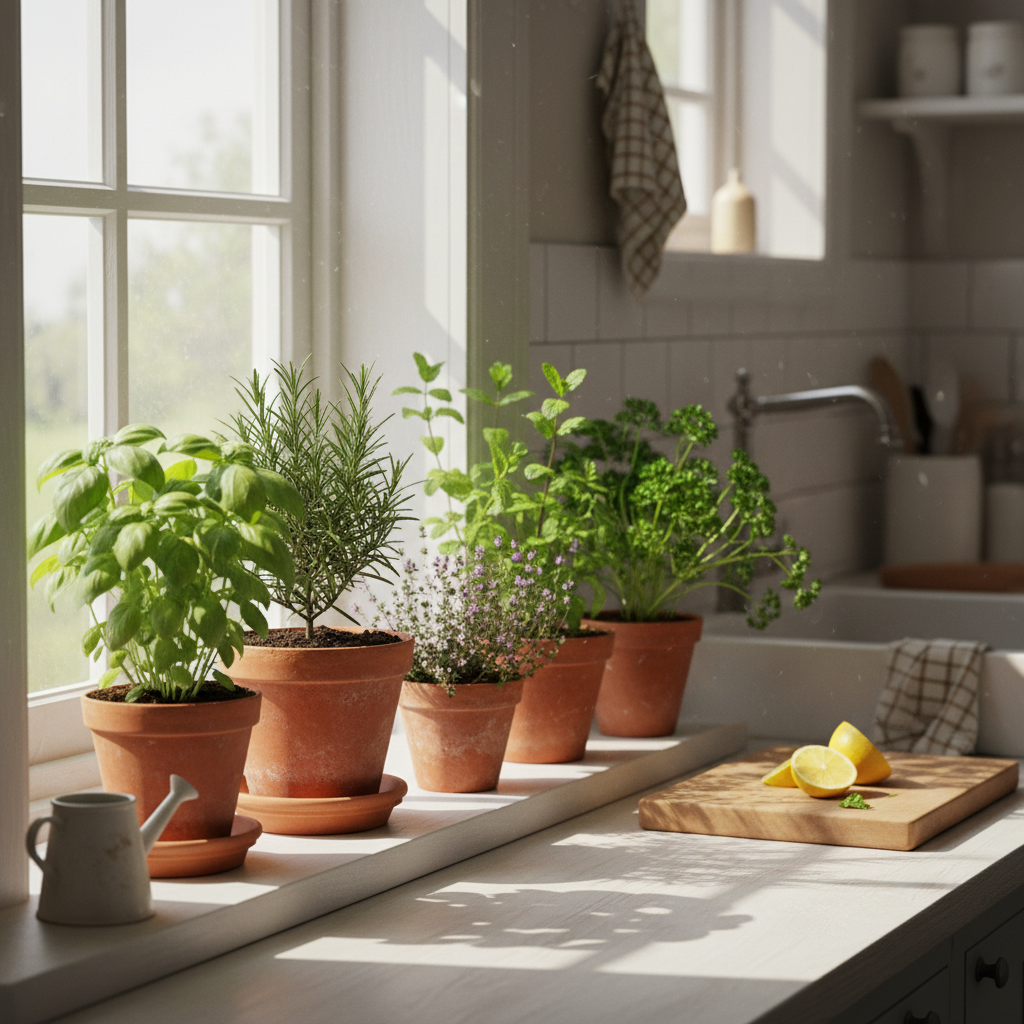
Terracotta pots are the gold standard for indoor herbs. They’re porous, which allows excess moisture to evaporate through the walls, and they’re heavy enough to be stable on a windowsill. The downside is that they dry out faster, which is actually an advantage for herbs that hate wet feet like rosemary and thyme. Make sure every pot has at least one drainage hole, and always use a saucer underneath to protect your windowsill.
Size matters too. Don’t overcrowd herbs into tiny pots, most culinary herbs do best in containers at least 6 inches in diameter. Larger pots provide more stable moisture levels and give roots room to develop. A 10-12 inch pot can hold a small herb collection with thyme, oregano, and chives growing together if they share similar water needs.
Light: The Make-or-Break Factor
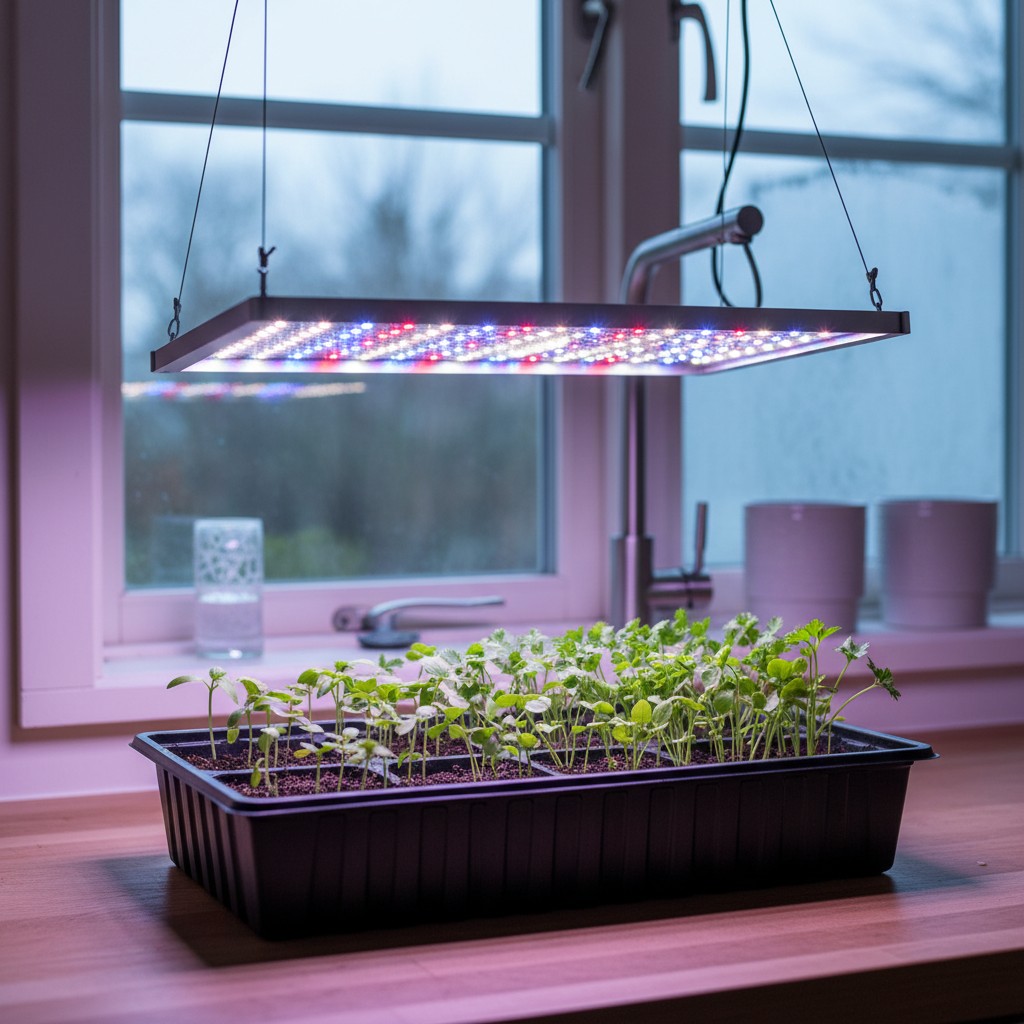
Light is the single biggest challenge for indoor herb growing. Most herbs evolved in sunny Mediterranean or tropical climates and want as much light as they can get. In winter, even a south-facing window provides significantly less light than summer outdoor conditions.
South-Facing Windows
A south-facing window is your best natural light source. In midwinter, it typically provides 4-6 hours of direct light, which is sufficient for most herbs except basil. Place your herbs as close to the glass as possible without letting leaves touch the cold pane. Rotate pots a quarter turn every few days to prevent plants from leaning dramatically toward the light.
Grow Lights
If you don’t have a bright south-facing window, or if you want to grow light-hungry herbs like basil, a grow light is a worthwhile investment. Modern LED grow lights are affordable, energy-efficient, and produce minimal heat. A basic setup that works for a windowsill herb garden costs $20-40 and will pay for itself within a few months compared to buying fresh herbs.
Position grow lights 6-12 inches above your herbs and run them for 12-16 hours per day. Use a simple timer so you don’t have to remember to turn them on and off. The difference a grow light makes is dramatic, herbs that were barely surviving on window light alone will start putting out vigorous new growth within a week or two.
If you enjoy growing small edibles indoors, you might also want to try growing microgreens alongside your herbs. They’re even easier than herbs and give you fresh greens in just 7-10 days.
Soil and Fertilizing
Don’t use garden soil for indoor herbs, it’s too dense, drains poorly, and can harbor pests and diseases. Use a high-quality potting mix formulated for containers. For Mediterranean herbs like rosemary, thyme, and oregano, mix in about 25% perlite or coarse sand to improve drainage further.
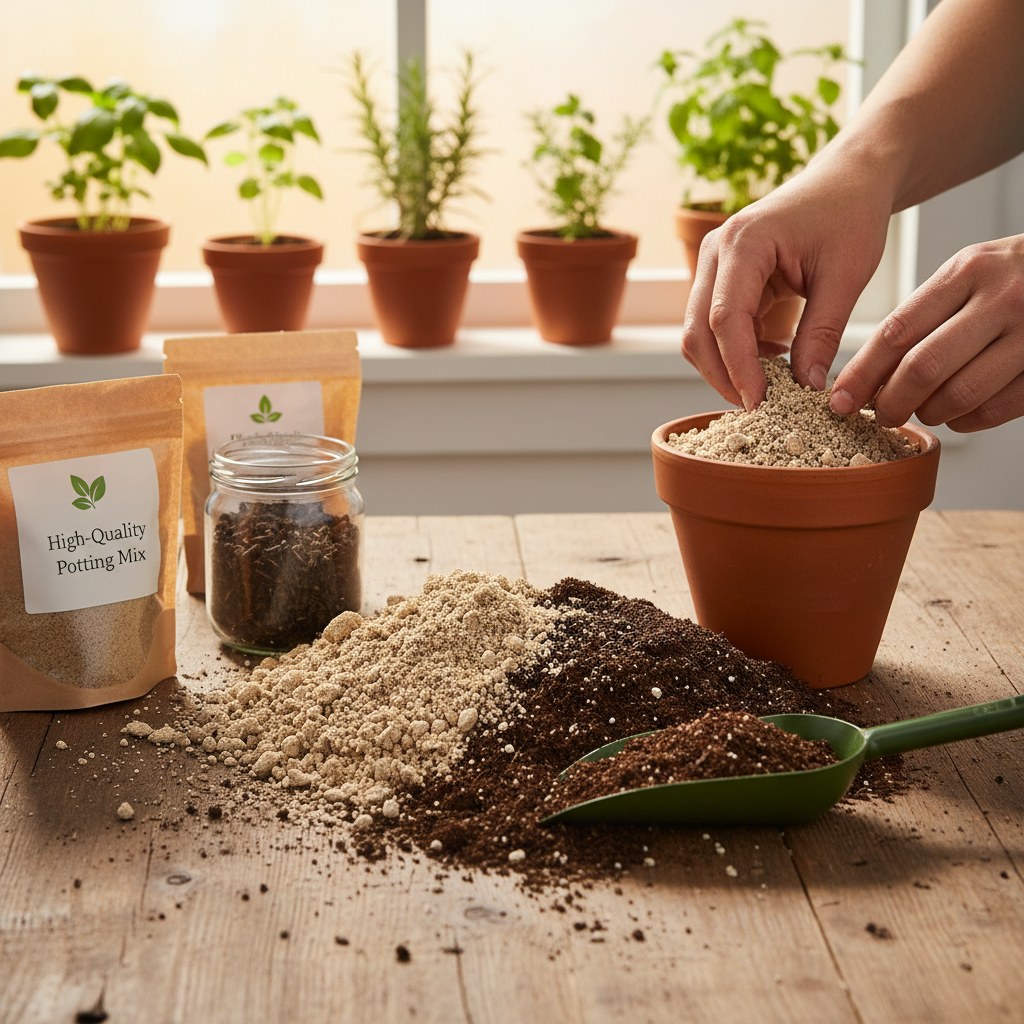
Indoor herbs grow slower than outdoor ones and don’t need heavy fertilizing. A half-strength liquid fertilizer every 4-6 weeks through winter is plenty. Over-fertilizing leads to fast, leggy growth with less flavor concentration, the opposite of what you want. Remember, slight stress actually intensifies herb flavor, so a lean feeding schedule is better than a generous one.
Watering Indoor Herbs Correctly
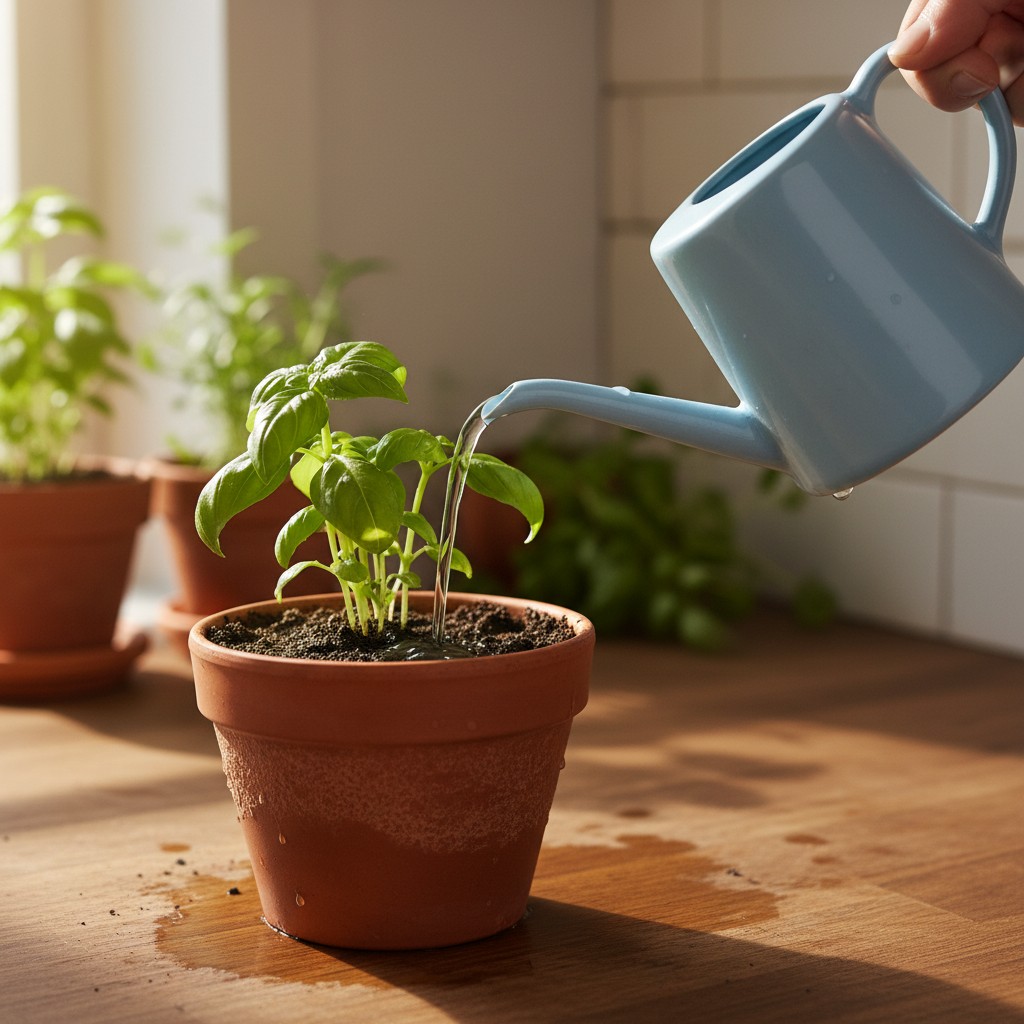
Overwatering kills more indoor herbs than anything else. The combination of lower light, cooler temperatures, and still air means herbs use far less water indoors than out. Here’s how to get it right.
For Mediterranean herbs like rosemary, thyme, sage, and oregano, let the top inch of soil dry completely between waterings. These plants evolved in dry, rocky conditions and genuinely prefer to be on the dry side. When you do water, water thoroughly until it runs out the drainage holes, then let the pot drain completely before putting it back on the saucer.
For moisture-loving herbs like mint, parsley, chives, and basil, keep the soil consistently moist but never soggy. The soil should feel like a wrung-out sponge, damp but not dripping. These herbs will show wilting quickly if they get too dry, but they bounce back fast with a good drink.
Humidity is another consideration. Indoor winter air is typically very dry, which most Mediterranean herbs actually prefer. But basil, parsley, and cilantro appreciate a bit more humidity. Grouping pots together creates a slightly more humid microclimate, or you can set pots on a tray of pebbles with water in the bottom (just make sure the pot bottoms aren’t sitting in the water).
When and How to Harvest
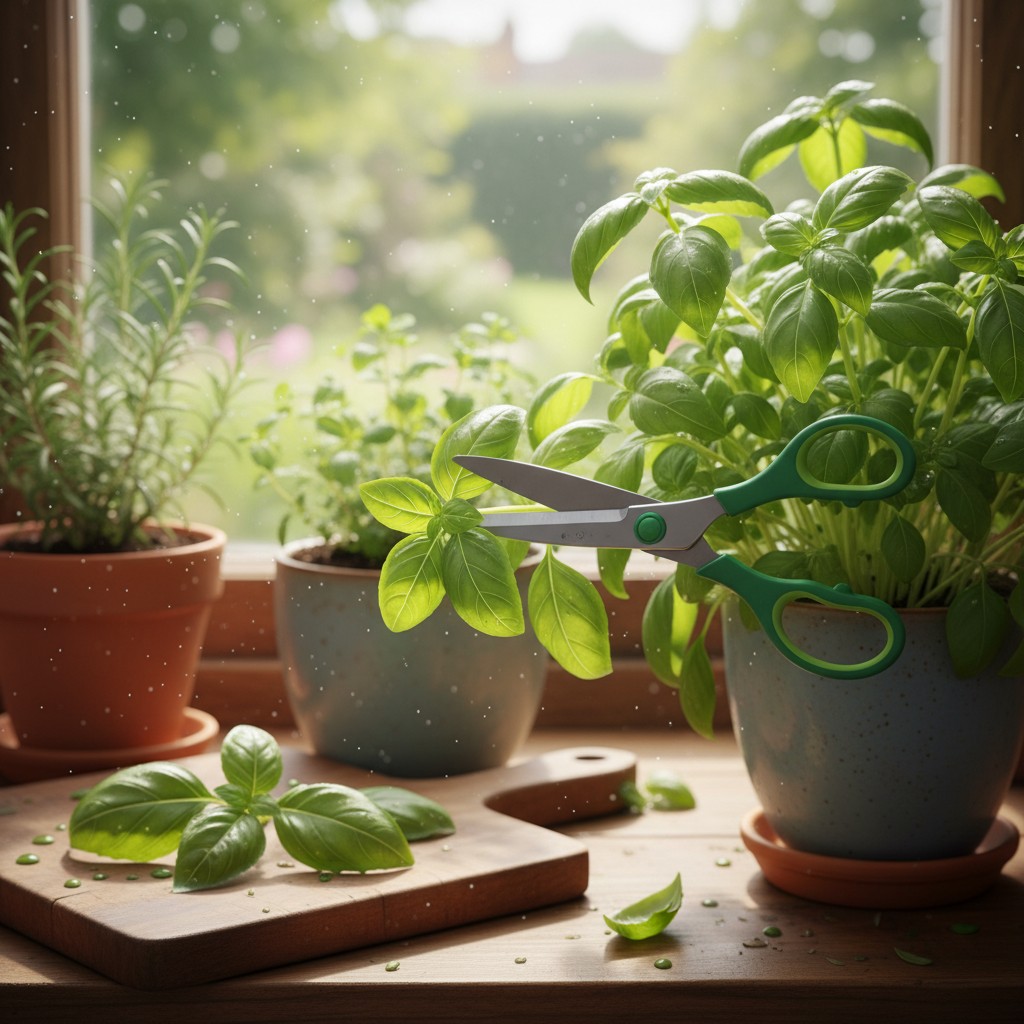
Harvesting is the whole point, so don’t be shy about it, regular harvesting actually encourages bushier, healthier growth. The key rules for harvesting indoor herbs are simple.
Wait until plants are well-established, usually 4-6 weeks after planting or transplanting, before taking your first harvest. Never remove more than one-third of a plant at one time. Harvest in the morning when essential oil concentrations are highest. Cut stems just above a leaf node to encourage branching. For chives, snip from the outside of the clump, cutting down to about an inch from the soil.
Indoor herbs grow slower in winter, so you’ll need more plants to provide the same harvest volume as your outdoor garden. I recommend at least two pots of your most-used herbs so one can recover while you harvest from the other.
I keep a little pair of herb scissors right on the windowsill next to my indoor garden. It sounds like a small thing, but having them right there means I actually use fresh herbs while cooking instead of reaching for the dried jar out of convenience. The difference in flavor when you add fresh thyme or rosemary to a winter stew is absolutely worth the minimal effort of maintaining a few pots on the windowsill.
Bringing Outdoor Herbs Inside
One of the easiest ways to start an indoor herb garden is to bring existing outdoor plants inside before the first frost. This works well for perennial herbs like rosemary, thyme, oregano, and sage. Here’s the right way to transition them.
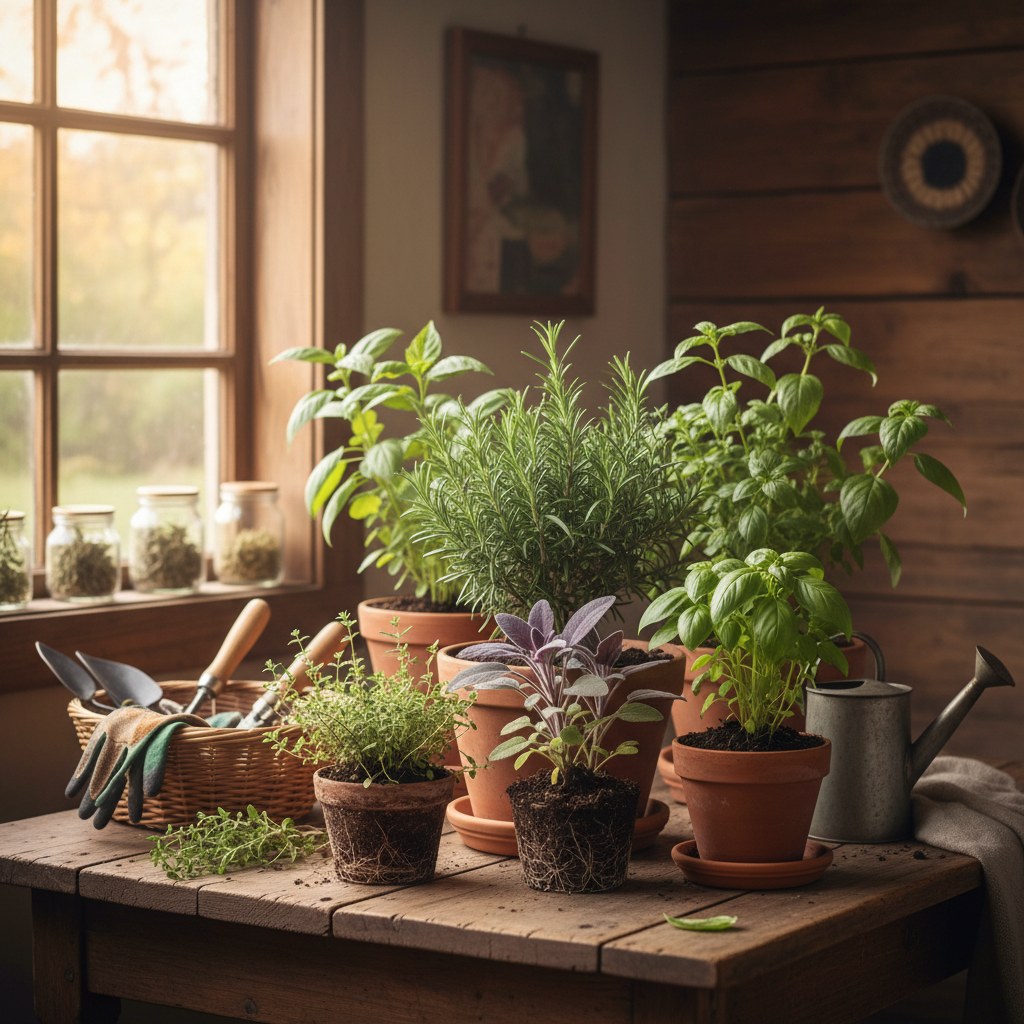
About two weeks before you expect the first frost, dig up the herbs you want to bring inside, or take 4-6 inch cuttings from established plants. Pot them in fresh potting mix in clean containers with good drainage. Place them in a shaded outdoor spot for a few days to begin the adjustment process. Then move them to a bright indoor spot, a south window or under grow lights.
Expect some leaf drop during the transition. Going from full outdoor sun to indoor light is a shock, and plants will shed leaves they can no longer support. This is normal. Keep watering on the lighter side during the adjustment period, and new growth suited to indoor conditions will emerge within a few weeks. This technique pairs well with container gardening since herbs already in pots simply need to be moved inside.
Common Problems and Solutions
Indoor herbs face a different set of challenges than outdoor ones. Here are the most common issues and how to fix them.
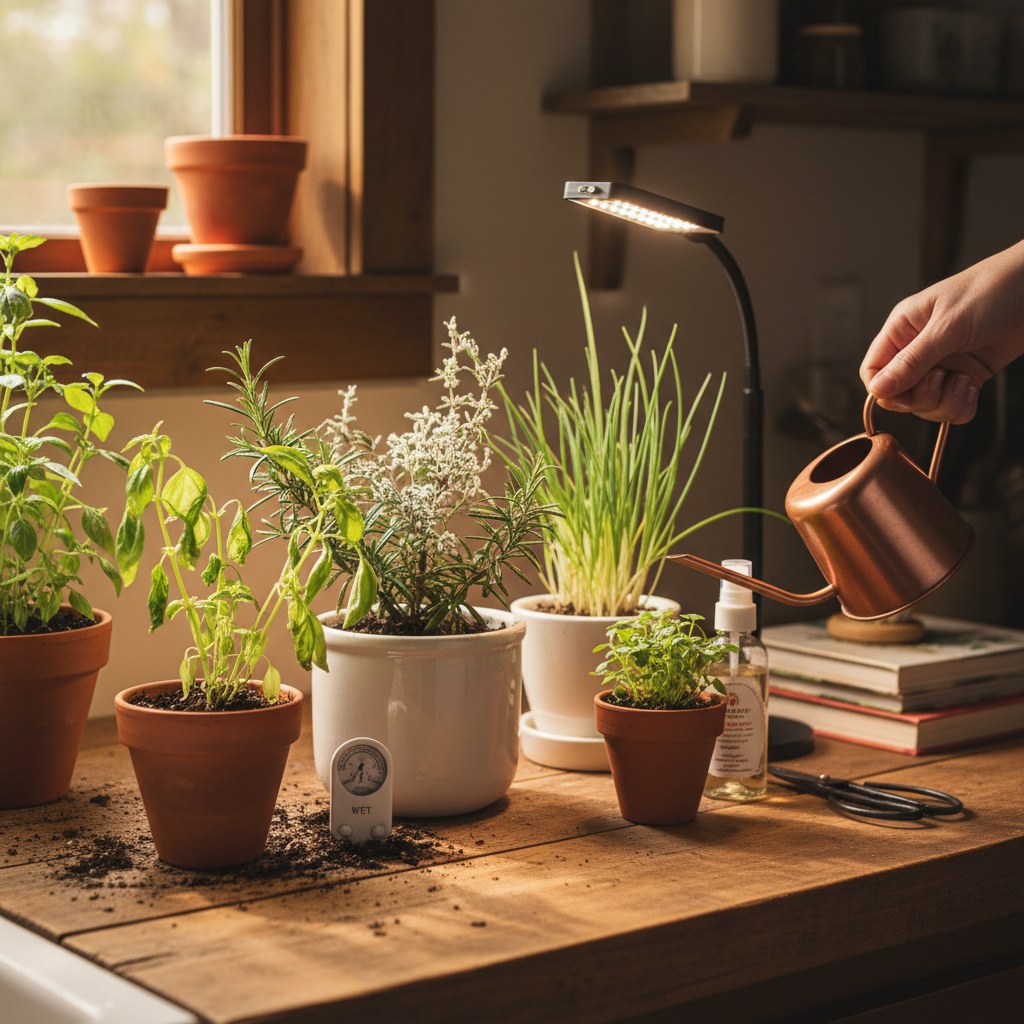
Leggy, stretched growth means not enough light. Move closer to the window or add a grow light. Pinch back the leggy growth to encourage bushier habits.
Yellowing leaves usually indicate overwatering. Check the soil moisture before watering and ensure pots have adequate drainage. It can also mean nutrient deficiency if you haven’t fertilized in months.
Fungus gnats: those tiny flies hovering around your pots, thrive in consistently moist soil. Let the top layer of soil dry out more between waterings, and add a thin layer of sand on top of the soil to discourage egg-laying.
Powdery mildew appears as white patches on leaves, usually when air circulation is poor. Increase airflow with a small fan and avoid getting water on foliage. Remove affected leaves promptly.
Spider mites love the dry indoor air. Look for tiny webs on leaf undersides. Spray plants with water regularly or wipe leaves with a damp cloth to keep mites at bay.
Cooking With Your Indoor Harvest
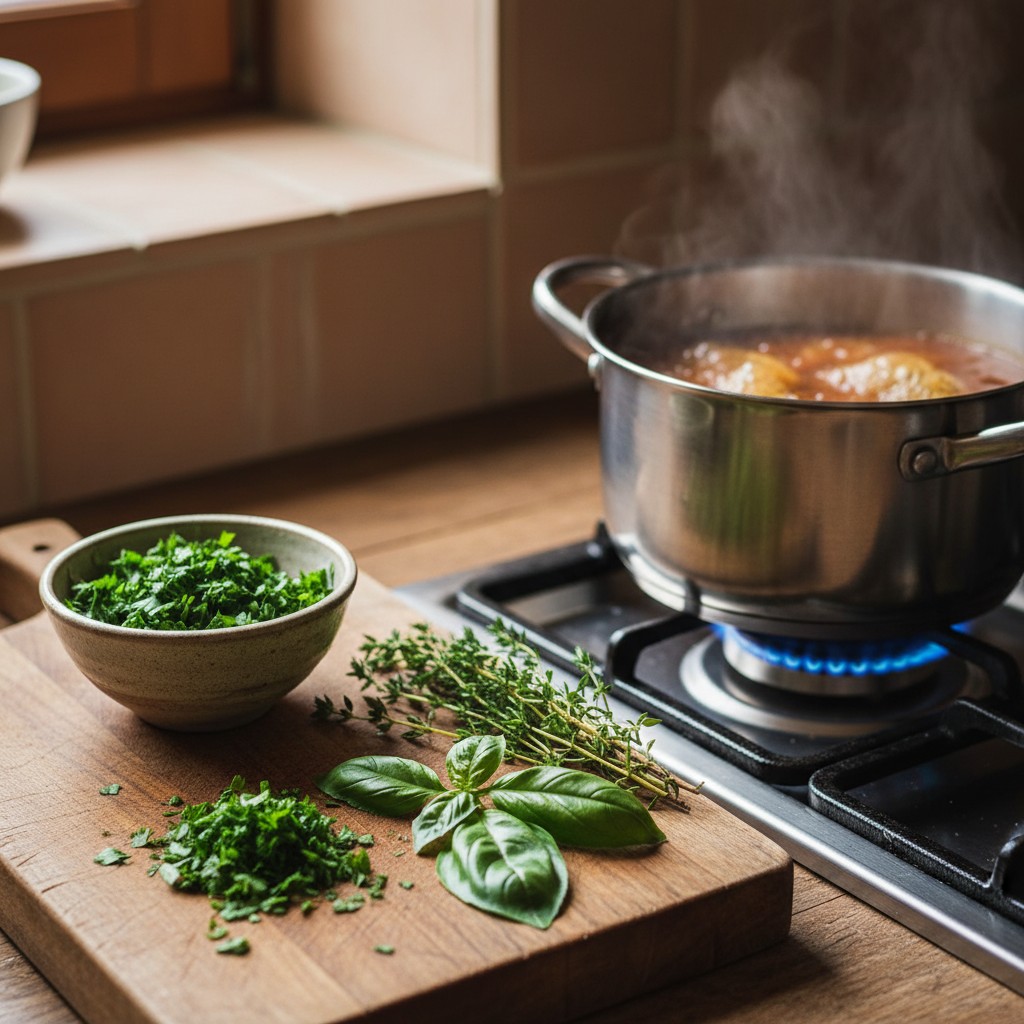
Having fresh herbs in winter opens up your cooking enormously. Fresh rosemary on roasted root vegetables, fresh thyme in winter soups, fresh mint in tea, fresh parsley in everything, the possibilities are endless. If you’re focused on cooking from scratch, fresh herbs are one of the easiest ways to elevate simple meals.
When you have more than you can use fresh, make compound butters by mixing chopped herbs with softened butter and rolling into logs to freeze. A good herb butter made with fresh herbs from your windowsill garden makes an ordinary piece of bread taste like something from a restaurant.
Starting Seeds Indoors for Next Year
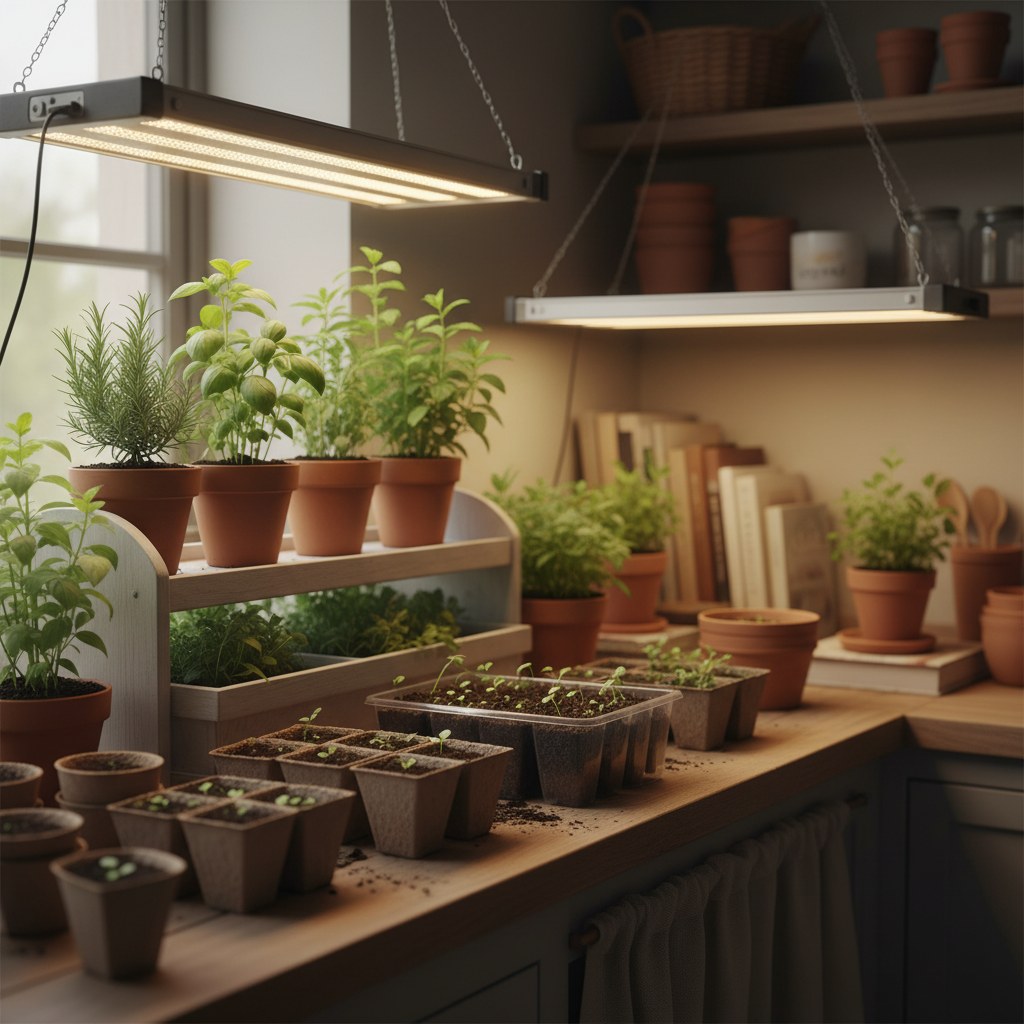
Your indoor herb setup does double duty in late winter when it’s time to start seeds for the spring garden. Those grow lights and sunny windowsills are perfect for getting a head start on next year’s outdoor herb garden. Start parsley, basil, oregano, and other herbs from seed indoors 6-8 weeks before your last frost date, and you’ll have robust transplants ready to go into the garden as soon as the weather warms.
Frequently Asked Questions
Can I grow herbs indoors without a south-facing window?
Yes, but you’ll likely need a grow light to supplement. East and west-facing windows provide some direct light and can work for low-light tolerant herbs like mint, chives, and parsley. North-facing windows alone are rarely sufficient for any herbs. A simple LED grow light running 12-14 hours daily compensates for lack of natural light effectively and affordably.
How long will indoor herb plants last?
Perennial herbs like rosemary, thyme, oregano, and mint can live indoors indefinitely with proper care. Annual herbs like basil and cilantro have a natural lifespan of several months and will eventually decline regardless of care. Plan to succession plant annuals every 6-8 weeks for a continuous supply. Parsley is biennial and will usually last through one full winter before going to seed.
Is it better to start indoor herbs from seed or buy transplants?
For immediate winter use, buying established plants or bringing in outdoor plants is faster, you can start harvesting within weeks. Growing from seed is cheaper but takes 6-12 weeks before plants are big enough to harvest from meaningfully. A good strategy is to buy a few transplants for immediate use and start seeds for longer-term supply. Herbs like chives and mint are especially easy from division of existing outdoor plants.
Why does my indoor basil keep dying?
Basil is the most demanding indoor herb. It needs more light than most windows provide in winter (6-8 hours minimum), warm temperatures above 60°F at all times, and consistent moisture without being waterlogged. Cold drafts from windows are often the culprit, even a few hours of temperatures below 50°F can damage basil. If you’re struggling, try a grow light and keep basil away from the windowpane itself during cold nights.
Do indoor herbs taste as good as outdoor ones?
Indoor herbs may have slightly less intense flavor than those grown in full summer sun, because strong light and warm temperatures increase essential oil production. However, the difference is modest, and fresh indoor herbs still taste dramatically better than dried herbs from a jar. Mediterranean herbs like rosemary and thyme tend to maintain their flavor best indoors, while basil shows the most noticeable difference from its outdoor counterpart.