Homesteading with Kids: Age-Appropriate Tasks from Toddler to Teen
Homesteading with Kids: Age-Appropriate Tasks from Toddler to Teen
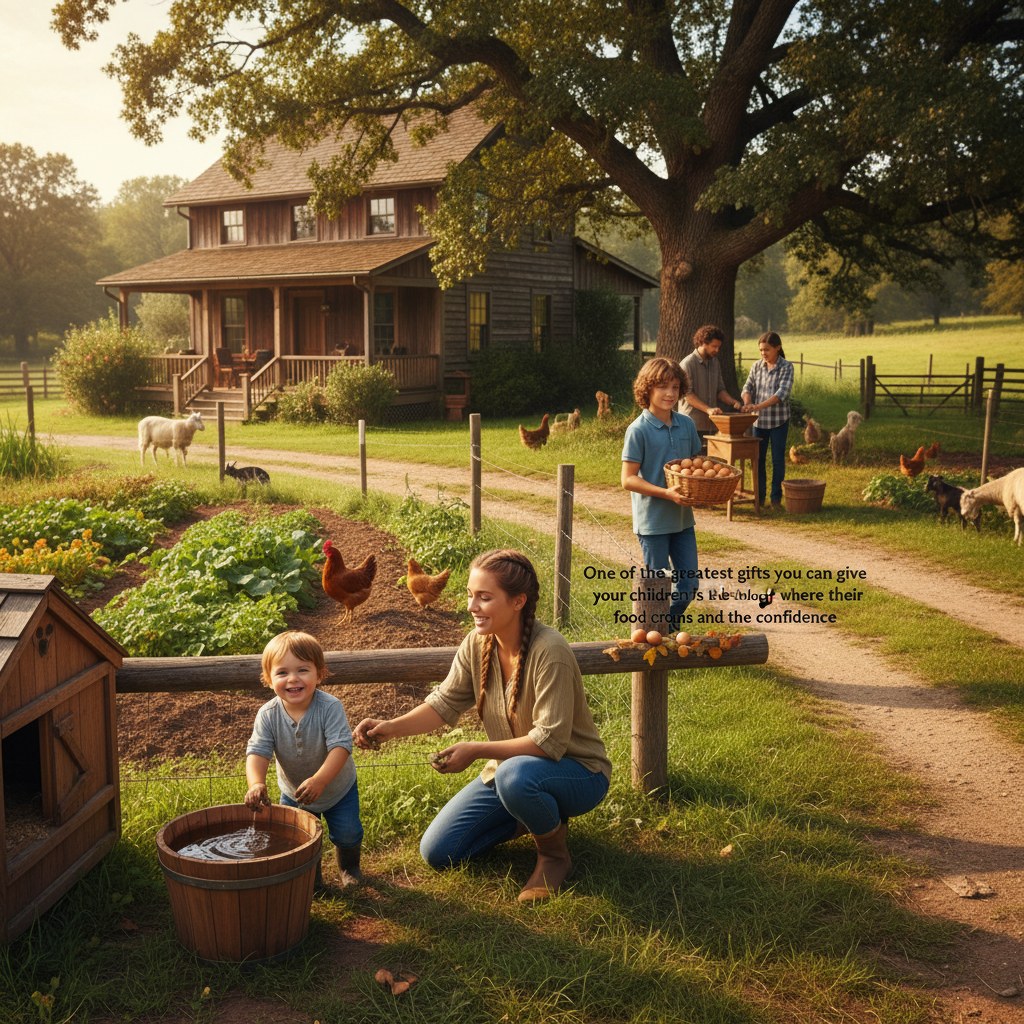
One of the greatest gifts you can give your children is the knowledge of where their food comes from and the confidence that comes from real, useful work. Homesteading with kids isn’t about cheap labor (though the help is certainly welcome), it’s about raising capable, connected, resilient human beings who understand that effort creates results.
But finding the right tasks for the right age can be tricky. Give a three-year-old a sharp hoe and you’ve got a trip to the emergency room. Give a thirteen-year-old the job of sprinkling seeds and you’ve got an eye roll heard round the county. The trick is matching responsibility to capability, then gradually increasing both as your child grows.
- Children as young as 2 can participate in meaningful homestead tasks with proper supervision
- Focus on process over outcome for younger children, the learning matters more than perfect results
- Real responsibility builds real confidence at every age
- Safety skills should be taught progressively alongside task skills
- Teens who grow up with homestead work develop practical life skills that serve them forever
The Philosophy: Work as Connection, Not Punishment
Before we get into specific tasks, let’s address the most important principle: homestead work should never feel like punishment. The goal is to create positive associations with useful work, the pride of collecting a warm egg, the satisfaction of pulling a perfect carrot, the accomplishment of cooking a meal from ingredients you grew yourself.
This means:
- Start by working alongside them, not by assigning tasks and walking away
- Praise effort and curiosity, not perfection
- Let them choose when possible, a child who picks their own garden tasks will be more engaged
- Accept imperfection, crooked rows still grow food, and messy egg collection still feeds the family
- Make it social: work goes faster and feels lighter when you’re doing it together
Ages 2-4: The Little Helpers
Toddlers and preschoolers are natural homesteaders, they want to touch, dig, explore, and imitate everything you do. Their attention span is short and their coordination is developing, but their enthusiasm is unmatched.
Garden Tasks
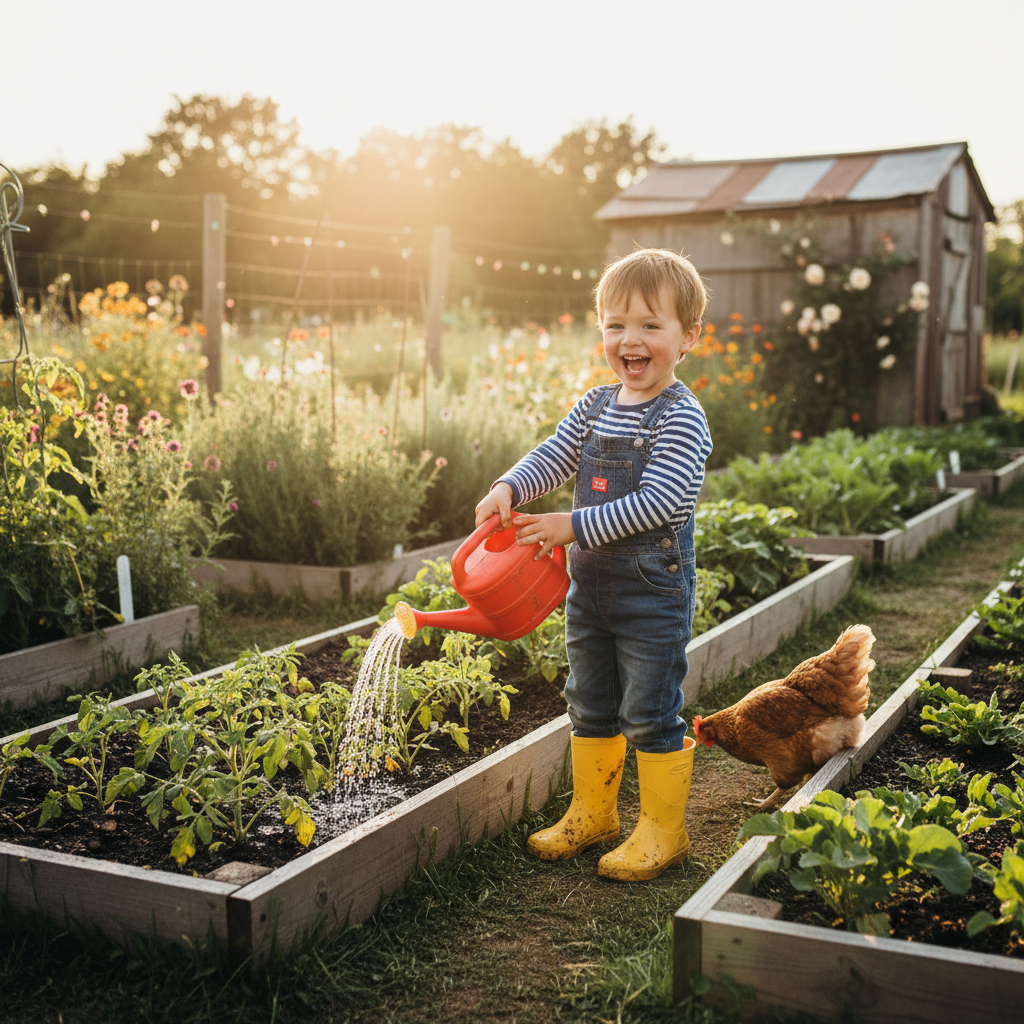
- Watering plants with a small watering can (expect more water on themselves than the plants)
- Dropping large seeds into prepared holes, beans, peas, squash, and sunflower seeds are perfect for small hands
- Pulling weeds (show them the difference between weeds and plants, and don’t worry too much about accuracy)
- Harvesting low-hanging fruit, cherry tomatoes, strawberries, snap peas
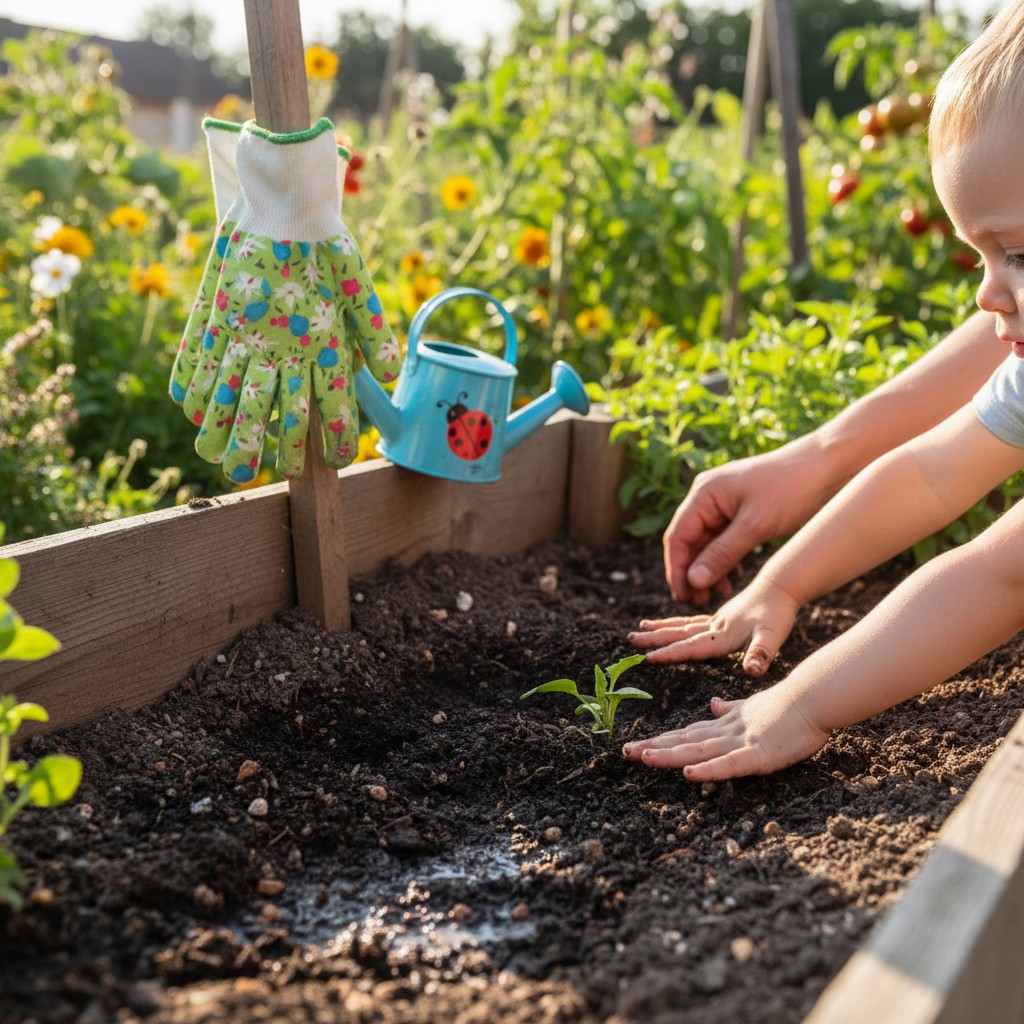
- Digging in the dirt, give them their own small patch and some child-sized tools
Animal Care
- Scattering chicken feed on the ground (the chickens aren’t picky about distribution)
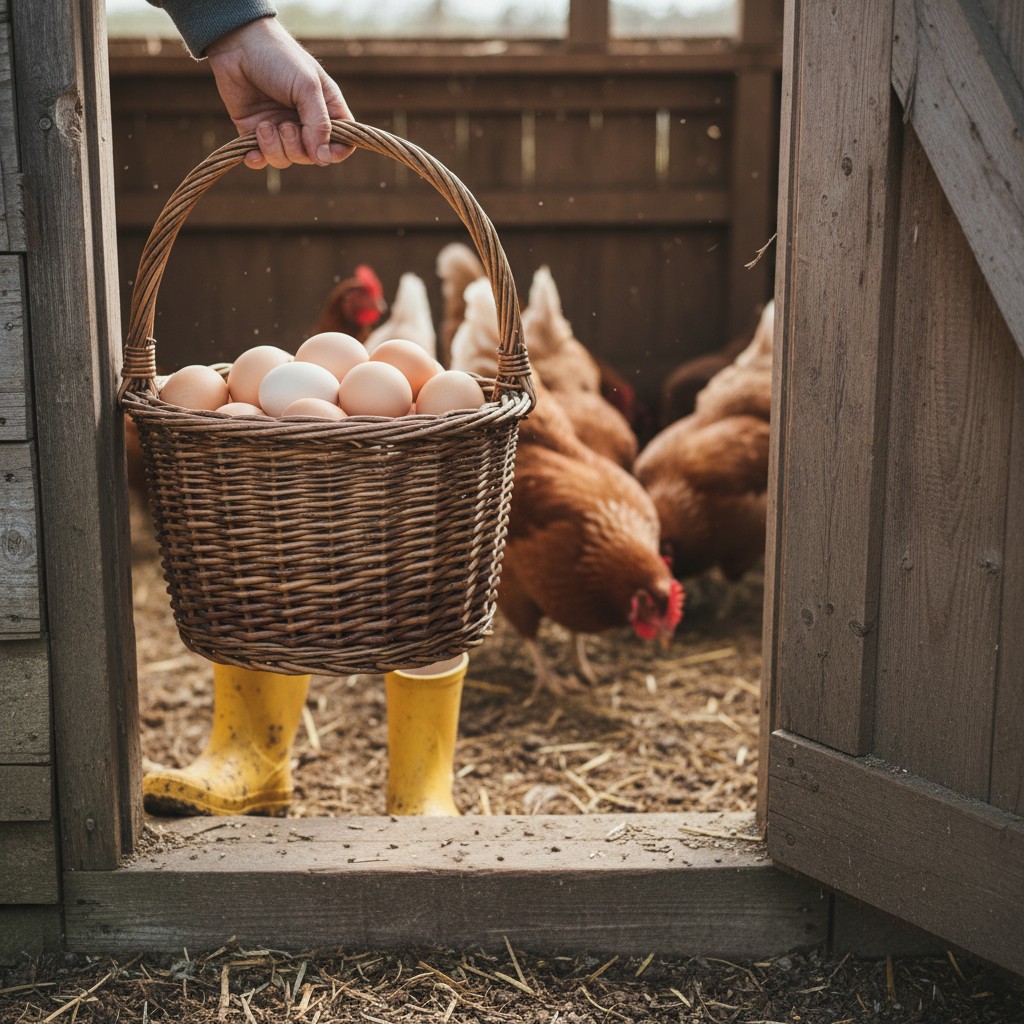
- Collecting eggs with supervision, teach gentle hands. This is a highlight for most toddlers. If you keep backyard chickens, this can become a beloved daily ritual.
- Filling water dishes for pets and small livestock
- Naming animals (a very important job, as any toddler will tell you)
Kitchen Tasks
- Washing vegetables in a basin of water
- Tearing lettuce and herbs for salads
- Stirring batters and doughs (with help holding the bowl)
- Sorting produce by color or size
Our two-year-old’s first homestead job was egg collecting. She would toddle out to the coop every morning in her rubber boots, carefully carry one egg at a time in both hands, and place it in the basket like it was made of glass. She’s seven now and manages the entire flock’s morning routine by herself. It all started with that one egg.
Ages 5-7: The Capable Beginners
This is when homesteading with kids really starts to get fun. School-age children can follow multi-step instructions, use basic tools safely, and take real pride in completing tasks independently. They’re also reading and doing basic math, which opens up new opportunities.
Garden Tasks
- Planting seeds and seedlings following spacing instructions, teach them to measure with a ruler or their hand
- Weeding their own dedicated garden row or bed, ownership increases engagement
- Watering with a hose (teach them to water the base of plants, not the leaves)
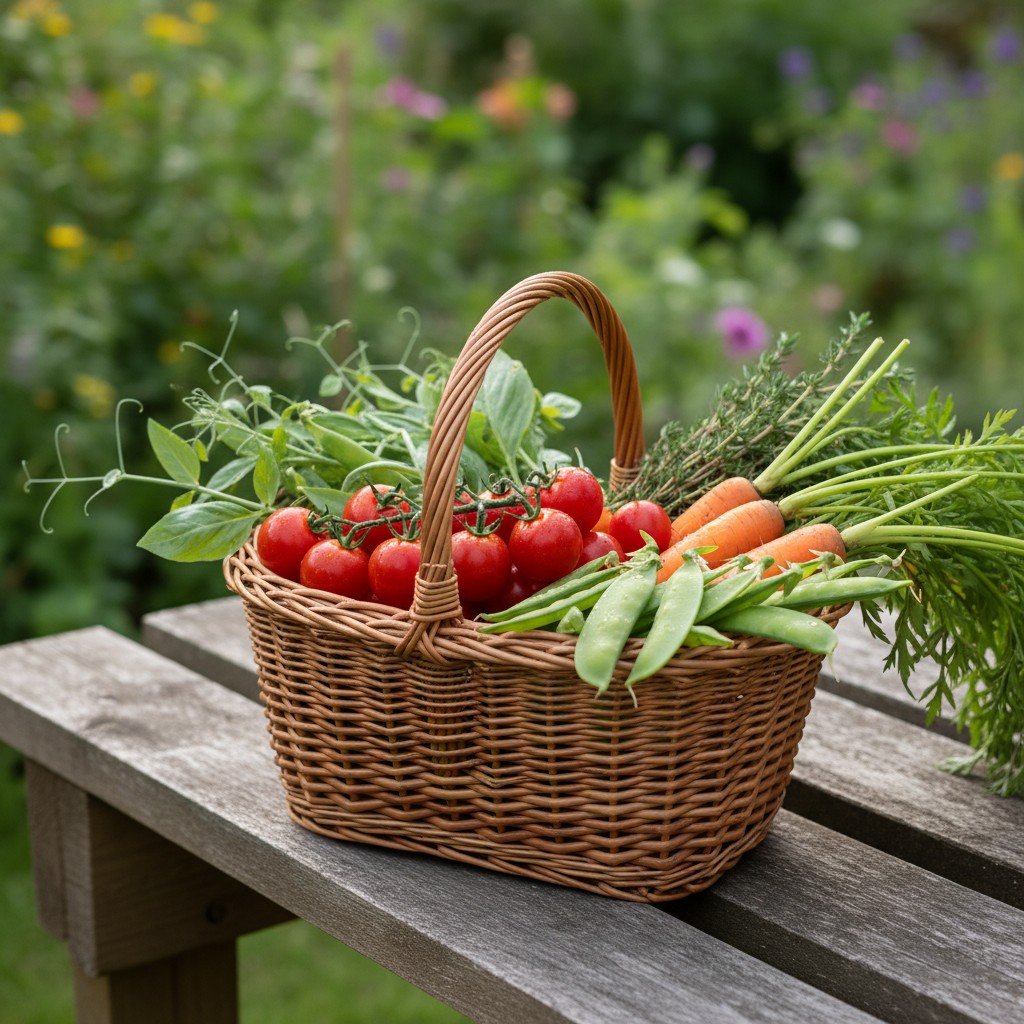
- Harvesting and sorting produce into baskets
- Starting seeds indoors, this is a great science lesson. Check out our seed starting guide for simple methods kids can follow.
- Helping with compost, turning the pile with a small pitchfork and learning what goes in (and what doesn’t). Our composting guide covers the basics.
Animal Care
- Full egg collection responsibility, counting eggs, recording the daily count
- Feeding chickens measured amounts of feed
- Refilling water containers for all small livestock
- Helping clean coops (scooping shavings, spreading fresh bedding)
- Gentle grooming of calm animals, brushing goats, rabbits, or horses
Kitchen Tasks
- Measuring ingredients for simple recipes
- Making salads from garden produce
- Kneading bread dough
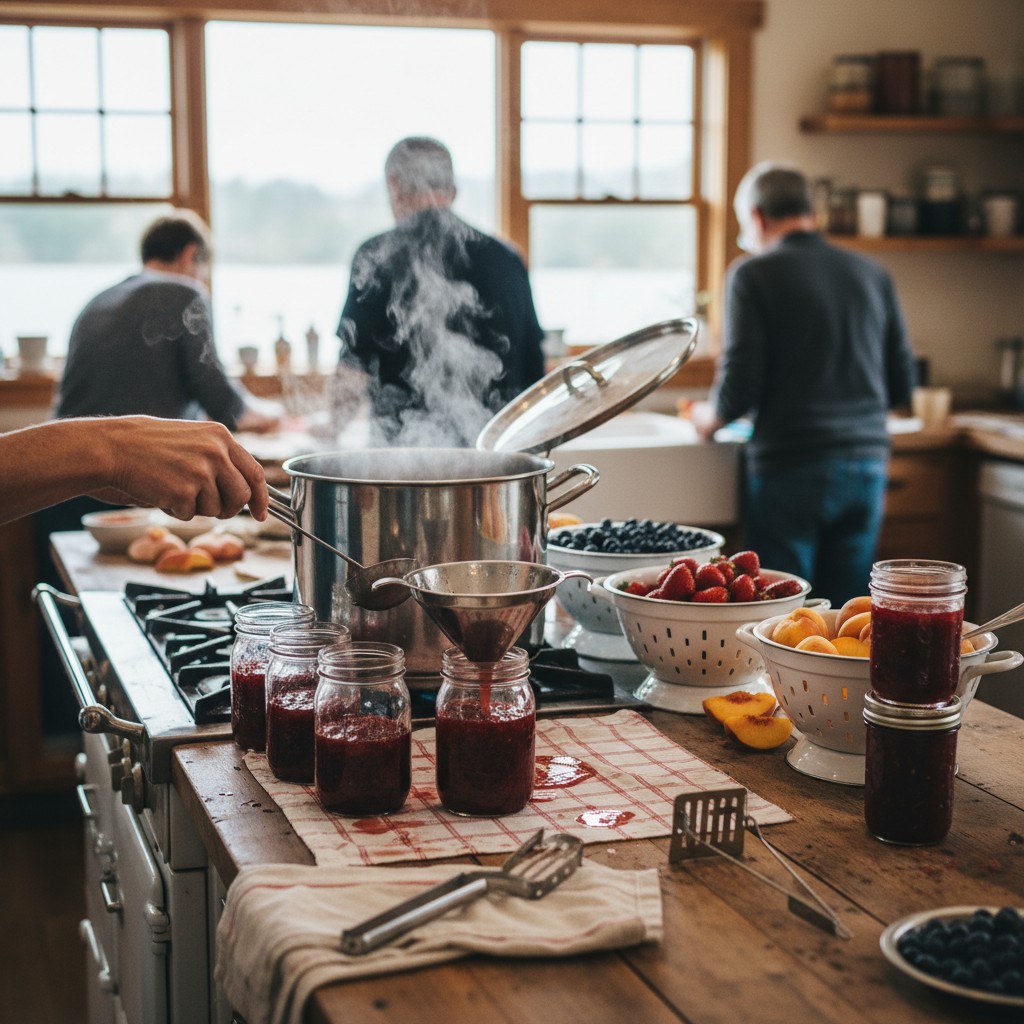
- Helping wash and prep produce for canning (removing stems, washing berries)
- Simple herb tasks, stripping thyme leaves, tearing basil, snipping chives with child-safe scissors. Building familiarity with growing herbs at this age sets the foundation for lifelong skills.
Other Homestead Tasks
- Stacking firewood (small pieces only)
- Sweeping the barn or coop
- Helping hang laundry on the line
- Nature journaling, drawing plants, insects, and weather observations
Ages 8-12: The Real Contributors
This is the golden age of homesteading with kids. Children in this range have the physical strength, attention span, and cognitive ability to handle genuinely useful tasks. Many can manage entire projects with minimal supervision. This is also the age when giving them real responsibility, and the natural consequences of neglecting it, teaches powerful life lessons.
Garden Tasks
- Planning and planting their own garden bed from seed catalogs to harvest
- Operating a rototiller or broadfork with instruction and initial supervision
- Identifying and managing common pests (hand-picking insects, recognizing disease)
- Succession planting, understanding and implementing a planting schedule
- Mulching and soil amendment
- Learning to use a hoe, rake, and garden fork properly
- Saving seeds for next year’s garden
Animal Care
- Full daily animal chore responsibility, feeding, watering, egg collecting, coop cleaning on a schedule
- Monitoring animal health and reporting concerns
- Helping with hoof trimming (holding the animal)
- Milking goats or cows with training
- Record keeping: egg counts, milk production, feed usage
Kitchen and Preservation
- Cooking simple meals independently, scrambled eggs, soup, baked potatoes. Our guide to cooking from scratch is a great resource for kids learning kitchen skills.
- Baking bread from start to finish
- Helping with water bath canning (with close adult supervision for the hot water)
- Making simple preserves, jams, pickles, dried herbs
- Dehydrating fruits and vegetables
Other Skills
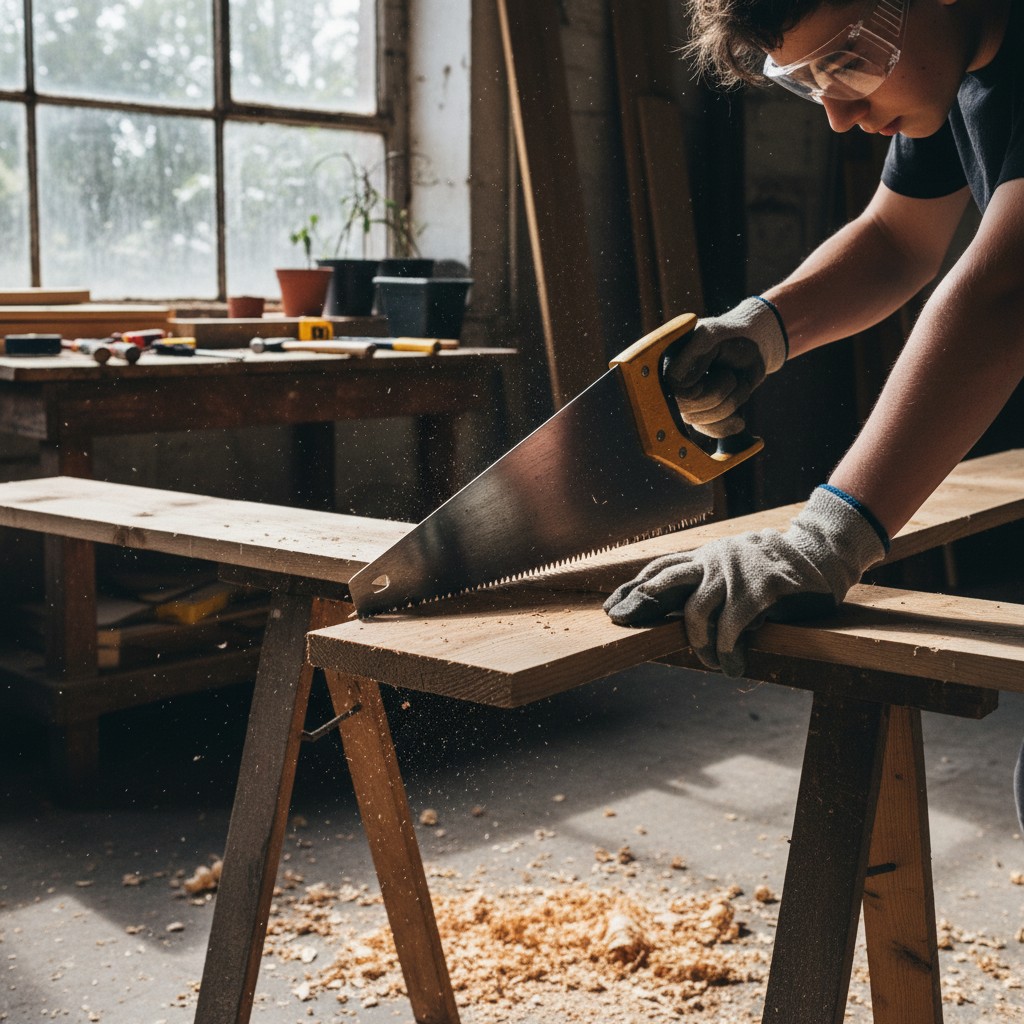
- Using hand tools, hammer, screwdriver, hand saw (with instruction)
- Basic fence repair
- Splitting kindling (with a hatchet, with training and supervision)
- Operating a wheelbarrow
- Mowing with a push mower
When our son was ten, we gave him a 4×8 raised bed and a twenty-dollar seed budget. He planned his garden, grew everything from seed, and by August he was selling surplus cherry tomatoes and basil to neighbors. He made forty-two dollars that summer and learned more about math, planning, and business than any worksheet could teach.
Ages 13+: The Junior Homesteaders
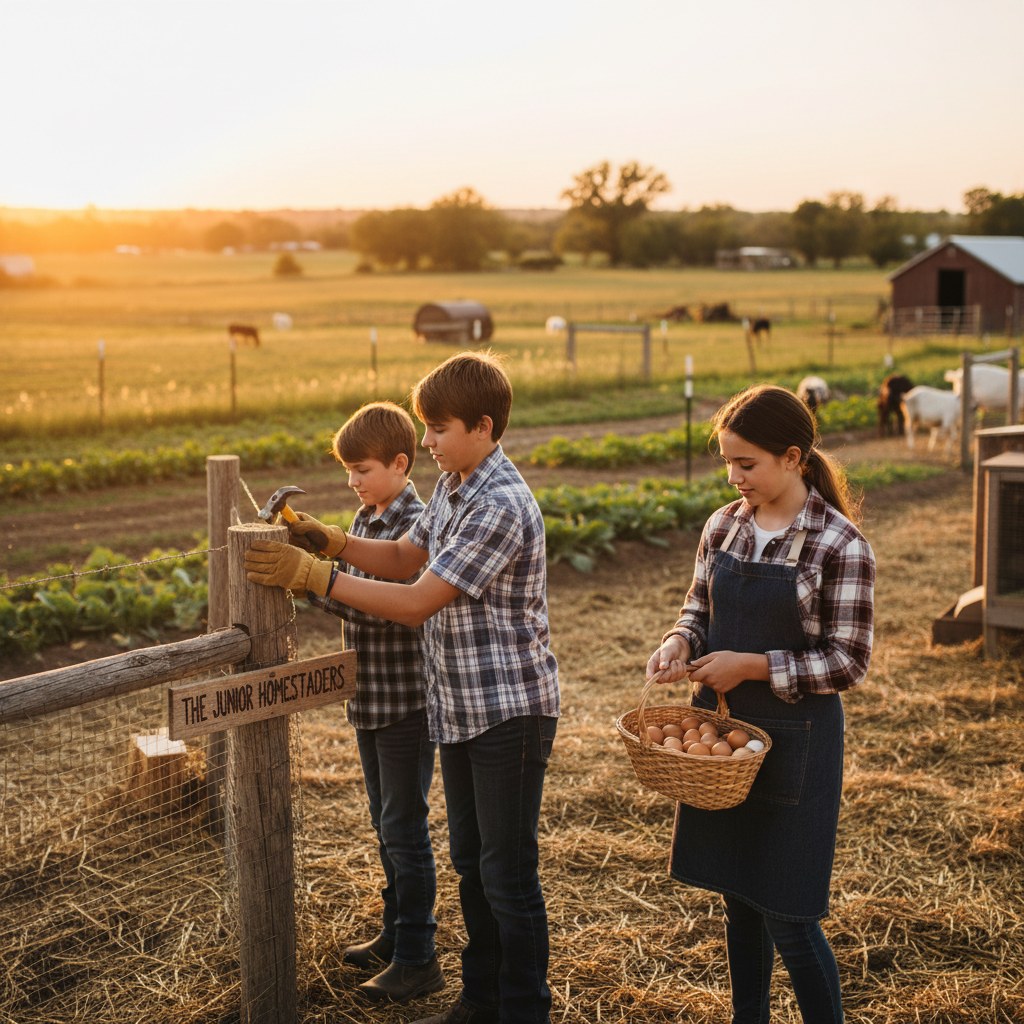
Teenagers are capable of nearly every homestead task an adult can do, with appropriate training and respect for safety. This is also the age where homesteading can become a genuine source of income and an impressive foundation for college applications, job interviews, and real-world competence.
Garden and Land Management
- Managing an entire garden section independently, from planning to harvest to cleanup
- Operating power equipment, riding mower, chainsaw (with thorough safety training), tiller
- Building raised beds, trellises, and garden structures
- Cover crop management and soil building
- Orchard care: pruning, spraying, harvesting
- Starting and managing a small market garden
Animal Care
- Full independent livestock management for a small flock or herd
- Breeding and birthing assistance
- Basic veterinary care, wound treatment, worming, vaccination
- Processing poultry (a difficult but important skill for meat-raising homesteads)
- Training animals
Kitchen and Preservation
- Pressure canning with training
- Meal planning and preparation for the entire family
- Cheesemaking, yogurt making, fermentation
- Butchering and meat processing
- Managing the pantry inventory
Business and Life Skills
- Selling at farmers markets (with an adult present as required by local laws)
- Managing a small homestead business, eggs, produce, baked goods
- Bookkeeping and budgeting for their projects
- Mentoring younger siblings in homestead tasks
- Equipment maintenance, oil changes, blade sharpening, basic small engine repair
A Task-by-Age Quick Reference
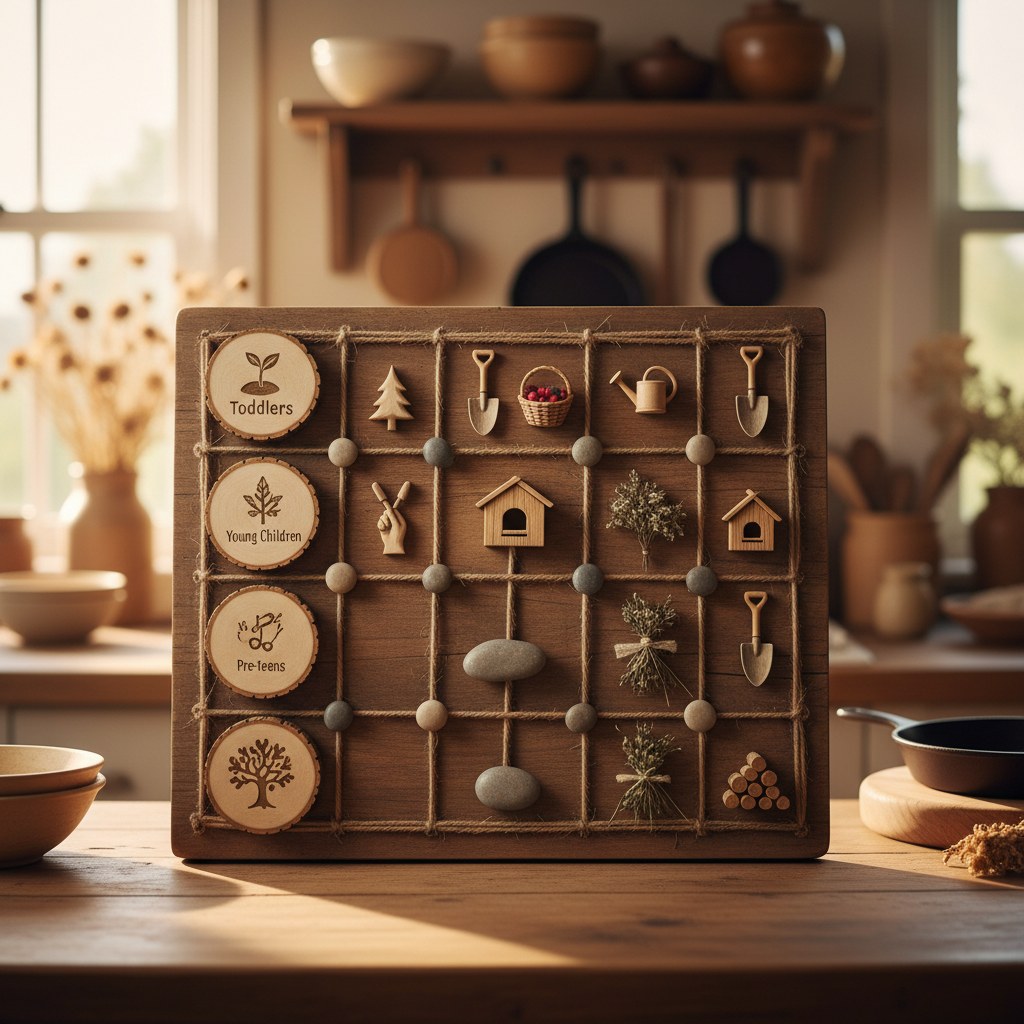
| Task Category | Ages 2-4 | Ages 5-7 | Ages 8-12 | Ages 13+ |
|---|---|---|---|---|
| Planting | Drop large seeds in holes | Plant with spacing guidance | Plan and plant own bed | Manage full garden section |
| Animal Care | Scatter feed, collect eggs | Measured feeding, full egg duty | Full daily chores, health monitoring | Independent livestock management |
| Cooking | Wash veggies, stir batters | Measure, knead, make salads | Cook simple meals solo | Full meal prep, canning, fermenting |
| Tools | Child-sized trowel, watering can | Small rake, scissors, pitchfork | Hoe, hand saw, hatchet (supervised) | Power tools with training |
| Independence | Always supervised | Supervised, some solo tasks | Mostly independent, checked on | Fully independent for most tasks |
Safety at Every Age
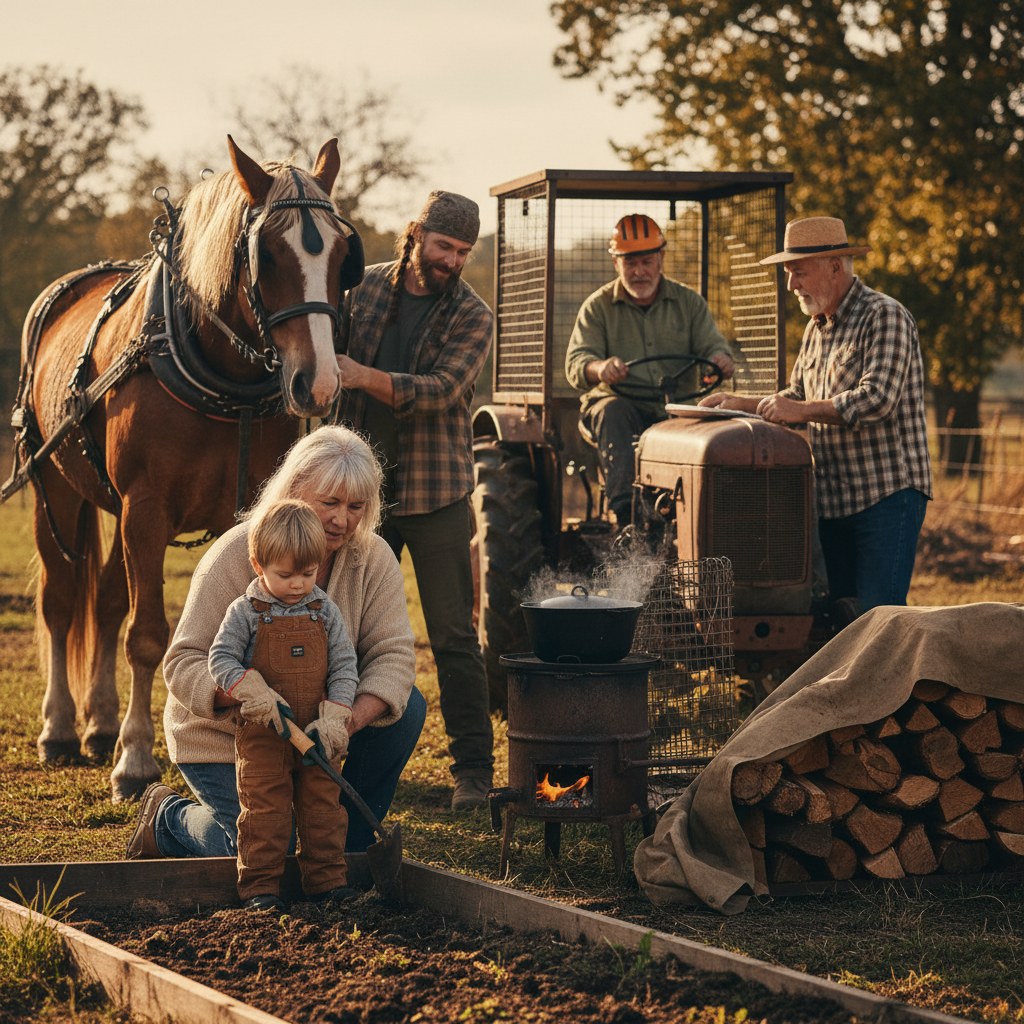
Homesteads involve real hazards, sharp tools, large animals, hot stoves, heavy equipment. Safety isn’t about wrapping kids in bubble wrap; it’s about teaching them to assess and manage risk.
⚠️ Zoonotic disease reminder for animal-care tasks: Animals carry germs that can make people sick even when the animals appear healthy. The most common risks for children doing farm chores are Salmonella (chickens, ducks, reptiles, including their housing and equipment), E. Coli O157:H7 (cattle, goats, sheep, and their manure or contaminated environments), and Cryptosporidium (calves, lambs, and other young ruminants). Teach children to wash hands thoroughly with soap and water immediately after handling animals, collecting eggs, cleaning coops, or touching any animal-related surfaces, before eating, drinking, or touching their face. Hand sanitizer alone is not sufficient for Cryptosporidium. Children under 5 and immunocompromised children are at highest risk. Source: CDC. Farm Animals and Germs.
- Ages 2-4: Direct supervision at all times. Remove hazards from their work area. Teach “hot,” “sharp,” and “gentle hands” concepts.
- Ages 5-7: Teach tool safety rules before handing over any tool. Supervise new tasks, then step back as competence develops. Establish firm boundaries about what they can and cannot do independently.
- Ages 8-12: Formal safety training for each new tool and task. Let them demonstrate competence before granting independence. Teach them to assess situations: “Is this safe? Do I need help?”
- Ages 13+: Treat them as apprentice adults. Thorough training on power equipment, including what to do if something goes wrong. Discuss real consequences of carelessness without being alarmist.
When Kids Resist
Even the most enthusiastic young homesteaders will have days (or phases) when they want nothing to do with chores. This is normal. Here are strategies that help:
- Offer choices, not commands. “Would you rather collect eggs or water the garden?” gives them agency.
- Keep core responsibilities non-negotiable (animals must be fed), but allow flexibility in timing and method.
- Connect work to results they care about. A teenager who doesn’t want to weed might be motivated by selling produce for spending money.
- Respect their other interests. A child who wants to read all afternoon can do chores in the morning.
- Work alongside them during resistant phases. Your presence often re-energizes their participation.
- Remember the long game. Today’s reluctant helper may be tomorrow’s passionate gardener. Plant seeds: literally and figuratively, and give them time to grow.
Building a Family Chore System
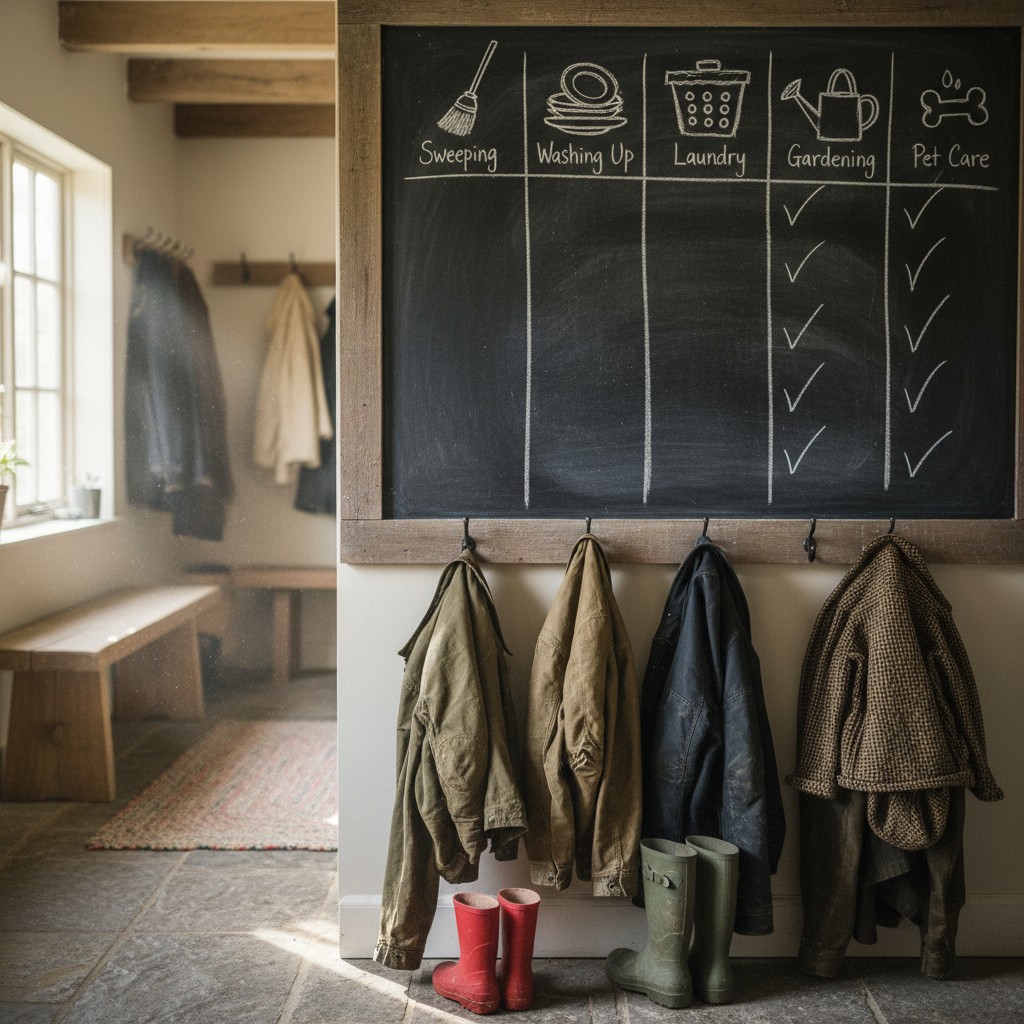
The most successful homesteading families use a structured but flexible chore system:
- Daily non-negotiables: Animals fed and watered, eggs collected, garden watered in dry weather
- Weekly rotating tasks: Coop cleaning, garden weeding, compost turning, kitchen deep cleaning
- Seasonal projects: Spring planting, summer preserving, fall harvesting, winter planning
- Personal projects: Each child’s own garden bed, animal, or enterprise
Post the daily and weekly expectations where everyone can see them. For younger children, a picture chart works better than a written list. For older children, a shared family calendar or whiteboard keeps everyone accountable.
🌱 From Our Homestead
Getting our kids involved in homesteading has been one of the best parenting decisions we have made. Our four-year-old collects eggs every morning without being asked, and our seven-year-old can identify a dozen garden herbs by smell alone.
Frequently Asked Questions
What if we’re new to homesteading ourselves, can we still teach our kids?
Absolutely. Learning together is actually one of the best approaches. Children love seeing that adults are learners too, and the experience of figuring things out as a family creates strong bonds. Start with something simple like a small garden bed or a few backyard chickens and let everyone learn as you go. Your kids will be more forgiving of mistakes than you think, and the shared experience of “we’re in this together” is powerful.
How do I keep younger kids safe around older kids’ tools and tasks?
Clear zones and rules are essential. Establish a rule that certain tools live in specific places and only come out with permission. When older children are using sharp or power tools, younger children stay a set distance away (we use a “two arm-lengths” rule). As children demonstrate responsibility with simpler tools, they graduate to the next level. It also helps to give younger children their own special tools so they don’t feel excluded or tempted to grab what their siblings are using.
At what age should kids start having required daily chores?
Most homesteading families find that ages 5-6 is a natural starting point for one or two required daily tasks. Before that, participation is encouraged but not required. A five-year-old can reliably collect eggs and refill a water dish every morning. By seven or eight, most children can handle a 15-20 minute daily chore routine. The trick is starting small and building gradually, a single daily task done consistently is better than a long list that overwhelms and leads to conflict.
How do we handle the emotional aspects of raising and processing animals?
This is among the most challenging parts of homesteading with children. Be honest and age-appropriate. Young children can understand that “some chickens are for eggs and some are for eating” without needing graphic details. Older children and teens benefit from honest conversations about the food system, ethical animal raising, and the responsibility that comes with taking a life for food. Never force a child to participate in processing, but don’t hide it either. Many homestead kids develop a deep, mature understanding of the cycle of life that serves them well as adults.
Can homesteading count as homeschool curriculum?
Yes, and it’s one of the richest sources of hands-on learning available. Gardening covers biology, ecology, and earth science. Animal husbandry teaches responsibility, record-keeping, and biology. Cooking and preserving involve chemistry, math (measuring, doubling recipes, calculating yields), and nutrition. Selling at markets teaches business, math, and social skills. Many states recognize agricultural and practical life skills as valid homeschool subjects. Document what your children learn with photos, journals, and project records to create a robust portfolio.