How to Start a Wildflower Meadow
Key Takeaways
- Site preparation is 80% of the work. Killing existing grass and weeds before sowing is essential, wildflower seeds cannot compete with established turf grass.
- Use native wildflower species whenever possible. They’re adapted to your soil and climate, support local pollinators, and require less maintenance than non-native mixes.
- The first year will look mostly like weeds. This is normal and expected. Most perennial wildflowers spend their first year building root systems, not flowering.
- Sow in fall (preferred) or very early spring. Seeds need cold stratification and good seed-to-soil contact, don’t bury them deep.
- A mature wildflower meadow needs mowing just once or twice a year and no fertilizer, irrigation, or pesticides, dramatically less maintenance than a lawn.
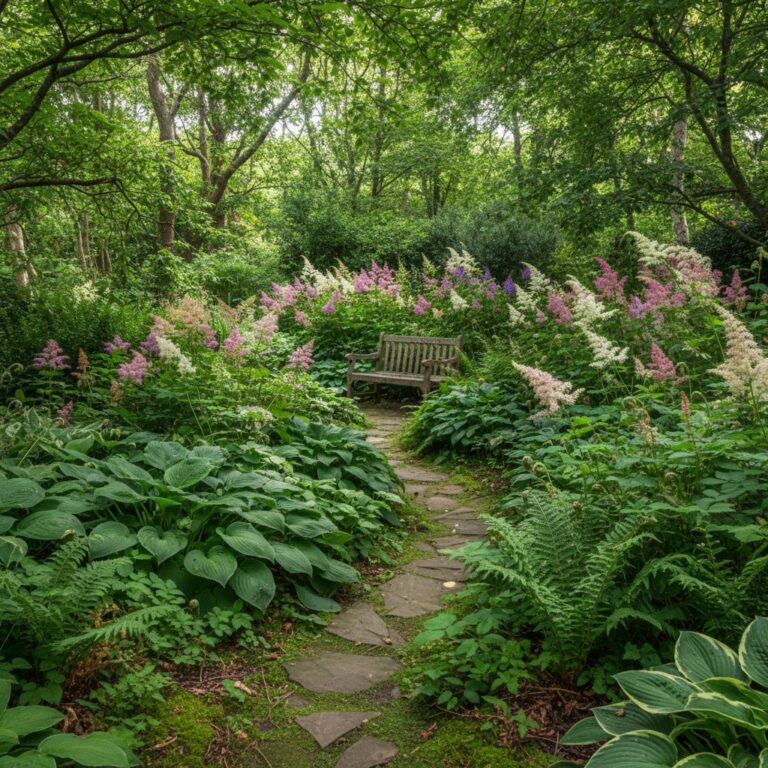
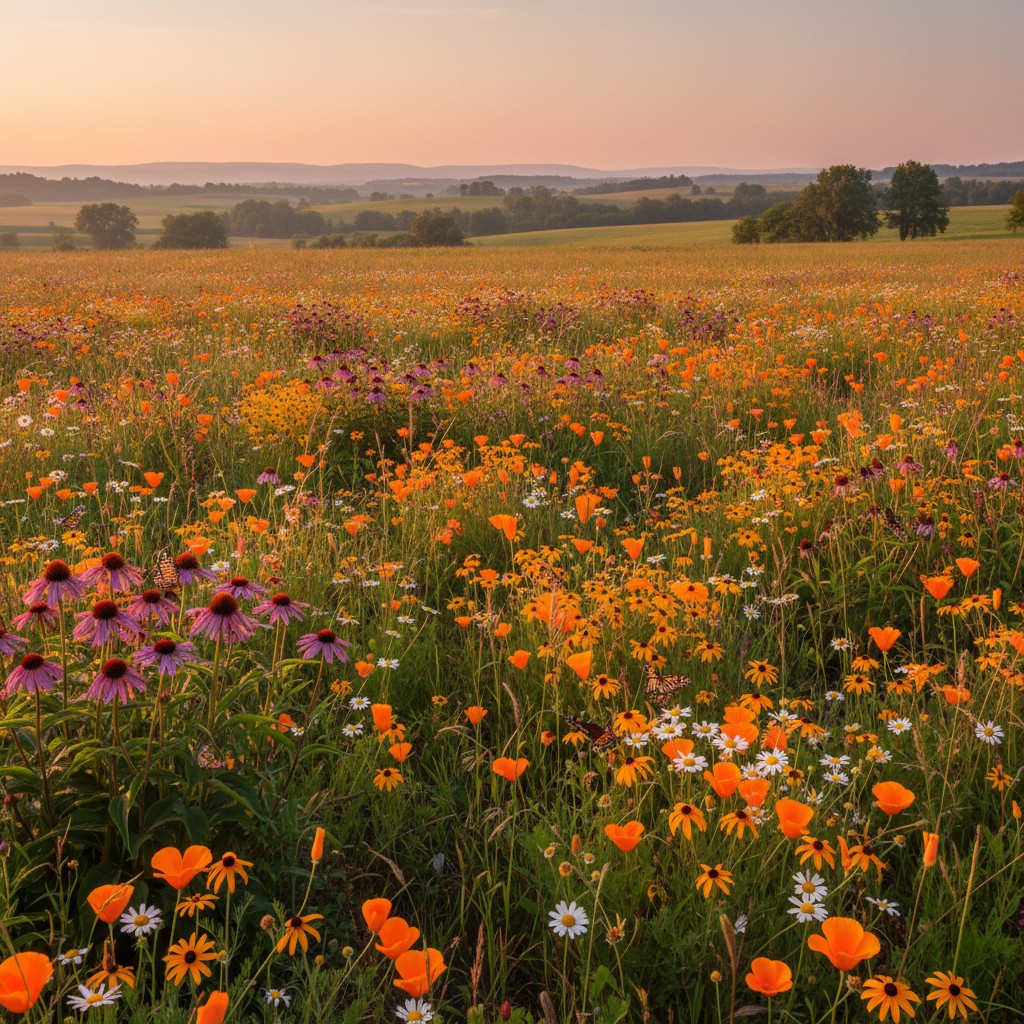
A wildflower meadow might be the most beautiful thing you can grow, and it’s the closest thing in gardening to letting nature do the work. No mowing every week. No fertilizing. No irrigation systems. Just a sweep of color that changes with the seasons, alive with bees, butterflies, and birdsong.
But here’s the truth that the seed packet photos won’t show you: creating a wildflower meadow is a multi-year process with an ugly first year. Those gorgeous catalog images of flower-filled meadows represent a mature planting in its third or fourth year, not what you’ll see twelve months after sowing. If you go in with realistic expectations and patience, the payoff is spectacular. If you expect instant results, you’ll be disappointed and tempted to give up right when things are about to get good.
🌱 From Our Homestead
We converted a struggling patch of lawn into a wildflower meadow by smothering the grass with cardboard in fall and direct-sowing native seed in early spring. By midsummer it was buzzing with pollinators, and now it is genuinely the easiest part of our property to maintain.
Why Start a Wildflower Meadow?
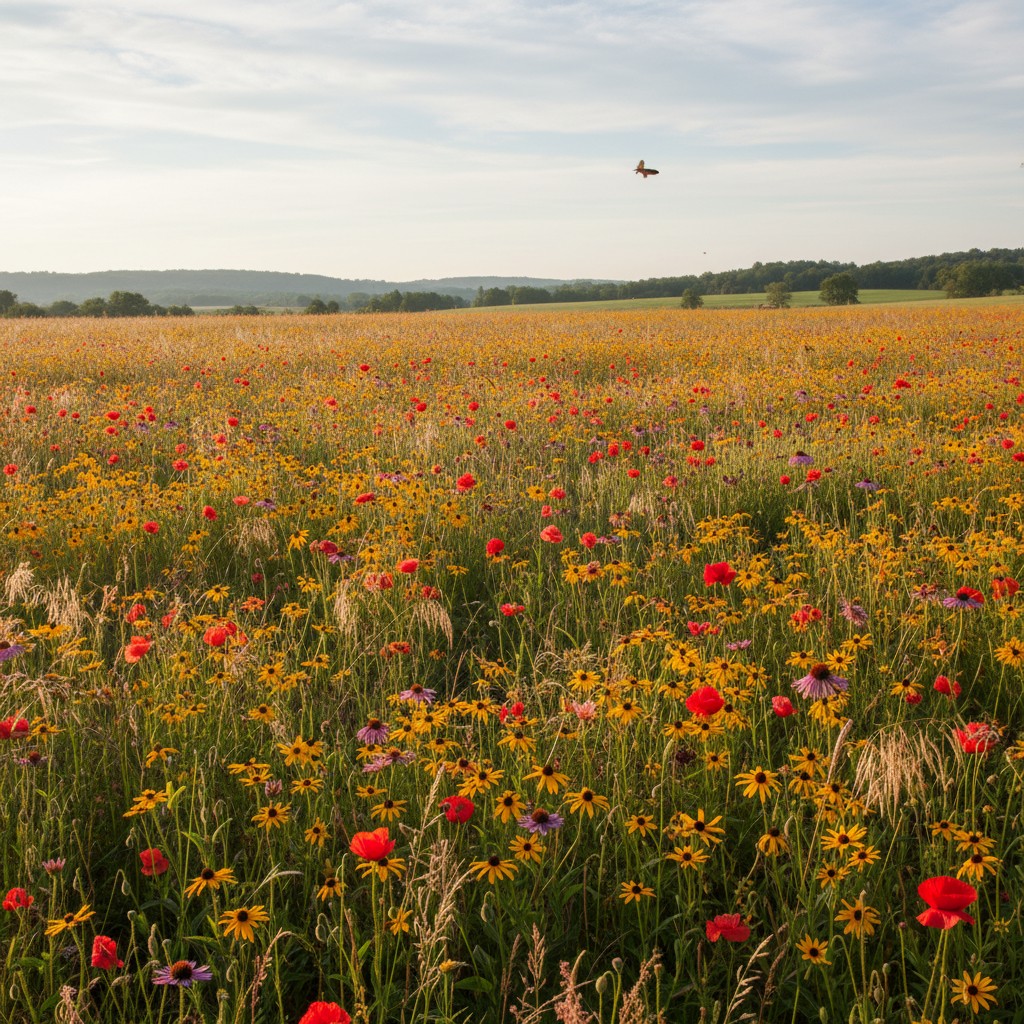
Beyond the obvious beauty, there are compelling practical reasons to convert lawn or unused land to wildflower meadow.
Ecological Benefits
Native wildflower meadows are pollinator powerhouses. A single acre of diverse wildflowers can support hundreds of bee species, butterflies, moths, and beneficial insects. Research by Tallamy & Burghardt et al. (2009, Conservation Biology, University of Delaware) found that native plants are approximately four times more attractive to native pollinators than non-native ornamentals. The Xerces Society has since helped popularize this finding. In an era of well-documented pollinator decline, even a small meadow makes a meaningful difference.
Meadows also provide habitat for ground-nesting birds, beneficial predatory insects, and fireflies. The deep root systems of native meadow plants filter rainwater, reduce runoff, and sequester carbon far more effectively than lawn grass.
Maintenance Savings
The average American spends roughly 70 hours per year mowing their lawn. A wildflower meadow, once established, needs mowing once or twice a year. No weekly mowing, no fertilizer, no irrigation, no herbicides. The time and money savings over the years are substantial.
Drought Resilience
Native meadow plants develop root systems that extend 3–10 feet deep, compared to lawn grass roots at 2–6 inches. During drought, your lawn turns brown and crispy while a native meadow stays green or goes gracefully dormant and bounces back with the next rain.
Site Preparation: The Make-or-Break Step
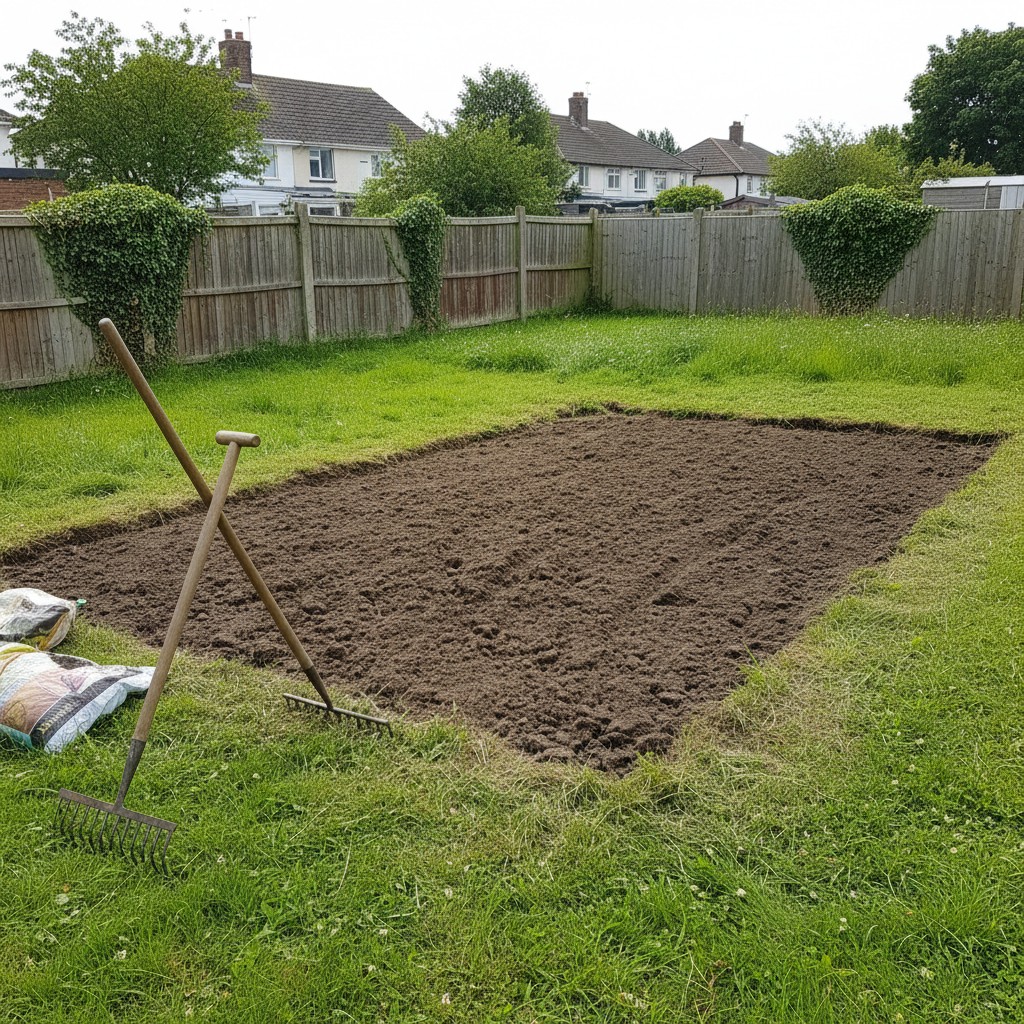
This is where most wildflower meadow attempts fail. People scatter seed on existing lawn or weedy ground and expect wildflowers to appear. They won’t. Grass and established weeds will outcompete wildflower seedlings every single time. You need to start with bare, weed-free soil.
The Smother Method (Recommended for Most Situations)
This is the gentlest and most reliable approach, though it requires planning ahead, it takes 2–4 months.
- Mow the existing vegetation as short as possible.
- Cover the entire area with overlapping layers of cardboard (remove tape and staples) or 4–6 sheets of newspaper. Wet the material down so it stays in place.
- Cover the cardboard with 4–6 inches of wood chips, straw, or leaves.
- Wait 2–4 months (start in spring for fall sowing, or the previous fall for spring sowing). The underlying grass and weeds will die from light deprivation.
- Remove the mulch layer, rake the cardboard remnants aside (most will have decomposed), and you’ll have bare, workable soil ready for seeding.
In my experience, the smother method is the most reliable for home gardeners. It’s low-tech, requires no chemicals, and kills grass reliably. The main downside is time, you need to plan months ahead.
Tilling Method
Tilling is faster but comes with a significant drawback: it brings buried weed seeds to the surface, creating a flush of new weeds. If you till, plan on tilling twice, once to break up the sod, wait 2–3 weeks for the first crop of weeds to germinate, then shallowly cultivate or hoe to kill those weeds before sowing your wildflower seed. This “stale seedbed” technique reduces (but doesn’t eliminate) the weed seed problem.
Don’t till deeply on subsequent passes. You want to kill surface weeds without bringing up more seed from below.
Herbicide Method
Some meadow establishment guides recommend glyphosate applications to kill existing vegetation. This is effective but increasingly controversial. If you choose this route, apply in fall when grass is actively growing, wait for complete kill, then seed into the dead sod. Many organic and ecologically-minded gardeners prefer the smother method instead.
A Note on Soil Quality
Here’s what most guides won’t tell you: wildflowers actually prefer lean, unfertile soil. Don’t add compost, fertilizer, or amendments before sowing a wildflower meadow. Rich soil favors aggressive grasses and weeds over wildflowers. If your soil is very fertile from years of lawn fertilization, that nitrogen will fuel weed growth at the expense of wildflowers for the first couple of seasons. Time and mowing will eventually deplete the excess fertility.
Seed Selection: Native vs. Non-Native
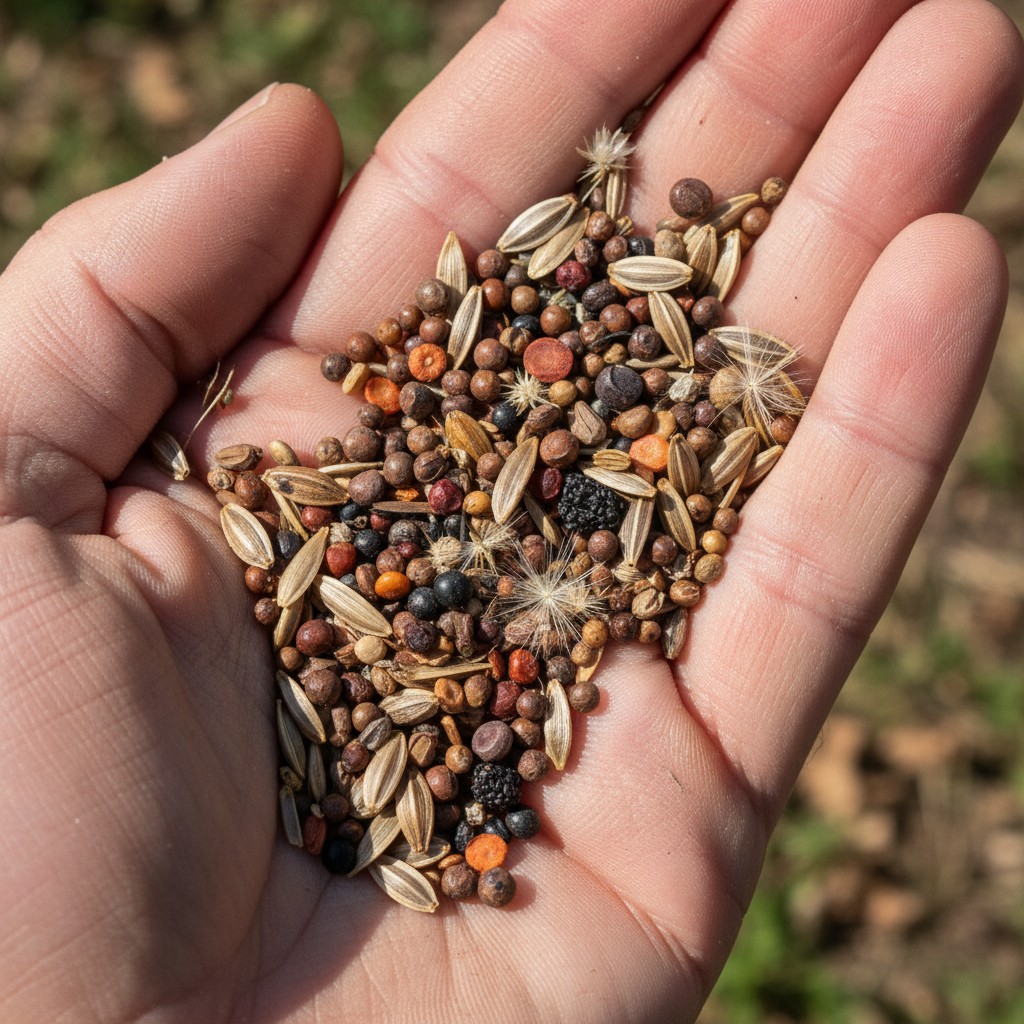
This is an important decision that affects both the ecological value and the long-term success of your meadow.
Native Wildflower Seeds
Native species are adapted to your region’s soil, rainfall, and temperature patterns. They support local pollinators (many of which have co-evolved with specific native plants and depend on them). They persist and self-sow year after year without replanting. And they require no supplemental water or fertilizer once established.
The challenge with native seed is that it’s more expensive, harder to source, and takes longer to establish than non-native mixes. Many native wildflowers are perennials that spend their first year building roots, so the visual payoff is delayed.
To find native species appropriate for your area, contact your state’s native plant society or cooperative extension office. They can recommend species lists and reputable seed suppliers. Some excellent native species for many regions include:
- Black-eyed Susan (Rudbeckia hirta). Biennial/short-lived perennial. One of the first natives to bloom in a new meadow. Bright yellow with dark centers.
- Purple coneflower (Echinacea purpurea). Long-lived perennial. Iconic prairie flower. Supports butterflies and goldfinches.
- Wild bergamot (Monarda fistulosa). Perennial. Lavender flowers are magnets for bees and butterflies. Mint family, aromatic foliage.
- Butterfly milkweed (Asclepias tuberosa). Perennial. Essential host plant for monarch butterflies. Brilliant orange flowers.
- Lanceleaf coreopsis (Coreopsis lanceolata). Perennial. Cheerful yellow flowers bloom for weeks. Easy to establish.
- New England aster (Symphyotrichum novae-angliae). Perennial. Late-season purple flowers provide critical fall nectar for migrating butterflies and pollinators.
- Little bluestem (Schizachyrium scoparium). A native bunch grass that adds structure, winter interest, and bird habitat to the meadow.
Non-Native Mixes
Those colorful wildflower seed packets at garden centers contain mostly non-native annuals, cosmos, bachelor’s buttons, corn poppies, African daisies, and similar species. They produce a gorgeous first-year display but are short-lived. Most need annual reseeding. They provide some pollinator value but far less than native species.
Non-native mixes have their place: they’re great for a quick, showy display while native perennials are establishing underneath. You can sow a mix of fast-blooming annuals and slower-developing native perennials together. The annuals give you flowers the first year while the natives are building roots, then the natives take over in subsequent years.
When and How to Sow
Timing
Fall sowing (preferred): Sow after the first frost but before the ground freezes. Seeds lie dormant through winter, receiving the natural cold stratification that many native species require for germination. They germinate naturally in spring when conditions are right. Fall sowing mimics nature’s own seeding cycle and generally produces the best results.
Early spring sowing: Sow as soon as the ground can be worked, while soil is still cool and spring rains are reliable. For species requiring cold stratification, you’ll need to cold-stratify the seed in your refrigerator for 4–6 weeks before spring sowing (mix seed with damp sand in a sealed bag, keep at 35–40°F).
Sowing Technique
- Mix seed with sand. Wildflower seed is tiny, and spreading it evenly is nearly impossible without a carrier. Mix your seed with 4–5 parts clean sand. This gives you more volume to spread and makes coverage more uniform.
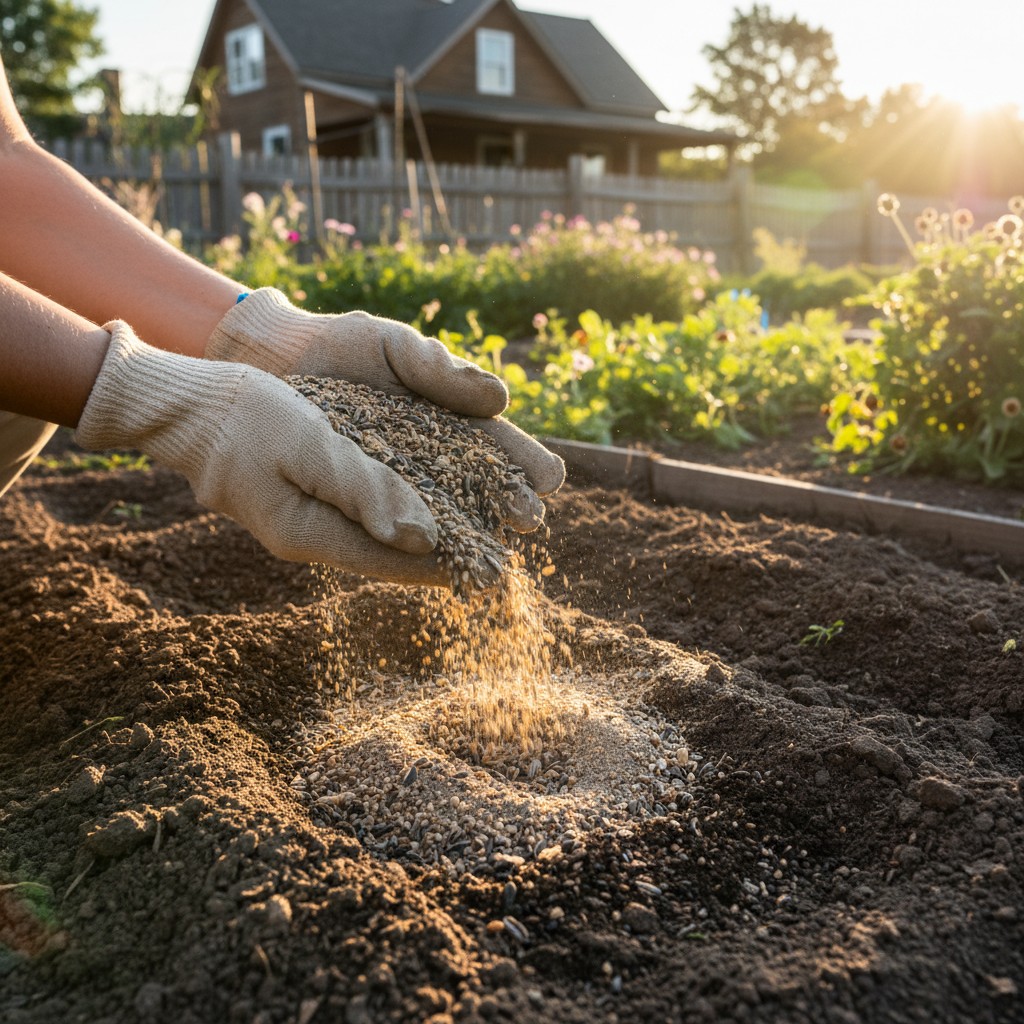
- Broadcast by hand in two passes, spread half the seed-sand mix walking in one direction across the area, then spread the other half walking perpendicular to the first pass. This cross-hatching gives the most even distribution.
- Press seed into the soil surface. Rake very lightly, just enough to ensure seed-to-soil contact. Most wildflower seeds need light to germinate, do not bury them more than 1/8 inch deep. Walking over the area or rolling with a lawn roller firms the seed into the soil surface.
- Water if sowing in spring and rain isn’t expected within a few days. Keep the soil surface moist (not soaked) for the first 4–6 weeks until seedlings establish. Fall sowings rely on natural precipitation.
How Much Seed?
Most native seed mixes are sown at about 60–80 seeds per square foot, which translates to roughly 4–6 ounces of pure seed per 1,000 square feet (the Prairie Nursery and Ernst Conservation Seeds standard for wildflower-dominant mixes). Follow the supplier’s recommended rate, it varies significantly by the specific mix.
The First Year: lean into the Ugly
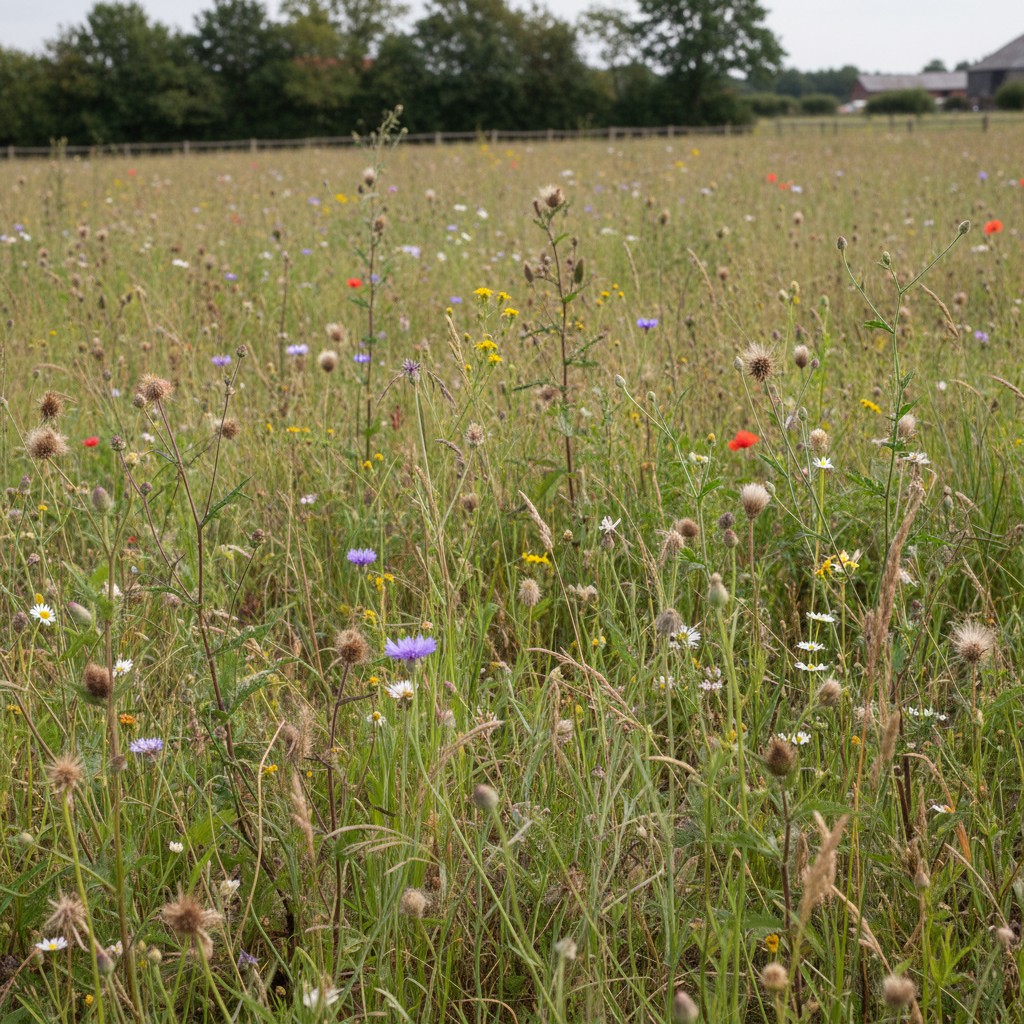
This is the part where patience gets tested. During the first growing season, your meadow will look mostly like weeds. That’s because it mostly is weeds. Annual weeds germinate faster than wildflowers and grow aggressively in the newly exposed soil.
Don’t panic. Don’t rip everything out and start over. The wildflowers are there, they’re just small and hidden among the weeds, quietly building their root systems.
First-Year Management
Mow the meadow to a height of 4–6 inches whenever the weeds reach about 12 inches tall. This typically means mowing 2–3 times during the first growing season. This keeps the weeds from shading out the young wildflower seedlings and prevents weeds from going to seed.
Set your mower as high as it goes. You’re not trying to make it look like a lawn, you’re just topping the weeds to let light reach the wildflower seedlings below.
Do not fertilize. Do not apply herbicides. Do not irrigate (except during extreme drought in the first year, and then only enough to prevent total seedling death).
Year Two and Beyond
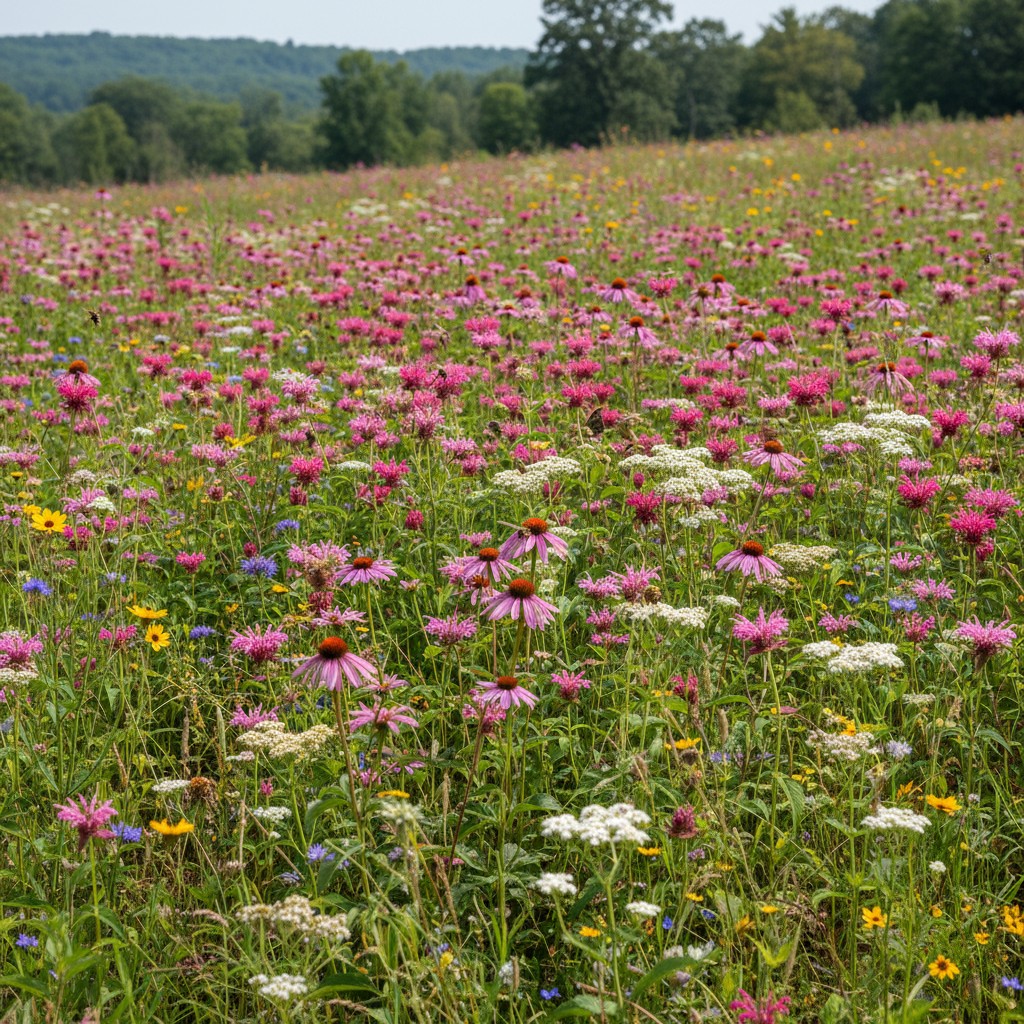
In the second year, you’ll start to see wildflowers blooming alongside the continuing (but diminishing) weed population. Black-eyed Susans and other fast-establishing species will be prominent. The slower-developing perennials will be getting bigger but may not bloom yet.
By year three, the meadow is hitting its stride. Perennial wildflowers are blooming strongly, the native bunch grasses are filling in, and the annual weeds are being crowded out by the increasingly dense perennial root systems. Each subsequent year, the meadow becomes more dominated by the wildflowers and less by weeds.
Annual Mowing Schedule (Year Two Onward)
A wildflower meadow needs one or two mowings per year to prevent woody plants (tree seedlings, shrubs) from encroaching and to knock back any remaining aggressive weeds.
- Late winter/early spring (February–March): Mow the entire meadow to 4–6 inches. This removes last year’s dead stalks and allows new growth to emerge unimpeded. The timing matters, mow before new spring growth begins but after overwintering insects have emerged. Leave the mowed material in place for a few days so any remaining insects can escape, then rake it off if desired.
- Optional mid-summer mow: If the meadow is in a visible area and you want a second bloom flush, mowing a section in late June can stimulate reblooming in some species. Don’t mow the entire meadow at once, always leave unmowed areas as pollinator and wildlife refuges.
Note on alternate-halves mowing: For established meadows, consider alternate-halves mowing (cutting only half the meadow each year) to preserve overwintering insects and invertebrate habitat.
Long-Term Maintenance
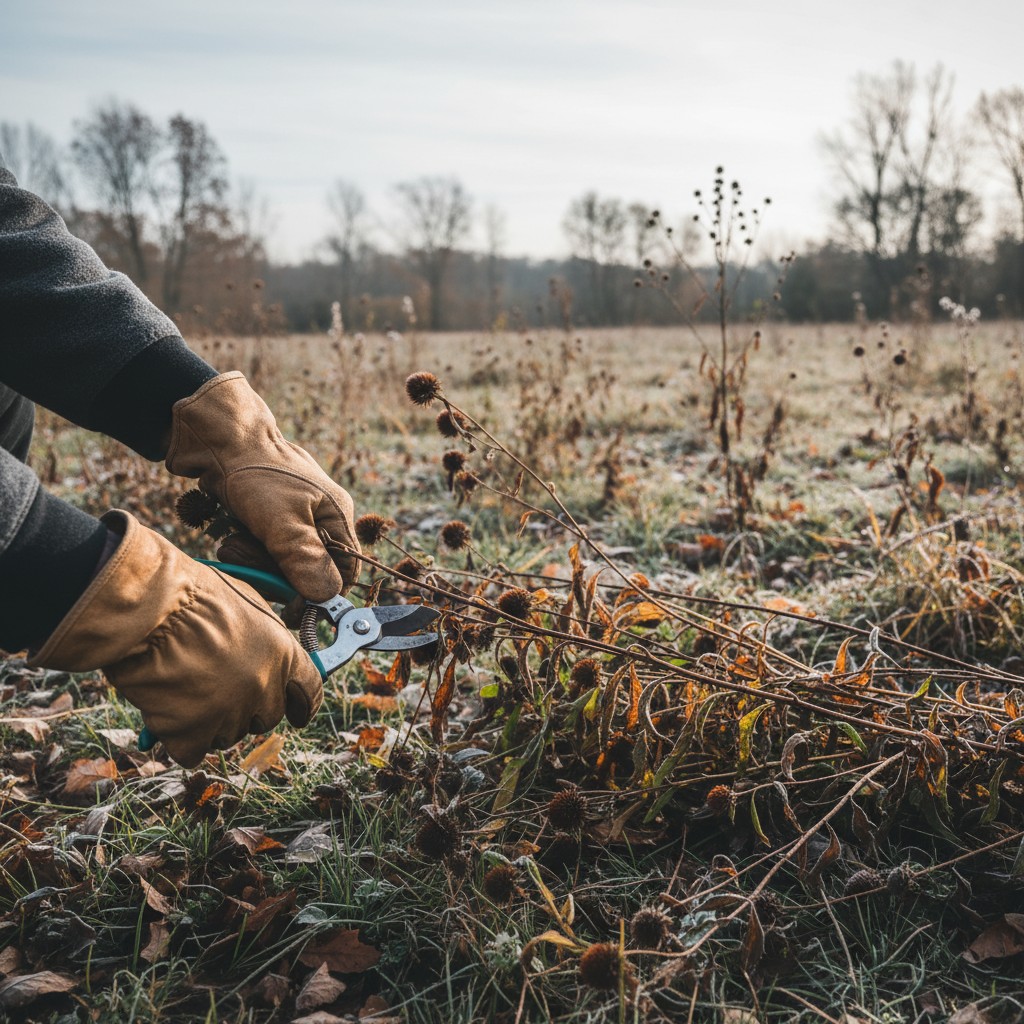
A well-established wildflower meadow is genuinely low-maintenance, but it’s not zero-maintenance.
- Watch for aggressive invaders. Some plants (both native and non-native) can become overly dominant and crowd out diversity. If one species starts taking over, selectively remove or mow it to keep the mix balanced.
- Overseed occasionally. Every 3–5 years, broadcast a fresh round of seed to introduce new plants and fill any thin spots. Fall is the best time for overseeding.
- Remove woody plants. Tree seedlings and aggressive shrubs will eventually try to colonize your meadow, that’s natural succession at work. Pull or cut them annually to maintain the meadow stage.
- Resist the urge to fertilize. Lean soil keeps the competitive balance in favor of wildflowers over grasses and weeds.
In my experience, the biggest threat to a mature meadow isn’t pests or drought, it’s the gardener’s own impatience. You have to let it be a little wild. That’s the point. The irregularity, the changing textures through the seasons, the patches of bare ground between bunches of flowers, that’s not messiness, that’s habitat. It’s exactly what pollinators and beneficial insects need.
Frequently Asked Questions
Can I convert my entire lawn to a wildflower meadow?
You can, but check local ordinances first. Some municipalities and HOAs have weed or lawn height regulations that may restrict wildflower meadows. Increasingly, communities are adopting “pollinator-friendly” exemptions, check if yours has one. If you face restrictions, consider starting with a meadow in the backyard (less visible), or convert a portion of the front yard while maintaining a mowed border that signals intentional management. That mowed edge makes a huge psychological difference, it tells neighbors this is a garden, not neglect.
How long until my wildflower meadow looks good?
Expect a weedy first year, a mixed second year with increasing wildflowers, and a genuinely beautiful meadow by year three. Full maturity, where the meadow has developed its own stable plant community with consistent blooming from spring through fall, takes about 3–5 years. The wait is real, but the result lasts decades with minimal intervention. If you want some immediate beauty, include fast-blooming annuals in your initial seed mix to provide first-year color while the perennials establish.
Will a wildflower meadow attract ticks?
Tall vegetation can harbor ticks, particularly in the northeastern United States where deer ticks are a concern. However, a well-managed meadow (mowed annually, no leaf litter buildup) is not significantly riskier than a typical suburban landscape. Maintaining a mowed buffer strip between the meadow and your living/play areas reduces tick migration to high-traffic zones. If ticks are a serious concern in your area, keep meadow plantings away from play areas and paths, and perform tick checks after spending time in tall vegetation.
My wildflower meadow failed, it’s all grass and weeds. What went wrong?
The most common reasons for meadow failure are: inadequate site preparation (existing grass wasn’t fully killed), sowing too deeply (seeds need surface contact and light), sowing at the wrong time, or losing patience and giving up during the weedy first year. If your meadow is truly failed, dominated by grass with no wildflower seedlings visible, the best approach is to start over. Smother or kill the existing vegetation completely, wait for a clean slate, and try again with fresh seed. Many successful meadows are the gardener’s second attempt, armed with the lessons from the first.