Cottage Garden Design: How to Create That Beautiful Wildflower Look
- Pack plants closely in flowing drifts, abundance over rigid structure
- Mix flowers, herbs, and vegetables together in the same beds
- Use self-seeding plants like hollyhocks and foxgloves for effortless fill
- Add vertical interest with climbing roses, sweet peas, and trellises
- Winding pathways create a sense of discovery and charm
- Plan for layered heights, short in front, tall in back
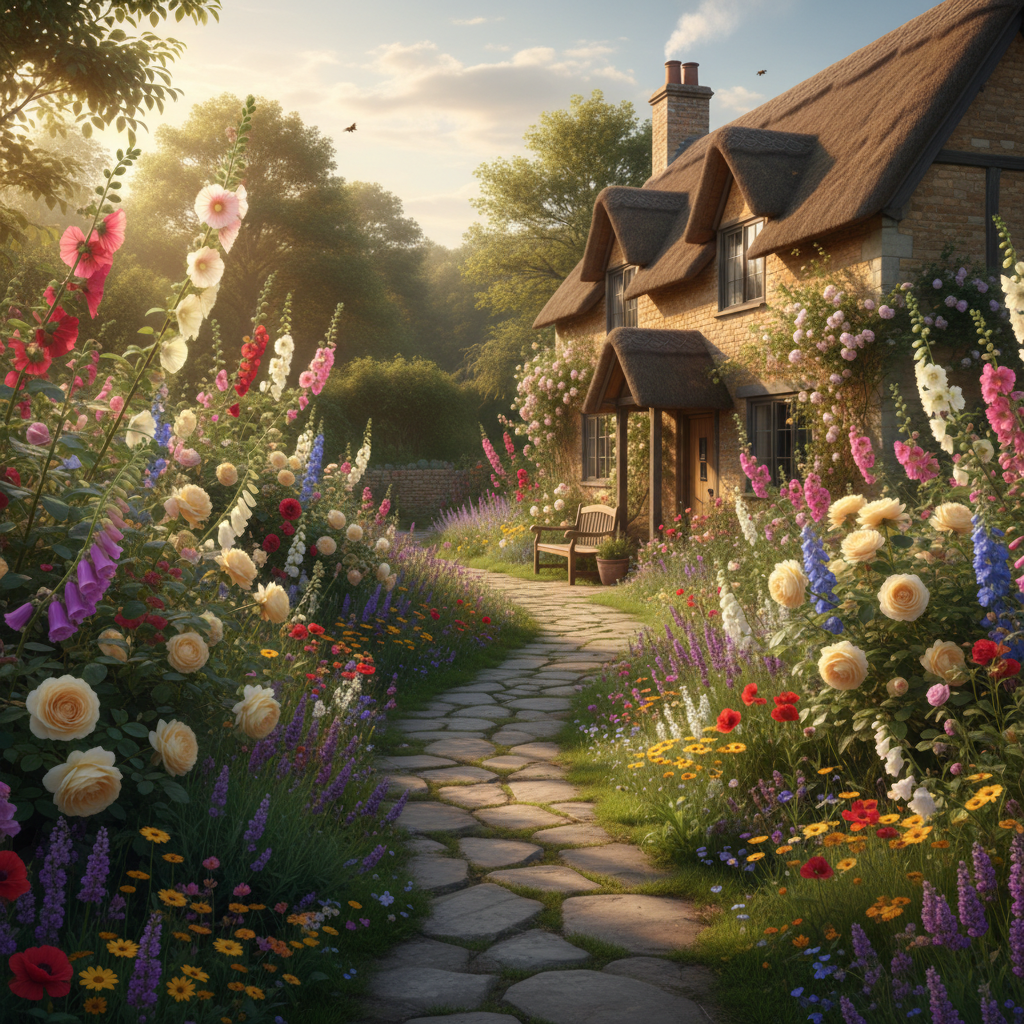
There is something irresistible about a cottage garden, that lush, overflowing, slightly wild look where flowers tumble over pathways, roses climb fences, and every corner is packed with color and texture. It looks effortless, but that effortlessness is actually the result of a few intentional design choices. The great news is that cottage gardens are easier to create than formal gardens because perfection is not the point.
My own cottage garden started as a tiny patch by the front porch, and it has slowly spilled into every corner of the yard. That is the magic of this style, it grows and evolves with you, and every season brings happy surprises.
🌱 From Our Homestead
Our cottage garden started as an overgrown strip between the porch and the driveway that I was tired of mowing. Two seasons of tucking in zinnias, herbs, and self-sowing annuals turned it into the most photographed spot on our property.
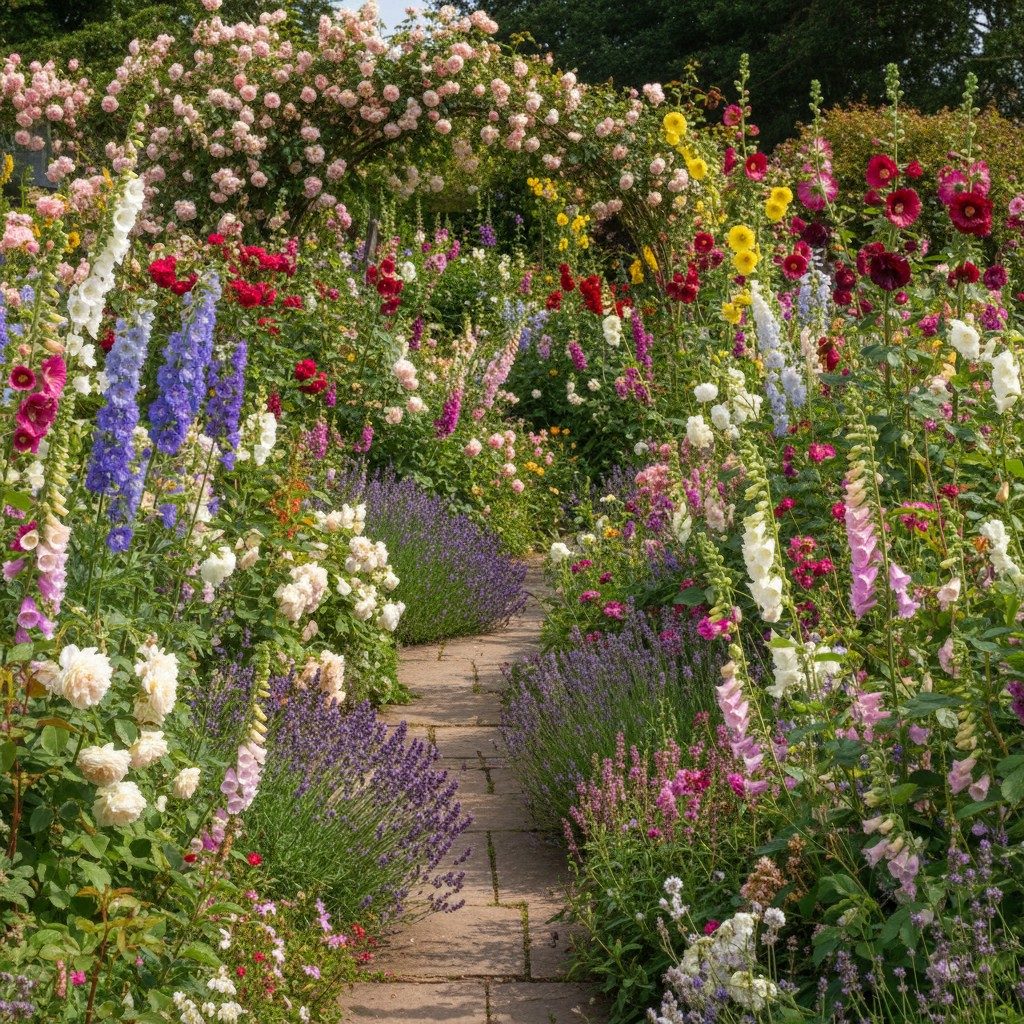
What Is a Cottage Garden?
A cottage garden is an informal, perennial-led planting style that blends flowers, herbs, and edibles into dense, layered beds. According to NC State Cooperative Extension, a cottage garden is “a perennial garden of informal design that grows in the space between the lawn and home.” The style traces back to English working-class gardens of the 1400s–1500s, where households grew everything they needed, food, medicine, and beauty, in a single small plot.
What makes the look distinct is the apparent lack of structure. The Royal Horticultural Society notes that “cottage-style gardens need voluptuous planting and haphazard self-seeding to get the look.” In other words: fill every inch, let things spill over, and let the plants decide where to wander.
What Are the Key Principles of Cottage Garden Design?
The core idea is abundance over structure, pack plants closely, mix everything together, and let self-seeders fill the gaps naturally. NC State Extension explains that “with the use of borders, paths, and hardscape the cottage garden takes shape”, so even the wildest-looking cottage garden has a quiet backbone of edging and walkways underneath the exuberance.
- Abundance over structure. Cottage gardens reject rigid geometry. Instead of neat rows, plants are packed closely together in flowing drifts and layers.
- Mix everything together. Flowers, herbs, vegetables, and fruit all share the same beds. Roses grow next to cabbages. Lavender borders the tomatoes. It is beautiful and functional.
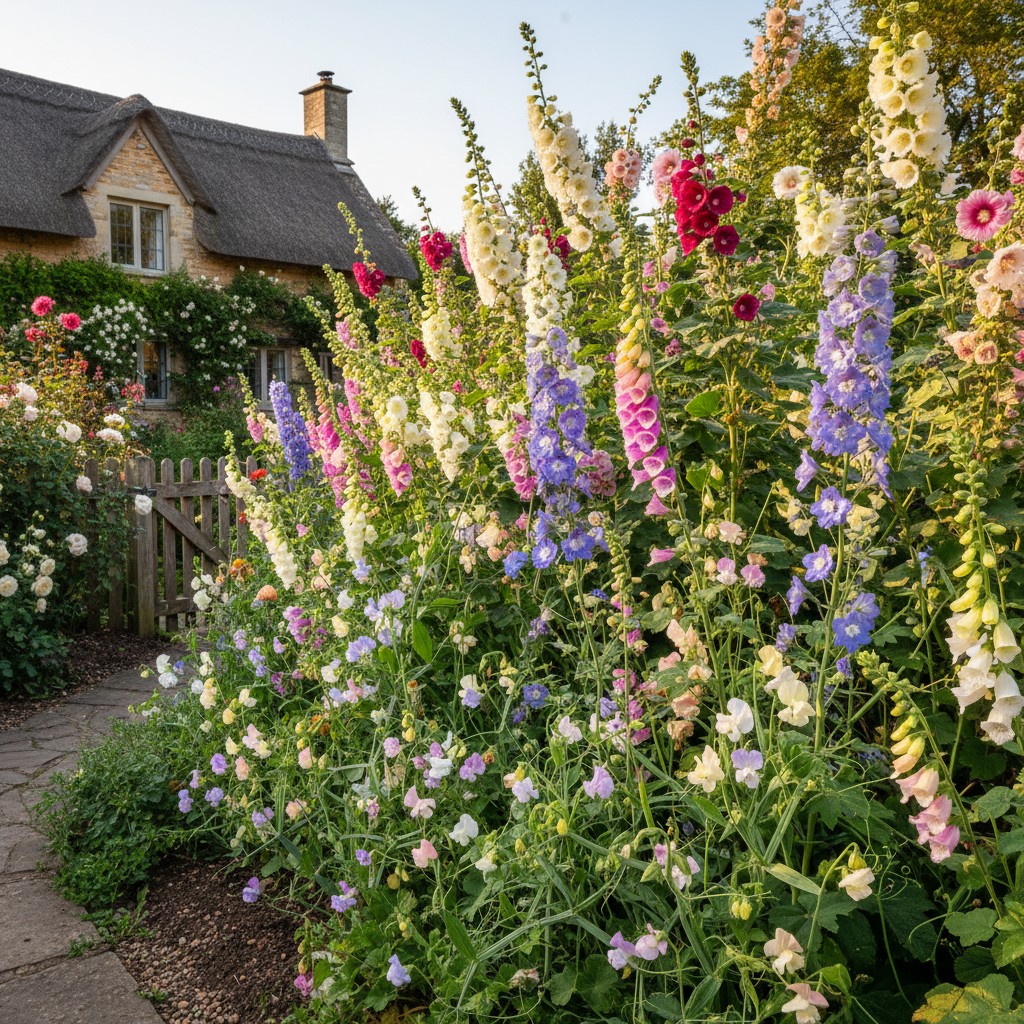
- Self-seeders are your friends. Let some plants go to seed, hollyhocks, foxgloves, sweet alyssum, calendula, and bachelor buttons will resow themselves year after year, filling in gaps naturally.
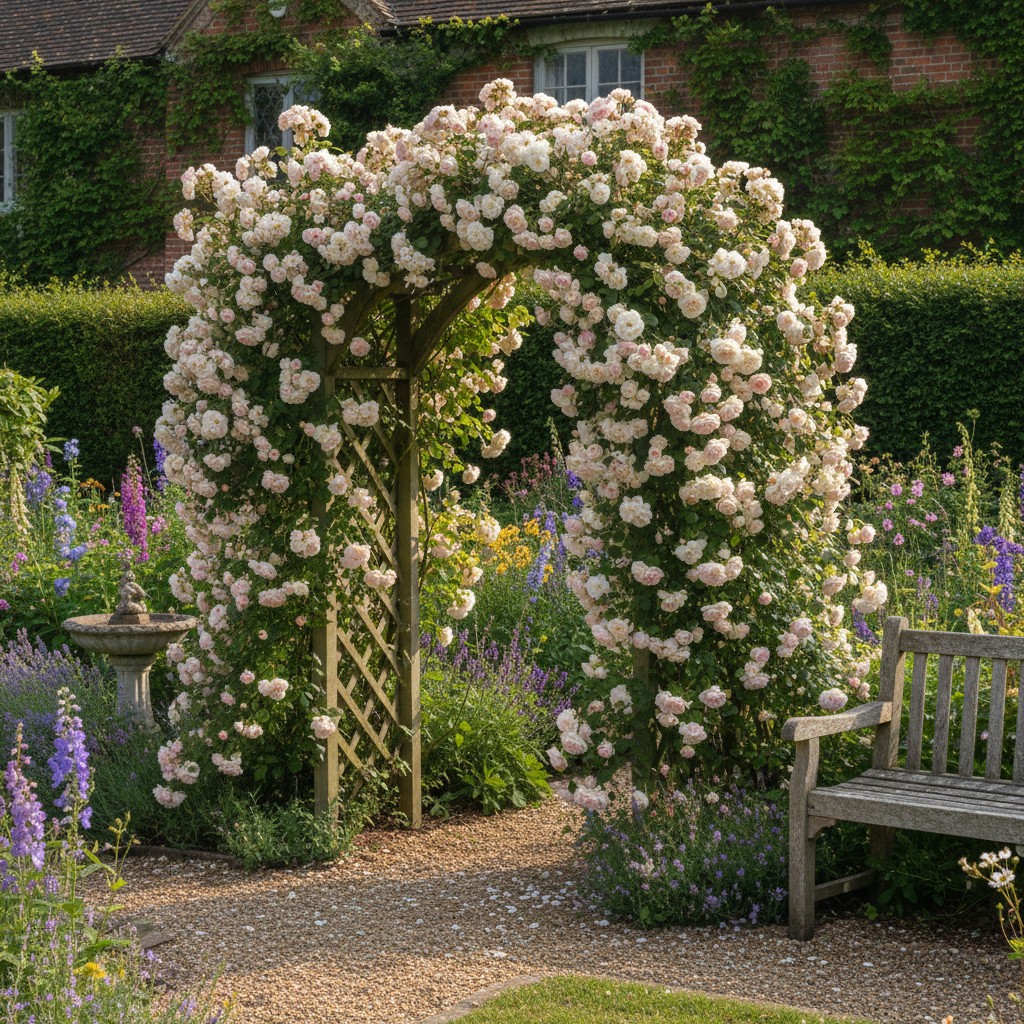
- Vertical interest. Climbing roses, sweet peas, clematis, and morning glories on trellises, arbors, and fences add height and drama. Try vertical gardening techniques for even more dimension.
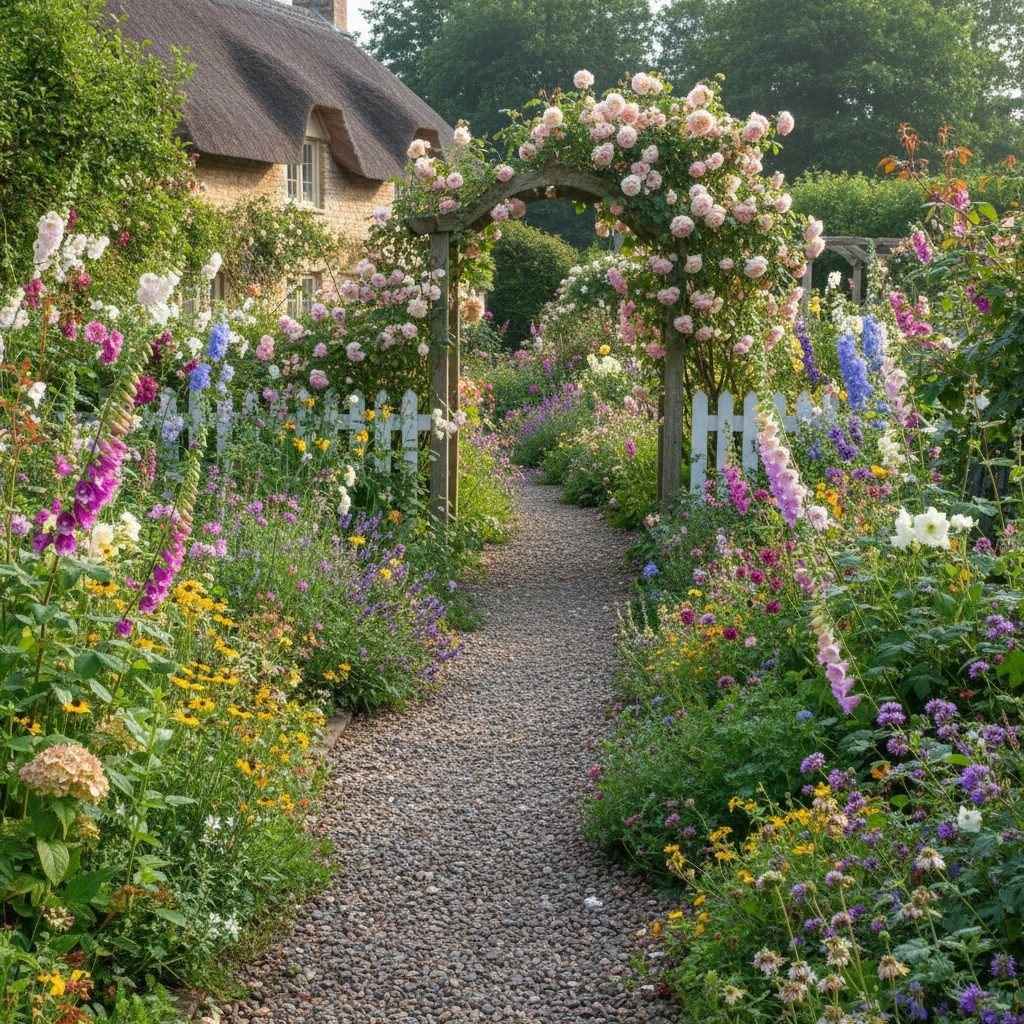
- Pathways. Winding gravel or stepping-stone paths create a sense of discovery and give you access without imposing straight lines.
How Do You Layer Plants Like a Pro?
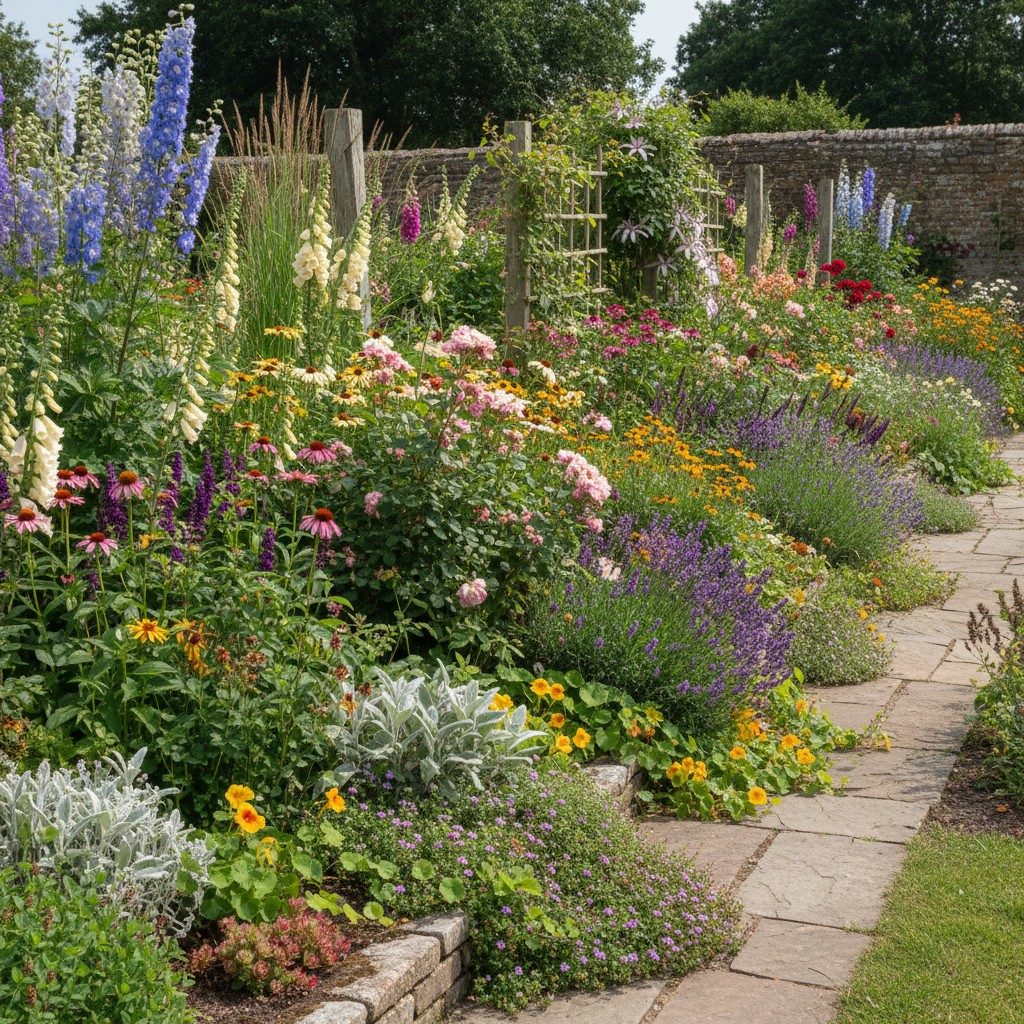
Plant in tiers by mature height, short edgers in front, mid-height perennials in the middle, tall spires at the back. The NC State Extension cottage-garden guide puts it simply: “Install plants as a mix, short in front, tall in back.” This three-tier approach stops the tallest plants from swallowing the small ones and gives every bloom a chance to be seen.
A simple working formula: edge the front with 6–12 in. Plants (alyssum, catmint, lamb’s ear), fill the middle with 18–30 in. Perennials (echinacea, phlox, salvia), and anchor the back with 3–6 ft. Spires (delphiniums, hollyhocks, sunflowers). The RHS notes that self-seeders like foxgloves “add to a sense of jostling companionship” when mixed with other unruly fill plants like aquilegia and sweet rocket.
What Are the Must-Have Cottage Garden Plants?
Build the backbone with long-lived perennials, fill gaps with fast-growing annuals, and always include roses.
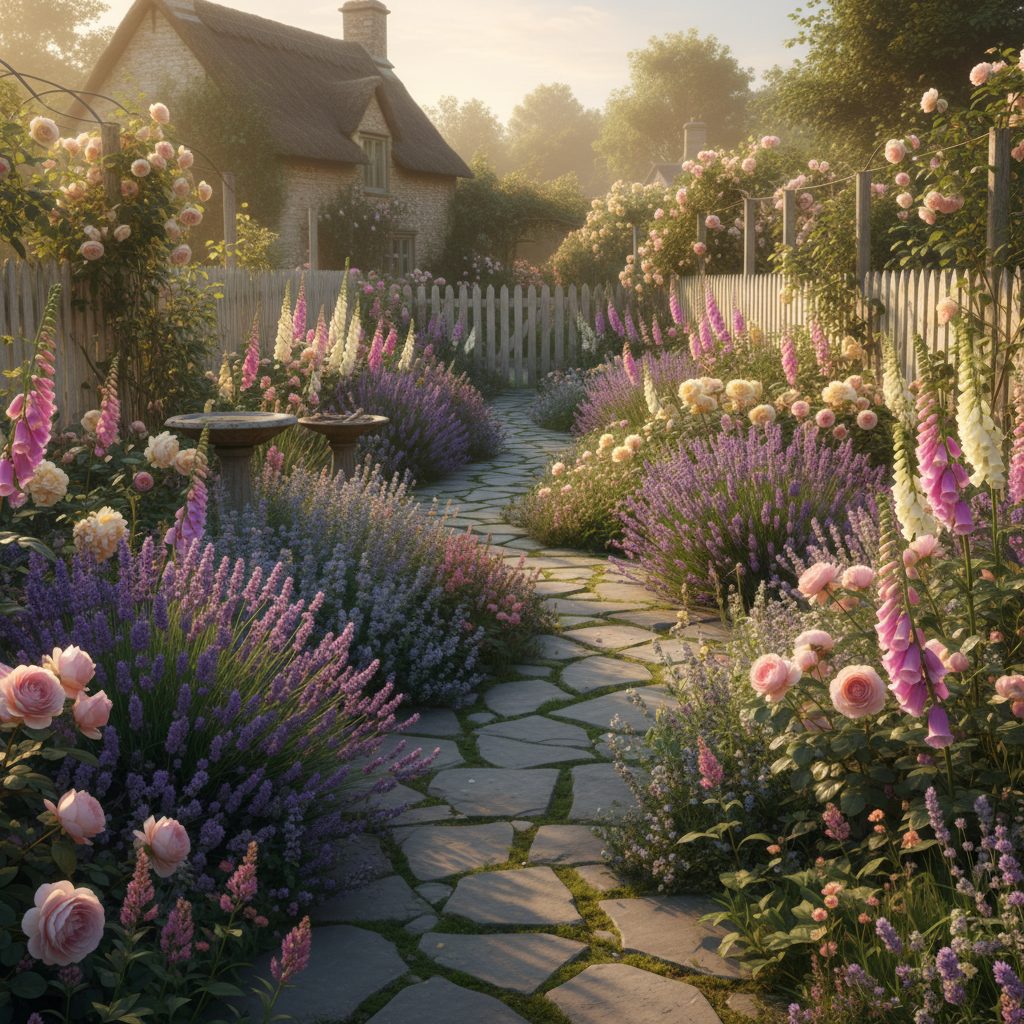
Perennials: Lavender, echinacea, peonies, delphiniums, phlox, black-eyed Susans, salvia, catmint, and daylilies. These come back year after year and form the backbone of your garden. Many of them also attract pollinators that benefit your whole yard.
⚠ Toxicity Note. Foxglove & Delphinium
Foxgloves (Digitalis species) are among the most iconic cottage garden plants and also among the most poisonous. All parts: leaves, flowers, seeds, contain cardiac glycosides (digitoxin, digoxin) that can cause life-threatening heart arrhythmia. They are toxic to humans, dogs, cats, and livestock. Grow them freely in your cottage garden, but be aware if you have young children or animals that might chew on plants.
Delphiniums contain diterpene alkaloids (primarily methyllycaconitine and nudicauline) in all parts of the plant. Toxic to humans and livestock; ingestion causes nausea, muscle weakness, and potentially heart failure in quantity. Handle with care, skin contact with plant sap can cause mild irritation in sensitive individuals. Keep away from grazing animals and supervise children in the garden.
Annuals: Zinnias, cosmos, sunflowers, snapdragons, sweet peas, and calendula. These fill in quickly and bloom all summer. Start them from seed indoors using our seed saving tips to save money year after year.
Important: Lathyrus odoratus (ornamental sweet peas) are toxic if eaten, all parts, particularly the seeds, contain neurotoxic amino acids (beta-aminopropionitrile and related compounds) that cause lathyrism with repeated ingestion. They are not edible and should not be confused with garden peas (Pisum sativum), which are perfectly edible. This confusion is a real risk, especially for children, who may see the pretty pods and assume they are like snow peas. Ornamental sweet peas are grown purely for flowers and fragrance.
Roses: No cottage garden is complete without roses. Choose disease-resistant varieties like Knock Out, David Austin English roses, or old-fashioned climbing varieties. They pair beautifully with herbs like lavender along pathways.
| Plant Type | Examples | Role | Sun Needs |
|---|---|---|---|
| Perennials | Lavender, peonies, echinacea | Backbone & structure | Full sun |
| Annuals | Zinnias, cosmos, snapdragons | Gap fillers & color | Full sun |
| Self-seeders | Hollyhocks, foxgloves, calendula | Effortless fill | Sun to part shade |
| Climbers | Roses, clematis, sweet peas | Vertical drama | Full sun |
| Herbs | Rosemary, thyme, oregano | Edging & fragrance | Full sun |
How Do Hardscape and Pathways Tie It Together?
Paths, arbors, and edges are the invisible skeleton that keeps a cottage garden from tipping into chaos. NC State Extension lists the standard cottage hardscape components as “edging/borders, arbors, walkways, trellises, bird bath, water feature, sitting areas.” You don’t need all of them, but two or three give the eye something to rest on.
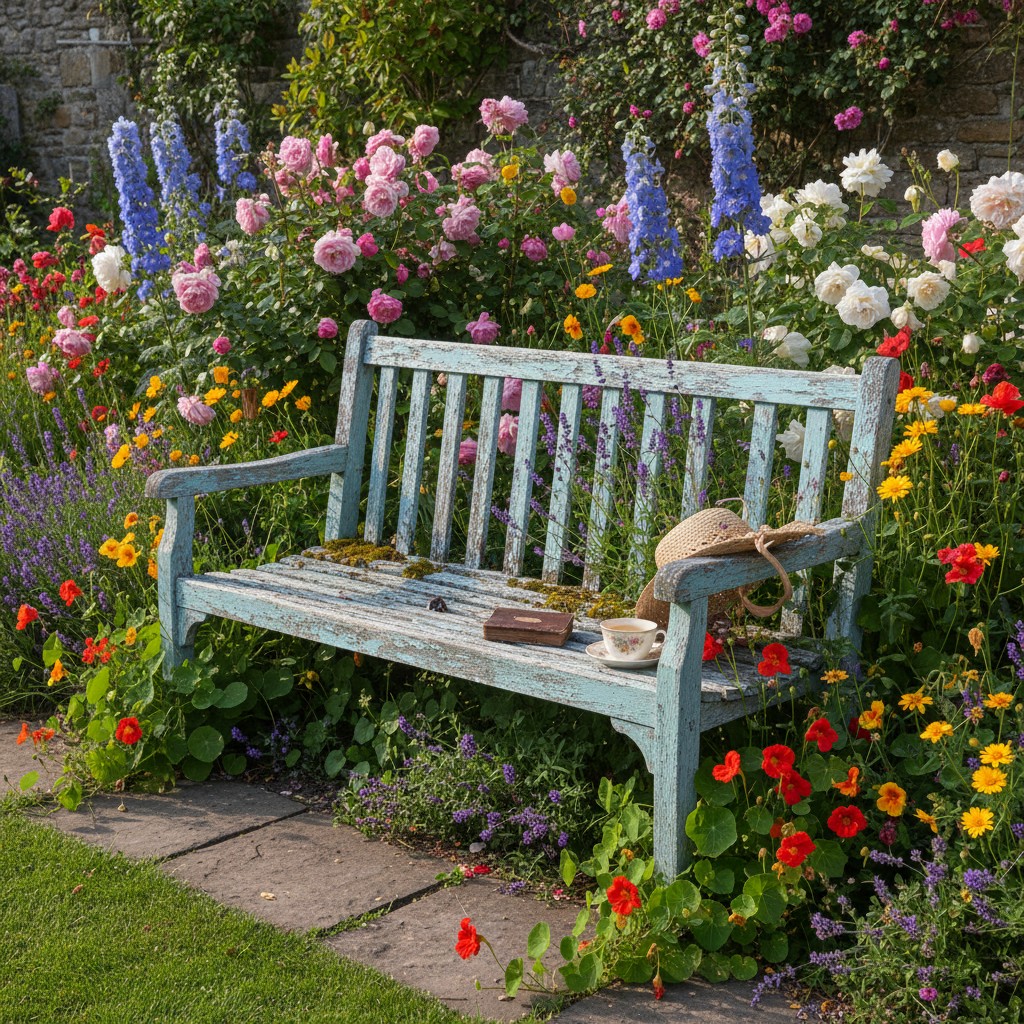
Keep paths narrow (24–36 in.) and curvy. Use gravel, stepping stones, or flagstone, never poured concrete, which fights the soft look. A simple wooden arbor at the entrance and a weathered bench tucked in the middle will make the garden feel intentional without making it feel formal.
How Do You Keep a Cottage Garden Going Year After Year?
The biggest maintenance job isn’t weeding, it’s editing. Self-seeders like feverfew, calendula, and sweet alyssum can take over a bed if you let them. Pull the volunteers you don’t want in early spring, keep the ones placed where you want them, and deadhead spent blooms to encourage second flushes.
Every 3–4 years, divide crowded perennials (peonies, phlox, daylilies) in early spring or fall. Top-dress beds with 1–2 in. Of compost each spring, packed-tight cottage beds are heavy feeders. Stake tall plants like delphiniums and hollyhocks before they flop. And resist the urge to “tidy” too aggressively; a little untidiness is the whole point.
what’s nice about a cottage garden is that there are no rules, only traditions and suggestions. Start with a sunny bed, pack it full of plants you love, and let the garden tell you what it wants to become. Add a cutting garden section for bouquets and a companion planting approach for the edible sections. The best cottage gardens evolve over years of happy accidents and intentional neglect.
Frequently Asked Questions
A: Yes, though plant choices change. Hostas, astilbe, foxgloves, bleeding hearts, and ferns create a beautiful woodland cottage feel in partial shade.
A: Less than you think. Deadheading, occasional weeding, and dividing perennials every few years is the bulk of it. The close planting actually suppresses weeds naturally.
A: Absolutely. Even a 4×8 foot bed can capture the cottage spirit. Focus on layering heights and using climbers to maximize vertical space.
A: Fall is ideal for planting perennials and spring bulbs. Spring is great for adding annuals and herbs. Most cottage gardens are built over 2–3 seasons, not all at once.
A: Most classic cottage plants, roses, lavender, delphiniums, need 6+ hours of direct sun. But a partial-shade cottage garden works beautifully with astilbe, foxglove, bleeding heart, hellebore, and hardy geraniums.